-
-
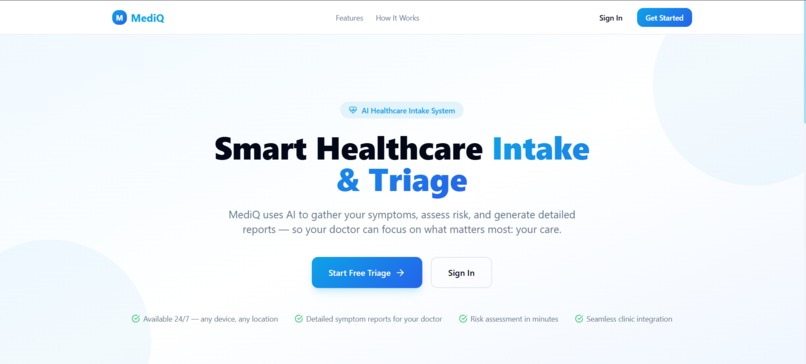
Home page
-
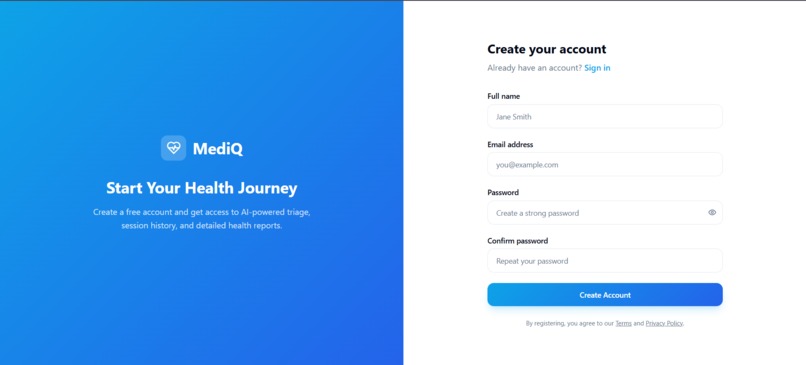
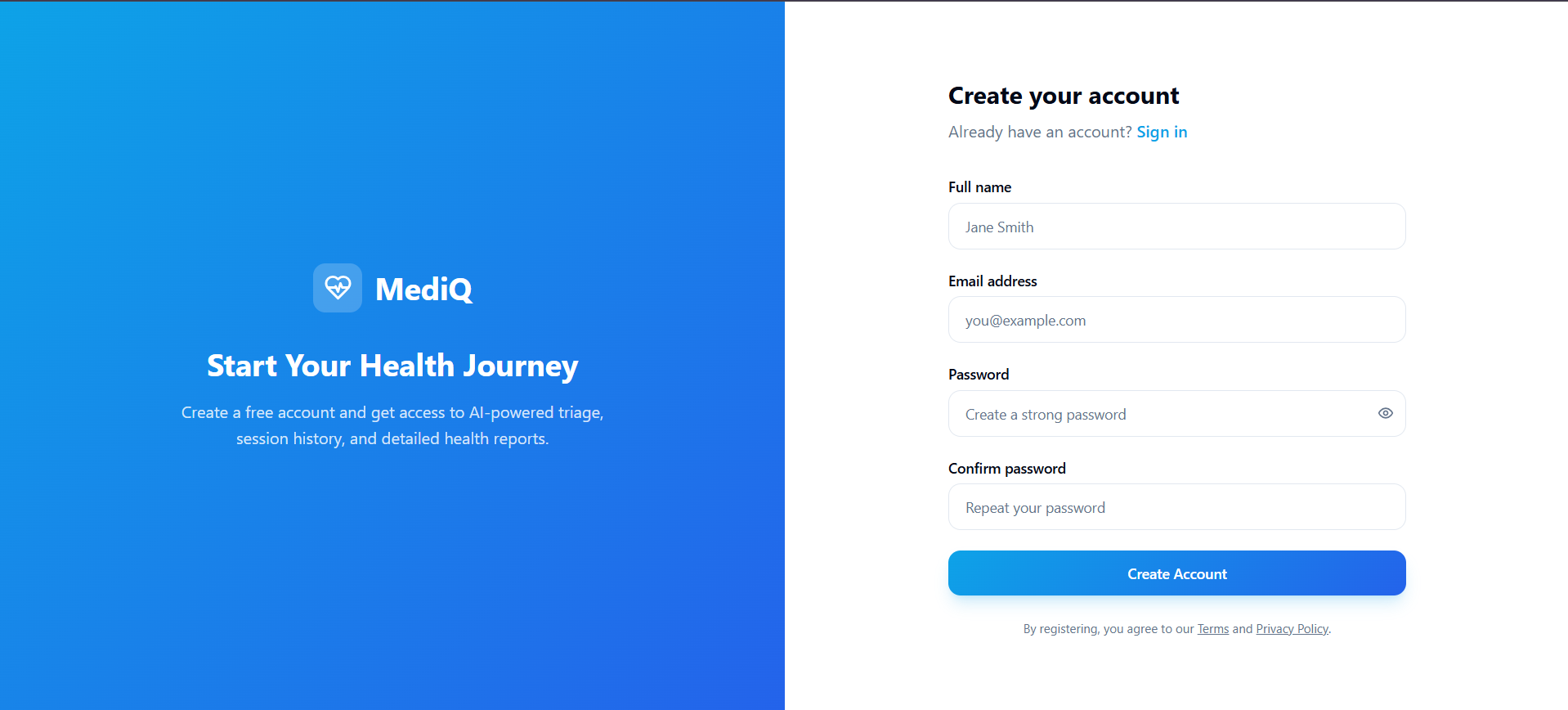
Sign up page
-
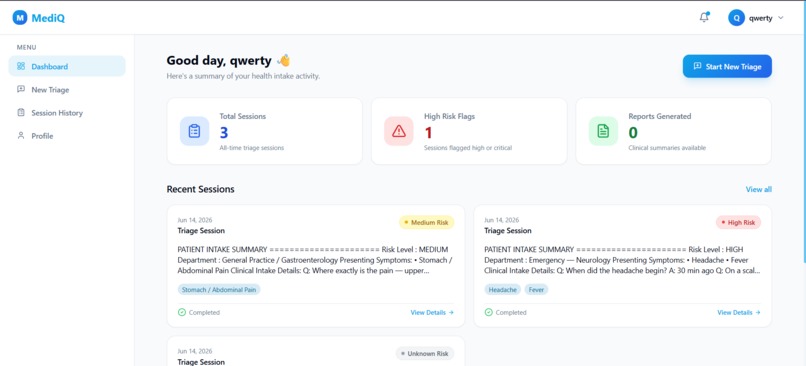
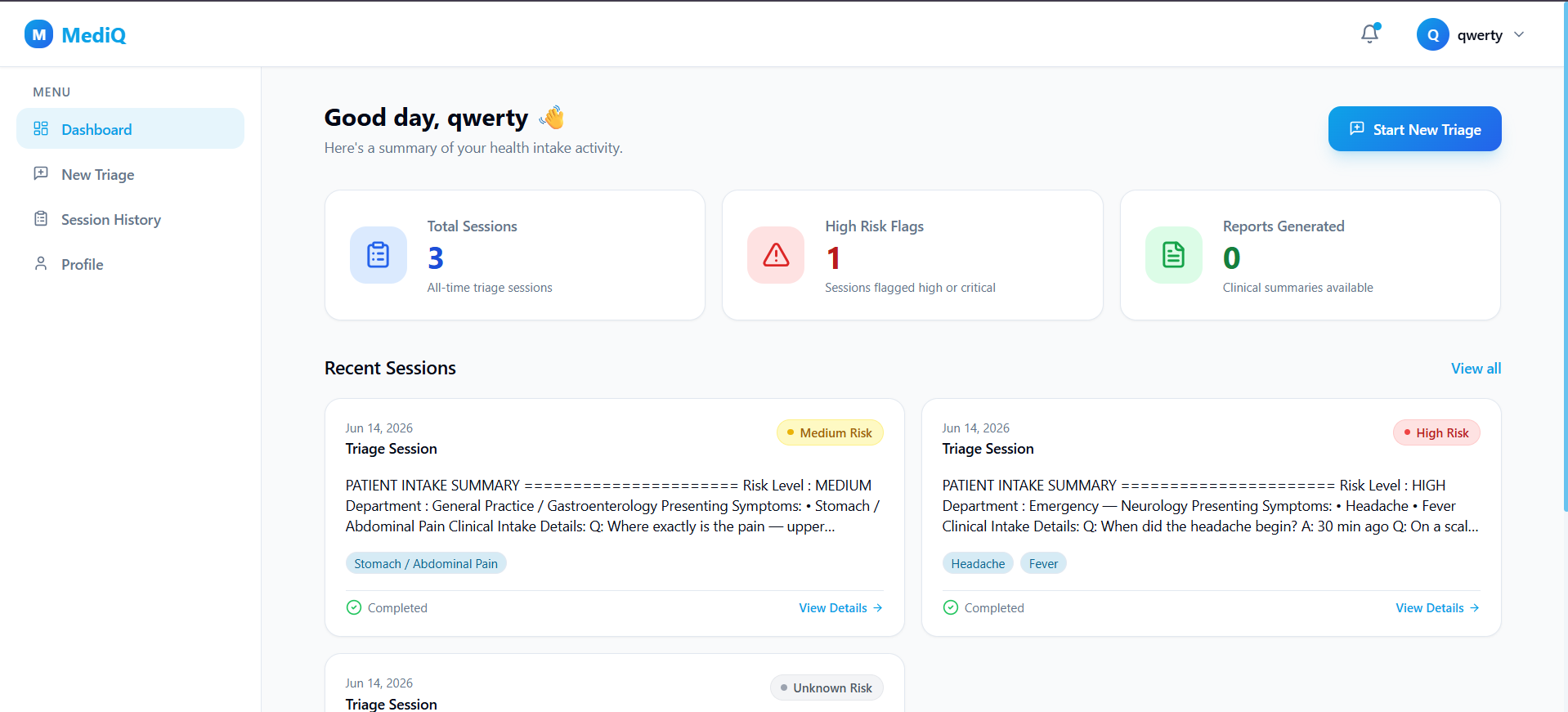
Dashboard page
-
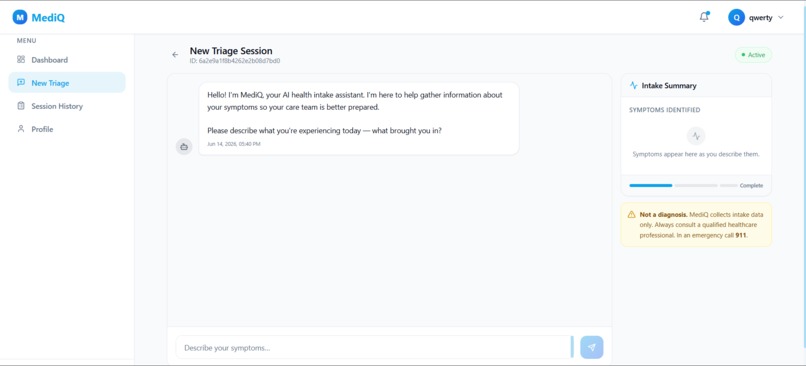
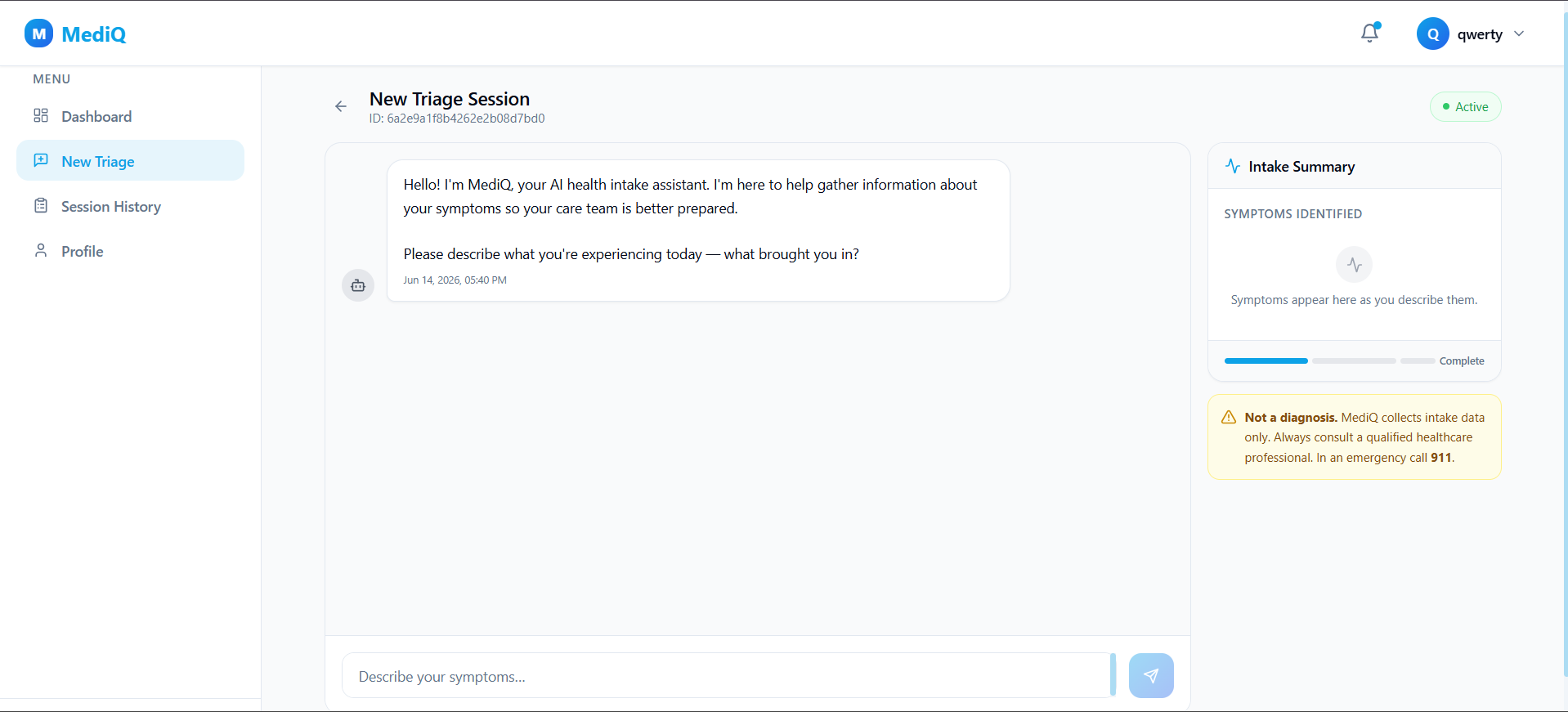
New session page
-
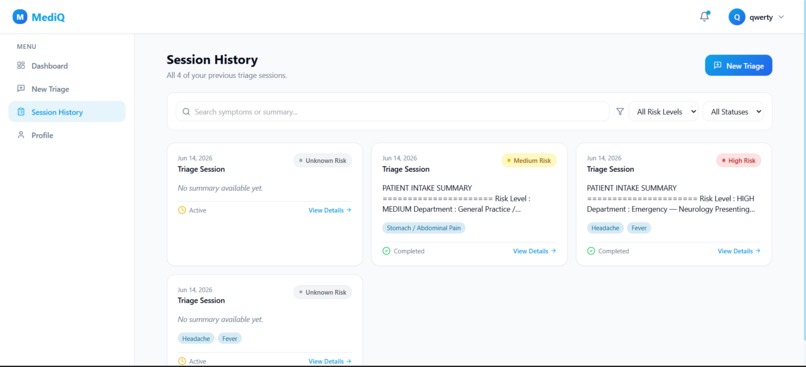
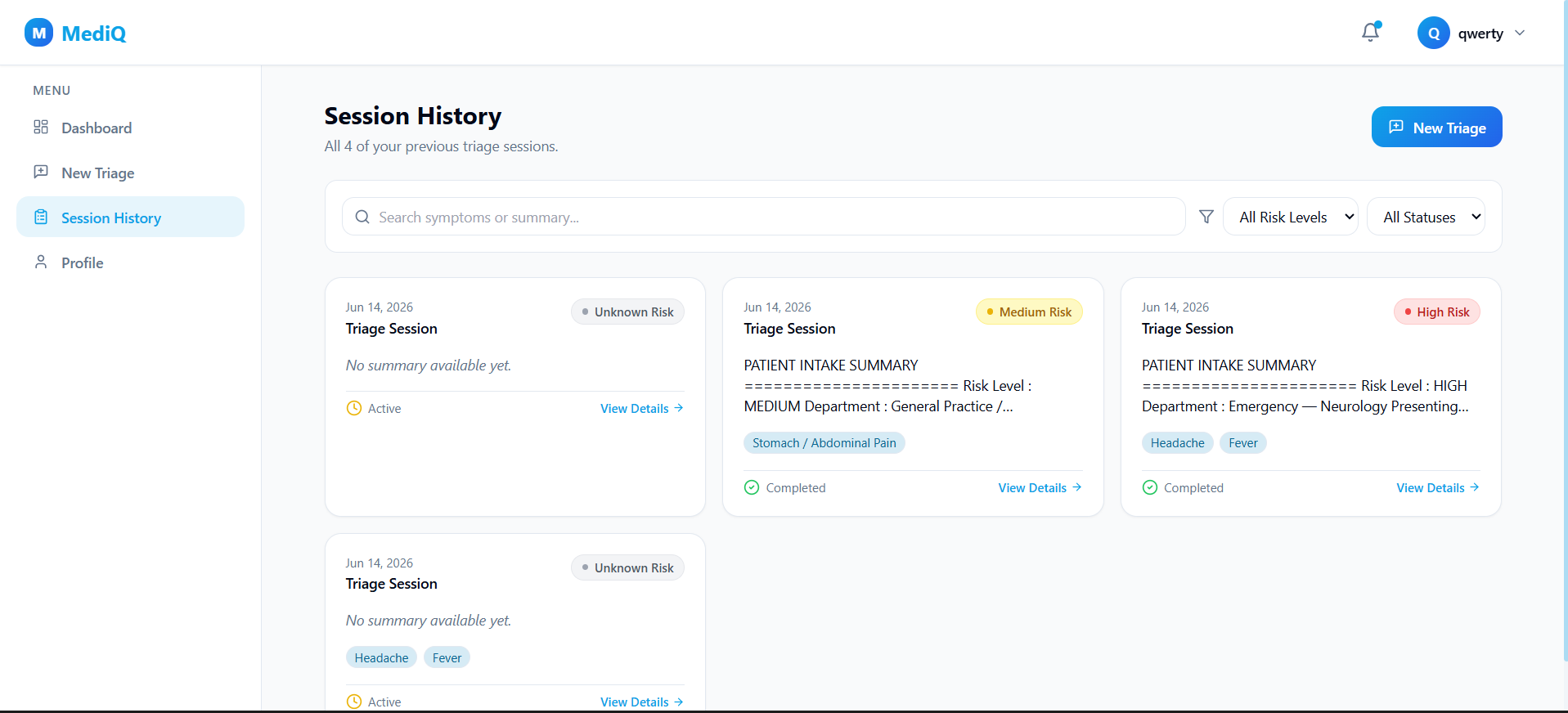
Session history page

Inspiration
Healthcare is one of those industries where a huge amount of time is spent on tasks that aren't actually healthcare. Before a patient even sees a doctor, someone has to answer calls, collect medical history, ask the same intake questions repeatedly, judge how urgent the case is, and route the patient to the right department. Many clinics are already overwhelmed with appointment requests and simply can't respond quickly enough.
That made us ask a simple question: what if the first interaction a patient had wasn't with a clipboard or a busy receptionist, but with an AI that could listen, understand, and ask the right questions? We wanted to build something that could reduce administrative workload while making the patient experience smoother and faster. That's how MediQ was born.
What it does
MediQ is an AI-powered healthcare intake and triage platform that acts as an intelligent first point of contact for patients. Instead of filling out long, static forms, patients interact with a conversational AI that understands symptoms expressed in natural language.
The system asks context-aware follow-up questions, extracts structured clinical information such as symptoms, severity, duration, medical history, and associated conditions, and continuously builds a complete picture of the patient's condition. It then generates a concise, doctor-ready summary and recommends the most appropriate medical specialty, helping healthcare providers start with the information they actually need.
How we built it
We built MediQ as a full-stack MERN application. The frontend uses React, Vite, Tailwind CSS, and shadcn/ui to provide a clean chat-based interface that feels more like a conversation than a medical form. The backend is powered by Node.js, Express.js, and MongoDB, handling authentication, conversation state management, and persistent storage.
The AI layer is driven by the Gemini API, which powers symptom understanding, clinical entity extraction, follow-up question generation, urgency assessment, and structured report creation. To keep the interaction reliable, we designed a state-driven triage workflow that guides users from the initial symptom description all the way to a final doctor-ready summary.
To make sure the system was more than just a demo, we also built an evaluation framework. We constructed a benchmark of 195 curated and real-world-inspired patient scenarios using public medical dialogue data, manually designed emergency cases, and LLM-generated paraphrases. The benchmark evaluates symptom extraction, clinical entity extraction, urgency prediction, department routing, conversational reasoning, and doctor summary generation using reproducible metrics.
Challenges we ran into
The hardest part wasn't integrating an LLM API—it was making the conversation feel natural while still collecting the structured information required for clinical workflows. We spent a lot of time refining prompts so that the AI could ask relevant follow-up questions without becoming repetitive or losing context.
Another major challenge was maintaining conversational state. Patient intake isn't a one-shot interaction; every answer changes what should be asked next. Building a workflow that could remember previous responses, update the patient's profile, and generate a coherent final summary required careful state management and backend orchestration.
Designing a meaningful evaluation pipeline was another challenge. Unlike traditional ML systems with a single accuracy score, an AI triage assistant has multiple responsibilities, so we needed a benchmark that could measure each capability independently and reproducibly.
Accomplishments that we're proud of
Built an end-to-end AI healthcare intake and triage platform instead of a simple chatbot.
Created a conversational workflow that adapts follow-up questions based on patient responses and generates structured doctor-ready summaries.
Developed a reproducible benchmark containing 195 patient scenarios to evaluate the AI pipeline across multiple dimensions.
Combined modern full-stack engineering with practical LLM integration to address a real operational challenge faced by healthcare providers.
What we learned
This project taught us that building AI products is as much about system design and evaluation as it is about the model itself. Good prompts alone are not enough—you need state management, structured outputs, reliable workflows, and a way to measure whether the system is actually performing well.
We also learned that healthcare AI should augment professionals, not replace them. The goal of MediQ is to automate repetitive administrative work so that doctors and clinical staff can spend more time focusing on patient care.
What's next for MediQ – AI Healthcare Intake & Triage Platform
We're excited to take MediQ beyond a hackathon prototype. Our next step is to add voice-based interactions so the platform can function as an AI phone agent for patient intake. We also plan to integrate with appointment scheduling systems and electronic health records, making it easier for clinics to adopt the platform in real workflows.
On the AI side, we want to expand the benchmark, support more clinical scenarios, and continuously improve reasoning and triage quality through evaluation-driven development. Our long-term vision is simple: build the AI-powered front desk for healthcare that helps patients get the right care faster while reducing the administrative burden on clinics.
Built With
- express.js
- gemini-api
- google-ai-studio
- javascript
- jwt
- mongodb
- node.js
- react
- rest-api
- tailwind-css

Log in or sign up for Devpost to join the conversation.