-
-
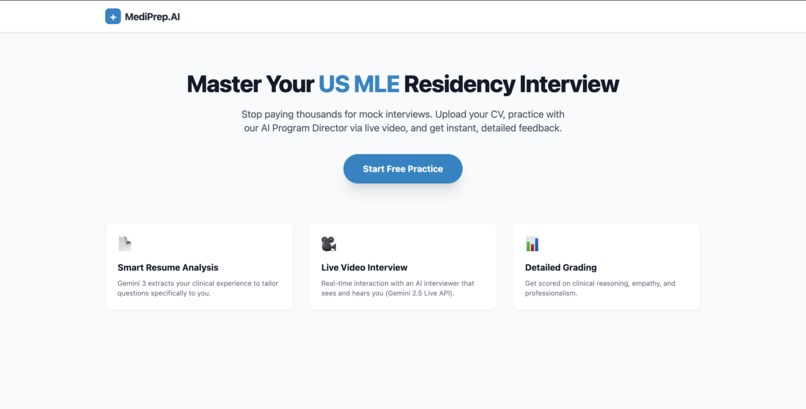
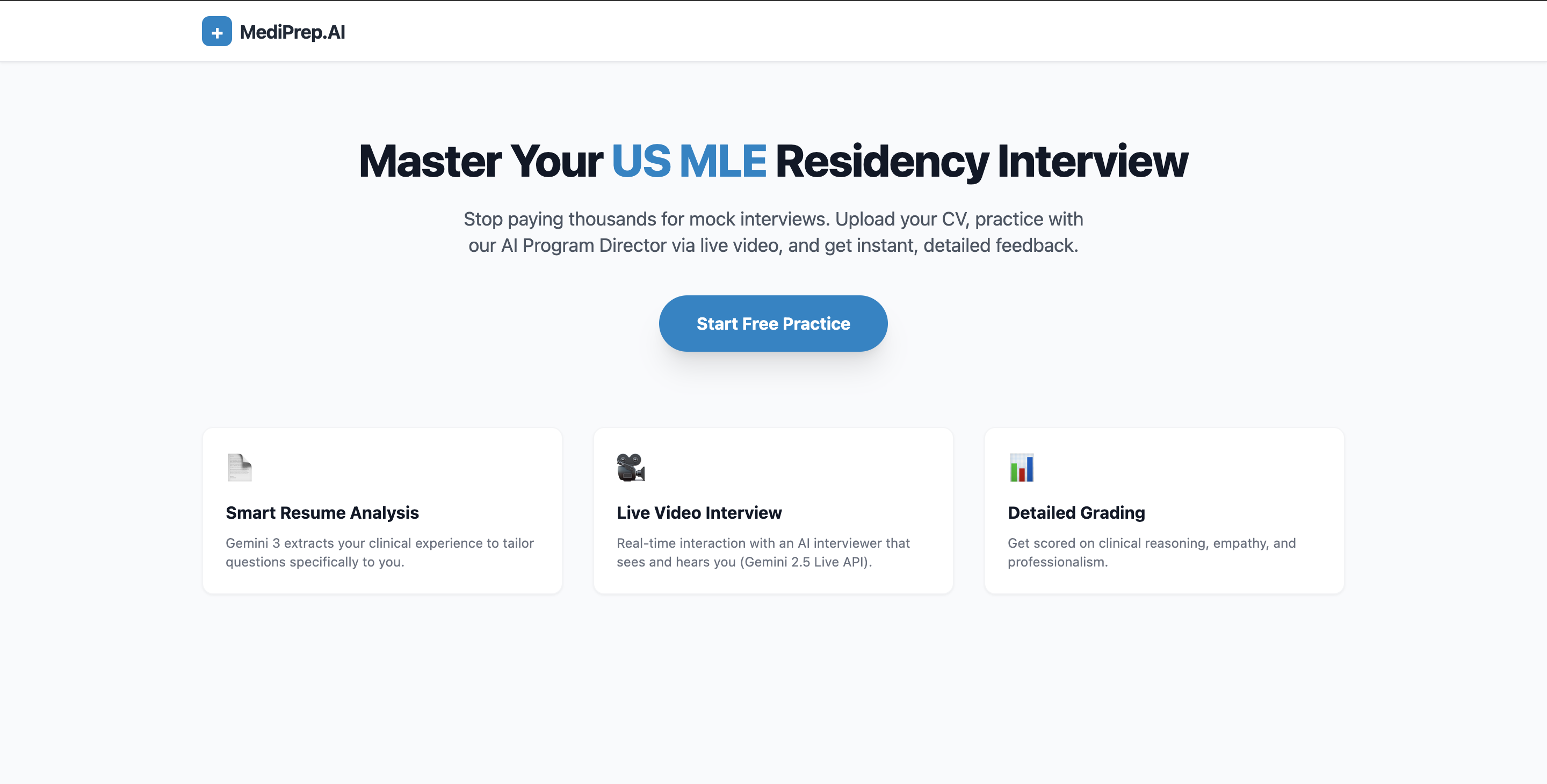
Home screen
-
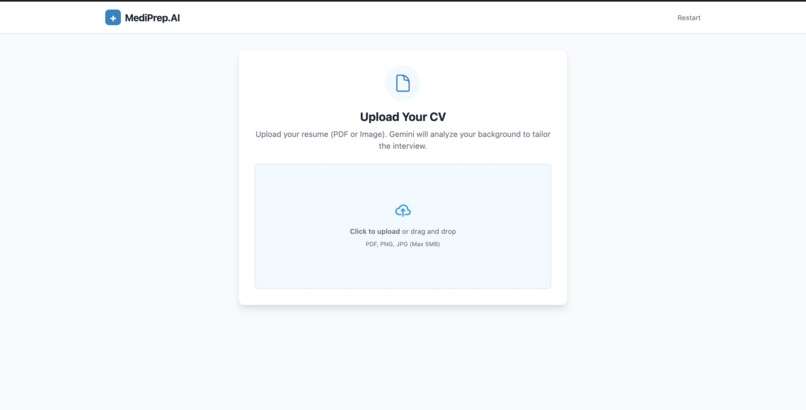
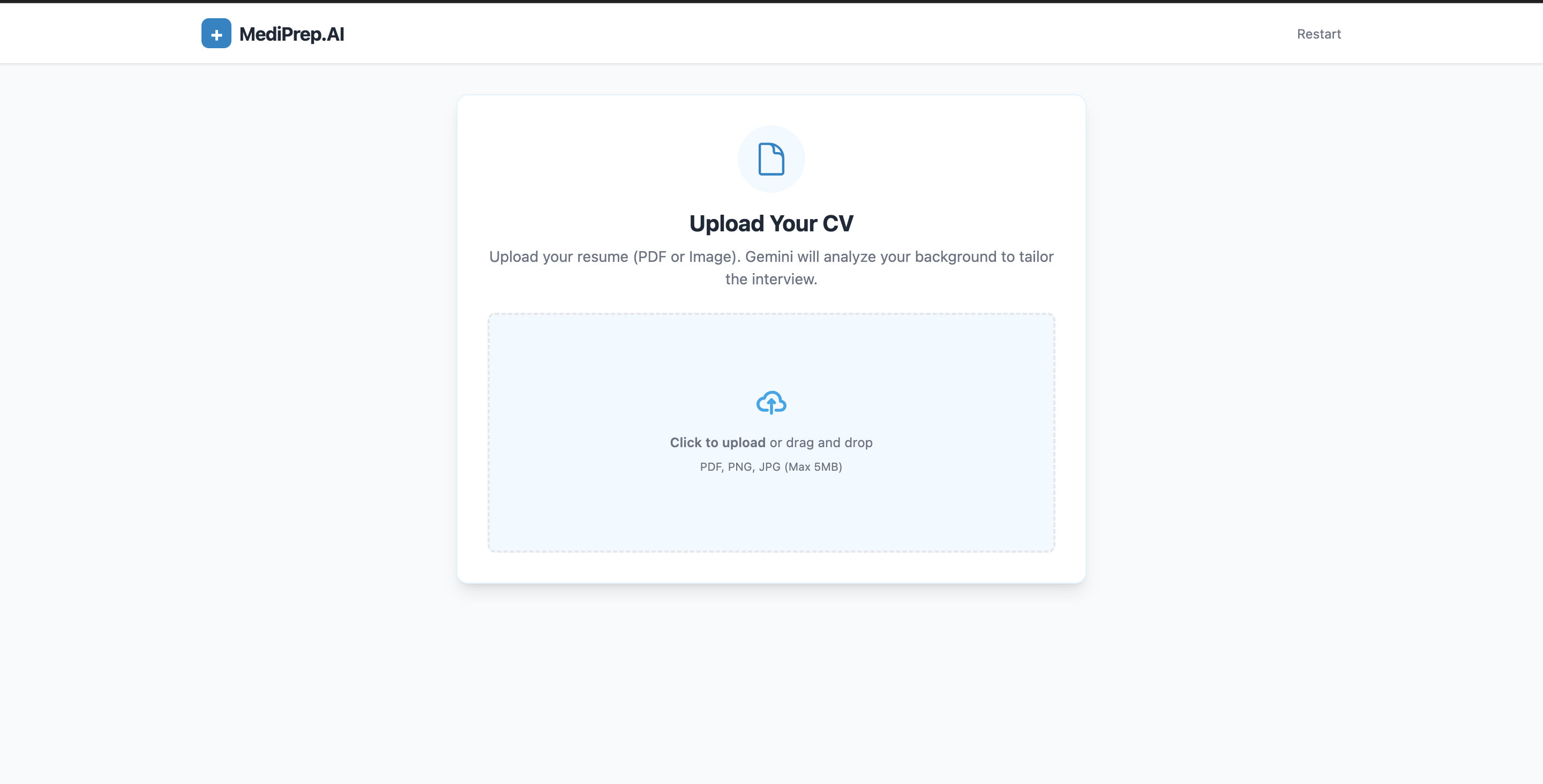
Resume Upload stage
-
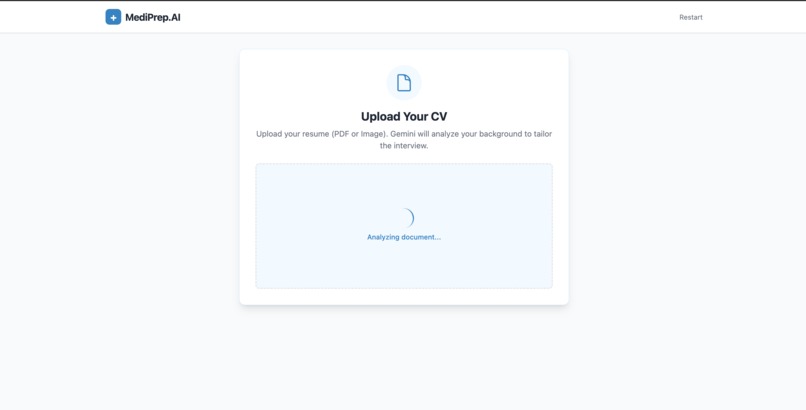
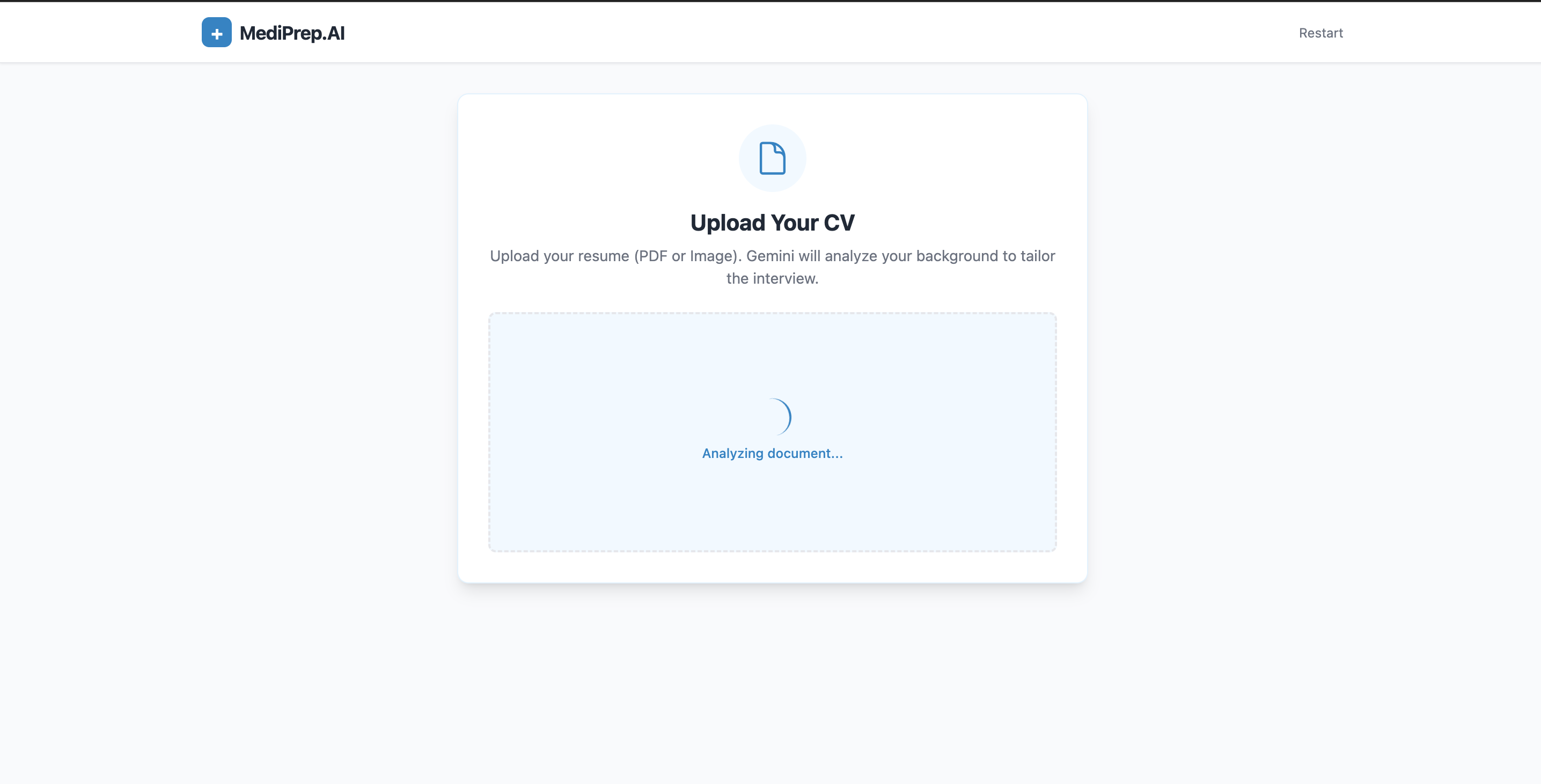
Resume Analysis Stage
-
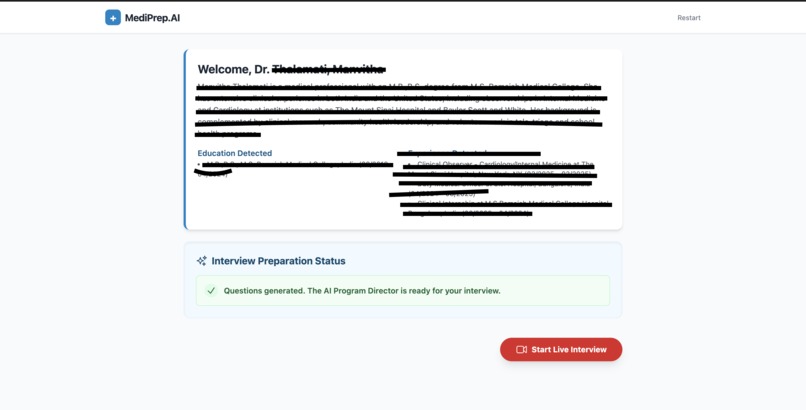
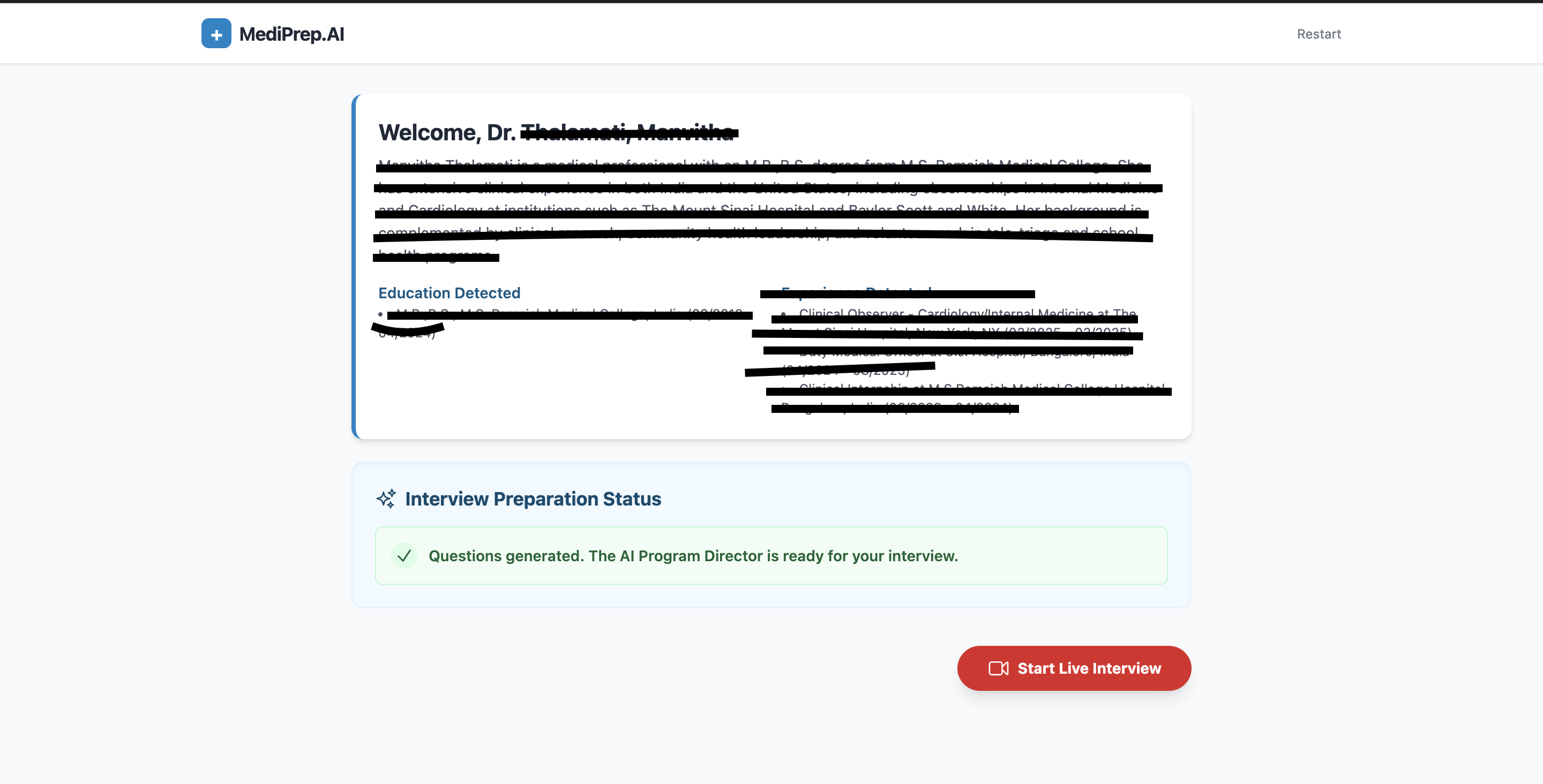
Pre interview stage
-
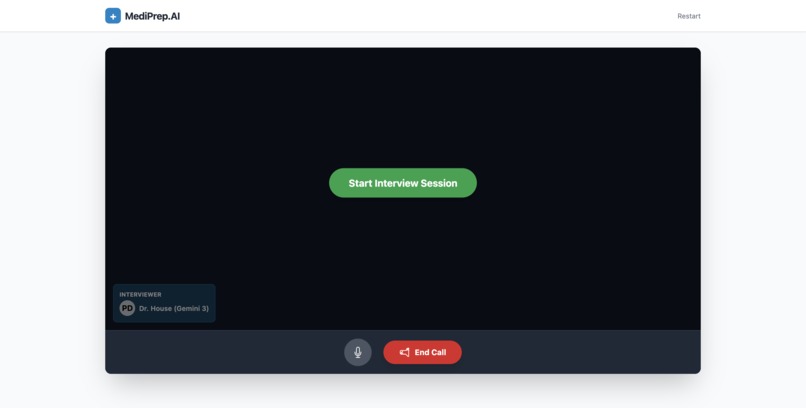
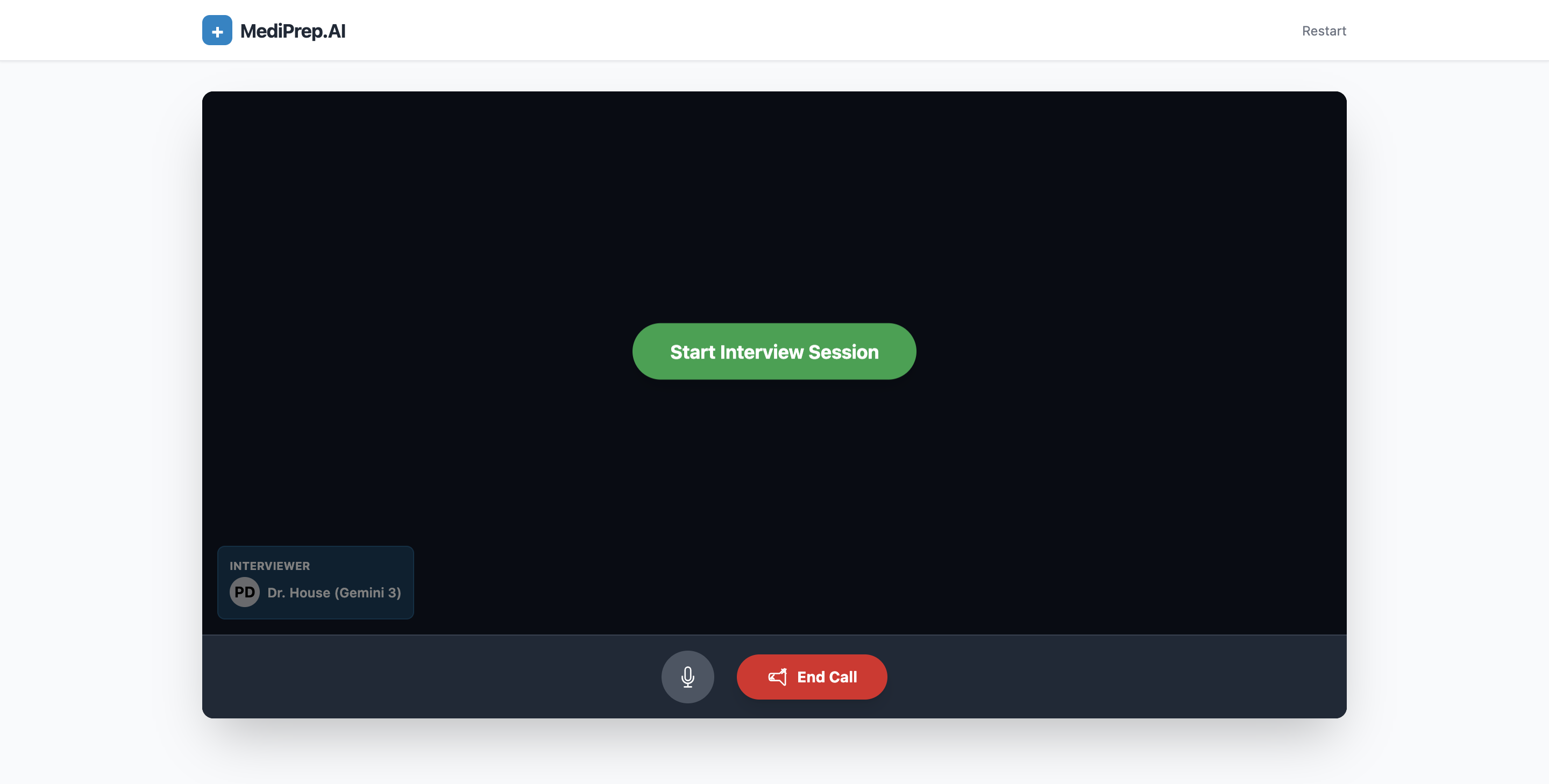
Interview Start Stage
-
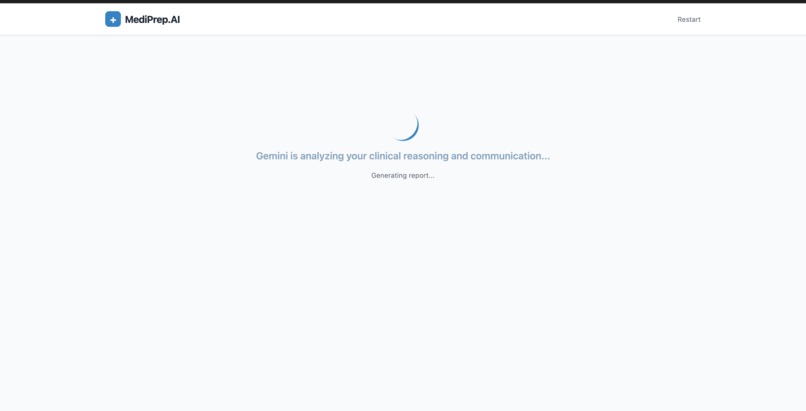
Feedback analysis stage
-
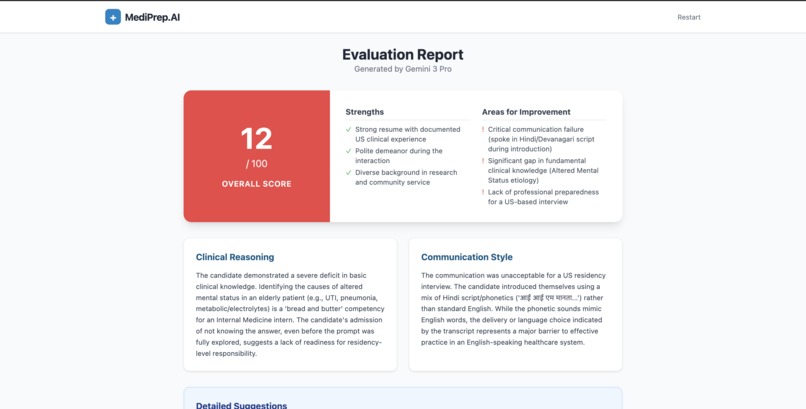
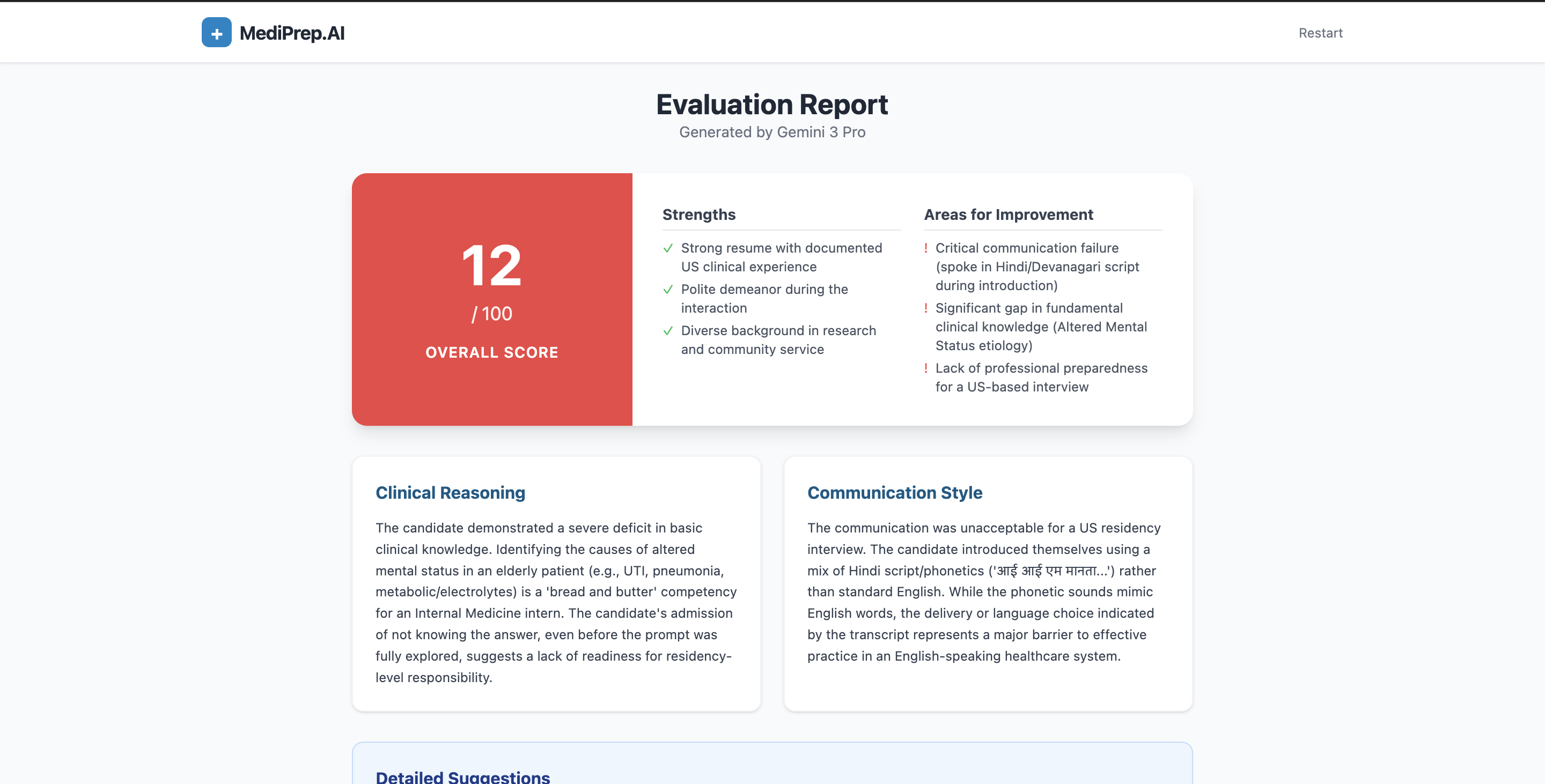
Feedback stage
Inspiration
The journey for MediPrep.AI began at home. This year, my wife applied for medical residency, and I watched her navigate the stressful and expensive process of interview preparation.
She spent thousands of dollars on coaching services, only to receive generic feedback that didn't truly address her unique background. Despite the high cost, she often had to practice on her own, unsure if she was improving, which did little to help her confidence or speaking skills.
This experience sparked a realization: What if there was a system that could conduct realistic interviews tailored specifically to a candidate's resume?
I envisioned a tool that could evaluate performance in real-time and provide instant, granular feedback—all at a fraction of the cost of human coaching. With the recent advancements in Large Language Models (LLMs), specifically their ability to process information and provide precise summaries, I knew this was the perfect use case for Gemini 3 and Gemini 2.5 Flash Live APIs.
What it does
MediPrep.AI simulates a live video residency interview. It analyzes the user's uploaded CV to generate tailored, context-aware questions. As the user responds in real-time, the AI evaluates their answers, body language, and speaking clarity, providing detailed feedback to help them improve their confidence and skills.
How we built it
I utilized a modern AI-first stack to bring this idea to life:
Planning: I used Google AI Studio apps to map out the Product Requirement Document (PRD) and plan the application architecture.
The Brains: The core logic is powered by Gemini 3, leveraging its superior performance in structured output and summarization to analyze resumes and generate relevant questions.
The Experience: I integrated Gemini 2.5 Flash Live APIs to handle the real-time video and audio interaction, creating a seamless "face-to-face" interview environment.
Development: Gemini 3 acted as an intelligent co-pilot throughout the coding process, helping to debug complex issues and accelerate the UI build.
Note on Architecture: To strictly adhere to the hackathon rules, the current version of the application does not have a persistence layer (database), nor does it include paywalls or user authentication. While the original vision included an auth system with subscription tiers, these were omitted for this submission.
Challenges we ran into
Building a real-time video application came with significant technical hurdles:
Live API Integration: Managing the connections with the Live API was the toughest challenge. Specifically, establishing stable WebSockets, handling the data stream seamlessly, and ensuring the connection closed properly at the end of a session required significant iteration.
UI/UX: creating a user interface that felt like a professional video call while handling the backend complexity was difficult.
However, using Gemini 3 as a coding assistant was a game-changer; it helped identify logic errors in the connection handling that would have taken days to solve manually.
Accomplishments that we're proud of
Cracking the Live Interface: Biggest technical win was successfully integrating the Gemini 2.5 Flash Live API with a custom video frontend. Getting the WebSocket connection stable enough to handle real-time audio/video streams was a massive challenge, but seeing that first truly "live" interaction work without lag was an incredible moment.
High-Fidelity Persona Generation: I'm Proud of how well Gemini 3 adopts the persona of a residency program director. By feeding it raw resume data, we were able to make it generate probing, specific questions that feel genuinely human, rather than generic queries.
Zero-Latency Feel: Achieved a conversational flow that feels natural. The system handles interruptions and pauses just like a real human would, which is critical for high-stakes interview practice.
Solving a Real Problem: Beyond the code, we are proud to have built something that addresses a genuine pain point for medical students—democratizing access to high-quality interview prep that was previously reserved for those with thousands of dollars to spare.
What we learned
The power of Multimodal AI: I learned just how effective Gemini 3 is at taking unstructured data (like a PDF resume) and turning it into a structured, interactive persona.
Real-time constraints: I gained a deep understanding of the intricacies of the Flash 2.5 Live API and WebSocket management.
Democratizing Access: Most importantly, we learned that high-quality, personalized professional coaching doesn't have to be a luxury good. AI can bridge the gap for students everywhere.
What's next for MediPrep.AI
Persistence & Analytics: The immediate next step is adding the persistence layer (Database & Auth) that we omitted for the hackathon. This will allow users to track their progress over time, re-watch their past interviews, and see a graph of their improvement in confidence and clarity.
Community Peer Practice: Building a feature where students can connect with each other for peer-to-peer mock interviews, using our AI to act as a moderator and feedback provider for both parties.
Specialty-Specific Tracks: Plan to fine-tune different "Interviewer Personas" for specific specialties (e.g., a high-pressure Surgery interviewer vs. a holistic Family Medicine interviewer) to match the specific vibe of different residency boards.
Scaling with a Sustainable Subscription Model
While the hackathon version is free and open to ensure accessibility, a tiered subscription model is planned to support continuous development and specialized features:
Freemium Access: A "starter" tier allowing users to perform one mock interview per month with basic feedback, ensuring that every student—regardless of financial status—has a baseline of preparation.
The "Match Pro" Tier: A monthly subscription providing multiple live sessions. This allows for the high-repetition "gym-style" practice that is essential for building muscle memory and overcoming interview anxiety.
Institutional Partnerships: We envision a B2B model where Medical Schools can purchase bulk licenses for their entire graduating class, providing students with a standardized, high-quality prep tool as part of their curriculum.
On-Demand "Expert" Modules: Premium add-ons that allow users to practice with specific AI-generated personas modeled after actual faculty from top-tier residency programs, using historical data to mimic their unique interviewing styles.
Vision
Ultimately, MediPrep.AI isn't just a tool; it's an equalizer. I want to remove the "pay-to-win" barrier of residency matching by providing world-class coaching that is personalized, affordable, and available 24/7.

Log in or sign up for Devpost to join the conversation.