Inspiration
Medical education can be dense, passive, and intimidating. Textbooks and question banks teach essential knowledge, but they do not reproduce the feeling of meeting a patient, deciding what to ask, ordering the right examination or test, and committing to a treatment plan.
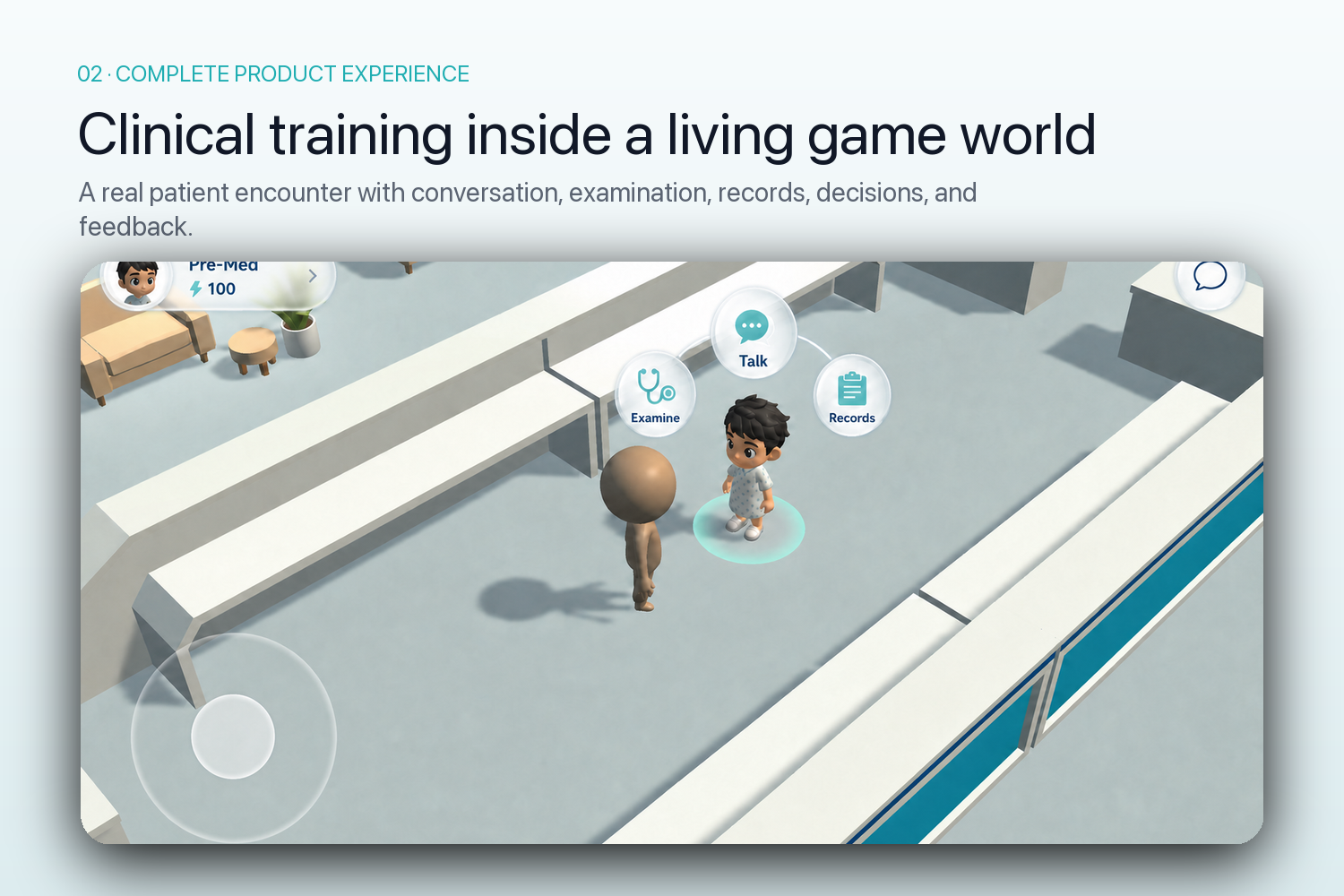
I wanted to make clinical practice feel like entering a living game world.
Medipok is a pocket medical training game where healthcare professionals and students learn by treating patients rather than only answering isolated questions.
What it does
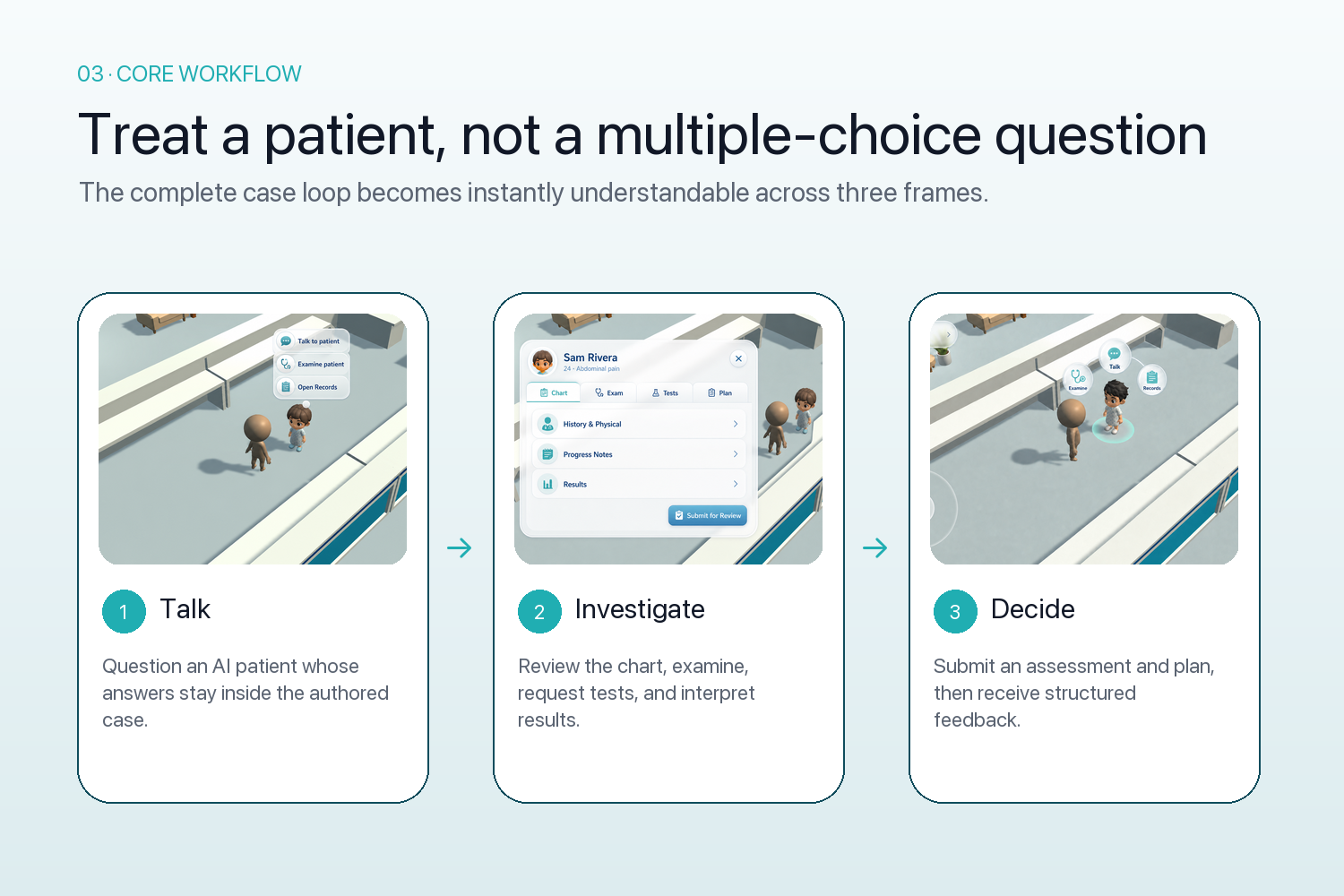
Players meet patients with authored clinical conditions and work through an encounter.
They can review the chart, speak with the patient, perform focused examinations, request tests, interpret results, document an assessment, choose a plan, and submit the case for evaluation.
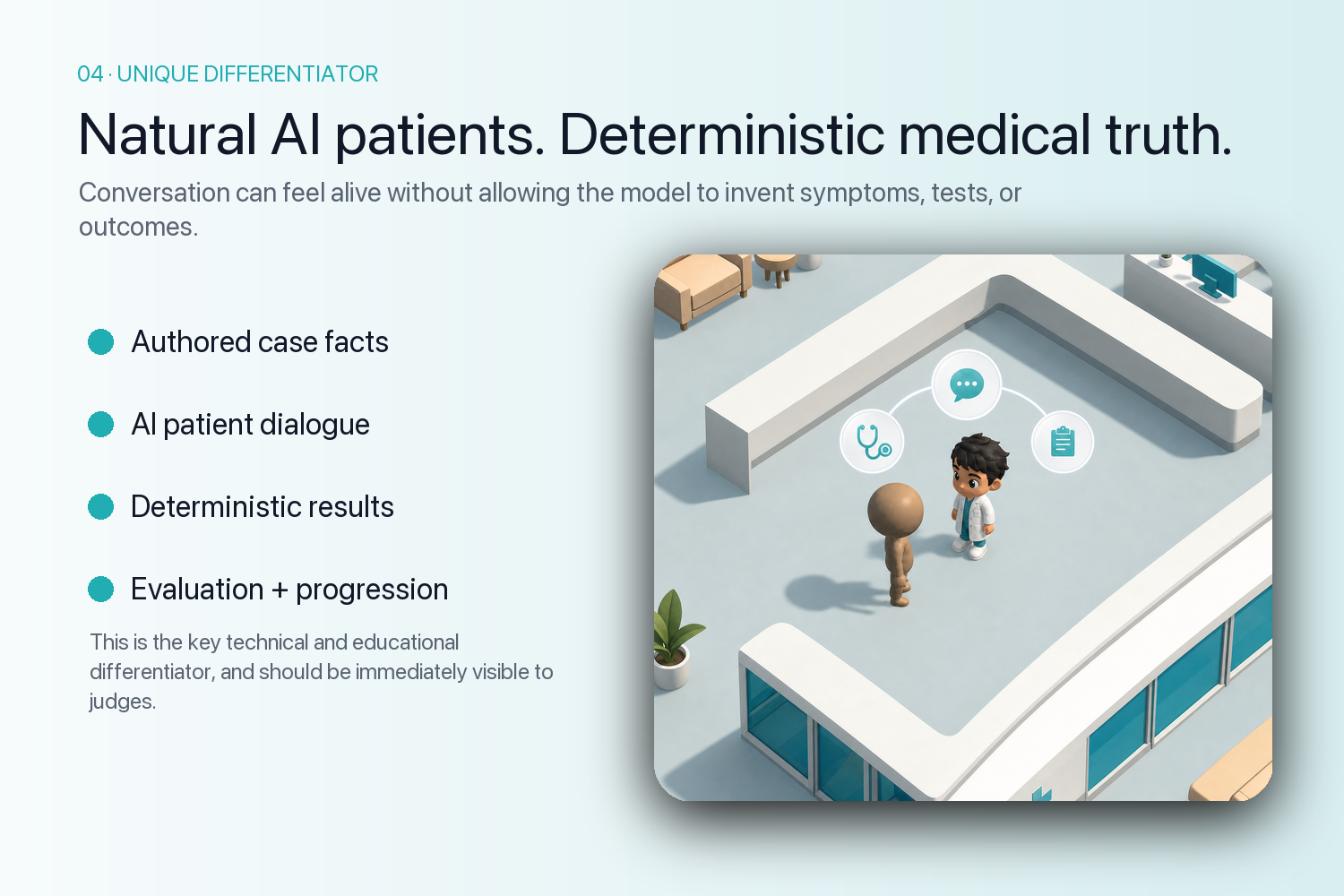
AI patients respond conversationally, but the medical truth remains controlled by the authored case. The AI can express a patient's personality, concerns, history, and reactions without inventing laboratory results or changing the underlying diagnosis.
The case engine currently contains ten authored clinical encounters. The submission demo focuses on one complete player-facing case from arrival through evaluation.
Players receive structured feedback, case outcomes, and progression rewards based on their clinical decisions.
How it works
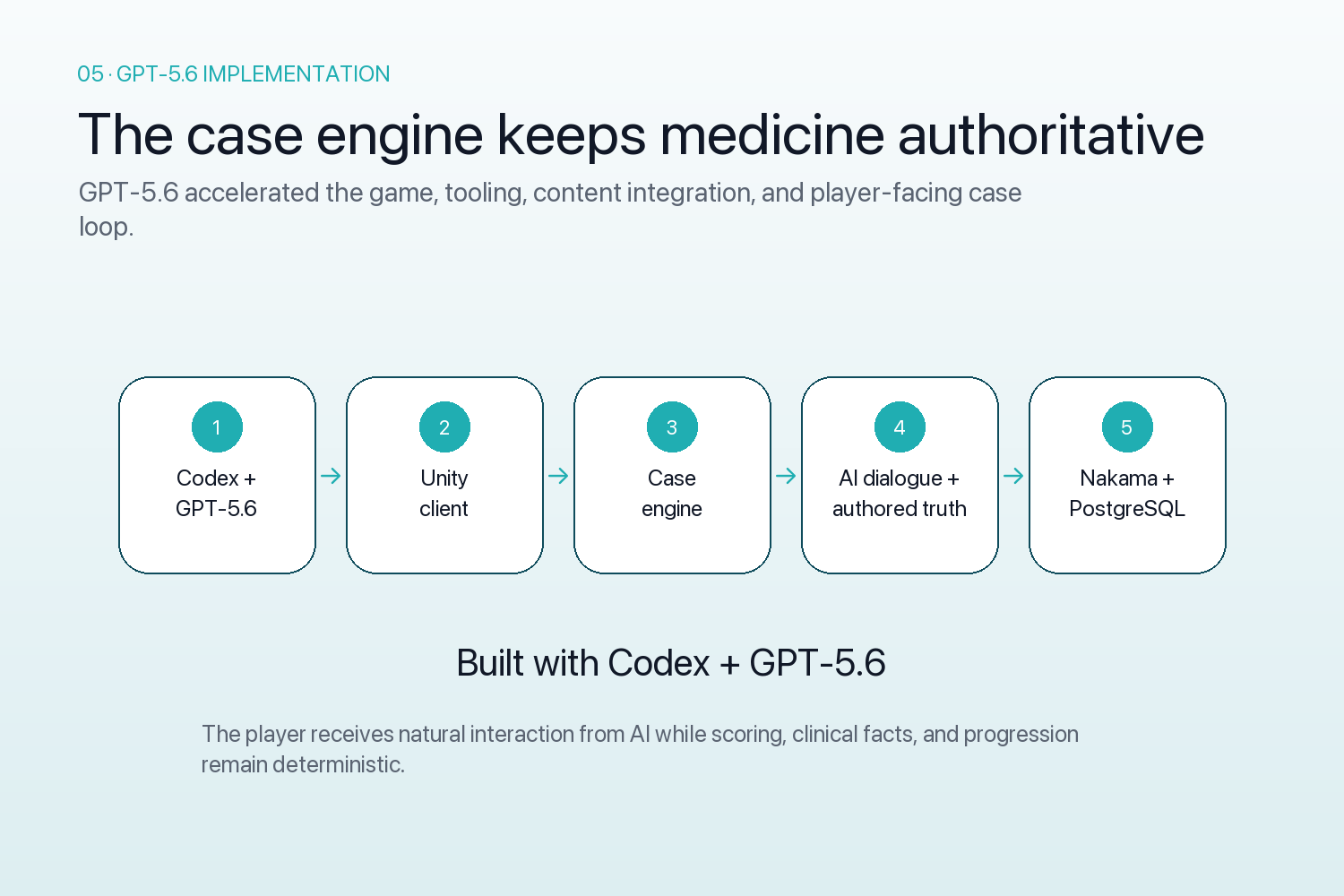
The player-facing experience is built in Unity with C#. The underlying case engine uses TypeScript and Zod for authored patients, records, encounter state, examinations, tests, assessment, treatment decisions, and evaluation.
Nakama and PostgreSQL provide the foundation for authoritative world services, identity, persistence, and future multiplayer interactions.
AI is responsible for natural patient conversation and intent. Deterministic gameplay systems remain responsible for clinical facts, available actions, test results, scoring, and progression.
Built with Codex and GPT-5.6
I used Codex and GPT-5.6 to build and debug the case loop, connect authored medical content to the player experience, test encounter outcomes, develop tooling, and accelerate the Unity and service integration.
The project documentation will identify the primary and supporting Codex sessions behind the submitted case.
Challenges and lessons
The most important challenge was balancing natural AI conversation with deterministic medical truth.
An AI patient should feel alive, but the model must not invent symptoms, results, or clinical facts merely to make the conversation interesting. Medipok separates dialogue generation from authoritative case state so both goals can coexist.
What's next
Next steps include additional specialties, collaborative and multiplayer cases, richer hospital environments, procedural simulations, and social progression for healthcare learners.
Built With
- c#
- codex
- gpt-5.6
- nakama
- openai-api
- postgresql
- typescript
- unity
- zod

Log in or sign up for Devpost to join the conversation.