Inspiration
Your medical history lives nowhere A folder at a clinic you stopped going to A pharmacy database A hospital portal you cannot log into Move cities change insurance or end up unconscious abroad and none of it follows you
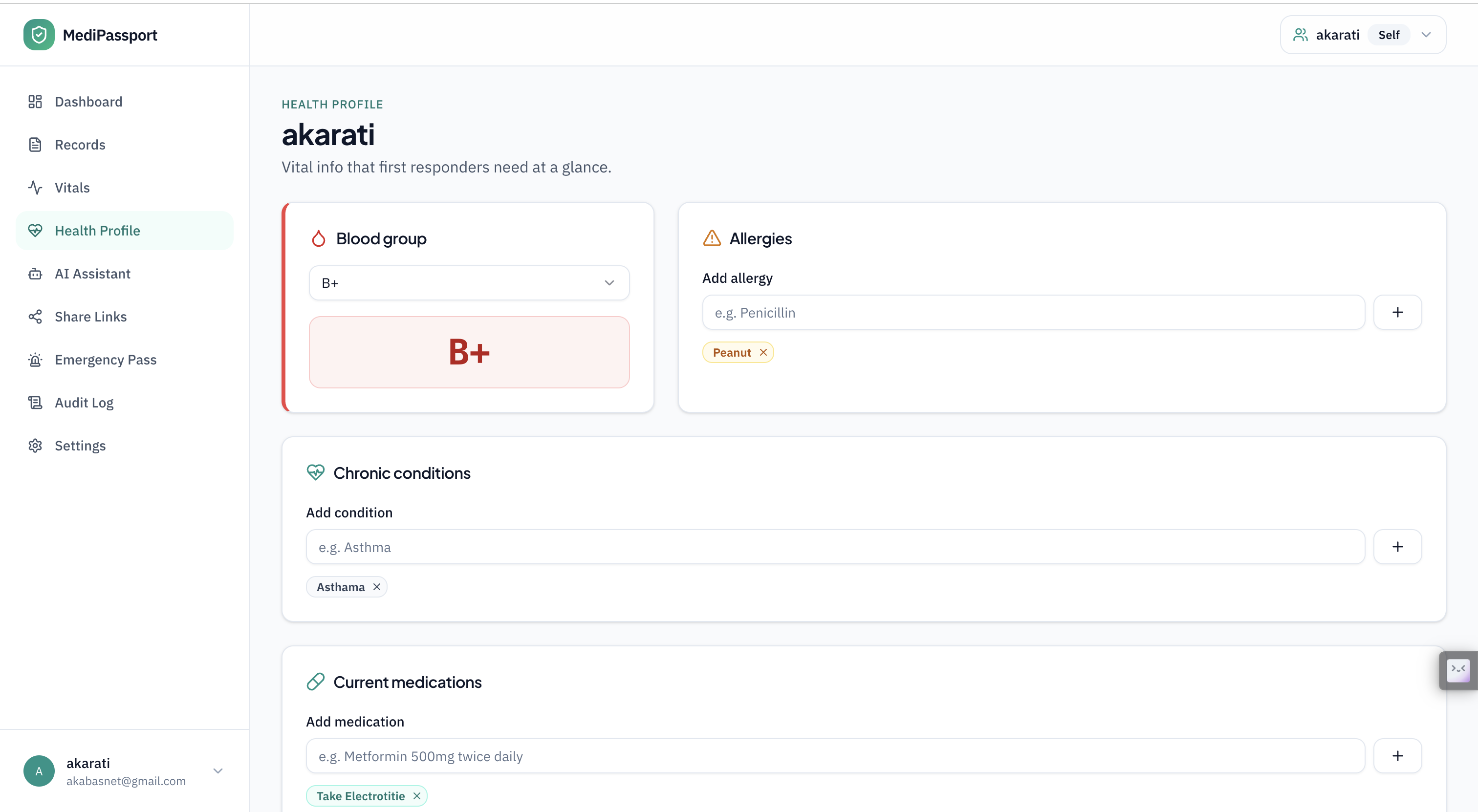
We wanted the passport model instead One document that belongs to you not to any institution and that any clinician anywhere can read and trust The failure we kept hearing about was emergency care A patient arrives unconscious nobody knows they are allergic to penicillin The information exists It is just not where it is needed
What it does
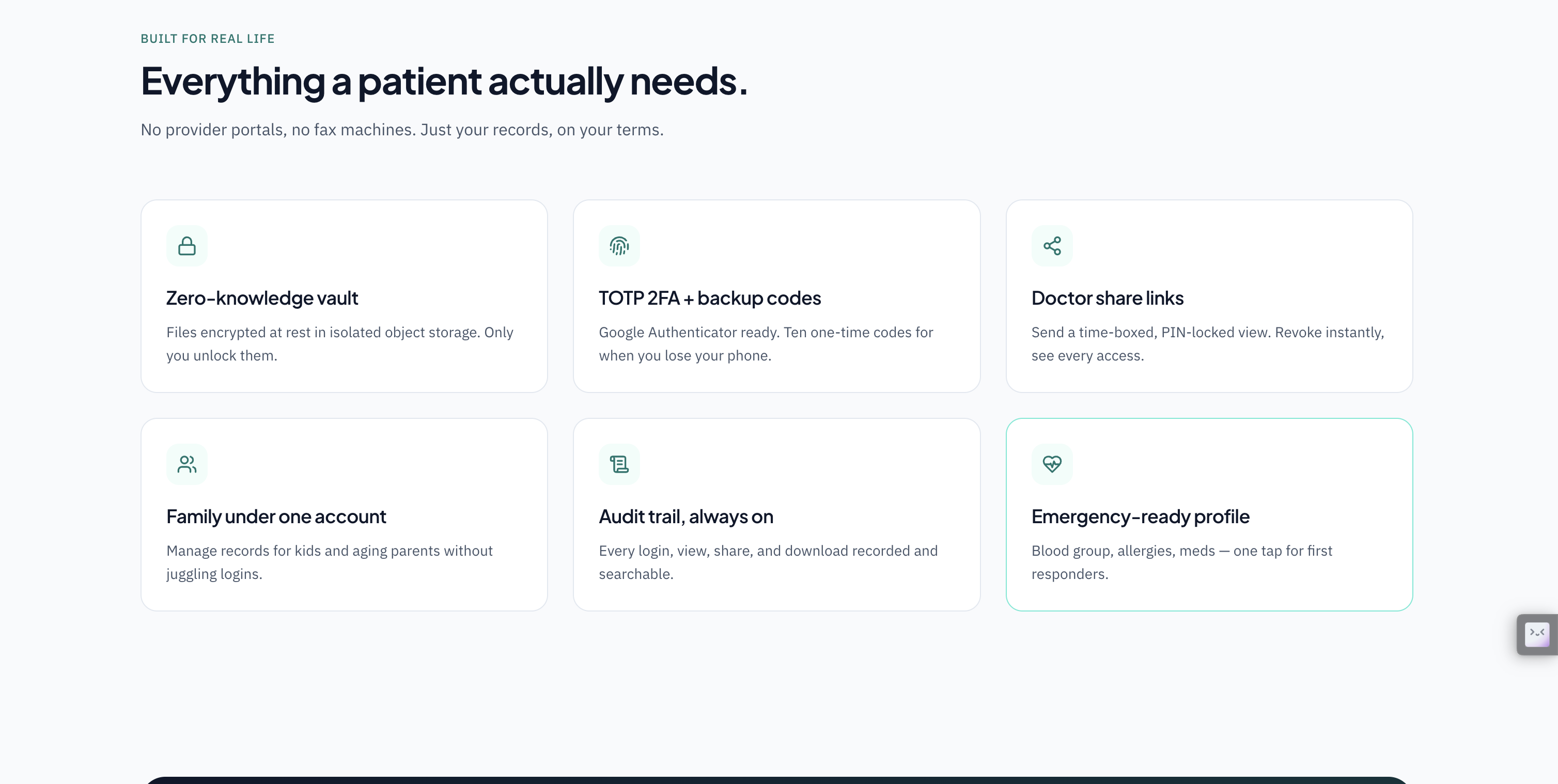
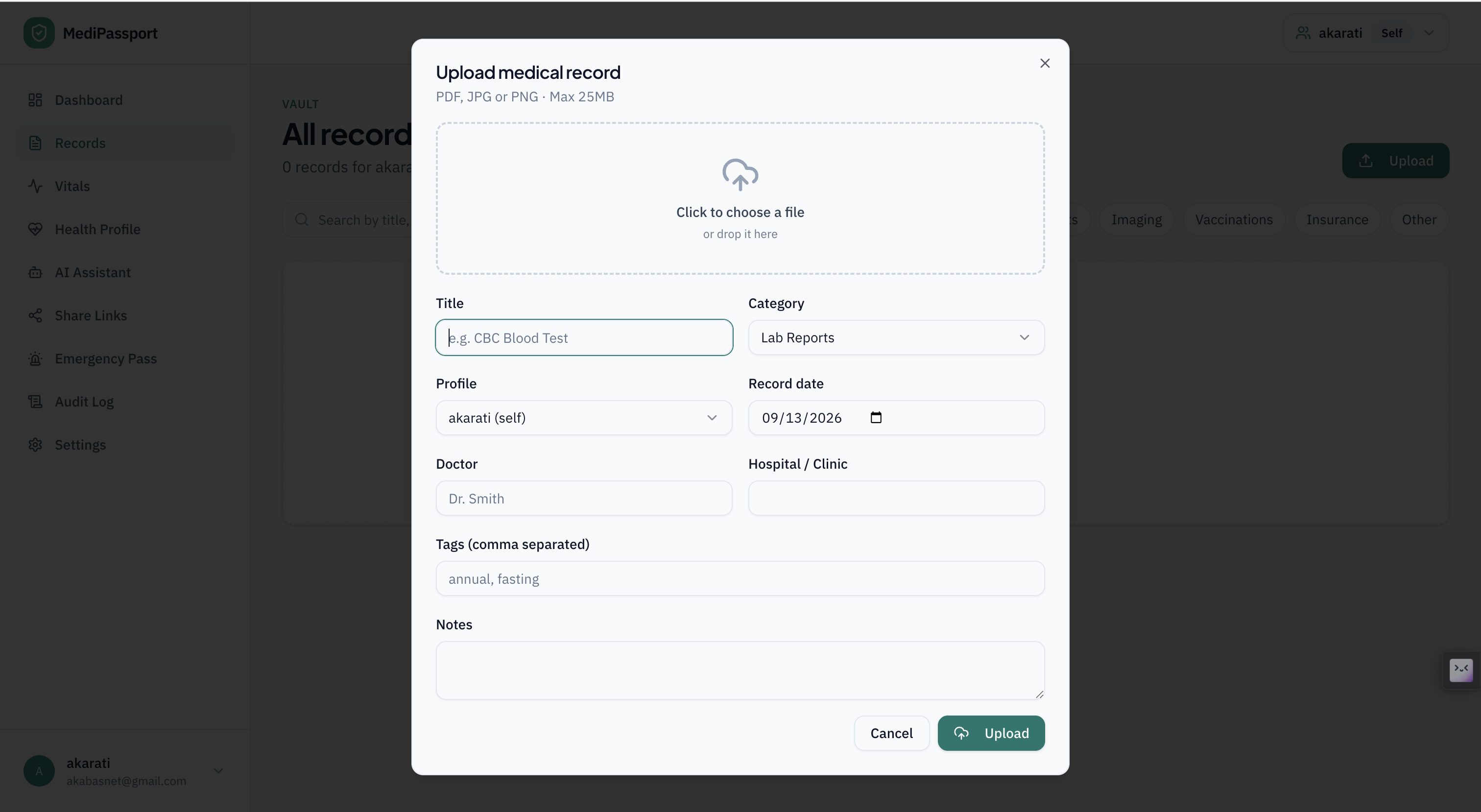
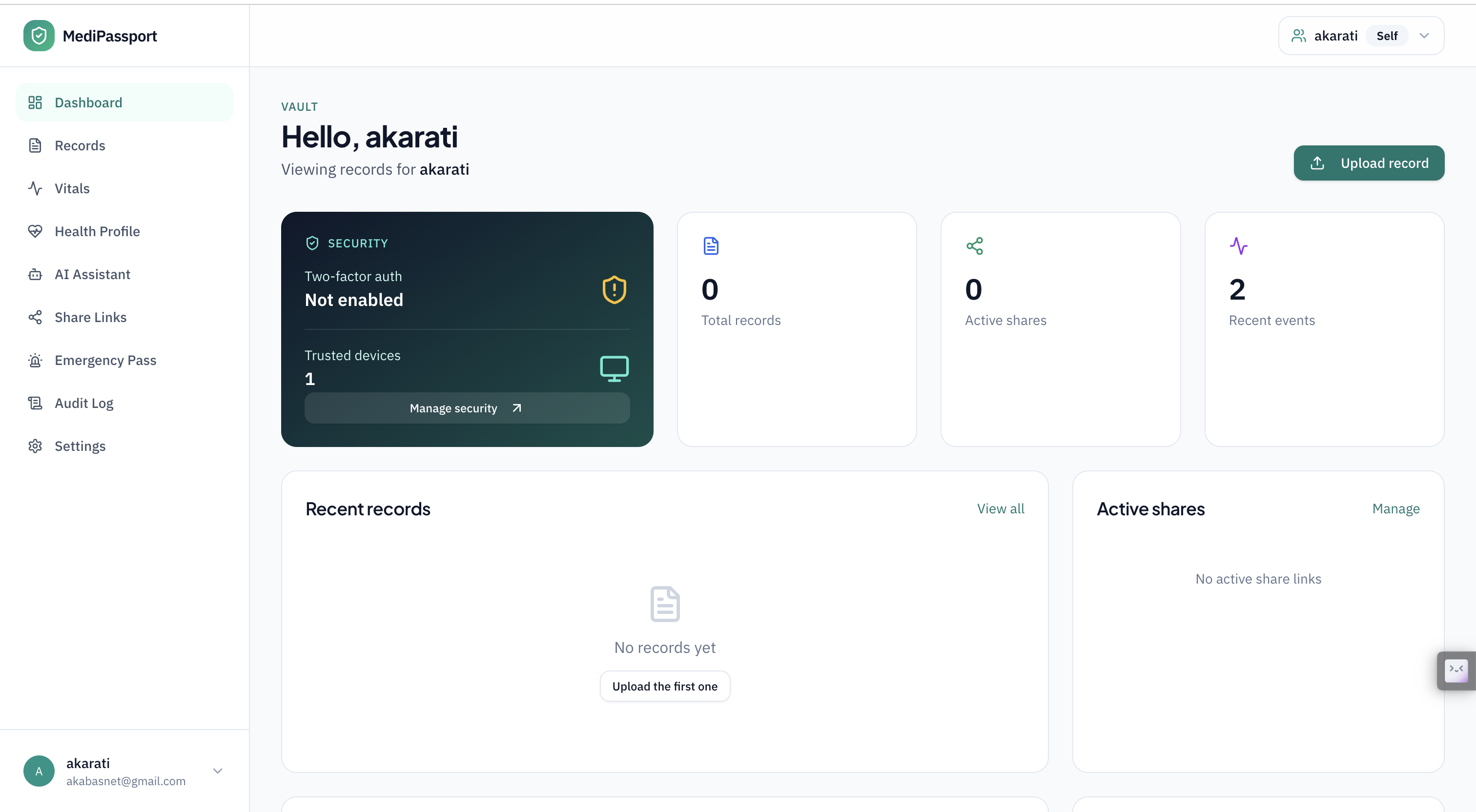
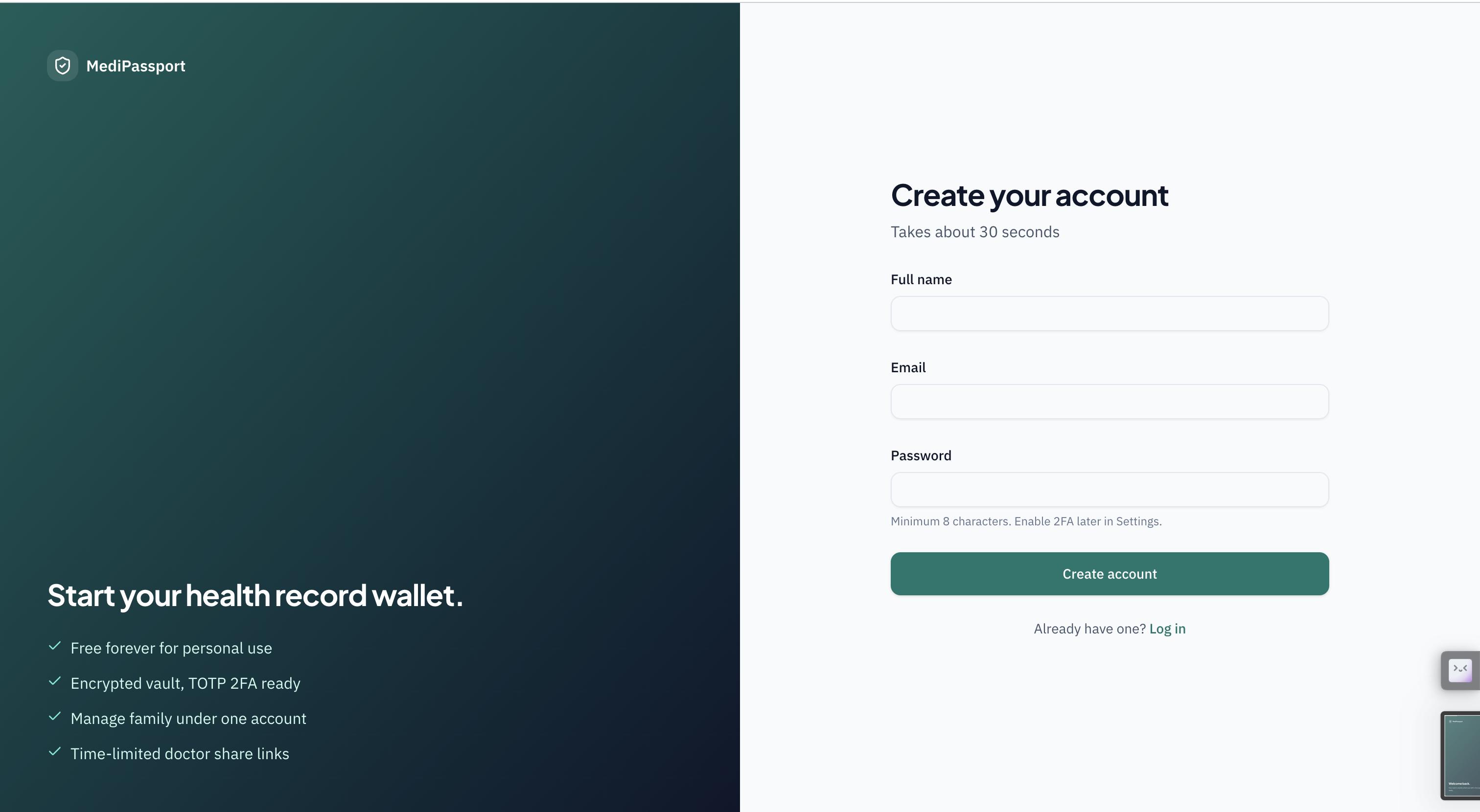
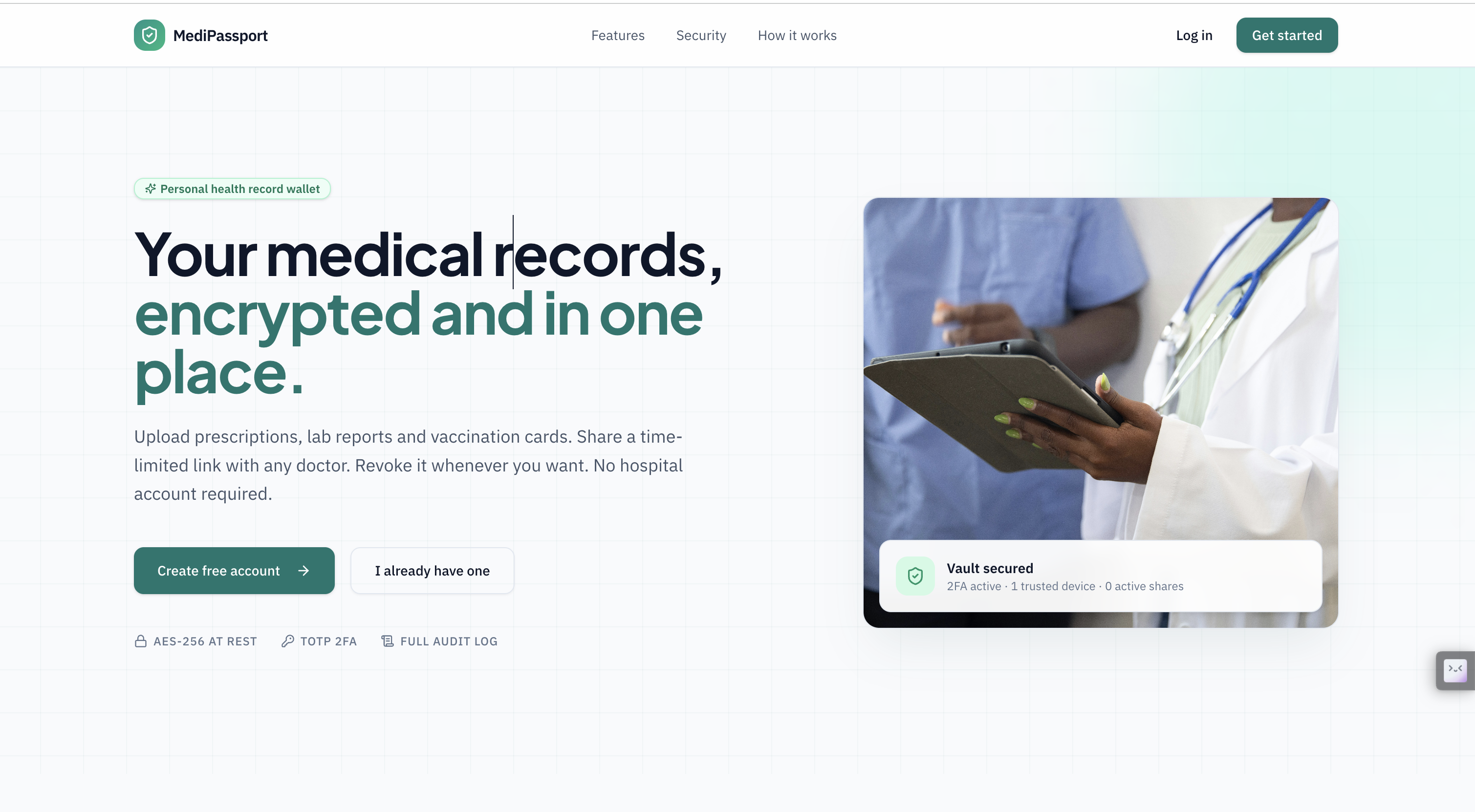
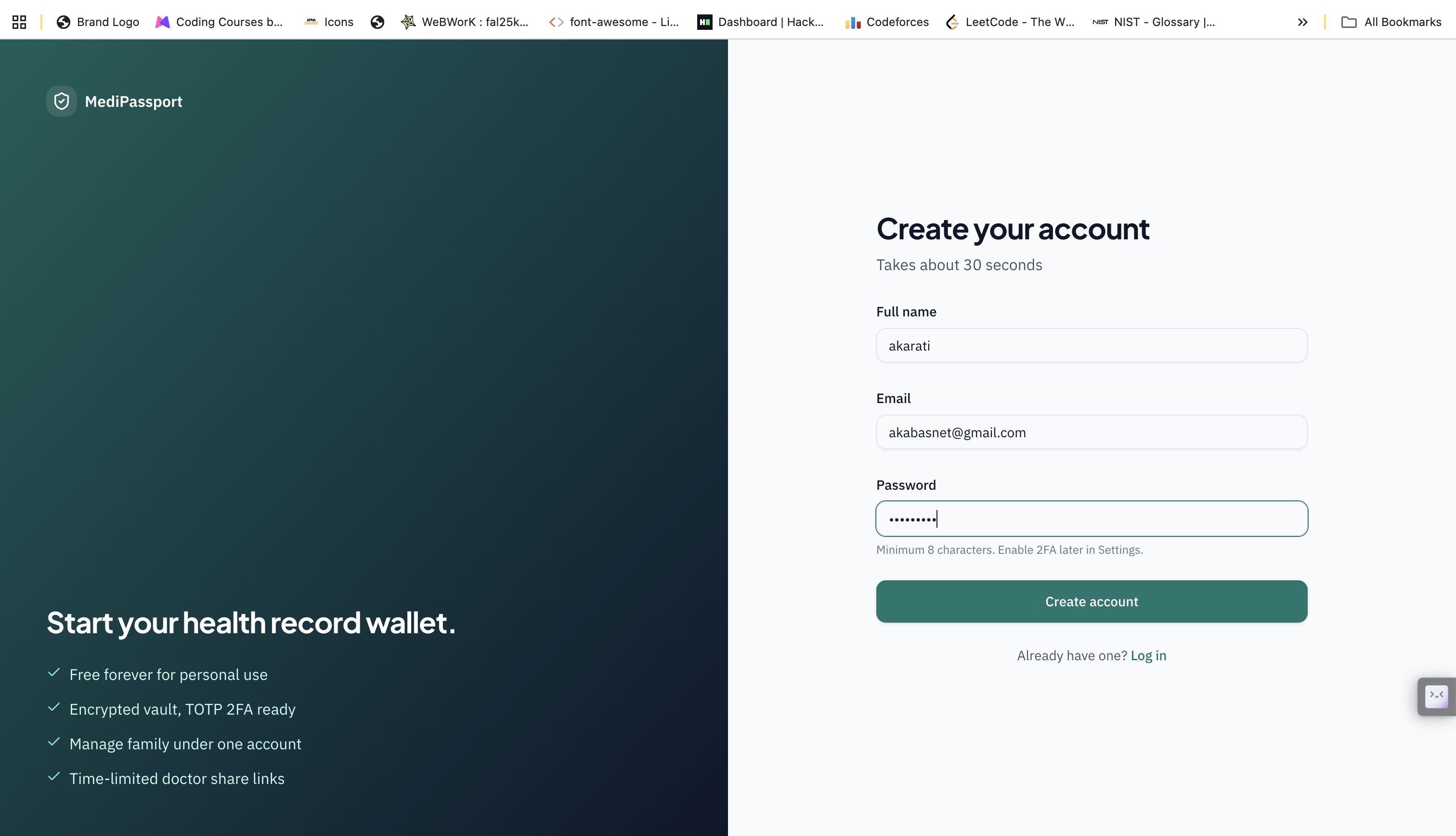
MediPassport is a lifelong medical record the patient carries and controls
One permanent ID that never changes even when email phone or password do
Full lifetime history every encounter medication lab result and body system reading with who where and when
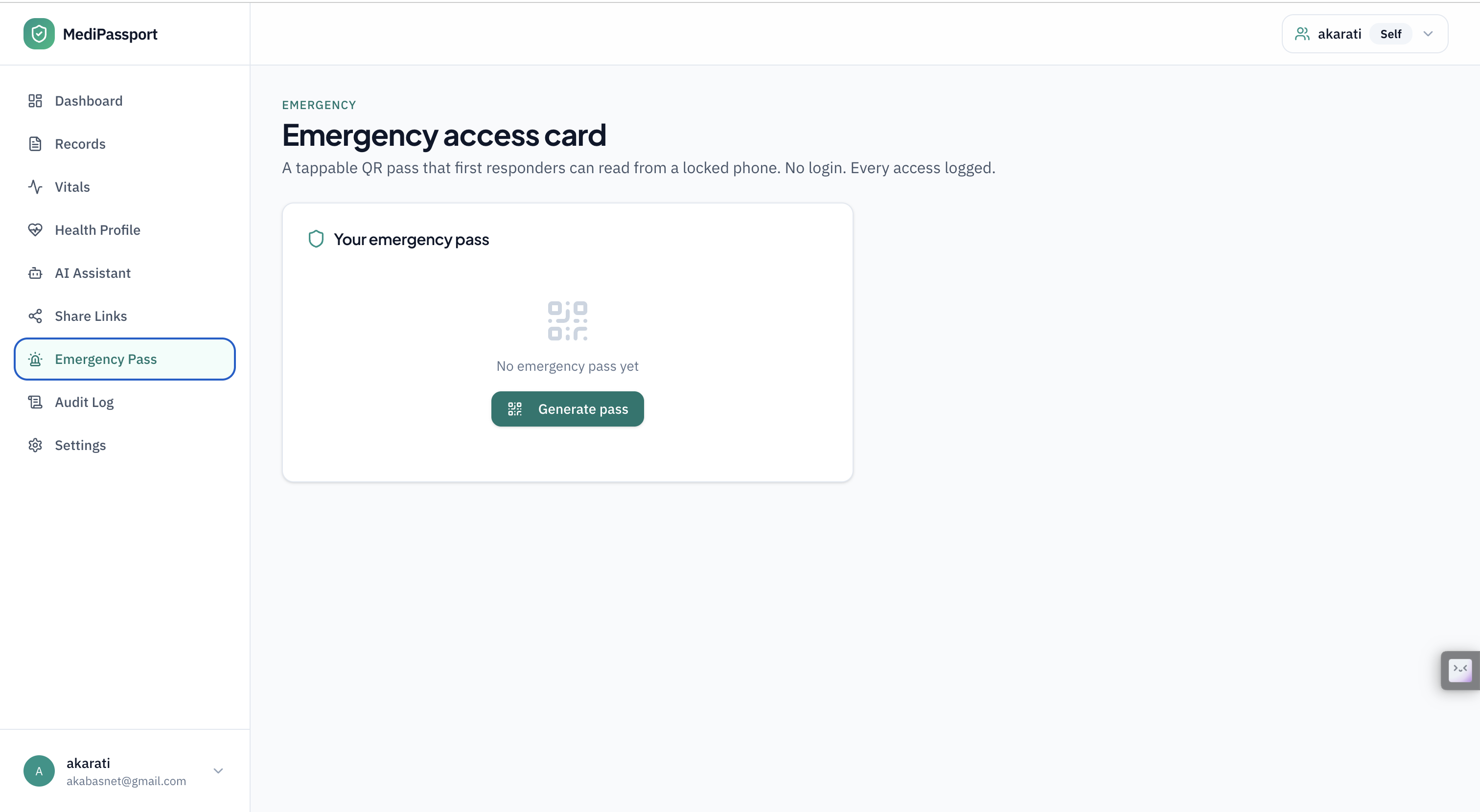
Emergency passport a signed offline verifiable snapshot any responder can scan from phone watch or card
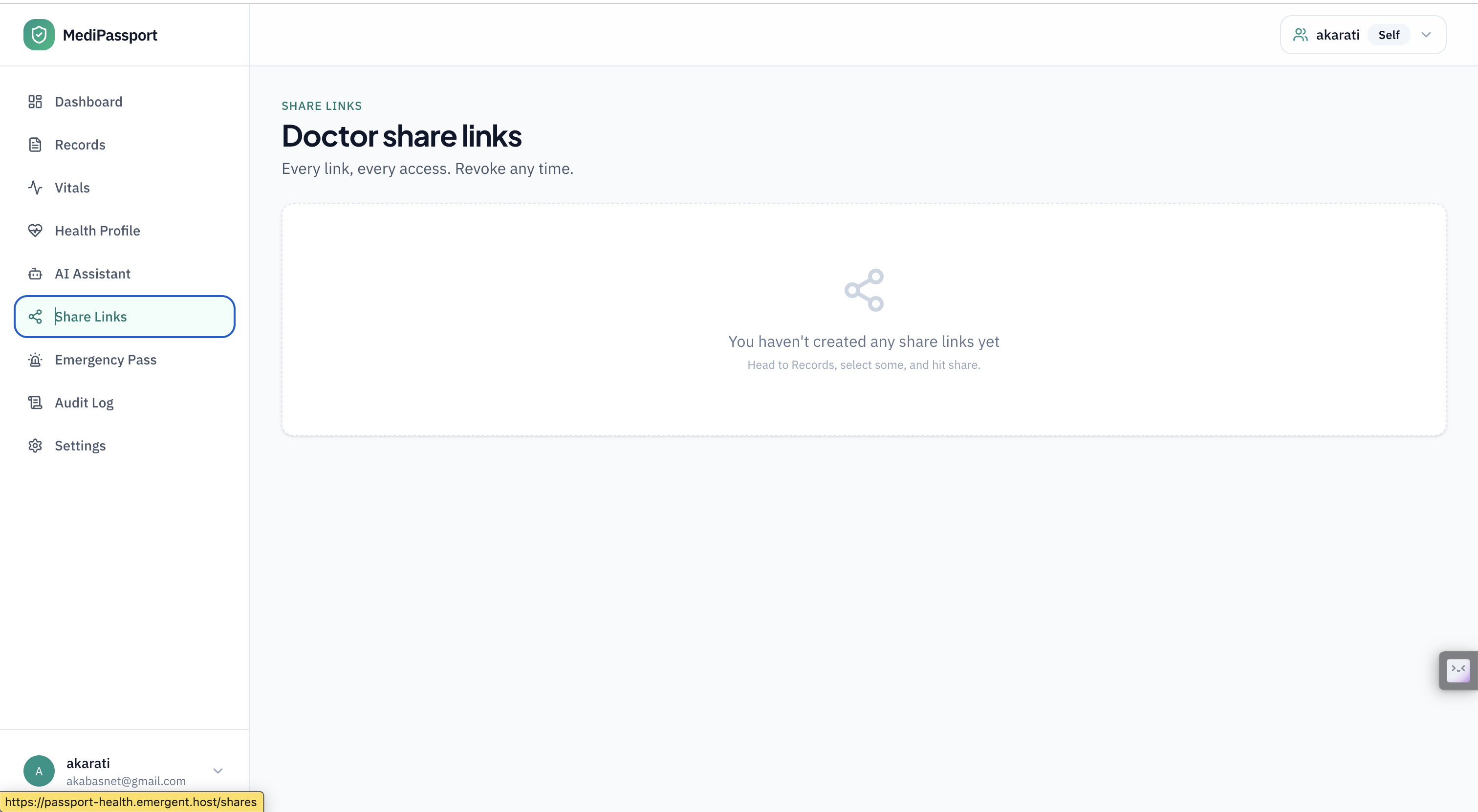
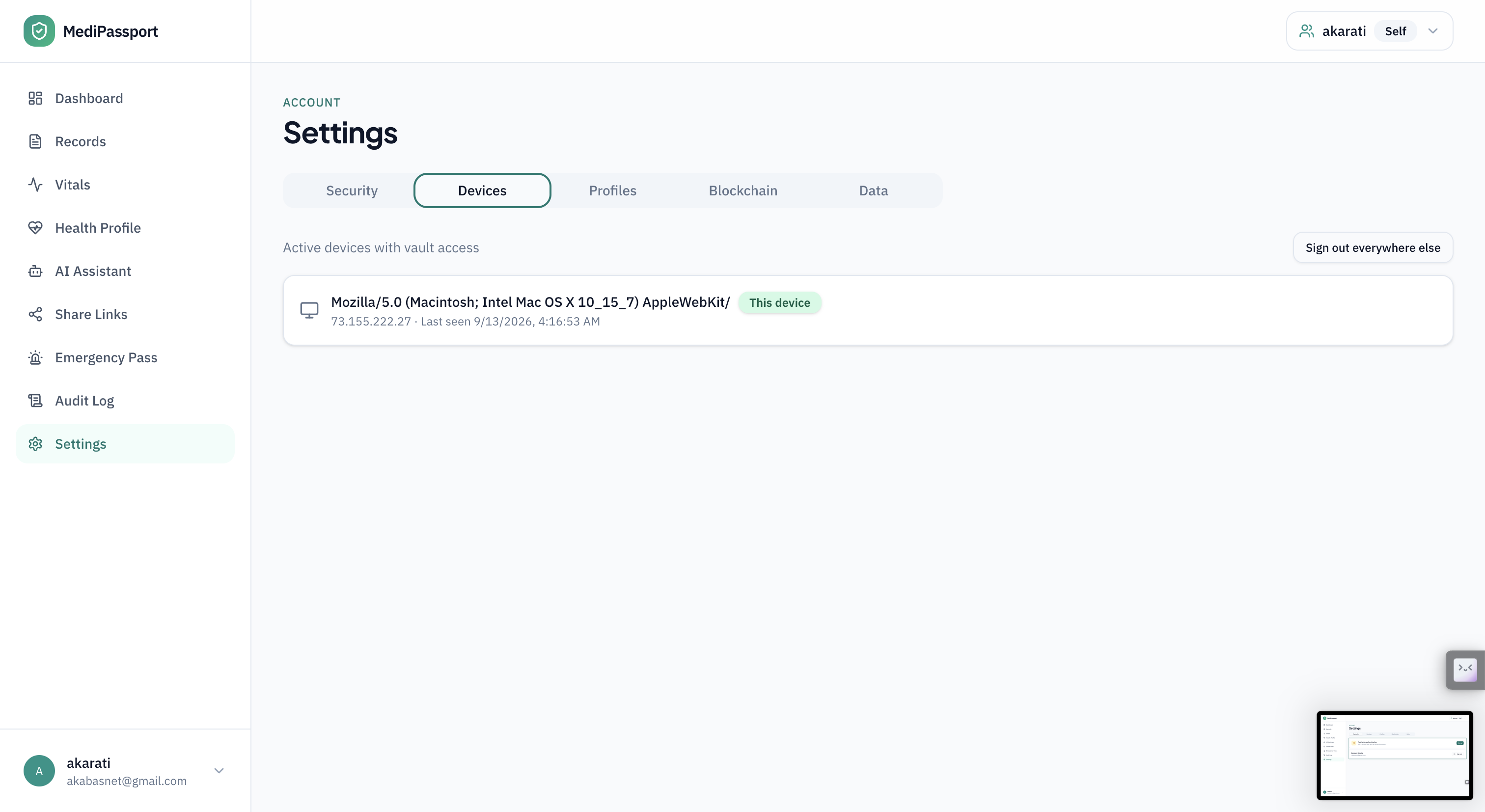
Real access control patients grant and revoke access every view is logged and the patient is notified
Clinical authorship only licensed clinicians write medical entries patients edit their own contacts
Two apps Two APIs One for patients one for medical staff
How we built it
Each patient gets a UUIDv7 at enrollment It is stored once and never written again
Records fall into three integrity classes that never mix
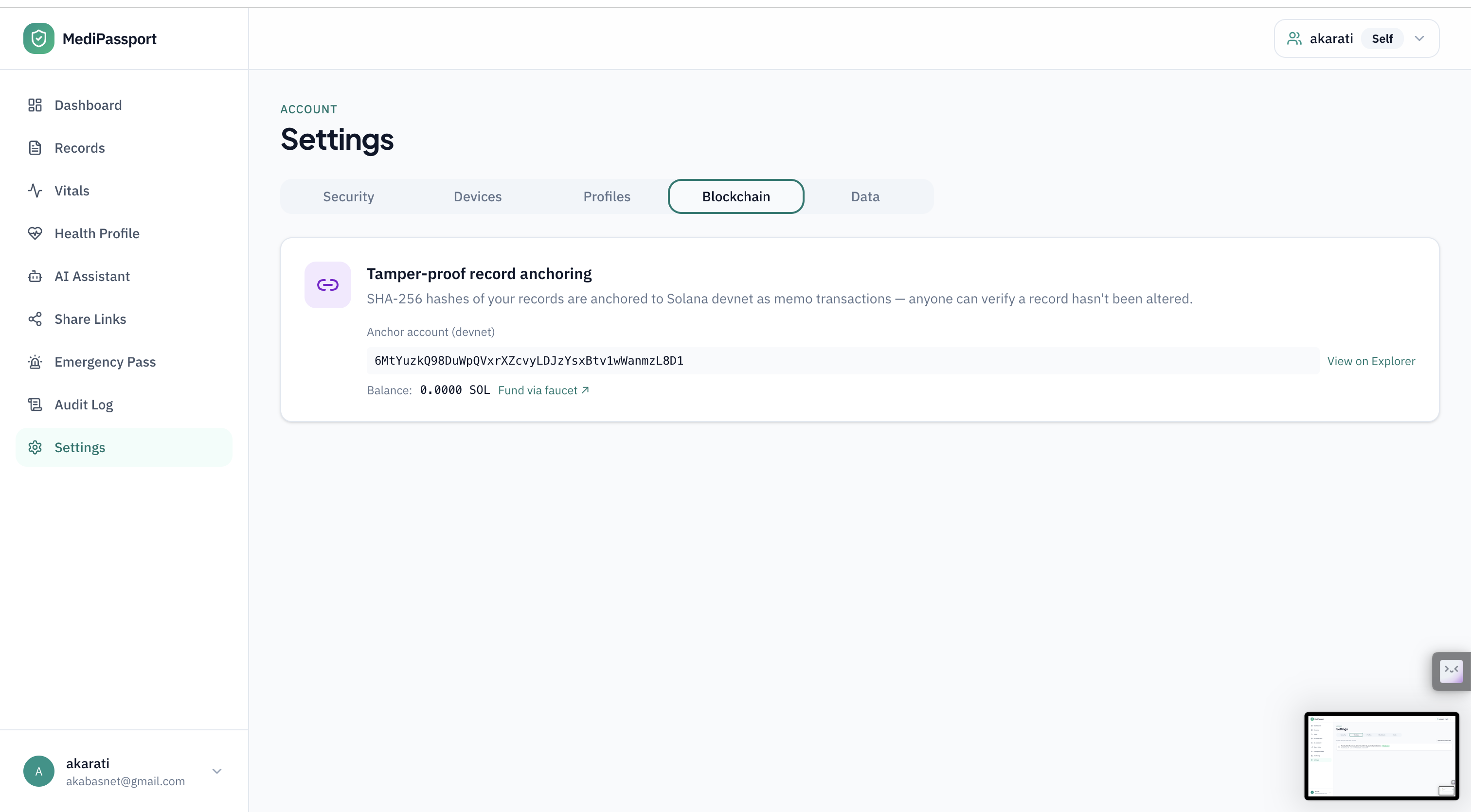
authored written by a licensed clinician hash chained and anchored to Solana
imported written by an external system source provenance preserved
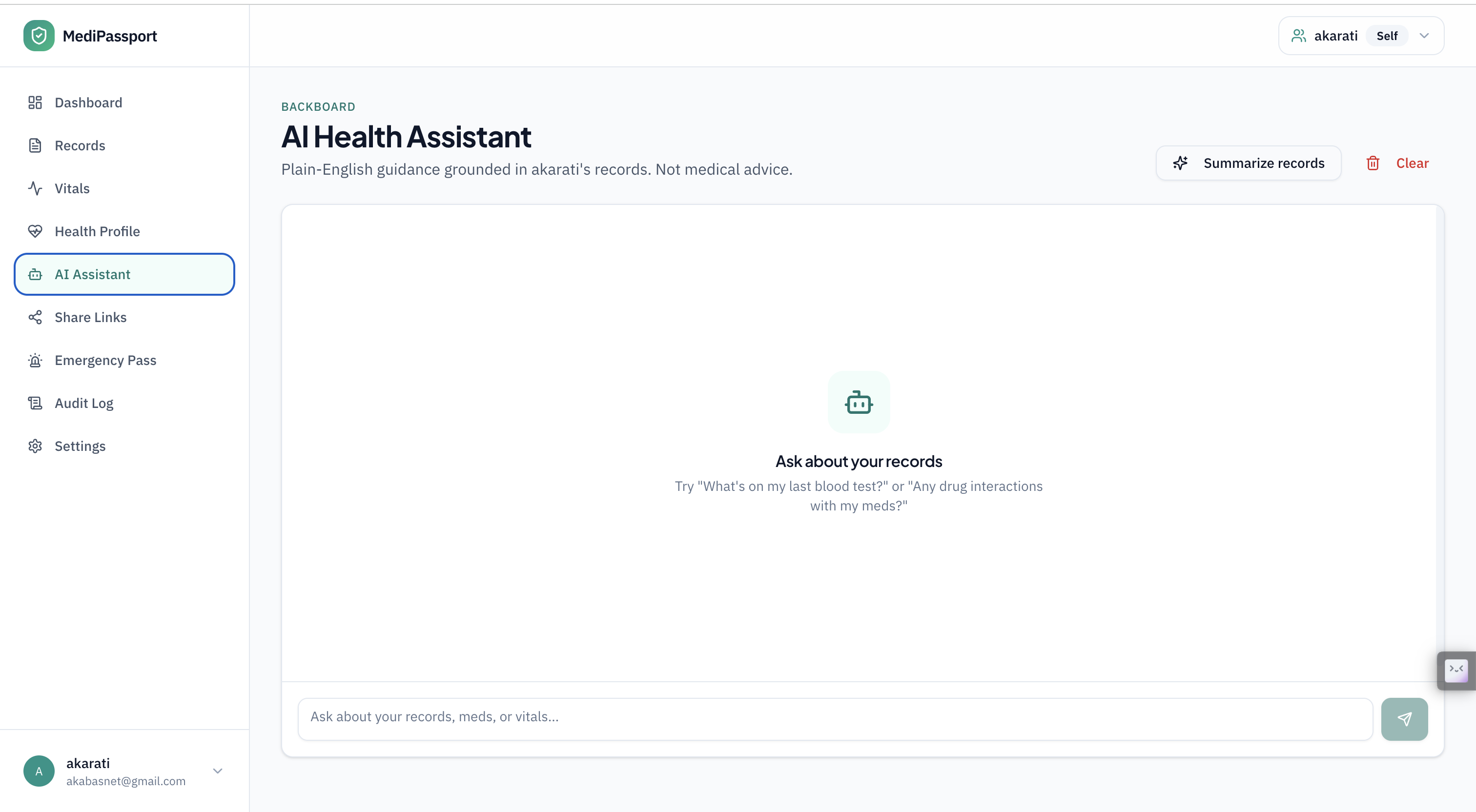
ai_summary written by Gemini or Backboard labeled as derived and stored separately
Clinician entries are chained
H n equals SHA 256 of H n minus 1 concatenated with h n concatenated with p
Only the 64 character hash goes on chain No PHI ever touches Solana Anchoring is async writes return in under 100 ms and the anchor confirms in the background
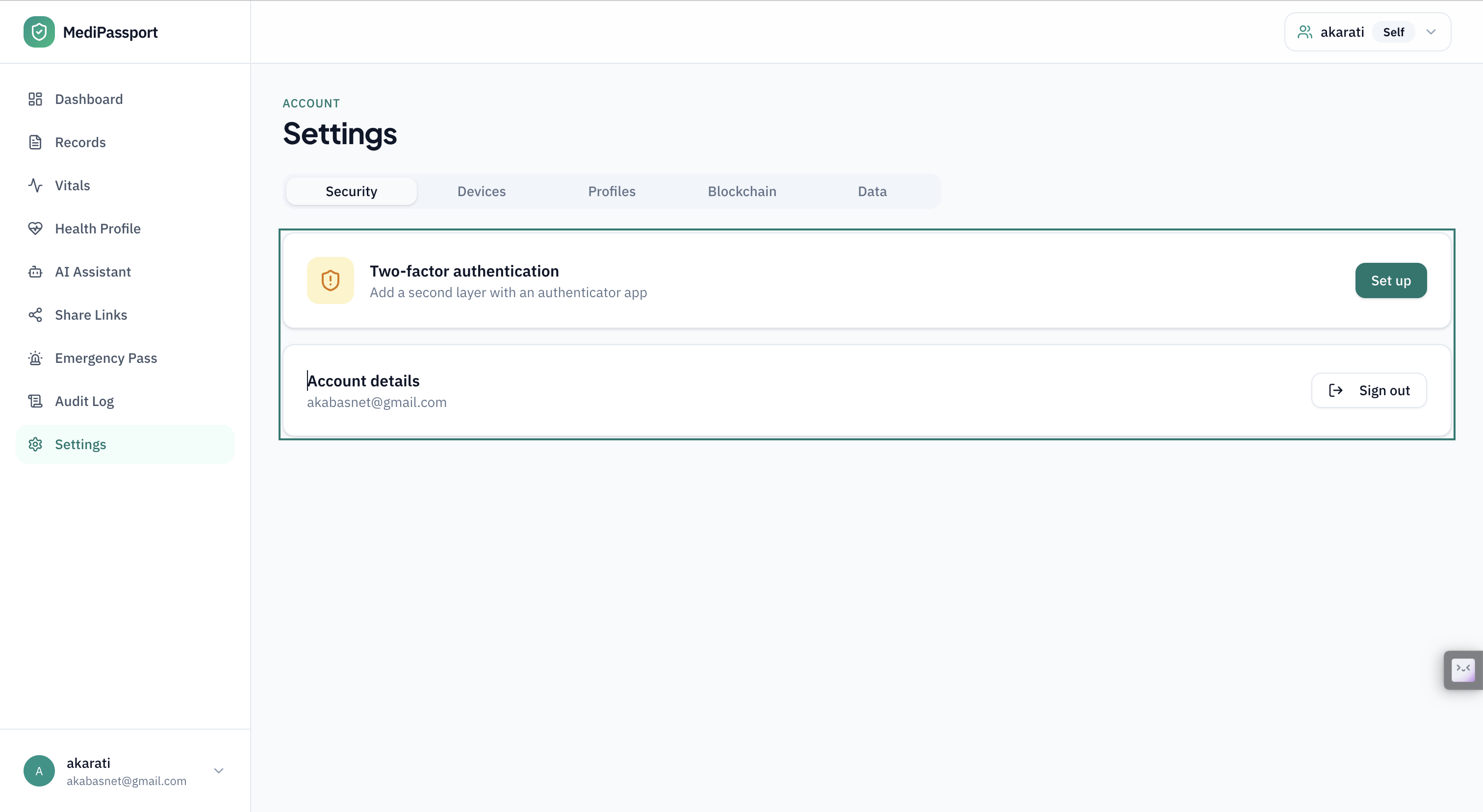
Every PHI field is AES 256 GCM encrypted at rest Passwords use Argon2id The backend runs a 12 stage middleware pipeline where request scope is set from the verified JWT never from a URL or body Flutter frontend one codebase for iOS and Android Presage turns the camera into a vitals sensor ElevenLabs reads the record aloud Hosted on Vultr under a signed BAA FHIR store on Medplum domain through GoDaddy Registry
Challenges
Break glass access Emergency speed and privacy pull in opposite directions We made it logged and notified rather than blocked A responder can open the snapshot but the access is time limited justified and the patient is notified within 60 seconds Transparency is the control not denial
Keeping AI out of the trust path Our first diagram had Gemini inline between the store and the anchor Redrawing it as a branch that reads from the store and writes to a separate labeled table fixed both the architecture and the story
Two databases one patient FHIR resources and time series vitals are different shapes Medplum holds the graph Tiger Data holds the measurements joined by patient UUID Keeping them consistent without a distributed transaction was the hardest part
What we learned
Integrity classes are architecture not a feature Once authored imported and ai_summary became separate species the trust story collapsed into one image three rows three colors
Request scope should never come from the request We caught three places where a patient ID was read from a URL The fix was to make it structurally impossible
Built with Flutter Node js Fastify PostgreSQL Medplum Tiger Data Solana Presage Gemini Backboard ElevenLabs Vultr Argon2id AES 256 GCM
Working prototype Authentication permissions and the integrity chain all function External services display real connection state
Built With
- aes-256-gcm
- argon2id
- backboard
- dart
- elevenlabs
- fastify
- flutter
- gemini
- godaddy-registry
- medplum-(fhir-r4)
- node.js
- postgresql
- presage-smartspectra
- smart-health-cards
- solana-web3.js
- sqlcipher
- tiger-data
- typescript
- vultr

Log in or sign up for Devpost to join the conversation.