-
-
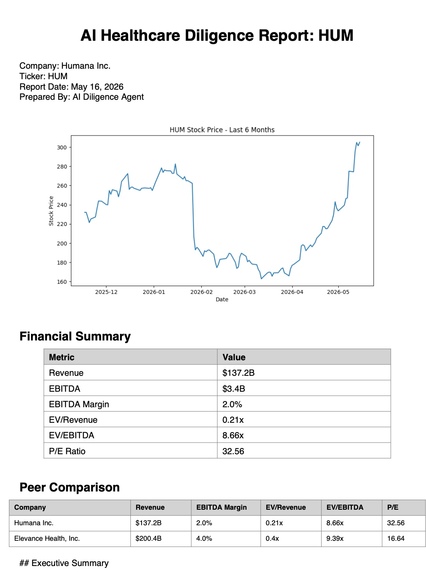
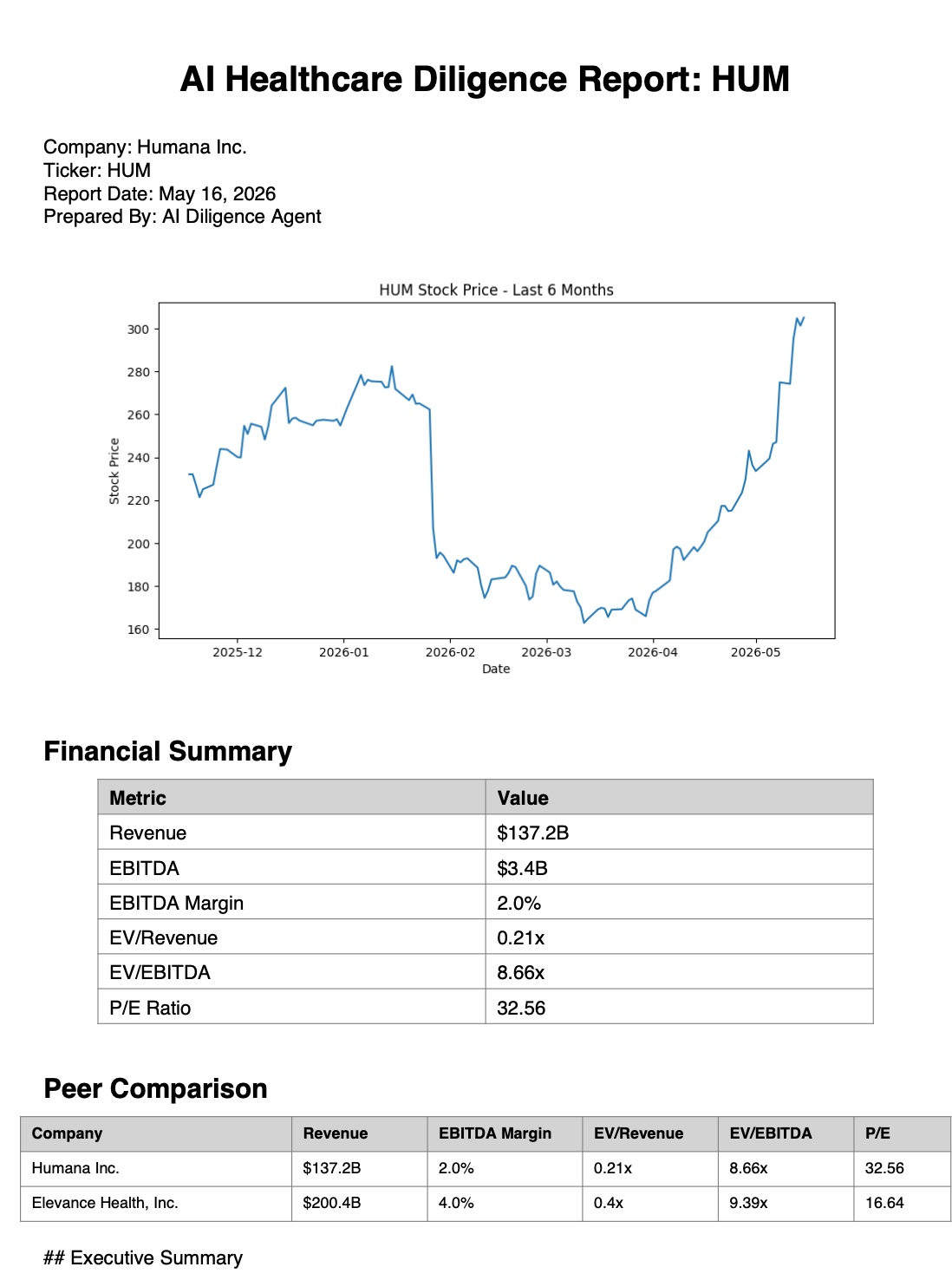
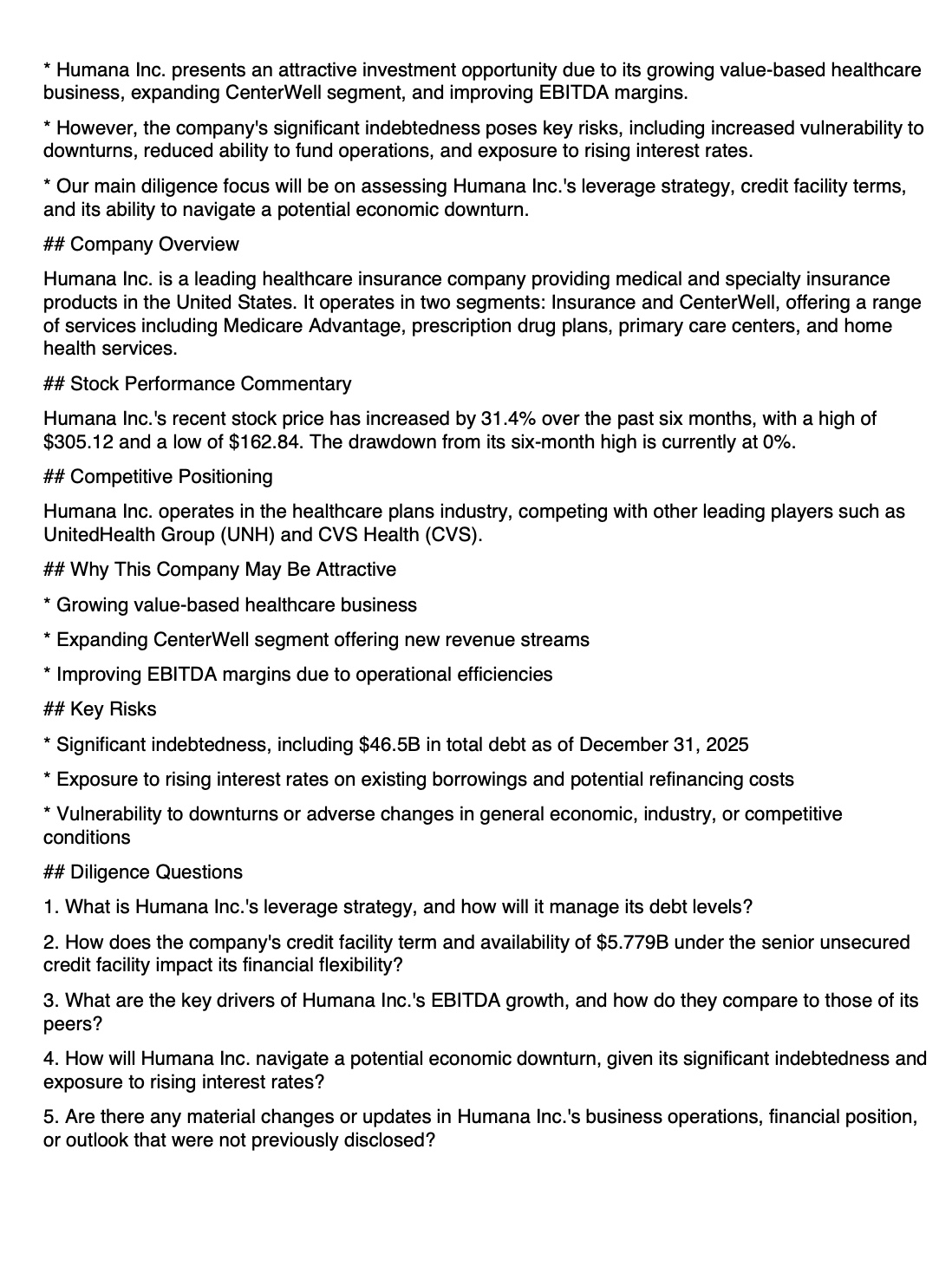
AI-generated healthcare diligence report with executive summary and key investment insights.
-
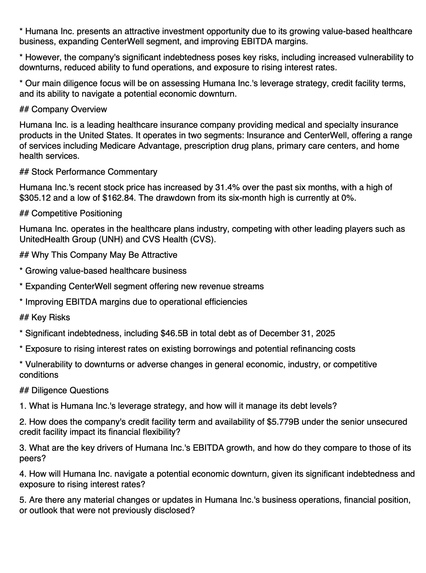
Automated extraction of operational, regulatory, and reimbursement-related healthcare risks.
-
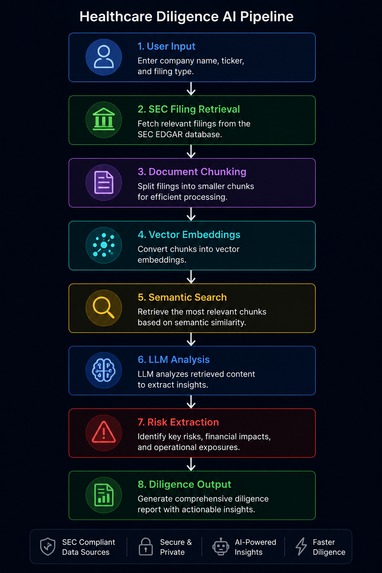
Retrieval-augmented AI workflow powering SEC filing analysis and diligence generation.
Inspiration
MedIntel AI was inspired by how time-consuming and fragmented healthcare diligence can be. Analysts and investors often spend hours digging through SEC filings, identifying reimbursement and regulatory risks, comparing competitors, and trying to turn all of that into actionable insights.
I wanted to explore how AI agents and retrieval systems could help automate parts of that workflow while still keeping the analysis structured and useful. Since healthcare is such a regulation-heavy and operationally complex industry, it felt like the perfect space to test AI-powered diligence workflows.
What it does
MedIntel AI is an AI-powered healthcare diligence platform that helps automate parts of the investment and research process for healthcare companies.
The platform can:
- Retrieve and analyze SEC filings
- Extract operational and regulatory risks
- Generate AI-powered summaries and insights
- Support contextual Q&A over filings using RAG workflows
- Organize information into a more streamlined diligence workflow
The goal was to create something that feels closer to an actual diligence copilot rather than just a generic chatbot.
How we built it
The project was built using:
- Python
- Large Language Models (LLMs)
- Retrieval-Augmented Generation (RAG)
- SEC EDGAR data retrieval
- Vector embeddings and semantic search
- Streamlit for the interface and workflow visualization
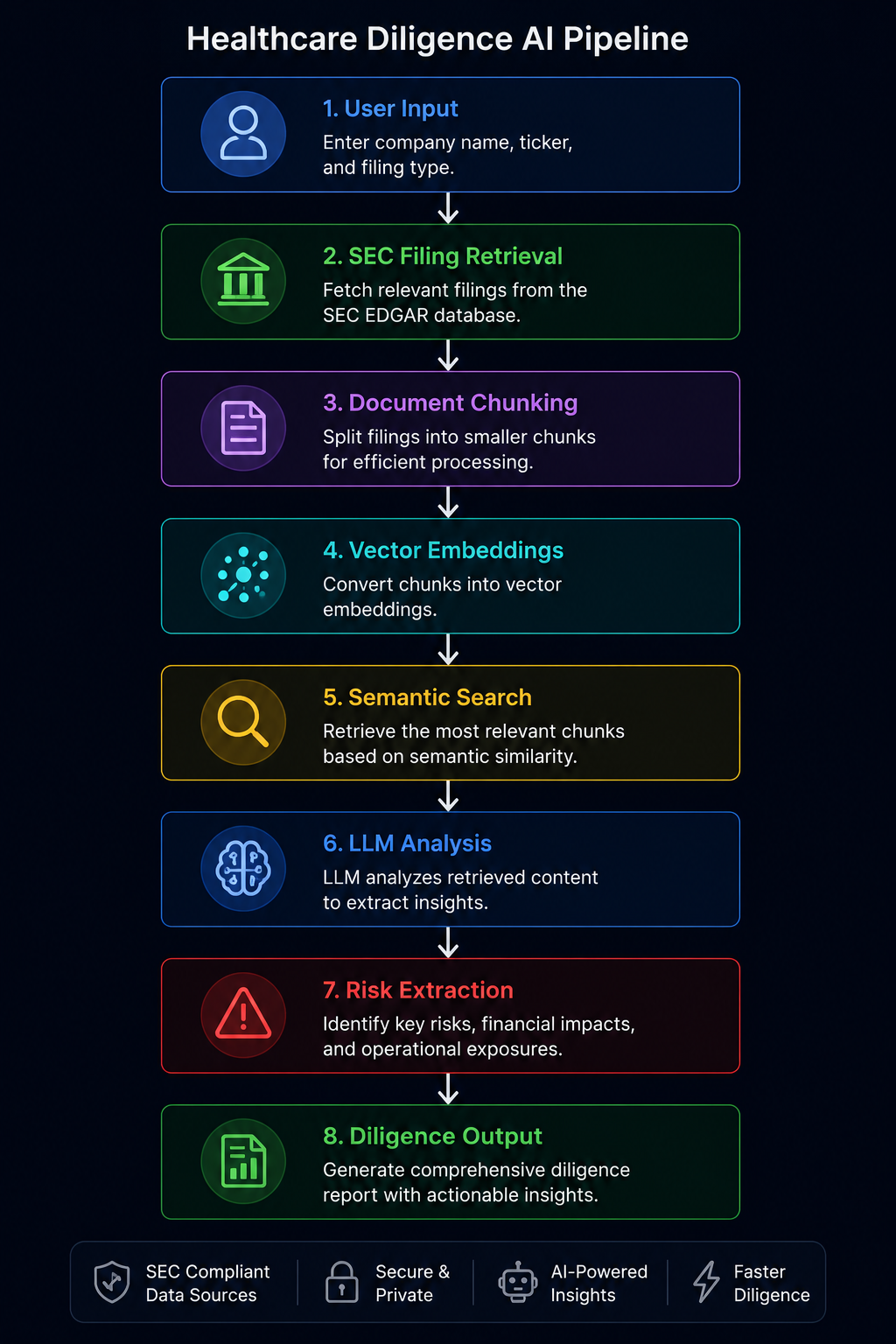
The workflow starts by retrieving publicly available filings and disclosures. Those documents are then chunked, embedded, and indexed into a vector database so the platform can retrieve contextually relevant sections during analysis.
From there, LLMs synthesize information, summarize risks, and answer diligence-focused questions based on the retrieved filing data.
Conceptually, the workflow looks like:
User Input → SEC Filing Retrieval → Document Chunking → Vector Embeddings → Semantic Search → LLM Analysis → Risk Extraction → Diligence Output
Challenges we ran into
One of the biggest challenges was handling the complexity of healthcare filings. SEC documents are long, dense, and often inconsistent in structure, which made retrieval accuracy and context management difficult.
Another challenge was balancing retrieval quality with model context limitations. A lot of time went into improving chunking strategies, prompt engineering, and retrieval workflows to improve relevance and reduce hallucinations.
I also spent a lot of time focusing on workflow and presentation because I wanted the platform to feel specialized and productized rather than just another AI demo project.
Accomplishments that we're proud of
One of the biggest accomplishments was building a workflow that could turn large amounts of unstructured healthcare filing data into organized, diligence-style insights.
I’m also proud of creating something that feels more like an enterprise workflow than a simple chatbot. The platform combines retrieval systems, AI reasoning, and healthcare-focused analysis into a cleaner diligence experience.
Another major accomplishment was building a project that connects healthcare, finance, and AI into a single workflow with real-world applications.
What we learned
This project taught me a lot about how important workflow design and information retrieval are in AI systems, especially in document-heavy industries like healthcare and finance.
I also learned that building a useful AI platform is not just about model outputs. Structuring information clearly, retrieving the right context, and designing a clean workflow are just as important as the underlying models themselves.
What's next for MedIntel AI
Future versions of MedIntel AI will focus on:
Automated diligence memo generation Competitor benchmarking dashboards Risk scoring systems Multi-document comparative analysis Expanded healthcare reimbursement intelligence More advanced multi-agent workflows
The long-term goal is to continue building MedIntel AI into a more complete healthcare intelligence and diligence platform capable of supporting investment and strategic analysis workflows more efficiently.

Log in or sign up for Devpost to join the conversation.