-
-
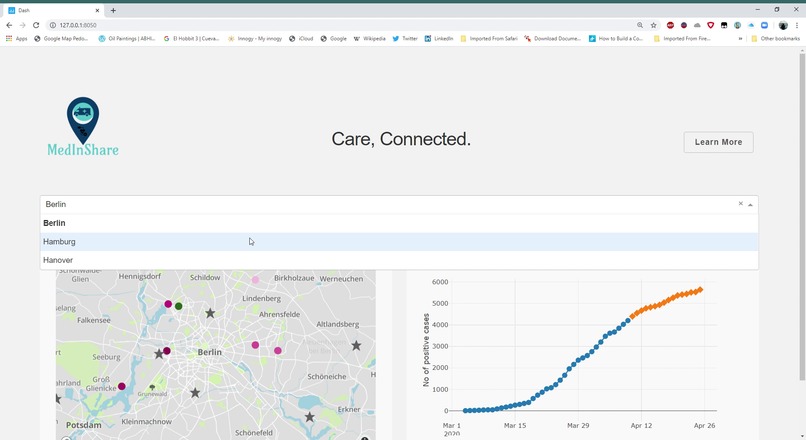
Platform Demo Region Selection
-
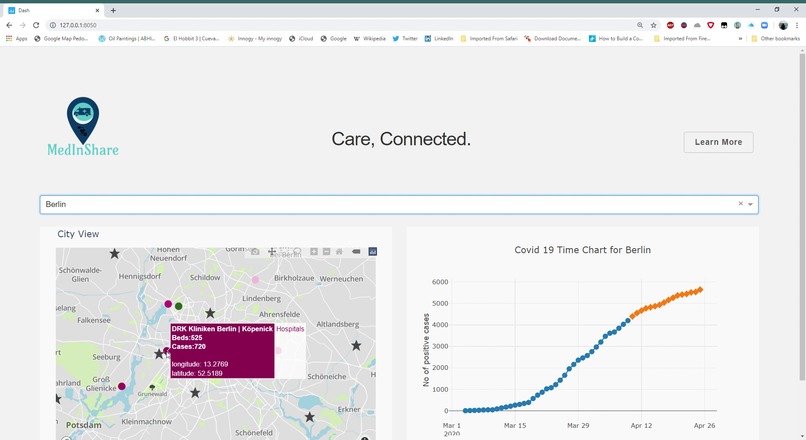
Platform Demo Hospital Dashboard
-
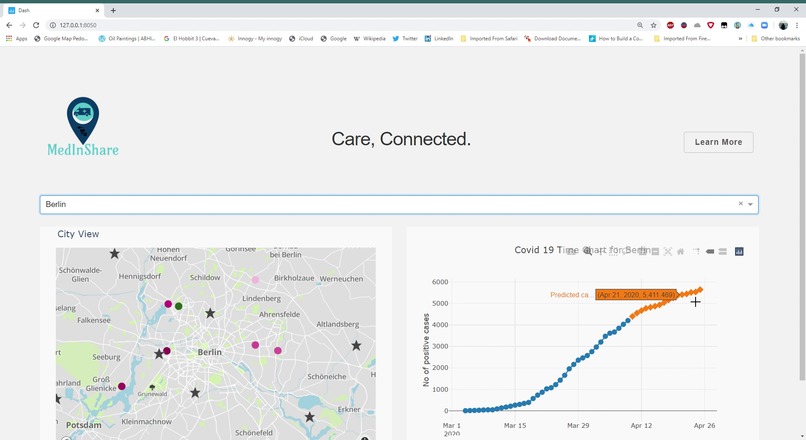
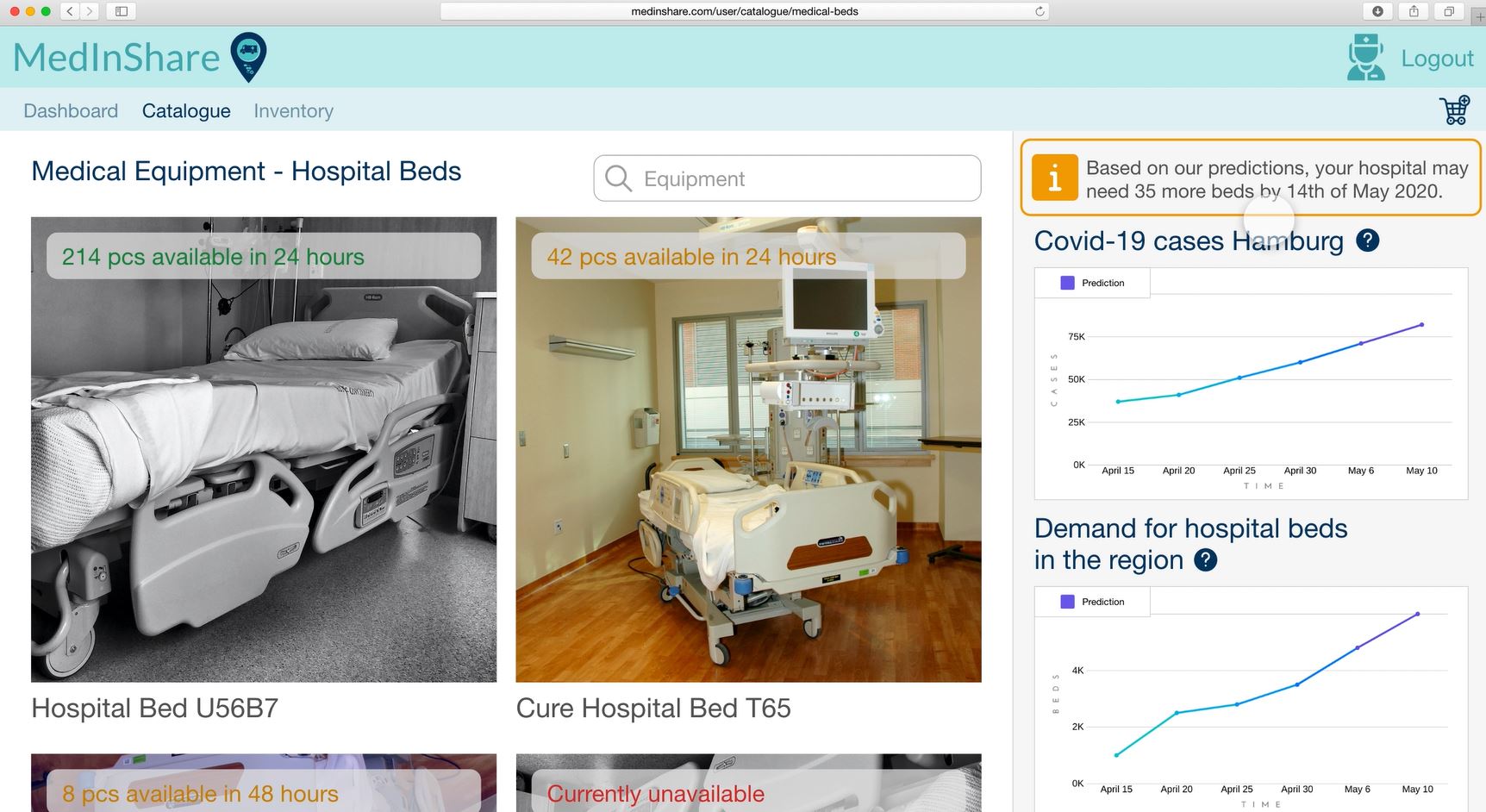
Platform Demo Predictive Modelling
-
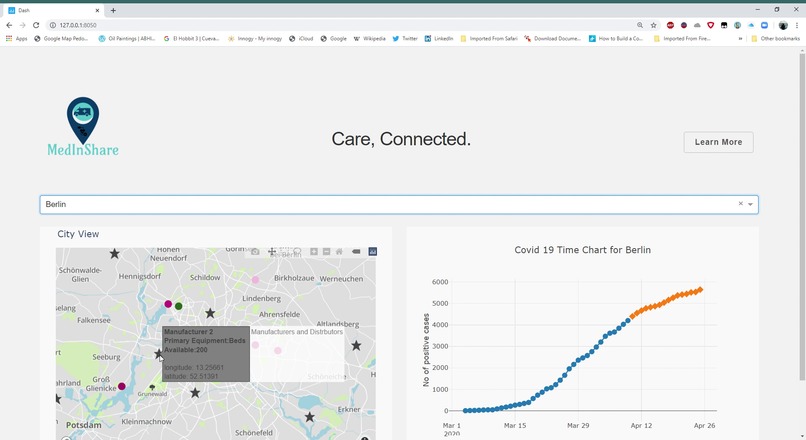
Platform Demo Manufacturers Dashboard
-
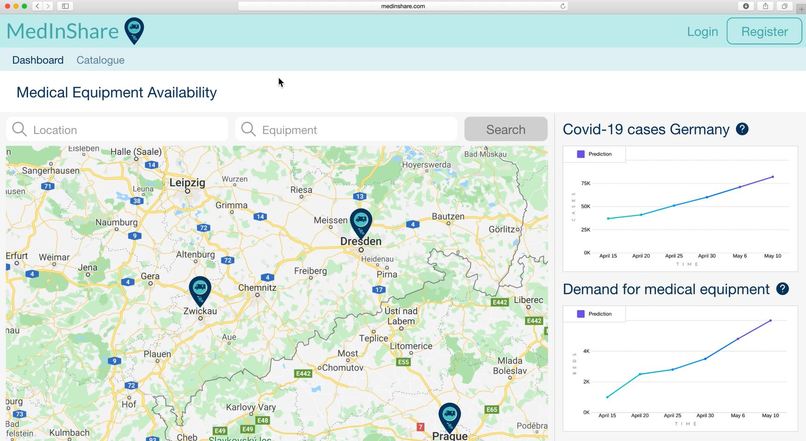
Landing Page
-
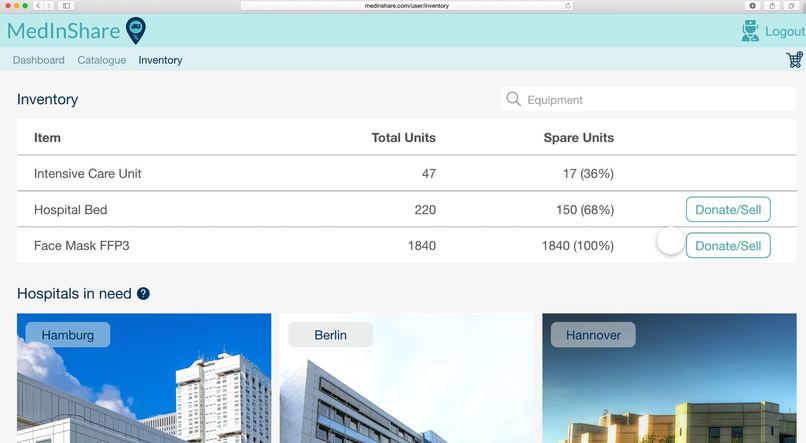
Inventory Page
-
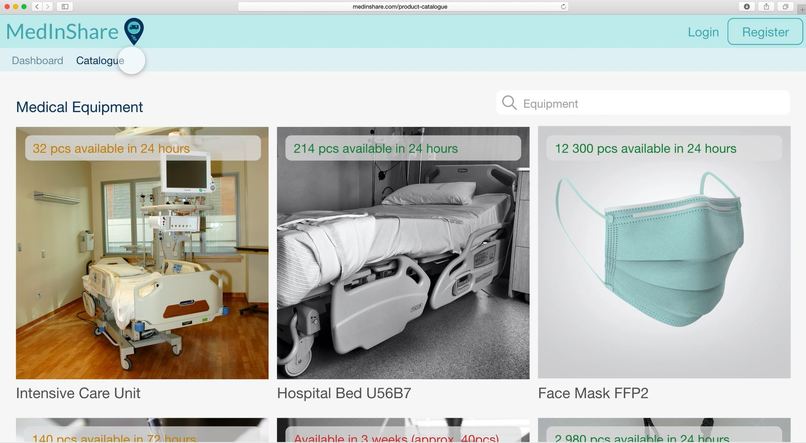
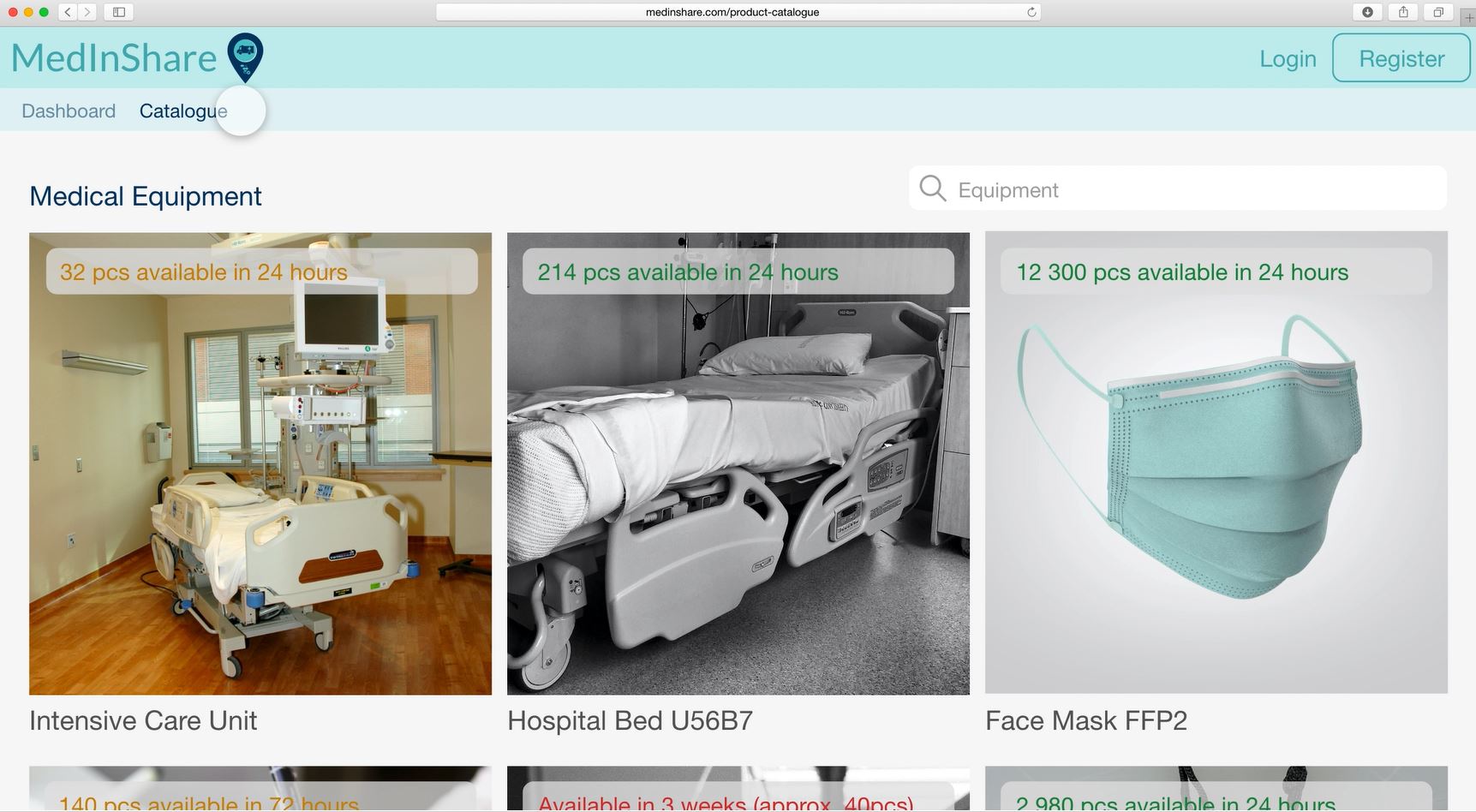
Catalog Page
-
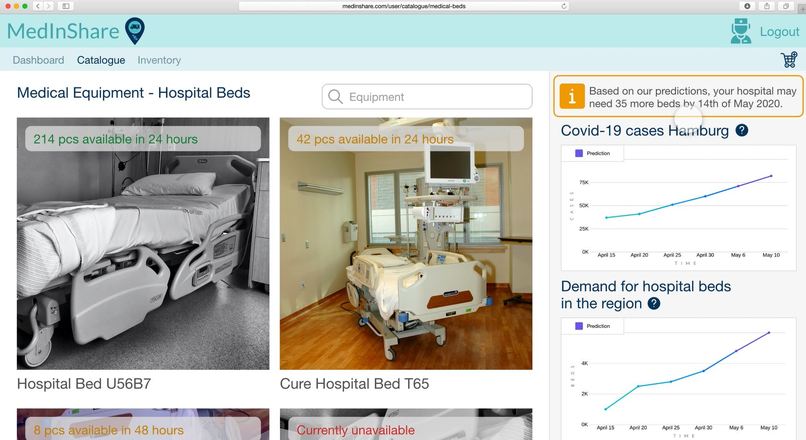
Product Listing/Buy
-
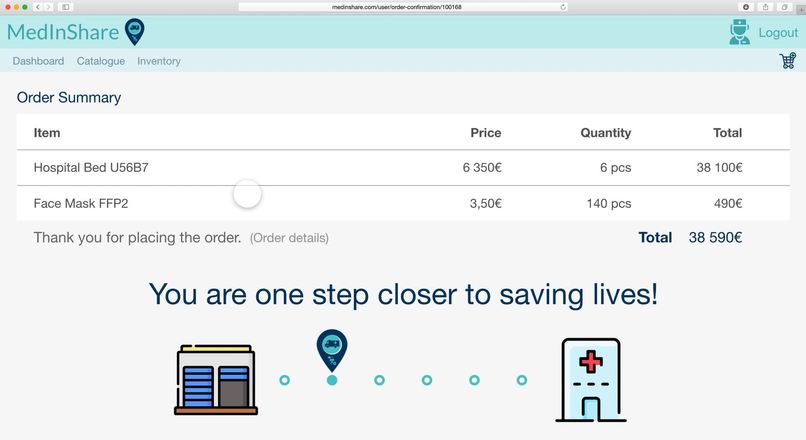
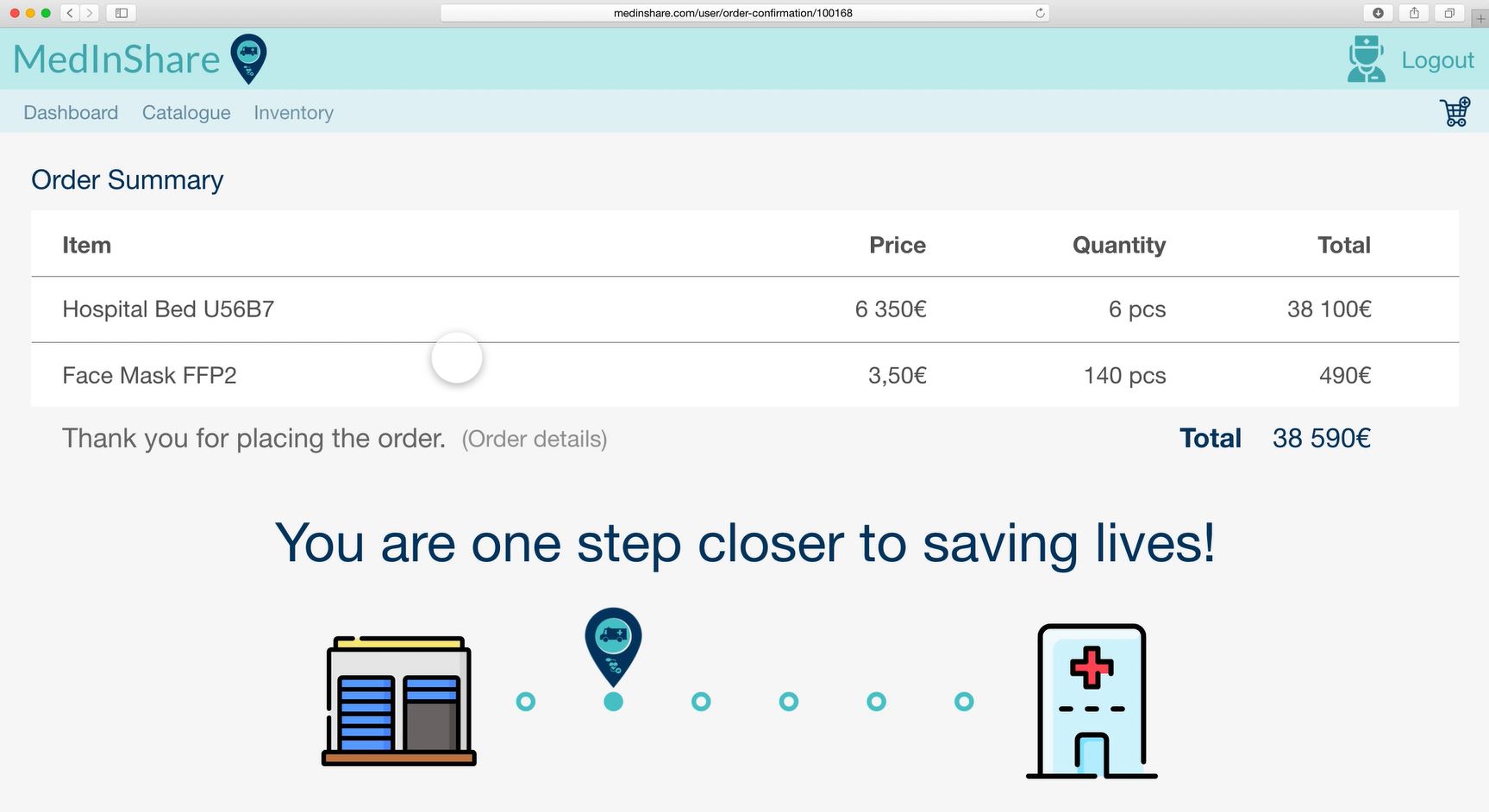
Order Confirmation
-

Cheers with the Submission!
-

All. Day. I. Dream. About. Sleep. - and Hack at Night
-


Problem Statement
During the Covid-19 crisis, hospitals across many countries have faced a lack of critical medical equipment. This deficit does not only affect the health and lives of patients but also those of health care workers themselves. This adds further pressure to an already overstretched system since if health care personnel are infected, the hospitals are left short staffed, leading to a decreased capacity to care for the patients.
The lack of medical equipment is often not due to the fact the equipment itself does not exist but because finding suppliers is a lengthy and cumbersome process which is frequently mediated by third parties. This increases the time from demand to finished supply transaction in a situation where literally every second counts.
Solution
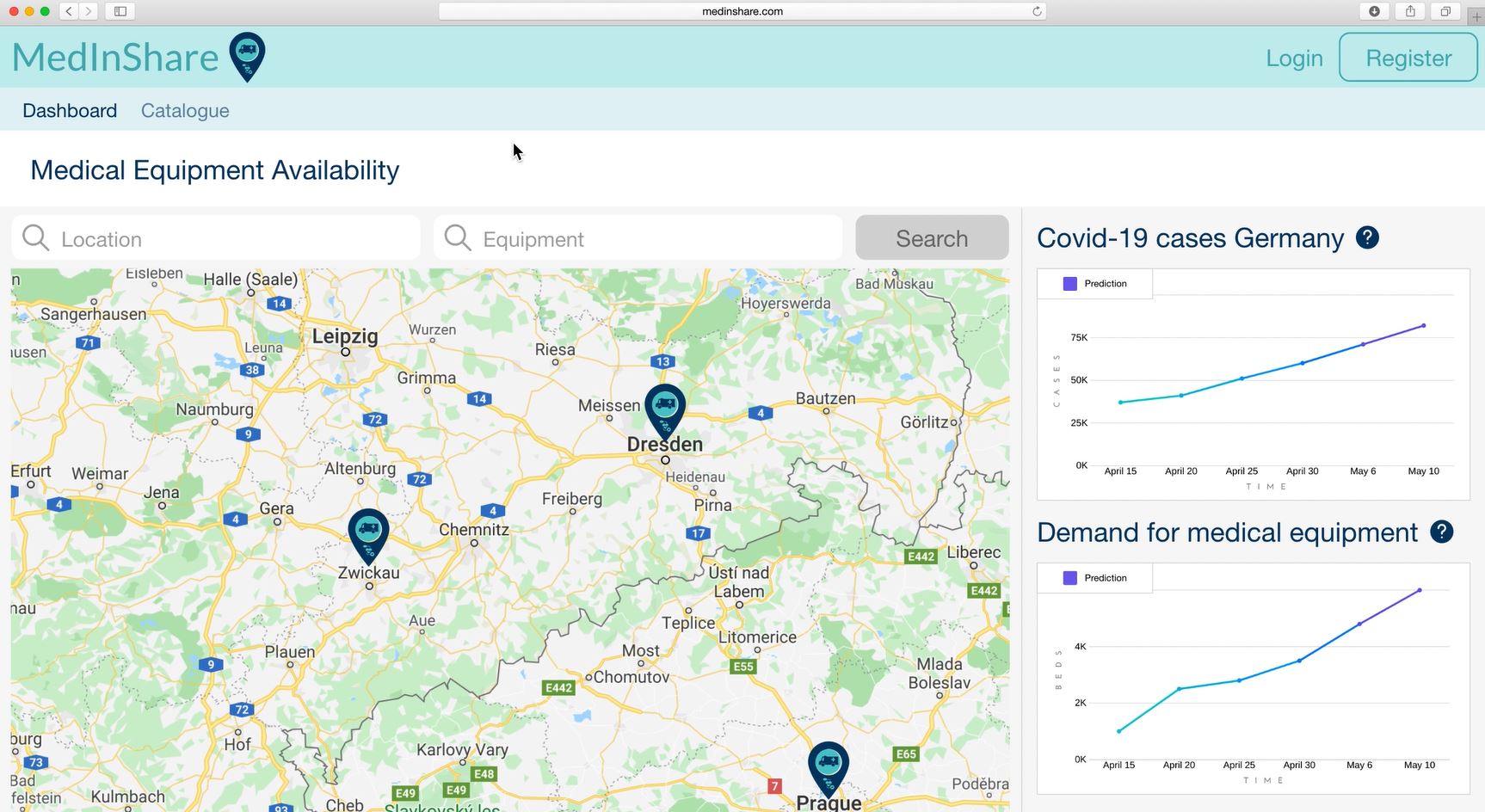
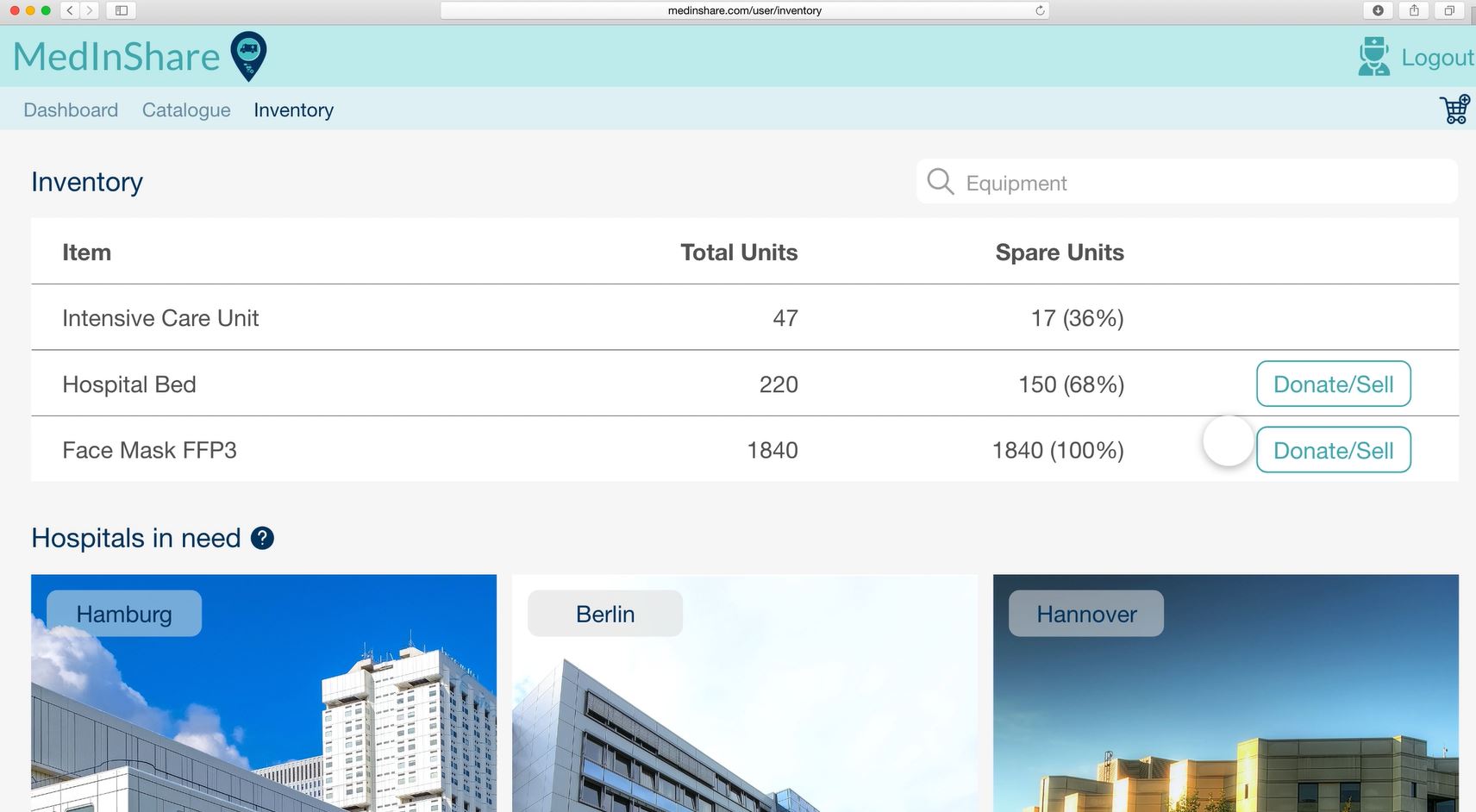
MedInShare is a resource allocation and optimisation tool that assesses the lack and need of medical equipment and facilitates distribution to centres that need it. We treat hospitals, manufacturers and distributors of medical supplies, all as a part of a large interconnected network. According to demand and supply data which individual parties specify, we can flexibly match those who need with those who offer. Moreover, using trends and patterns in data, we can aid hospitals in predicting their future demand, to ensure that when medical equipment is needed, it is already there.
In the case of spreading infections, such as the Covid-19 pandemic, we can help first connect initially affected countries and locations with the equipment they need and at the same time use patterns of their demand along with patient numbers to predict future demand in other countries and notify the governments and producers. In this way we can help facilitate sufficient medical equipment for everyone throughout the crisis.
Our Impact
MedInShare will transform the healthcare supplies market so that transfers are easier, faster and more direct. This will bring benefits for all parties on the market.
For hospitals
- Easier access to medical equipment facilitated by:
- erased need for middlemen when accessing supplies.
- the possibility for combining supply from multiple sources to serve a single demand without the need to make multiple enquiries.
- Increased speed of the whole process, enabling quick fulfilment of the demand.
- A quick match is ensured between suppliers and consumers despite high rates of change experienced by the system during the crisis.
- Possibility for peer-to-peer exchange between hospitals with large stocks and those experiencing lack of equipment.
For manufacturers and distributors
- Information about current demand across the system allowing the suppliers to flexibly and quickly respond.
- Fairer opportunities - suppliers of the same product at the same rates have equal chances.
- Amount of shelved medical equipment is minimized.
- Suppliers reorienting themselves to new products due to a crisis are able to:
- gain up-to-date information about shortages in the system.
- make the availability of additional resources quickly known.
For governments
- Gain up-to-date information about system status (e.g. reserves, shortages).
- Do not have to act as a middleman between consumers and suppliers.
- Information about demand can be used by other countries to adjust their preparation strategies in case of a crisis that gradually affects different countries at different time points.
Business Model
Our Business model consists of 3 main parts:
Value Proposition
As breifly mentioned above in the Impact section
Hospitals and medical Institutions can predict the demand for their medical equipment factoring covid or general demand forecast and order supplies with the delivery lead time calculated so that they have the equipment in time to serve the patients.
Manufacturers and Distributors can be part of a global distribution network of medical equipment which can be used to predict demand. Trends and analysis from this can be used to optimize their production and supply chain planning.
Government bodies can have an overview of the medical equipment trade and distribution and use this information to make better Healthcare strategies and systems for public.
Cost-Revenue Model
- Low Optimization Cost
- Minimal IT Infrastructure Cost
- No Inventory Cost
- Skill cost
- Positive Revenue model
- Commission based revenue model - ~2% per transaction
- Advertising fee
- Overall high profit
Market Analysis
MedInShare has is entering into the Global Medical Device industry with a size of 615B$ in 5 years. Considering the presence of 'Made to Order' and 'Made to Stock' products, the 'Made to Stock' industry can be assumbed to be ~20% of this total industry coming upto ~185B$.
This industry has huge potential and there large number of manufacturers, distributors, hospitals and medical institutions, both big and small sized that can be connected to improve the movement of medical equipment. To our benefit, there are not many platforms servicing this market giving us a massive competitive advantage.
Assuming ~10% of this industry can be serviced through our platform by leveraging the network created and charging the manufacturers/distributors ~2% per transaction, we predict to have a revenue of ~400M$ in 5 years.
With this, we start the journey to become the biggest platform for a global medical equipment distribution network.
Our effort during the hackathon
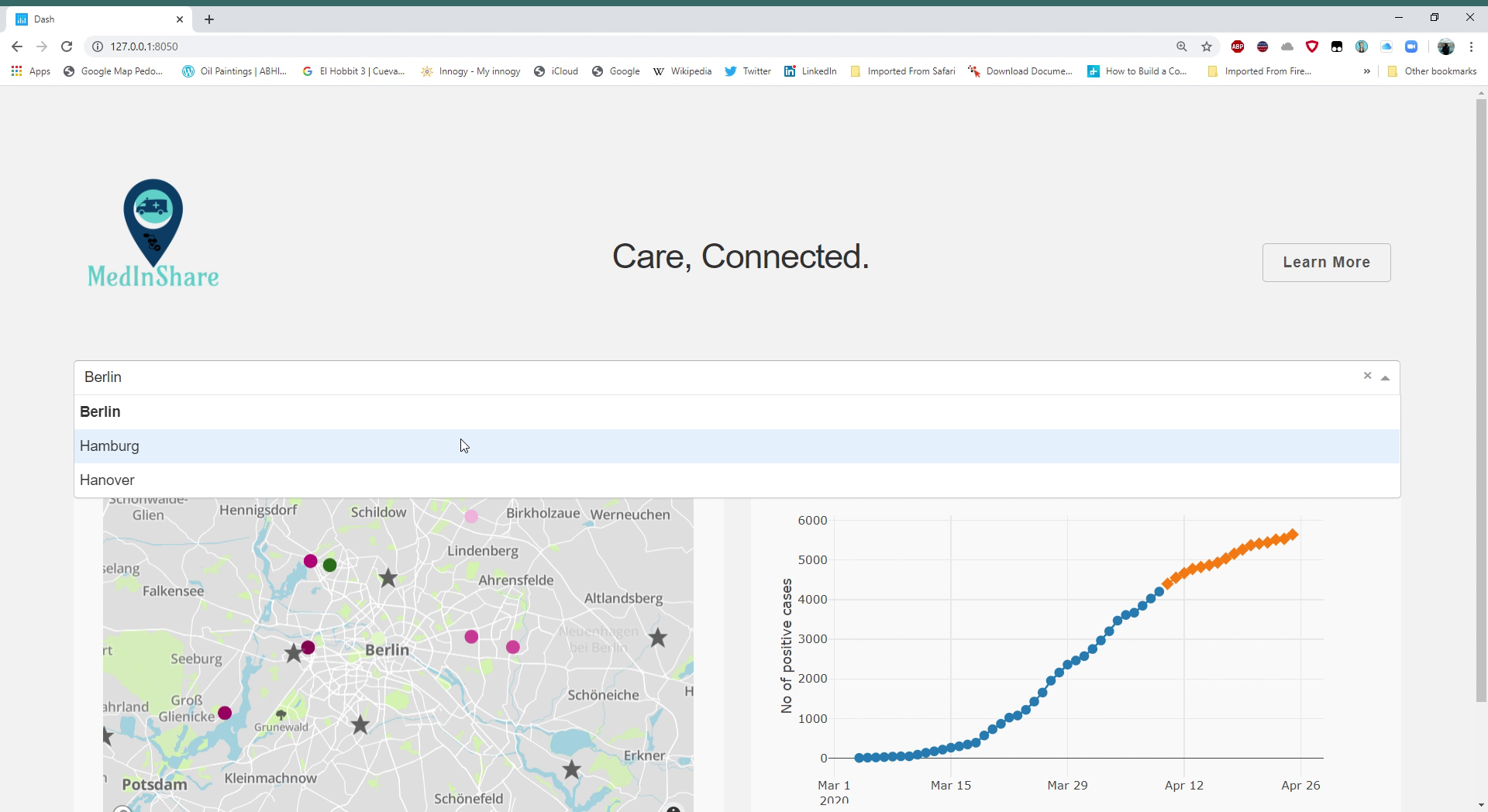
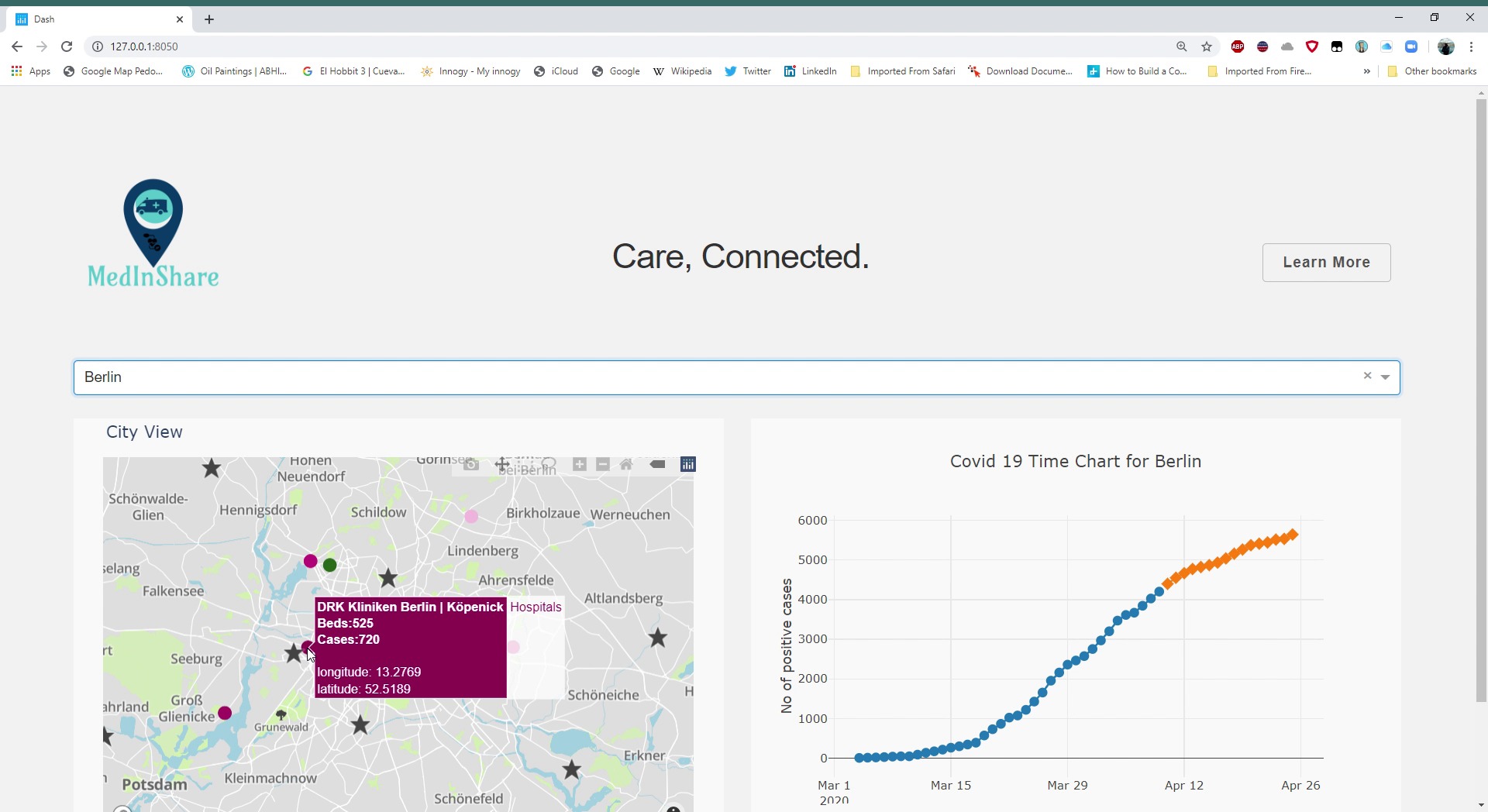
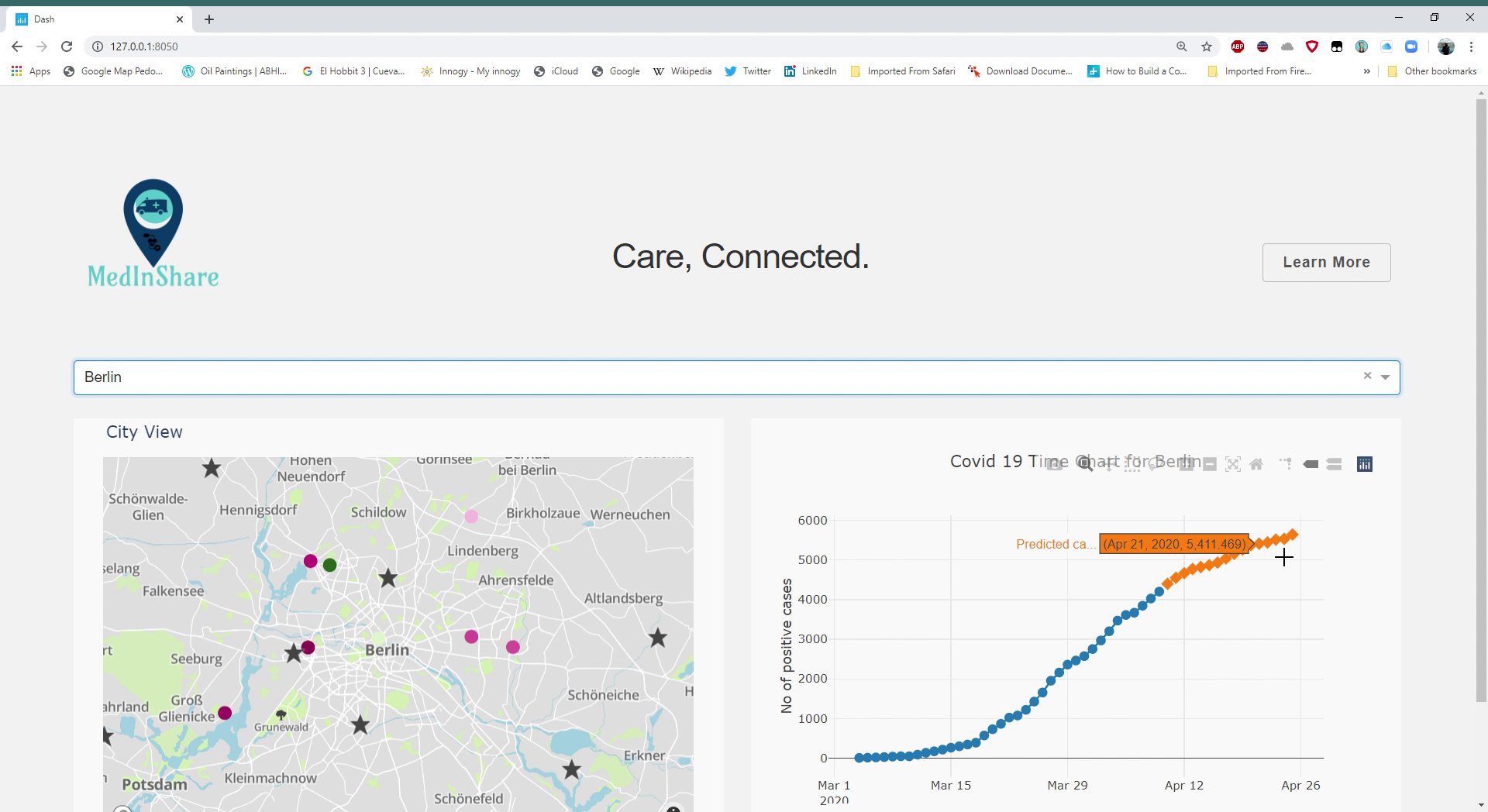
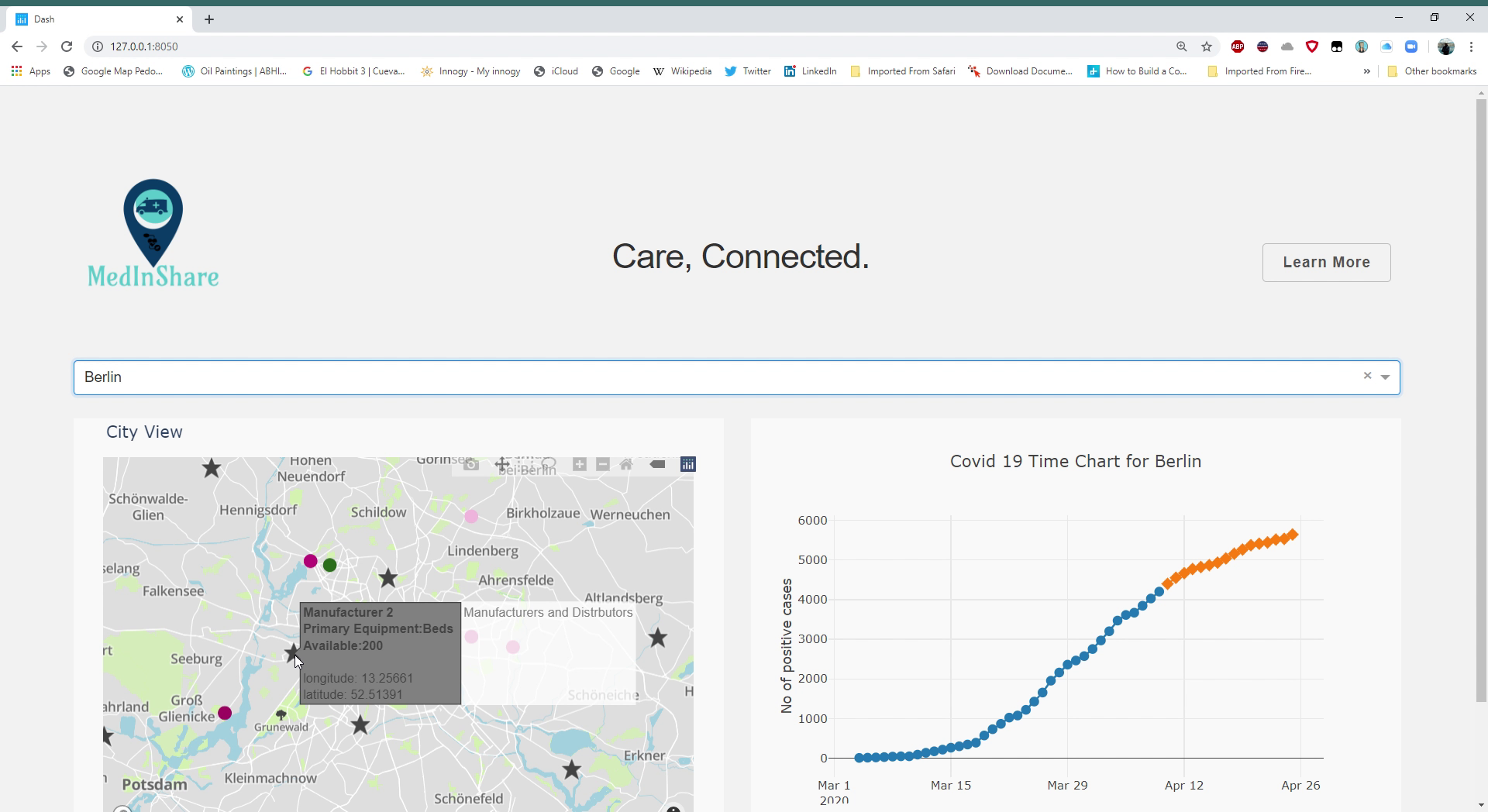
We have used available data on the quantity of hospital beds within hospitals in three major cities in Germany along with data on changes in the number of Covid-19 patients in the same areas to estimate the possible shortage of hospital beds. We have also created a dummy dataset estimating production of hospital beds and created a platform which demonstrates the process of matching the demand with supply, taking into account geographic location. Moreover, the platform analyses the patterns experienced by hospitals in regard to the number of Covid-19 patients, enabling us to make predictions about the future demand of hospitals which are still experiencing only the beginnings of the pandemic.
On the business side, we have created the vision for the final product along with some of the steps needed to be taken in order for our tool to have maximal impact in improving the process of medical equipment transfer.
Some of us have even managed to get some sleep.
Platform Development Approach
Since our approach is data driven, we first had to acquire data that would suit our needs. We combed through daily Covid-19 statistics for three cities in Germany (Berlin, Hamburg & Hannover) and compiled a time-series dataset from them. We had to build a dummy dataset for the manufacturers and distributors as real data on the medical equipment quantities was not easily available. We built a predictive model for this time-series data. This model was built using a Long Short Term Memory Recurrent Neural Network (LSTM-RNN)and it helps to forecast the trend of the disease for the next 16 days. Using the data on the deficits in medical equipment in over-burdened healthcare facilities and the predicted figures we will be able to identify and recommend manufacturers and distributors that can help with the shortage.
Accomplishments that we are proud of
- Amazing idea
- Great working atmosphere within the team
- Good and efficient execution
- Creative and effective Sales Pitch
- Well thought through Business Plan
- Fun times together
For the future
While the current crisis has highlighted the issues related to current process of medical equipment transfer and has thus to a large extent motivated this project, we have always had its future applicability on our minds. After the current crisis has passed we will carry on connecting everyone and providing a platform that optimizes the medical supplies transfer.
The flexibility of MedInShare, which is based on the current demand and offer of medical resources means that it can easily accommodate both normal functioning as well as critical situations.
We plan to scale our platform to accommodate a larger product range and connect with a wider network of medical manufacturers, distributors, hospitals and medical facilities to enable an optimized distribution of medical equipment across the world.
Next steps
We plan to start approaching the representatives of our target stakeholders (hospitals, medical institutions, manufacturers, distributors and governments) to discuss what would be their expectations of the product so we can ensure that our solution truly matches their needs.
We would like to seek support with:
- Connections to administrators of Hospitals and Medical facilities
- Creating a network of Medical equipment Manufacturers and Distributors
- Collaboration with Public Health and Statistical Organizations
- Subject Matter Experts in the field
As we build on international cooperation, we would cherish the opportunity for cooperation with EU commission with an aim to find an optimal roll-out strategy for each of the member states.
Built With
- flask
- keras
- numpy
- pandas
- plotly-dash
- python
- scikit-learn
- tensorflow


Log in or sign up for Devpost to join the conversation.