-
-
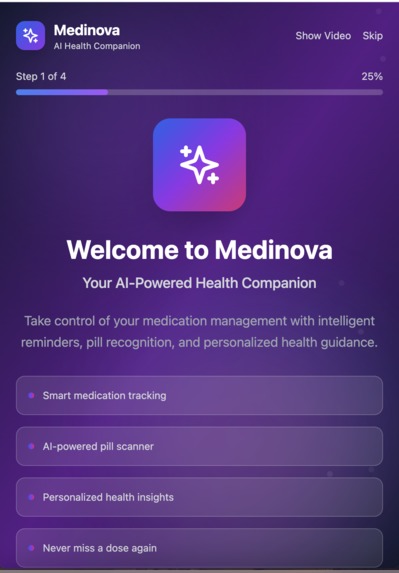
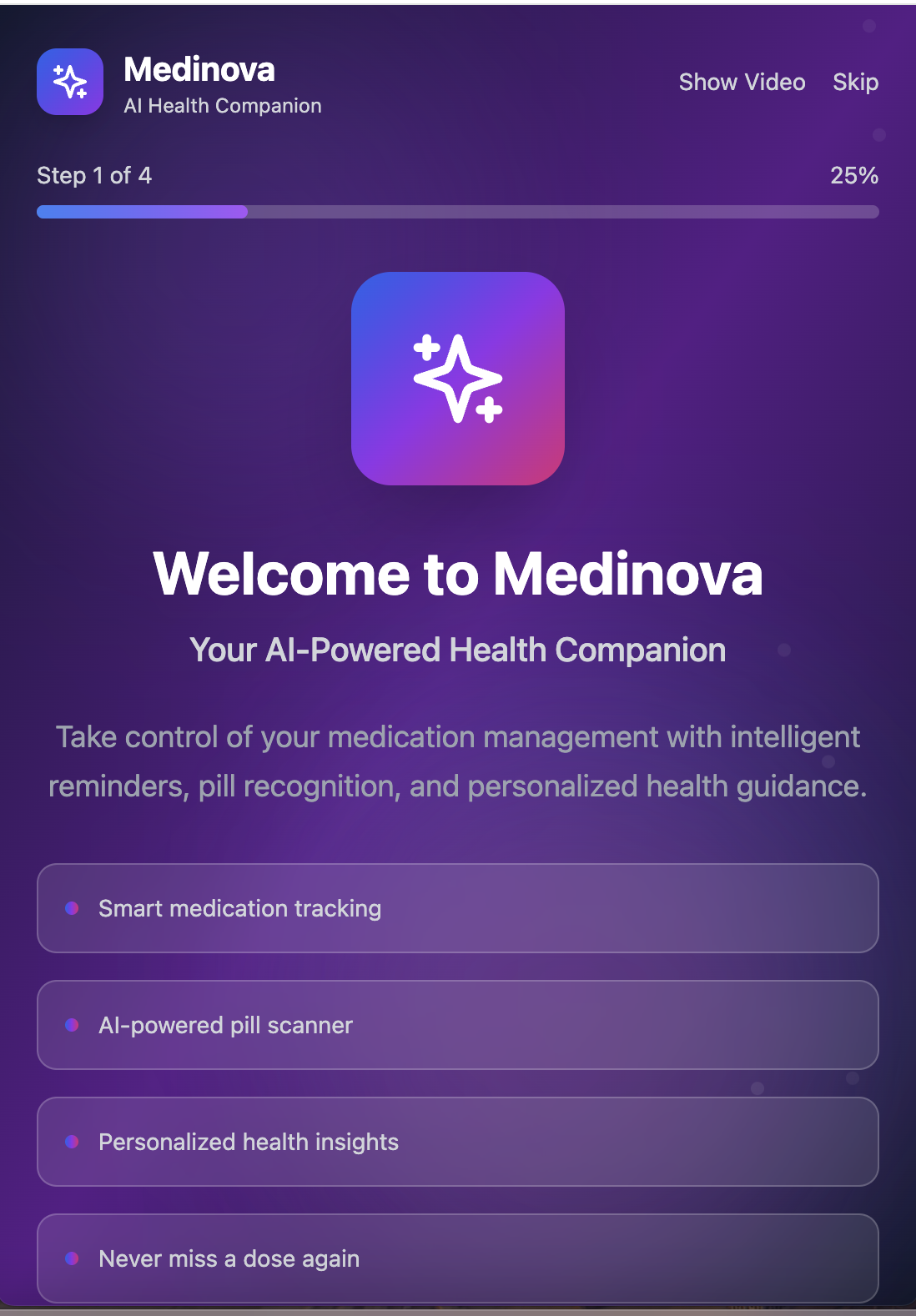
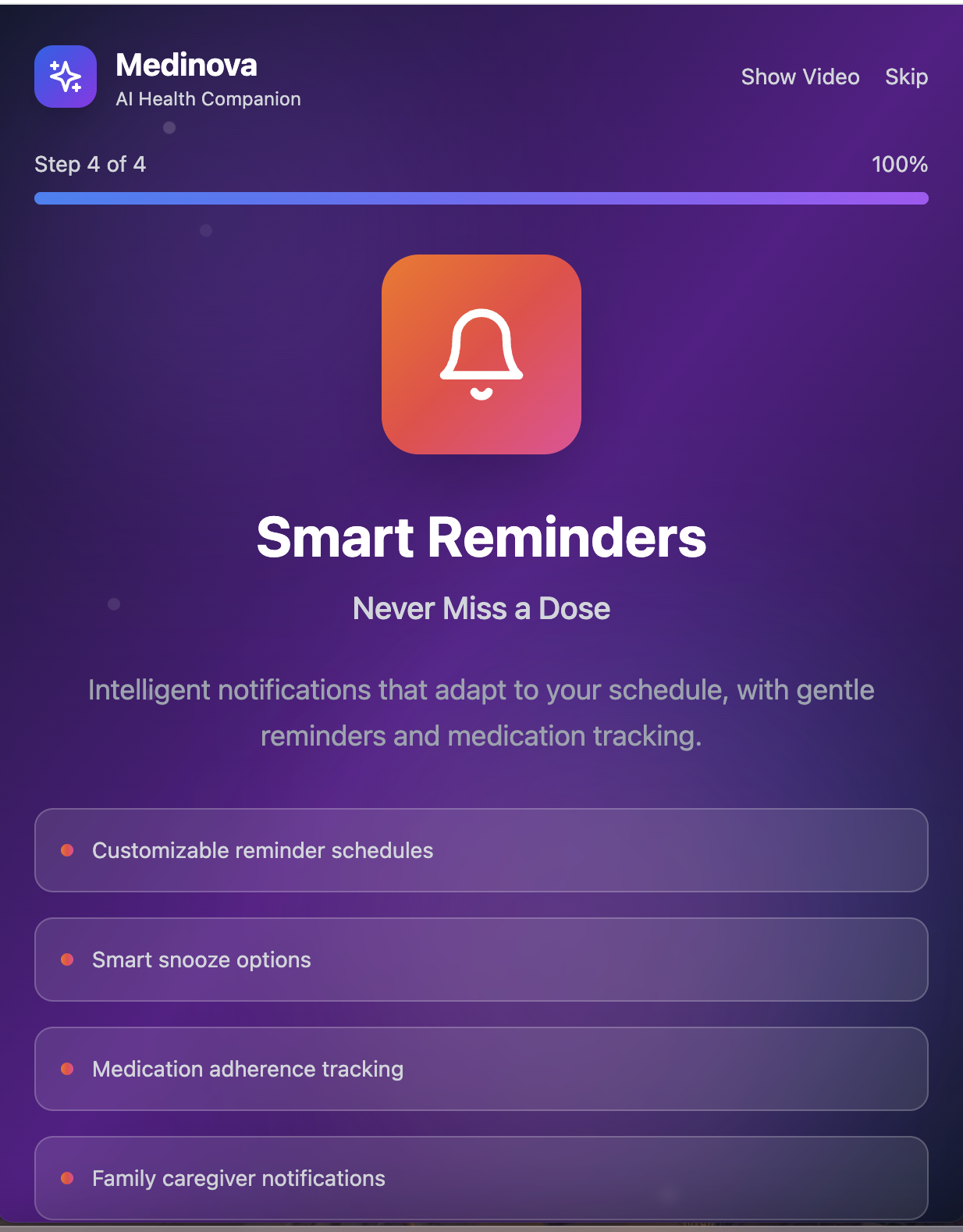
Onboarding Screen
-
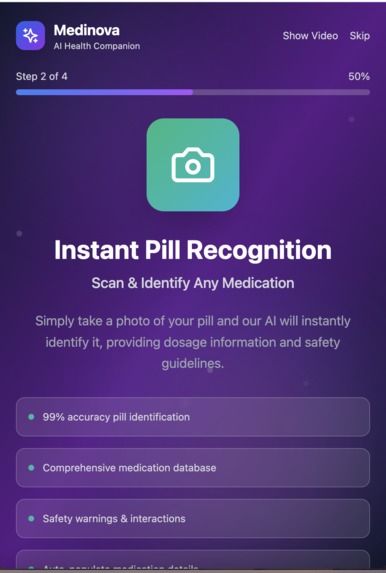
Onboarding Screen
-
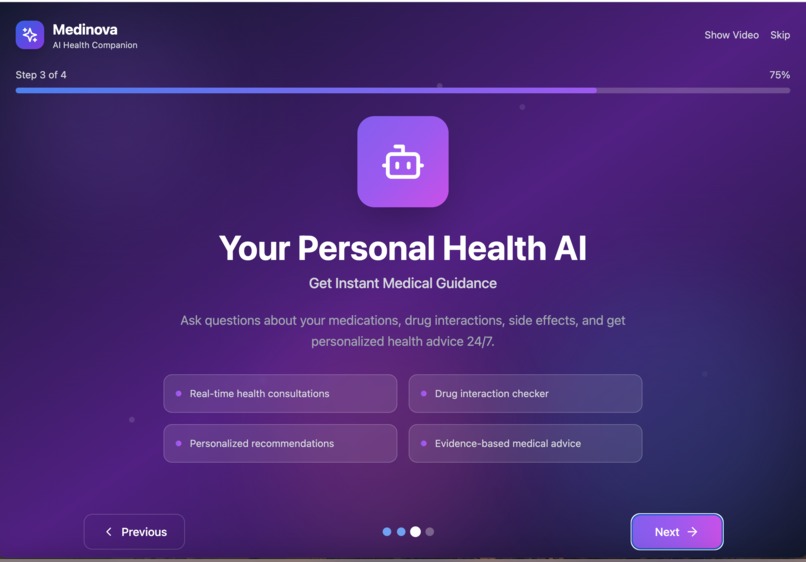
Onboarding Screen
-
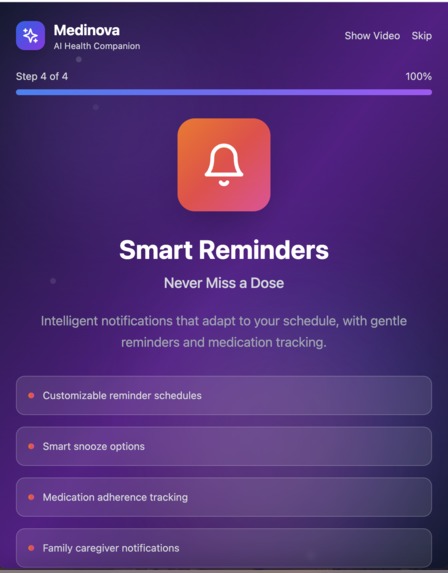
Onboarding Screen
-
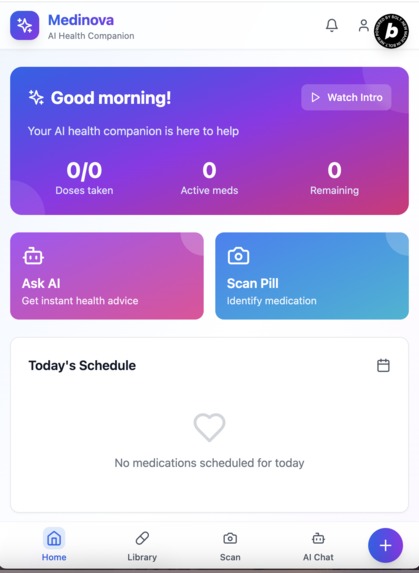
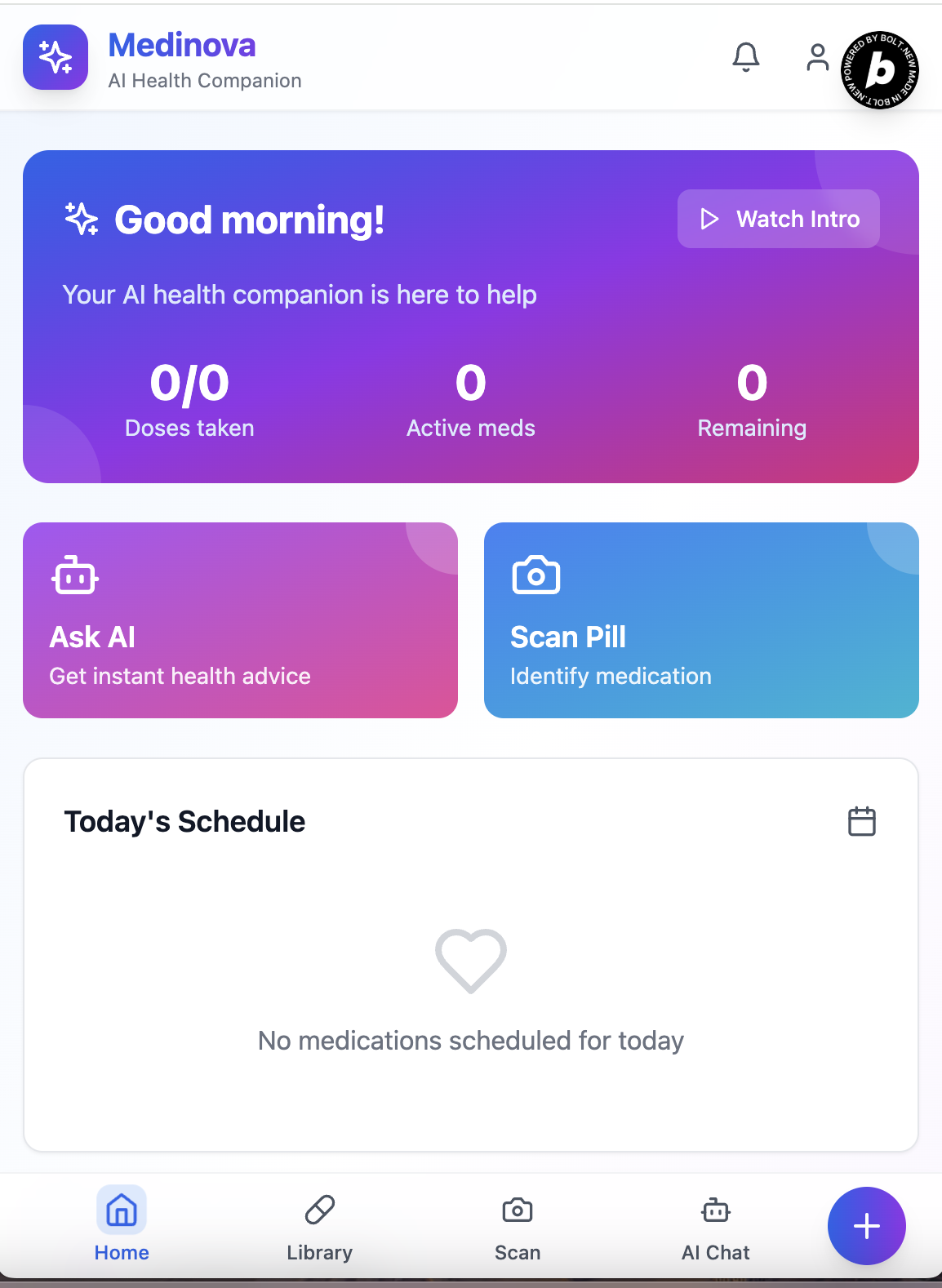
Homepage
-
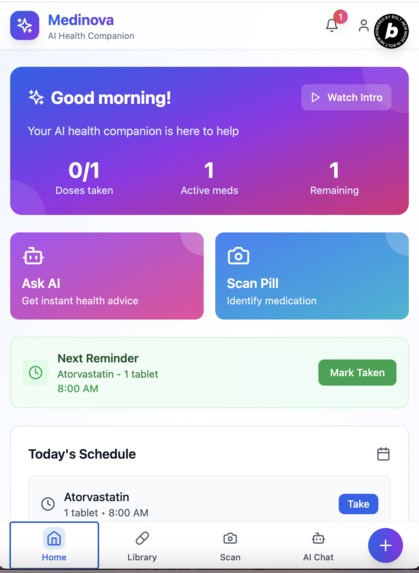
Homepage
-
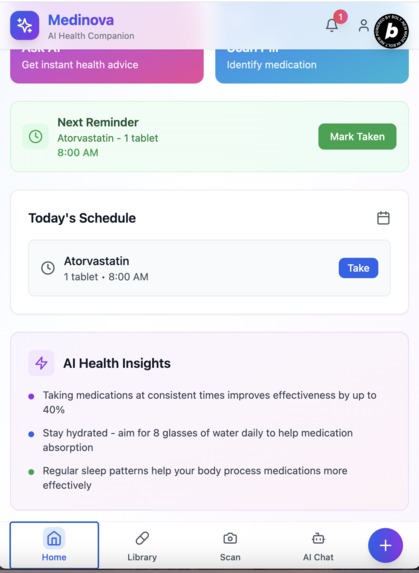
Homepage
-
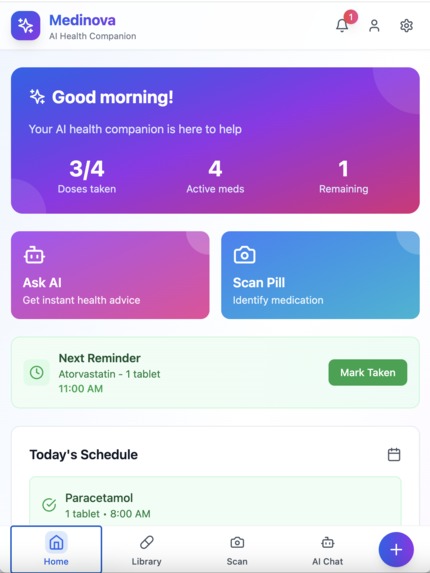
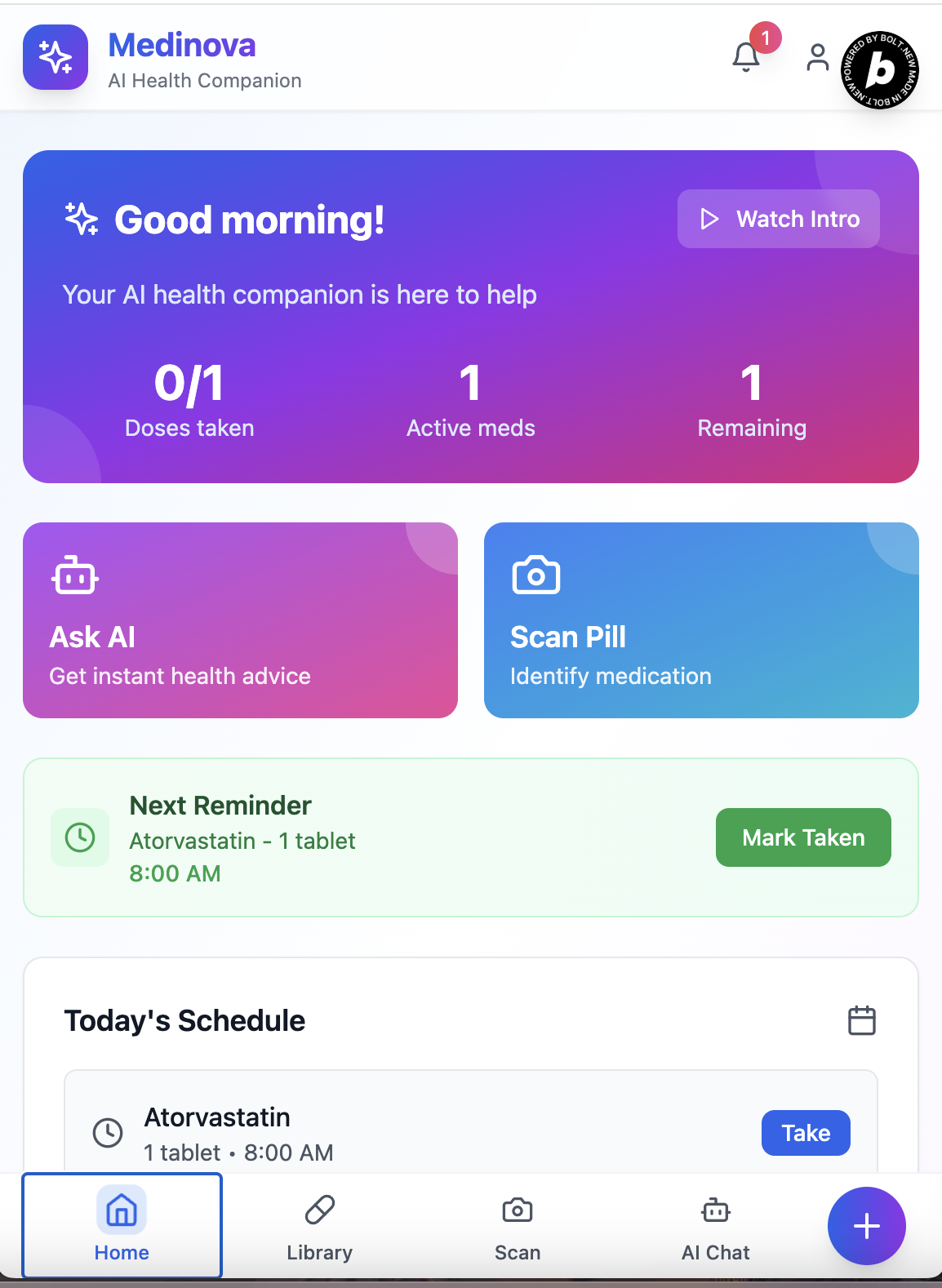
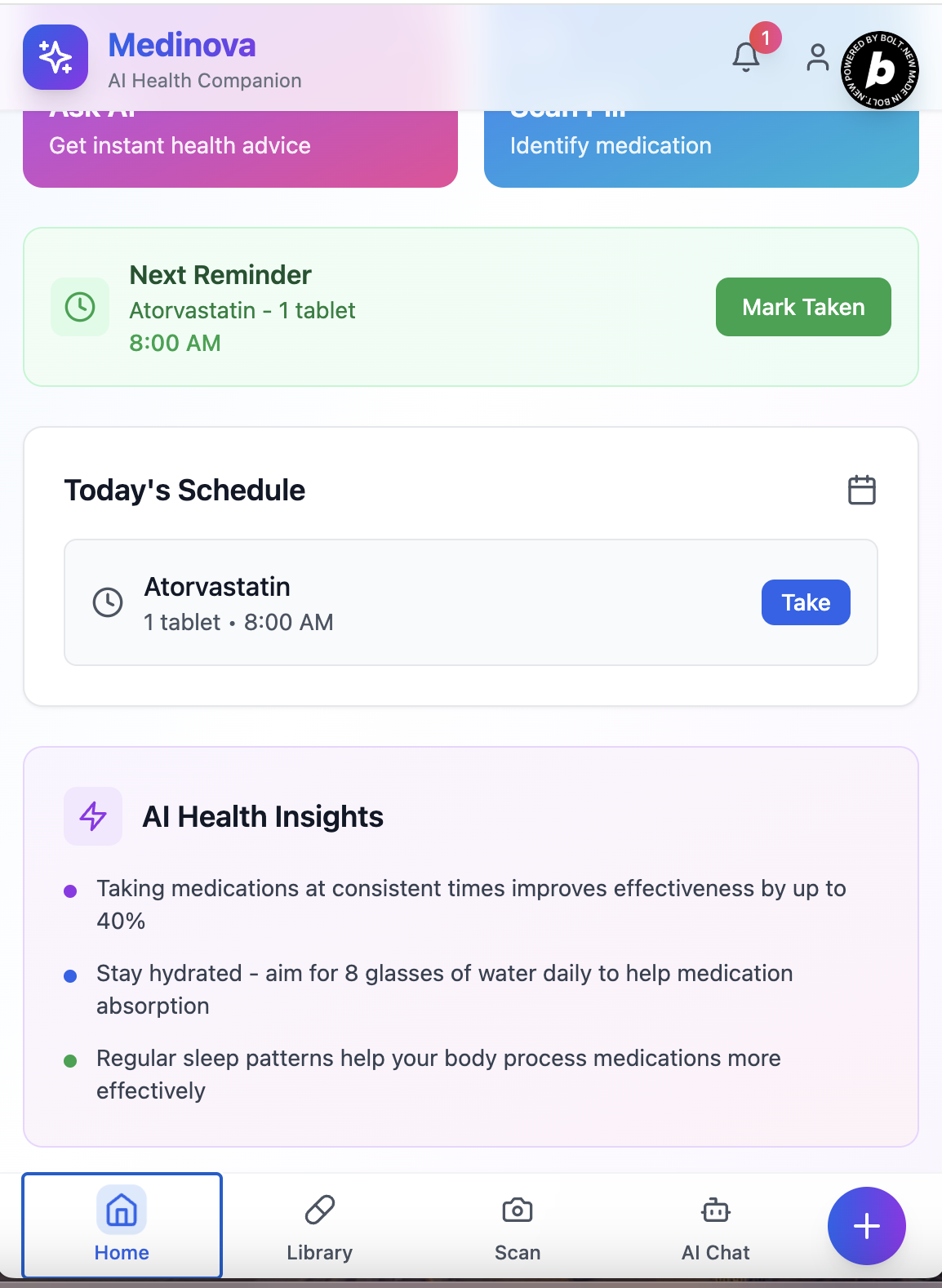
Homepage - Added medicines
-
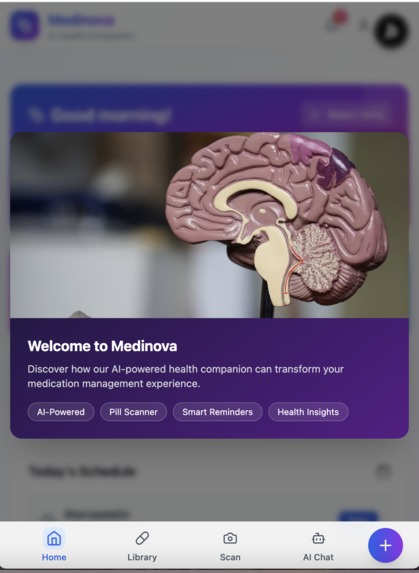
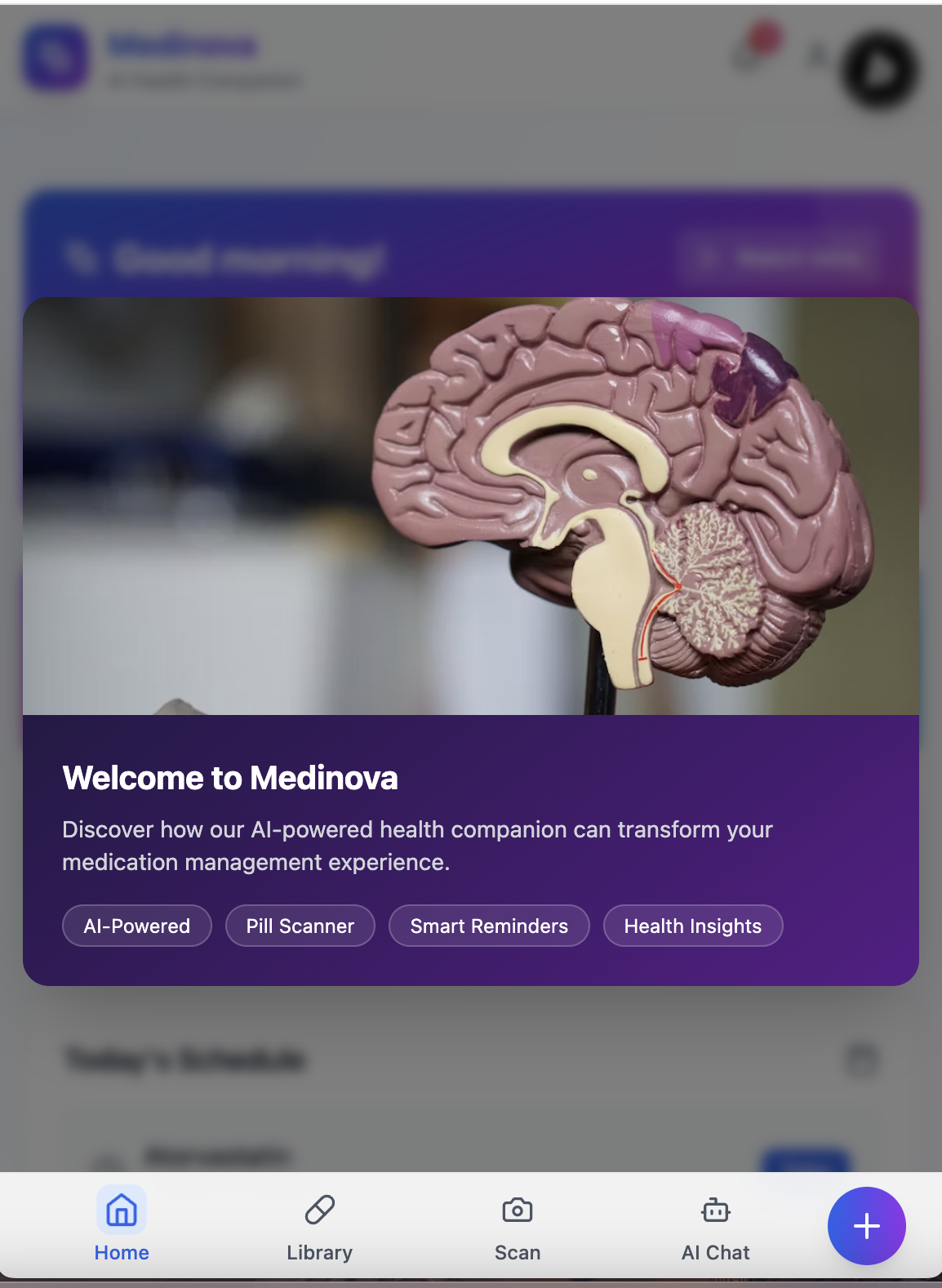
Info Video
-
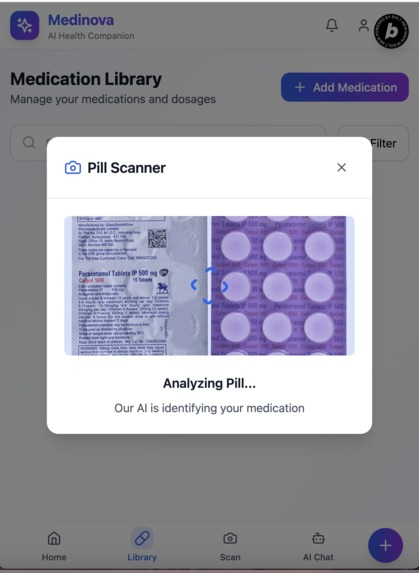
Pill scanning
-
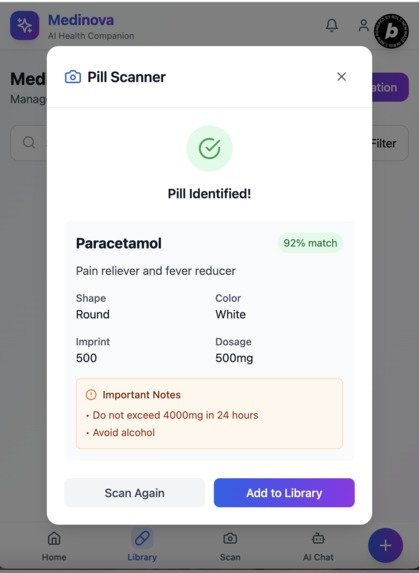
Pill scanning Completed
-
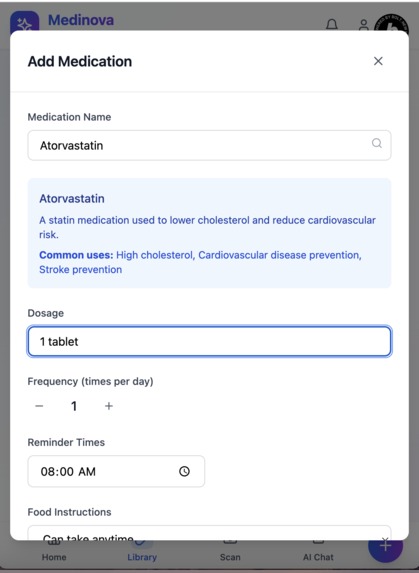
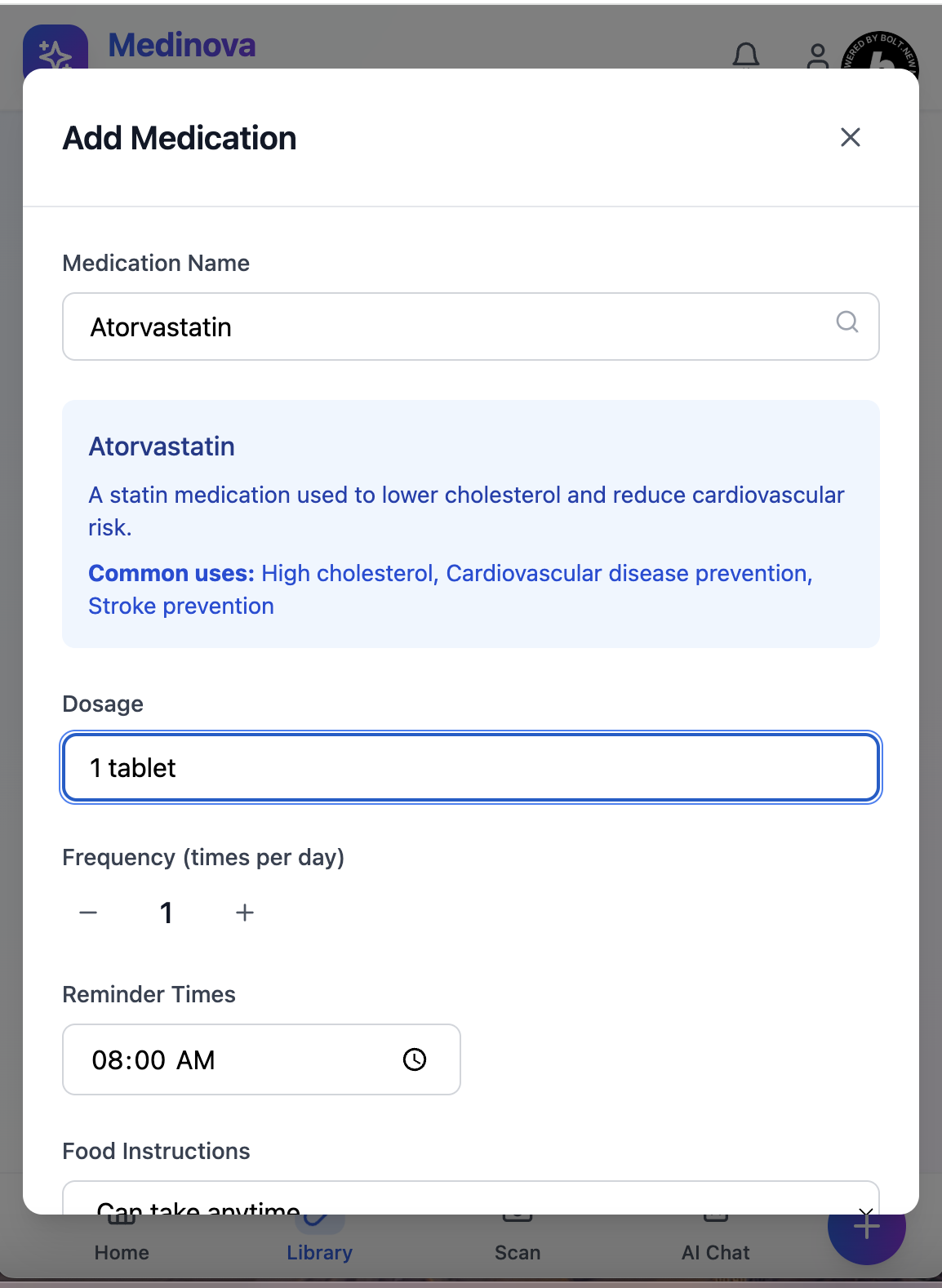
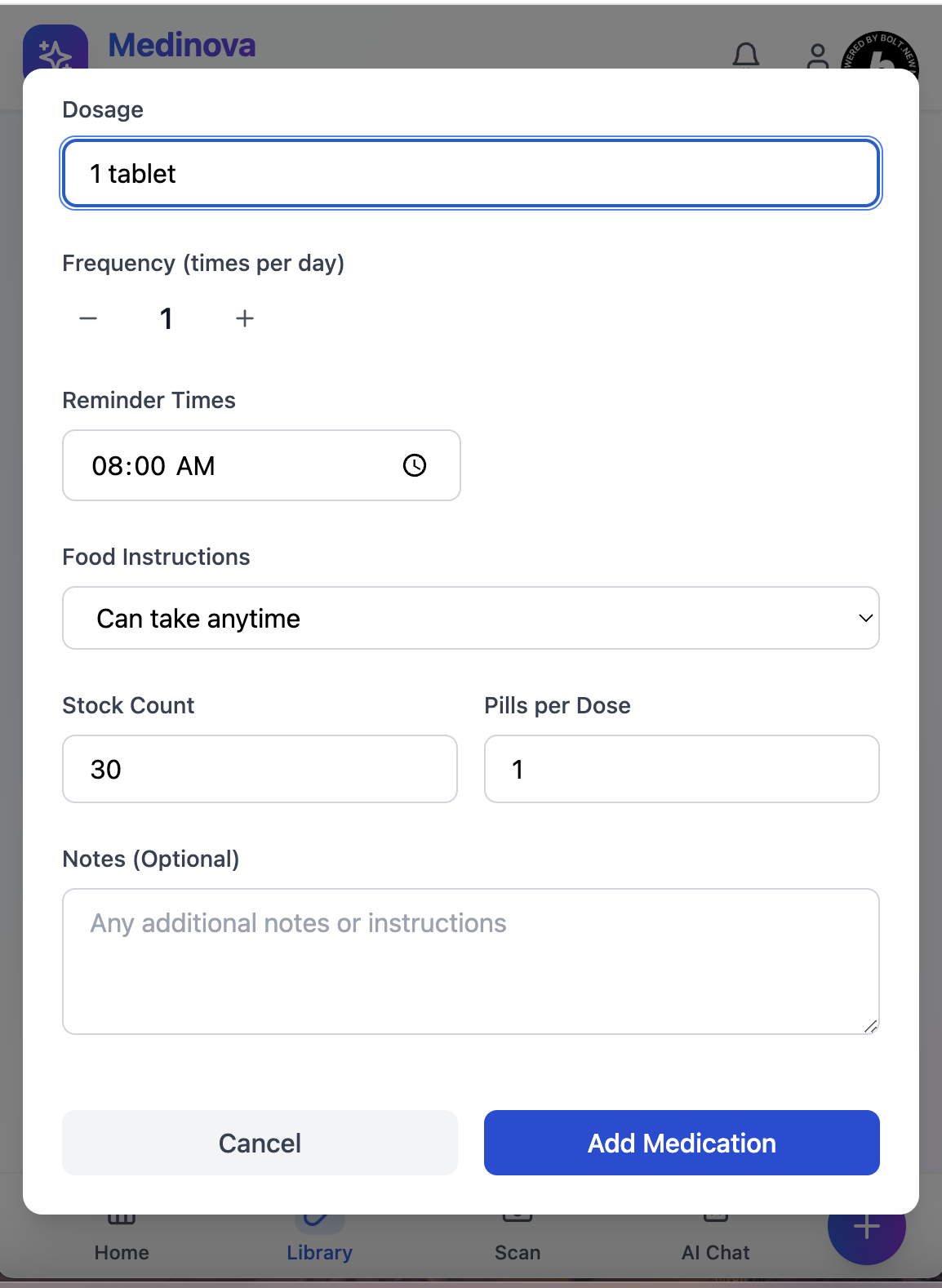
Adding medication
-
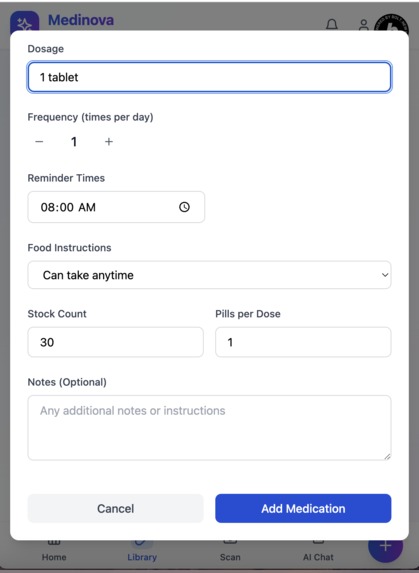
Adding medication
-
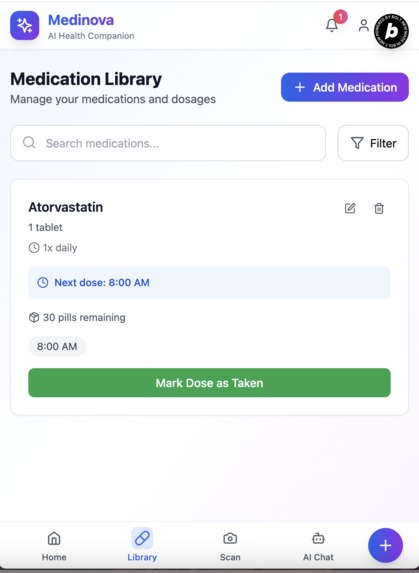
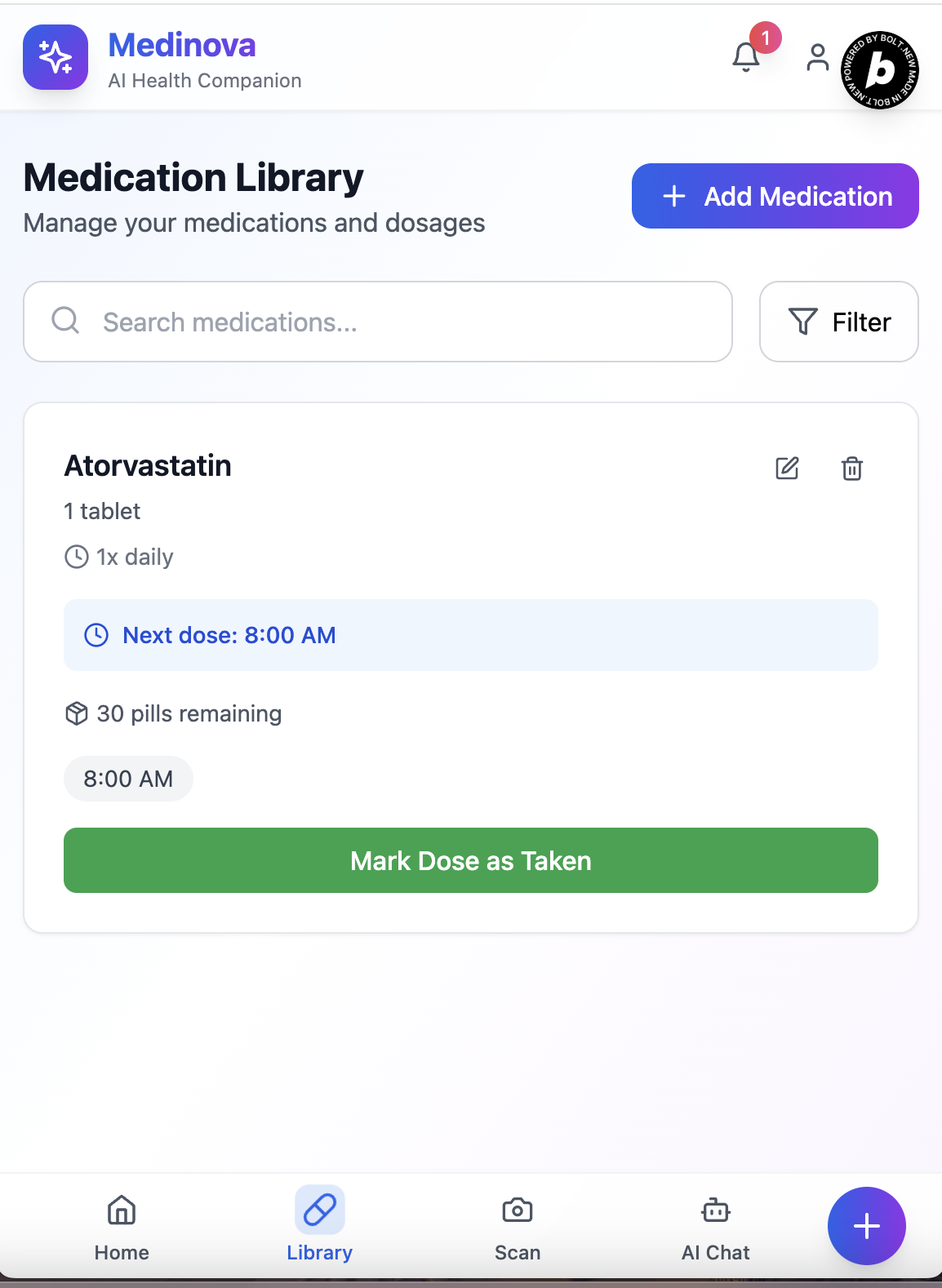
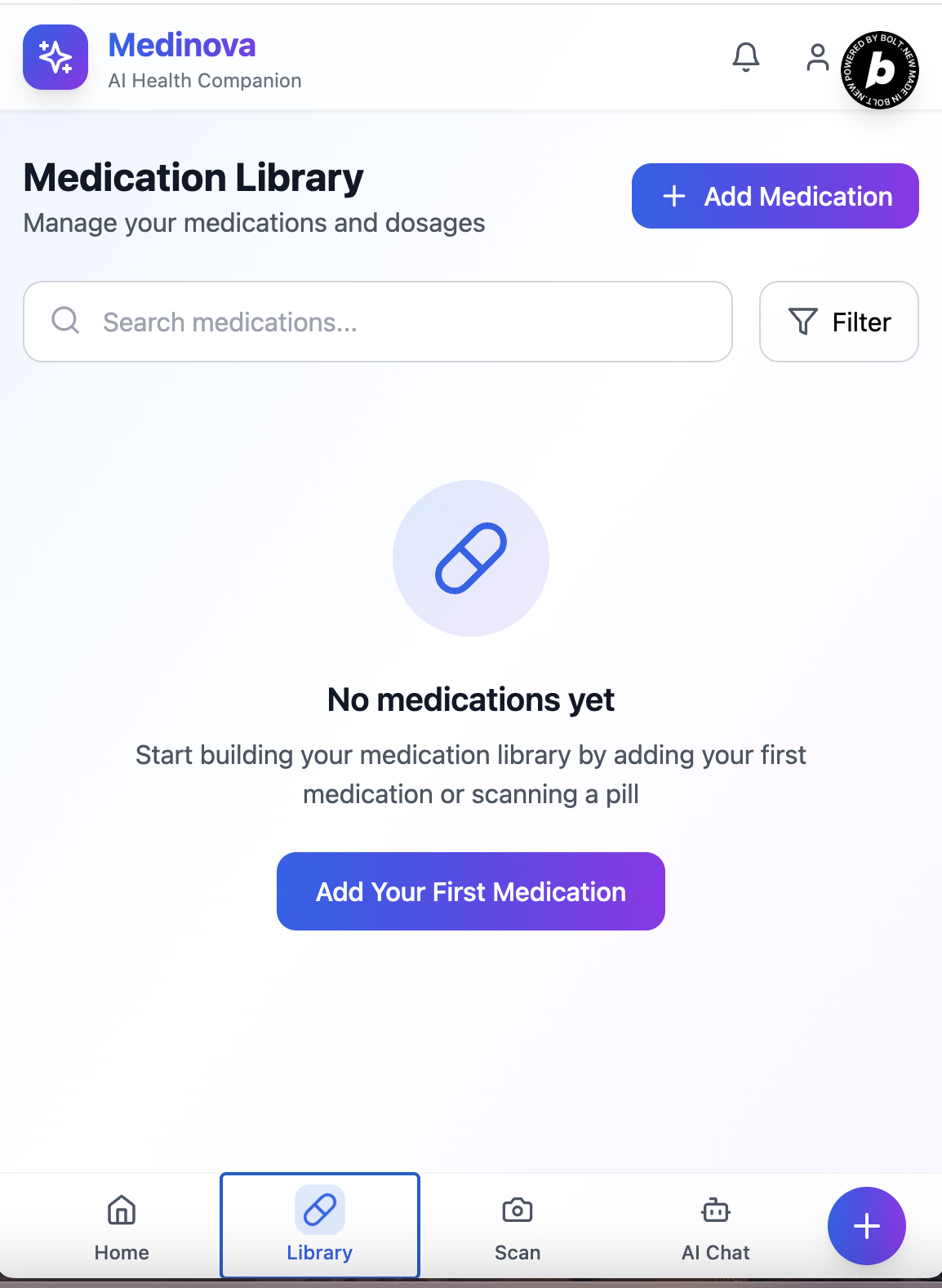
Library
-
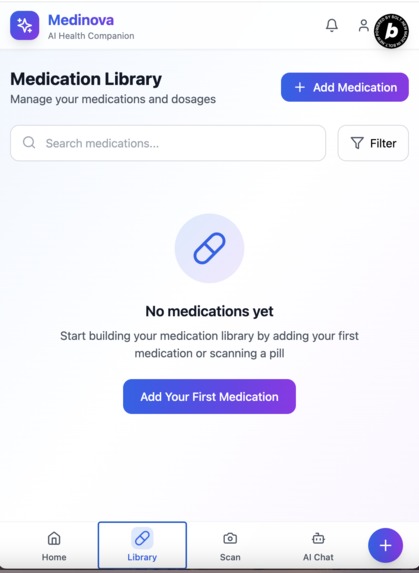
Library
-
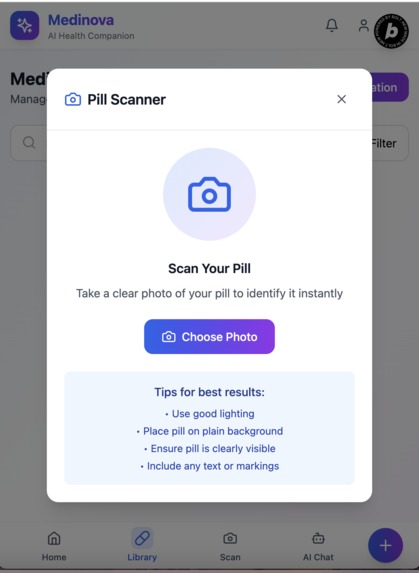
Scanning
-
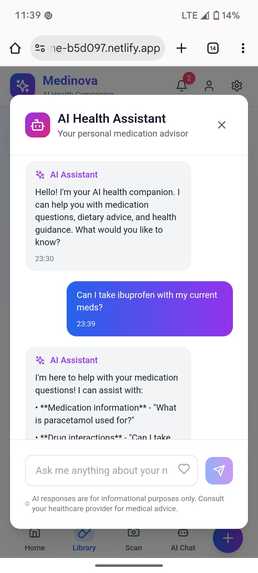
Ai chat bot
🧠 Inspiration
The inspiration for Medinova came from a very personal place — thinking about how my grandmother, like many elderly people, often forgets to take her medication on time or struggles with understanding how and when to take them properly. I wanted to build something that wasn’t just a set of alarms, but a compassionate, intelligent companion that could support real-world medication routines, even when someone doesn’t have the prescription or packaging at hand. That led me to combine the power of AI, visual pill recognition, and voice guidance into a unified experience that feels intuitive, informative, and friendly for users of all ages — especially seniors.
💊 What it does
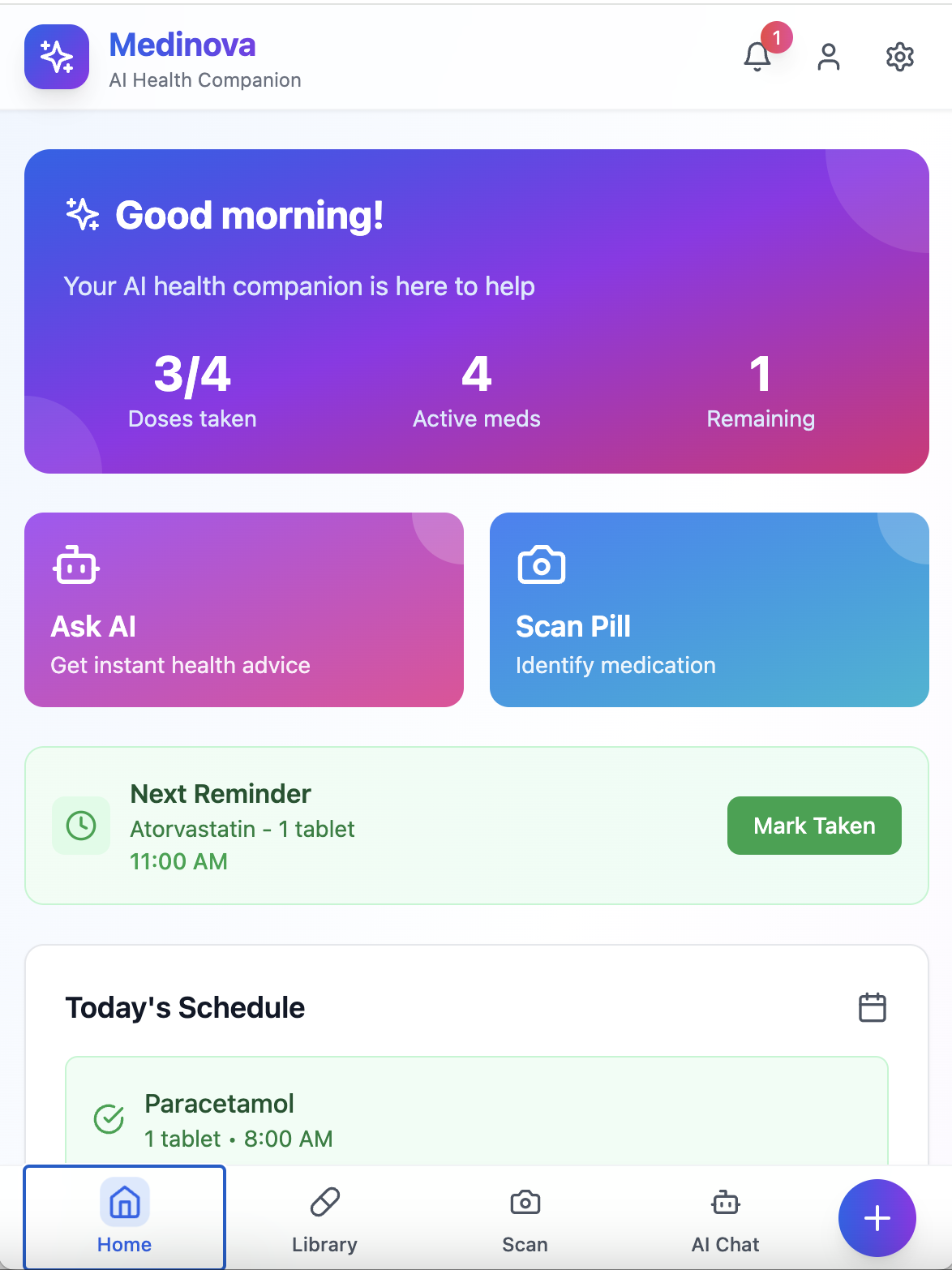
Medinova is an AI-powered personal health companion that helps users manage their medications with confidence and ease. At its core, it functions as:
- A smart medication reminder system (with snooze and taken tracking)
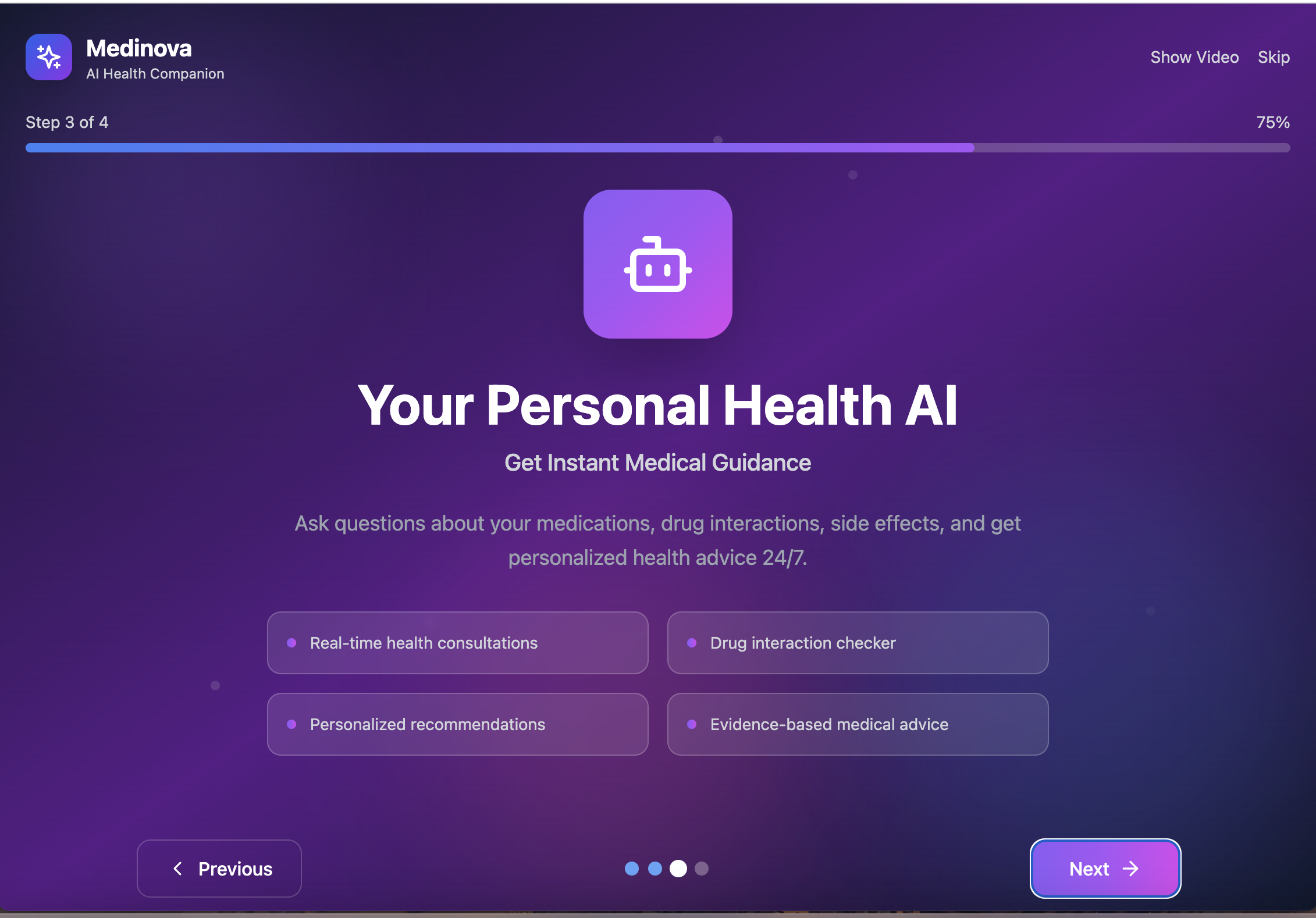
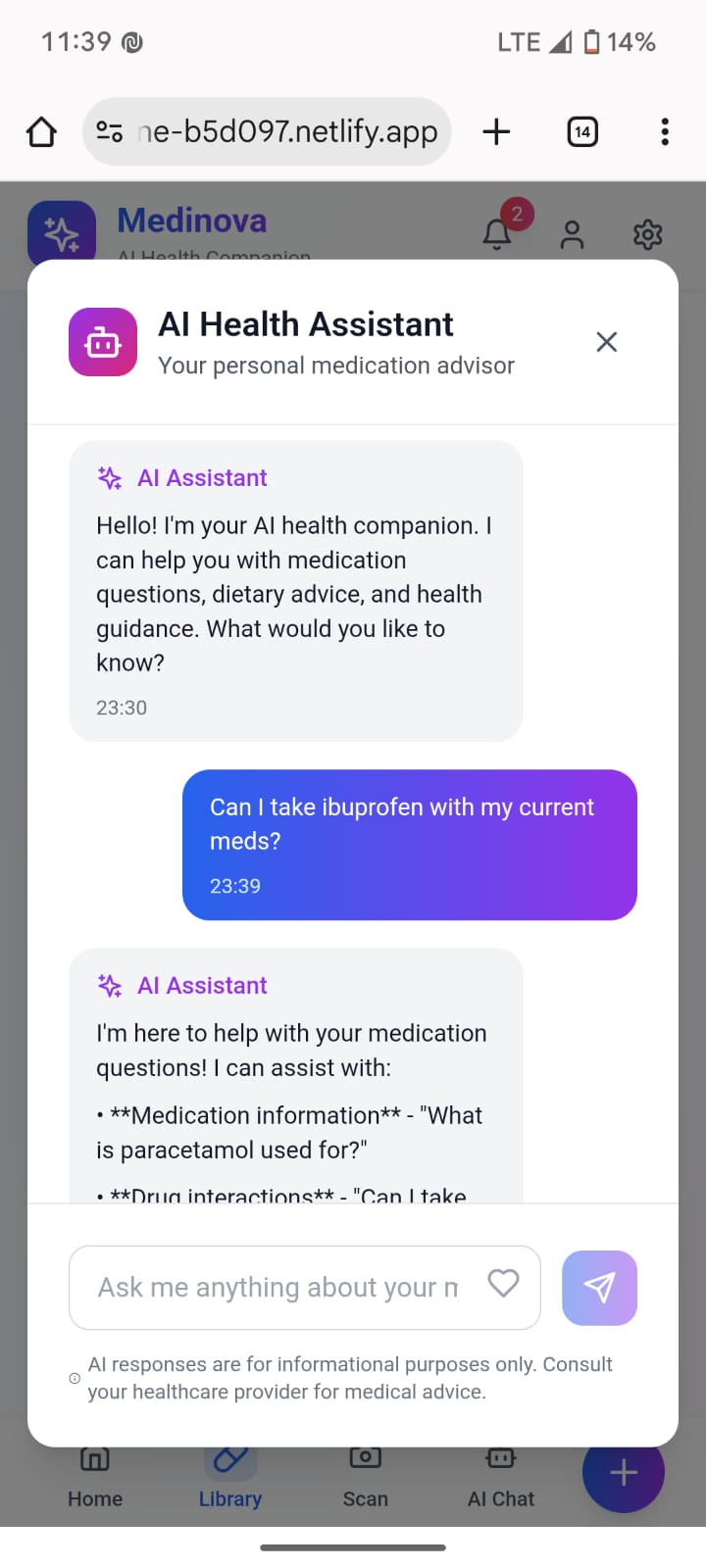
- An AI chat assistant that answers medical queries in natural language (e.g., “Can I take this with milk?”)
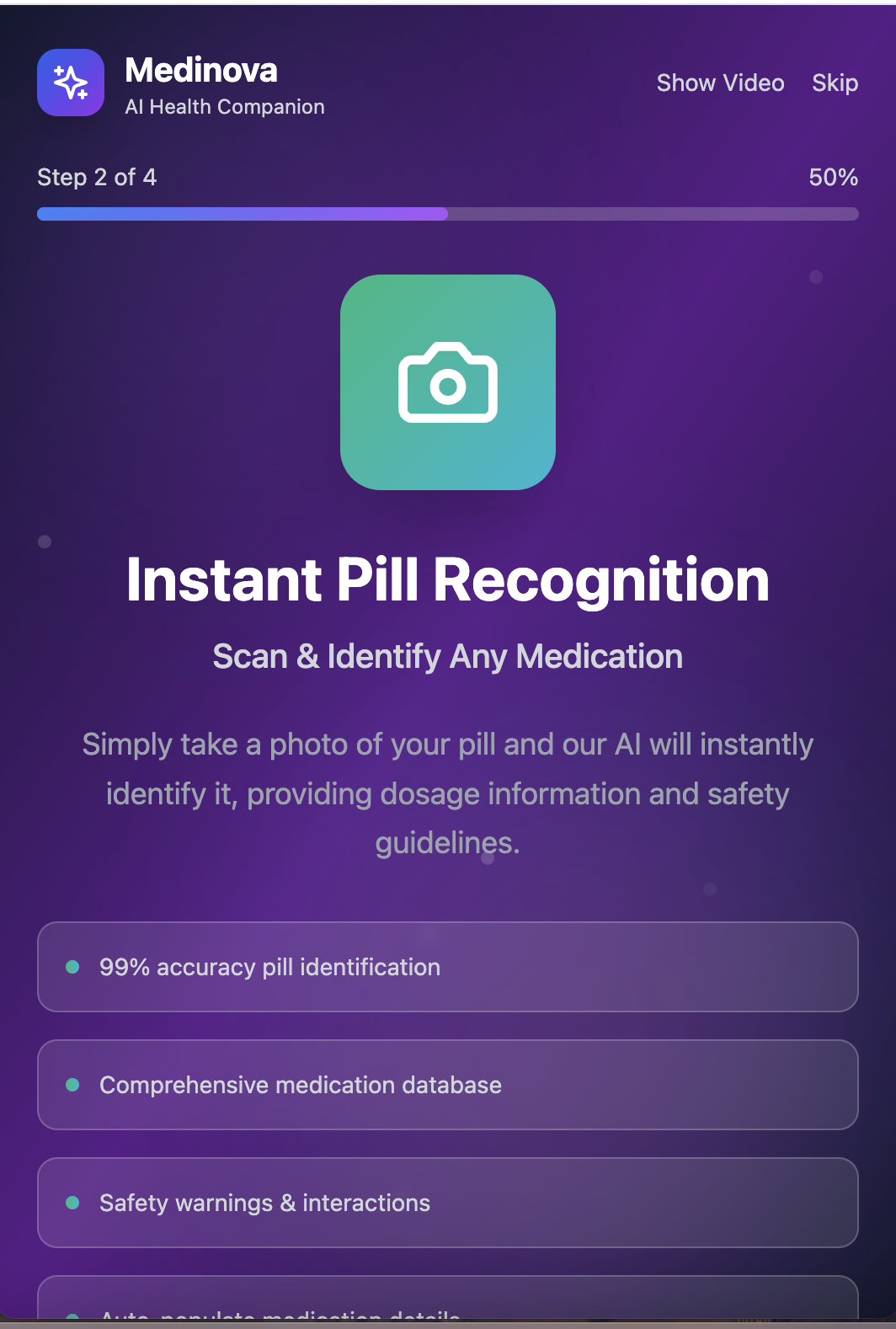
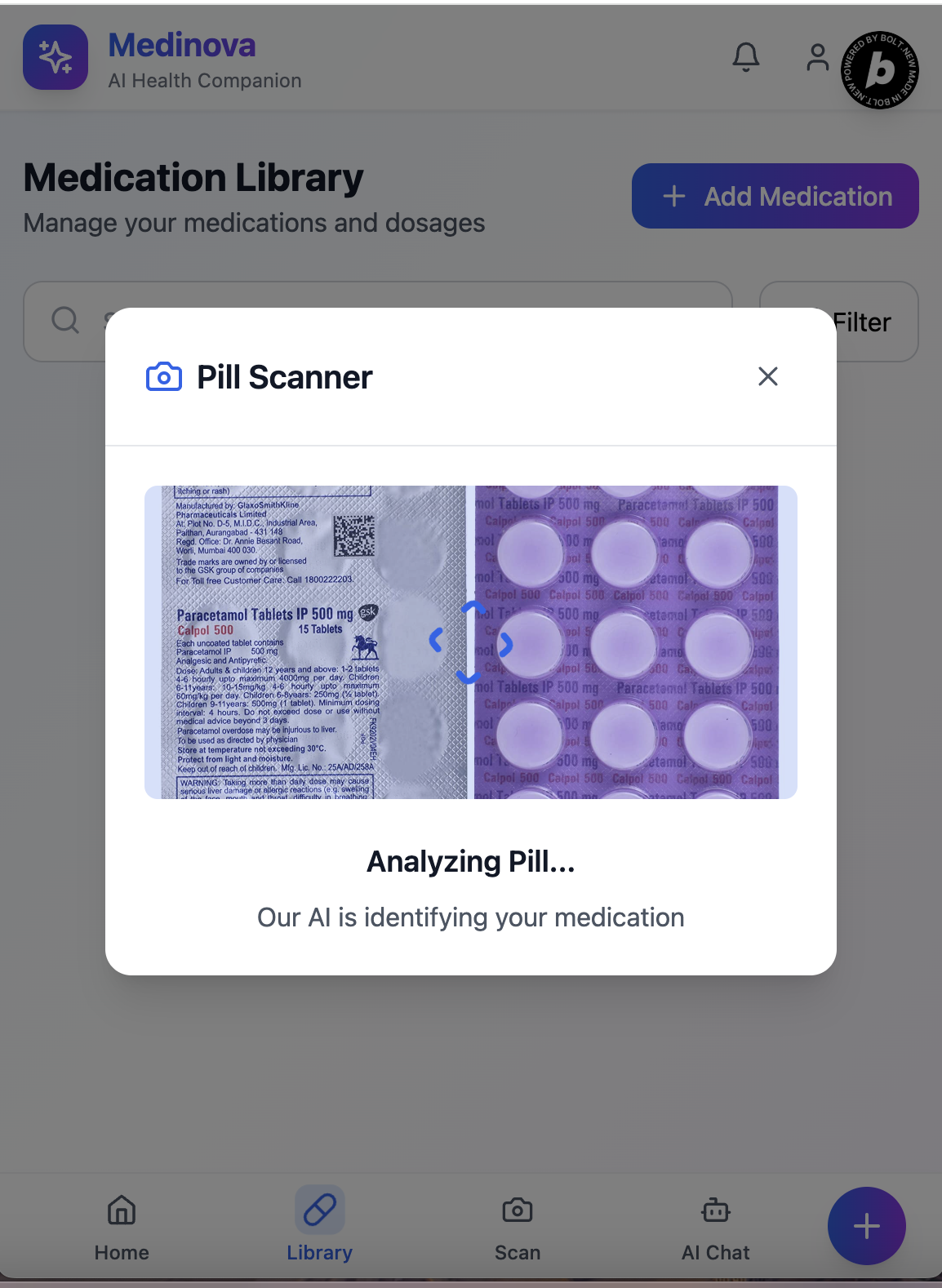
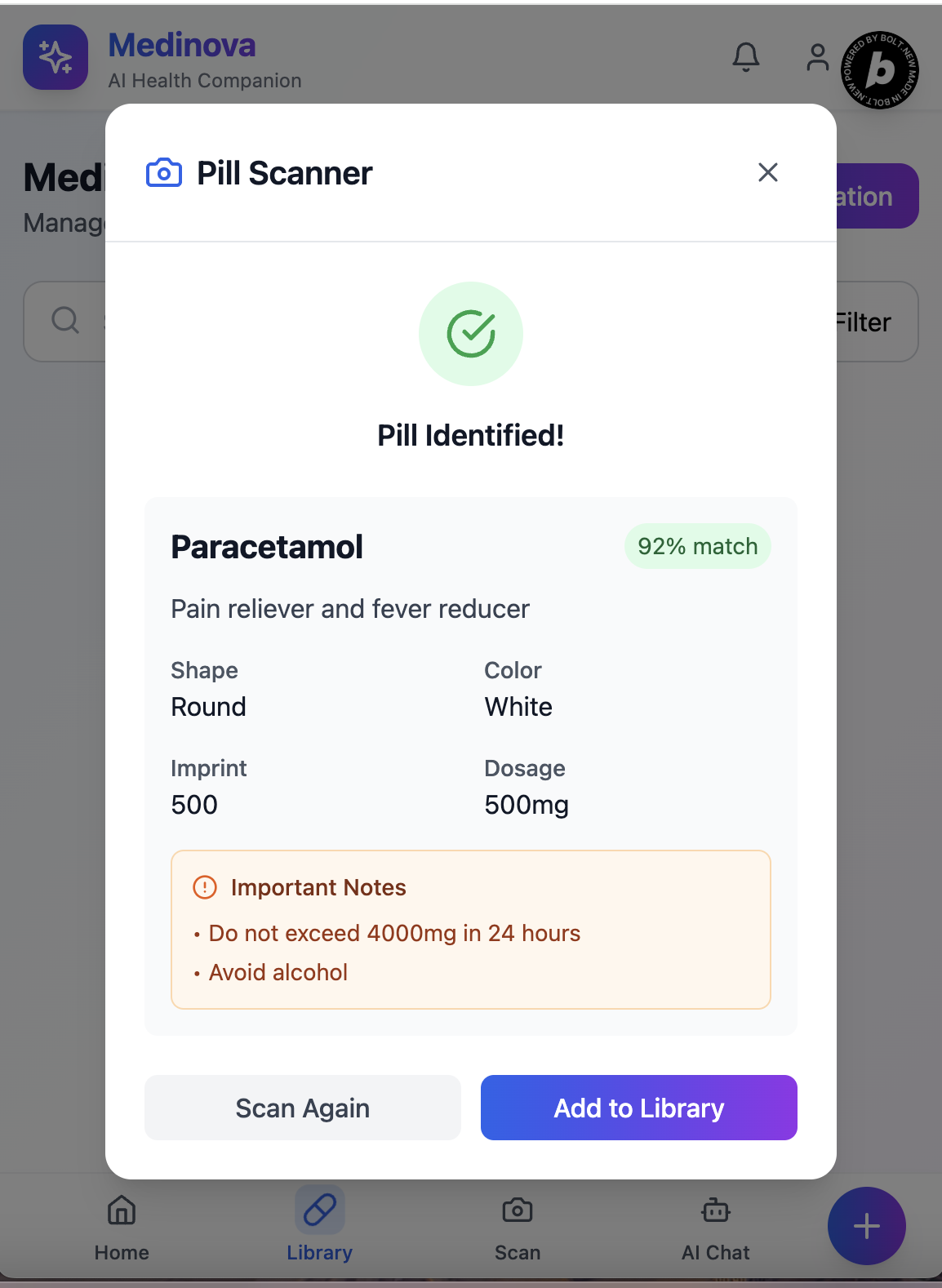
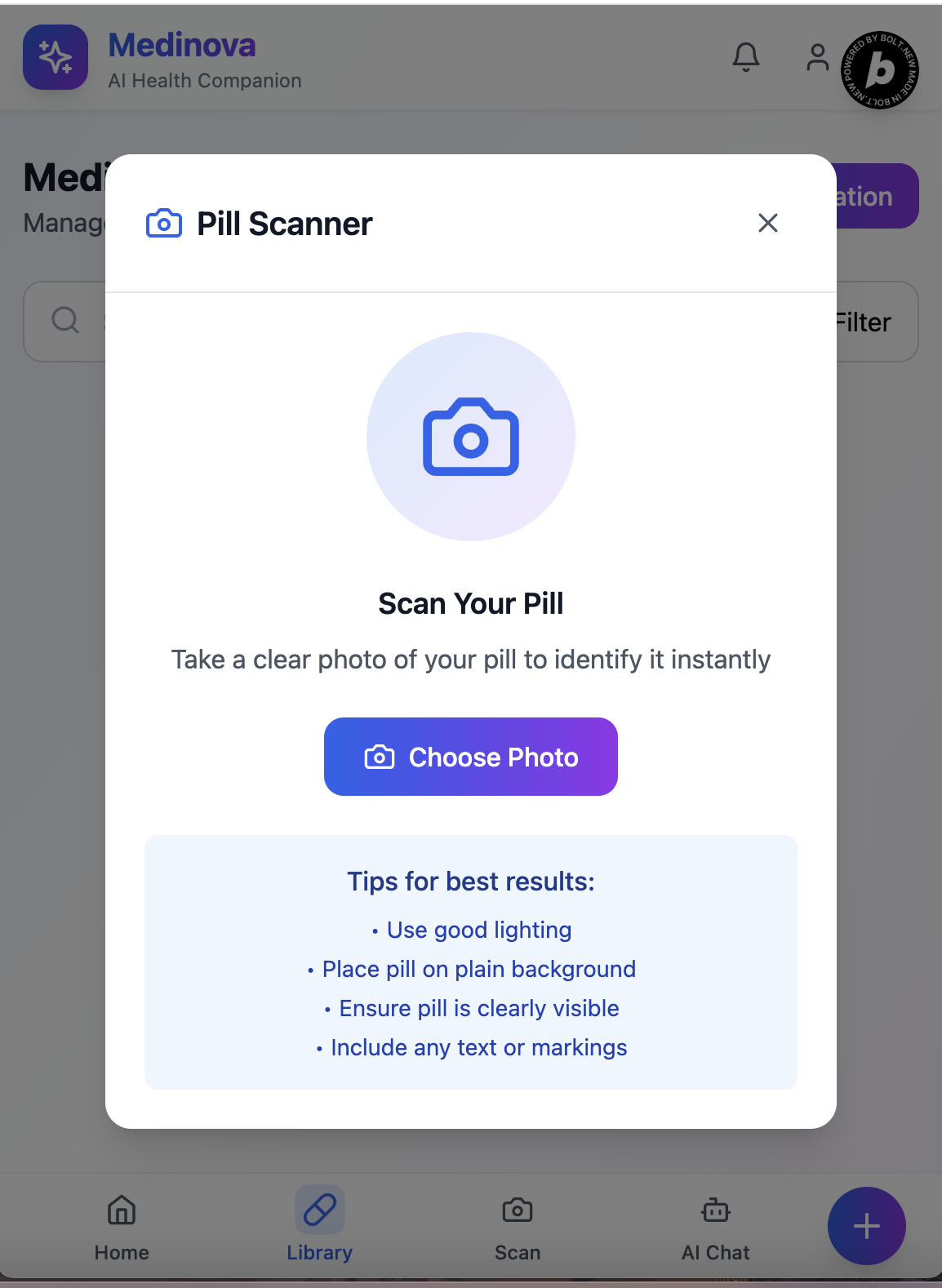
- A visual pill scanner that lets you identify medicines just by scanning the pill (shape, color, imprint — no packaging needed)
- A diet and routine guide tailored to the medicine you're on, including food to avoid and ideal intake timing
- A refill tracker that reminds users when their medicine stock is running low
- A caregiver-friendly mode that allows loved ones to monitor and assist from afar
- A clean, accessible UI with grandma-friendly features like large fonts, voice interaction, and emergency alerts
It’s not just a reminder tool — it’s an empathetic digital companion for medication management.
🔧 How I built it
I built Medinova using Bolt, which allowed me to rapidly prototype the AI interactions, structure the backend logic for reminders, and visually lay out the user experience.
Key components I implemented:
- A mock medication database with 6 elderly-relevant medicines (e.g., Paracetamol, Metformin, Thyronorm) including data like dosage, timing, food restrictions, and side effects
- A camera-based pill scanner, mocked using pill traits (color, shape, imprint) and matched to the database
- An AI chat assistant (powered by GPT-like intelligence) to help users navigate side effects, interactions, and routine advice
- A voice reminder system and voice-input compatibility for users who prefer speaking over typing
- A thoughtful UI/UX, optimized for elderly users with larger icons, contrast themes, and one-tap navigation
All of this was structured to work within Bolt’s ecosystem, using lightweight data handling, visual flow logic, and AI integration tools.
🧱 Challenges I ran into
Some of the key challenges I faced:
- Balancing technical depth with elderly accessibility — building something intelligent without overwhelming the user
- Designing the pill scanner logic in a realistic MVP scope (visual traits without real ML model training)
- Creating an AI assistant that gives meaningful, medically-safe advice while staying simple and understandable
- Keeping the UI focused — I had to resist the temptation to keep adding features and instead prioritize core functionality
🏆 Accomplishments that I'm proud of
- Designing an app that combines empathy and AI — something both futuristic and truly useful for real-world users like my grandmother
- Building a holistic medication experience that goes beyond static reminders to offer education, structure, and care
- Making the app feel friendly and empowering, not clinical or overwhelming
- Designing for accessibility by default — voice, visuals, emergency access, and simplicity
📚 What I learned
- How powerful AI can be when contextualized properly in a user journey
- That accessibility and elder care need to be top-of-mind when designing health tech
- How to balance ambition with MVP reality, especially when building for people who might not be tech-savvy
- The importance of empathy as a UX superpower — designing not just for tasks, but for comfort, understanding, and reassurance
🚀 What’s next for Medinova
This is just the beginning. The vision for Medinova includes:
- Full prescription scan and auto-detection of medicine schedules
- Wearable integration (like Fitbit or Apple Health) for proactive alerts based on vitals
- Expanding the pill identification engine using actual ML model training and third-party APIs
- Adding regional language support and audio-based interactions for accessibility in diverse communities
- Creating a care team dashboard for doctors or family to oversee patients remotely
- Exploring predictive health alerts, where Medinova learns from patterns to prevent missed doses or flag unusual symptoms
Ultimately, Medinova is not just a med tracker — it’s a mission to bring compassionate technology to people who need it most.
Built With
- bolt
- chatgpt
- imagekit
- javascript
- nelify
- openai
- python
- supabase
- web

Log in or sign up for Devpost to join the conversation.