Challenges we ran into:
Time constraints and resource availability prevented us from 3D printing the model of our pill dispenser as we’d originally hoped. We’d hoped to implement motors and create a functioning prototype as a proof of concept, but could not do so by extension.
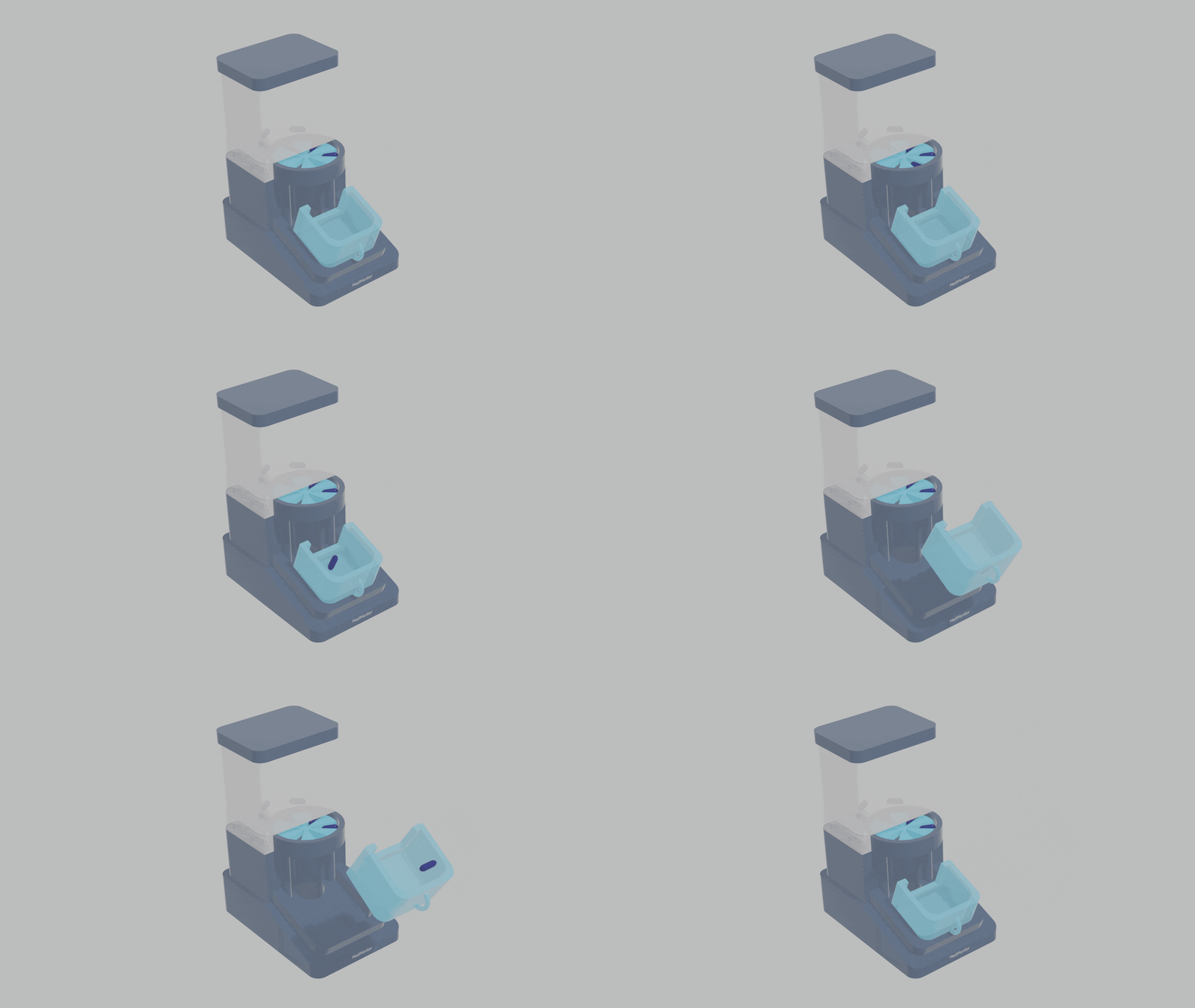
Instead, we looked into other ways to display our project and its functions, and landed on creating a 3D animation. Together, we worked with blender for the first time. This took a lot of fiddling, but we successfully created a 3D animation of the pill dispenser, and were left with a greater understanding of 3D modelling and animation software. This is something we hope to leverage in future hackathons, projects, and our university careers.
Accomplishments that we’re proud of: Successfully creating a 3D animation of our product despite working with blender for the first time ever Creating a functioning and interactive interface for the product Collectively attending our first hackathon, gaining experience, and learning more (particularly about AI and some of the resources available to us)
What we learned: By attending workshops, we learned more about AI and how to utilise it, wiring and using an arduino with a sensor, applications and resources available to us like versal, and much more
Inspiration
My grandparents take multiple medications every day, and I’ve seen firsthand how confusing and stressful it can be to keep track of doses, timing, and refills. Even with pill organizers and phone alarms, they can still miss or take incorrect doses. We were inspired to build MediMonitor as a tool that helps people take the right medication at the right time, without added stress.
What it does
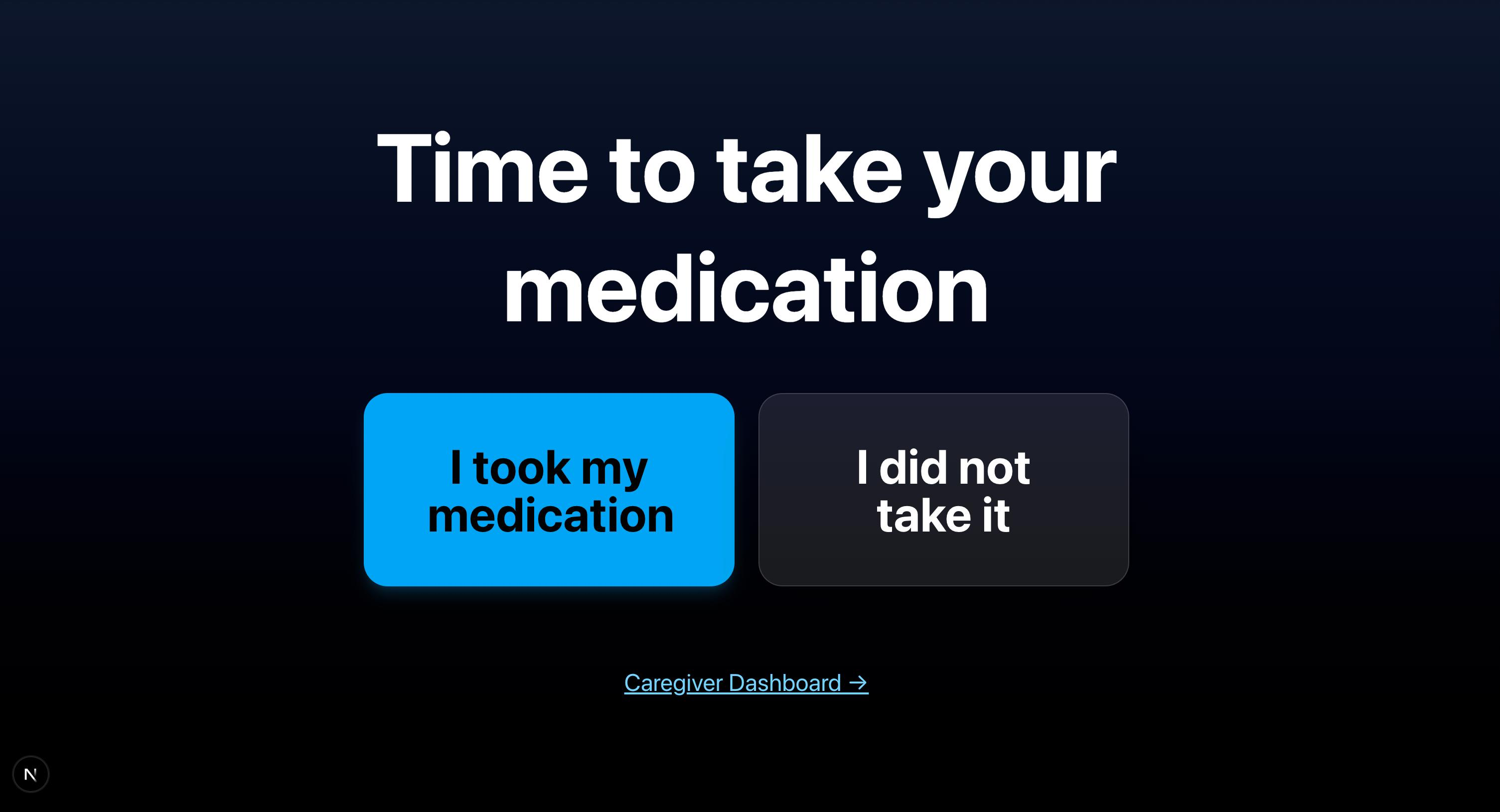
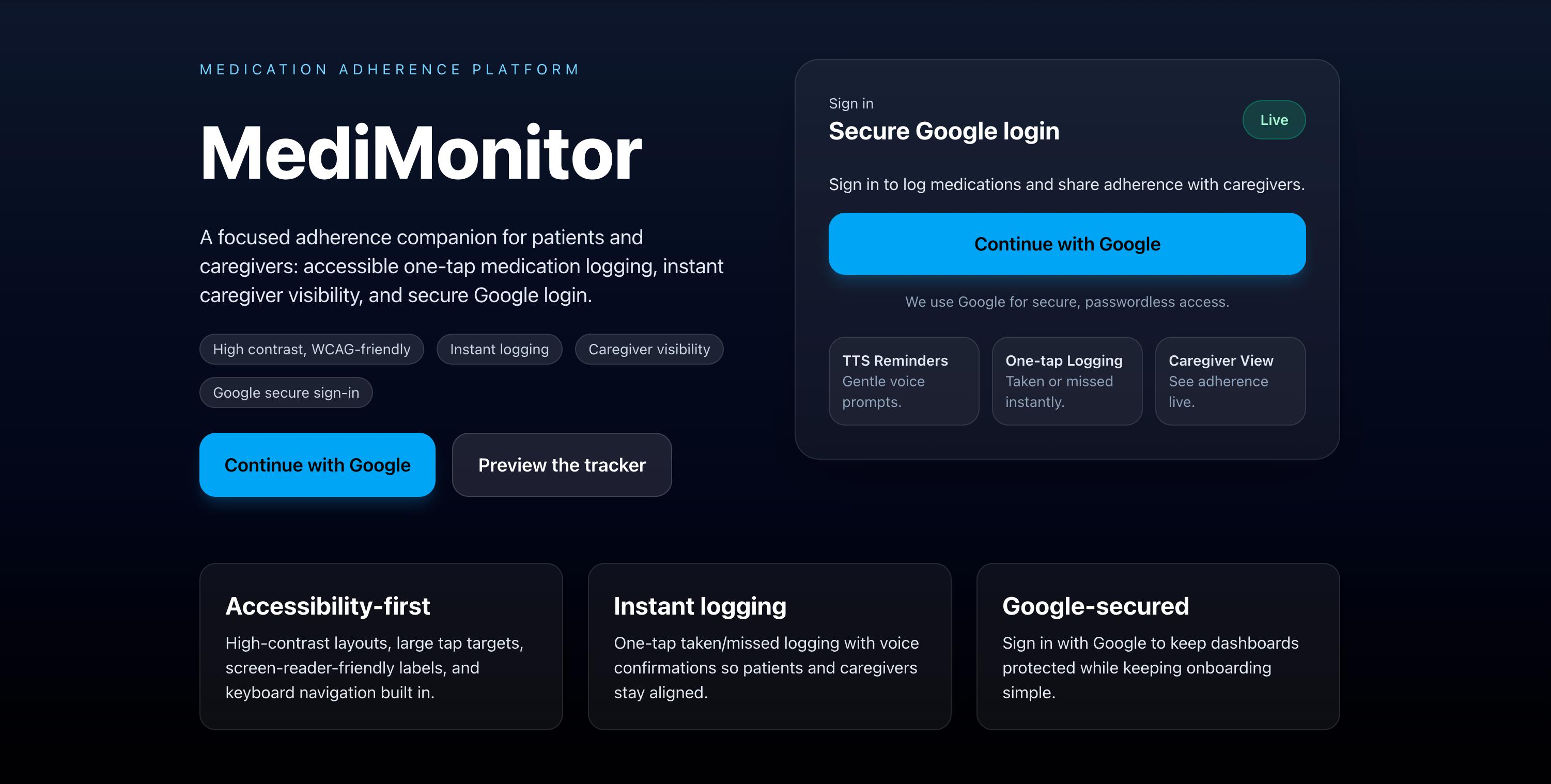
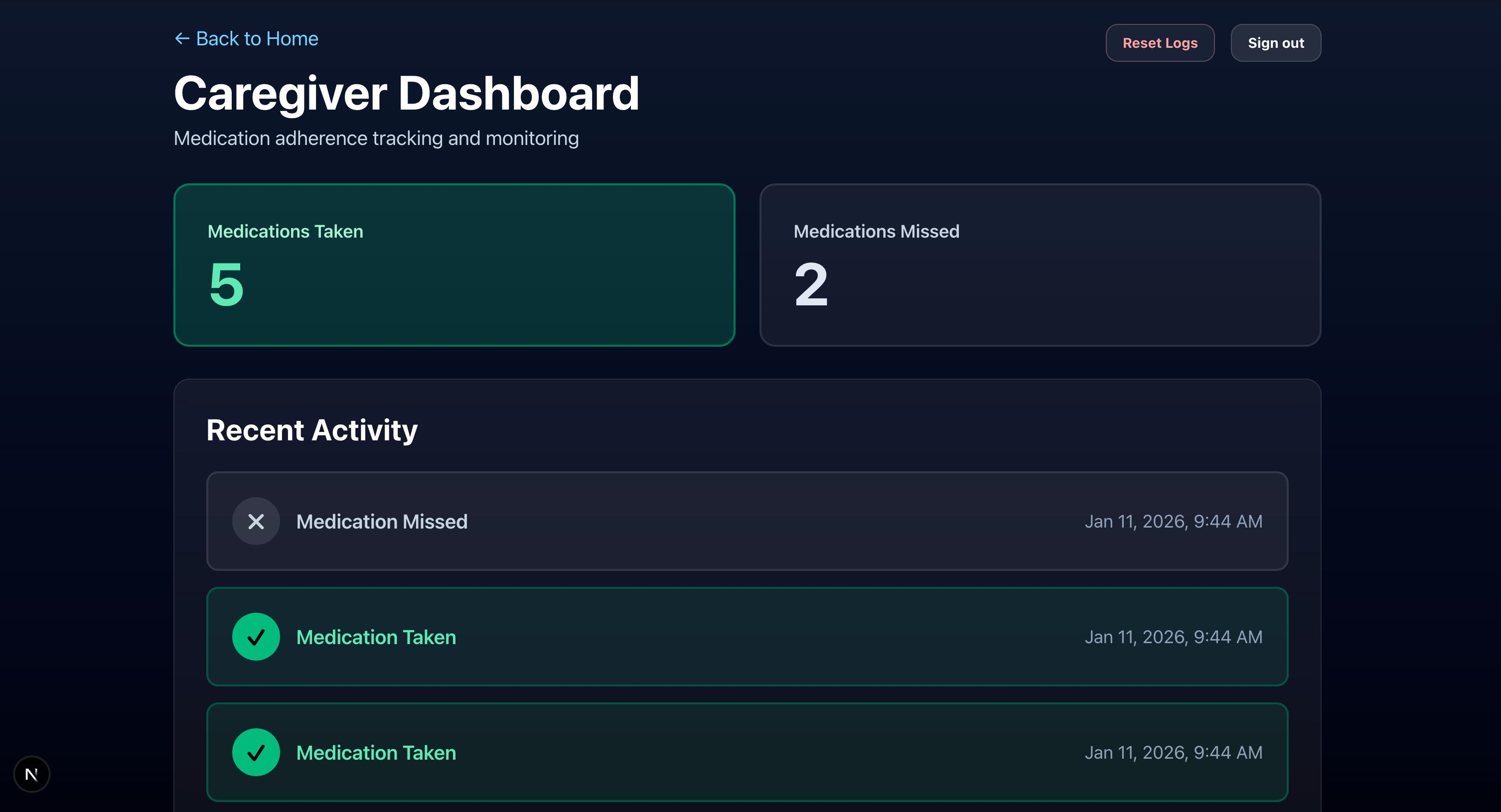
Web App: An application to track user medication habits and history. The program tracks when medications have and have not been taken, and provides users with a summary of this information to fully grasp medication habits. This product can be used by both end users, as well as caregivers, and long/short term care facilities.
MediMonitor includes several key features that improve accessibility. First, its text-to-speech functionality supports users who have difficulty reading or have visual impairments. The dispenser also reduces the need for manual effort when taking medication, benefiting users with limited dexterity or mobility. Overall, MediMonitor makes medication management more accessible and convenient, particularly for individuals with physical limitations or busy schedules.
Device: Will use a motor and Arduino to physically dispense pills at the right time using information from the app to provide further convenience.
How we built it
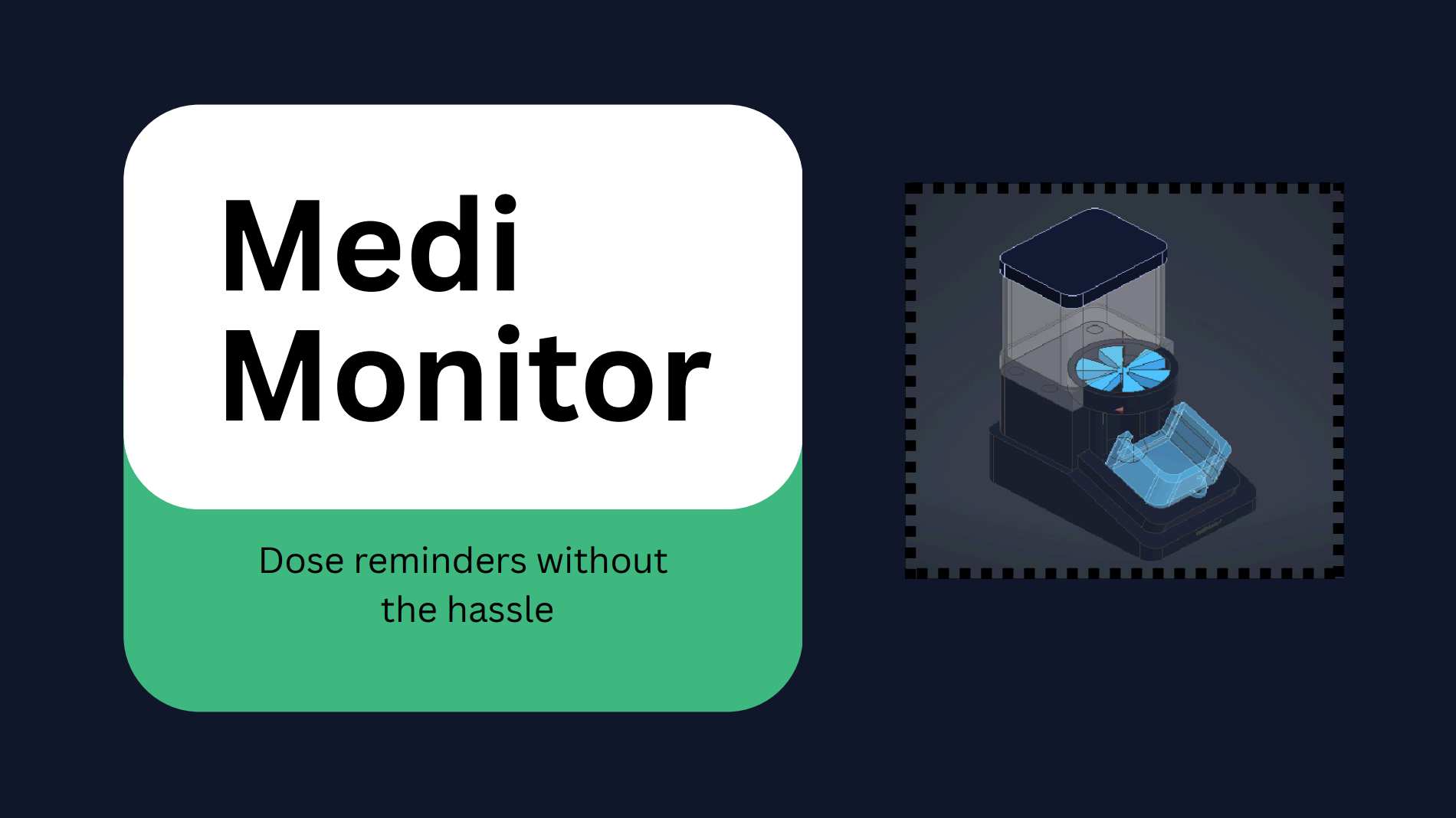
The model of the device was created in Autodesk Inventor. We were unable to print the model physically, so we used blender to simulate it working.
Challenges we ran into
There were always challenges along the way, slow and careful debugging helped get things working along the way. For example, time constraints and resource availability prevented us from 3D printing the model of our pill dispenser as we’d originally hoped. We’d hoped to implement motors and create a functioning prototype as a proof of concept, but could not do so by extension.
Instead, we looked into other ways to display our project and its functions, and landed on creating a 3D animation. Together, we worked with blender for the first time. This took a lot of fiddling, but we successfully created a 3D animation of the pill dispenser, and were left with a greater understanding of 3D modelling and animation software. This is something we hope to leverage in future hackathons, projects, and our university careers.
Coordinating hardware concepts with software planning, while learning new tools under pressure, was another significant hurdle. Working together and learning as a team, however, made getting over this hurdle simpler.
Accomplishments that we're proud of
Designing a complete and functional device model in a short amount of time Creating a clear, user-focused solution to a real-world healthcare problem Successfully simulating the device’s behavior despite limited resources Developing both hardware and software components within a tight deadline Collectively attending our first hackathon, gaining experience, and learning more (particularly about AI and some of the resources available to us)
What we learned
From the challenges we faced, we learned the importance of adaptability and problem-solving when projects do not go as initially planned. Although time and resource constraints prevented us from building a fully functional physical prototype, we learned how to pivot our approach and still effectively communicate our idea through alternative means. Creating a 3D animation allowed us to showcase the design and functionality of our pill dispenser while developing new technical skills in Blender and 3D modeling.
We also learned the value of patience and persistence through slow, careful debugging and experimentation with unfamiliar tools. Coordinating hardware concepts with software planning highlighted the need for clear communication and structured collaboration, especially under time pressure. By working together and supporting one another, we were able to overcome these challenges and strengthen our teamwork skills.
What's next for MediMonitor
Our next steps include building a physical prototype of the pill dispenser, integrating it with the web application, and enabling real-time input so medications are dispensed automatically at scheduled times. In the future, we hope to expand the system with additional safety checks, notifications, and support for multiple medications.


Log in or sign up for Devpost to join the conversation.