-
-
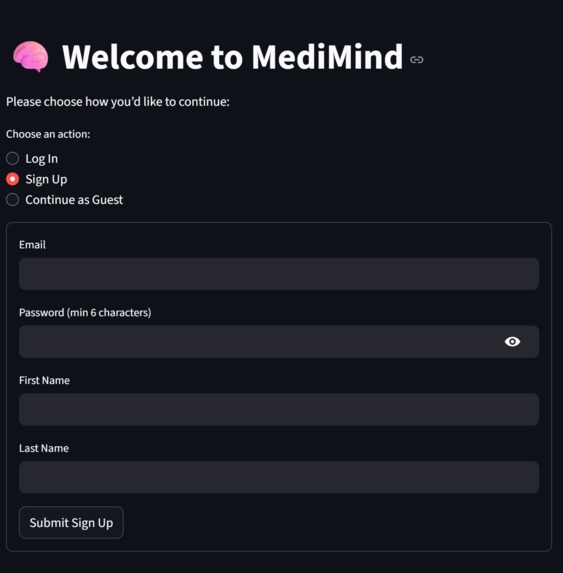
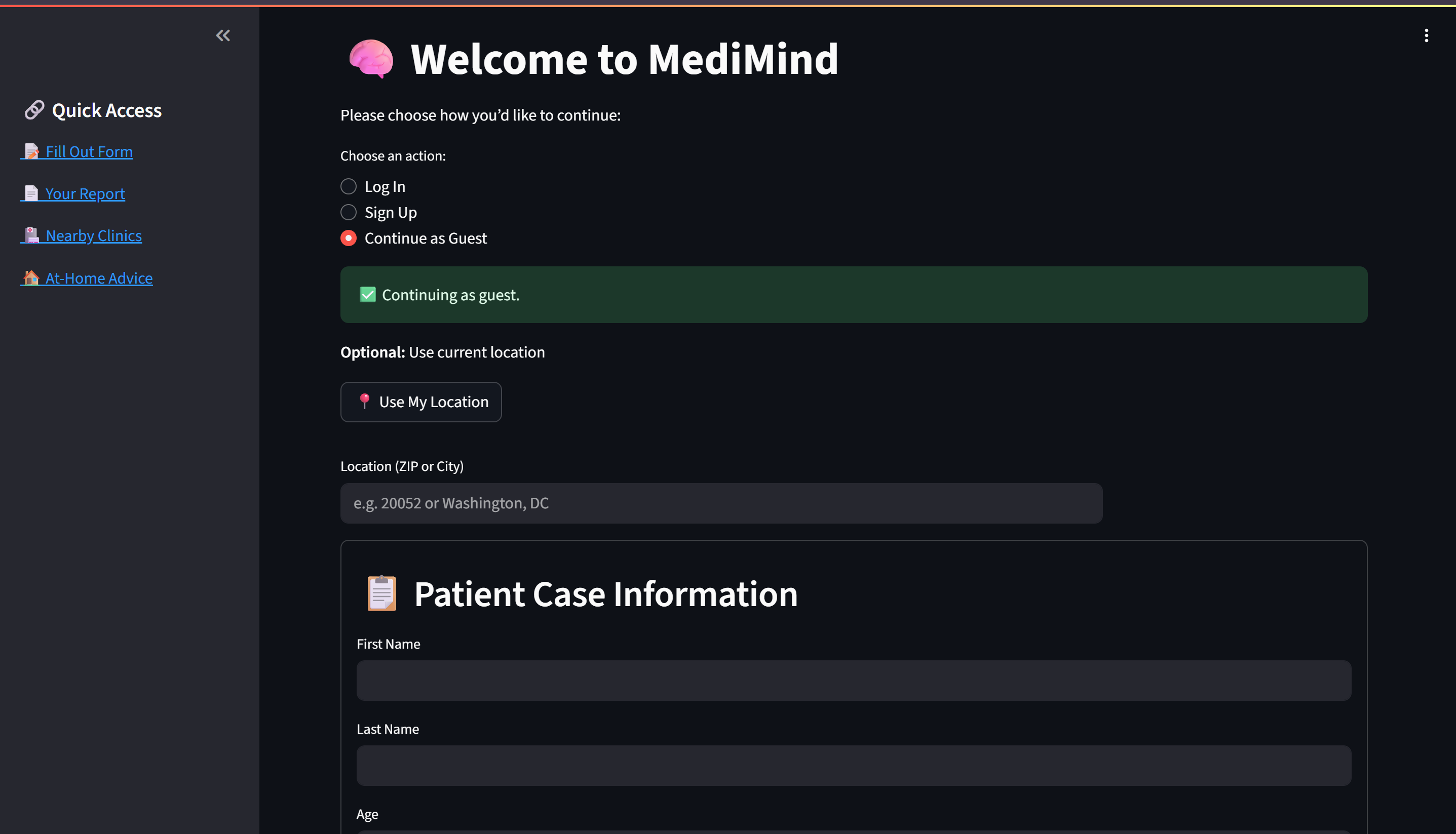
Homepage
-
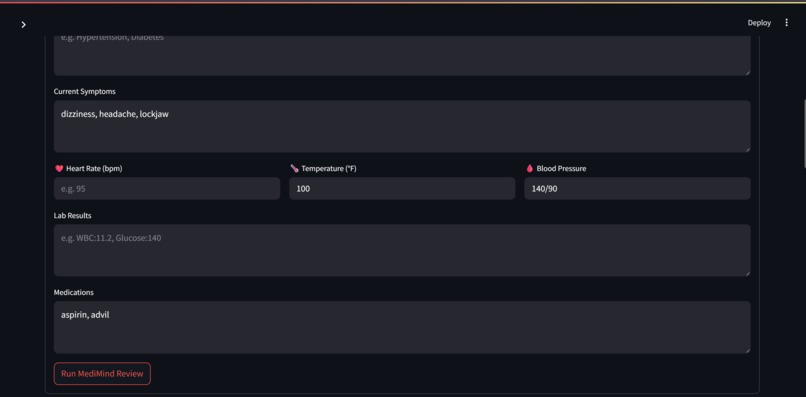
Form(1)
-
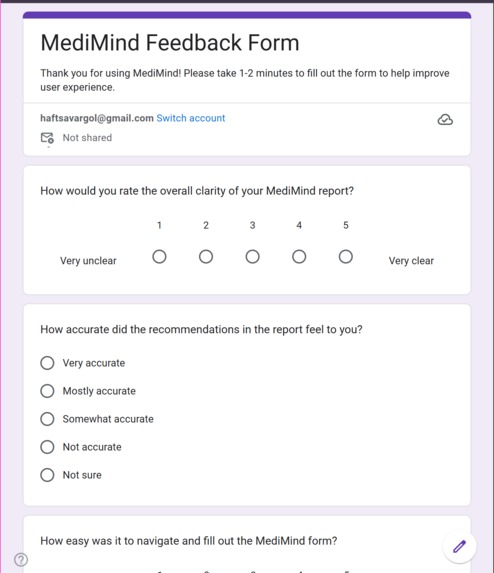
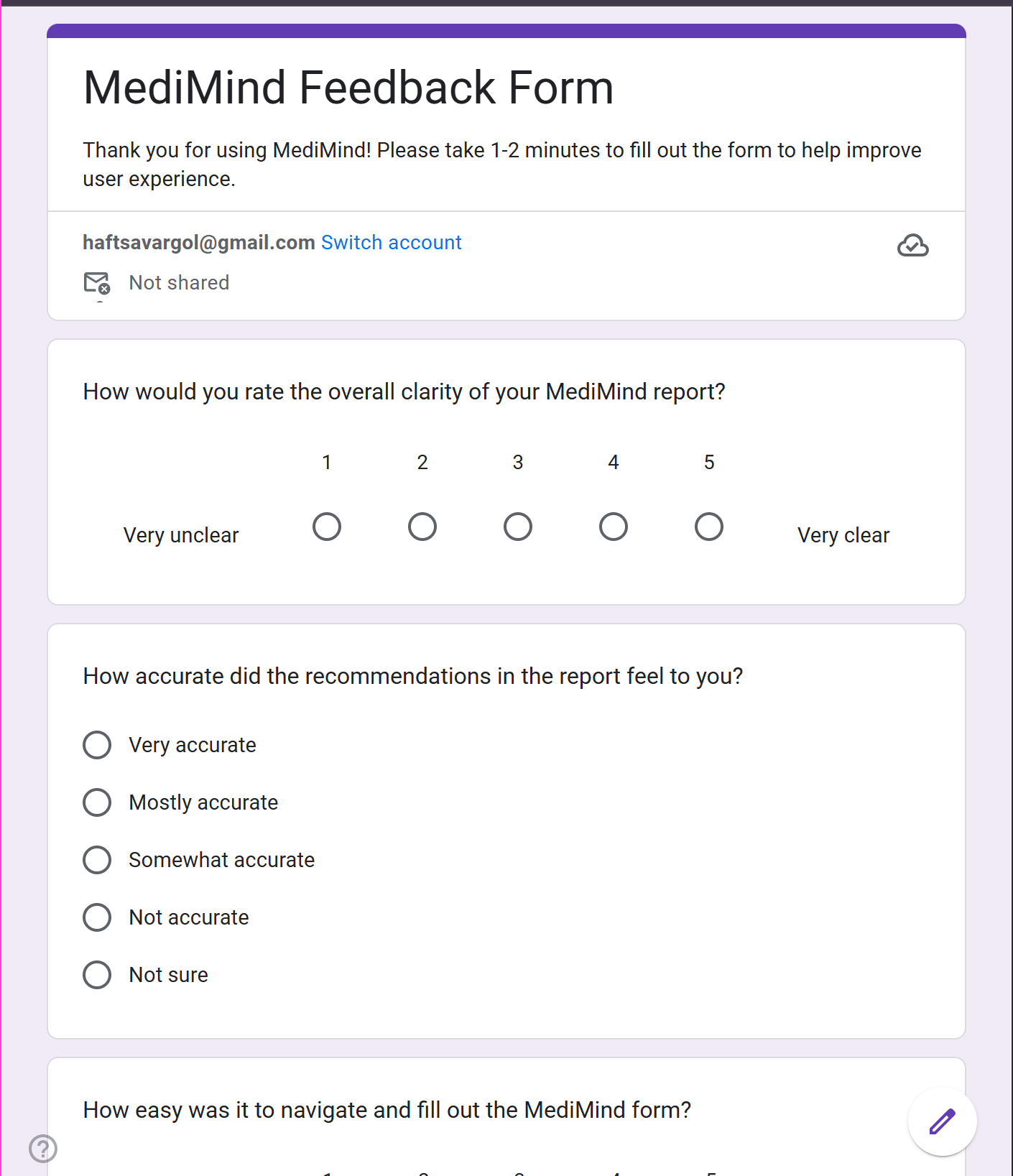
Feedback form
-
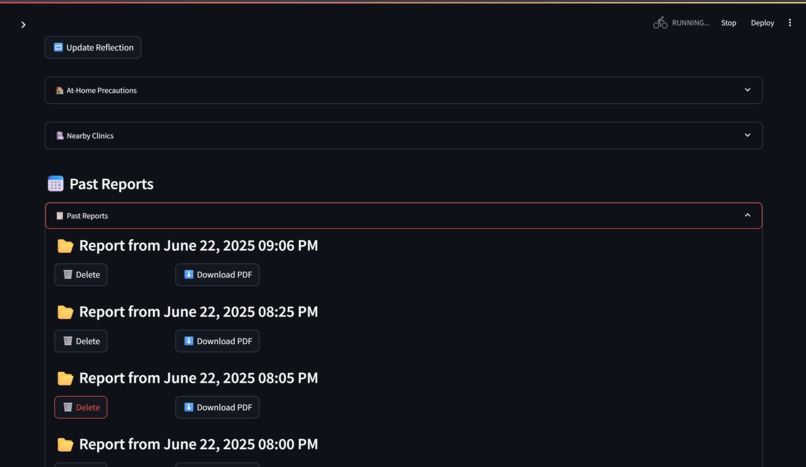
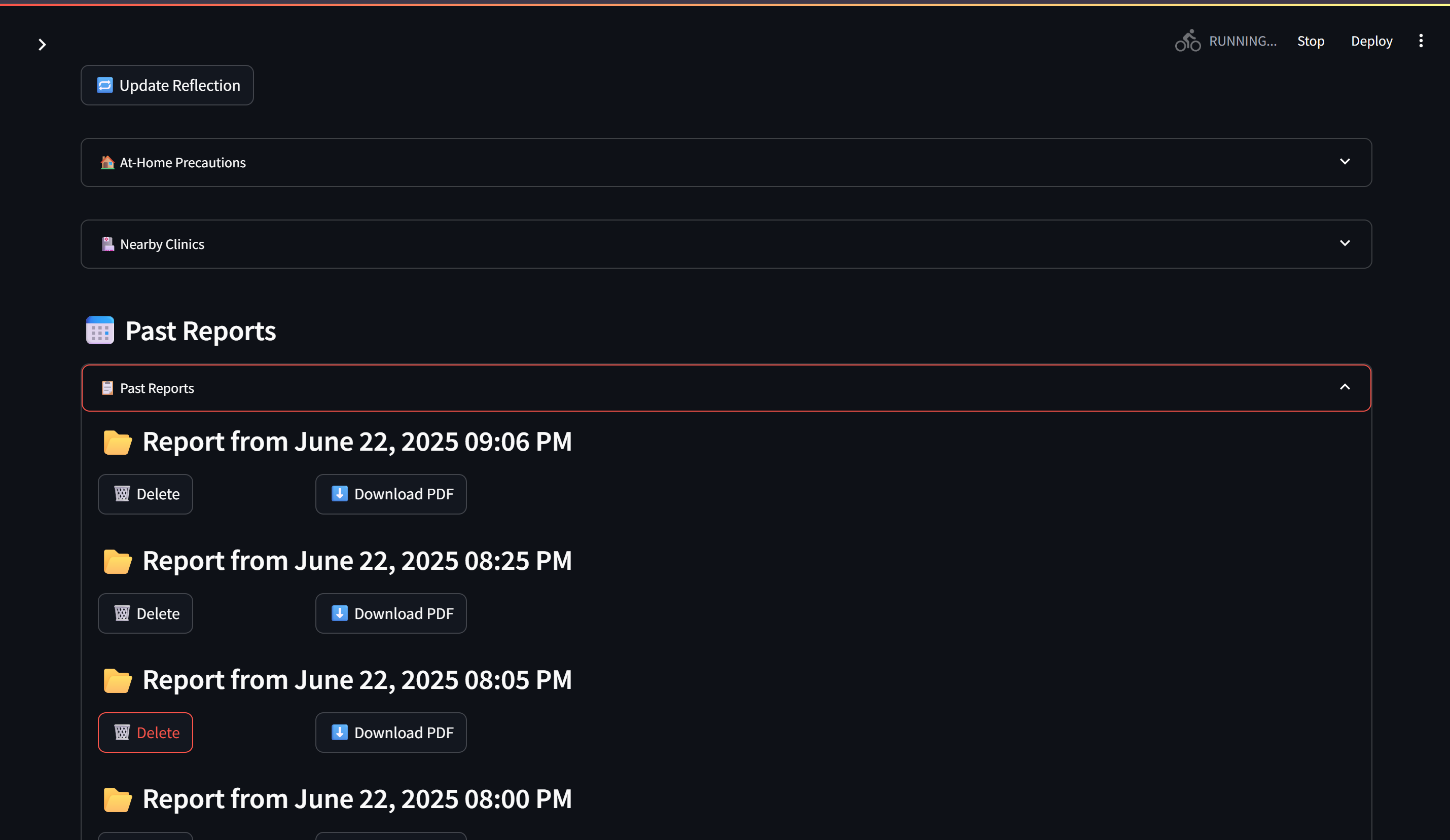
Past reports section
-
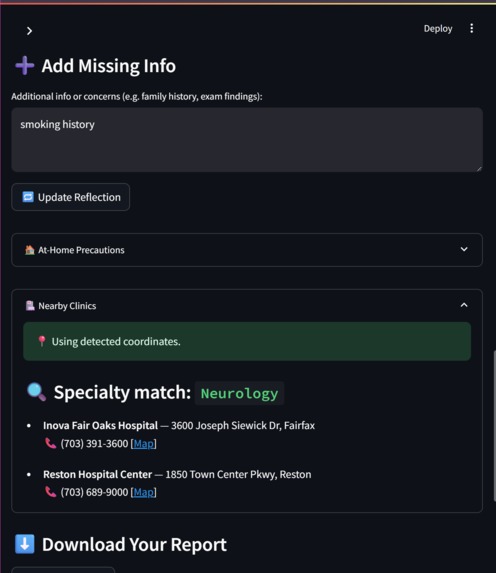
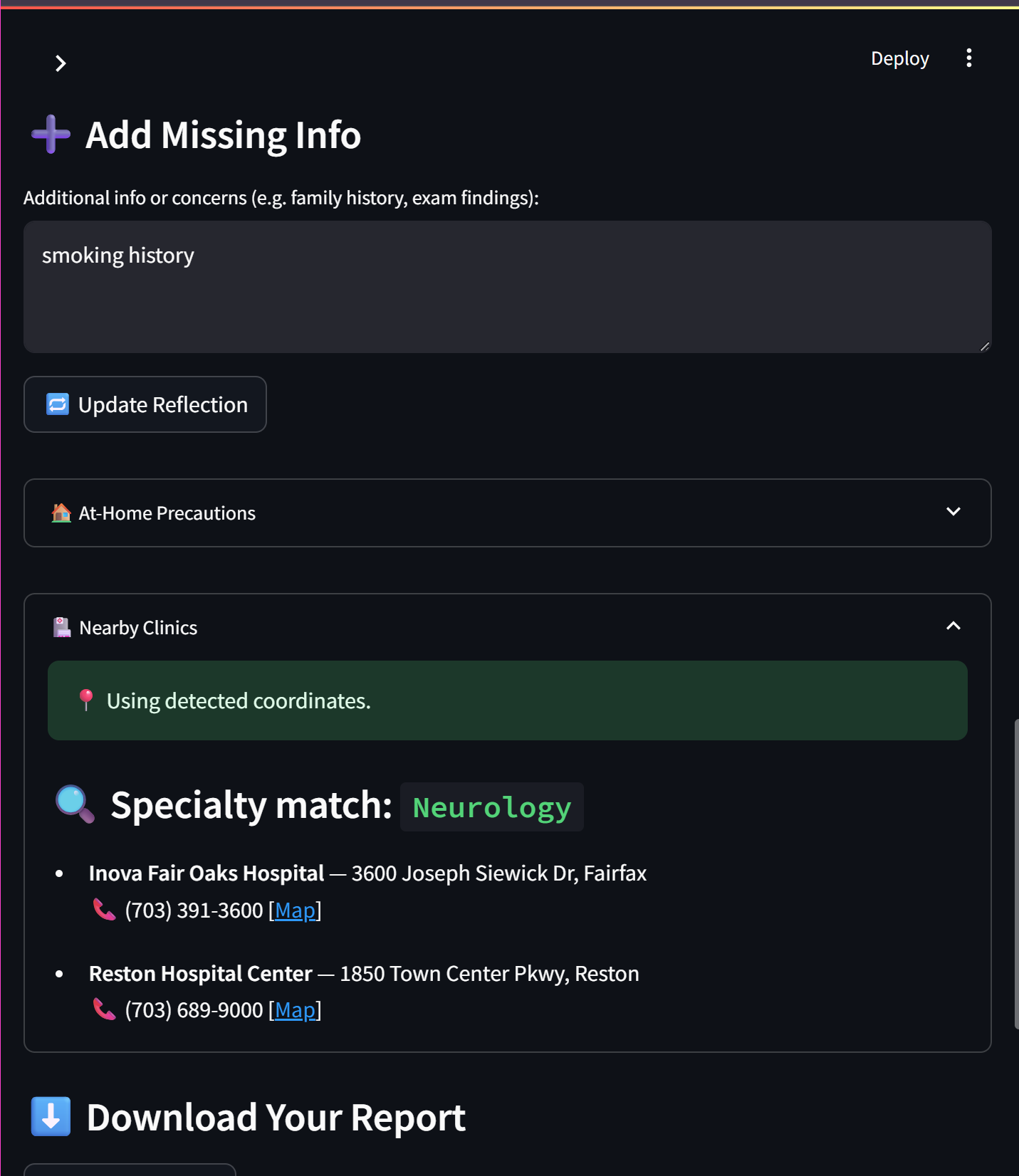
Clinics section
-
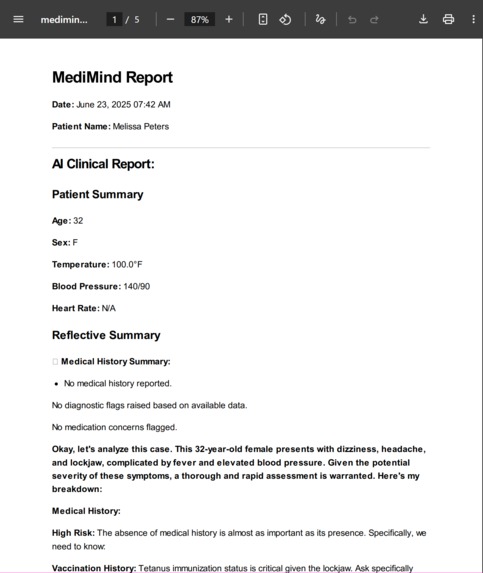
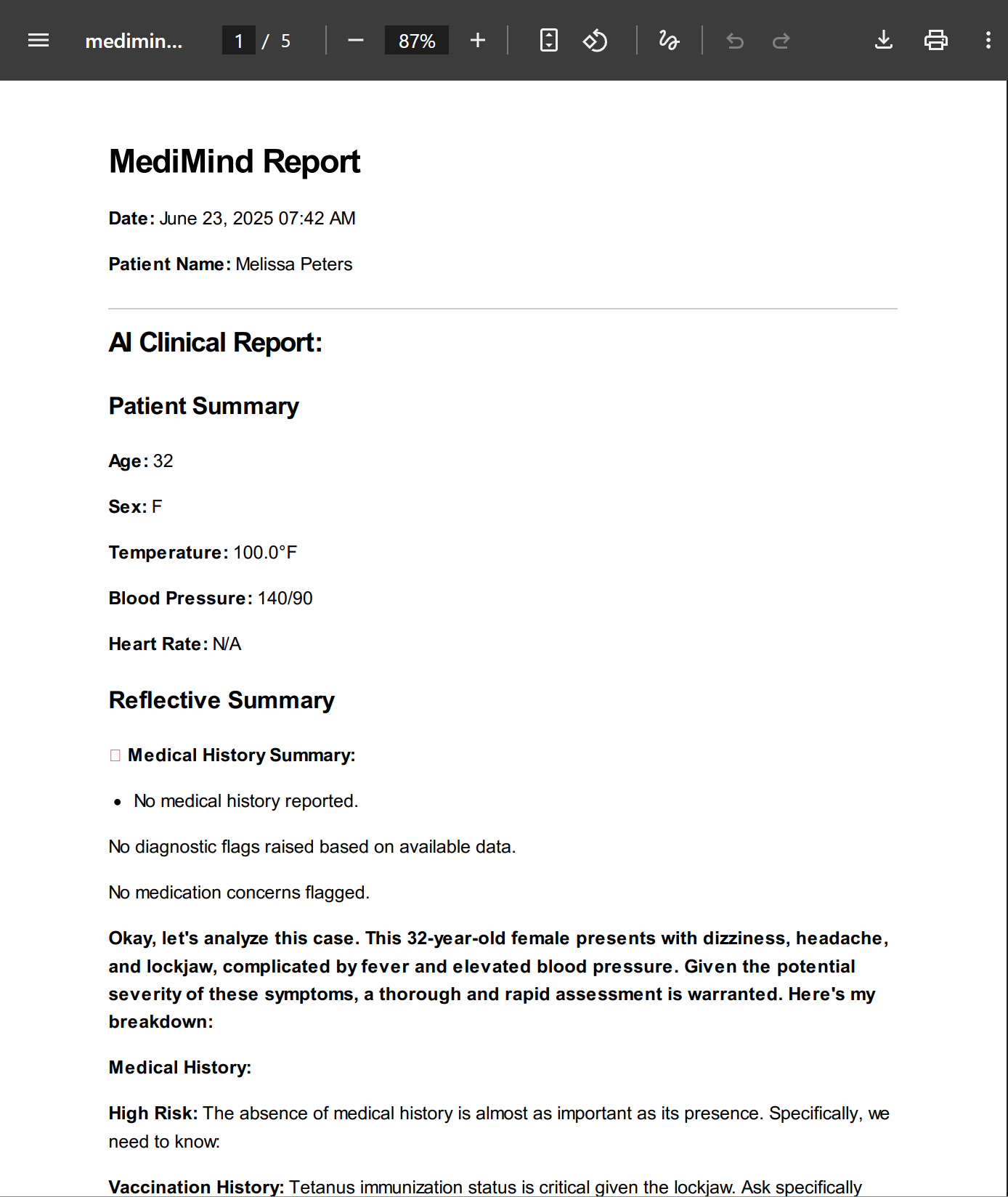
PDF preview of report
-
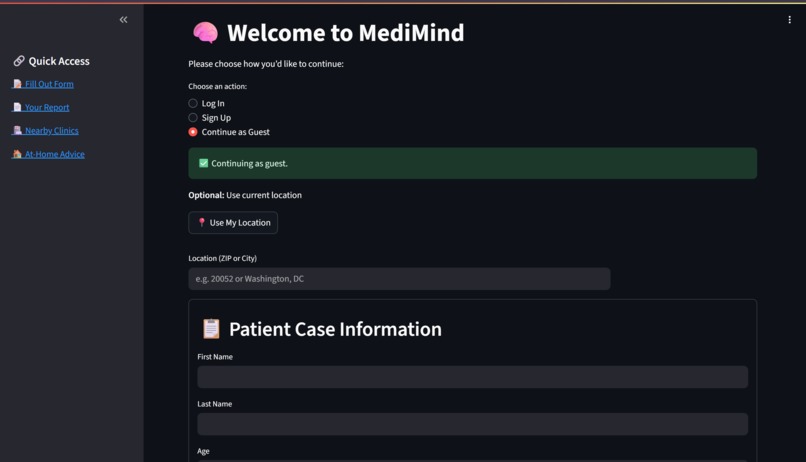
Sidebar nav + form
-
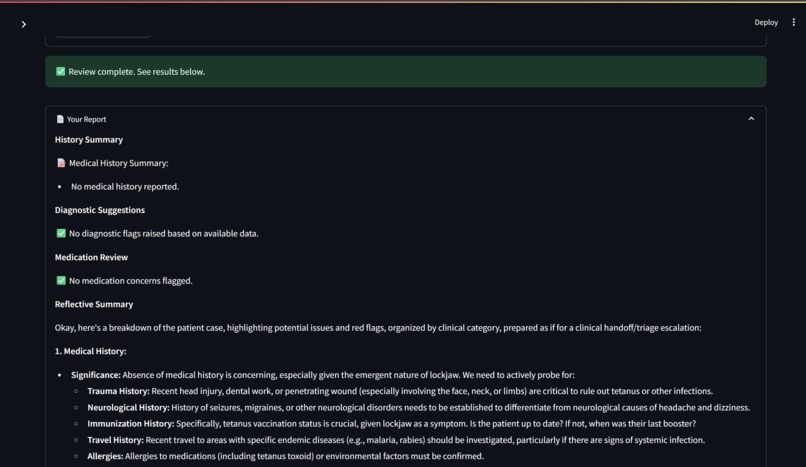
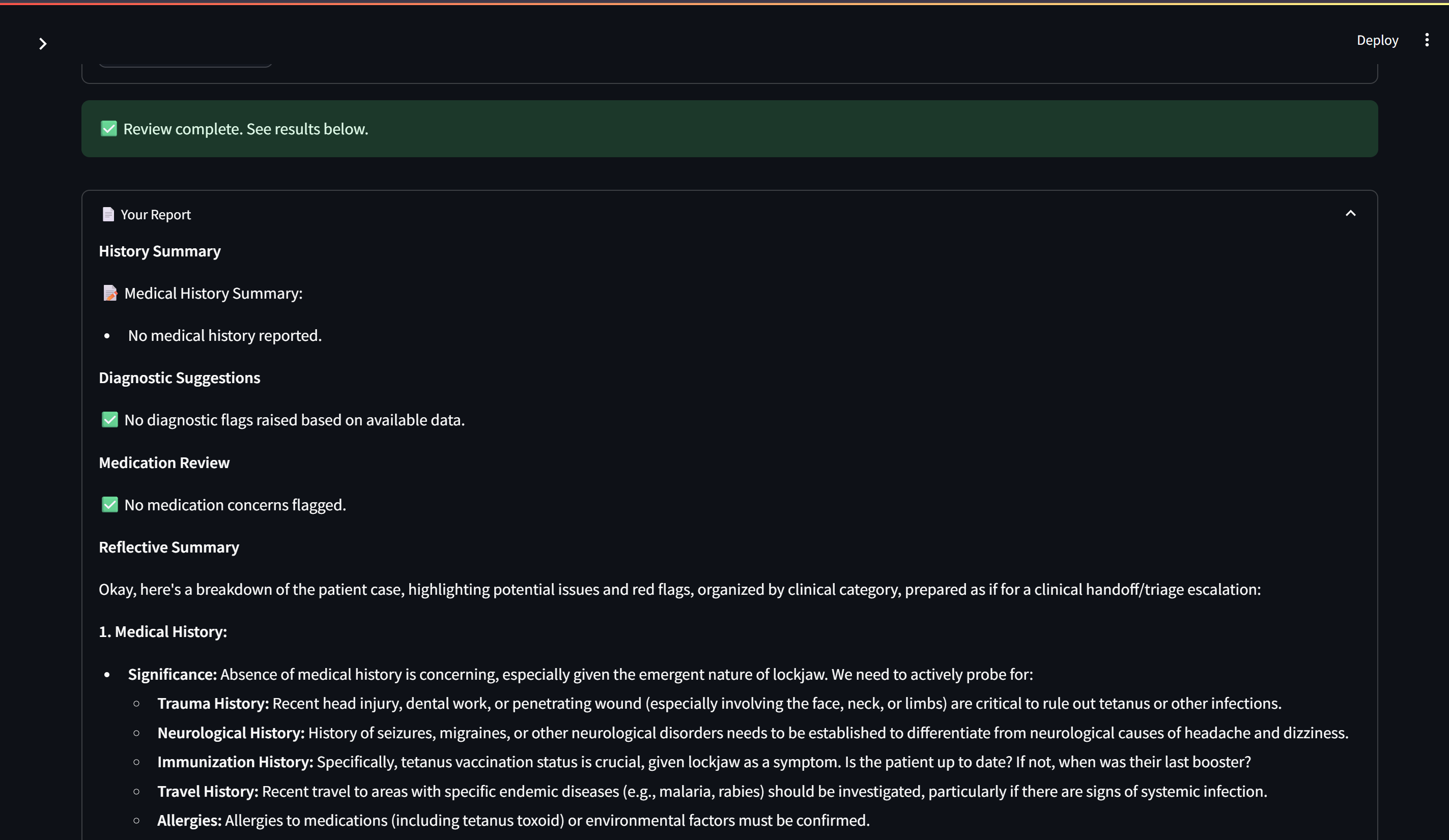
Report (1)
-
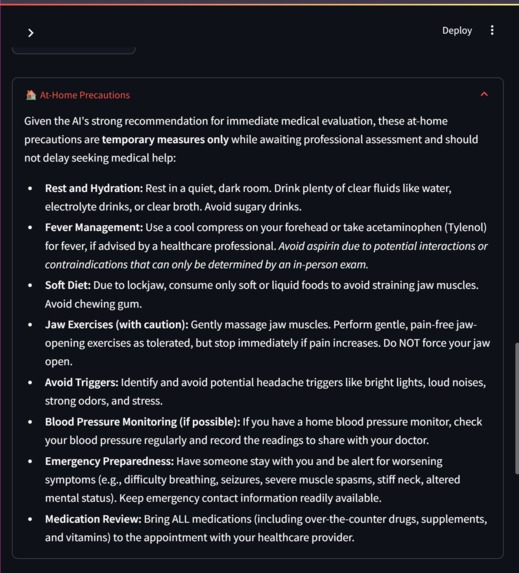
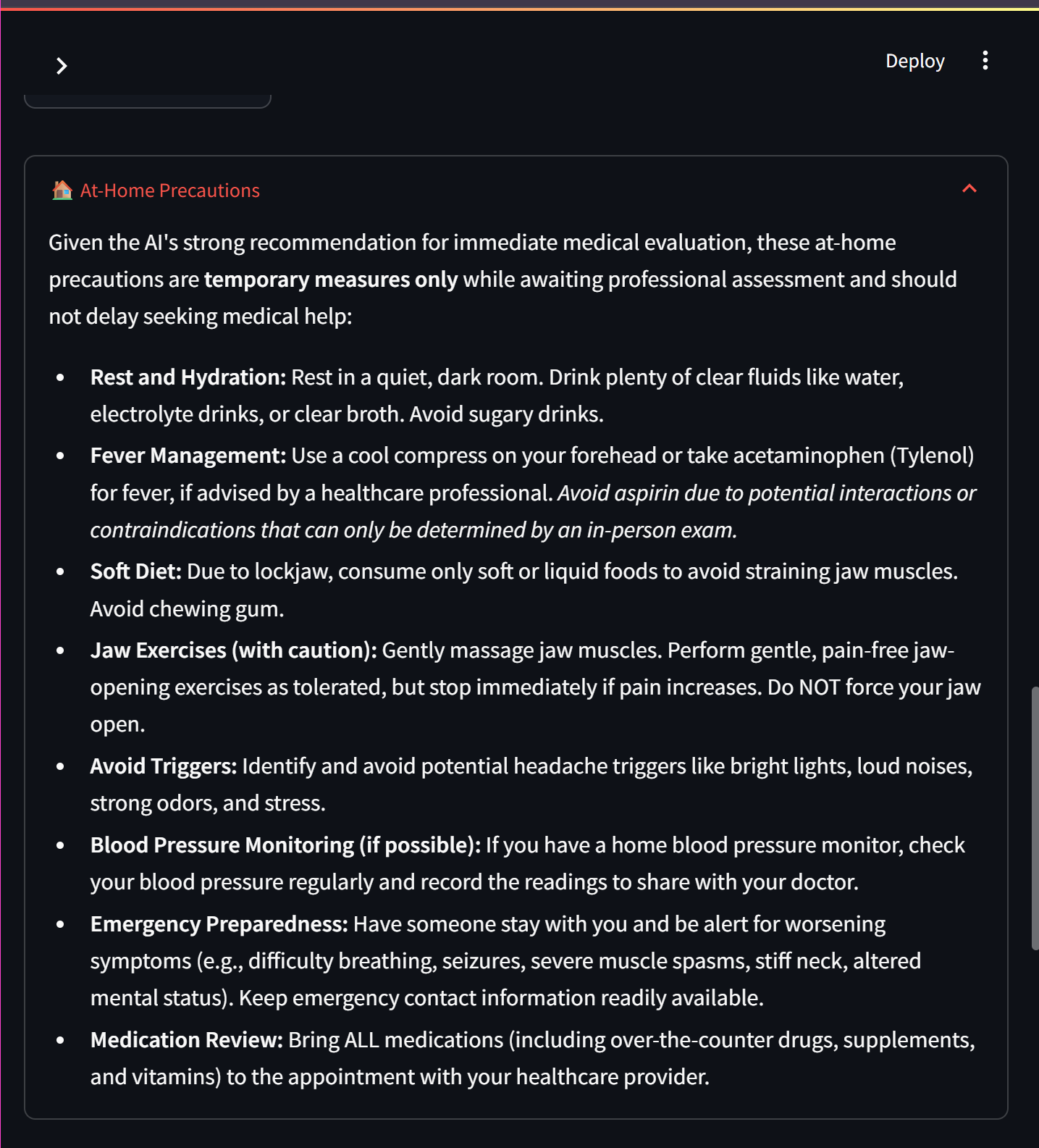
At-home precautions section
-
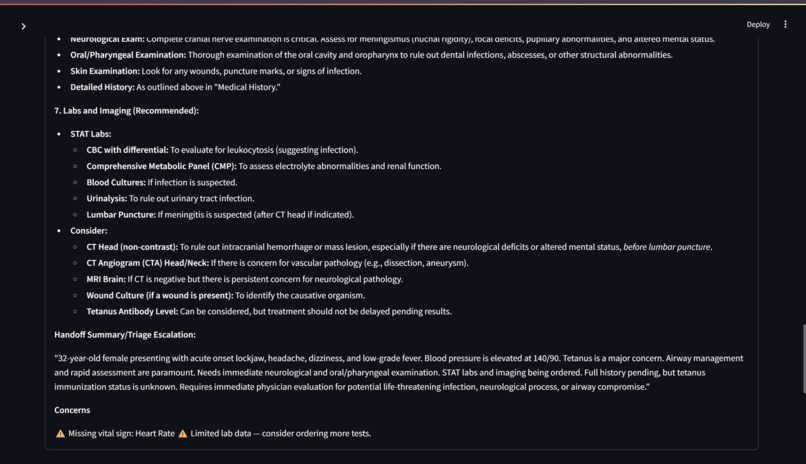
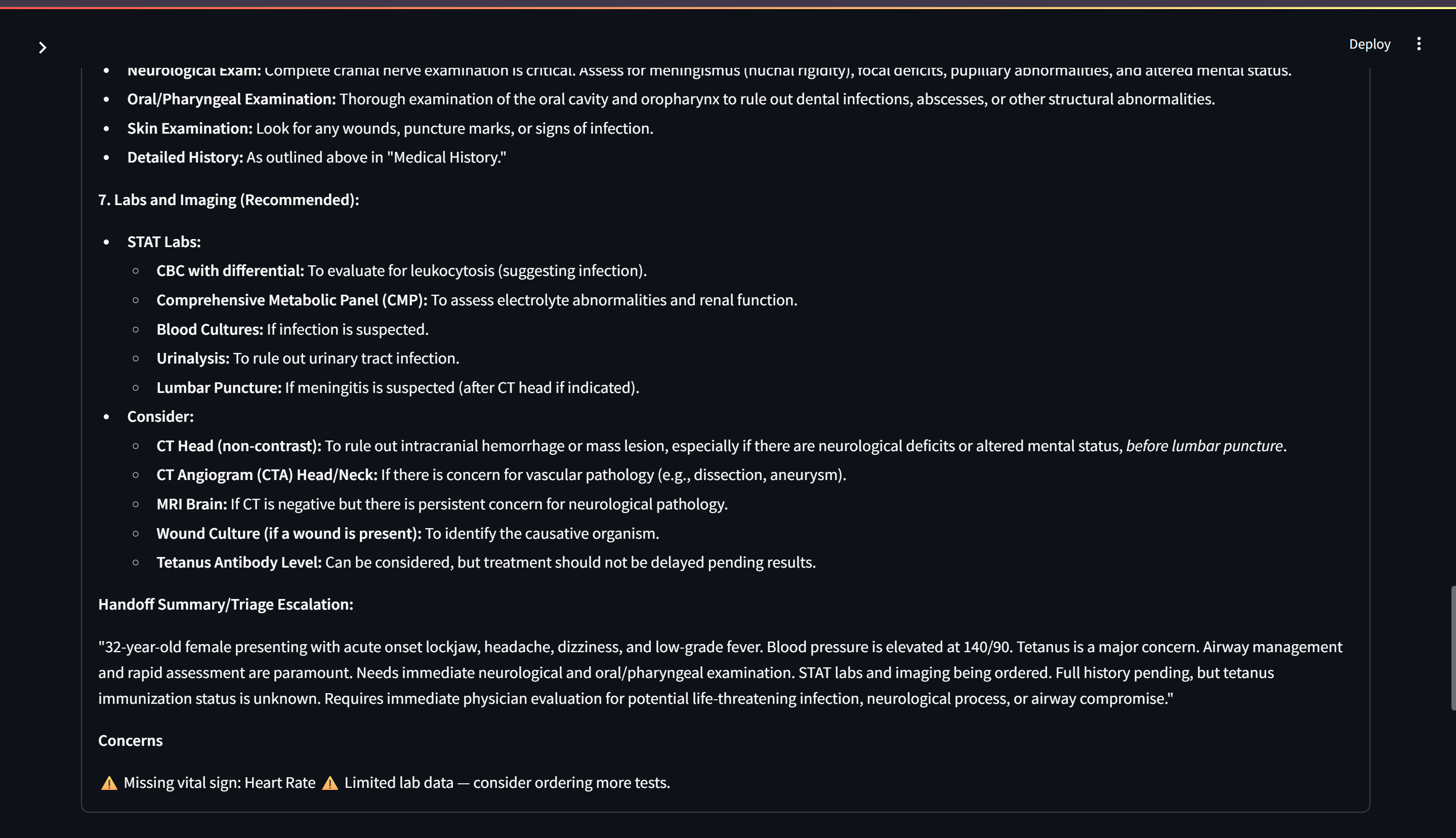
Report (2)
🧠 Inspiration
The inspiration for MediMind comes from two personal stories. One of my closest friends was struggling with a neurological issue that went undiagnosed for a long time. Before she knew the cause, and her symptoms weren't fully developed, she turned to ChatGPT, spending hours re-explaining her symptoms over and over just to get useful, consistent feedback — but each new session felt like starting from scratch. Similarly, my dad experienced persistent lip soreness and burning after anesthesia, and my sister was turning to CharGPT with every sign she had and returning only with vague unhelpful causes.
These moments showed me the potential — and the limits — of current AI systems. They highlighted a need for something more intelligent, reflective, and continuous. That was the spark for MediMind — a tool that could act like a multi-agent clinical team, working together to reflect on patient data, recommend care, and surface helpful next steps.
What it does
MediMind is an AI-powered clinical companion that allows users to:
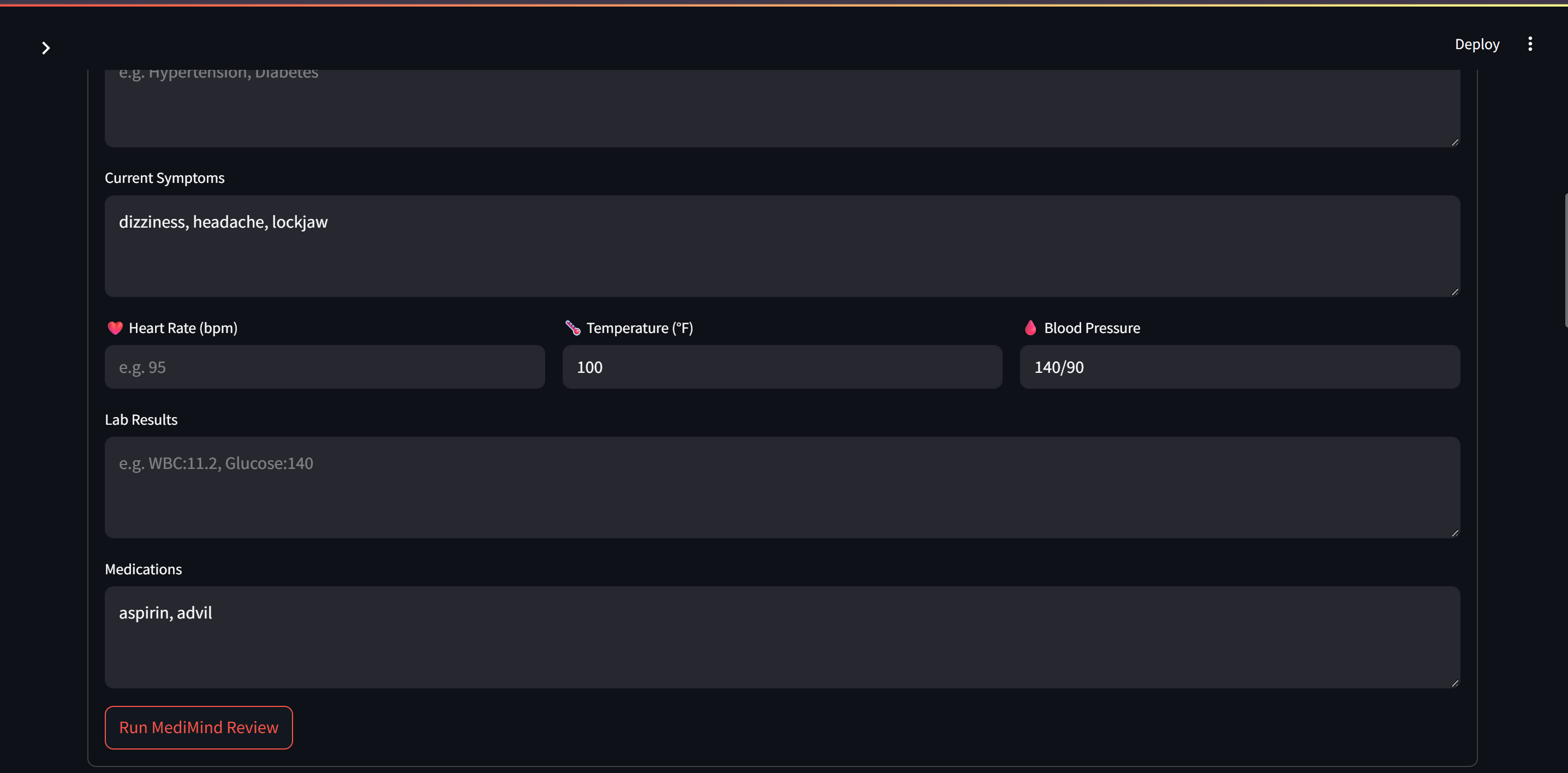
- Submit symptoms, history, medications, and vitals via a structured form
- Run multi-agent analysis to generate a reflective medical summary
- Receive personalized at-home care precautions
- Discover nearby specialty clinics based on symptom categories
- Download a clean, styled PDF report
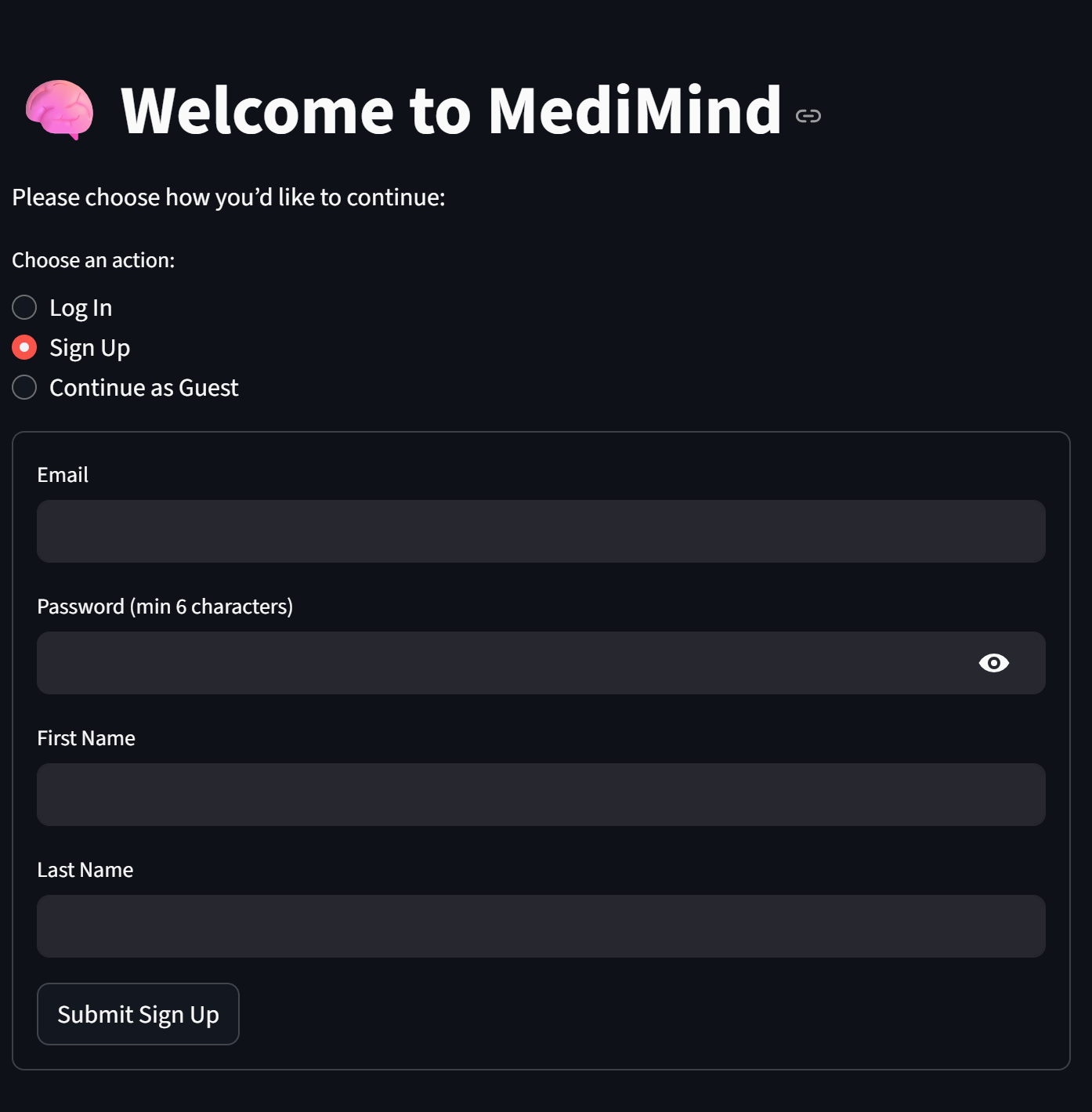
- Log in to save and view past reports — or continue as a guest
It’s designed to give patients and caregivers the ability to reprocess information, update cases as symptoms evolve, and avoid having to explain everything from scratch each time.
How I built it
- Frontend: Built with Streamlit for responsive, form-based data input
- Multi-Agent Backend: Uses Google’s Agent Development Kit (ADK) to orchestrate:
- A Reflection Agent (summarizes the case)
- A Precaution Agent (offers care suggestions)
- A Specialty Mapping Agent (maps symptoms to medical specialties)
- Vertex AI Gemini 2.0: Powers generative text processing for summaries and recommendations
- Firebase (Auth + Firestore): Handles user authentication and stores report history
- Google Places API: Suggests local clinics matched to user symptoms
- PDFKit / WeasyPrint: Renders the output into downloadable, professional PDFs
- Cloud Run: Deployed and hosted on Google Cloud
Challenges I ran into
- Getting multi-agent output to feel coherent and non-redundant
- Managing context across multiple submissions without overwhelming the user
- Handling geolocation accurately and providing real clinic recommendations based on symptoms
- PDF rendering issues — especially formatting complex AI output
- Safely managing credentials and API keys during deployment
Accomplishments that I'm proud of
- Built a production-ready multi-agent system from scratch in just days
- Designed an intuitive UI that makes clinical AI feel usable for real people
- Created meaningful, personalized reflections based on real medical inputs
- Fully integrated Google Cloud technologies: Vertex AI, Cloud Run, Firebase, and Places API
- Honored real stories — and turned them into a functional, caring product
What I learned
- How to design, build, and orchestrate multiple agents using ADK
- The importance of reprocessing context for users — especially in healthcare
- How to bridge clinical reasoning with AI generation
- How to integrate Firebase auth and database systems with Python/Streamlit
- Deployment best practices for secure apps on Cloud Run
What's next for MediMind
- Add visual trends for labs and vitals
- Integrate with wearable devices for real-time health monitoring (smart watches or smart blood-pressure devices)
- Expand language support for non-English speakers
- Build a clinician-facing dashboard for managing multiple patient cases
- Incorporate case memory across sessions for richer, ongoing insights
- Add a voice assistant
MediMind is more than a project — it’s a step toward making AI feel more human, helpful, and health-focused.
Built With
- adk
- css
- firebase
- firestore
- gemini
- google-cloud
- google-places
- html
- javascript
- json
- mermaid
- pdfkit
- python
- streamlit
- vertex
- weasyprint

Log in or sign up for Devpost to join the conversation.