Inspiration
Background: Context & End User
Epidemics spread silently in tier 2/3 India; detection lags by 7–10 days in labs.
Pharmacies see demand spikes (for fever/cough meds) within 24 hours—but this data isn’t analyzed.
54% of pharmacies are independent in tier 2/3, serving 70% of India’s population.
No public health system leverages these pharmacies for early outbreak detection.
End users: (1) Pharmacists (operational), (2) Health authorities (government), (3) Tier 2/3 populations (early protection)
What it does
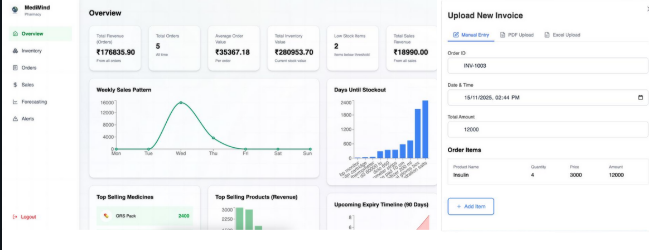
Baseline & trends: bar charts for uploads, line charts for sales speed.
Expiry tracking: batch-level alerts with loss predictions.
Smart reorders: AI-based urgency levels and quantity suggestions.
Conversational AI: predictive inventory insights on demand.
Epidemic detection: regional spikes shown through heatmaps.
Impact: higher profits + reliable medicine access for patients.
How we built it
- Pharmacist uploads data → Data Ingestion & Normalization
Here’s the thing — every system needs clean and consistent data. The pharmacist uploads a document (PDF, CSV, or Excel). This goes through:
1.0 Data Ingestion & Normalization
Reads the file.
Cleans it.
Converts formats to a standard structure (a normalized dataframe).
Makes sure fields match the system’s internal schema.
Output: A polished dataframe ready to store.
- Data Persistence Management
This component deals with where and how the data is stored.
Historical Snapshots → inventory_history
Every upload creates a dated snapshot. This allows tracking:
Past stock levels
Changes over time
Trends and patterns
Current Inventory Snapshot → current_inventory
This is the live, up-to-date state:
Current stock levels
Batch details
Expiry dates
The system now has two parallel memories: one long-term, one short-term.
- Predictive Analytics Engine (The Brain)
This is where the magic happens.
It takes in:
Current stock levels
Time-series history
And produces:
A. Reorder alerts
Triggered when:
Stock is running low
Predicted demand is rising
Usage patterns suggest future shortage
B. Expiry alerts
Checks which medicines are close to expiry.
C. Reorder recommendations
Not just alerts, but smart suggestions:
Quantity to reorder
Expected depletion date
Suggested reorder timing
This engine is basically forecasting the pharmacist’s needs before they even ask.
- AI Chatbot Interface (The Face)
The pharmacist asks a question like:
“Which medicines will expire soon?”
“Do I need to reorder Paracetamol?”
“Show me inventory levels.”
The chatbot pulls answers from:
expiry_alerts
reorder recommendations
predictive engine outputs
current inventory
It acts as the front-facing assistant that converts backend analytics into clear responses.
Challenges we ran into
Accomplishments that we're proud of
FIRST-MOVER IN EPIDEMIC EARLY Uses pharmacy activity to spot outbreaks early.
PROPRIETARY BRAIN-VS-FACE ARCHITEC. Engine predicts, chatbot explains.
BUILT FOR MESSY DATA Works even with incomplete or irregular records.
MASSIVE DUAL IMPACT Cuts ₹1,100 crore wastage and speeds response by 3 weeks.
STRONGER MOAT THAN Tier-2/3 data network beats metro-only billing players.
What we learned
What's next for MEDIMIND
add doctors and features like booking a consultations

Log in or sign up for Devpost to join the conversation.