-
-
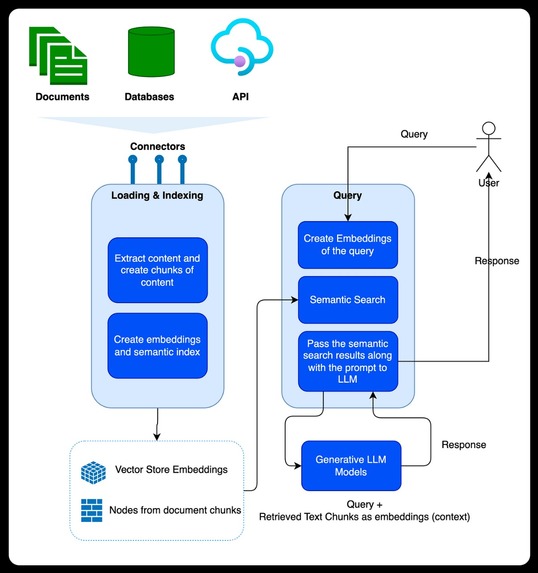
-
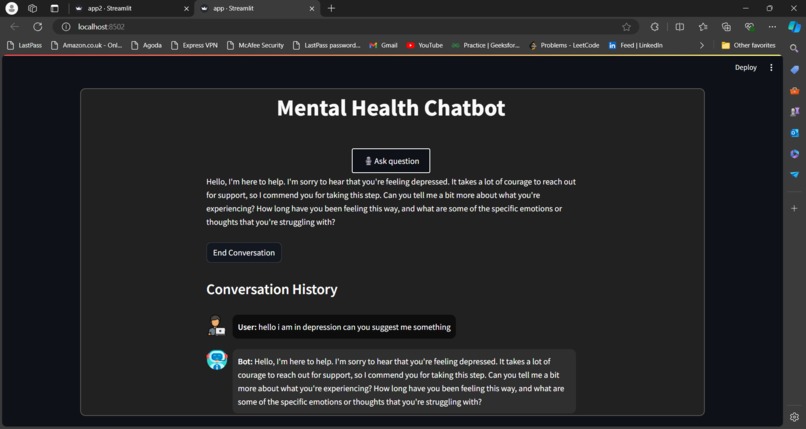
chatbot 2
-
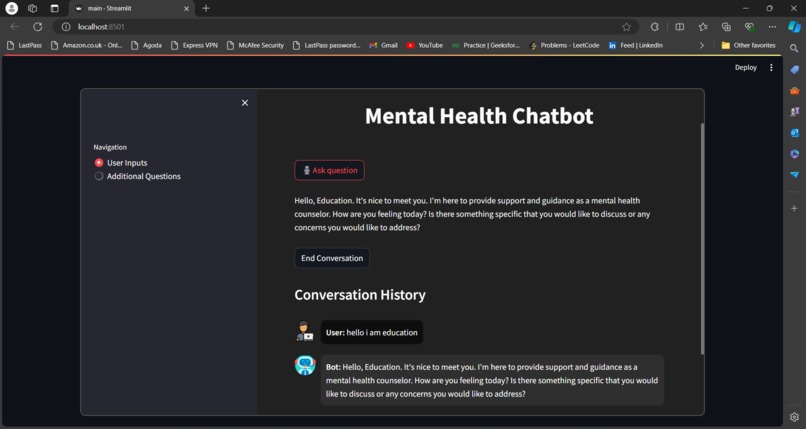
health_chatbot
-
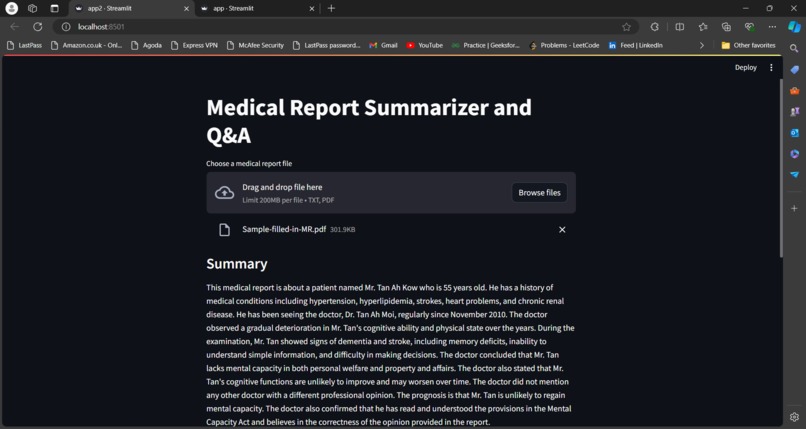
mediacl report parser
Inspiration
The inspiration for MediMind stemmed from observing two significant challenges in today's healthcare landscape: the rising mental health crisis and the complexity of medical information. Many individuals struggle to access timely mental health support due to stigma, availability, and cost. Simultaneously, patients often find it difficult to comprehend their medical reports, leading to anxiety and confusion. We envisioned a solution that could address both issues by leveraging the power of AI.
What it does
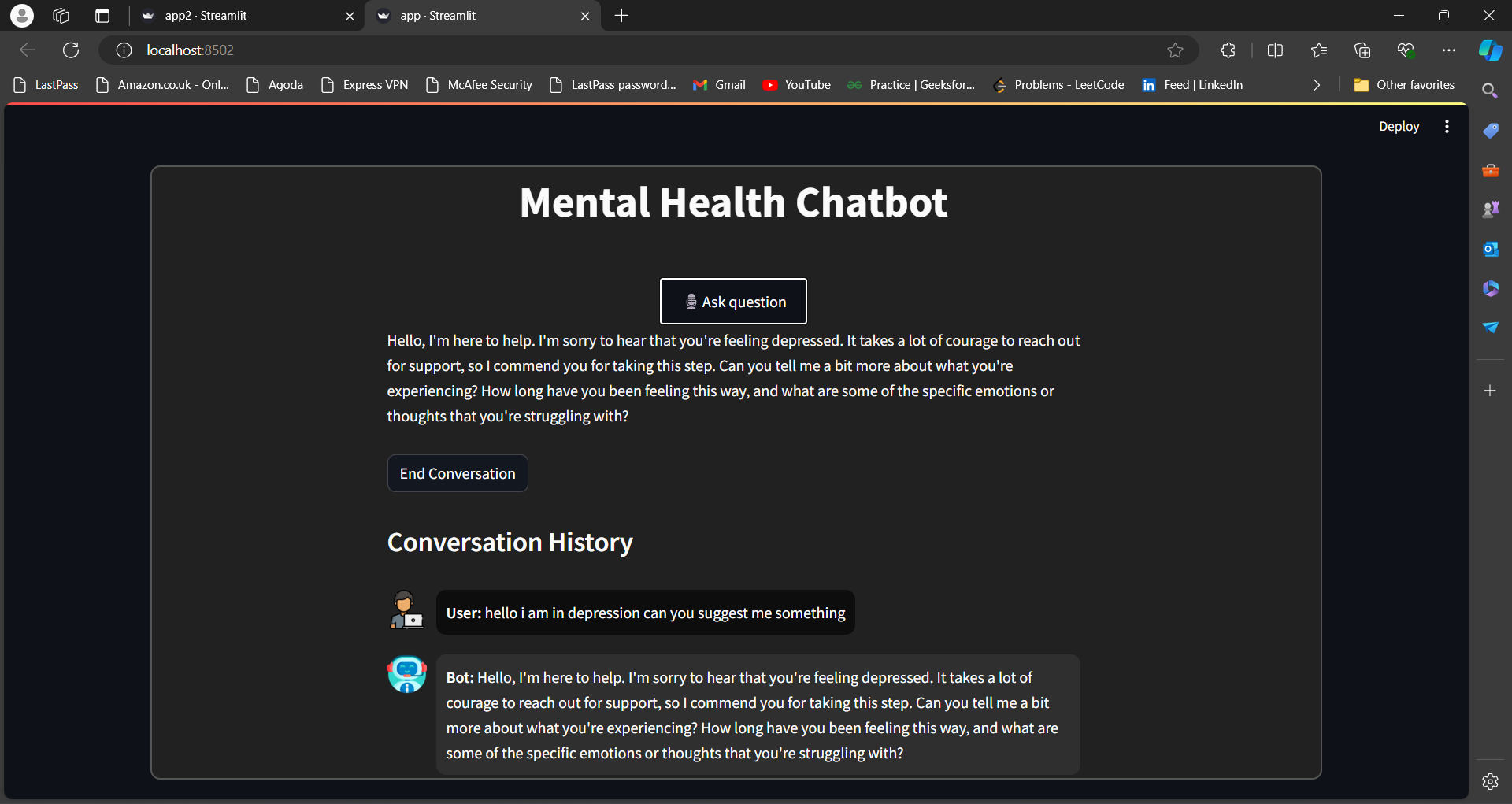
MediMind is an AI-powered platform designed to address two critical areas in healthcare: mental health support and medical report comprehension. Our solution offers two main features:
Voice Chatbot for Mental Health Support Medical Report Parser and Summarizer Key Features
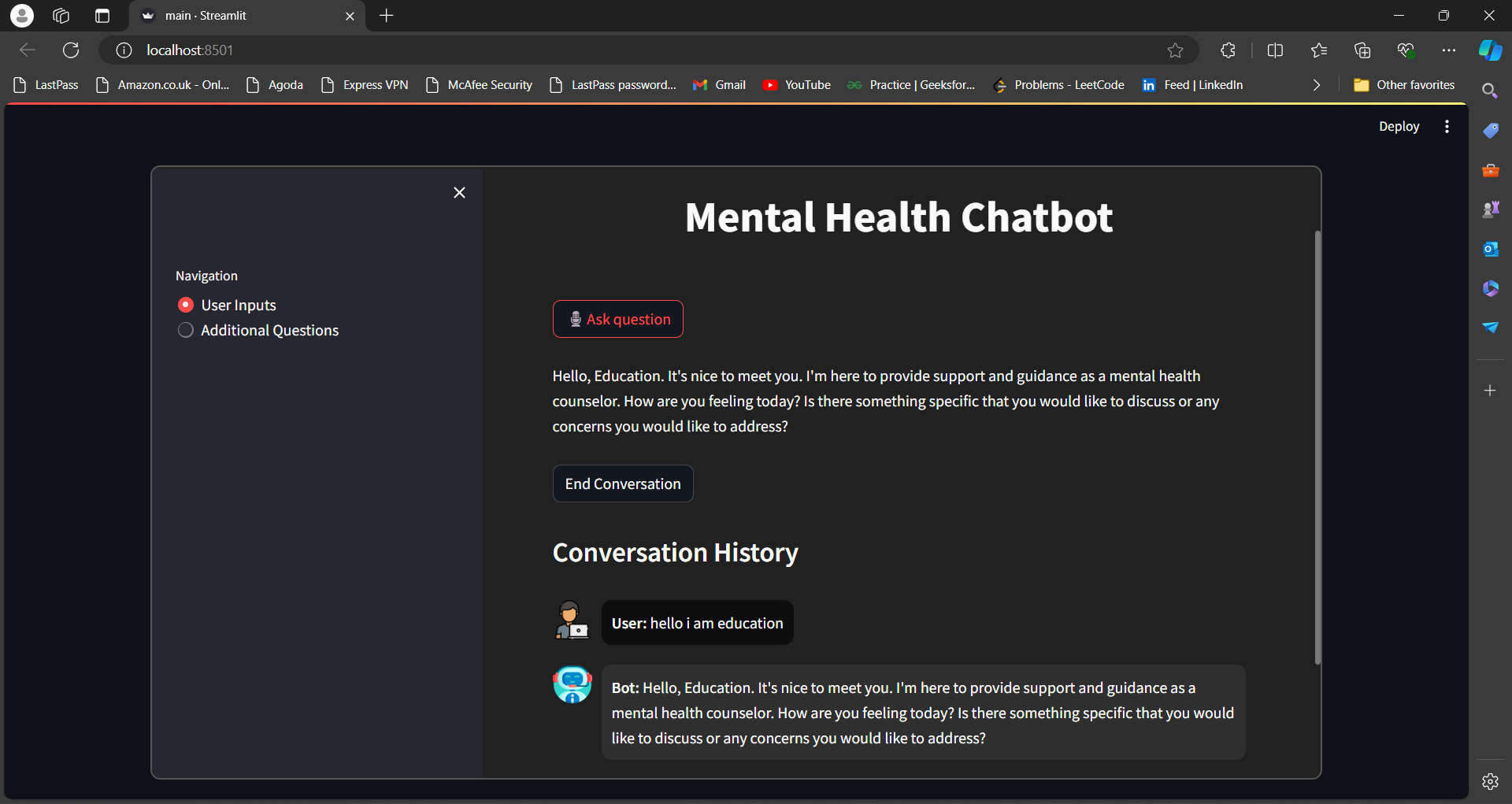
Voice Chatbot for Mental Health Support Empathetic Listening: Users can engage in voice chats with an AI chatbot trained to provide empathetic and supportive responses. The chatbot is designed to understand and address mental health concerns, offering advice and coping strategies tailored to the user's needs. Immediate Assistance: Available 24/7, MediMind provides immediate mental health support, reducing barriers to accessing care and offering a safe space for users to express their feelings and concerns.
Personalized Responses: The chatbot leverages machine learning to offer personalized responses based on the user's input, ensuring that the support provided is relevant and helpful.
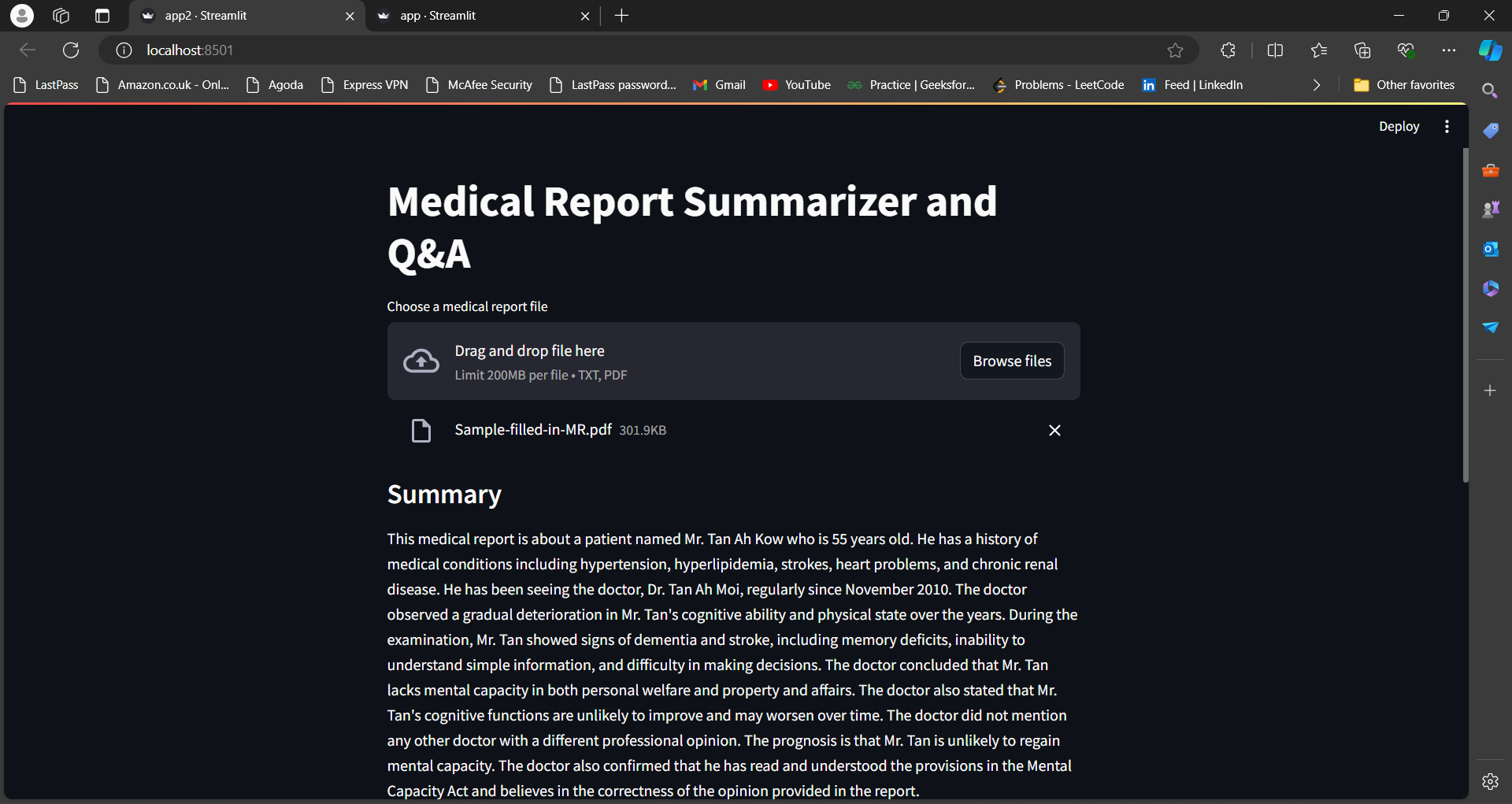
Medical Report Parser and Summarizer Simplified Summaries: Users can upload their medical reports, and MediMind's parser will break down the complex information into easy-to-understand summaries. This helps users grasp the essential points of their reports without the need for medical expertise. Key Point Highlighting: The parser highlights key points and important information within the medical reports, making it easier for users to identify and focus on critical details.
Interactive Q&A: Users can ask questions related to their medical reports, and the AI will provide clear and concise answers. This interactive feature ensures users can get the information they need to make informed health decisions.
Benefits Accessibility: MediMind makes mental health support and medical information accessible to everyone, regardless of location or time.
Empowerment: By providing clear and understandable medical information, MediMind empowers users to take control of their health and engage in more informed discussions with healthcare providers.
Support and Guidance: The mental health chatbot offers a non-judgmental space for users to seek support, helping to reduce the stigma associated with mental health issues.
Use Cases Mental Health Support:
A user feeling stressed and anxious can start a voice chat with the AI chatbot to receive immediate support and coping strategies. Medical Report Comprehension:
A user receives a complex medical report from their doctor. By uploading it to MediMind, they get a simplified summary and can ask follow-up questions to better understand their health status. Integrated Experience:
A user who is both anxious about their health and confused by their medical report can use both features of MediMind to receive emotional support and a clear understanding of their medical information.
How we built it
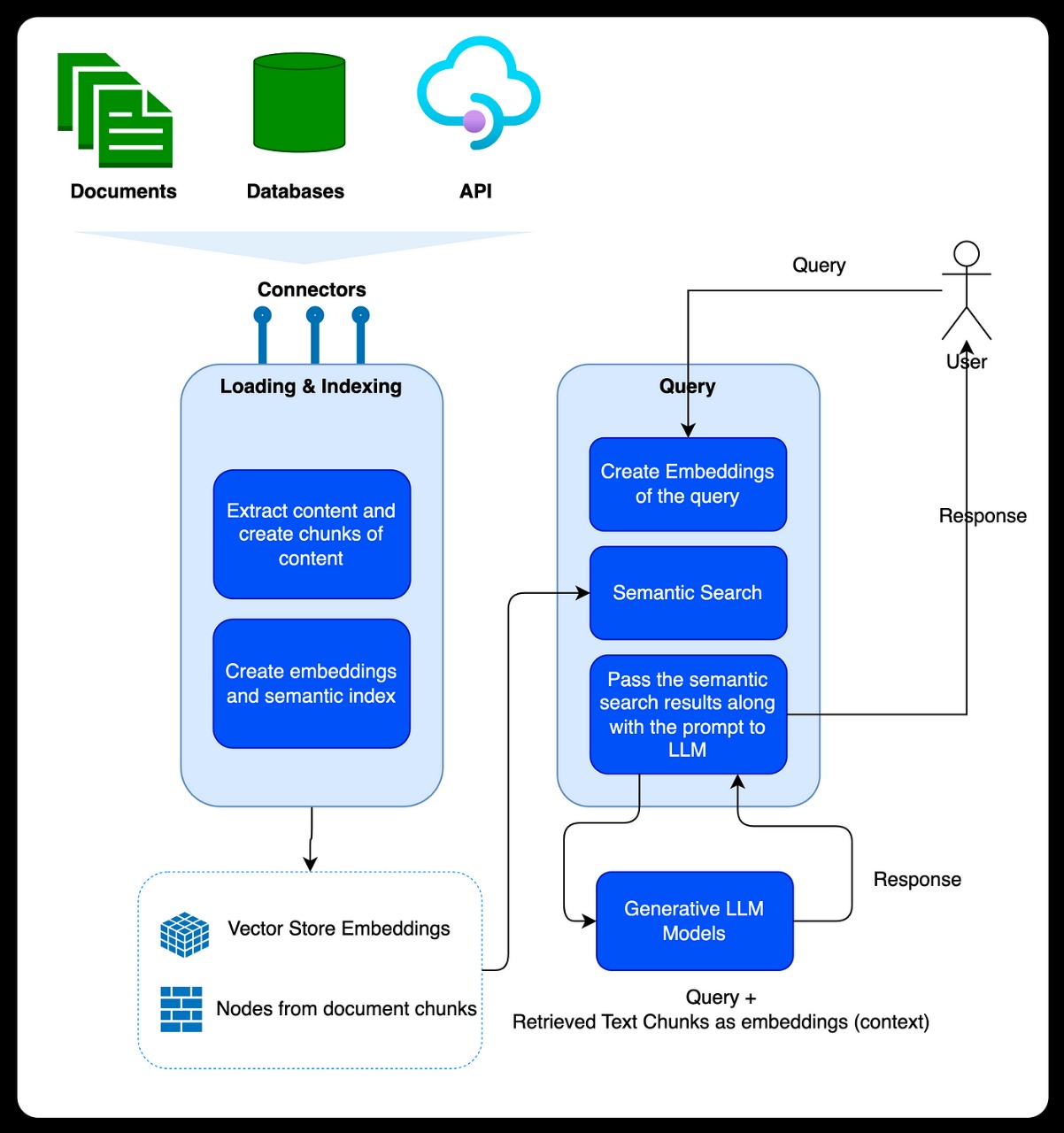
Utilized Natural Language Processing (NLP) techniques and machine learning algorithms. Fine-tuned a pre-trained language model (e.g., OpenAI's GPT-3) to understand and respond empathetically to mental health-related queries. Development:
Built the chatbot interface using Streamlit for quick and interactive web app development. Integrated Azure Cognitive Services for speech recognition and text-to-speech capabilities. Utilized the OpenAI API for generating conversational responses. Testing and Iteration:
Conducted extensive testing with beta users to gather feedback. Iteratively improved the chatbot's responses based on user interactions and feedback.
Medical Report Parser and Summarizer Data Preparation: Collected a variety of medical reports and documents. Annotated key medical terms and concepts to create a labeled dataset. NLP and Summarization:
Developed summarization techniques to generate simplified versions of complex medical documents. Development:
Created a web interface using Streamlit for users to upload and view their medical reports. Implemented the parsing and summarization functionality in Python. Integration:
Ensured seamless integration between the voice chatbot and the medical report parser to provide a cohesive user experience.
Challenges we ran into
Accuracy and Reliability:
Training the AI to provide accurate mental health advice and reliable medical information required extensive testing and validation. User Engagement:
Designing an engaging and supportive user experience, particularly for those seeking mental health support, required careful consideration of UX/UI principles. Technical Integration:
Integrating multiple AI components and ensuring they work seamlessly together posed significant technical challenges. Natural Language Understanding:
Developing the AI's ability to understand and respond accurately to a wide range of natural language inputs, especially in the context of mental health.
Accomplishments that we're proud of
Empathetic AI:
Successfully developed a voice chatbot that can provide empathetic and supportive responses, making mental health support more accessible. Medical Report Simplification:
Created a robust medical report parser that simplifies complex medical information, empowering users to better understand their health. User-Centric Design:
Designed and developed a user-friendly interface using Streamlit that caters to the needs of users seeking mental health support and medical information. Technical Innovation:
Leveraged advanced technologies such as the OpenAI API, Azure Cognitive Services, and large language models (LLMs) to build a sophisticated and integrated solution.
What we learned
Empathy in AI:
Building an AI that can effectively provide mental health support taught us the importance of empathy and contextual understanding in machine learning models. Medical Data Processing:
We deepened our knowledge of NLP techniques to parse and summarize complex medical documents accurately. User-Centric Design:
Understanding the needs of users, especially those in vulnerable situations, was crucial in creating an intuitive and accessible interface. Cloud Integration:
Leveraging Azure services enabled us to enhance our solution with reliable cloud-based capabilities, ensuring scalability and robustness. Collaboration and Iteration:
Working as a team and iterating based on feedback was essential for refining our solution and overcoming technical challenges.
What's next for MediMind
Enhanced Emotional Intelligence Improved Empathy:
Continuously refine the AI's ability to detect and respond to emotional cues, enhancing the empathetic interaction with users. Incorporate more nuanced emotional understanding to offer even more personalized and effective mental health support. Expanded Language Support:
Develop support for multiple languages to make mental health support and medical report parsing accessible to a global audience.
Advanced Medical Report Features Deeper Medical Insights: Integrate predictive analytics to provide users with insights based on their medical history and reports. Offer proactive health management advice, such as recommendations for follow-up tests or lifestyle changes based on report findings. Electronic Health Record (EHR) Integration:
Develop capabilities to integrate with existing EHR systems, allowing seamless access to users' medical histories and reports. Ensure that users can securely share and retrieve their medical data across different healthcare providers.
NOTE: In deployment get are getting error in audio play.

Log in or sign up for Devpost to join the conversation.