-
-
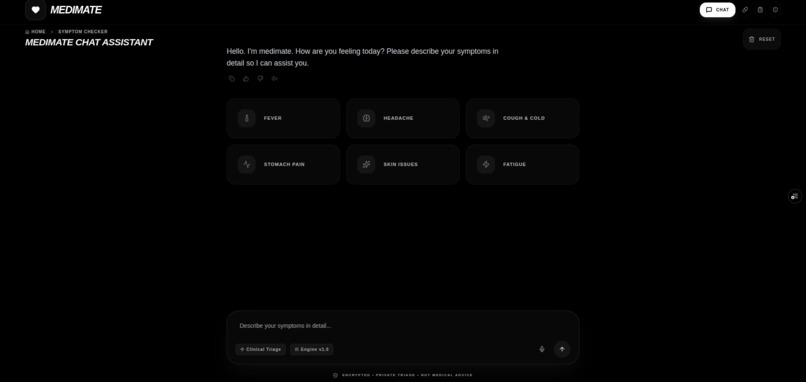
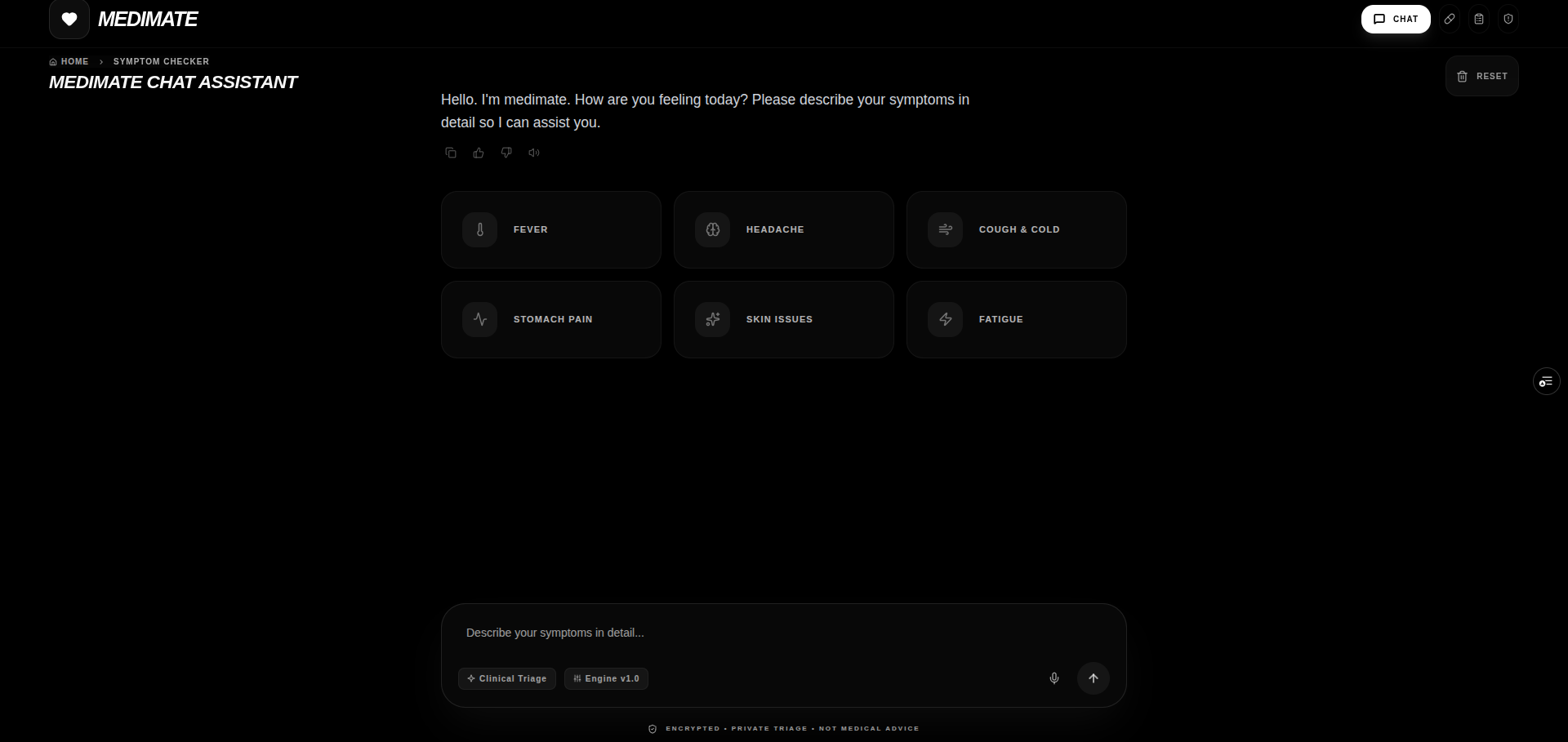
medimate chatbot
-
-
-
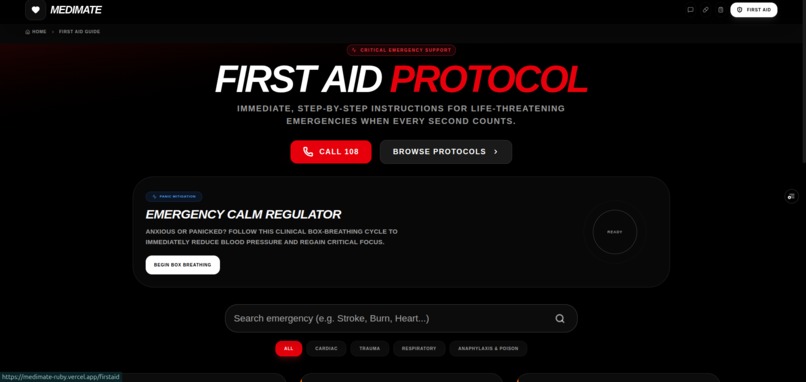
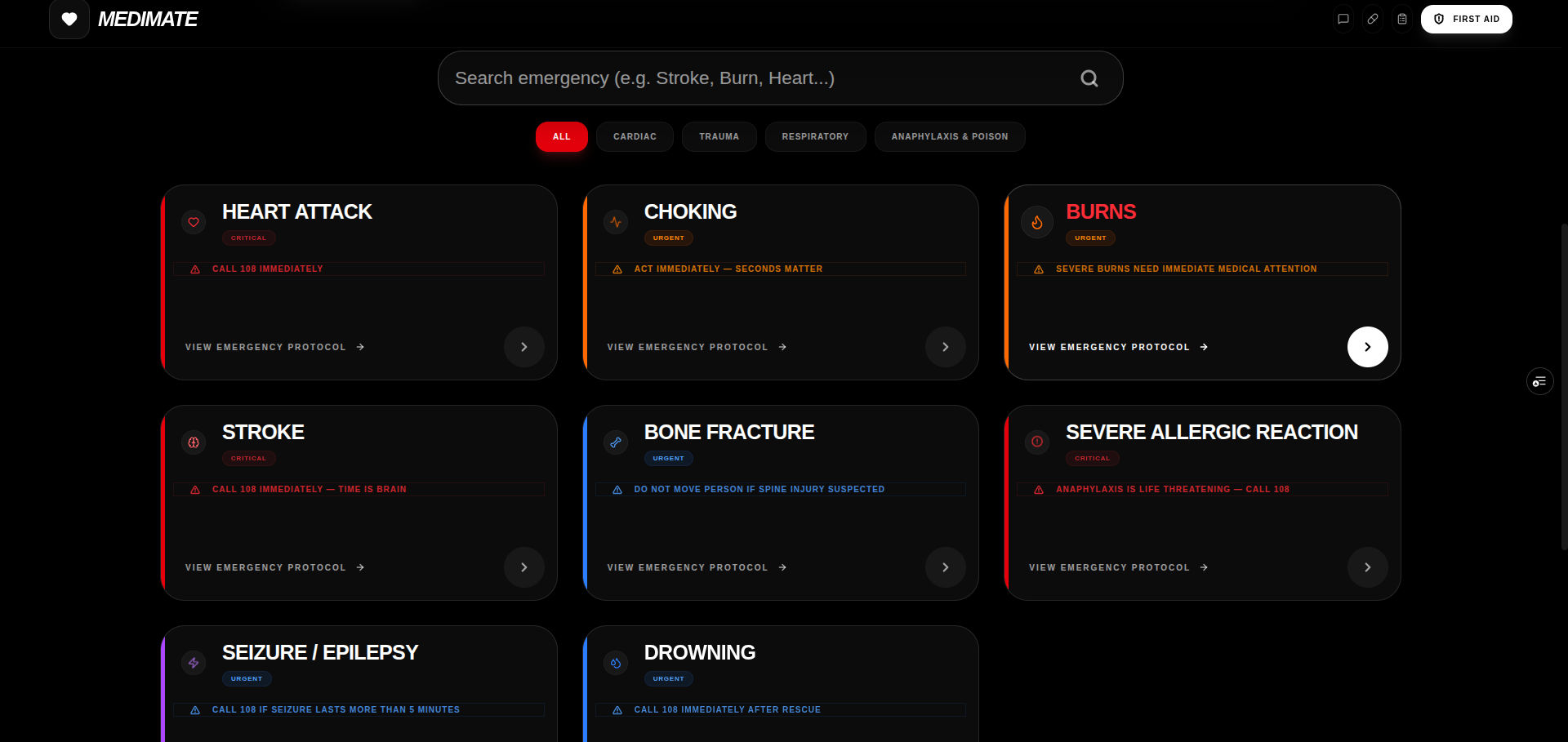
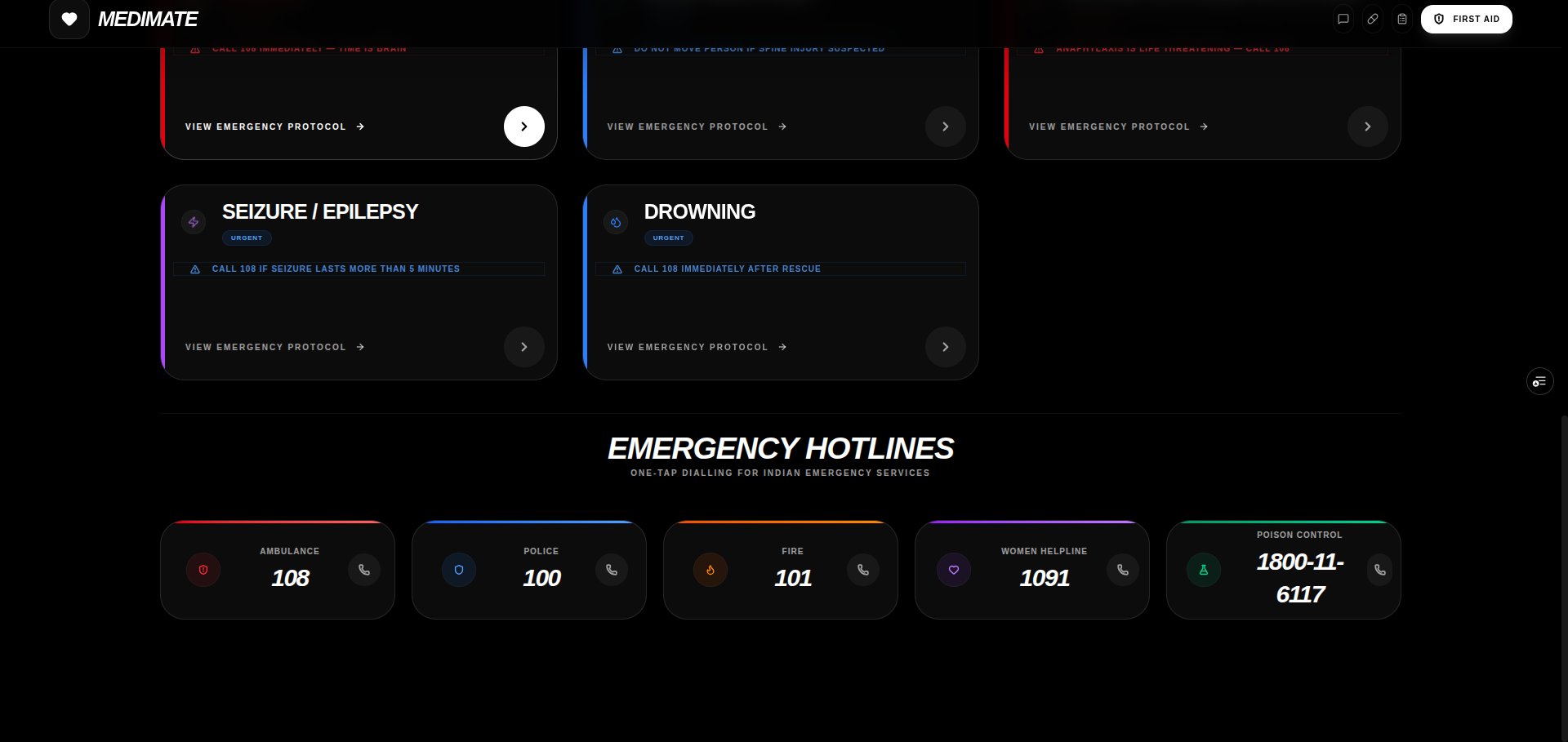
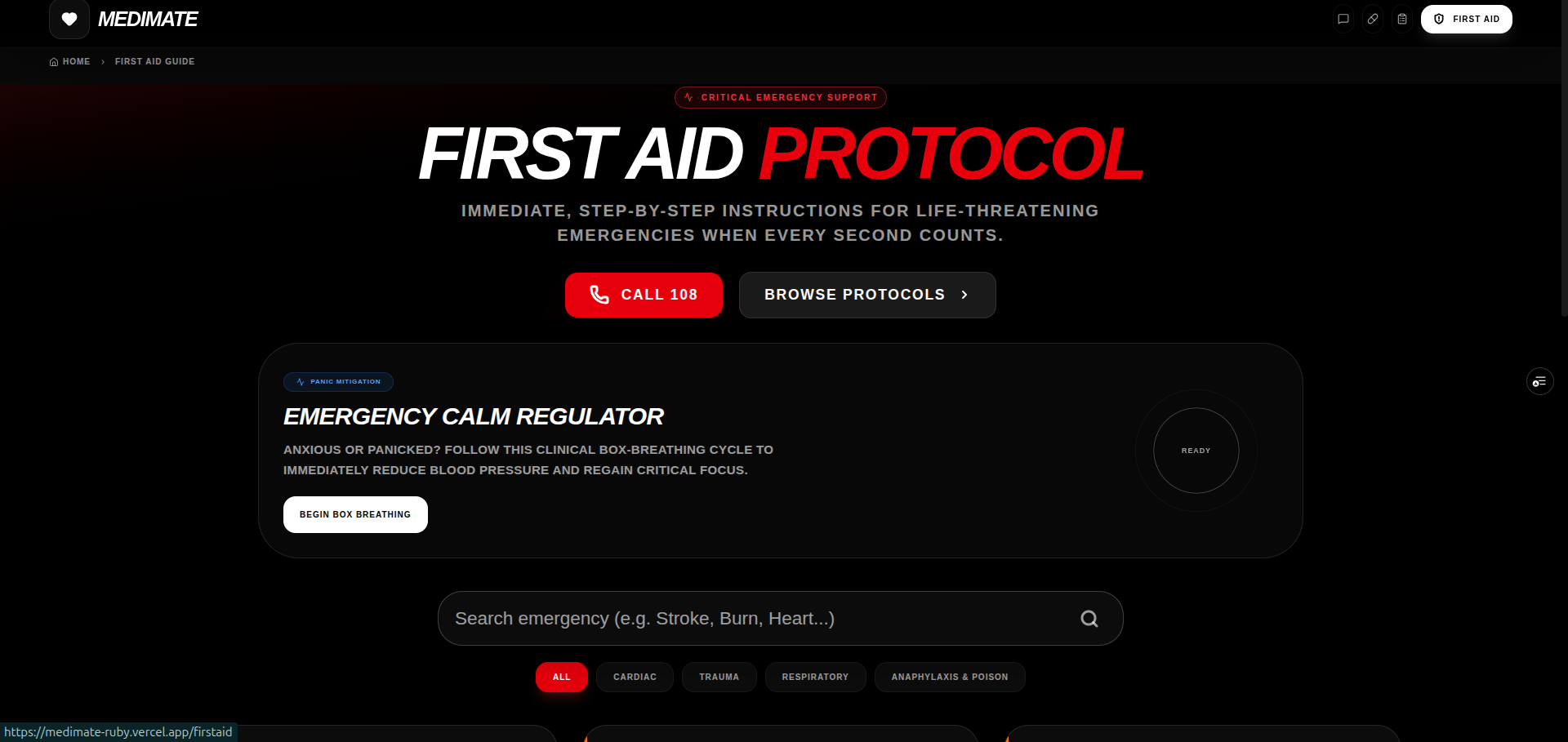
first aid guide
-
-
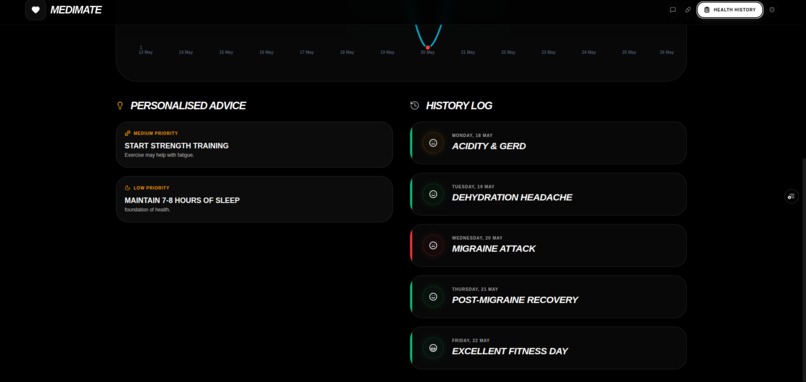
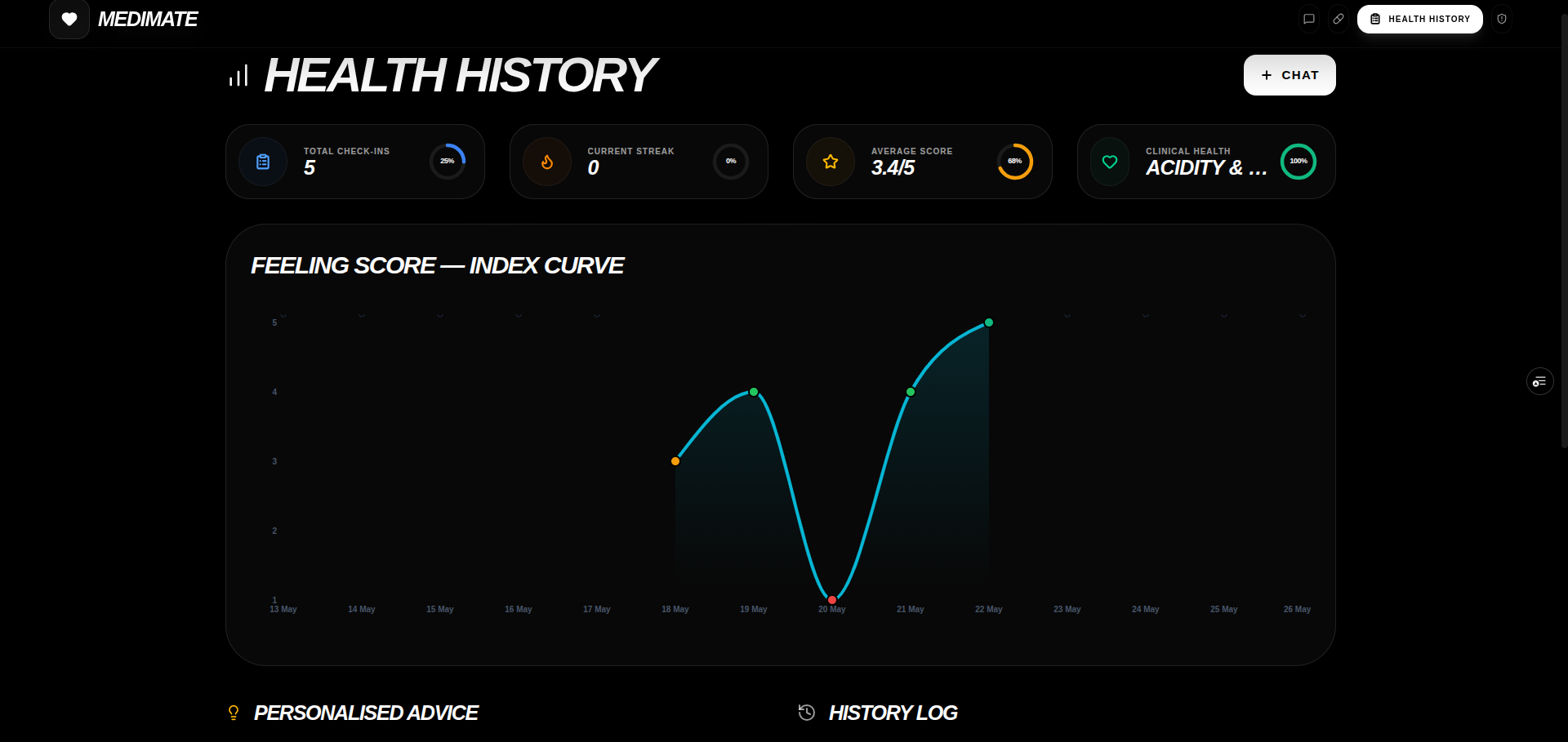
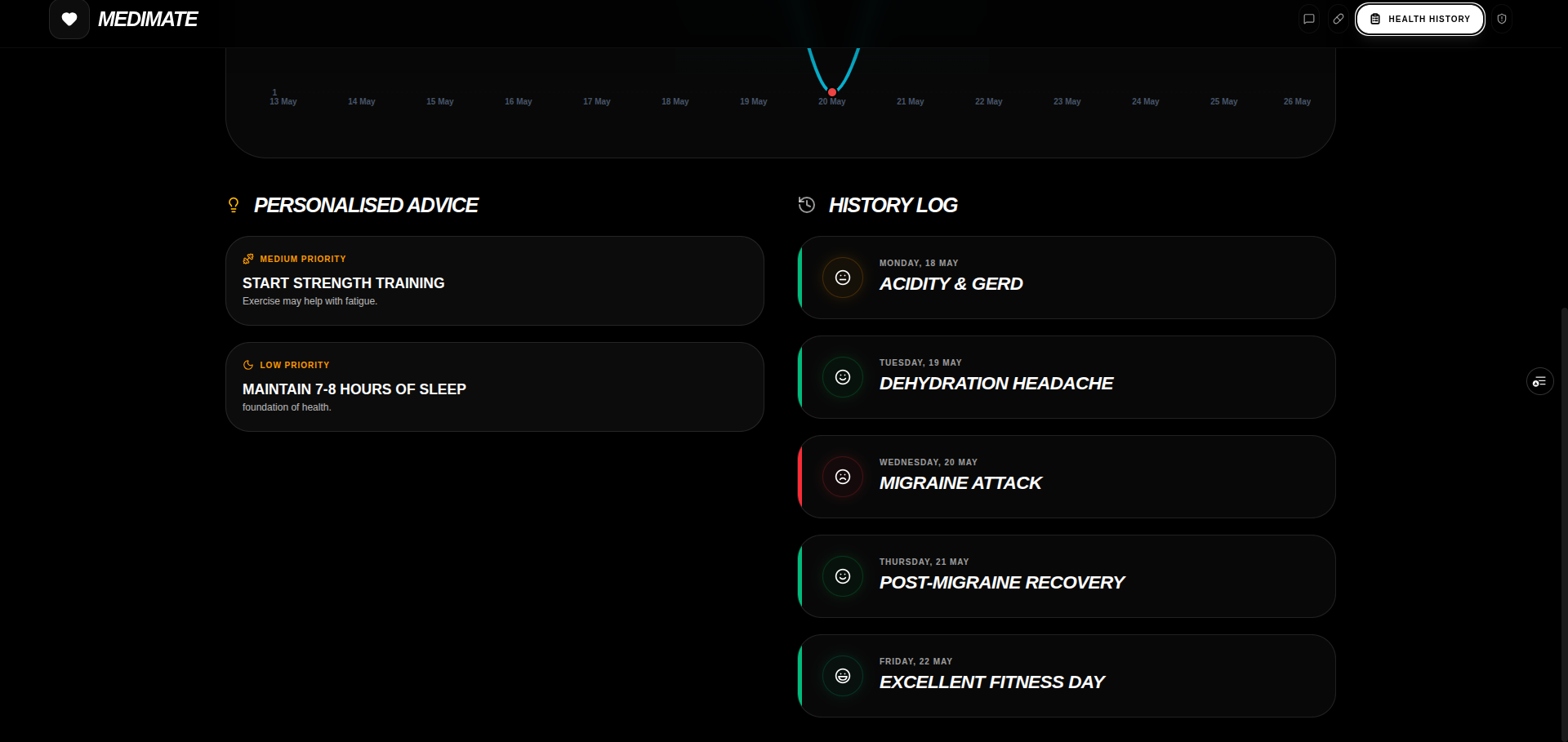
2nd history page
-
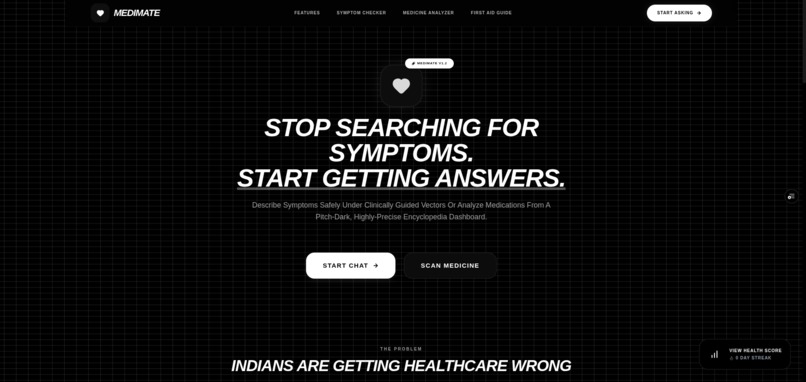
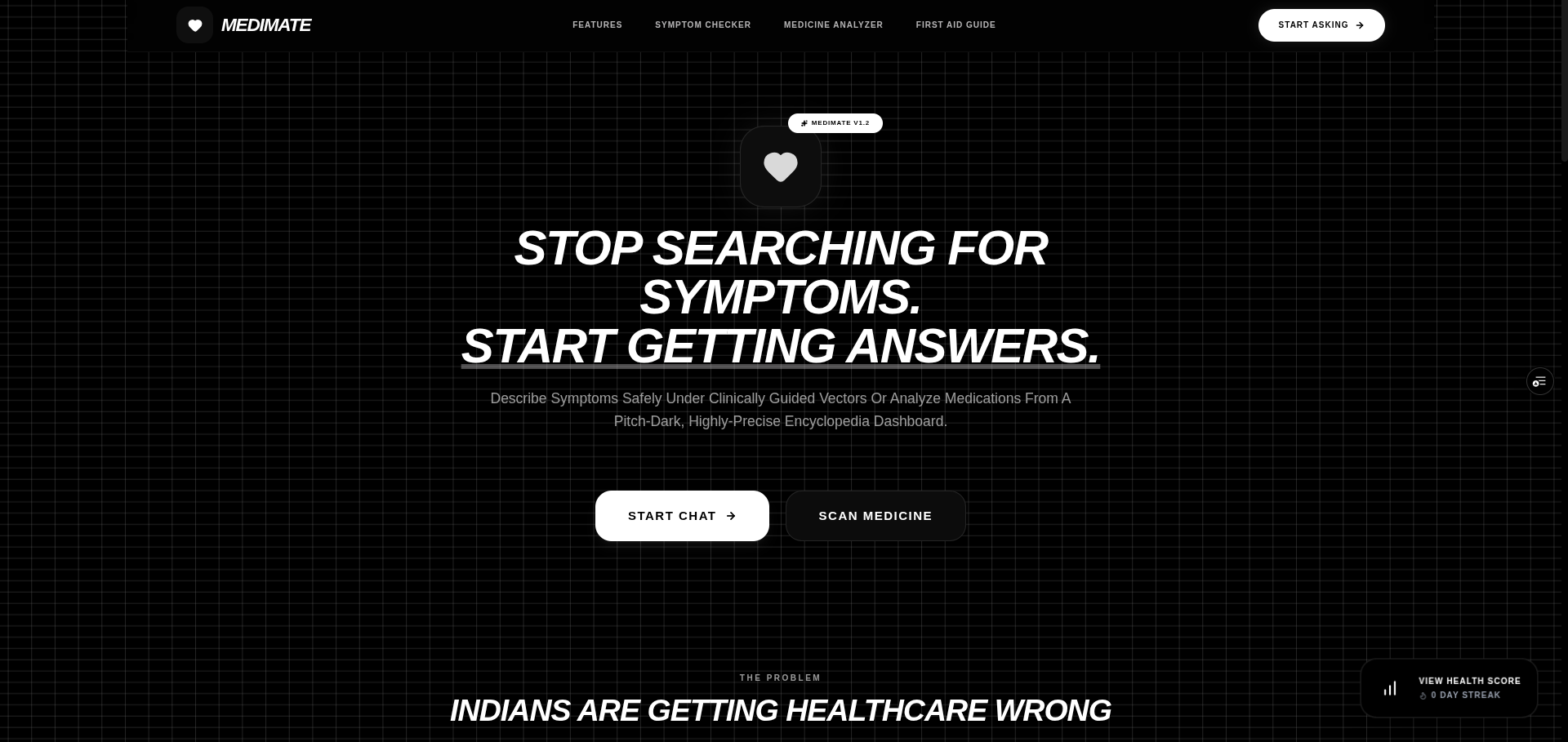
landing page
-
-
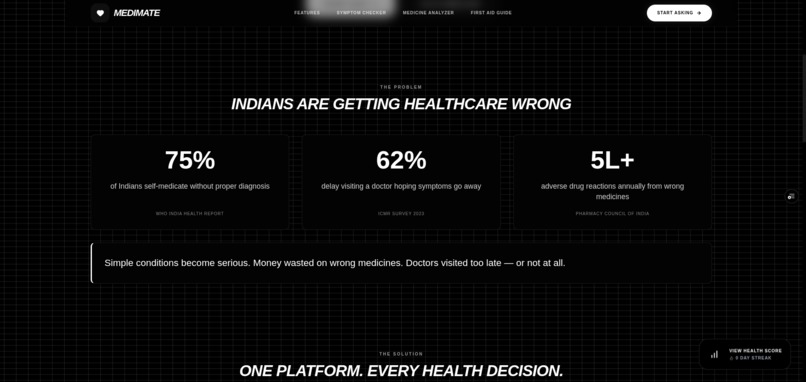
problem we are solving
Inspiration
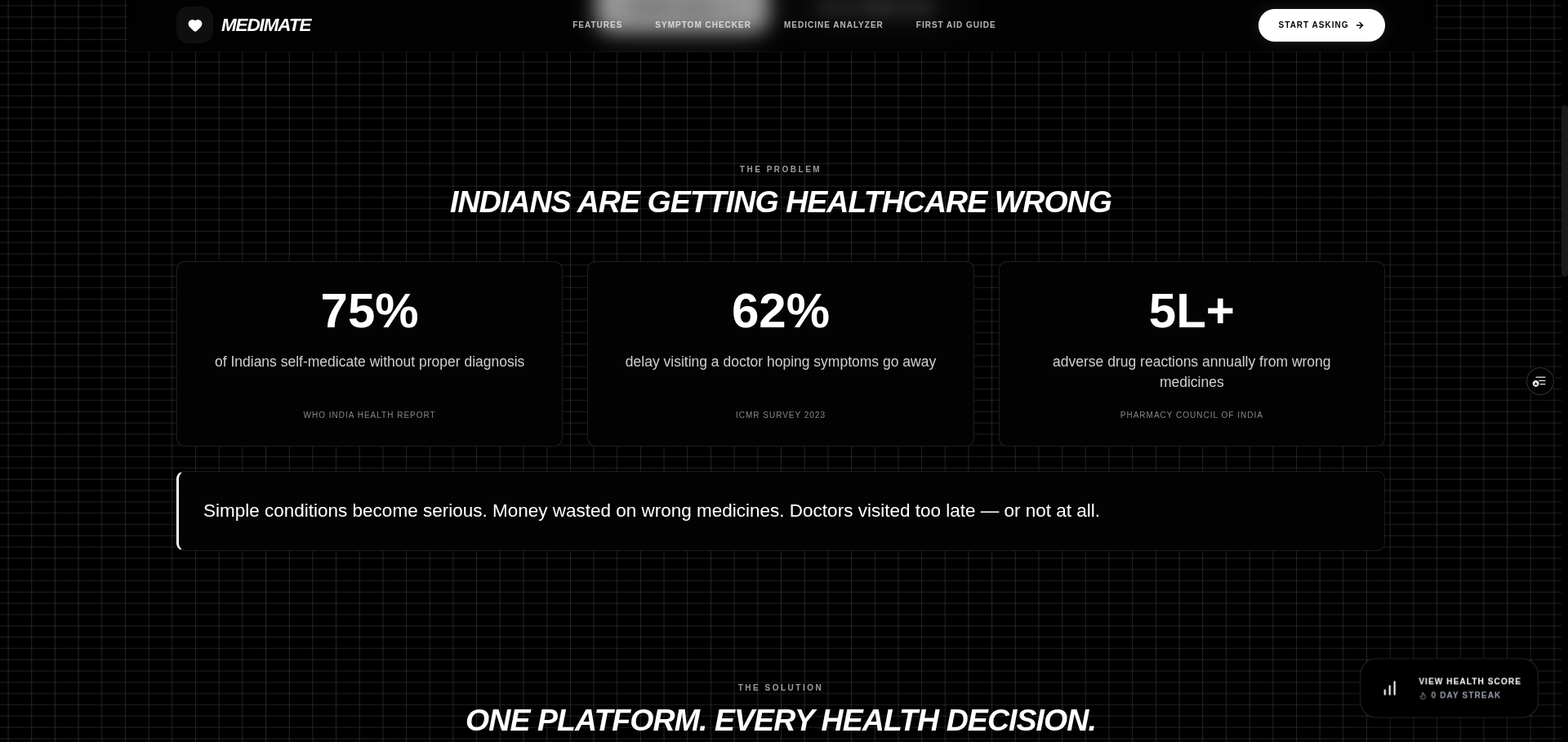
Every day, millions of Indians search their symptoms on Google or ask general AI chatbots for health advice. The problem is that general AI guesses. It gives western medicine names nobody can find, skips prescription warnings, and has no idea what is available at your local pharmacy. I built MediMate to solve exactly this — a healthcare companion that is built specifically for India, gives grounded answers, and knows when to stop and tell you to see a doctor.
What It Does
MediMate is a complete healthcare companion with four features:
Symptom Checker — A guided AI chat that asks structured questions like a doctor intake form (MCQ-based), then gives a likely condition, home remedies, India-specific medicine suggestions with direct links to order on 1mg, PharmEasy and Netmeds, and a clear recommendation on whether to see a doctor and which specialist.
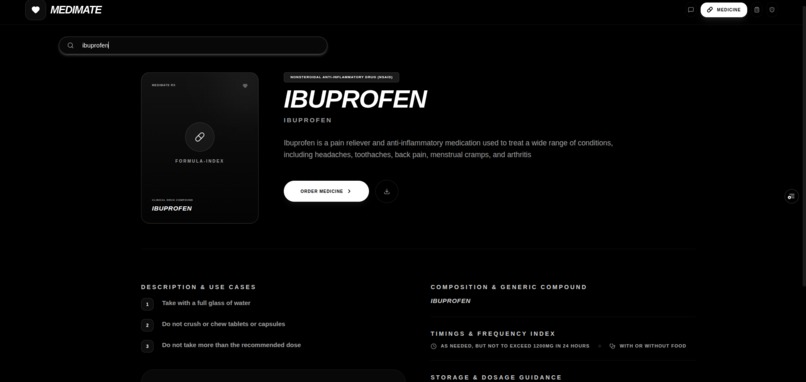
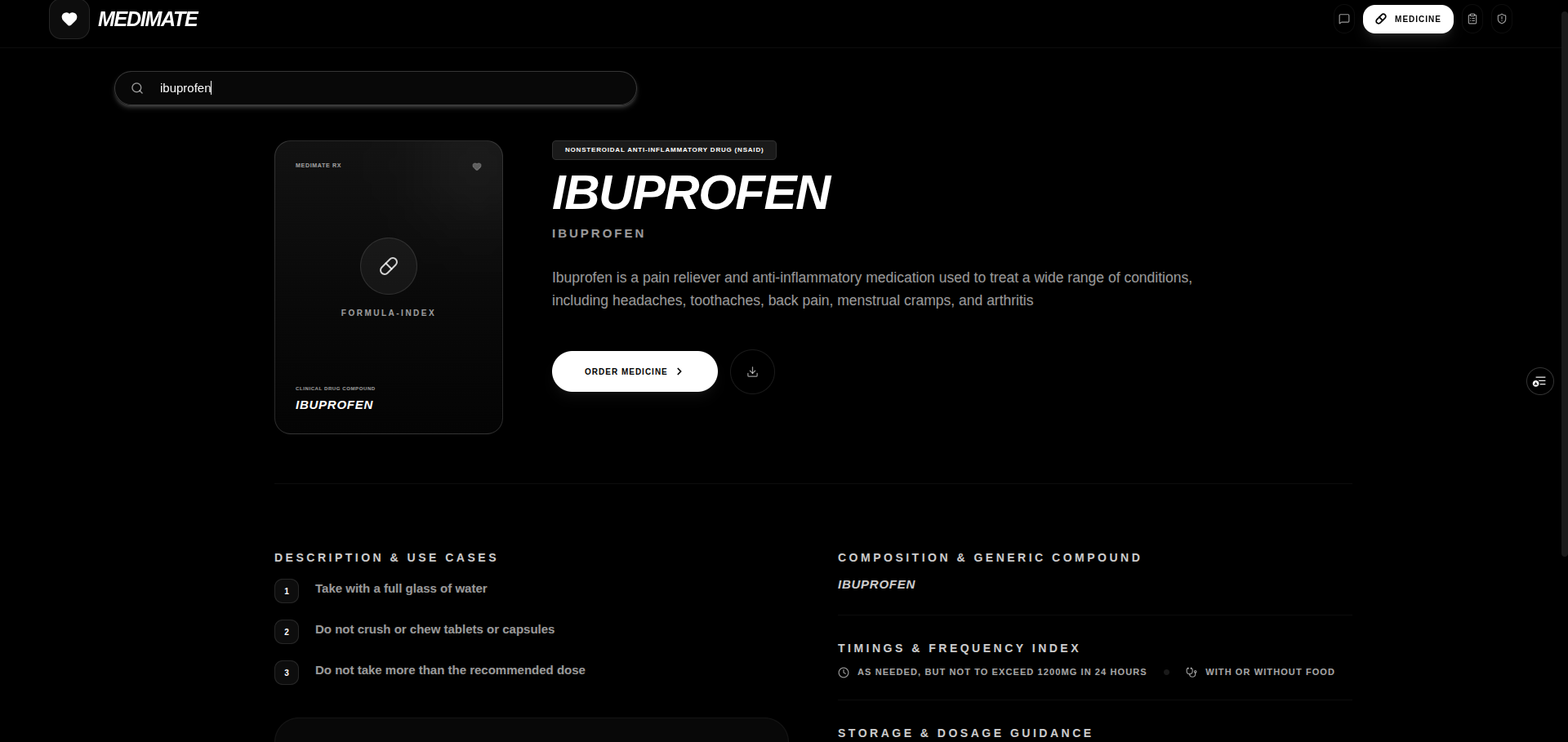
Medicine Analyzer — Search any medicine by name and get a full breakdown: what it treats, dosage timing, how to take it, side effects, warnings, storage instructions, and direct pharmacy order links.
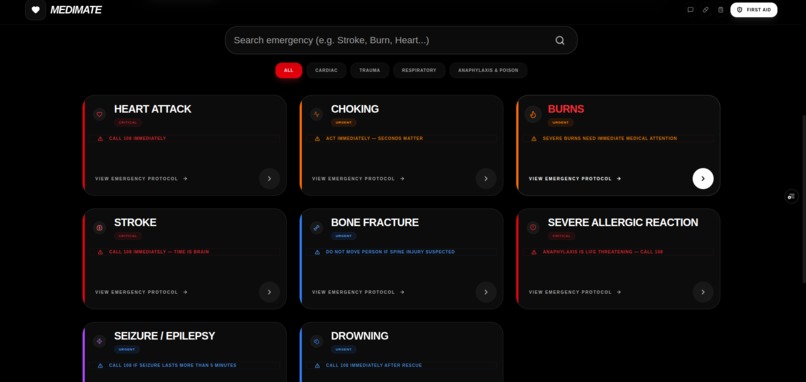
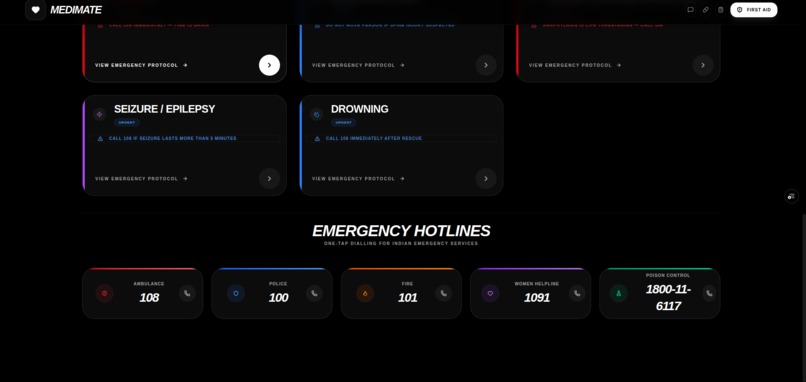
First Aid Guide — A fully offline-ready emergency reference with step-by-step instructions for heart attack, stroke, choking, burns, seizures, and more. Includes India emergency numbers (108, 100, 101) as one-tap call buttons.
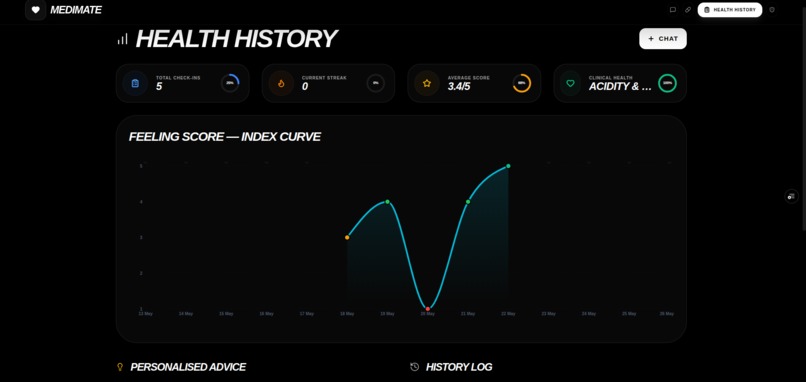
Health History Dashboard — Automatically captures every diagnosis from your chat sessions and builds a 14-day health score graph. Analyses patterns and gives personalised lifestyle advice like hydration reminders, diet suggestions, and when to book a checkup.
How I Built It
- Frontend: Next.js 14 (App Router), Tailwind CSS, Framer Motion for animations, Recharts for health graphs
- AI: Groq API running Llama 3.3 70b for fast, free inference
- Anti-hallucination: A local database of 50+ verified conditions with India-specific medicines, symptoms, dosages, and hospital type recommendations. The AI references this database before every response — a RAG (Retrieval Augmented Generation) approach that keeps answers grounded in verified data instead of assumptions
- Storage: localStorage for health history — no user data leaves the device
- Pharmacy Integration: Dynamic links to 1mg, PharmEasy, and Netmeds using their search URLs
The Biggest Challenge
The hardest problem was preventing the AI from hallucinating medical information. A general AI confidently suggests wrong dosages or medicines that do not exist in India. My solution was to build a curated local disease database and inject it into every AI request as a reference document. Combined with strict system prompt rules — like never giving specific dosage numbers and always flagging prescription medicines — this significantly reduced incorrect responses. The AI now refuses to guess on serious conditions and redirects users to the right specialist instead.
What I Learned
- How to implement RAG architecture at a basic level without a vector database
- How to design conversational AI flows that feel structured rather than open-ended
- The importance of responsible AI design in healthcare — knowing when the AI should say "see a doctor" instead of answering
What's Next
- Voice input for symptom checking
- Hindi and regional language support
- Integration with real doctor booking platforms
- Personalised medicine reminders
- Verified medical professional review of the database
Built With
- api
- framer
- groq
- groq-sdk
- llama
- motion
- next.js
- recharts
- tailwindcss
- typescript
- vercel


Log in or sign up for Devpost to join the conversation.