-
-
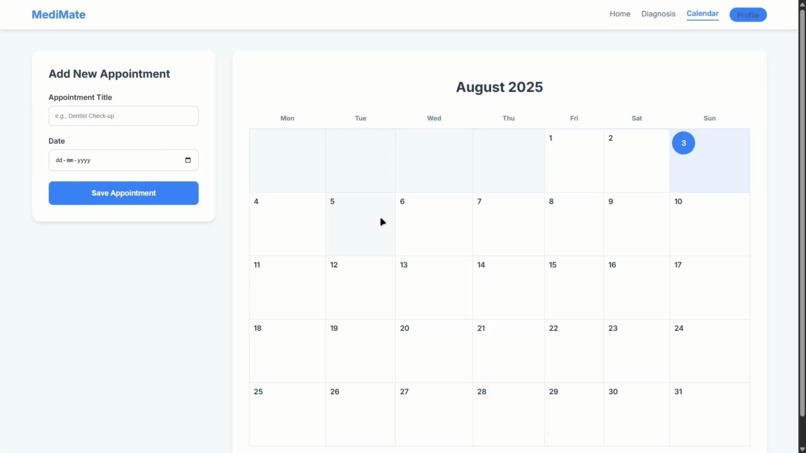
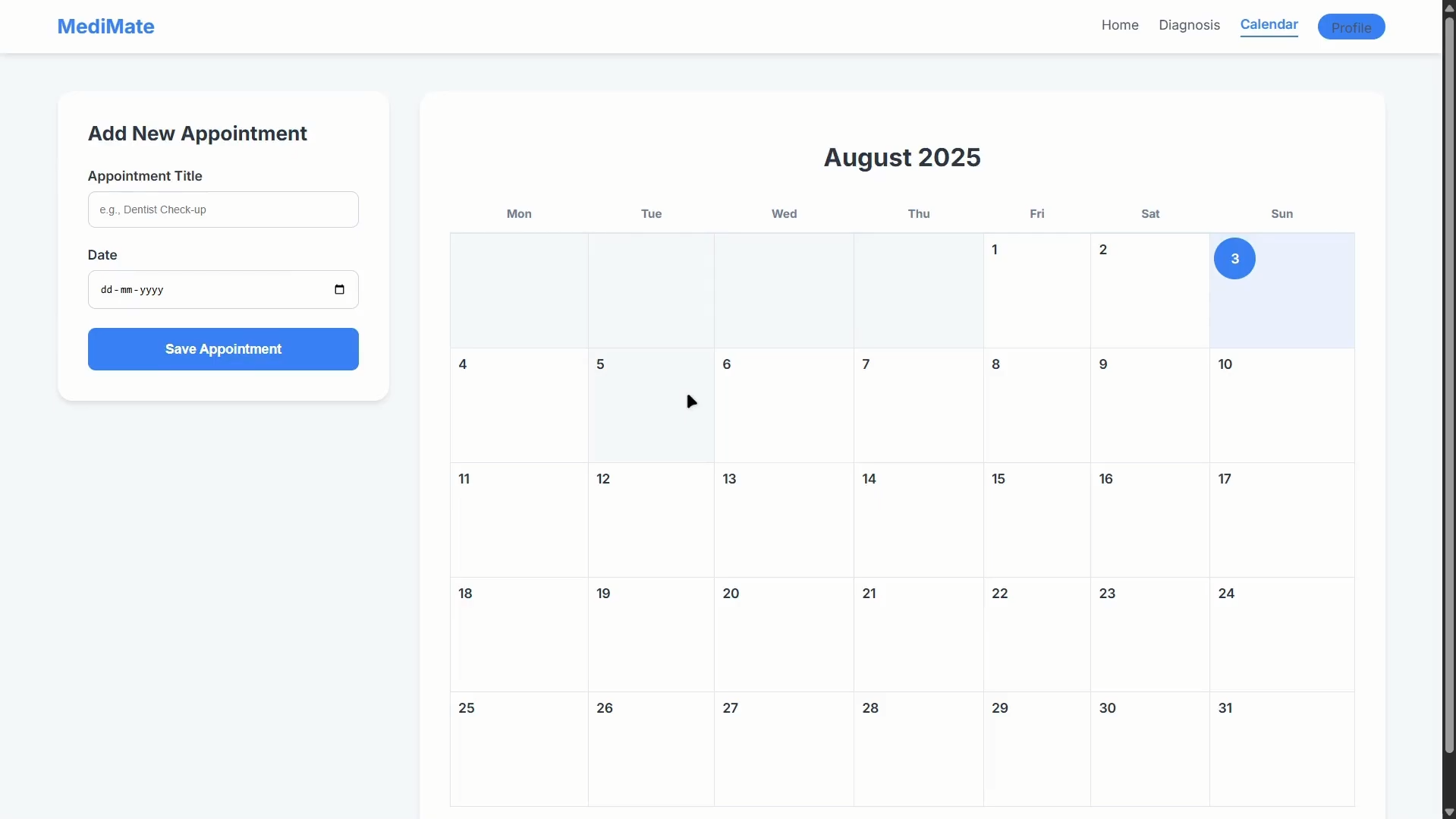
Calendar
-
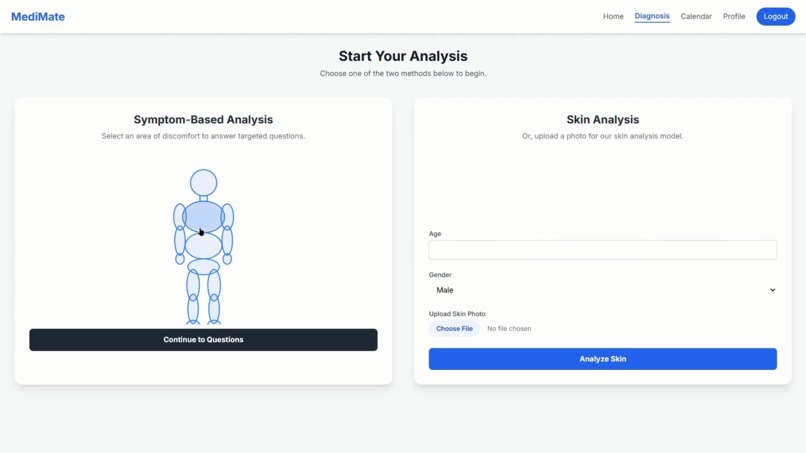
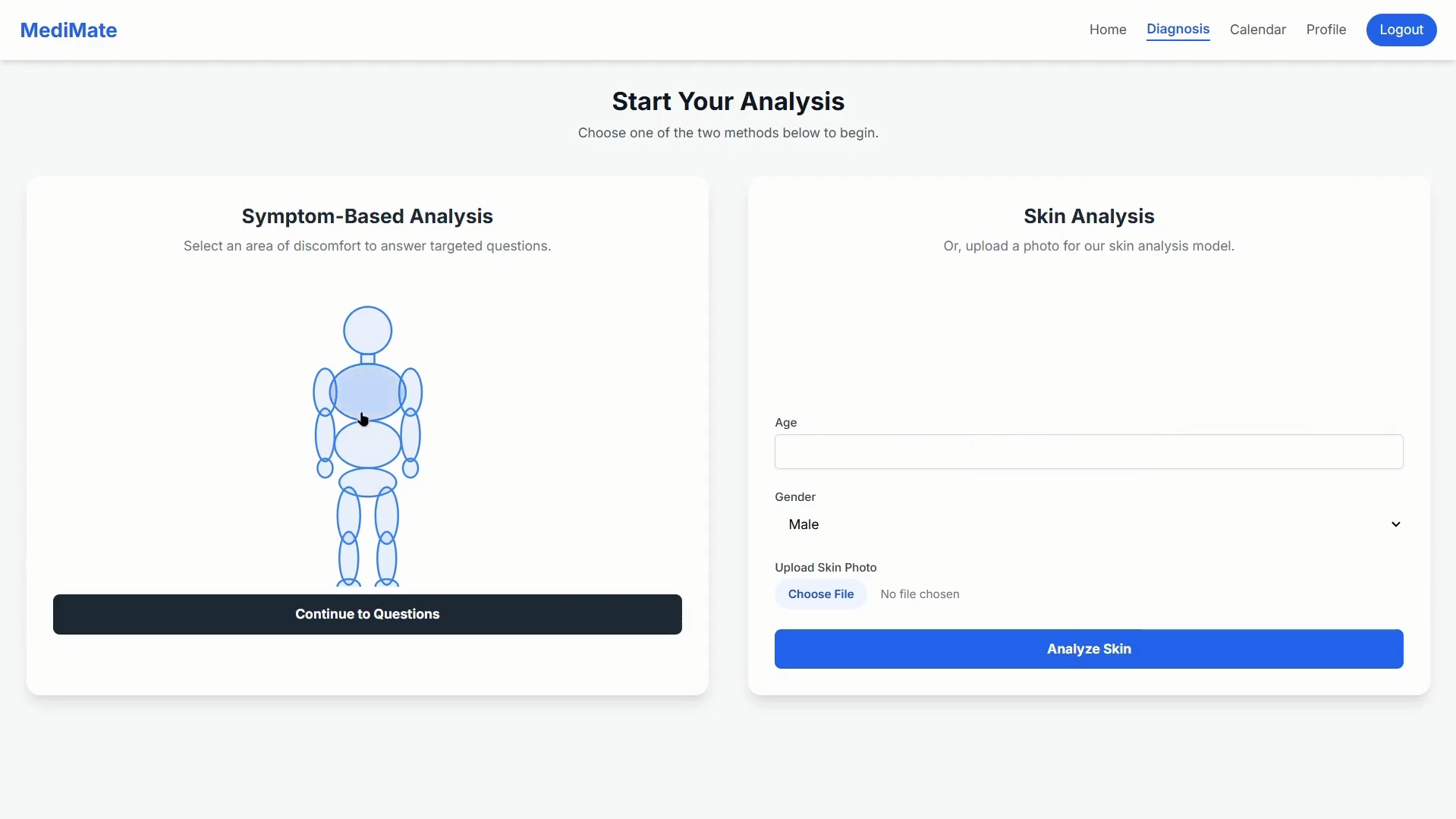
Analysis hub
-
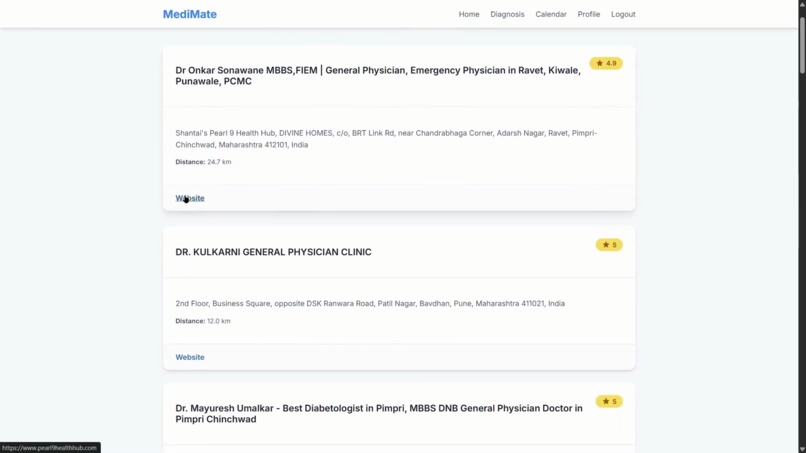
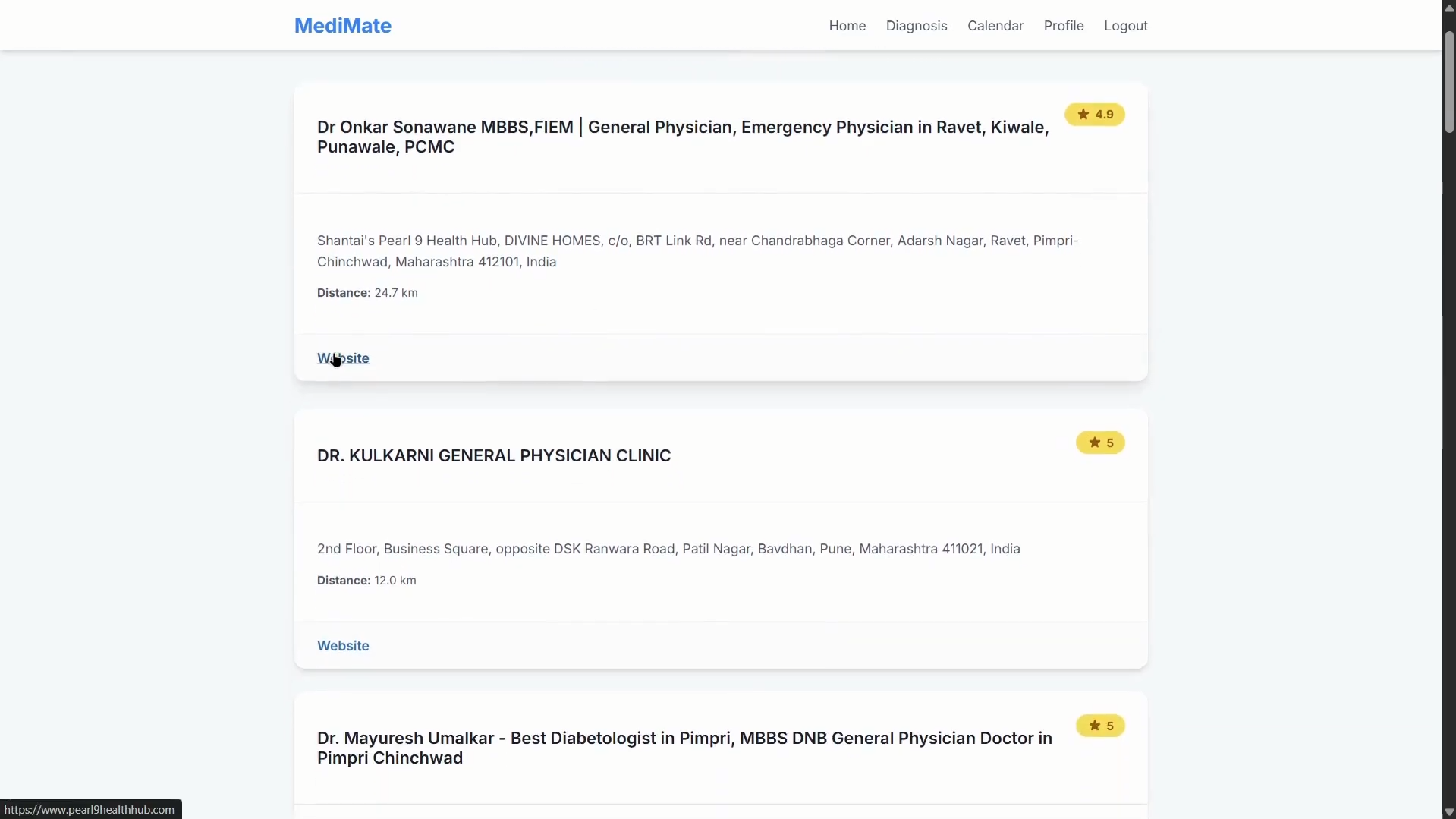
Nearby doctors
-
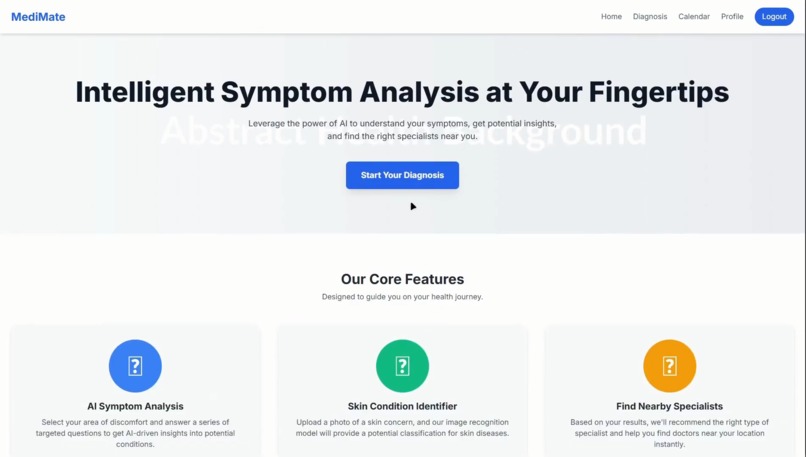
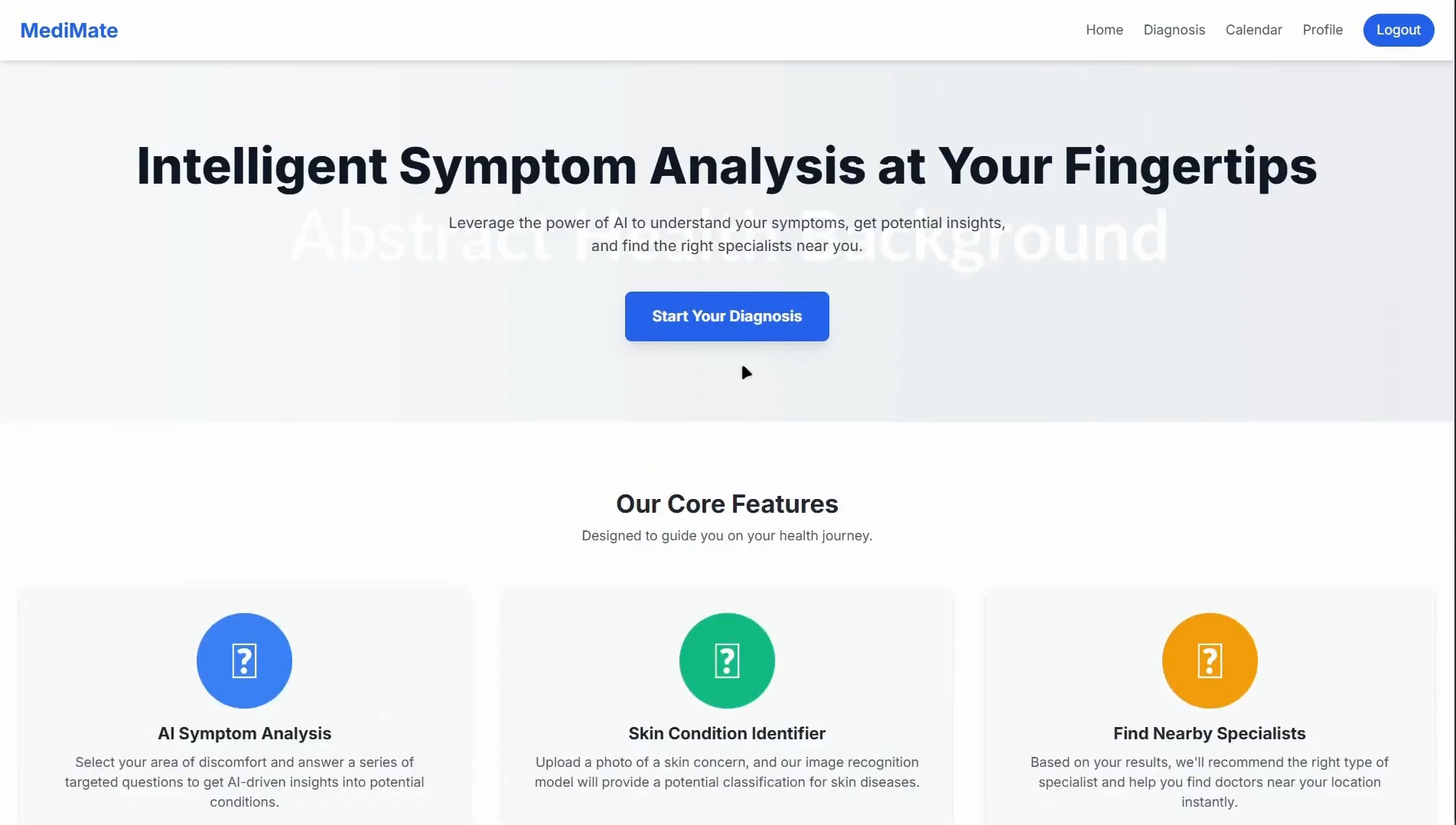
Home Page
Inspiration
The inspiration for MediMate began not in a lab, but with a personal experience that I'm sure many of us can relate to: a run-in with "Dr. Google."
I had a persistent stomach ache that lasted for a couple of days. Instead of immediately seeing a doctor, I consulted the internet. The search results quickly escalated from plausible causes to alarming and thankfully, incorrect conditions like kidney stones or a bowel obstruction. Predictably, my focus went straight to the worst-case scenarios. The resulting stress and anxiety were significant, and it highlighted a major flaw in how we seek health information online. The next day, the pain disappeared on its own.
This experience was the catalyst. It made me question: what if there was a way to get preliminary health guidance that was designed to inform, not to frighten? This question led me to research the formal term for this experience: Cyberchondria.
As I researched, I was surprised to learn just how widespread this issue is, affecting many different demographics across the country. I also saw how this digital anxiety could push people towards real-world harm, like risky self-medication.
But the most critical insight was understanding why this happens. I connected this psychological issue to the larger, structural problem of healthcare access in India. With a vast majority of our population living in rural areas and facing a significant lack of access to specialist doctors, turning to the internet isn't just a habit; for many, it's a necessity.
This is how the "Dual Healthcare Challenge" came into focus, and that is what led to MediMate.
What it does
MediMate is a web app that tackles India's Dual Healthcare Challenge by providing safe guidance and a clear path to professional care.
- AI Symptom Analysis: Instead of unreliable searches, users get a calm, preliminary assessment (not a diagnosis) by answering questions or uploading a skin image. The result includes a severity category and responsible advice.
- Specialist Doctor Locator: Based on the AI assessment, the app finds the nearest relevant specialists, creating an efficient and direct path to the right expert.
- Support Tools: The app also includes user profiles and a calendar with automated email reminders for appointments.
How we built it
- Backend: A Django (Python) application using Celery for automated email reminders.
- AI Core: A two-step process using Random Forest and CNN models for initial analysis, with Google's Gemini LLM translating the results into human-friendly advice.
- Frontend & Services: A responsive web application connected to our backend integrated with a mapping service for doctor locations.
- Database: Sqlite
Challenges we ran into
- Responsible AI and Prompt Engineering: My main challenge was ensuring the AI was a safe guide, not a replacement for a doctor. Crafting the Gemini LLM prompts to be responsible and empathetic required extensive testing.
- ML Model Accuracy: I spent significant time tuning my ML models to be accurate without overfitting. This was a crucial balancing act to ensure reliable performance on diverse, real-world user inputs.
Accomplishments that we're proud of
While it doesn't completely solve the problem on its own, I'm proud to have taken a tangible first step. A full solution will need government and doctor partnerships, but this is where it begins.
What we learned
- My key takeaway was the challenge of building responsible AI; ensuring the system always guides users to professional medical help is paramount.
- The term Cyberchondria :)
What's next for MediMate
- Integrating teleconsultation to connect users directly with doctors.
- Adding more regional languages for wider accessibility across India.
- Upgrading to a fully dynamic AI model for even smarter and more accurate analysis.
Built With
- cnn
- css
- django
- django-celery
- github
- google-maps
- html
- javascript
- ml
- python
- render
- smtp
- sqlite
- tensorflow

Log in or sign up for Devpost to join the conversation.