-
-
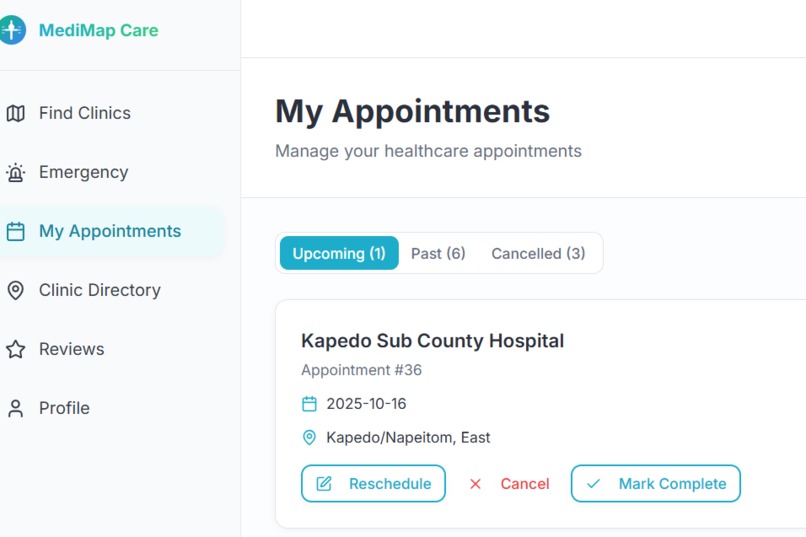
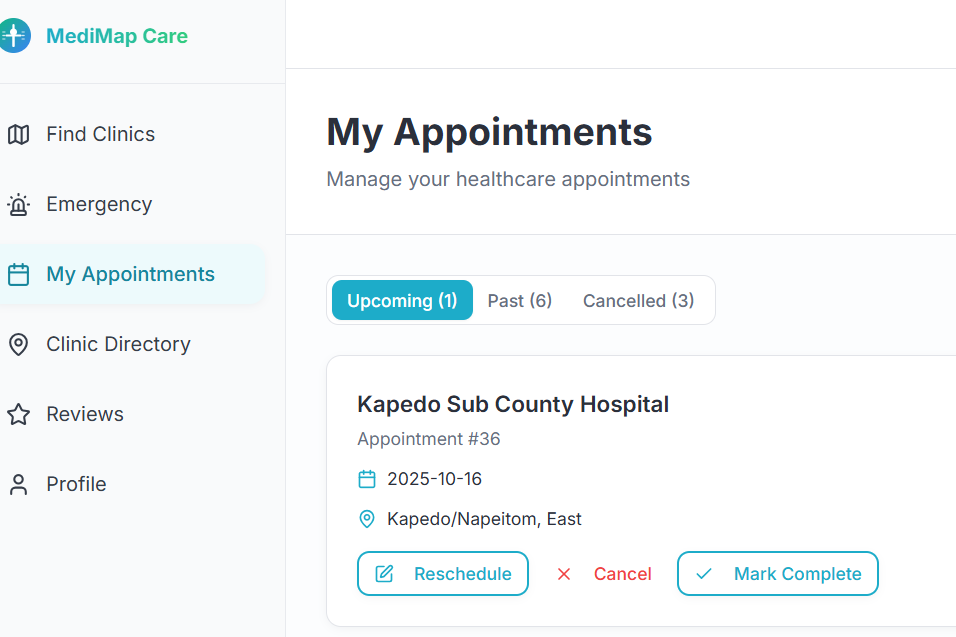
Appointments Page
-
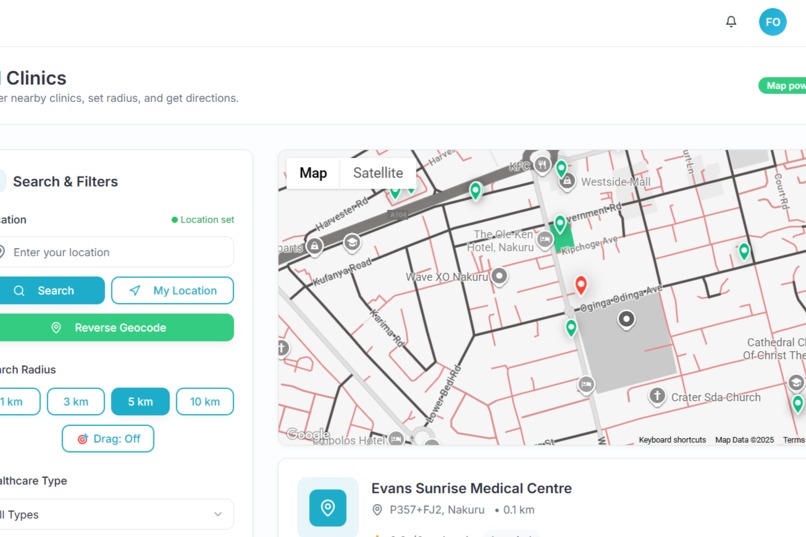
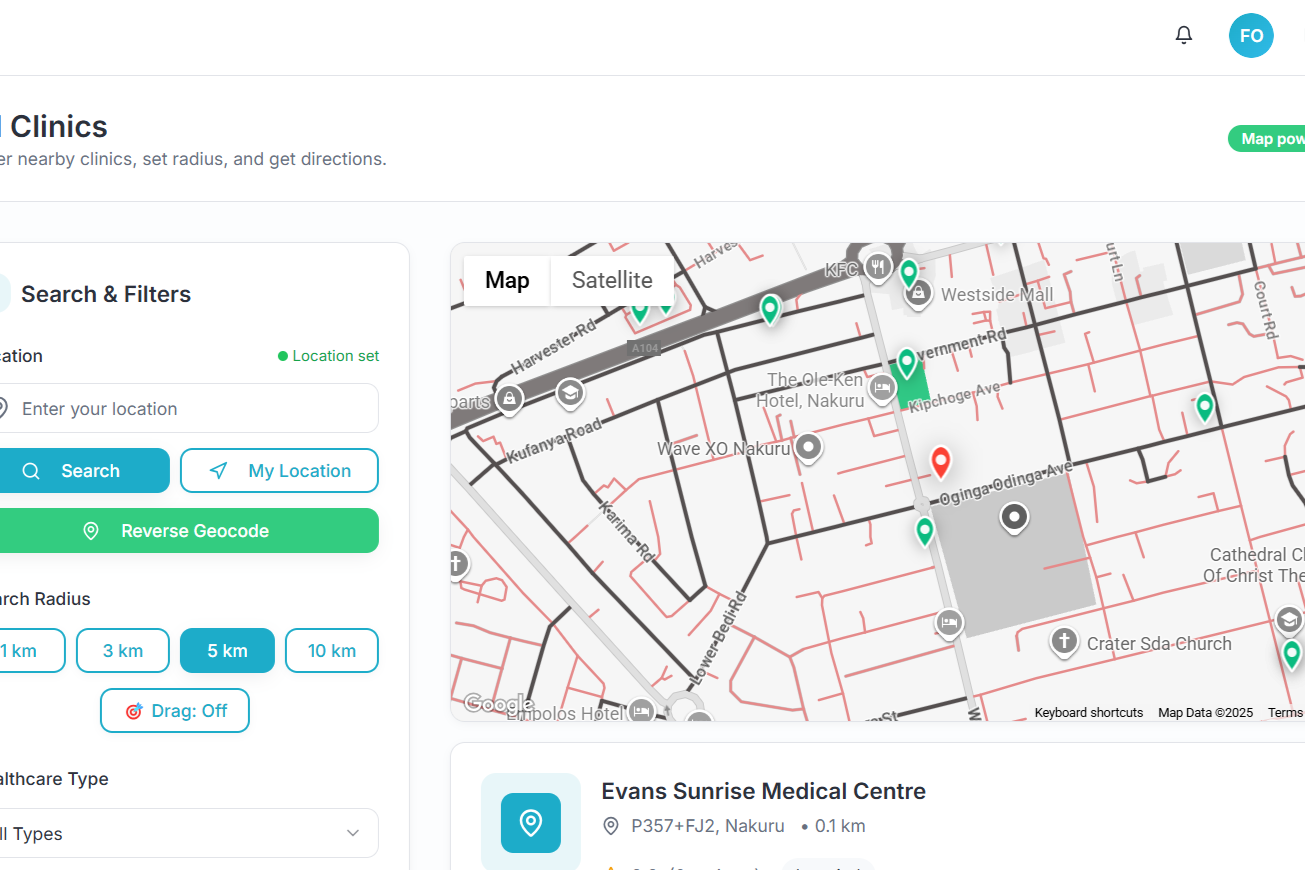
Find clinics near you with the added reverse geolocation feature
-
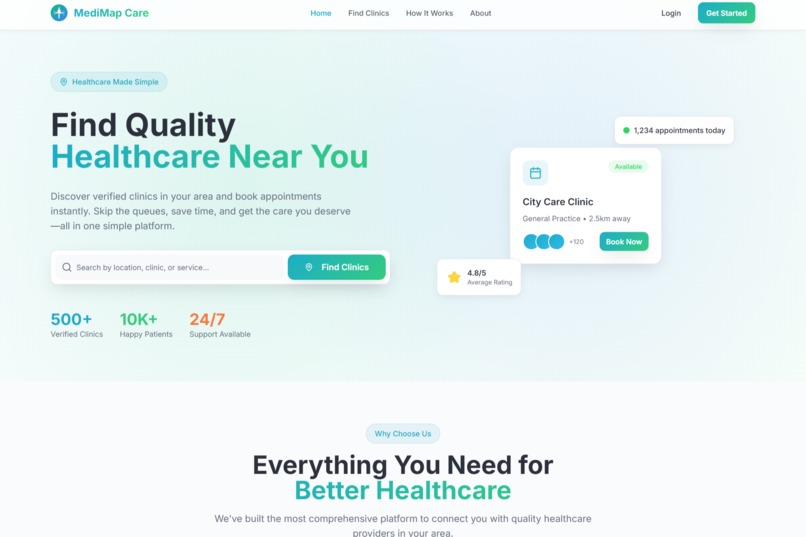
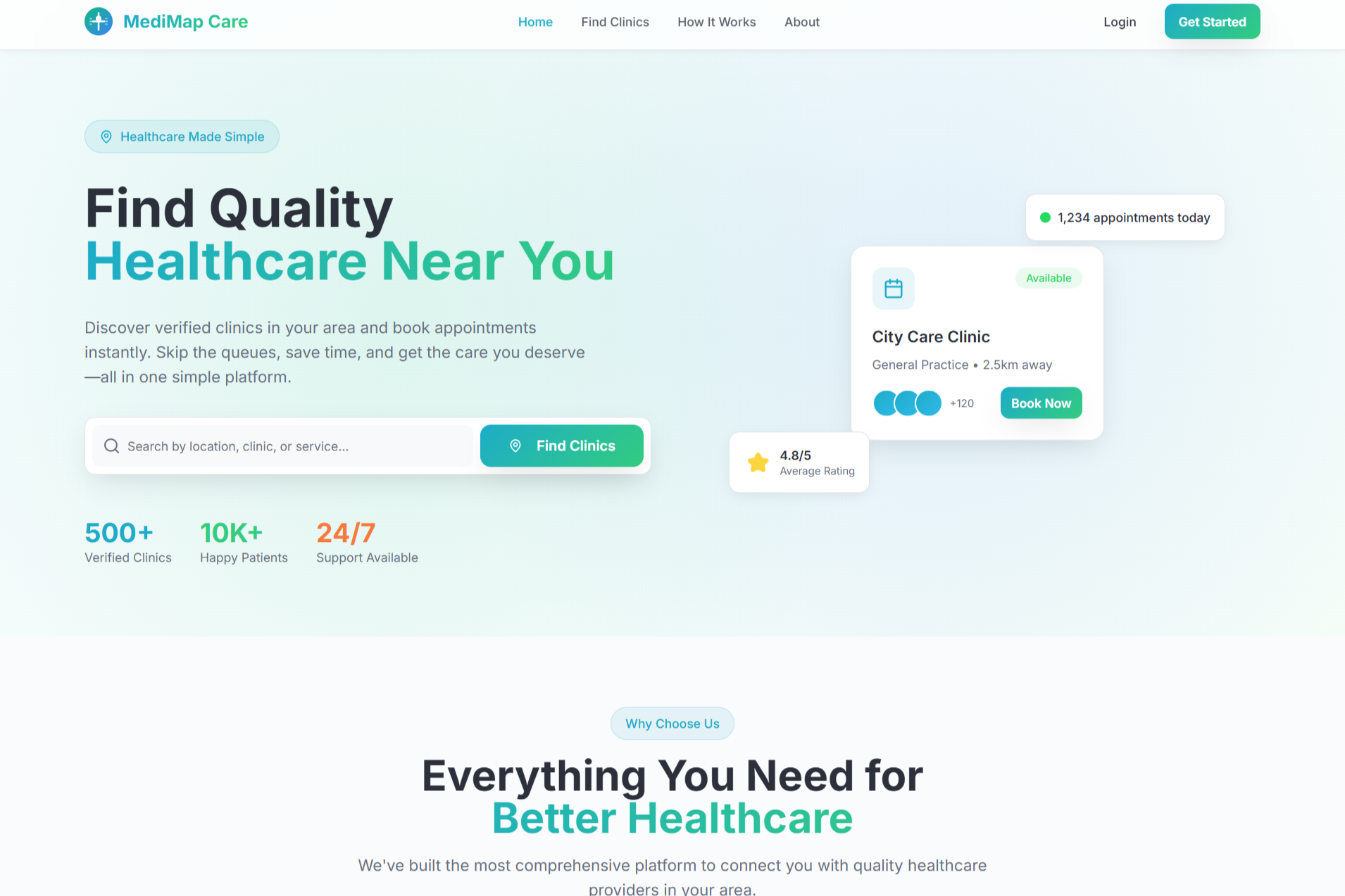
Hero section
Inspiration MediMap Care was motivated by the actual problems in the healthcare system of Kenya and in our communities overall in other countries: the insufficient access to medical institutions, time spent on booking an appointment manually, and lack of information about the quality and availability of clinics. We realized the impact that geographic barriers and information gaps were disproportionately affecting rural and underserved communities, and just came up with an idea to democratize access to healthcare and save the lives of many all over the world as we can.
What it does MediMap Care is a full-fledged healthcare application that links patients to certified medical centers via location-based business. Customers can find the closest clinics with the help of interactive Google Maps, make a reservation in real-time, read and write verified reviews, and filter by the specialty, availability, and distance. It offers in-person and video consultations, including such functions as emergency contacts and medical history storage, and tailored to mobile-first usage in Kenya and elsewhere.
How we built it MediMap Care is constructed on the basis of a contemporary full-stack architecture. The frontend is written in React 18 and TypeScript and built with Vite to develop fast and styled with Tailwind CSS and shadcn/ui components. In mapping we combined Google Maps JavaScript API and places API. The backend is written in TypeScript, Express.js, and Node.js, and powered by Supabase (PostgreQL database and authentication software). We used TanStack Query to manage state, Zod to validate and JWT to perform secure authentication. The tools used to support the development process were ESLint, PostCSS, and Concurrently.
Challenges we ran into The central one was how to incorporate Google Maps APIs and deal with API quota and proper geospatial queries without PostGIS that might create bottlenecks in terms of performance. Another problem we encountered was synchronous database write during clinic data saves and this would escalate latency once there was a high traffic. Also, it was hard to reach full coverage of new endpoints without automated unit/integration tests, and no check of important API keys was imposed to create a failure at runtime.
Achievements that we are proud of. We are proud that we have successfully designed a complete function platform that perfectly combines mapping, appointments, and reviews and has real-time geolocation and mobile-first design. Covering larger cities and towns in Kenya, even the rural ones, and ensuring a verified review system, establishing trust with the community. HIPAA-compliant data processing and cross-browser support were also attained in the project alongside having a scalable and clean code base.
What we learned This project taught us about the value of geospatial data processing and the intricacies of the healthcare integrations in a variety of settings such as Kenya. We got familiar with Google Maps APIs, Supabase as a backend service, and the importance of proper testing to avoid regressions. We also came to know about the necessity of background job systems to process data-intensive tasks and the usefulness of mobile-first design to be accessible in low-connectivity zones.
What's next for MediMap Care We will then apply PostGIS to correct the radius queries, add a background job system to perform a batch of clinic saves and extensive automated tests. These will be increased Google API quotas monitoring, serving more areas of Kenya, and adding telemedicine capabilities. The future plans are to add offline facilities, multi-linguals (English and Swahili) and collaboration with the health information systems in Kenya to cover more data.
Built With
- and-geographic-barriers
- and-information
- and-search-by-specialty-or-location?all-while-prioritizing-mobile-first-accessibility.-our-mission-is-to-eliminate-barriers-of-distance
- autoprefixer
- bcrypt
- ensuring-quality-care-reaches-rural-and-urban-areas-alike
- express.js
- frontend:-react-18
- google-maps-services-api-mapping-&-location:-google-maps-javascript-api
- google-places
- html5-geolocation-state-management:-tanstack-query
- it-connects-patients-with-verified-clinics-through-interactive-maps-powered-by-google-maps.-users-can-instantly-book-appointments
- jwt
- manual-booking-processes
- postcss
- react-context
- react-hook-form
- read-transparent-reviews
- shadcn/ui
- supabase-(postgresql)
- tailwind-css
- time
- typescript
- vis.gl/react-google-maps-backend:-node.js
- vite
- zod-development-tools:-eslint

Log in or sign up for Devpost to join the conversation.