
Inspiration
Life gets busy and symptoms blur into the background. We wanted a lightweight way to turn “I don’t feel right” into concrete next steps—triage, an appointment, and insurance clarity—in one loop.
What it does
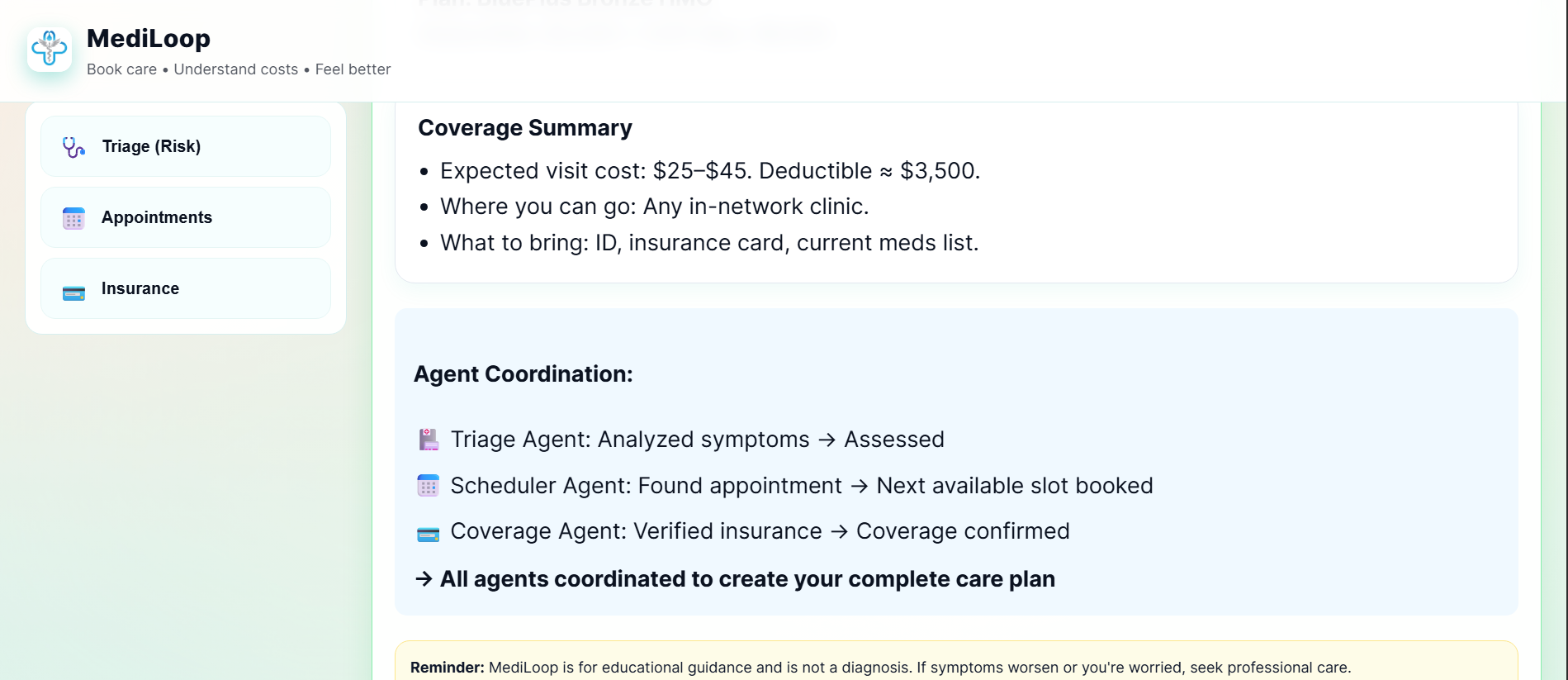
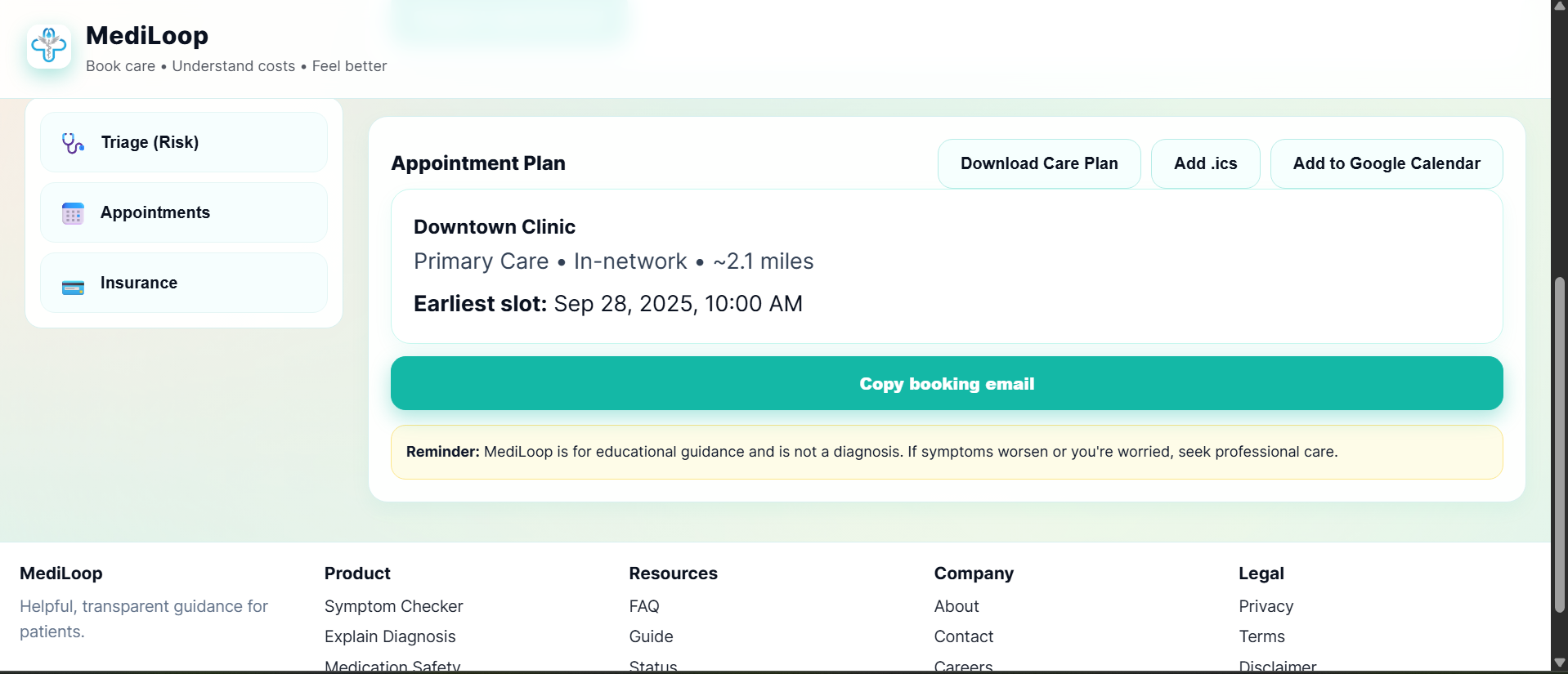
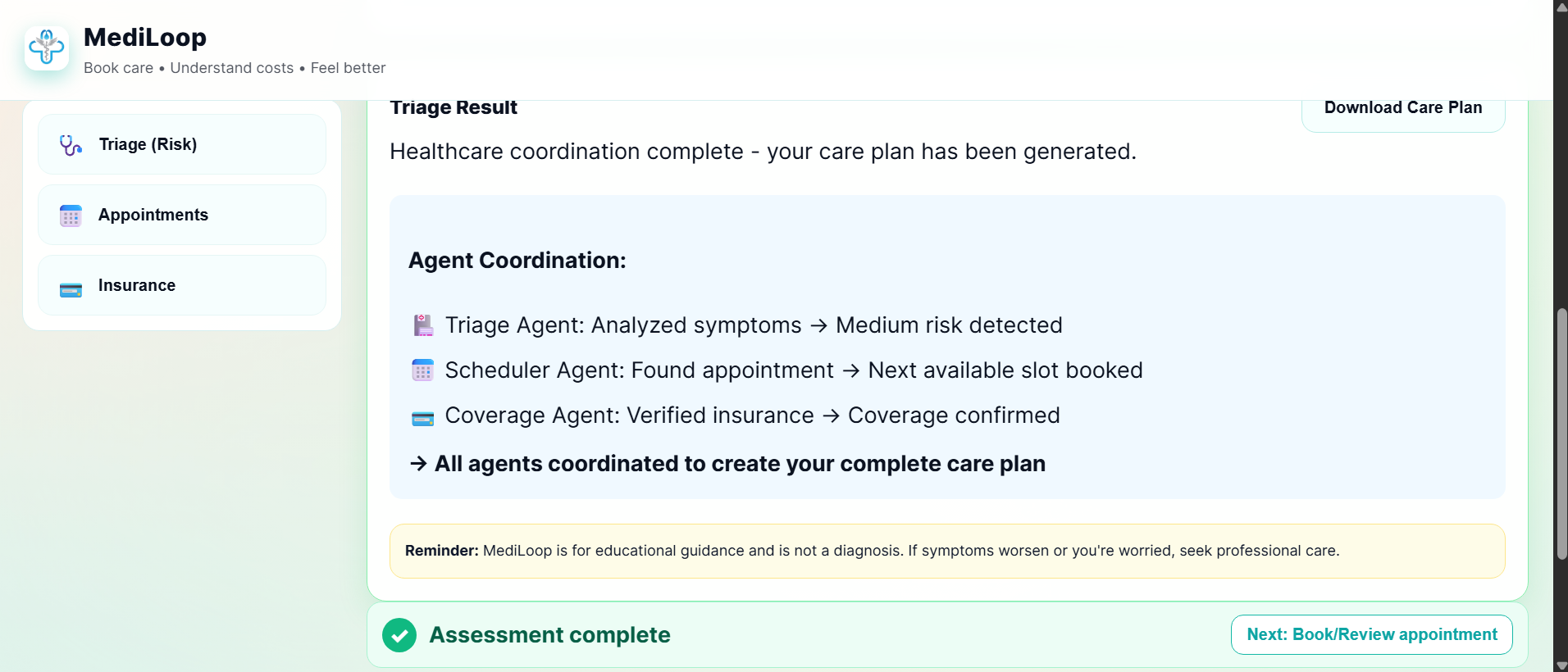
MediLoop is an AI-assisted care loop. You describe symptoms, it triages risk, recommends the right care level, books or preps an appointment, and summarizes likely coverage and costs—then schedules a follow-up.
How we built it
Backend in FastAPI with endpoints for triage, entries, checks, and an A2A orchestrator (Triage → Appointment → Insurance). Data lives in Supabase (JSON columns). Frontend (Vite/React) consumes the API and falls back to local demo data if the backend is down. Deployed on Railway with Docker, environment-based config, and CORS.
Challenges we ran into
Cross-OS issues (Python versions, encodings, line endings), import/casing bugs, Supabase schema/RLS details, Docker vs Nixpacks on Railway, and keeping frontend/backed URLs and env vars aligned during rapid changes.
Accomplishments that we're proud of
A working multi-agent flow with graceful fallbacks, clean triage heuristics that feed scheduling and coverage, a resilient UI, and repeatable deploys. We also set up scripts/logging to debug fast under time pressure.
What we learned
Small observability (health checks, simple logs) pays off. Be explicit with Docker and env vars. Plan schemas early. Fallbacks keep demos usable. And resolve Git conflicts early with consistent file casing/UTF-8.
What’s next for MediLoop
Add auth and per-user data security, real provider/insurance APIs, job queues for agent steps, richer progress UI/SSE, care-plan PDFs and calendar invites, SMS reminders, and multilingual support.


Log in or sign up for Devpost to join the conversation.