-
-

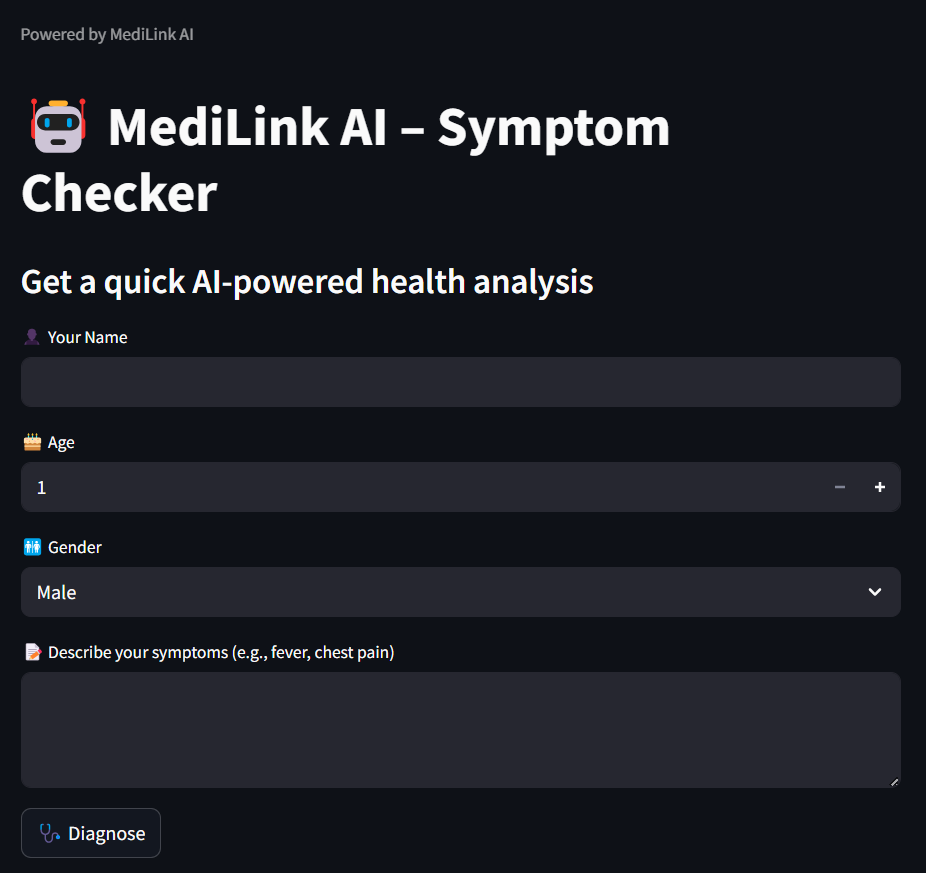
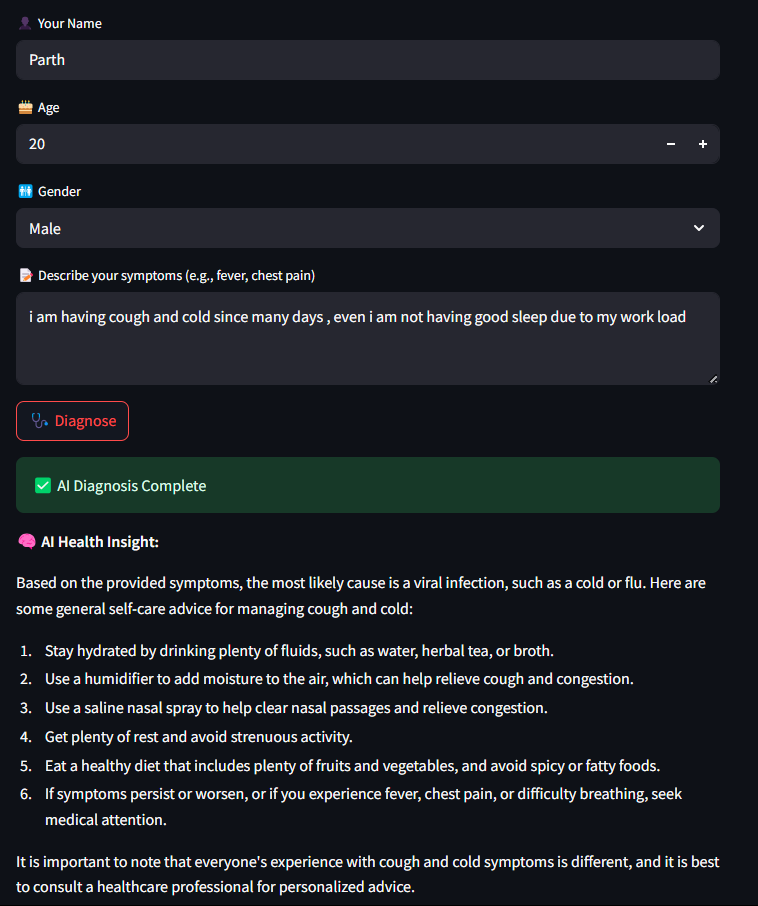
A user-friendly interface where patients can input their symptoms and receive an AI-powered diagnosis instantly.
-
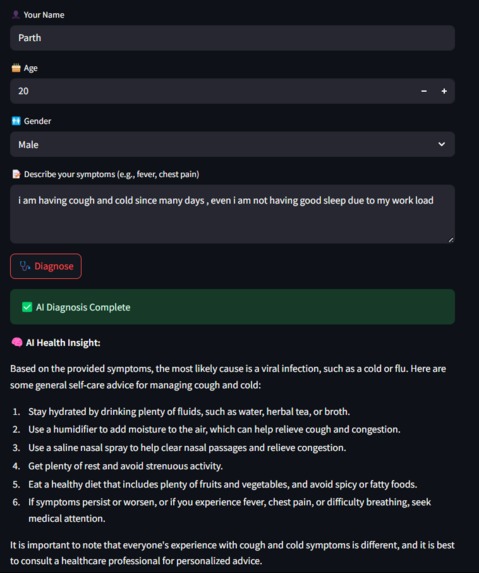
AI analyzes symptoms and provides instant health advice with personalized, clear suggestions for self-care and next steps.
-
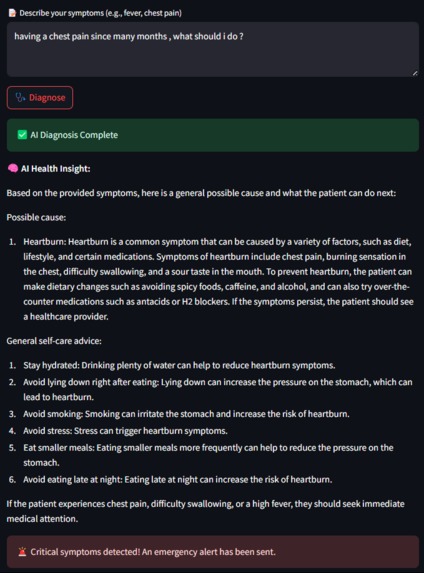
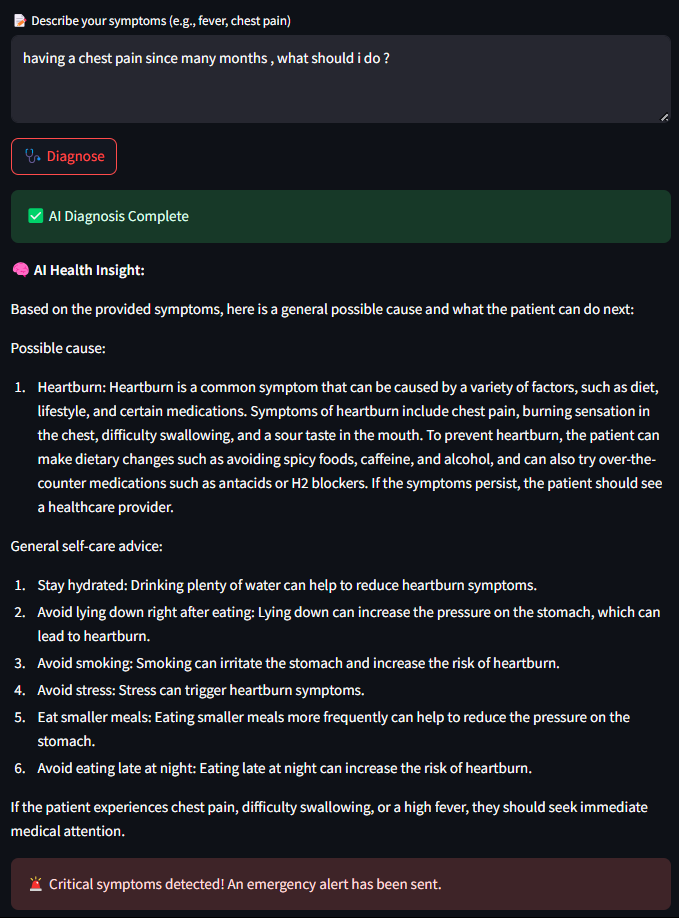
AI detects critical chest pain symptoms and sends an emergency alert while offering self-care tips for possible heartburn-related issues.
-
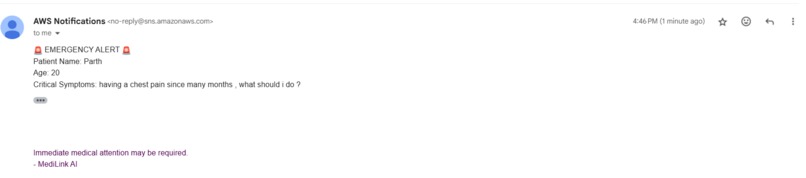
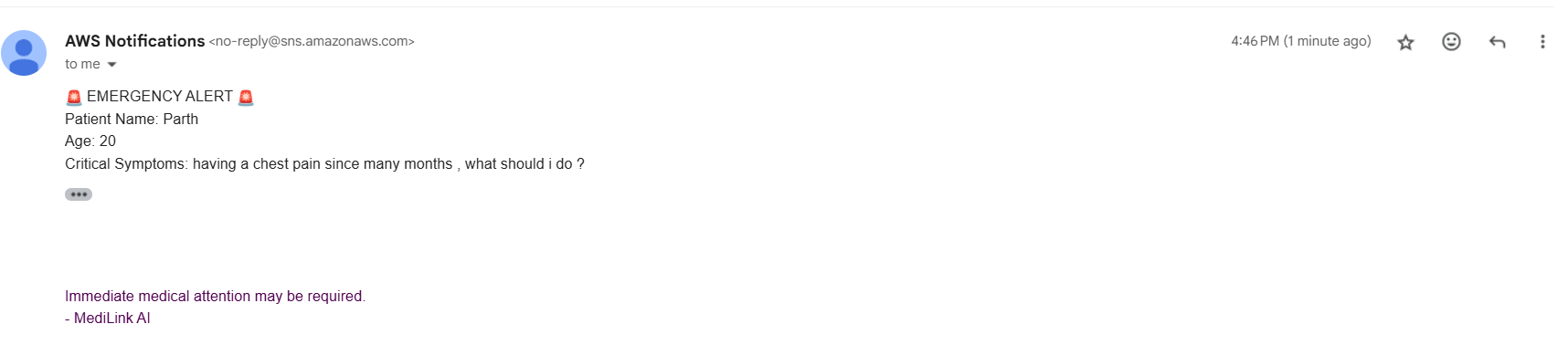
Emergency email alert triggered by MediLink AI for critical symptoms like chest pain—prompting urgent medical attention.
Inspiration
During my time abroad as a student, I personally experienced how difficult it can be to access fast, reliable medical support — especially when you're unfamiliar with the local healthcare system. This led me to think about people in rural areas or underserved communities who may not have access to doctors at all, but still have internet or basic mobile connectivity.
What if AI could provide a first layer of triage or health insight — anytime, anywhere?
That idea became the foundation for MediLink AI.
What it does
MediLink AI is an AI-powered remote diagnosis and emergency alert system. Here's what it does:
- Accepts user-inputted symptoms like “chest pain” or “high fever”
- Sends those symptoms to Amazon Bedrock (Titan Text G1) to generate a medically responsible 3-sentence insight
- Automatically detects critical symptoms (e.g. chest pain, shortness of breath)
- Triggers a real-time emergency alert via Amazon SNS (email)
- Stores the case securely in Amazon DynamoDB for future analysis or triage
How we built it
- Frontend: Streamlit for UI, built for mobile and desktop access
- AI Model: Amazon Bedrock (Titan Text G1) for natural language diagnosis
- Emergency Alerting: Amazon SNS for email-based real-time notifications
- Database: Amazon DynamoDB to store each patient’s info securely
- Deployment: Hosted using Streamlit Cloud
- Secrets: Secured AWS credentials using Streamlit secrets manager
All AWS services were configured using IAM, Boto3 SDK, and tested both locally and live.
Challenges we ran into
- Accessing Bedrock: Initial model access required waiting for approval
- SNS sandbox restrictions: Alerts were limited to verified email addresses until production access was enabled
- Credentials security: Accidentally committed AWS keys during dev; had to learn and use GitHub Push Protection & environment-based secrets
Accomplishments that we're proud of
- Successfully integrated Amazon Bedrock, SNS, and DynamoDB into a seamless user experience
- Deployed a fully working, mobile-friendly app using only serverless tools
- Created a clean UI with medical safety considerations in AI prompting
- Implemented automated emergency alerts that work live from a public deployment
What we learned
- How to build real-time AWS integrations with Bedrock and SNS
- Managing IAM permissions and securing API credentials in production
- Prompt engineering for medical safety within large language models
- Using DynamoDB for structured, scalable cloud storage
What's next for MediLinkAI
- Integrate multilingual input support using Amazon Translate
- Build an admin dashboard for doctors to view patient records and alerts
- Extend with IoT sensor data (wearables or edge devices)
- Add downloadable reports for patients (PDF/CSV)
- Improve Bedrock prompting to adapt to different health categories
Built With
- amazon-web-services
- amazondynamodb
- amazonsns
- boto3
- iam
- python
- titantextg1

Log in or sign up for Devpost to join the conversation.