-
-
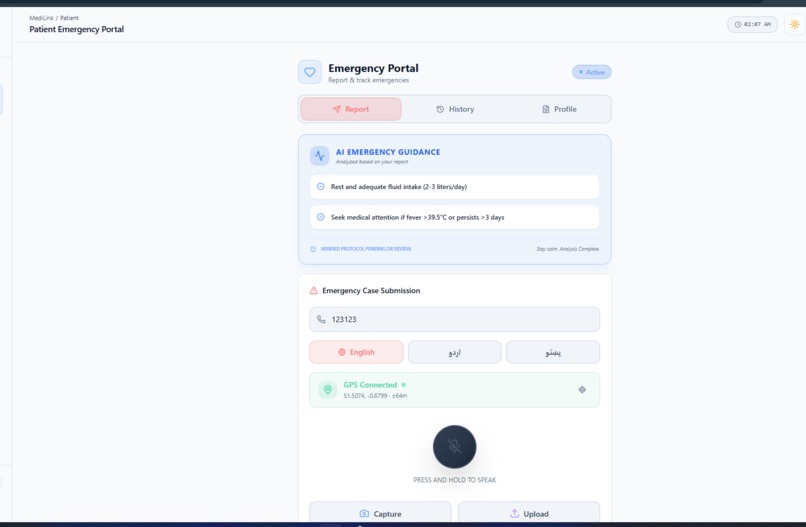
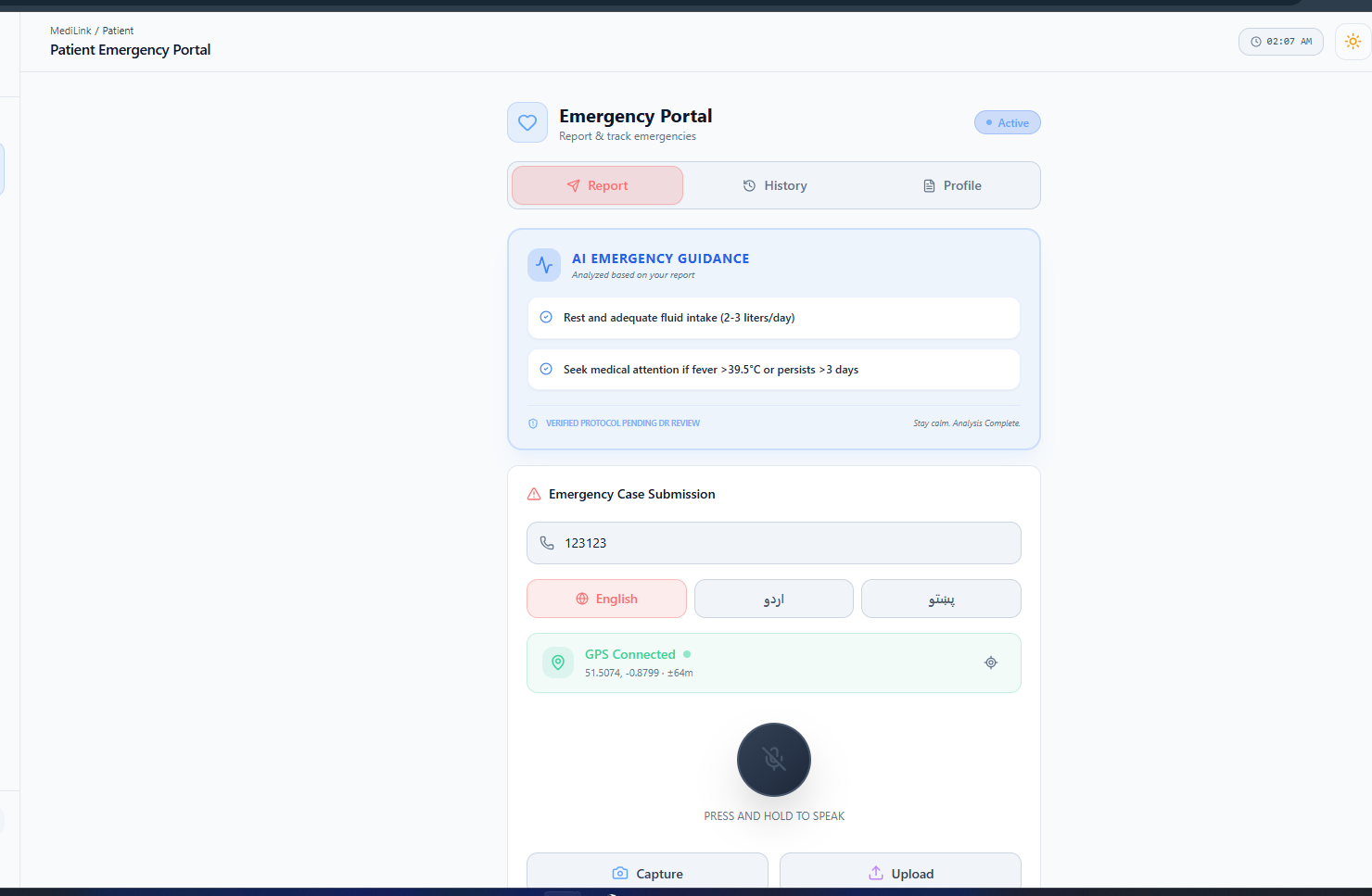
Patiant Portal
-
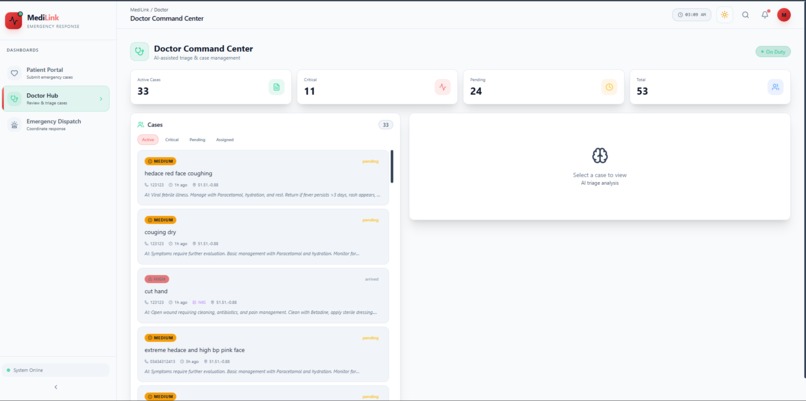
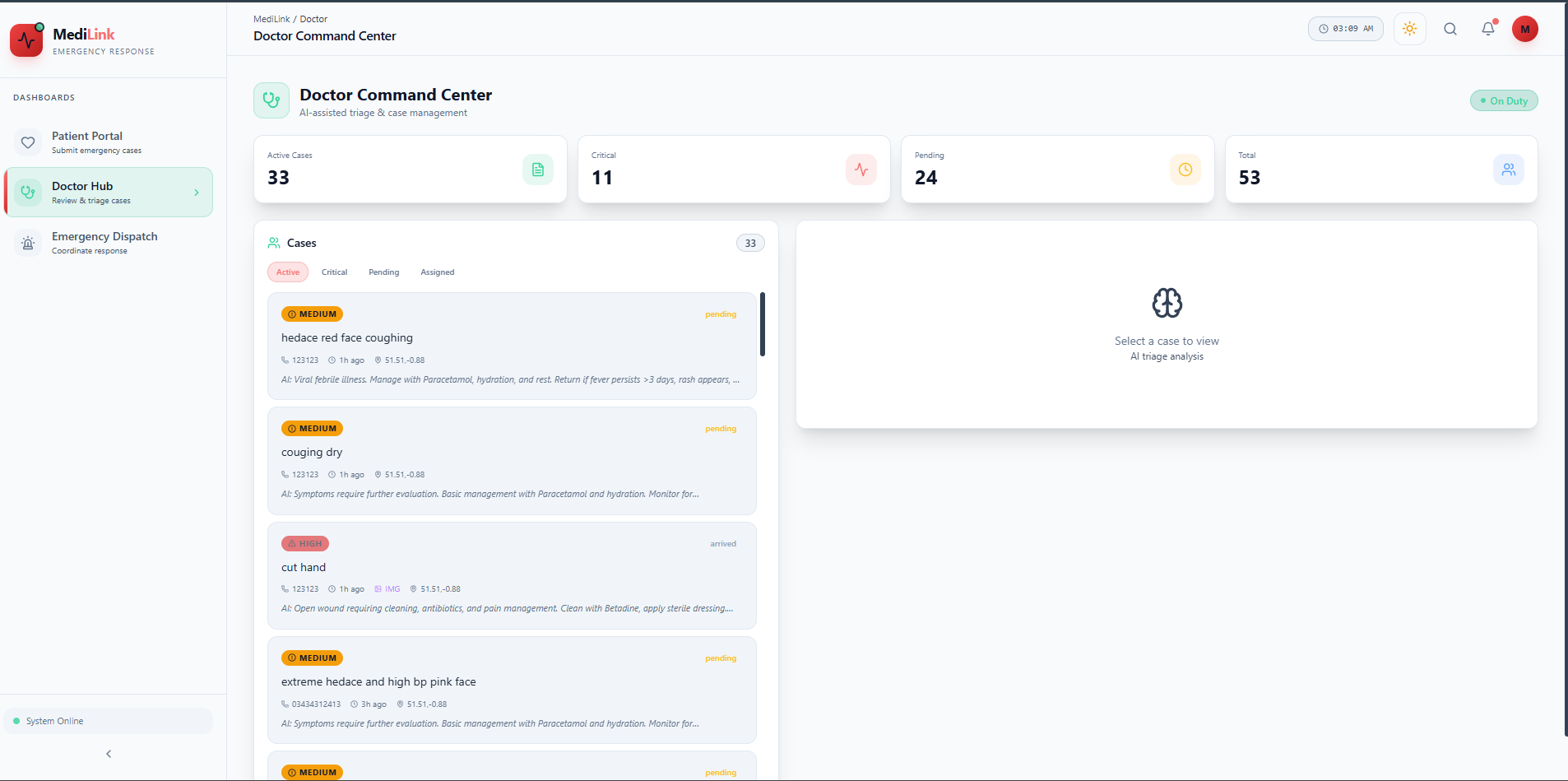
Doctor Portal
-
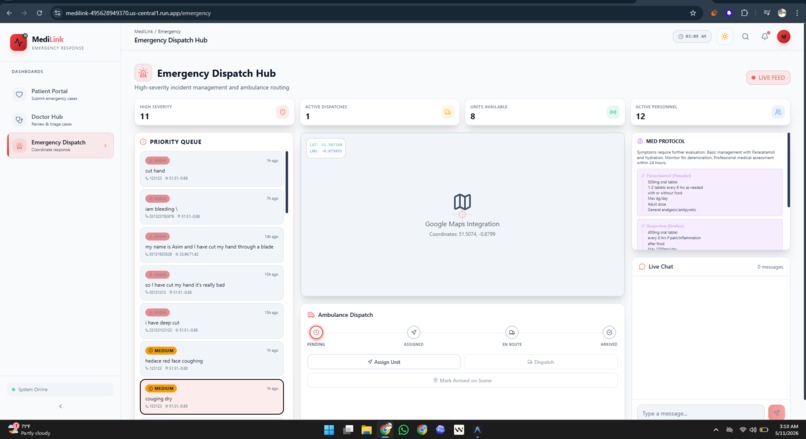
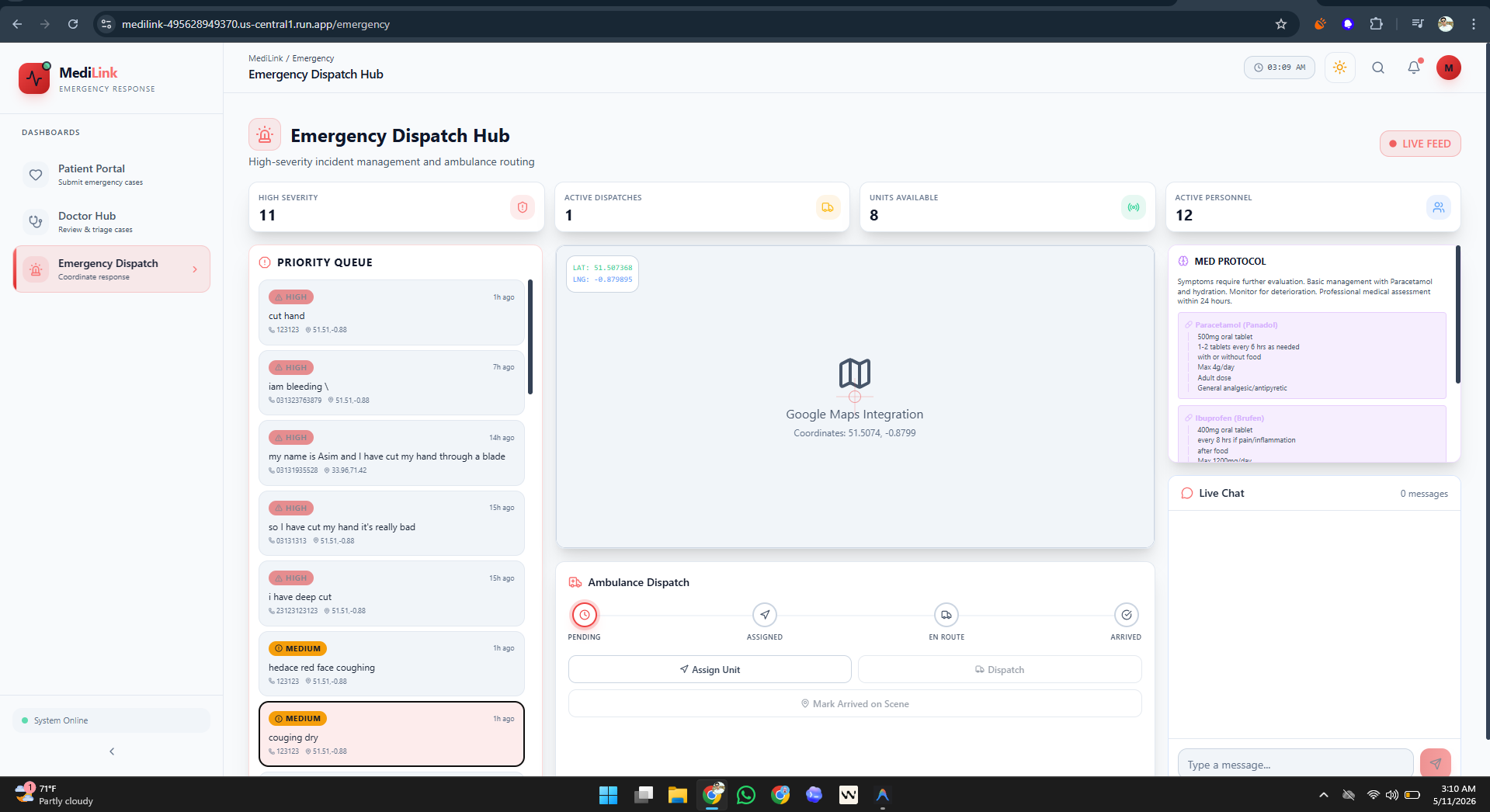
Emergency Portal
-
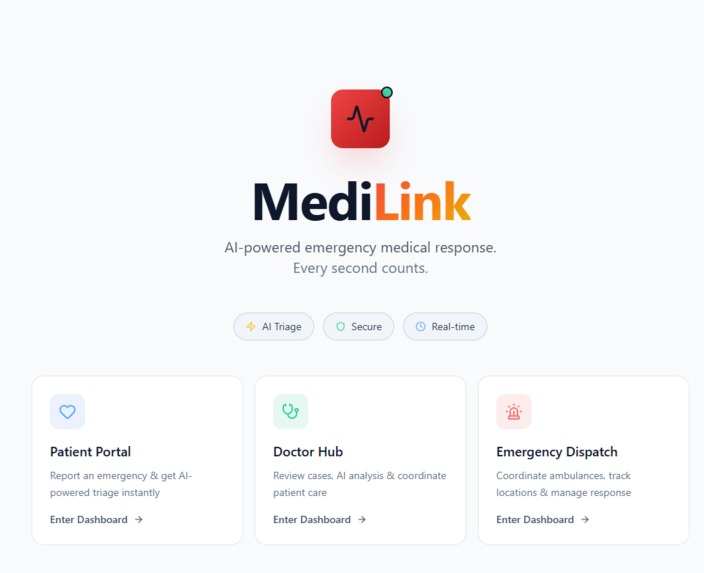
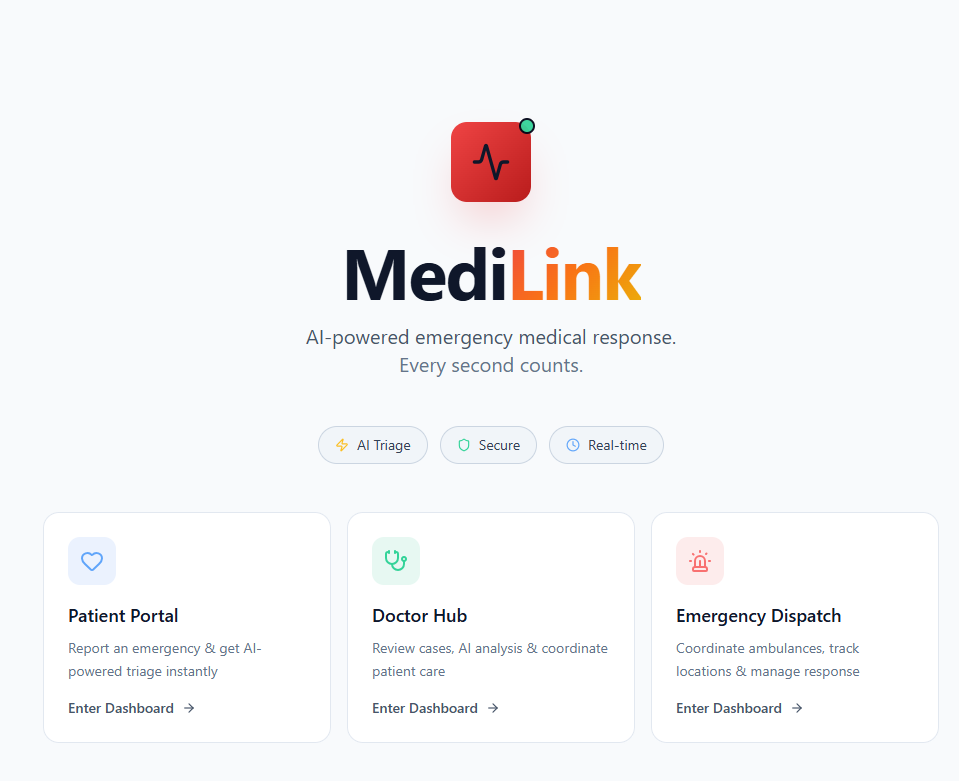
Main Site
🚑 MediLink AI — Hackathon Project Overview
💡 Inspiration
Every second matters during a medical emergency.
Many people facing emergencies panic because they do not know:
- what condition they might have,
- which doctor they need,
- what medicine they already take,
- or how to explain symptoms quickly.
This communication gap wastes critical time during the Golden Hour — the first hour after a traumatic injury or medical emergency where fast decisions can save lives.
We built MediLink AI to bridge that gap using AI-powered emergency triage, multilingual voice interaction, and real-time coordination between patients, doctors, and emergency dispatchers.
🚑 What It Does
MediLink AI creates a complete emergency-response ecosystem connecting:
👤 Patient Dashboard
Patients can:
- Speak symptoms using voice input (Urdu/English support)
- Upload previous medical records or prescriptions
- Receive AI-powered emergency analysis
- Get medicine safety alerts and allergy warnings
- Maintain a persistent medicine history
- Share live emergency status with responders
👨⚕️ Doctor Dashboard
Doctors can:
- View patient symptoms in real time
- Access uploaded medical records instantly
- Receive AI-generated treatment suggestions
- Get alerts about medicine conflicts or allergies
- Add prescriptions to long-term patient history
- Monitor emergency severity levels
🚓 Dispatcher Dashboard
Emergency dispatchers can:
- Track incoming emergency requests
- Prioritize high-risk patients using AI triage scoring
- Coordinate ambulance routing
- Monitor live doctor-patient communication
- Handle mass emergency scenarios efficiently
🛠️ How We Built It
MediLink AI was designed for ultra-fast emergency response and low latency.
⚡ Frontend
- Next.js 14
- TypeScript
- Tailwind CSS
- Framer Motion
- shadcn/ui
🔥 Backend & Infrastructure
- Firebase Authentication
- Firestore Database
- Firebase Storage
- Cloud Functions
- Google Cloud Run
🧠 AI Layer
- Gemini 2.0 Flash
- Real-time symptom analysis
- Prescription interpretation
- Medicine conflict detection
- Emergency severity classification
- Multilingual processing (Urdu + English)
The low-latency performance of Gemini Flash allowed us to process emergency triage responses in under 2 seconds.
🚧 Challenges We Ran Into
🧠 Human-in-the-Loop Safety Logic
One of the biggest challenges was ensuring AI never acts completely autonomously during emergencies.
We implemented a Human-in-the-Loop architecture where:
- AI provides recommendations,
- doctors verify medical decisions,
- and dispatchers retain operational control.
This balance between automation and human oversight was critical for safety.
🌍 Multilingual Voice Processing
Handling real-time Urdu and English voice input was difficult because:
- medical terminology varies heavily,
- accents differ across regions,
- and speech clarity changes during emergencies.
We optimized prompt engineering and transcription handling to improve reliability under stress conditions.
🔄 Real-Time State Synchronization
Managing live updates across:
- patients,
- doctors,
- dispatchers,
- and AI processing pipelines
required careful real-time orchestration using Firebase listeners and event-driven state management.
🏆 Accomplishments That We're Proud Of
- ⚡ Sub-2-second emergency triage processing
- 🎙️ Real-time multilingual voice interaction
- 🩺 AI-assisted medicine safety checks
- 📄 Dynamic medical record uploads
- 🔄 Smooth animated emergency workflow transitions
- 🚑 Multi-dashboard ecosystem working together live
- 🧠 AI recommendations integrated safely with doctors
One of our proudest achievements was creating a UI that remains simple and calm even during high-stress emergency situations.
📖 What We Learned
Building MediLink AI taught us that emergency software is not just about technology — it is about trust, clarity, and speed.
We learned:
- how critical UX simplicity is during panic situations,
- how difficult real-time medical orchestration can become,
- and how AI must assist humans rather than replace them in healthcare.
We also gained deep experience with:
- low-latency AI pipelines,
- Firebase real-time architecture,
- emergency-focused UX design,
- and scalable state synchronization.
🚀 What's Next for MediLink AI
We want to expand MediLink AI into a complete intelligent emergency ecosystem.
🔍 Planned Features
📸 OCR Prescription & Medicine Scanner
Patients will be able to:
- scan handwritten prescriptions,
- digitize medicine records,
- and automatically update medical history.
🚨 Mass Casualty Mode
A special emergency mode for:
- disasters,
- accidents,
- and large-scale emergencies
where dispatchers can manage multiple patients simultaneously using AI-assisted prioritization.
🌐 Expanded Language Support
Support for:
- Pashto
- Arabic
- Hindi
- and regional dialects
to improve accessibility globally.
🧬 Personalized Medical Intelligence
Future AI models could:
- detect recurring medical risks,
- predict dangerous medicine interactions,
- and provide smarter emergency preparation recommendations.
❤️ Final Vision
Our vision is simple:
No person should lose precious emergency time because of communication barriers, panic, or lack of medical history.
MediLink AI aims to become the intelligent bridge between patients, doctors, and emergency responders — helping save lives when every second matters.
Built With
- antigravity
- nextjs

Log in or sign up for Devpost to join the conversation.