Inspiration
In disaster-prone regions like KPK and Punjab, rural communities often struggle to communicate their needs quickly due to language barriers, low literacy, and lack of digital access. Delayed or unclear information can cost lives. MediLink AI was inspired by the need to create a simple, accessible bridge between vulnerable populations and NGOs, using voice and AI to ensure no cry for help goes unheard.
What it does
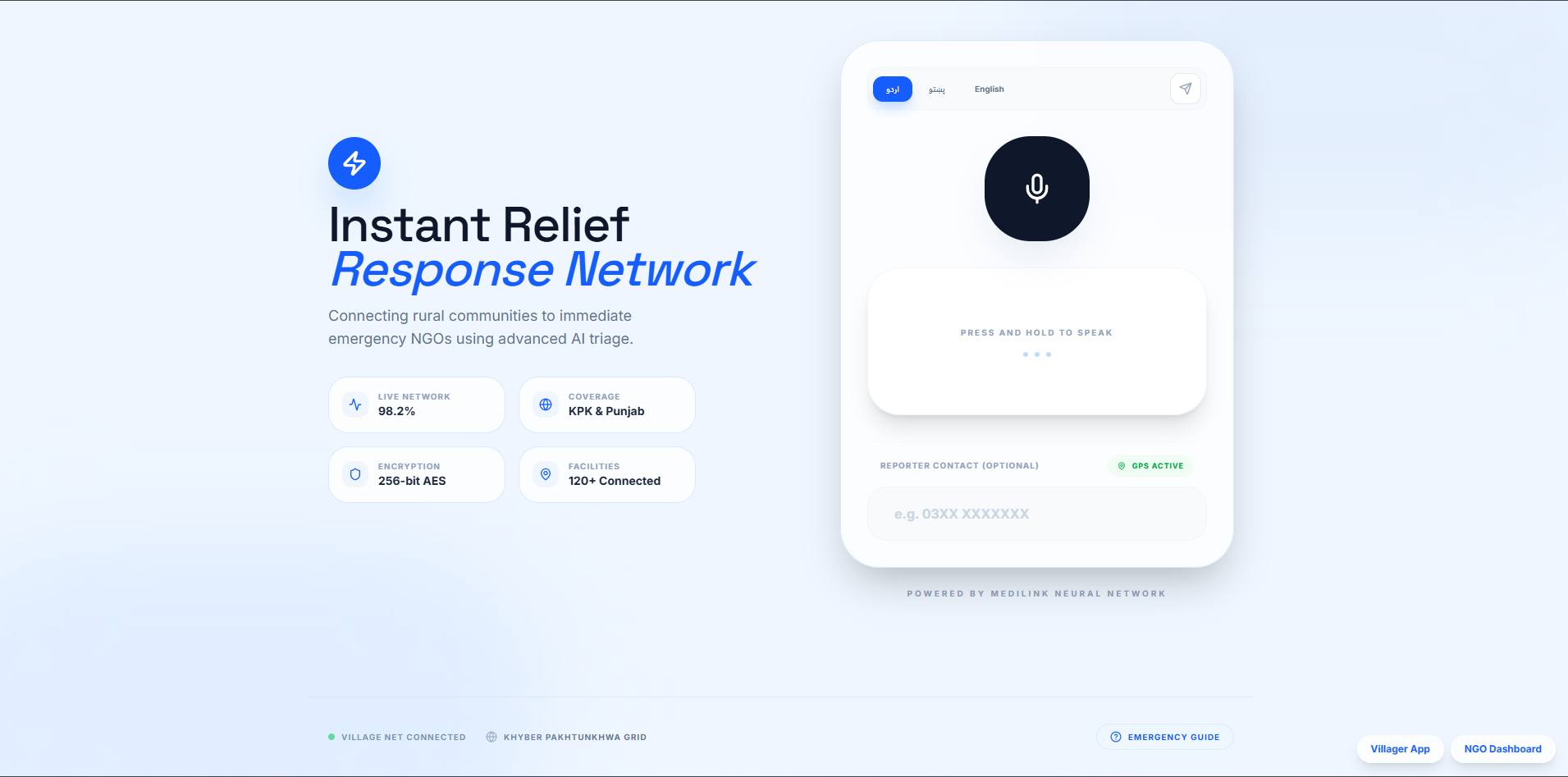
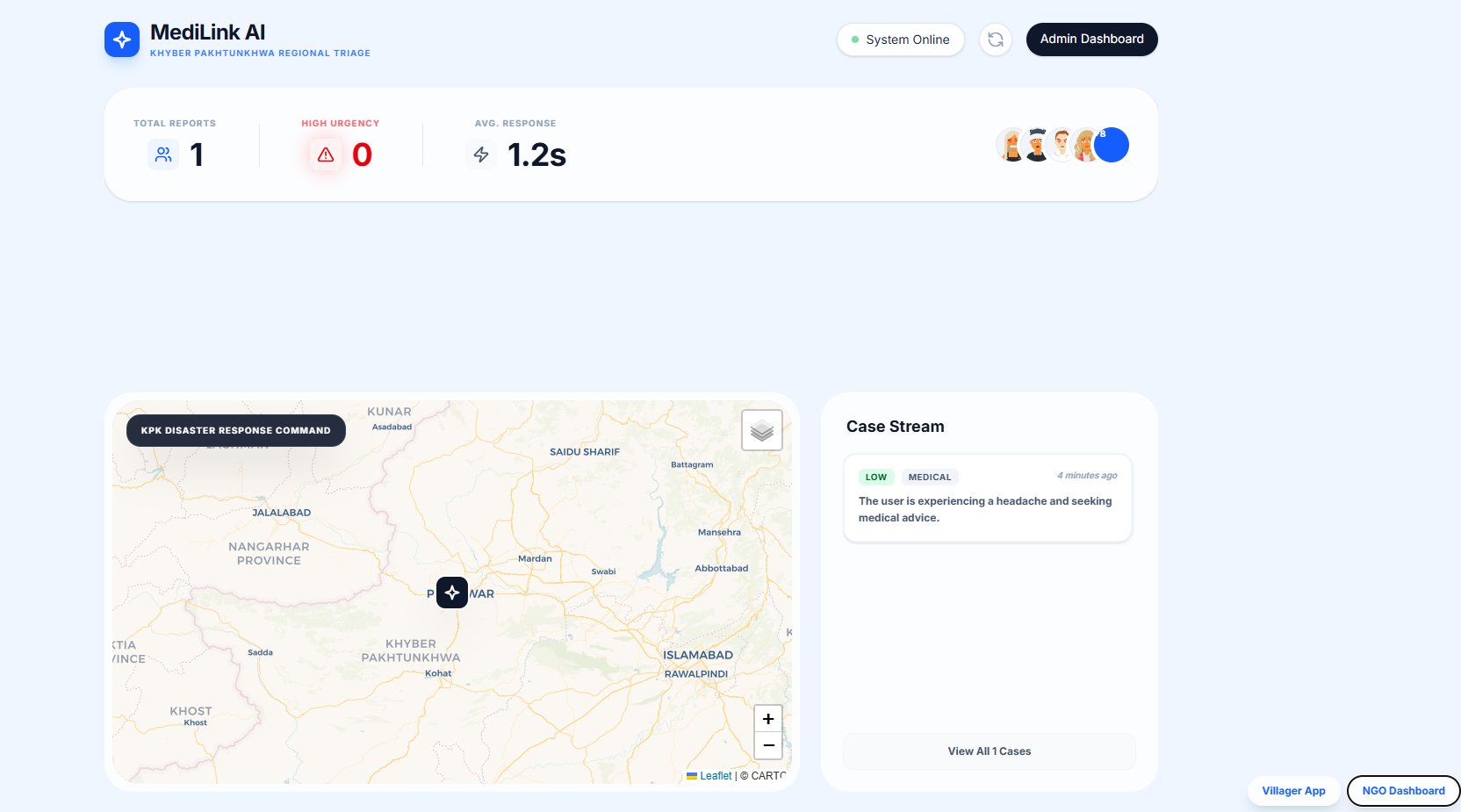
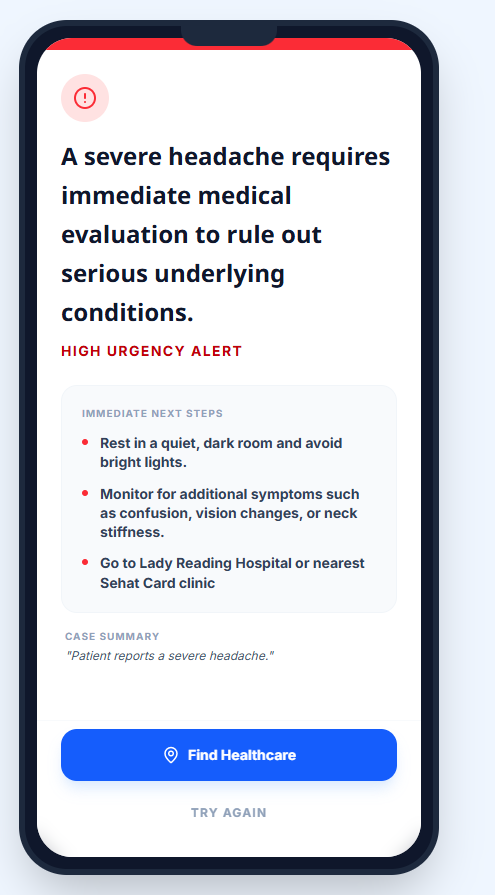
MediLink AI is an AI-powered emergency response platform that enables villagers to report incidents using voice or text in Pashto, Urdu, or English. The system transcribes, analyzes, and assigns urgency scores to each report, then visualizes them on a real-time map for NGOs. Relief organizations can track, prioritize, and respond efficiently through a centralized command dashboard with location and contact integration.
How we built it
We built the frontend using React, Vite, and Tailwind CSS to create a fast, responsive interface. The backend runs on Express.js, handling API requests and integrating with AI services. Firebase Firestore powers real-time data syncing, while Firebase Authentication manages access control. The core triage engine uses AI (Gemini API) to process multilingual input, detect urgency, and structure reports. Leaflet was used to implement interactive incident mapping.
Challenges we ran into
Handling multilingual voice input—especially Pashto—was a major challenge due to limited transcription accuracy and dialect variations. Designing a reliable urgency scoring system without over- or under-prioritizing cases required careful tuning. Ensuring real-time performance while maintaining secure data handling in a disaster context was also complex. Additionally, making the interface simple enough for non-technical users while still powerful for NGOs required multiple iterations.
Accomplishments that we're proud of
We successfully built a production-ready system that combines voice input, AI triage, and real-time mapping into a single platform. The ability to process Pashto voice reports and convert them into actionable NGO tasks is a major milestone. We also created a scalable architecture using Firebase that can handle real-time updates efficiently. Most importantly, the platform is practical and deployable in real-world crisis situations.
What we learned
We learned the importance of designing for accessibility first—voice interfaces can be far more impactful than text in rural contexts. Working with real-time systems taught us how to balance performance and reliability. We also gained insights into how AI can assist decision-making but still requires human oversight. Lastly, we understood the complexity of building for disaster scenarios, where simplicity, speed, and clarity are critical.
What's next for MediLink AI
Next, we plan to improve voice recognition accuracy for regional dialects and expand language support. We aim to integrate offline capabilities for low-connectivity areas and add SMS/WhatsApp-based reporting. Enhancing the NGO dashboard with predictive analytics and resource optimization is also a priority. Long-term, we want to partner with local governments and humanitarian organizations to deploy MediLink AI in real disaster response operations.

Log in or sign up for Devpost to join the conversation.