-
-
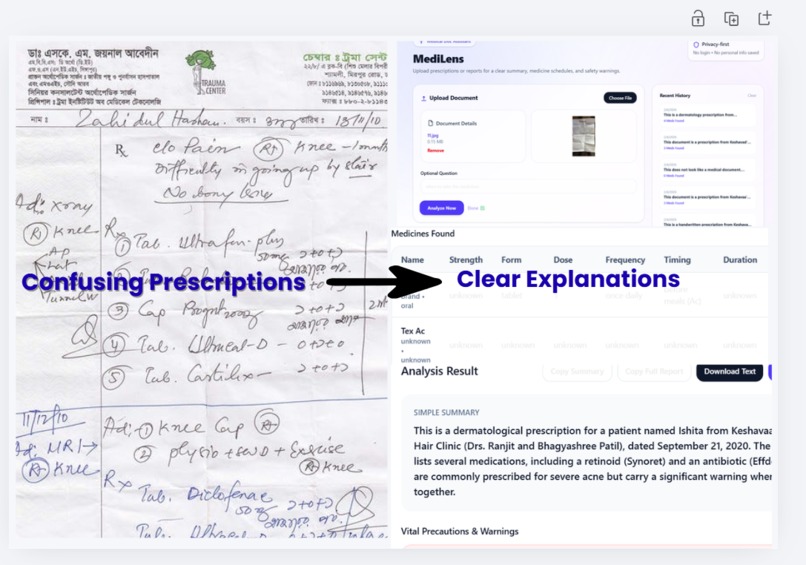
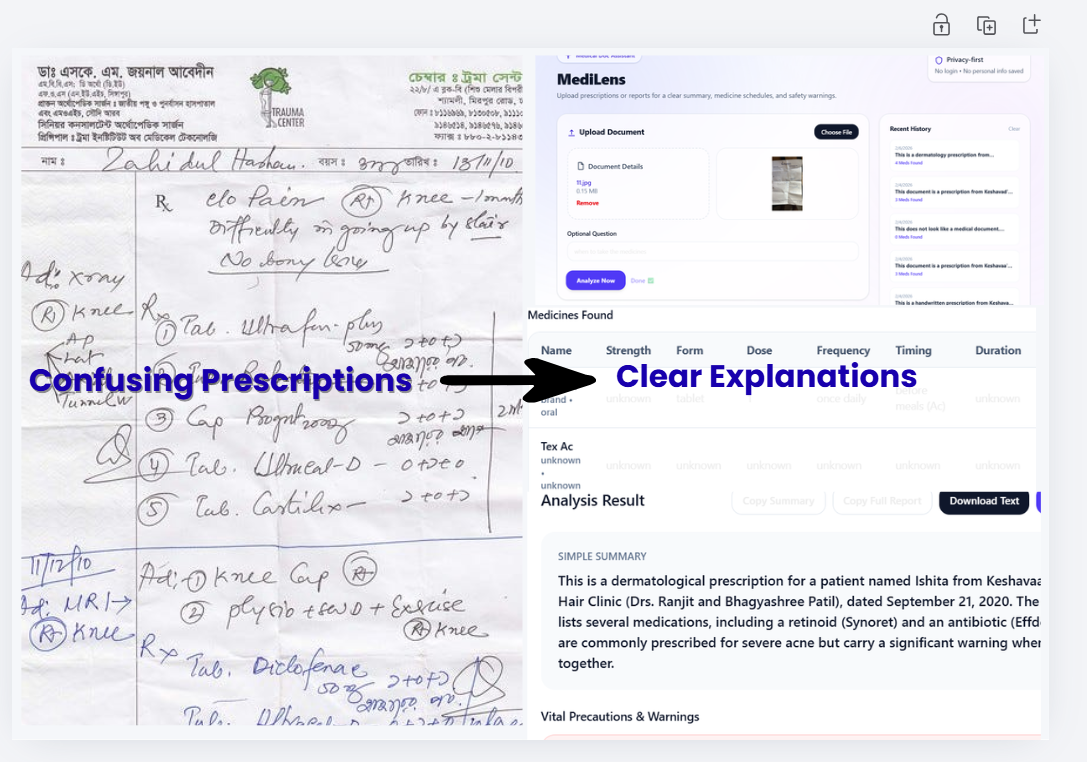
image describing before vs after using MediLens
-
-
-
-
-
-
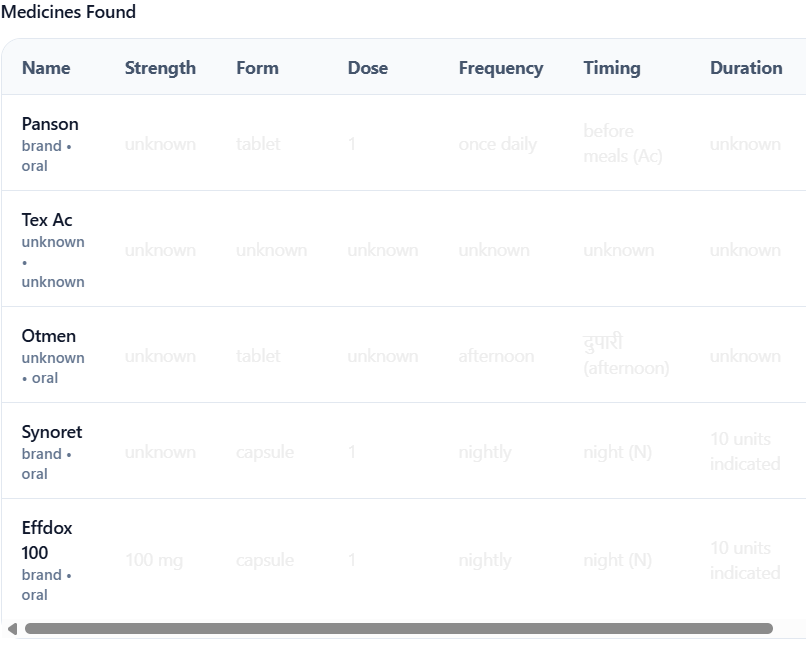
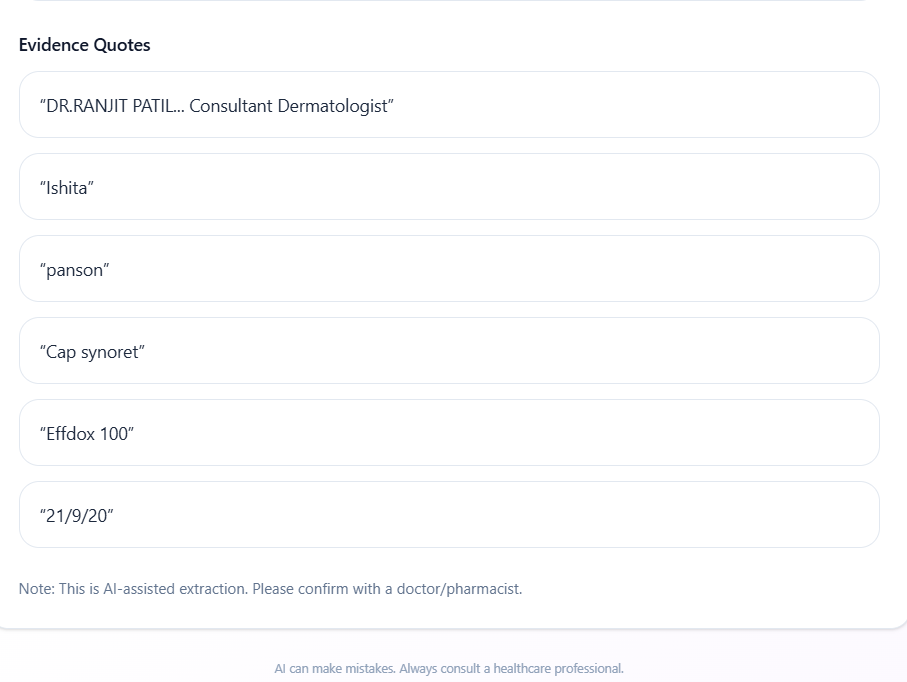
Inspiration:
MediLens was inspired by observing how elderly patients and people with disabilities struggle to understand their own medical prescriptions.
Handwritten notes, abbreviations, and dense medical jargon often leave users confused once they leave the clinic or pharmacy. For older adults, people with visual impairments, or those with limited health literacy, this confusion can feel overwhelming and stressful. Many patients hesitate to ask repeated questions or depend entirely on others to interpret their instructions.
Healthcare information should not require medical training to understand. MediLens aims to restore clarity, confidence, and dignity to patients who deserve to understand their own health.
What It Does:
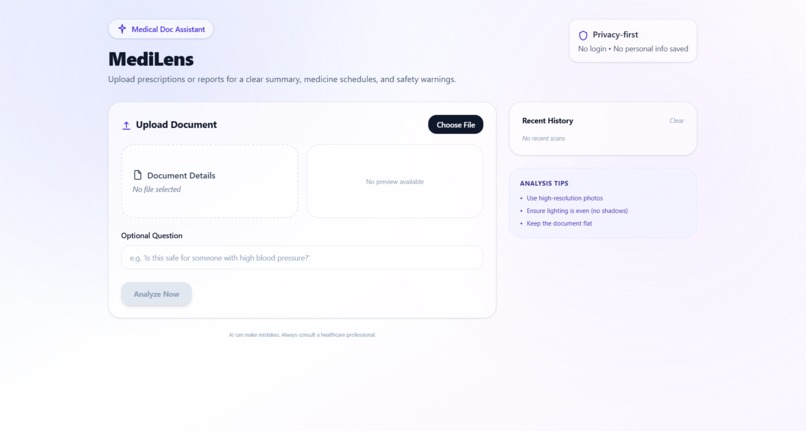
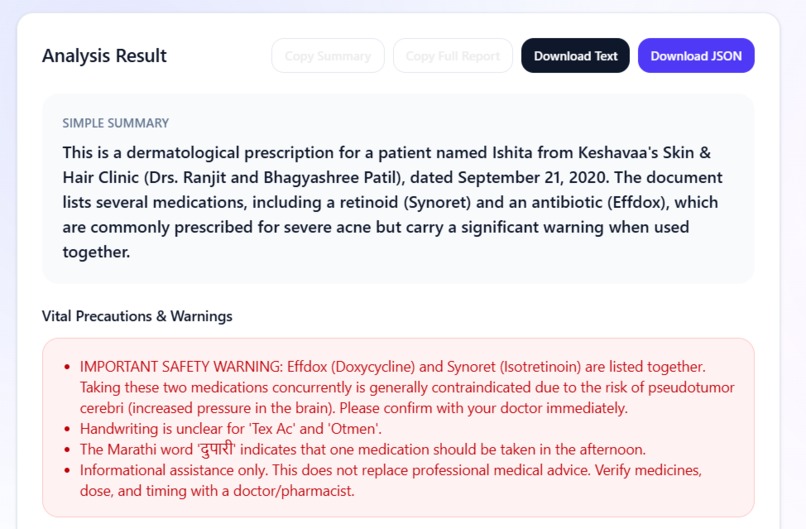
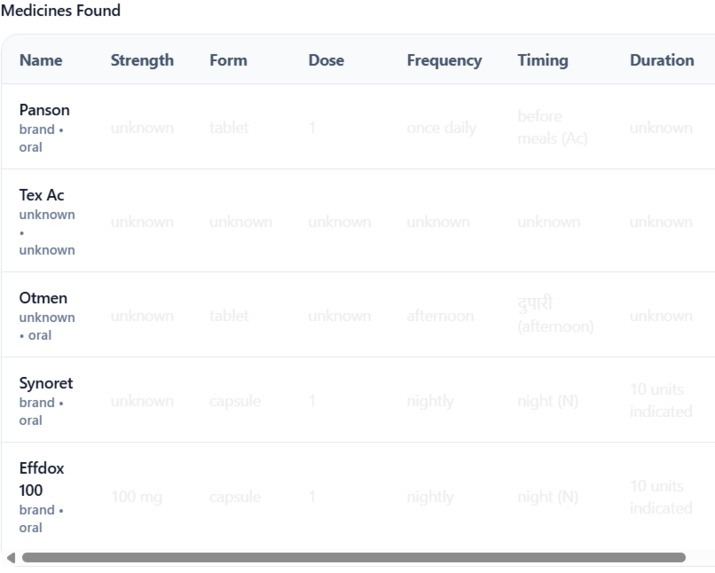
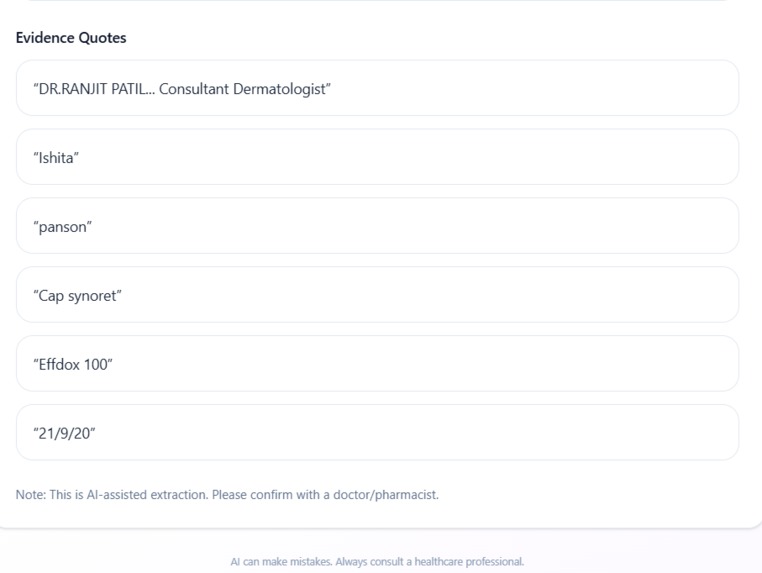
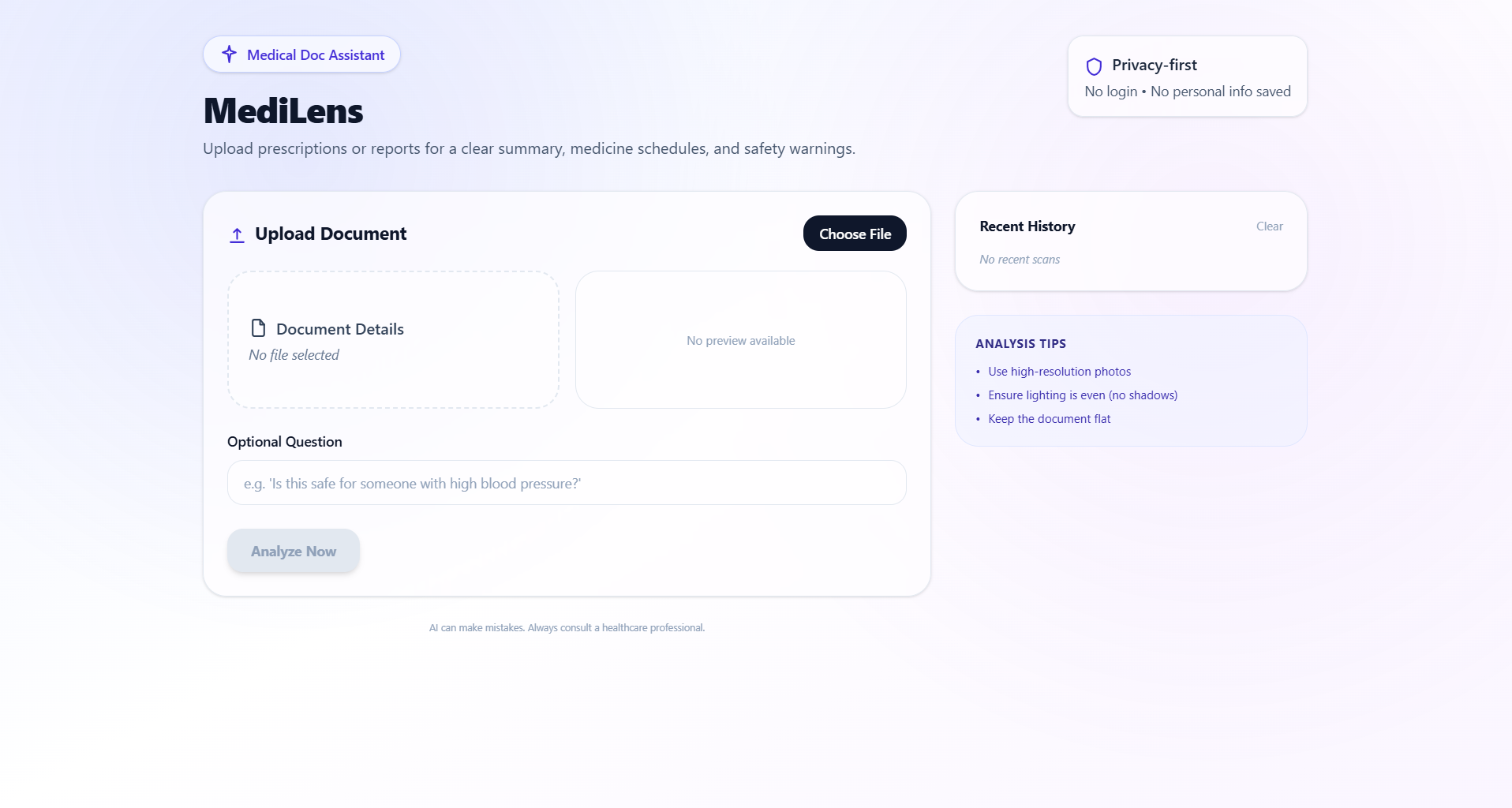
MediLens is a medical document assistant that helps users understand prescriptions and medical reports more clearly.
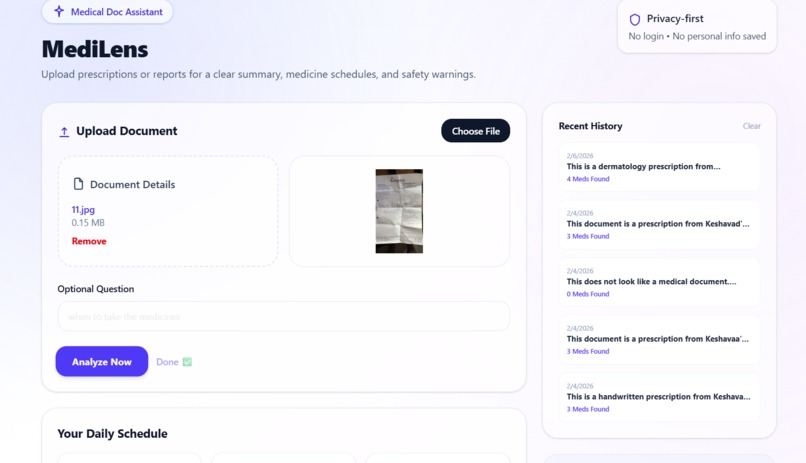
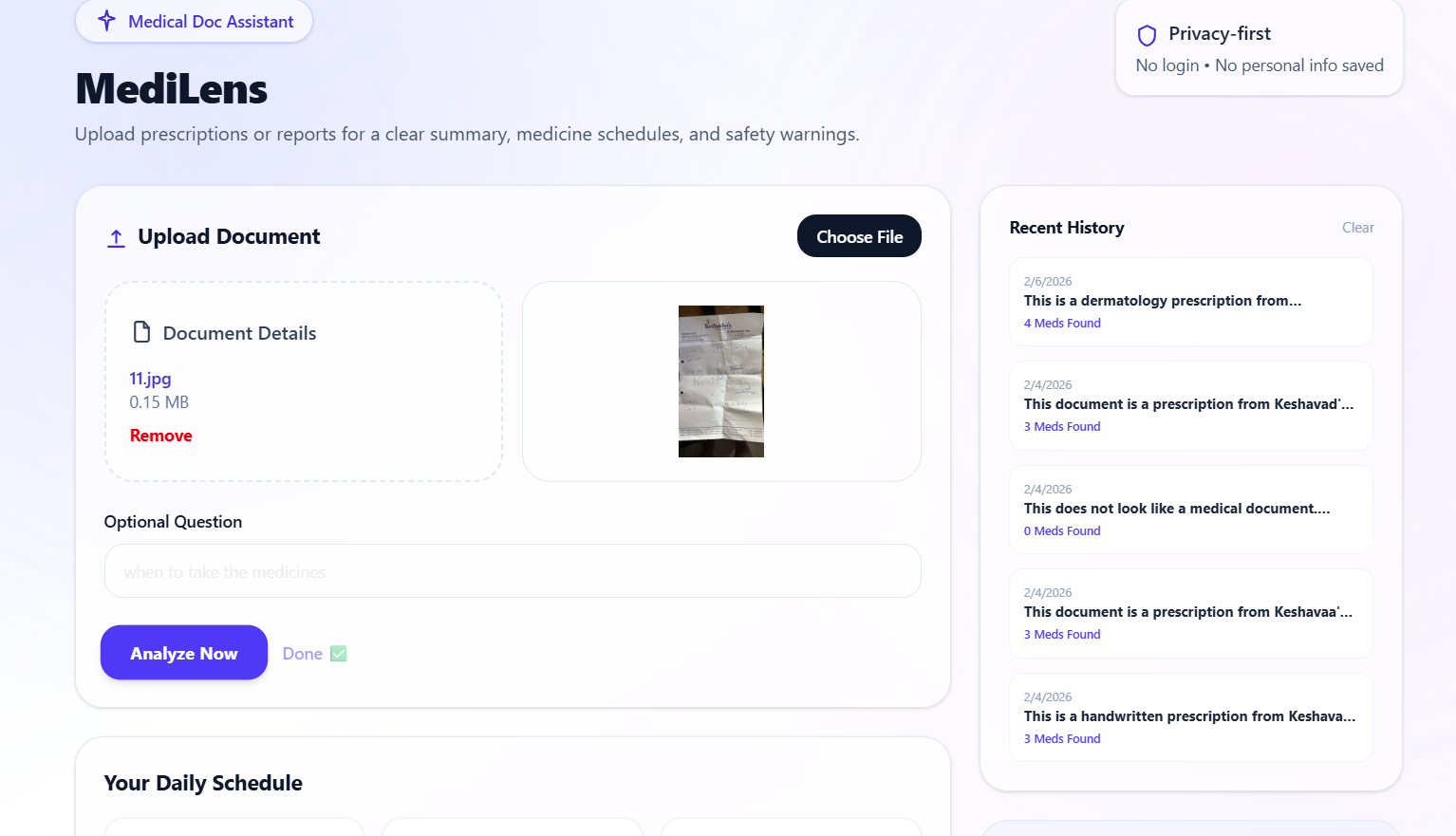
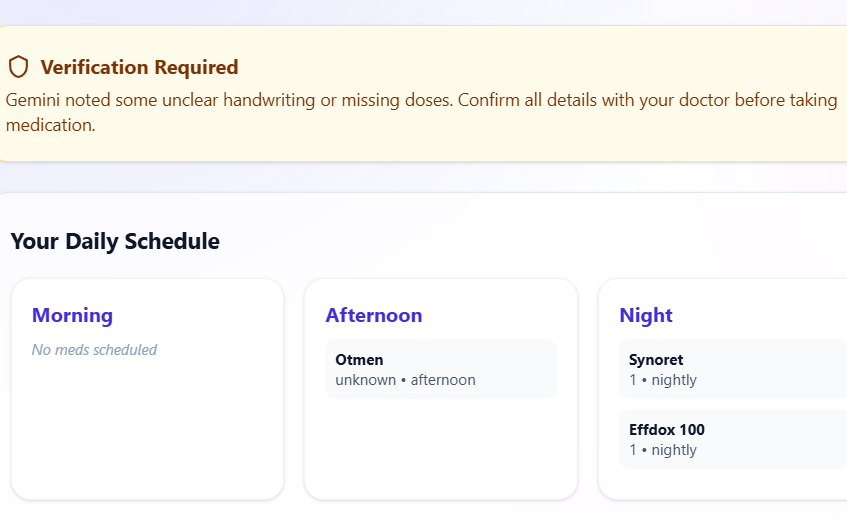
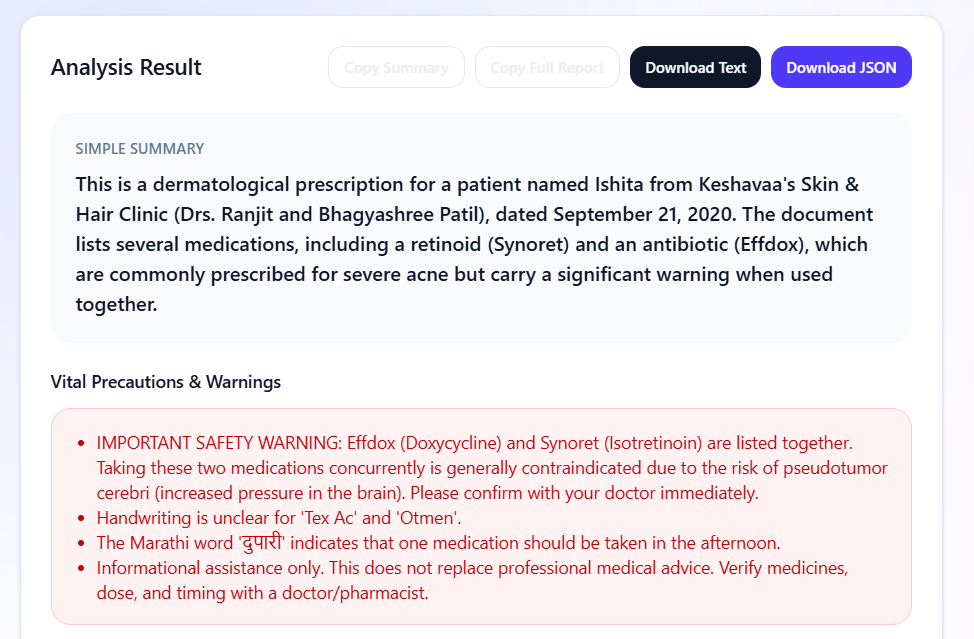
Users can upload an image of a prescription or report and receive:
- Clear, simplified summaries written in plain language
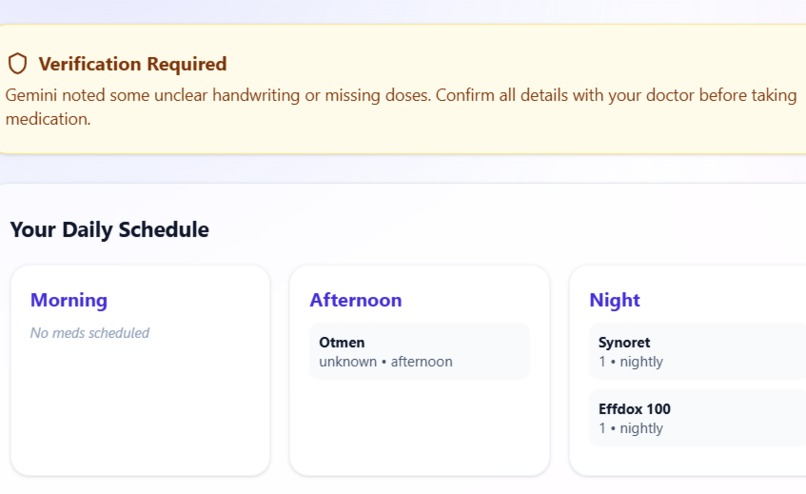
- Medication usage guidance (timing, frequency, duration)
- Safety notes and precautions to reduce misuse or confusion
The project is designed to support patients — not replace doctors or pharmacists — by allowing users to calmly revisit and understand medical instructions at their own pace, especially after leaving a clinic or pharmacy.
How I Built It:
MediLens is built as a web application using:
- Gemini AI for vision-based understanding and reasoning over medical documents
- Next.js and React for the frontend interface
The core workflow is intentionally simple and accessibility-focused:
Upload prescription → Gemini AI analyzes image → Clear explanation shown to user
The interface prioritizes readability, minimal interaction, and a calm layout so that elderly users and people with accessibility needs are not overwhelmed by the technology.
Challenges I Faced:
Working with medical information required a strong focus on responsibility and ethical boundaries. It was important to avoid diagnoses, treatment advice, or overconfident claims. The project strictly focuses on explanation and clarity, with clear reminders to consult healthcare professionals.
Another challenge was handling handwritten prescriptions, which vary widely in structure, quality, and legibility. Designing prompts that extract useful information while remaining cautious required careful iteration.
As someone still learning, connecting AI outputs to a usable frontend was also challenging, but it provided valuable insight into how real AI-powered applications are built end to end.
What I Learned:
This project reinforced that impactful technology must be built with empathy.
I learned:
- How multimodal AI can assist vulnerable users when applied thoughtfully
- Why accessibility and clarity matter more than feature count
- How to frame AI systems as supportive tools, not authorities
- How small, focused solutions can meaningfully improve real-world experiences
Most importantly, I learned that building for elderly users and people with disabilities requires patience, humility, and care — not just technical skill.
Final Note:
This project focuses on real-world usefulness, ethical boundaries, and respectful integration into existing healthcare workflows. MediLens is designed to help users understand their medical information — not replace professional care — and to make healthcare knowledge more accessible to those who need it most.
Built With
- geminiai
- html
- javascript
- next.js
- react
- tailwindcss
- typescript
- vercel

Log in or sign up for Devpost to join the conversation.