-
-
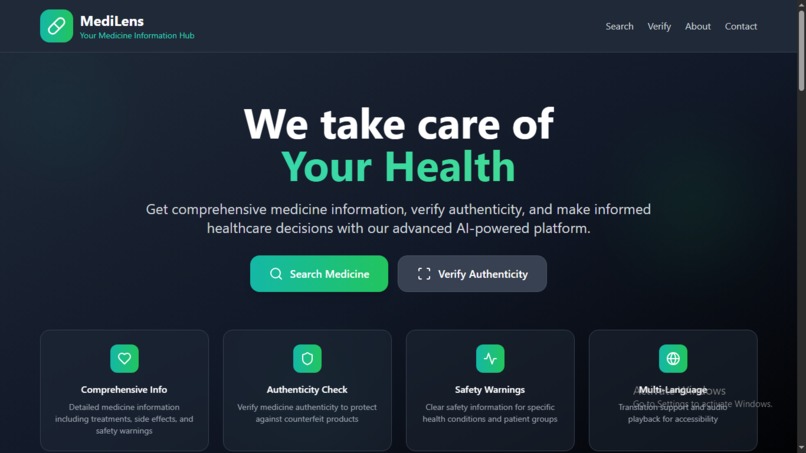
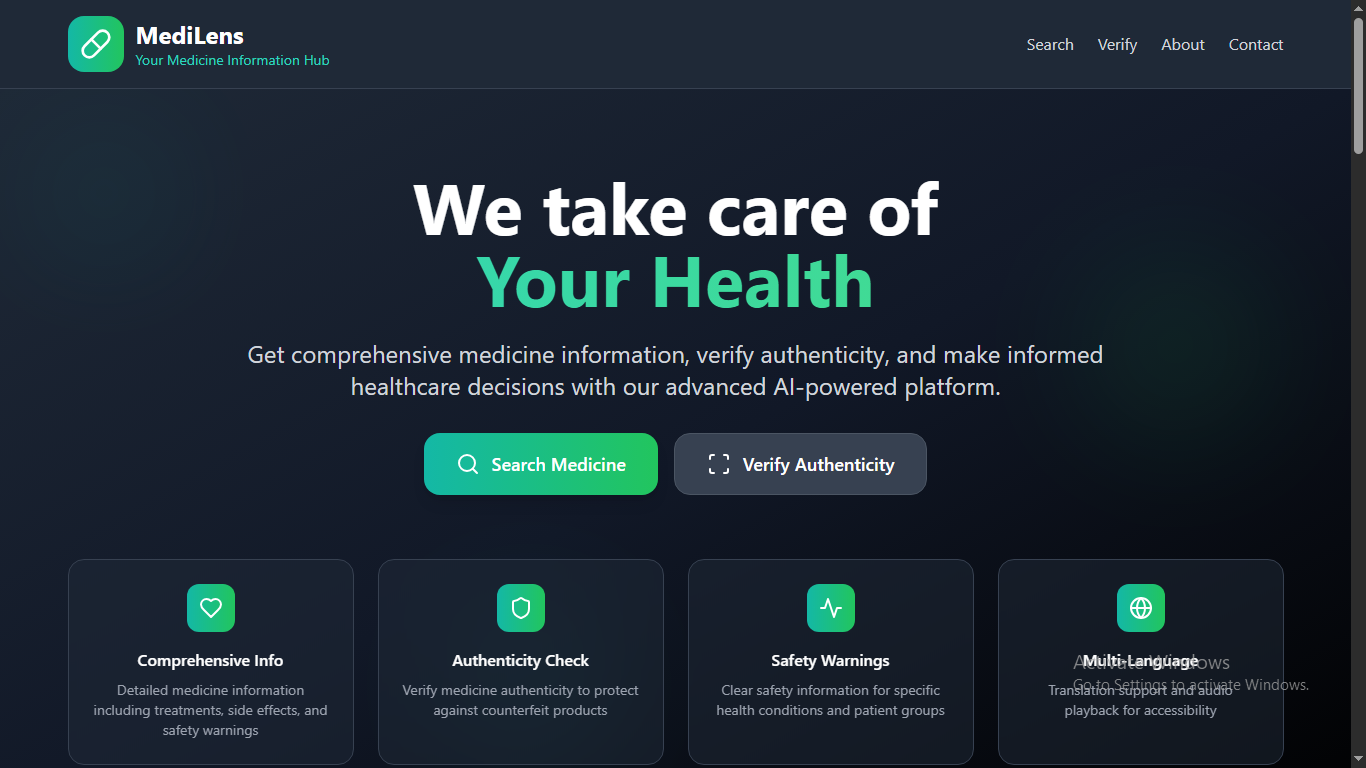
Landing Page #1: Hero Section
-
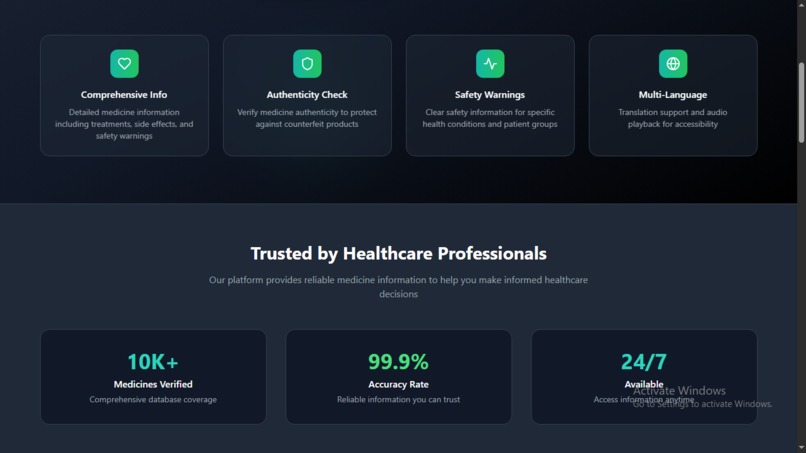
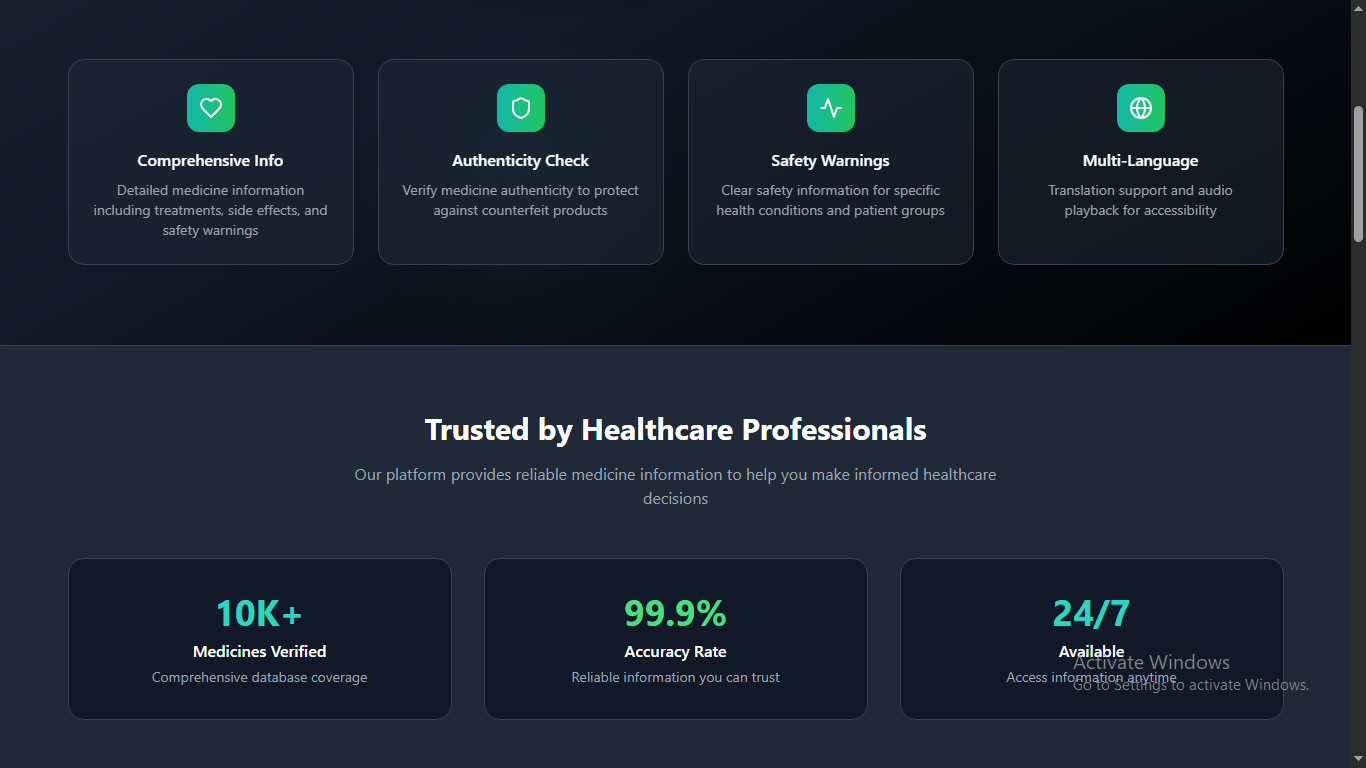
Landing Page #2
-
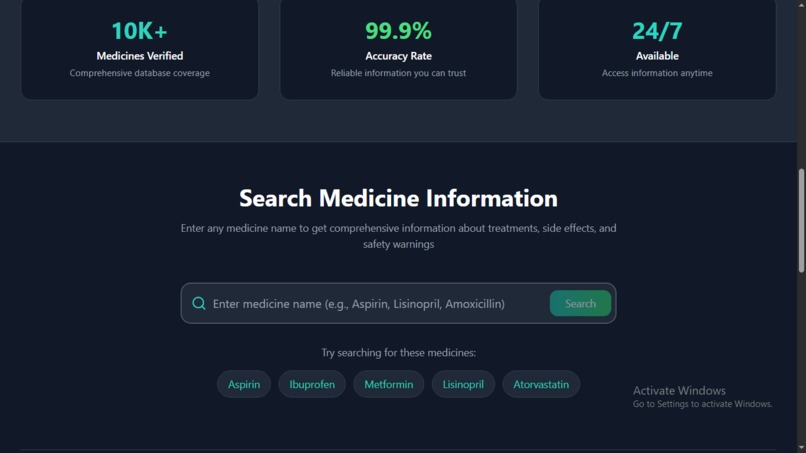
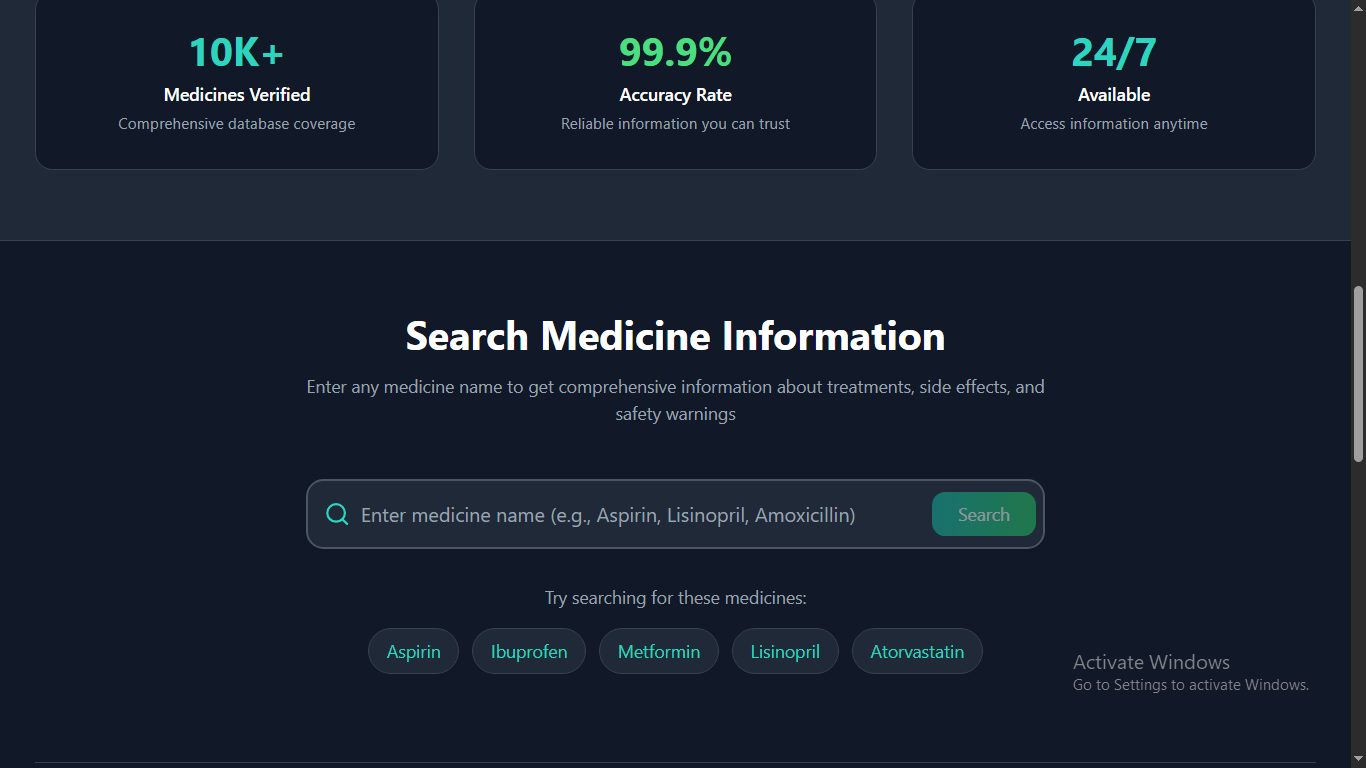
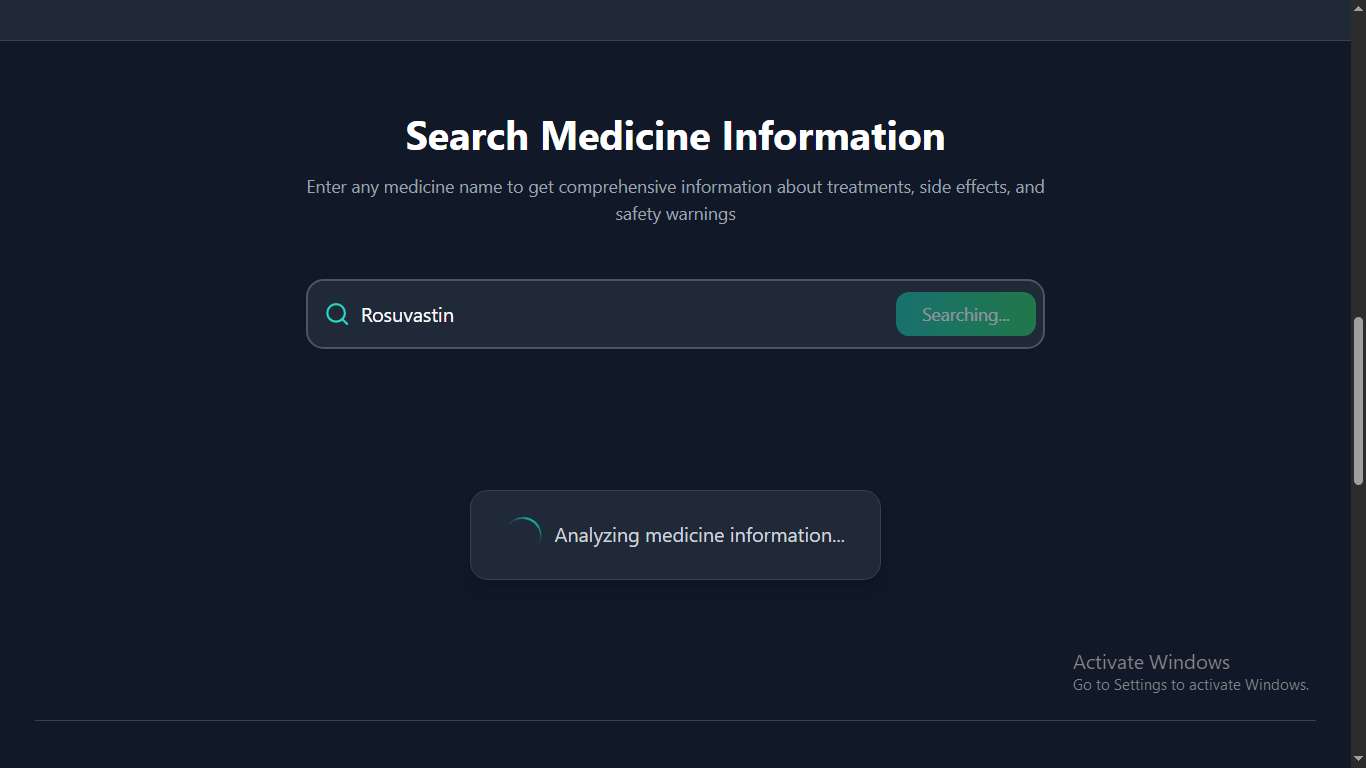
Medicine Info Search #1
-
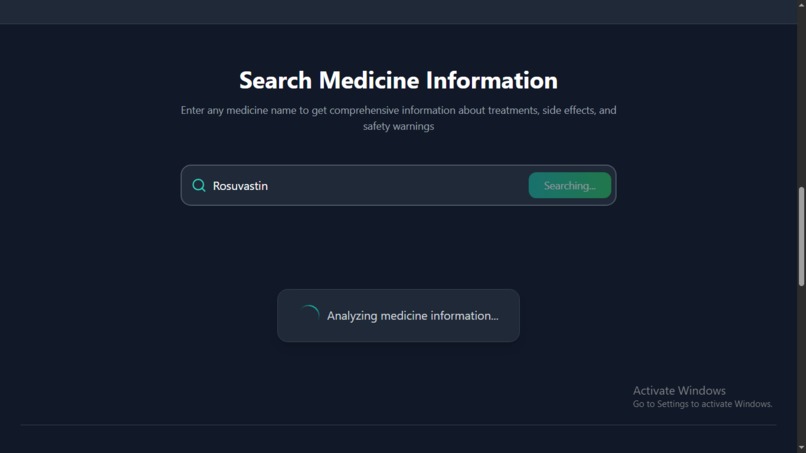
Medicine Info Search #2
-
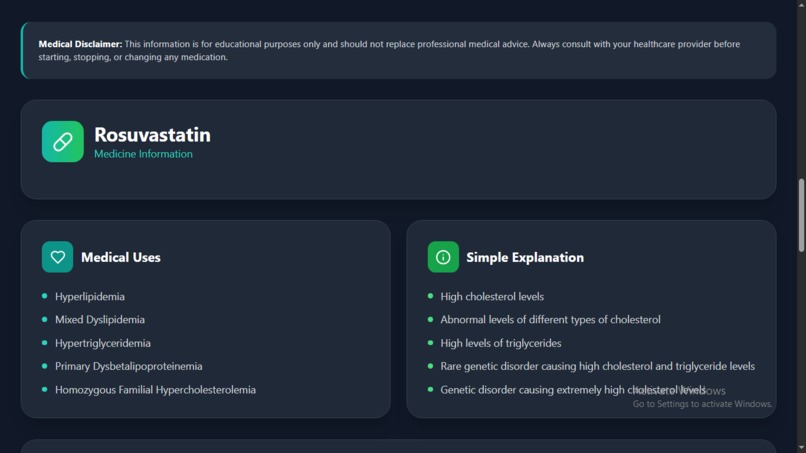
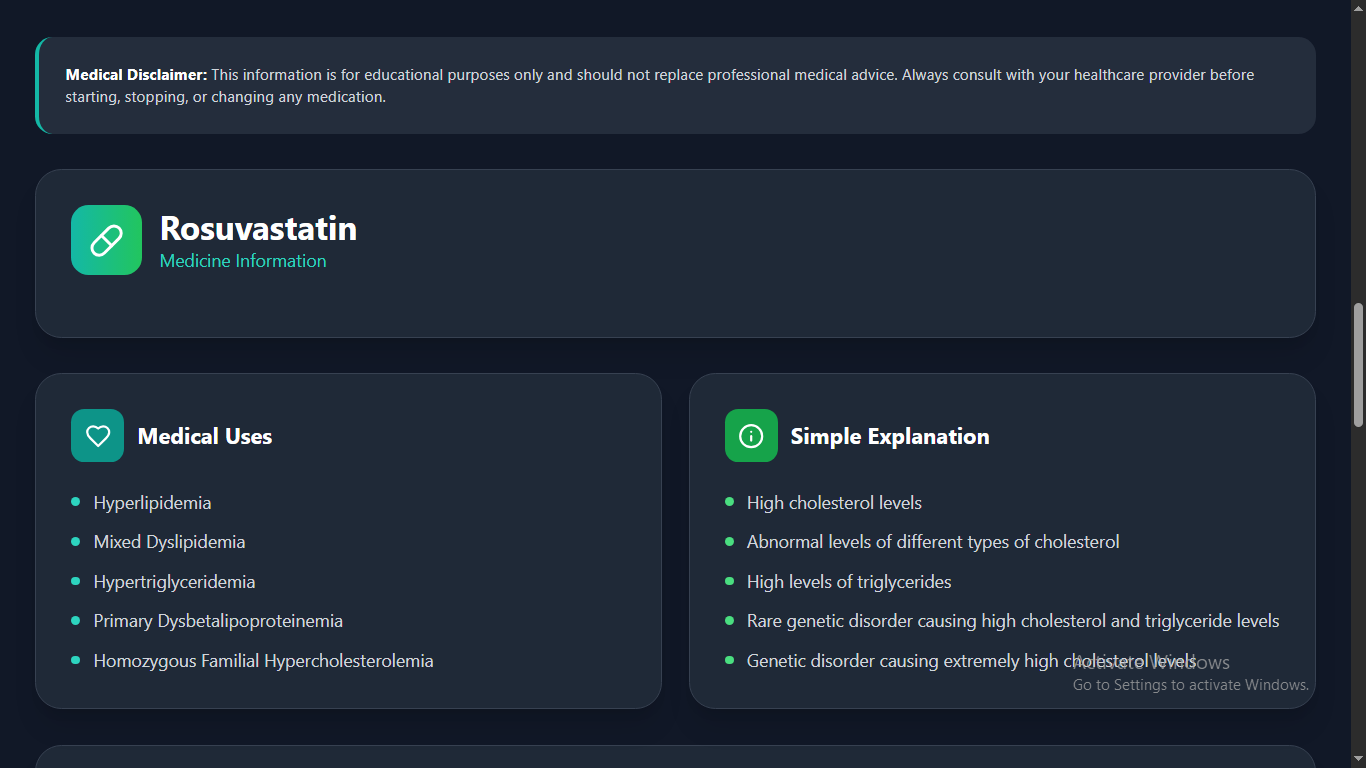
Medicine Info Results In Medical & Simple Words
-
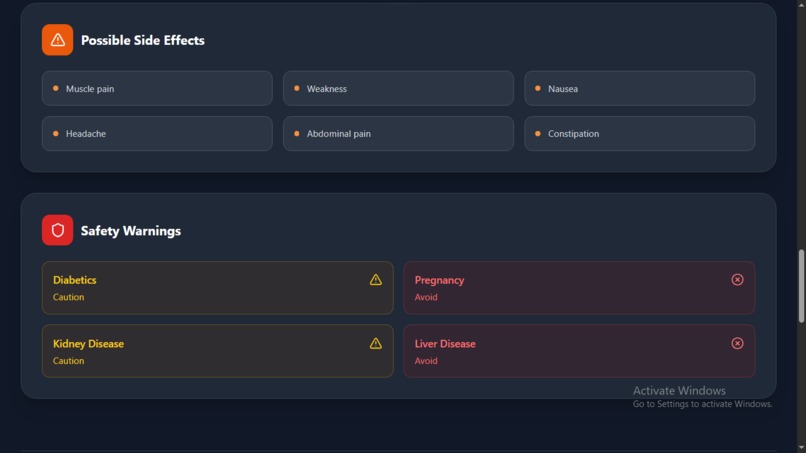
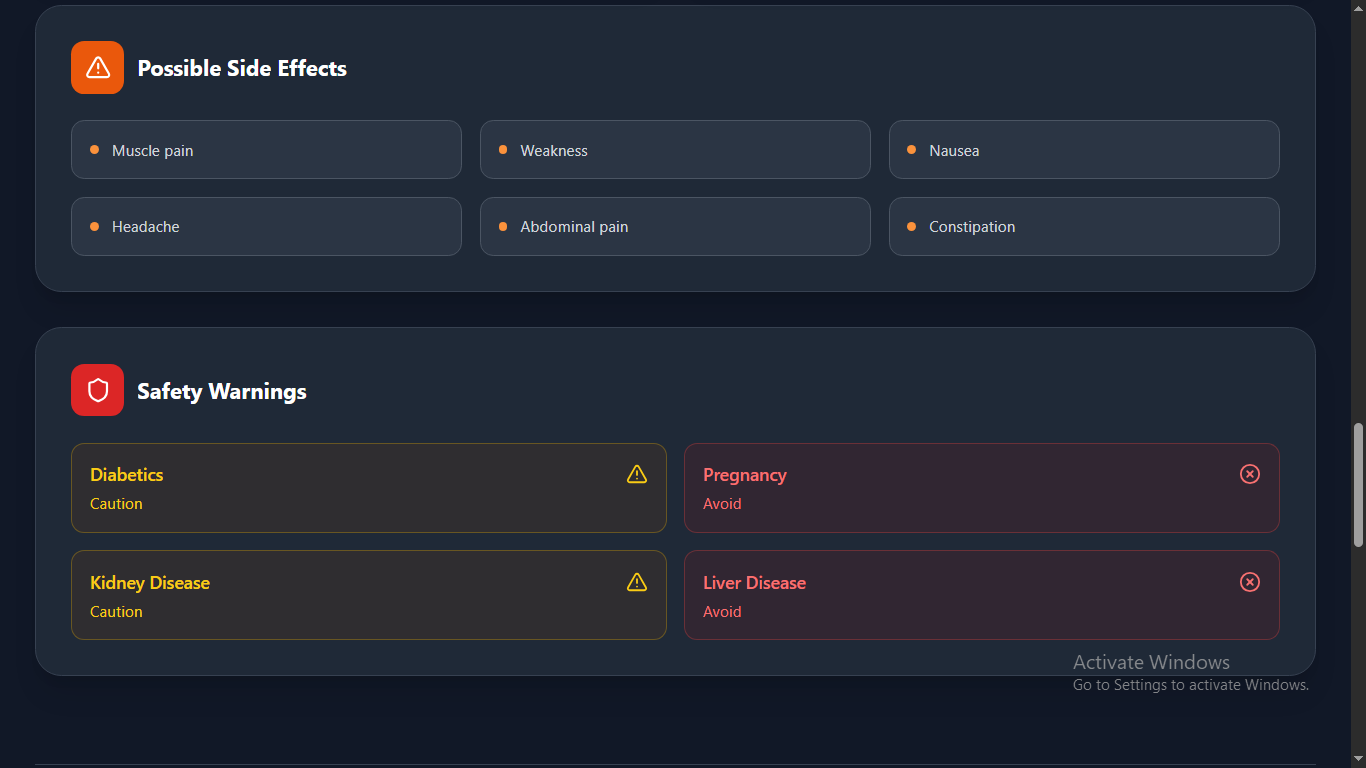
Side Effects & Safety Warnings
-
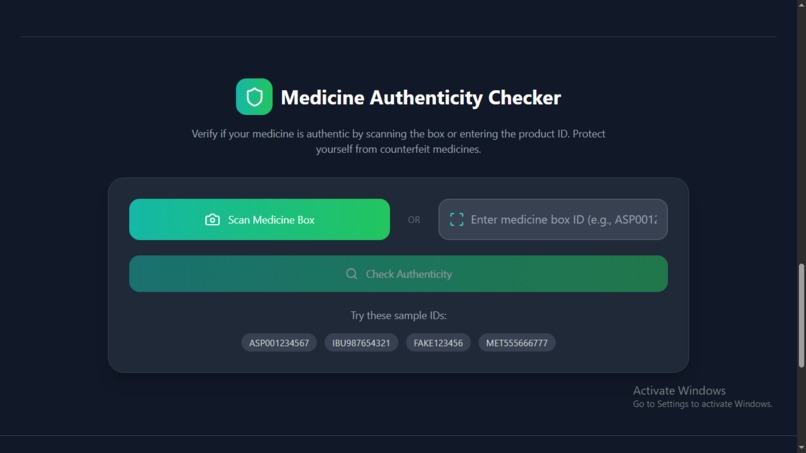
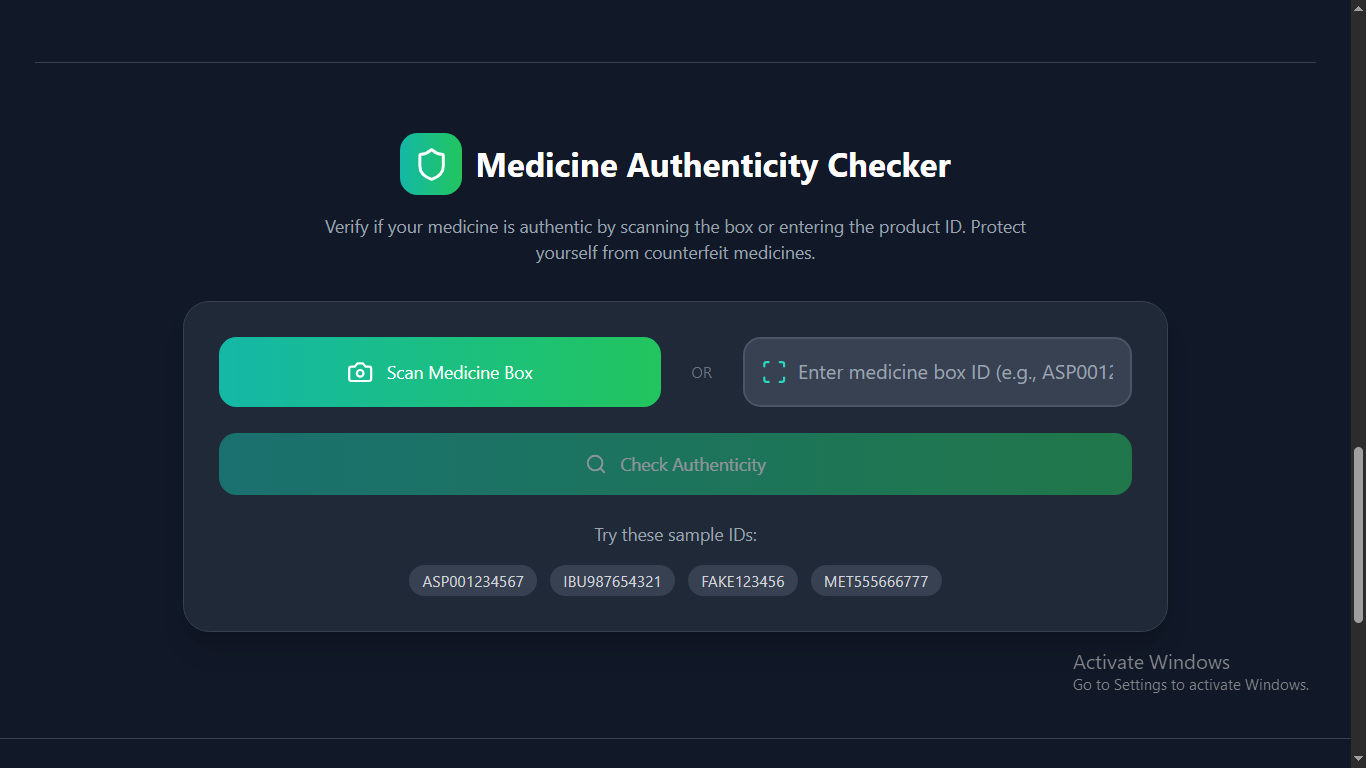
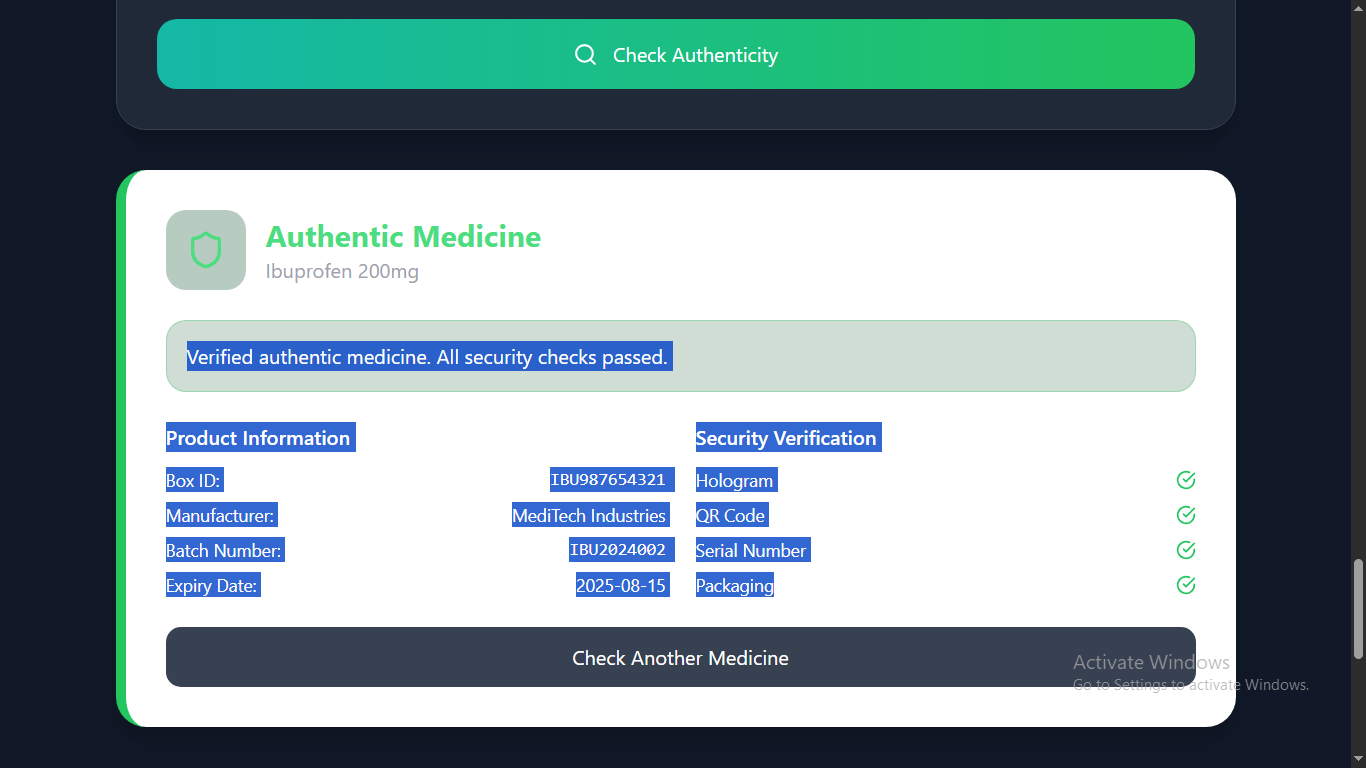
Authenticity Checker
-
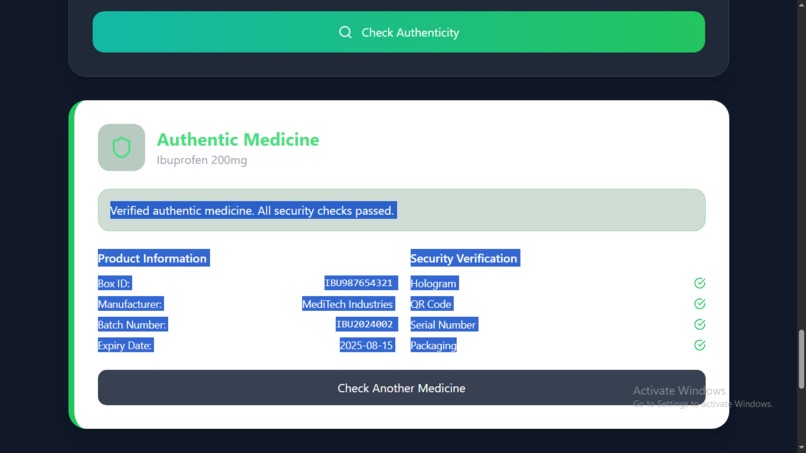
Authenticity Checker Result
-
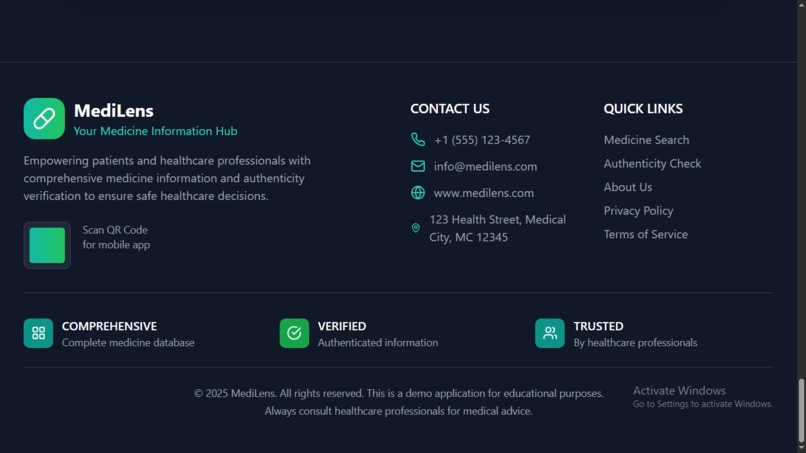
Footer
🩺 Inspiration
A few months ago, my aunt (who lives in a rural town) was prescribed some medication after a visit to a local clinic. She didn’t fully understand what it was for, but she trusted the doctor.
Days later, she developed severe side effects - turns out, the medicine was a cheap counterfeit, and also dangerous for someone with diabetes like her.
We realized something painfully common in my country:
People take medicine they don’t understand.
Even if someone looked up the information of the medicine online, they are not likely to understand the complex medical terms.
Eg: When looking up Rosuvastin medicine, google says it "treats Hyperlipidemia and Primary Dysbetalipoproteinemia".Fake drugs circulate, and patients pay the price.
MediLens was born out of that pain — and the hope that we can give people the power to understand and protect their own health, using technology.
💊 What it does
MediLens is a web app that helps users instantly understand any medicine and verify if it might be fake.
With just a scan or a typed-in name, MediLens provides:
- ✅ What the medicine treats (in both medical terms and simple everyday language)
- ⚠️ Common side effects
- 🚫 Safety warnings (e.g., if unsafe for diabetics, pregnant women,)
- 🔍 An Authenticity Checker to flag suspicious or counterfeit drugs
It's like giving every family their own trusted pharmacist - in their pocket.
🛠️ How we built it
- Frontend: React + Tailwind CSS
- AI integration: OpenAI GPT-4 API trained on medical data generates trusted medical summaries
- Backend: Used SupaBase to handle Edge Functions
- Fake Medicine Detection: Built a basic pattern-based checker to flag common counterfeit risks
- Accessibility: Explanations in simple everyday terms for those who dont understand complex medical terms.
- Data Structure: Follows a structured JSON schema to ensure clean UI rendering
We focused on shipping something real, fast, and functional — without compromising empathy.
🚧 Challenges we ran into
- Ensuring the AI output was consistent and in strict JSON format for rendering
- Translating medical knowledge into accurate but general population-friendly language
- Adding OCR support with limited API access during the hackathon
- Designing an intuitive UI for users who may not be tech-savvy or literate
- Avoiding hallucinated or unsafe AI-generated medical info — we had to carefully design prompts
🏆 Accomplishments that we're proud of
- 🧠 Built a working MVP that blends AI and health safety
- 🩺 Delivered a project with real-world impact potential in rural and urban parts of the world
- 🎯 Created a simple UI that can be used by both a medical college student and a rural grandmother
- 💚 Made a tool that could save lives by preventing fake or wrongly used medicine
📚 What we learned
- Simplicity wins ; a clear UI beats a flashy one when your users are in real need
- Empathy in design is not optional in healthcare - it’s core functionality
- There’s still huge untapped space for AI in preventive healthcare and health literacy in South Asia and beyond.
🚀 What's next for MediLens
- ⚕️ Partner with real pharmacists to expand our medicine database and flag high-risk brands
- 🤝 Add multi-language translation support for non-english speakers
- 🌍 Add offline functionality for remote villages with limited internet
- 📲 Launch a mobile version with voice search and real-time barcode scanning
- 🧪 Add a “symptom to medicine” recommender for common health issues
Our mission is clear:
Every person deserves to know what they’re putting into their body. With MediLens, we’re making that knowledge accessible, trustworthy, and empowering for everyone.
Built With
- javascript
- openai
- react-native
- supabase
- tailwind
- typescript


Log in or sign up for Devpost to join the conversation.