-
-
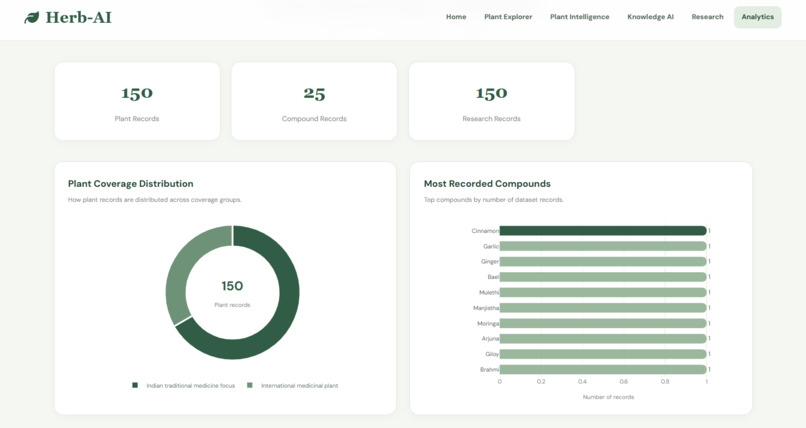
Analutics
-
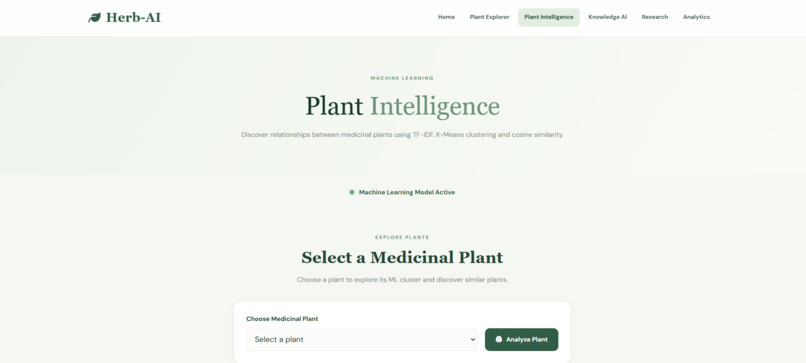
Plant Intelligence
-
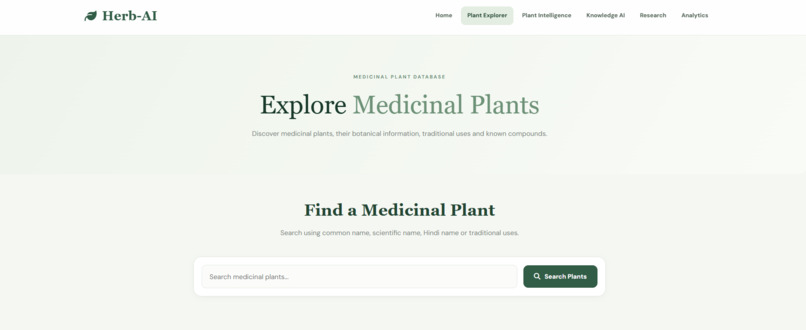
Plant Explorer
-
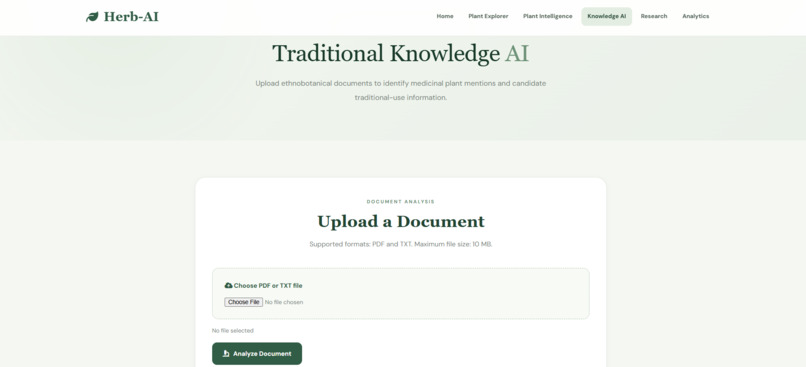
Knowledge AI
-
Research
-
Home
Inspiration
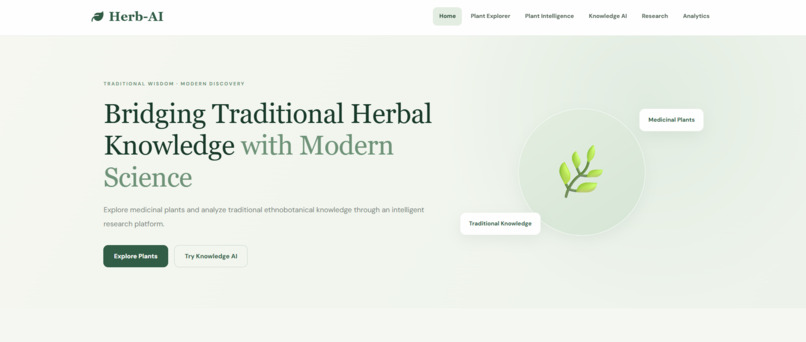
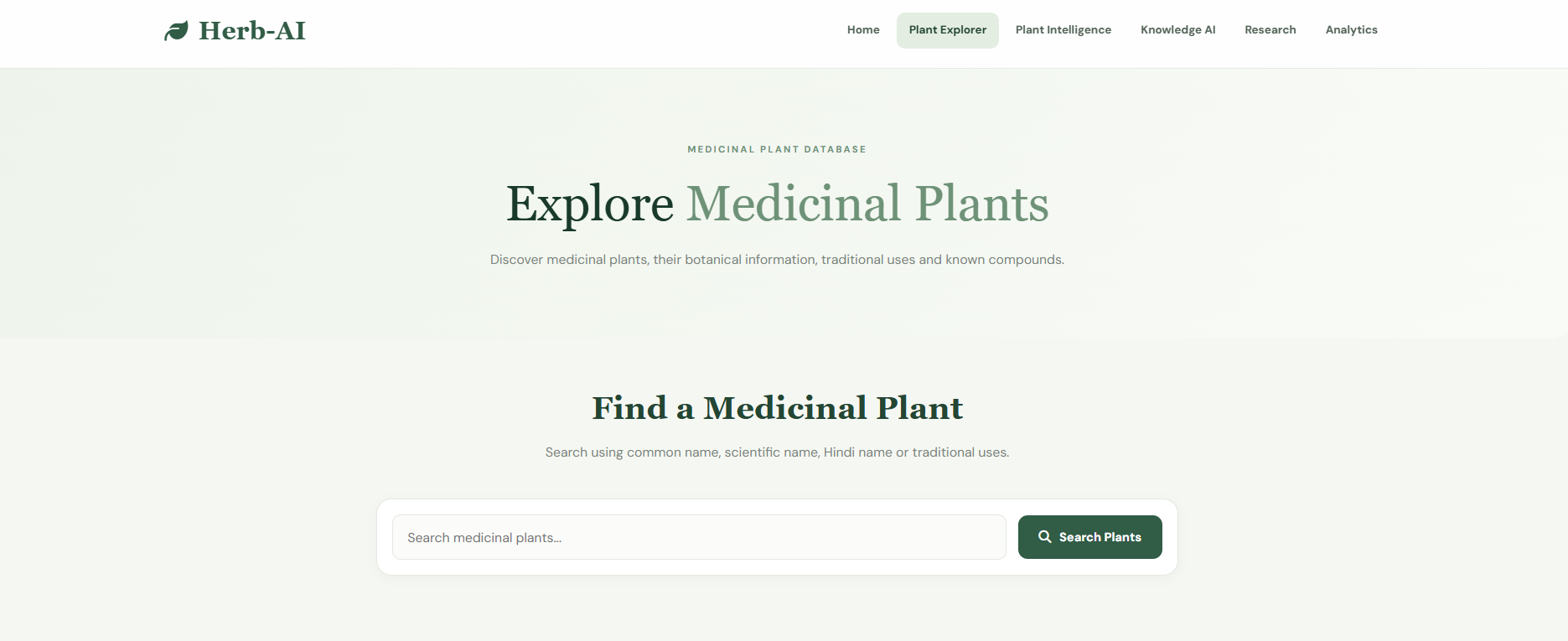
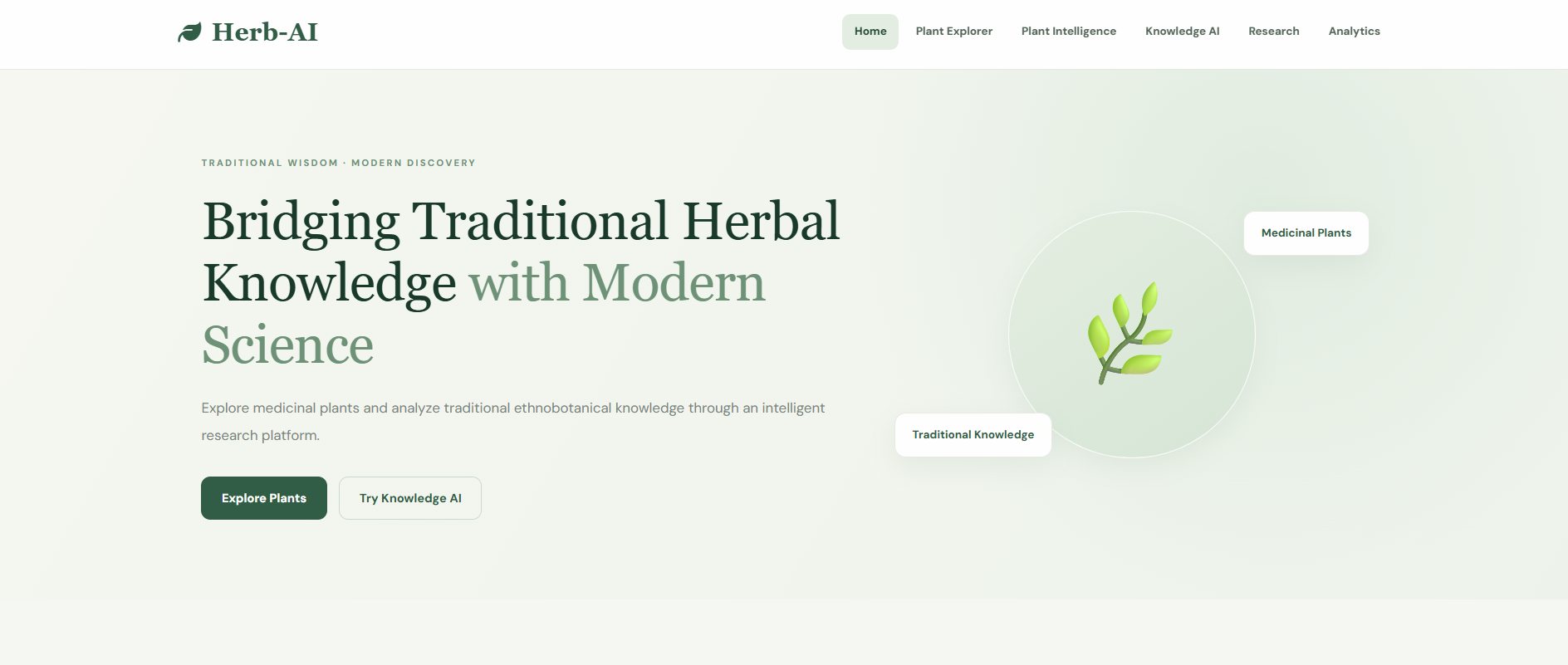
The inspiration behind MediHerb AI was to bridge the gap between traditional medicinal plant knowledge and modern artificial intelligence. Valuable information about medicinal plants is often scattered across different sources, making it difficult to explore and analyze. We wanted to create a platform that makes this knowledge more accessible, organized, and research-friendly.
What it does
MediHerb AI is an AI-powered medicinal plant knowledge platform that allows users to:
- Explore medicinal plants and their traditional uses.
- Discover plant compounds and related information.
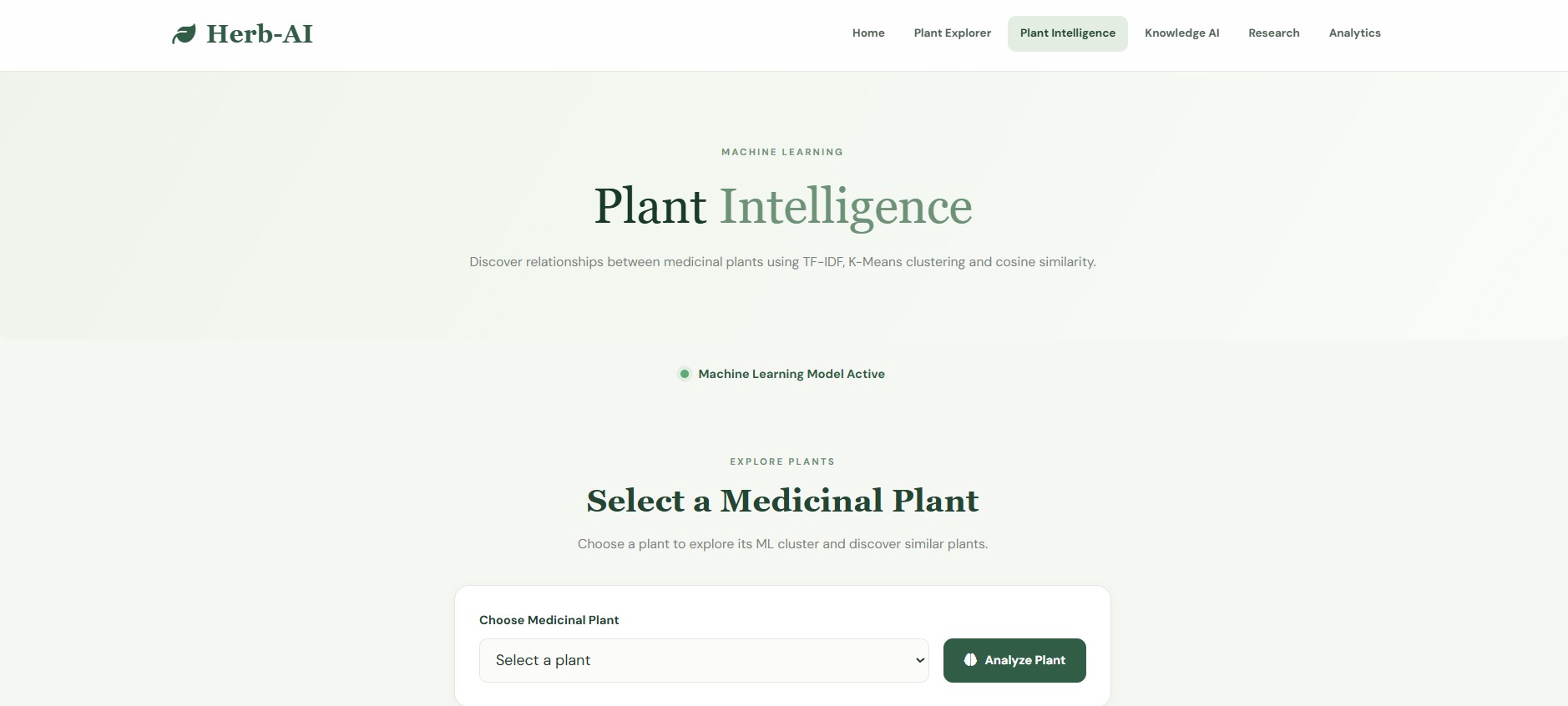
- Analyze similarities between medicinal plants.
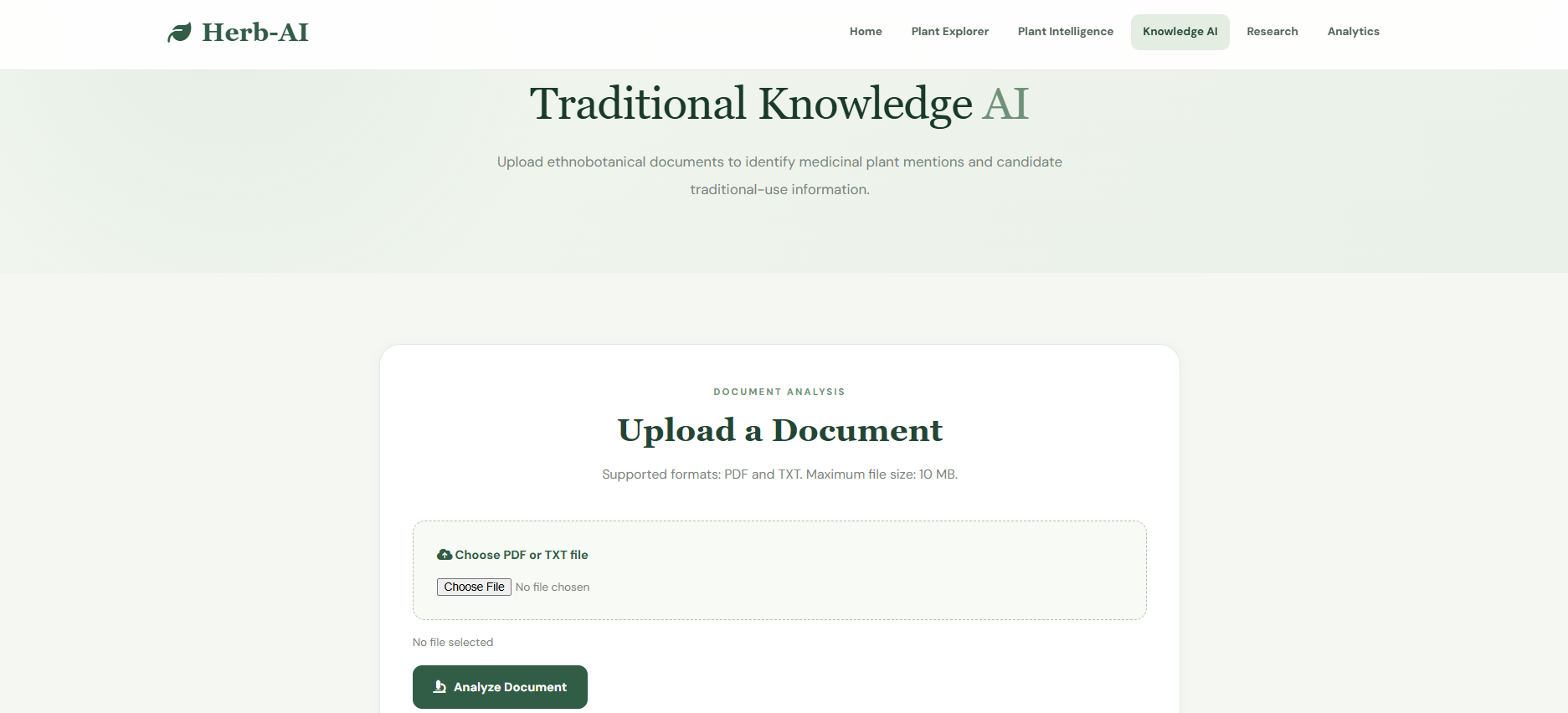
- Extract plant-related information from uploaded PDF and TXT documents.
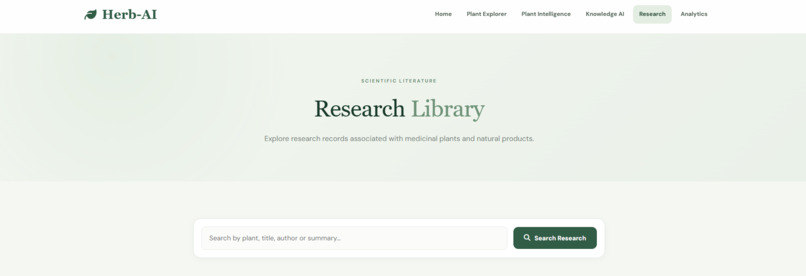
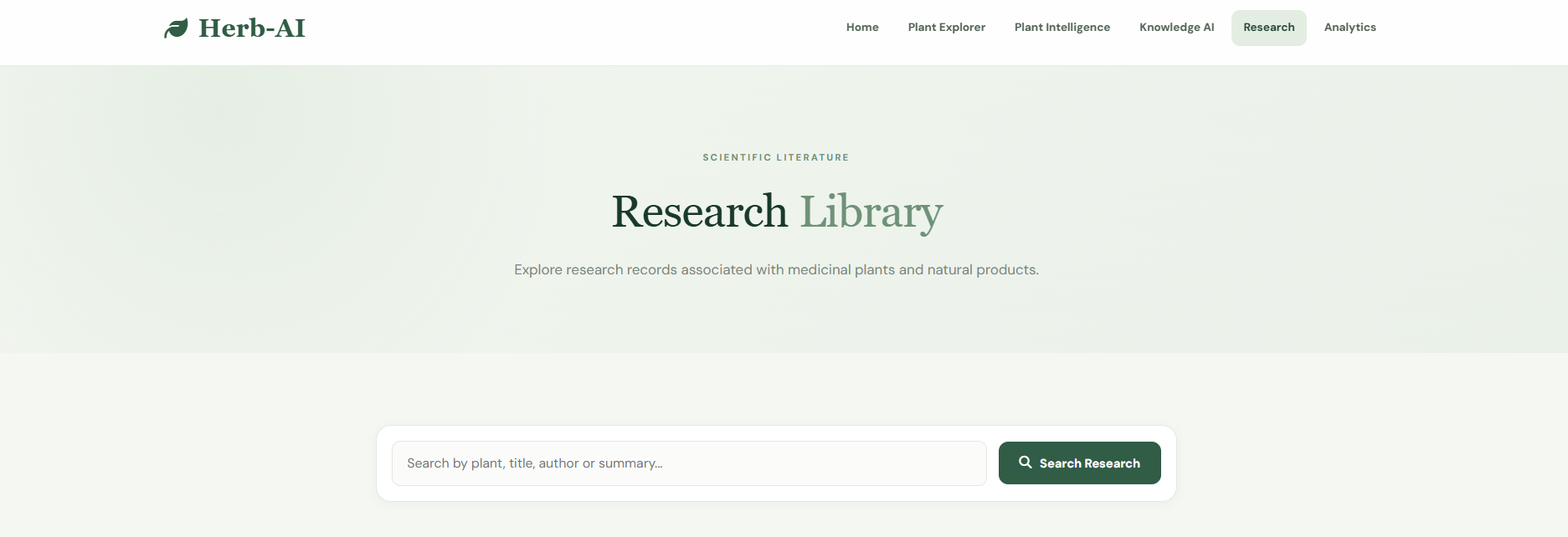
- Search research-related information through external research resources.
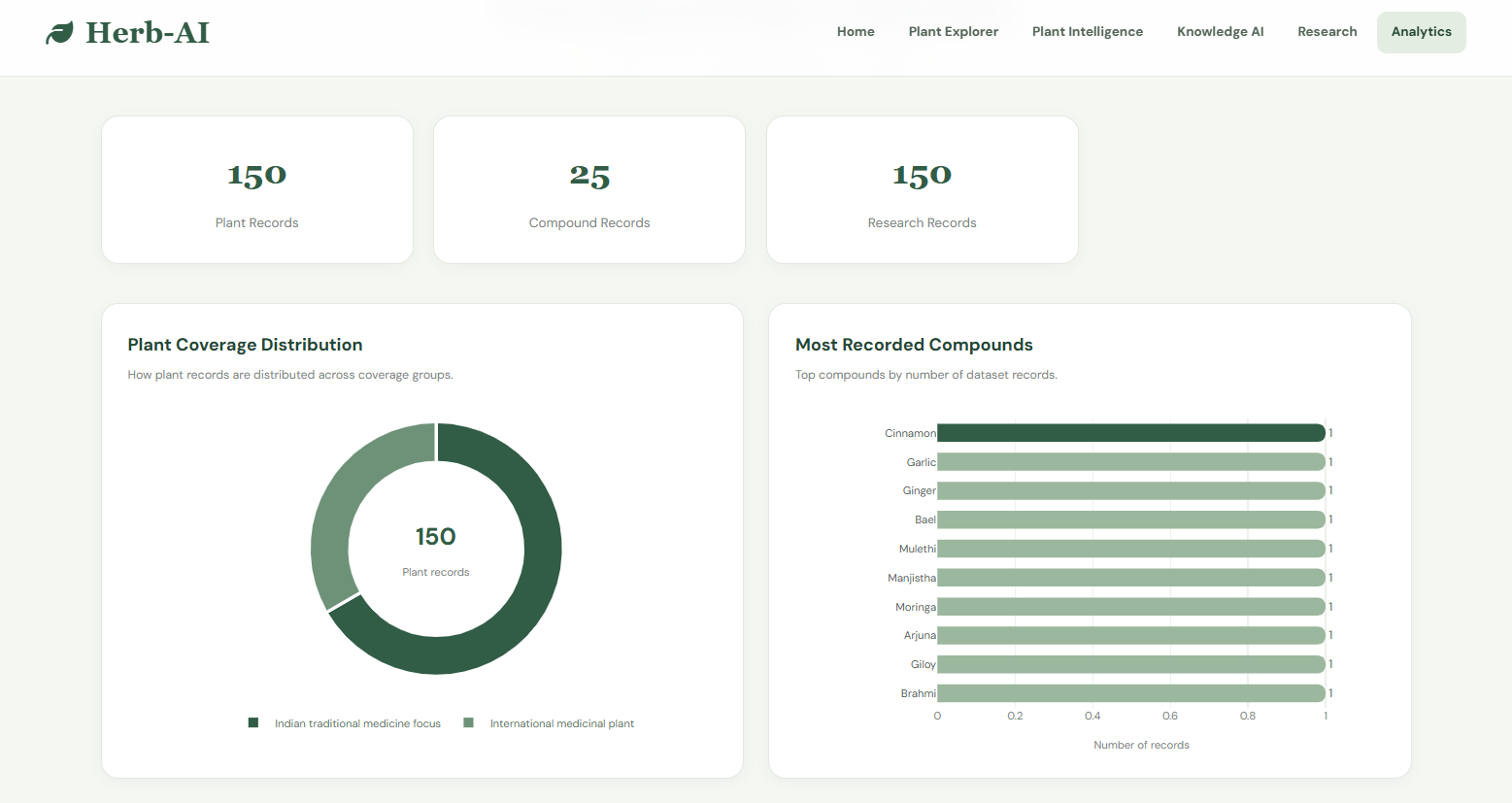
- Visualize plant data through interactive analytics dashboards.
How we built it
We developed MediHerb AI using Python and Flask for the backend and HTML, CSS, and JavaScript for the frontend. Pandas and NumPy support data processing, while Scikit-learn provides machine learning capabilities. We implemented TF-IDF vectorization, K-Means clustering, and cosine similarity to analyze plant information. The platform uses structured CSV datasets to organize medicinal plant knowledge and Plotly to create interactive visualizations.
Challenges we ran into
Some of our major challenges included organizing medicinal plant information into structured datasets, handling different document formats, extracting relevant information from uploaded documents, and implementing meaningful similarity analysis. We also faced challenges in integrating multiple features into a single platform while maintaining a smooth, responsive, and user-friendly interface.
Accomplishments that we're proud of
We successfully developed an integrated platform combining traditional medicinal knowledge, machine learning, document analysis, research discovery, and interactive analytics. We are particularly proud of implementing plant similarity analysis and creating a unified interface that makes medicinal plant information easier to explore.
What we learned
Through this project, we gained practical experience in Flask application development, machine learning, NLP techniques, data preprocessing, document processing, frontend integration, and data visualization. We also learned how to transform structured datasets into interactive, user-focused applications.
What's next for MediHerb AI
Our future plans include integrating advanced NLP and generative AI models, improving the accuracy of traditional knowledge extraction, expanding the medicinal plant database, adding multilingual support, and incorporating more research-backed information. We also aim to develop personalized plant information recommendations and make the platform more scalable and accessible.
