-
-

Logo
-
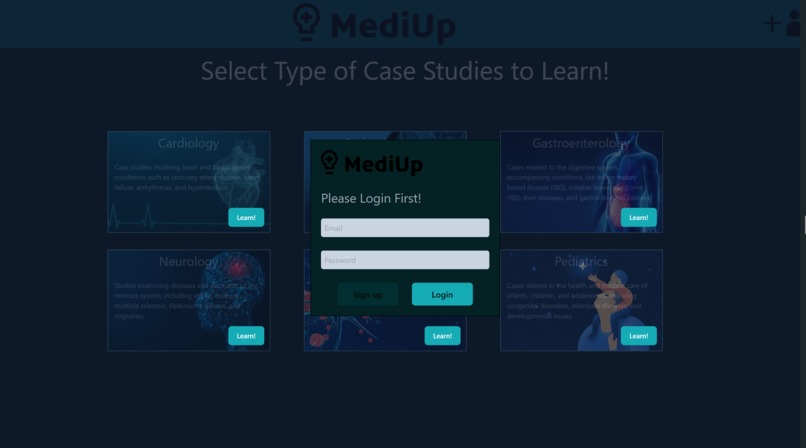
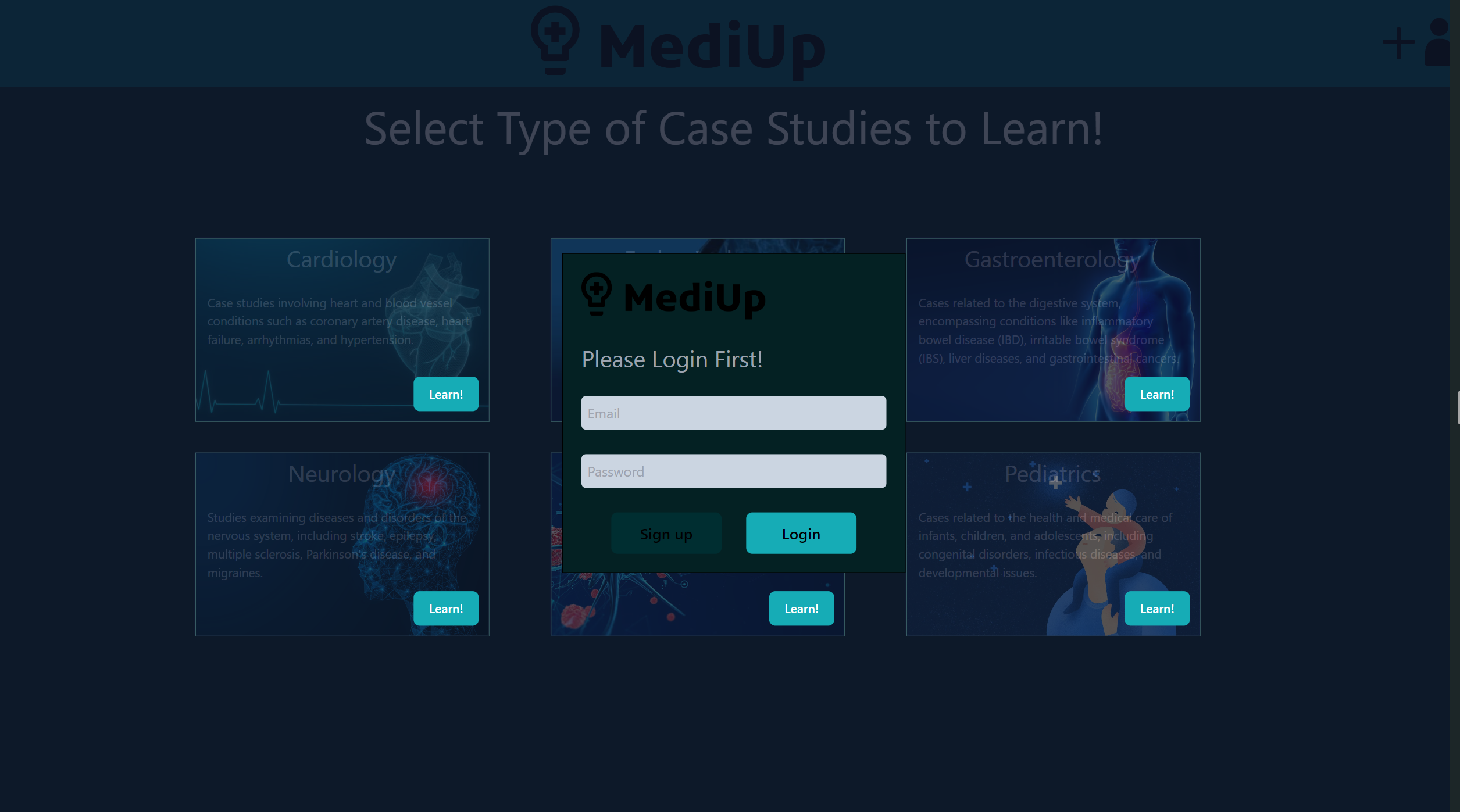
Login Page
-
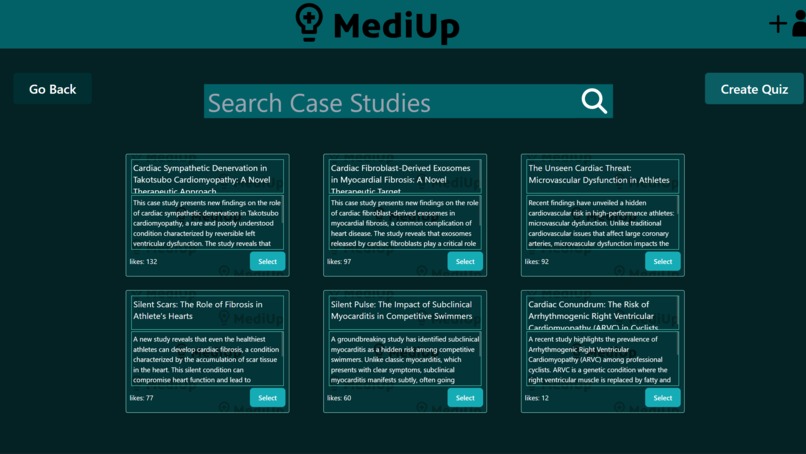
Options of case studies to choose from
-
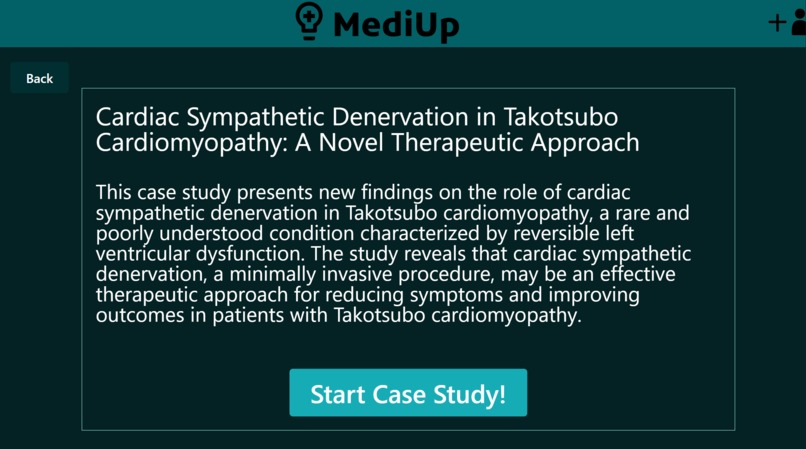
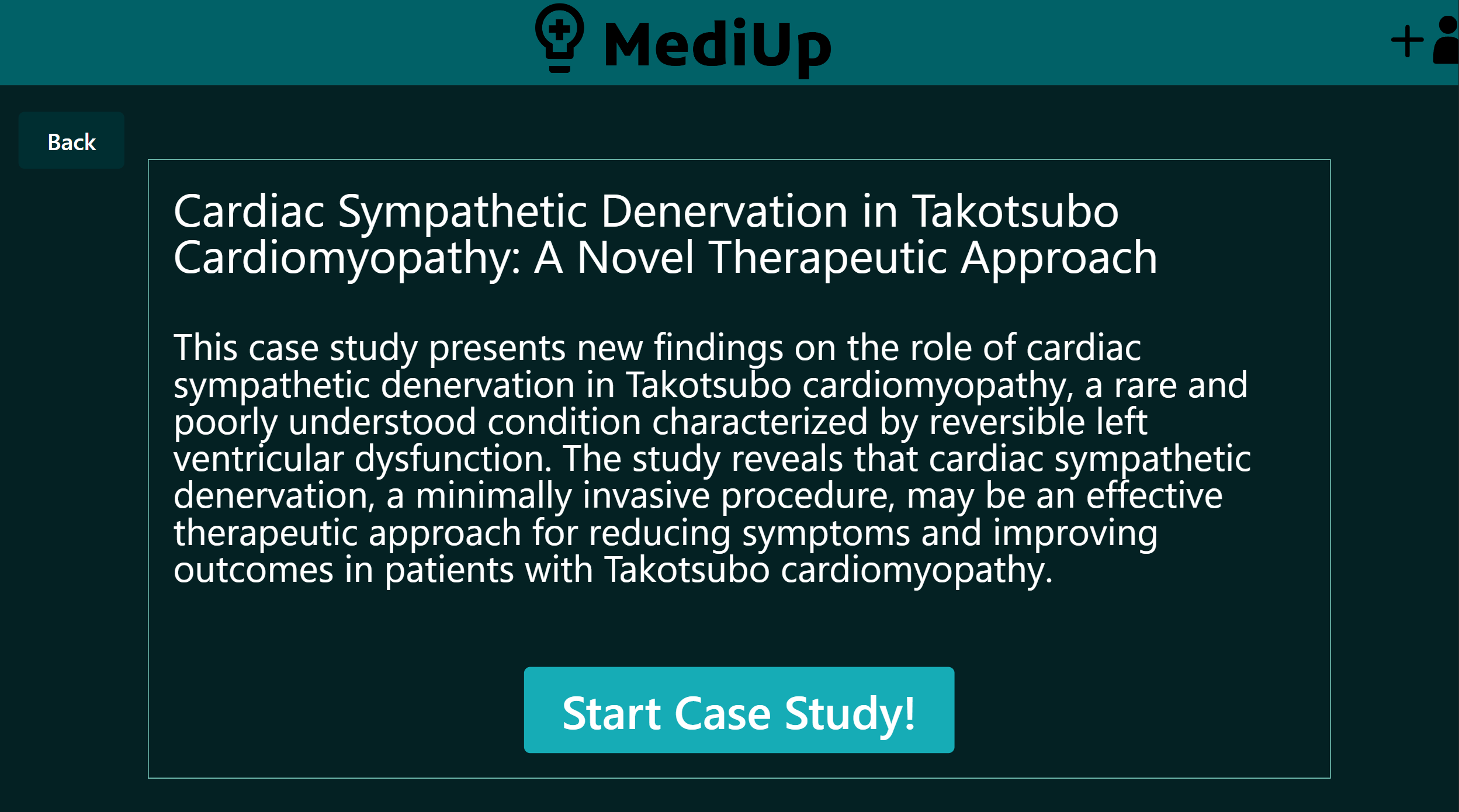
Example of a case study
-
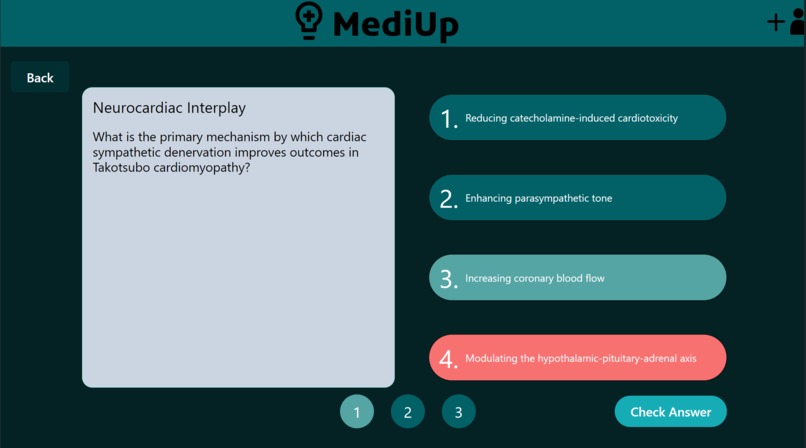
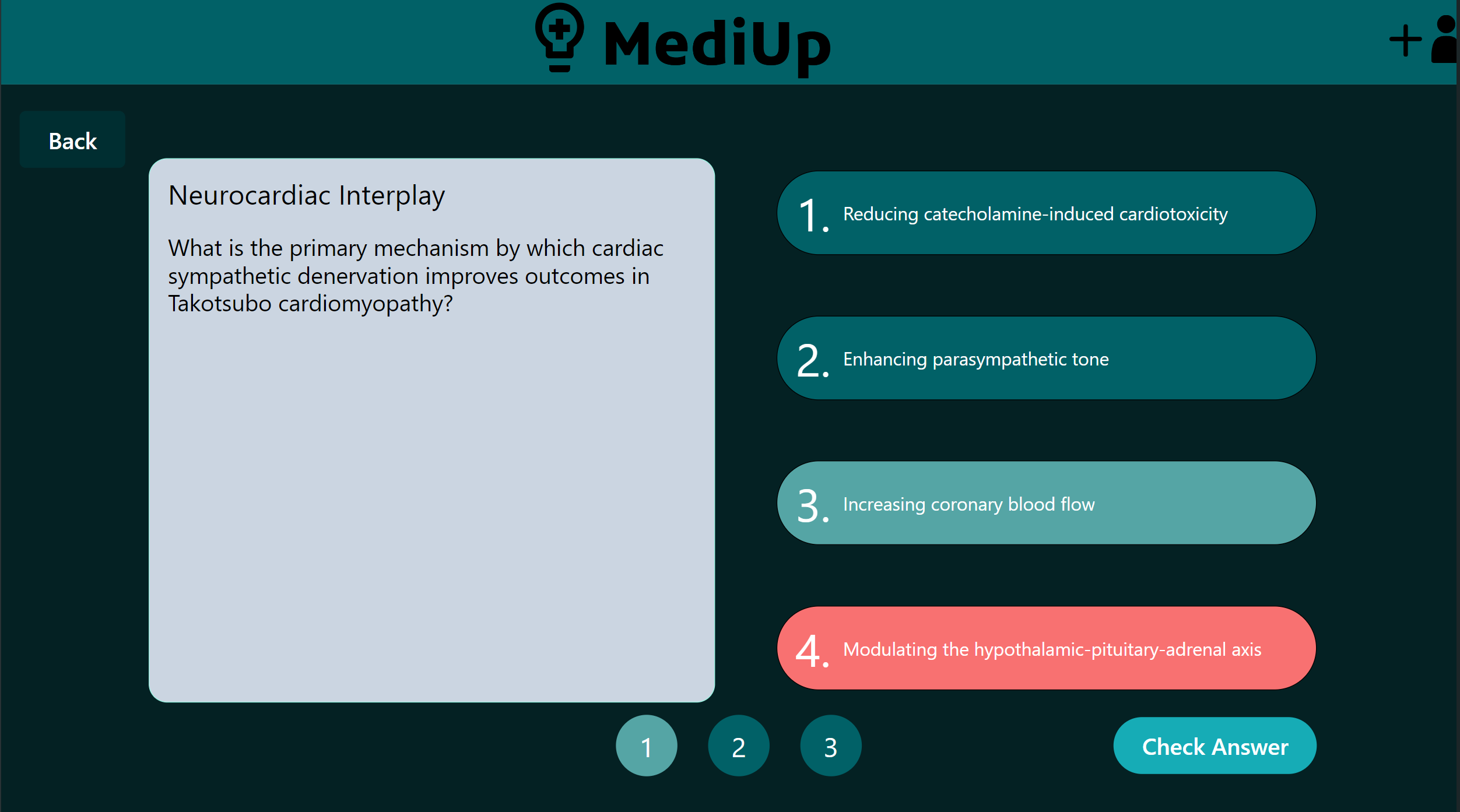
Multiple choice quiz after learning about the case study
-
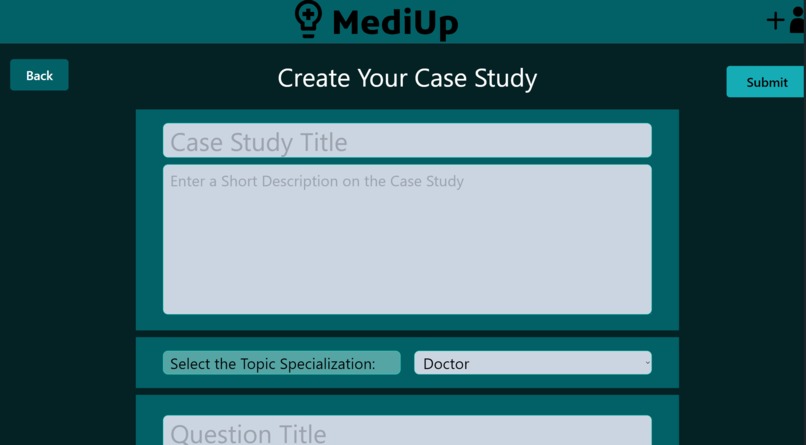
Quiz creator view for doctors, dentists, optometrists, etc



For the track - Laerdal: A Micro-Credentialing System for Medicine
Inspiration
Our hackathon project focused on teaching medical professionals based on real-life examples. We drew inspiration from the "Duolingo" app, particularly its use of multiple-choice quizzes to engage users and facilitate learning. We put our own twist to the app to cater it towards medicine and provide real life case studies. For our logo, we combined a light bulb, symbolizing knowledge, with a "+" sign, representing health.
What it does
Our project was created to provide a comprehensive website to quiz medical professionals on the latest in medicine and current case studies. Keeping up with medical advancements is crucial for providing the best patient care and ensuring effective treatments. Our platform offers regularly updated quizzes that cover a wide range of medical topics, helping professionals stay informed. Additionally, our website allows verified professionals and doctors to create and share their own quizzes and case studies, providing a collaborative learning environment. This feature not only enhances the available knowledge but also encourages a culture of continuous learning and professional growth for others. By using our website, medical professionals can maintain their expertise, contribute to the education of their peers, and deliver the highest standard of care. Regular engagement with the platform ensures that healthcare providers remain at the cutting edge of medical developments, benefiting both their practice and their patients.
If this project were to be further developed, it would be necessary for us to create a terms and liability sheet for legality issues regarding sensitive information from real life case studies. Further improvements will be listed under V2 changes.
How we built it
We used React for the front end and Express for the backend - Code written in Typescript. MongoDB was our choice for the database to store data for users and questions. Everything in the database is protected with authentication via JWT, and sensitive information is hashed for security. We hosted our website on Render.com using the free tier. Being a free service, our site takes a while to load, so please be patient! You may need to wait a bit (50 seconds or more) for the initial site to load. and once you attempt to login or signup, you may need to wait again for the server side to load.
As for the team, many of these languages and software tools were new to some of us. We used Discord to communicate with each other and GitHub to centralize our code. Each team member had their own branches within GitHub to store their work. We used Figma to plan the layout of each page and to create a color scheme that we all liked, that we thought would be appropriate for an educational site. This tool helped us visualize our design and ensure that everyone was on the same page regarding the look and feel of the website.
Challenges we ran into
One of the challenges we encountered was connecting the database to the website. While some of us had experience with SQL and working with our own databases from school, connecting the code to the database proved challenging without the step-by-step instructions we were used to.
Likewise, a majority of our team were not familiar with the tech stack or language used in MediUp, which posed the challenge of having to overcome the learning curve alongside working on the project within the week.
Accomplishments that we're proud of
Some of the accomplishments we're proud of include getting the program to run smoothly. This hackathon was the first for some of us, and it provided a great experience in working on a project together and learning new languages or stacks. We faced various challenges, but seeing the program run and host successfully was a significant achievement. It was incredibly satisfying to see all the functions work as intended.
Additionally, the hackathon gave us a real feel for collaborative development and the application of our skills. We learned a lot from each other, and this experience has certainly boosted our confidence in tackling future projects.
What we learned
The learning aspect varied for each of us. Tailwind was new to some of us, so we learned as we created the website. Using MongoDB for our database was also unfamiliar to the majority of us and difficult to connect to our code. Similarly, React, Express and Typescript were also a first for some individuals. We used Figma to map out our color scheme and layout, which was a valuable tool to learn outside of coding. Learning how to use GitHub was another tricky aspect for those who without much experience, but fortunately, we had experienced teammates who had used it before and could guide us
What's next for MediUp! V2
What we plan to do next is implement a scoring system for each quiz question the user gets right or wrong, OR per completed quiz further gamefying the site to encourage engagement and frequent use. This can also include achievements to encourage users to create their own quizzes as well.
Additionally, we will include a profile page to track the user's quiz progress, showing which quizzes they have completed, or created. Users will be able to review past questions to improve their understanding and mastery of the material. This will help reinforce learning and ensure a deeper grasp of the content.
There will also be a sign up sheet for those who would want to create a quiz, making it so that only verified users will be able to create new quizzes (this is a similar concept to what Coursera has)
There will also need to be more security aspects, such as scanning and detecting quizzes created by users for several things such as checking for sensitive information, false information, etc.
Creating quizzes will get more details (ie, ability to add more text, images, videos) and different types of questions (aside from multiple choice, we may have short answer, matching, etc)
Finally, quizzes should be more catered towards specific users, based on their occupation/field, and previous quizzes they may have completed.
Built With
- express.js
- mongodb
- mongoose
- node.js
- react
- render.com
- tailwind
- typescript
- vite

Log in or sign up for Devpost to join the conversation.