-
-
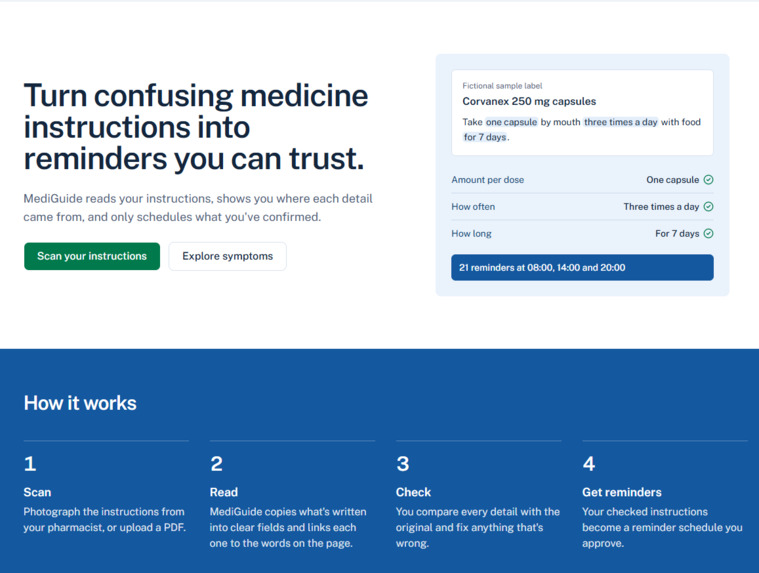
Explanation Page
-
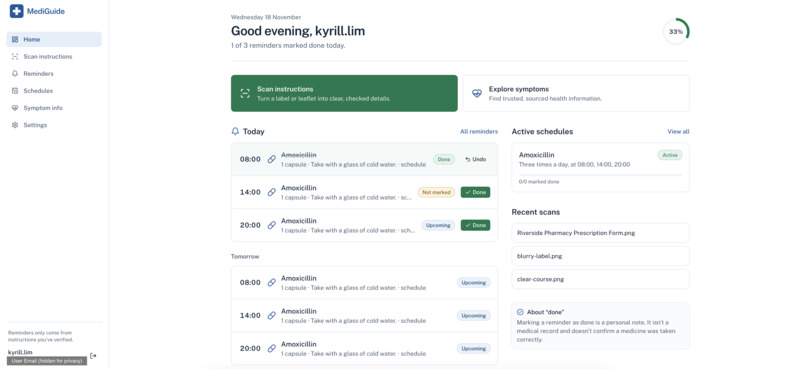
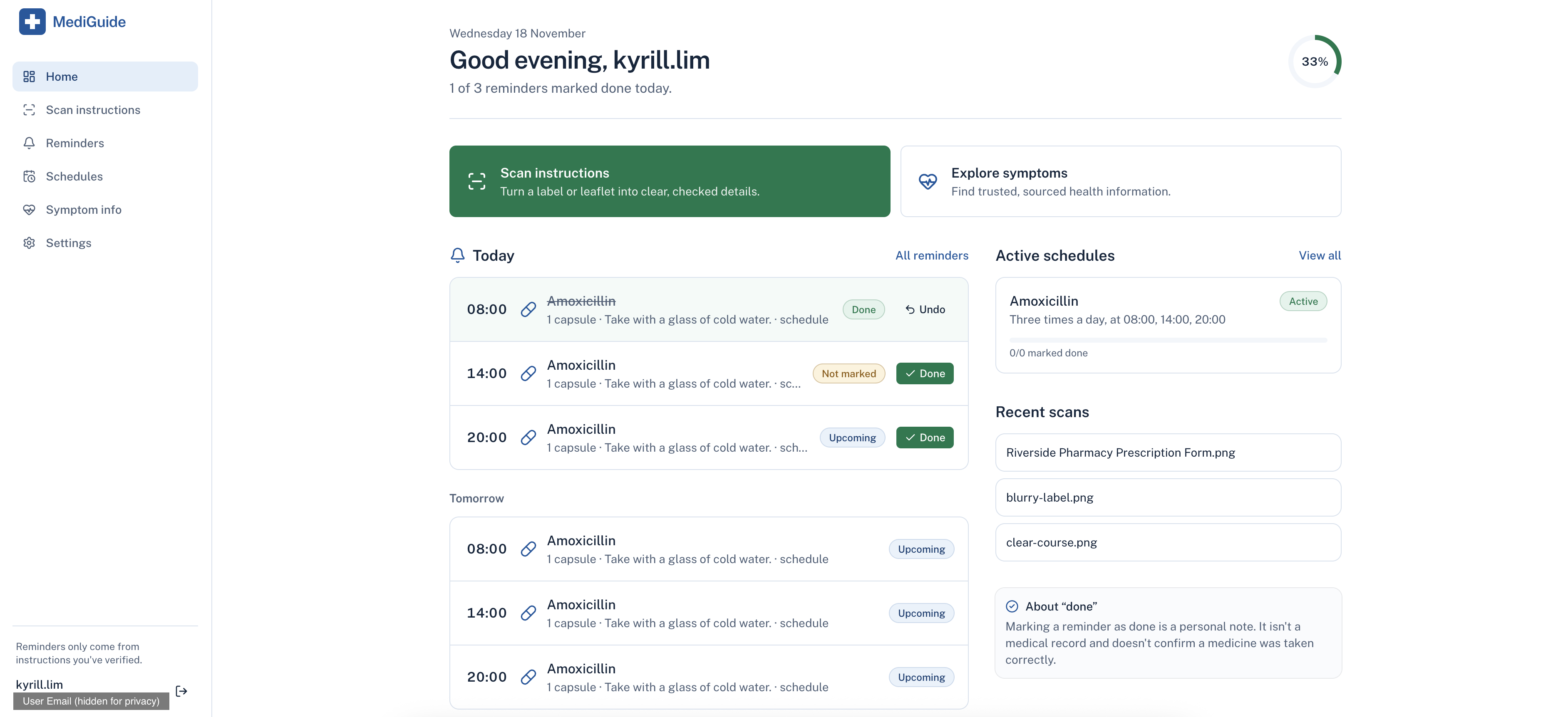
Dashboard
-
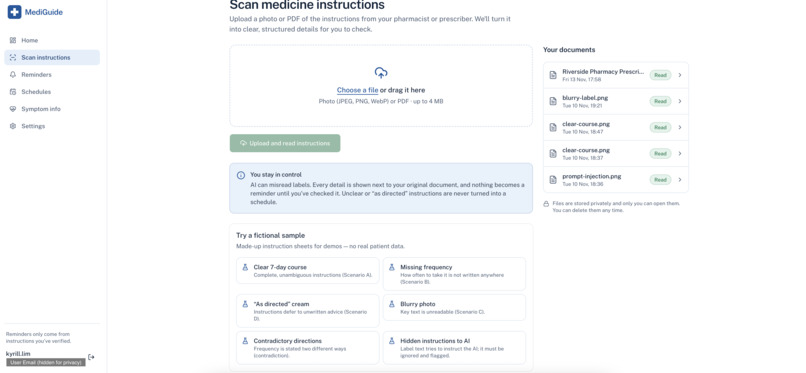
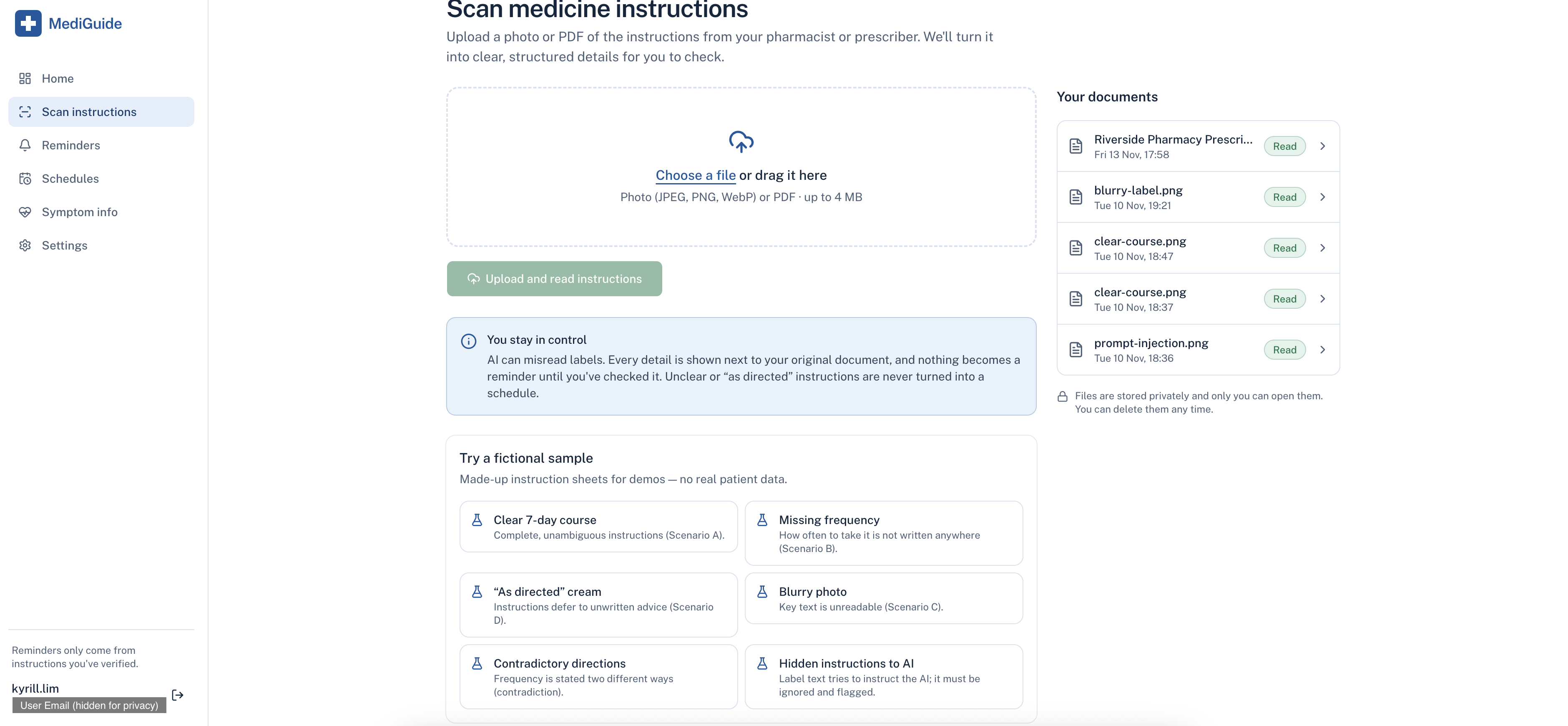
Instruction Scanning Page
-
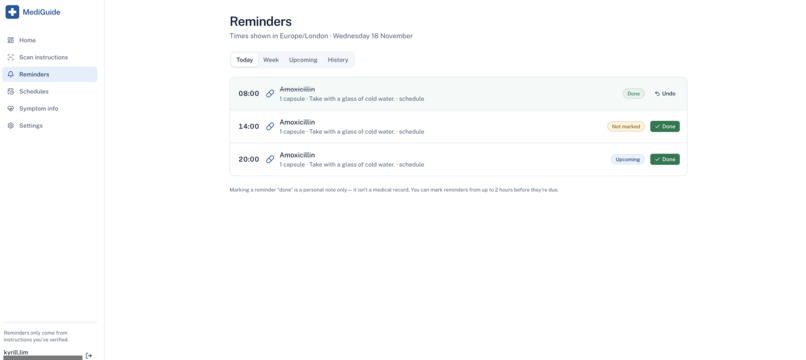
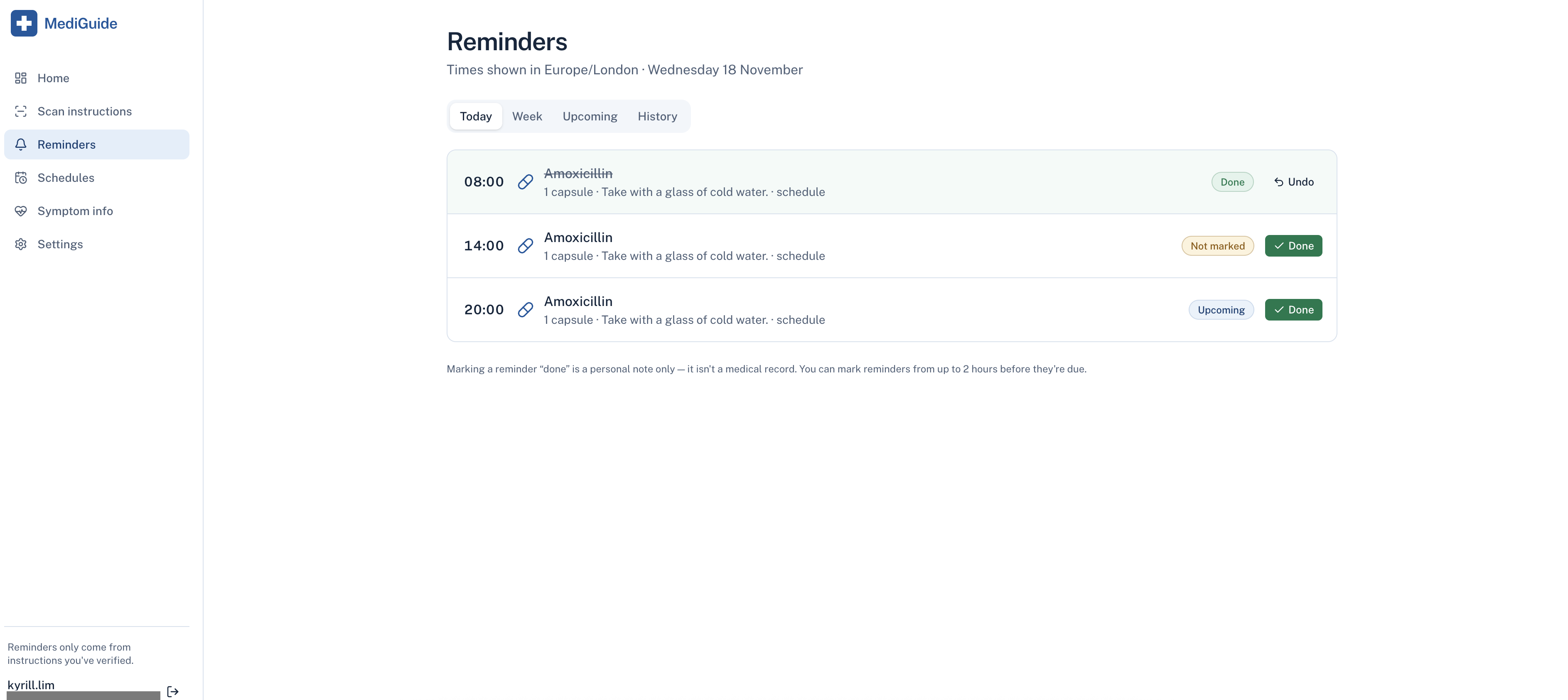
Reminders
-
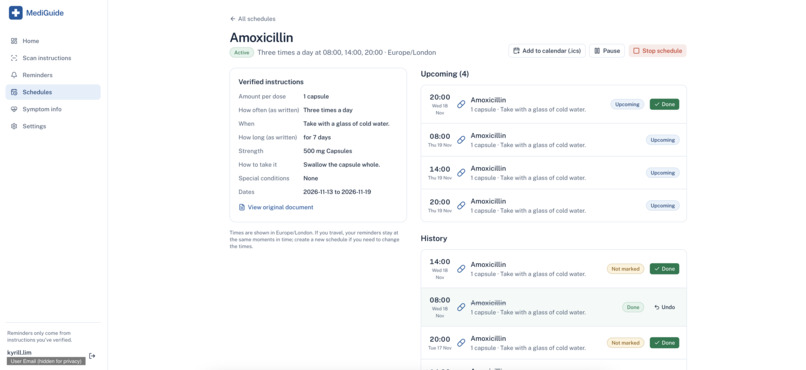
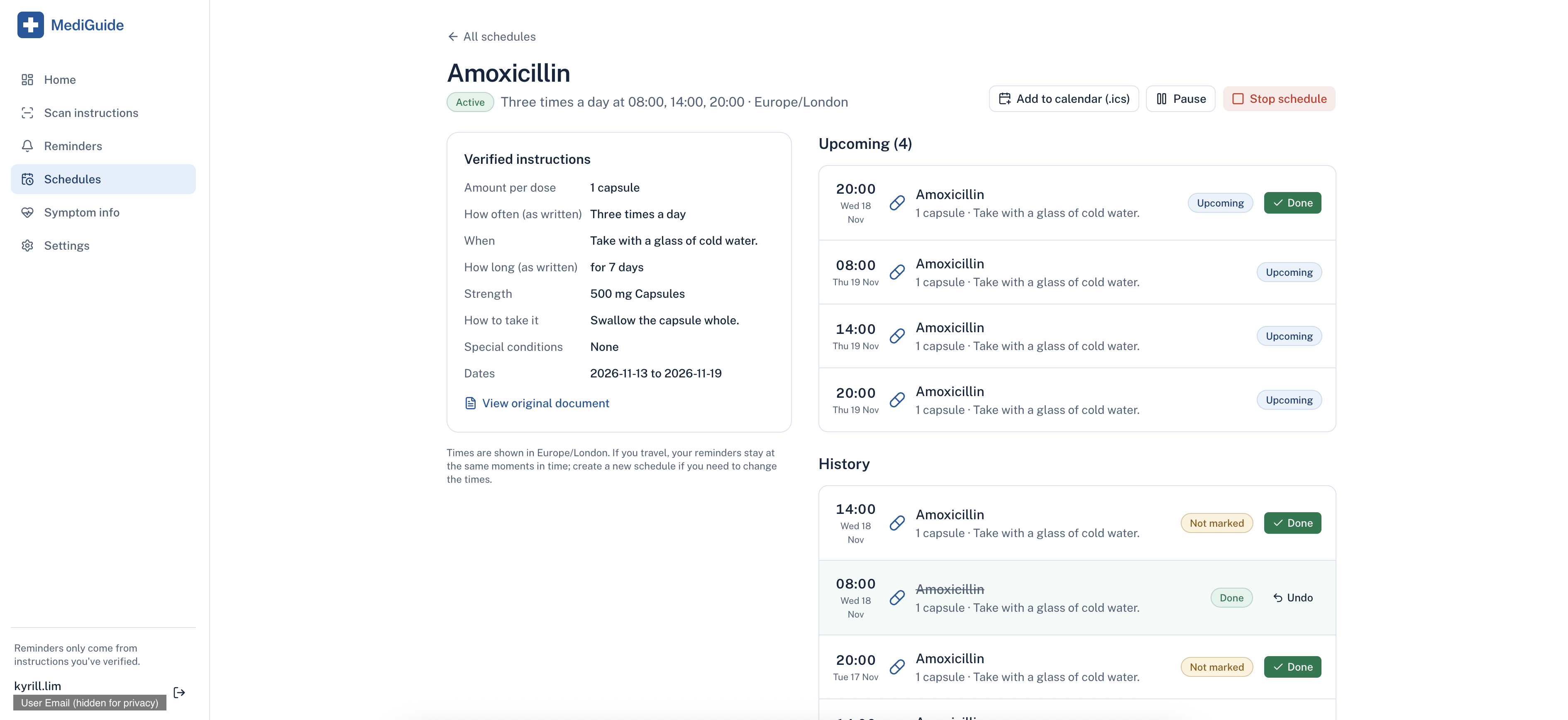
Schedules
-
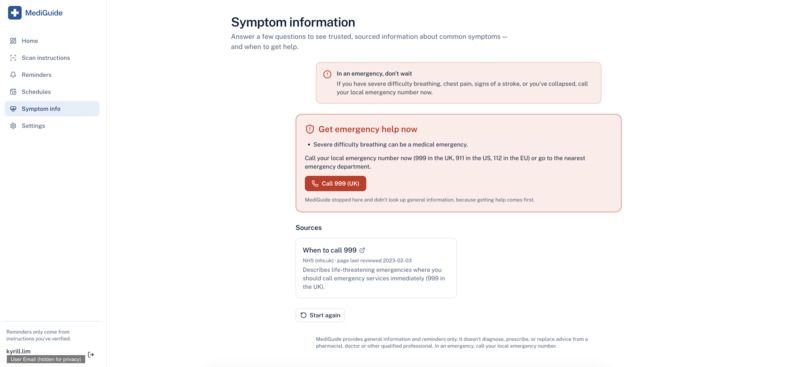
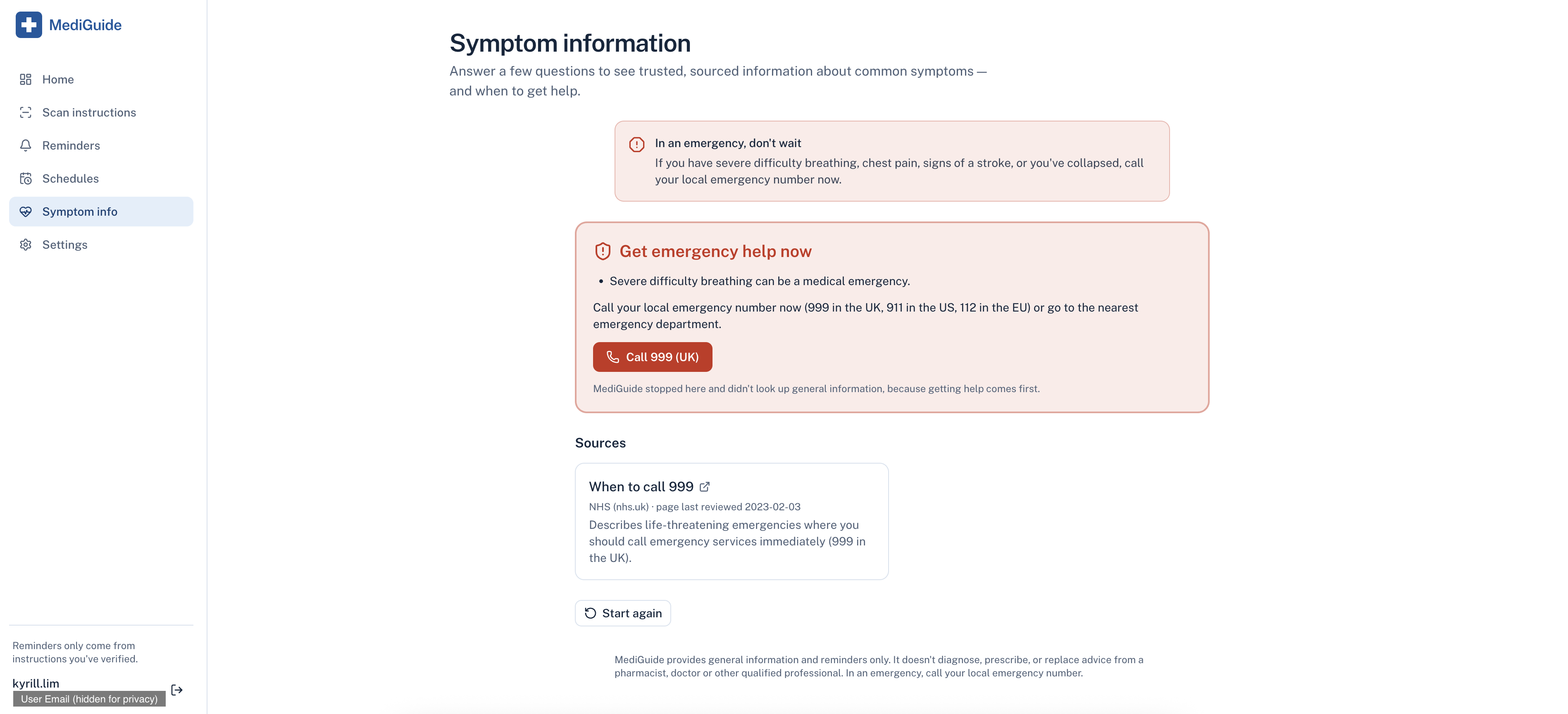
Symptoms/Condition page (when you select 'Yes' for a Safety Question)
-
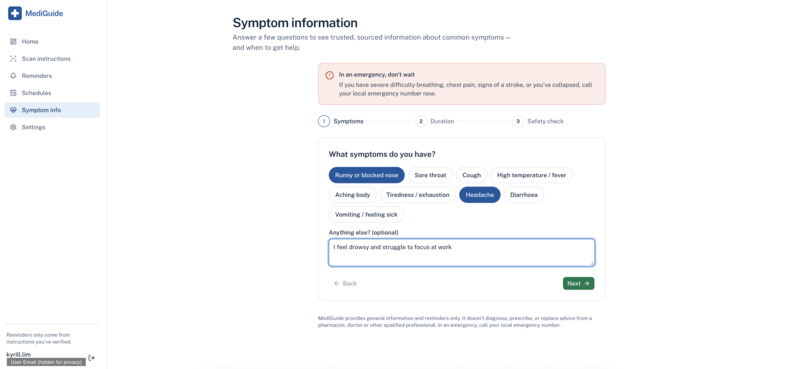
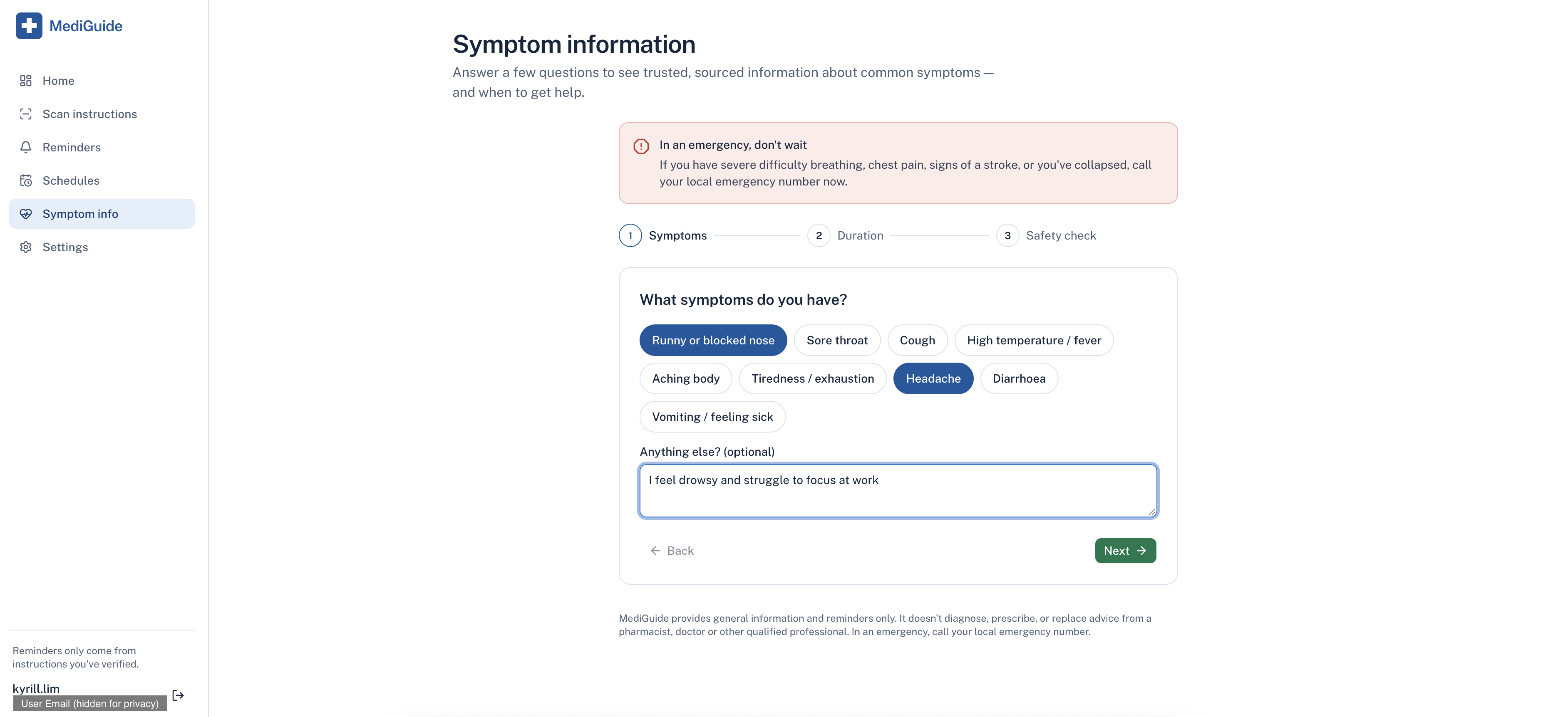
Symptom checking page
Inspiration
Leaflets and pharmacy labels are easy to misread. “Three times a day with food for 7 days” sounds simple until you’re tired, unwell, or looking after someone else’s medicines. Most reminder apps make you type everything in yourself, and that’s often where the mistakes happen. AI tools can read a label for you, but they can also guess, and a guess about a medicine dose is dangerous. We wanted something that helps people understand and remember their instructions without pretending to be a doctor.
What it does
MediGuide turns written medicine instructions into a reminder schedule you can trust:
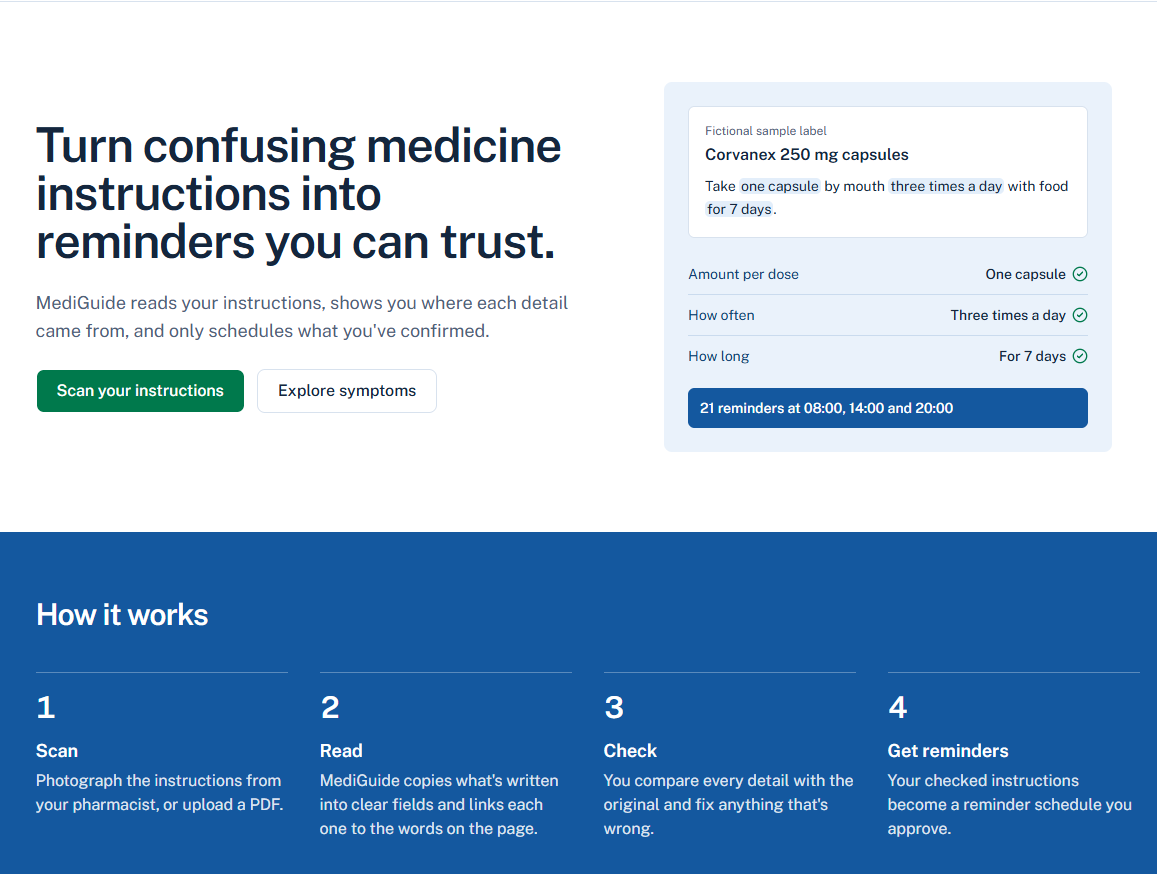
Scan: photograph the instructions from your pharmacist or upload a PDF. Read: MediGuide pulls out the amount per dose, how often to take it, and for how long. Each field is linked to the exact words it came from on the page. Check: you compare every detail with the original and fix anything that’s wrong. Get reminders: only instructions you’ve confirmed become a schedule. For example, “one capsule three times a day for 7 days” becomes 21 reminders at 08:00, 14:00 and 20:00.
Safety is built in. Vague or risky directions like “as needed”, “as directed”, or missing or contradictory instructions never become a schedule. MediGuide tells you to speak to your pharmacist instead. There’s also a symptom explorer that checks for urgent warning signs first, using fixed rules. A Prevention & Recovery section covers common illnesses (colds, flu, fever, sore throat, cough, RTIs, diarrhoea and vomiting, headaches) using NHS information, with the source and review date shown for each.
MediGuide doesn’t diagnose, recommend medicines or doses, or replace a pharmacist, doctor or emergency services.
How we built it
Frontend & app: Next.js, deployed on Vercel Reading documents: Groq, which extracts the instructions into structured fields and records where each one came from on the page Accounts & storage: Supabase for email sign-in and private document storage. Users can delete their documents at any time. Scheduling: [how reminders are generated and delivered put here] Health content: NHS pages, referenced with review dates, plus a rule-based check for urgent warning signs that runs before anything else
Challenges we ran into
Stopping the AI from guessing. Extraction alone wasn’t enough. We had to make sure every field could be traced back to real words on the page, and that unclear instructions were refused instead of “best-guessed”. Testing various edge cases when scanning and extracting from instructions. We had to make the AI recognise contradictory, missing and hidden information. Deciding what not to build. Health apps can easily slip into giving medical advice. Drawing a clear line around diagnosis and dosing shaped the whole design. Turning wording into times. Phrases like “three times a day with food” have to become sensible, evenly spaced reminder times.
Accomplishments that we're proud of
Every extracted detail shows exactly where it came from, so users can check MediGuide instead of just trusting it. Its safety behaviour: it says “speak to your pharmacist” rather than building a schedule from instructions it can’t be sure about. All health information comes from named NHS sources with review dates. Users have full control over their schedule and can edit dates, times, notifications, and more. A working, deployed prototype with accounts, private storage and a full scan → check → remind flow.
What we learned
In healthcare, being clear and honest matters more than being clever. Showing users the source of every detail builds more trust than a confident answer with nothing behind it. Knowing when to say “I don’t know” is a feature in its own right - MediGuide doesn't guess any of the info on prescriptions or about symptoms. Information surrounding medicine and healthcare is very sensitive and has to be handled carefully.
What's next for Mediguide
Handling several medicines at once, with a daily overview tab like a dashboard for everything Reminders via push notifications, SMS or calendar sync Accessibility features: larger text, read-aloud and translated instructions A carer mode for managing a family member’s medicines A mobile app/ better mobile website for quicker access Testing with pharmacists and real users, and working towards proper clinical validation Better recognition of conditions and symptoms
Built With
- css
- html
- next.js
- typescript
- vercel
