-
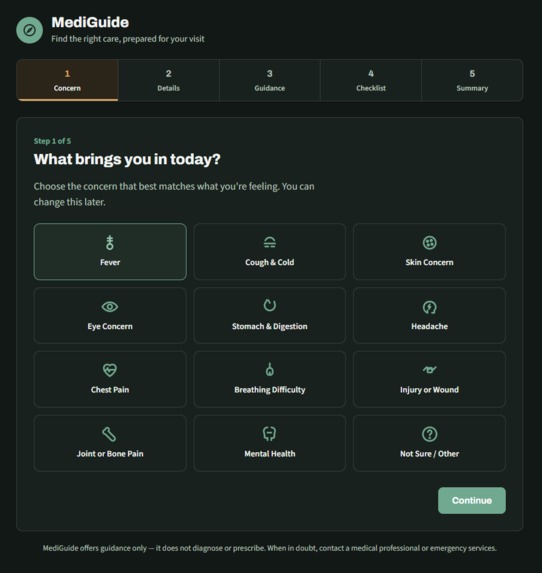
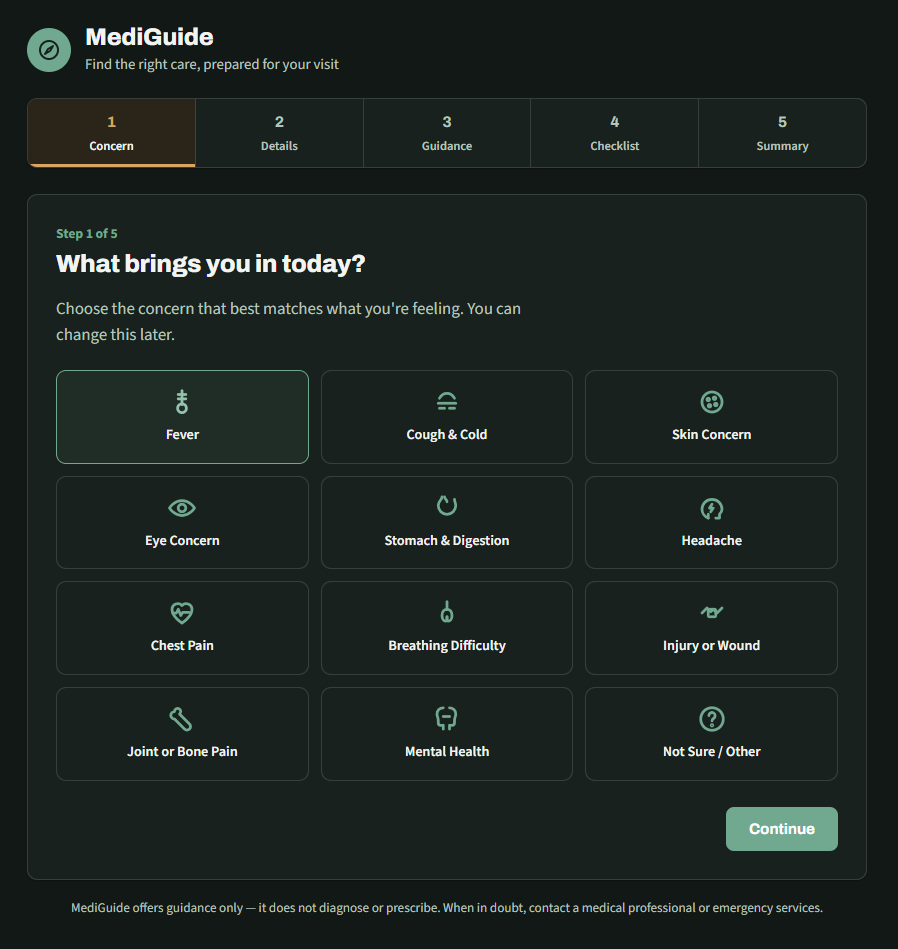
Concern Page
-
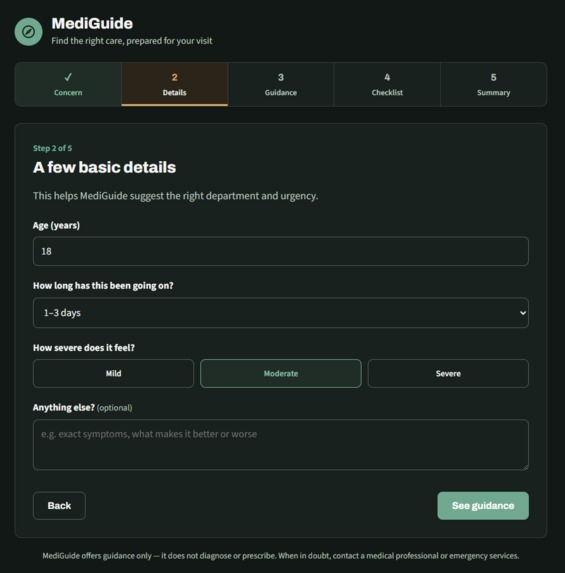
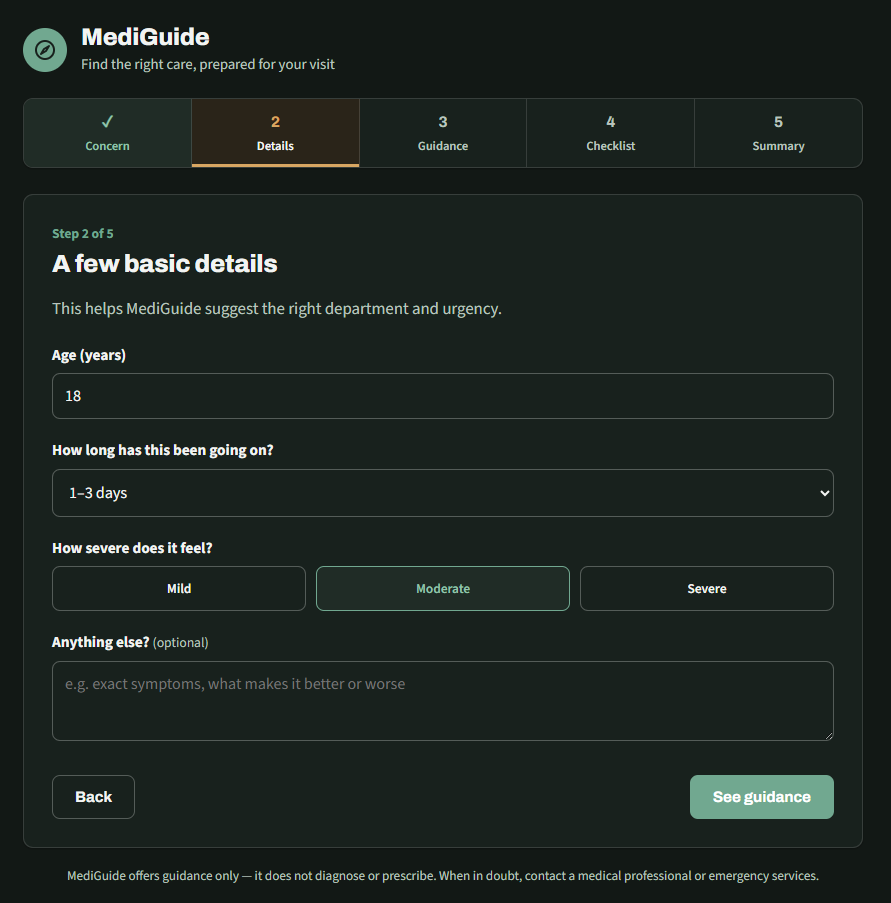
Details Page
-
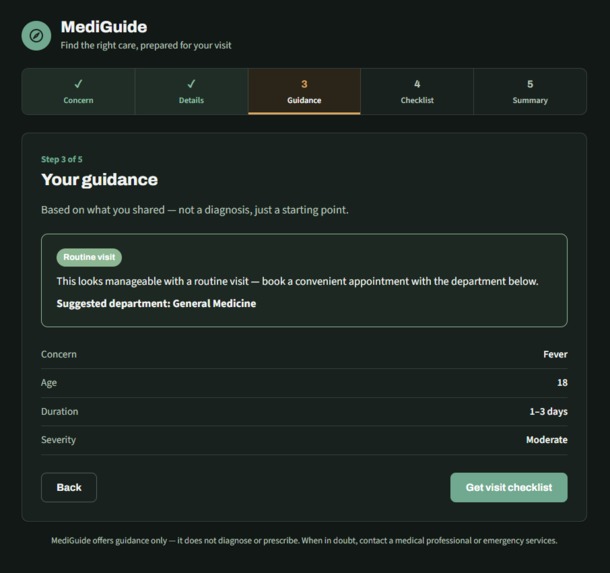
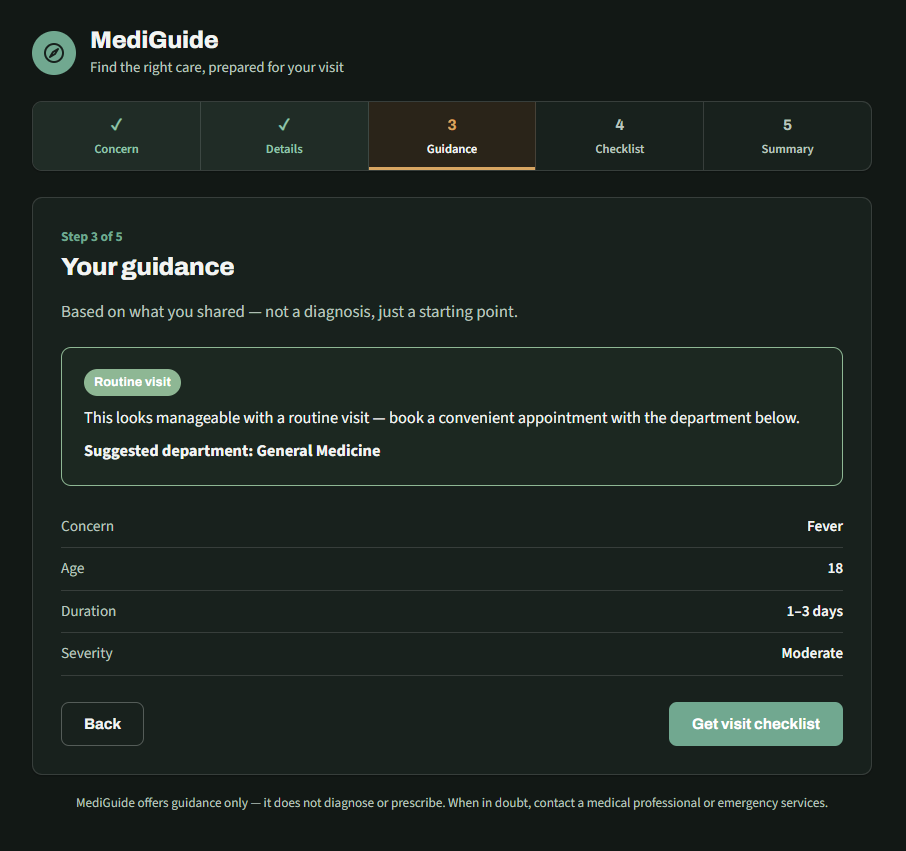
Guidance Page
-
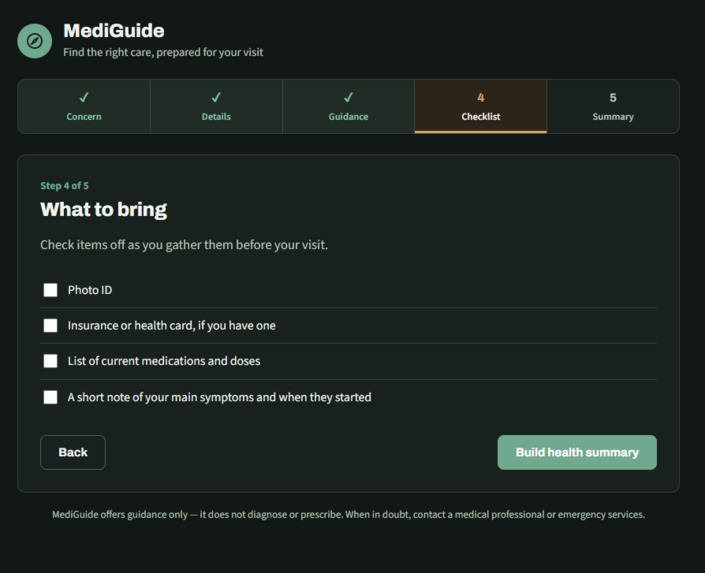
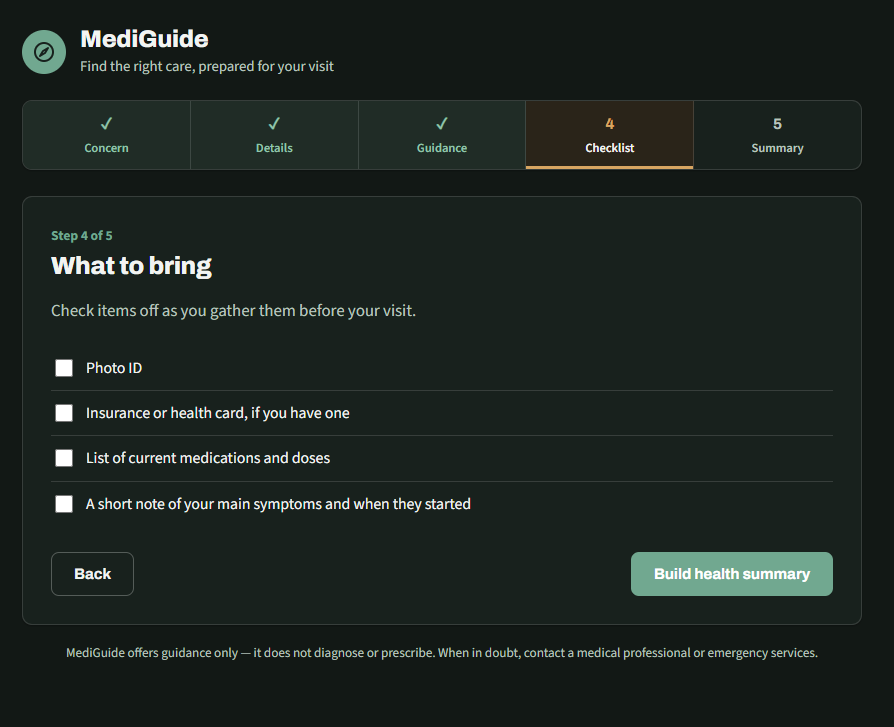
Checklist on what to bring during the checkup
-
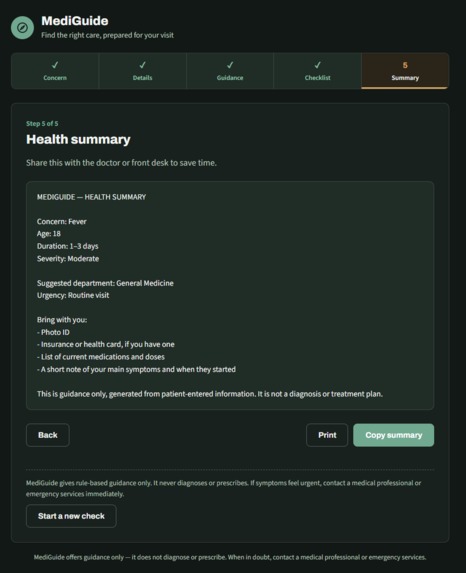
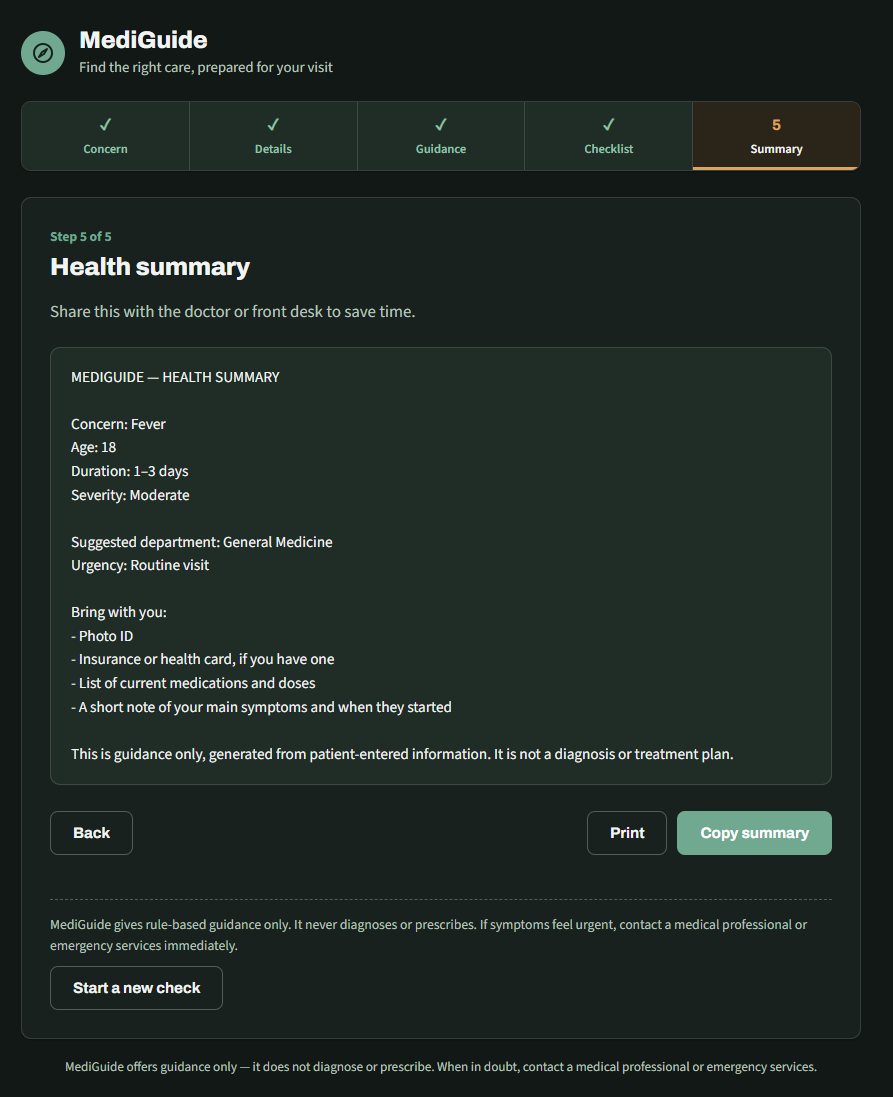
Summary Page
Inspiration
Anyone who's stood at a hospital department board confused, or watched an elderly relative forget symptoms the moment a doctor asks, knows this problem. Existing apps solve one piece — a symptom checker, or a booking tool — but nothing carries a patient through the whole journey. That gap inspired MediGuide.
What it does
MediGuide guides a patient through 5 steps: pick a concern → enter basic details → get a suggested department and urgency level → get a personalized visit checklist → generate a clean summary to hand the doctor. It prepares patients — it never diagnoses or prescribes.
How we built it
Frontend: HTML, CSS, JavaScript Backend: Python + Flask Guidance Engine: rule-based logic with safety checks on every input Storage: SQLite (local, minimal data collection)
We also built a standalone HTML/JS prototype that runs the same rule logic client-side for live demos.
Challenges we ran into
Keeping guidance useful without ever crossing into "diagnosing" Balancing simplicity for elderly/first-time users with covering enough symptom categories Rule-based logic has coverage limits — deciding what to handle vs. leave for later
Accomplishments that we're proud of
A complete, live-demo-ready prototype covering the full patient journey, not just department suggestions A safety-checked rule engine A genuinely elderly-friendly, plain-language interface
What we learned
Trust is everything in health UX — the tool must always be clear it's guidance, not diagnosis Small choices (font size, step count, wording) matter hugely for accessibility Rule-based systems are easier to explain and trust than opaque ML for a first health tool
What's next for MediGuide
Get the guidance framework reviewed by healthcare professionals Connect to real hospital check-in systems Expand symptom categories and run user testing with elderly patients, then pilot with a clinic


Log in or sign up for Devpost to join the conversation.