Inspiration
- Sepsis kills more hospital patients than any other single condition, and mortality rises roughly 8% for every hour treatment is delayed. Diagnosis relies on a nurse or doctor noticing a pattern across many vitals — something that is easy to miss during a busy shift.
- Dangerous drug combinations are common when a patient sees multiple specialists who don't see each other's prescriptions. No single doctor has the full picture, and manual cross-checking against every other active medication is impractical at scale.
Both problems share the same root cause: critical signals are scattered across systems and people, and no one is watching it all, all the time.
What it does
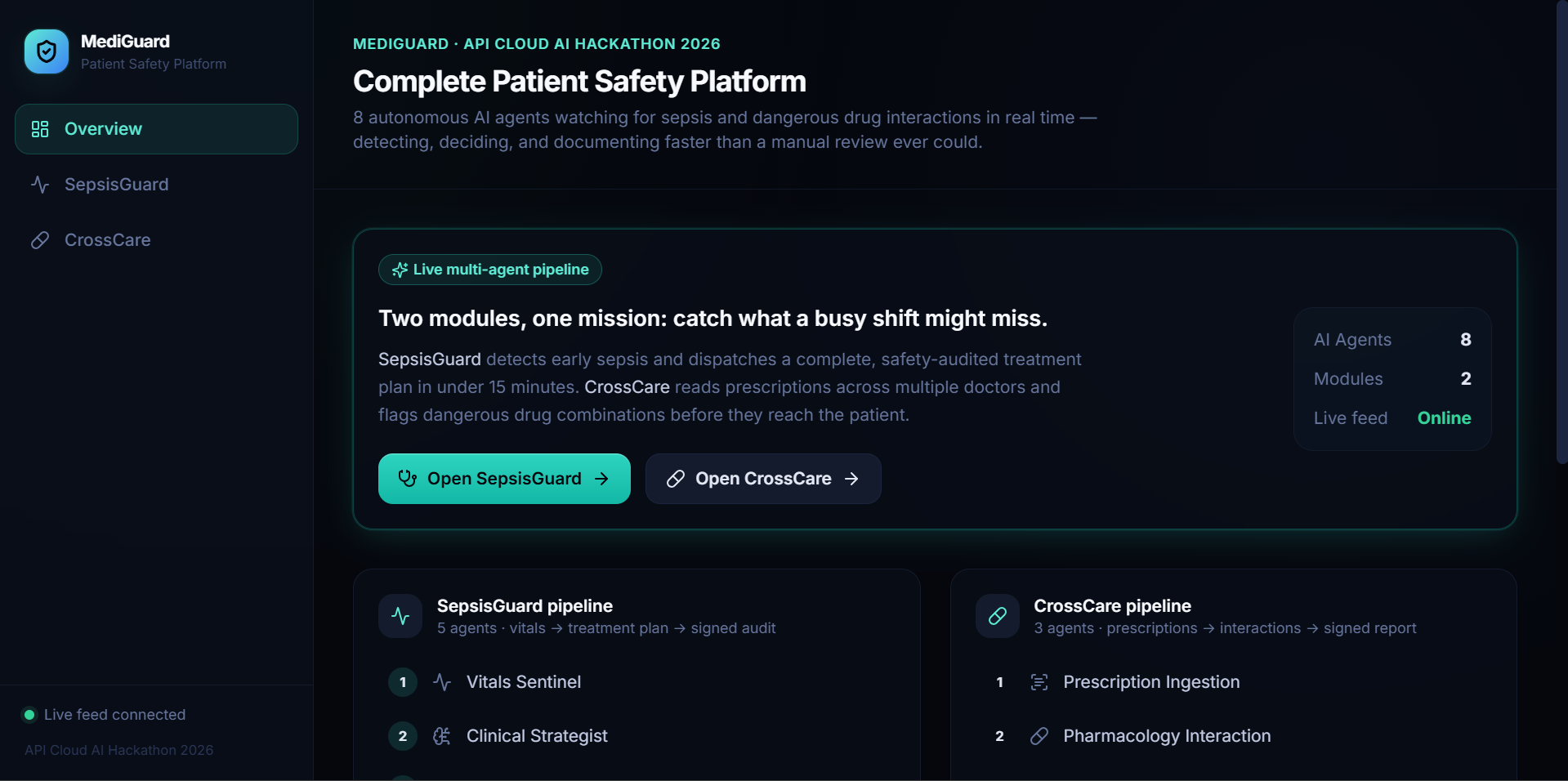
MediGuard is a two-module patient-safety platform that sits between raw clinical data (vitals monitors, prescriptions) and the medical team, using autonomous AI agents to catch life-threatening problems faster than manual review ever could.
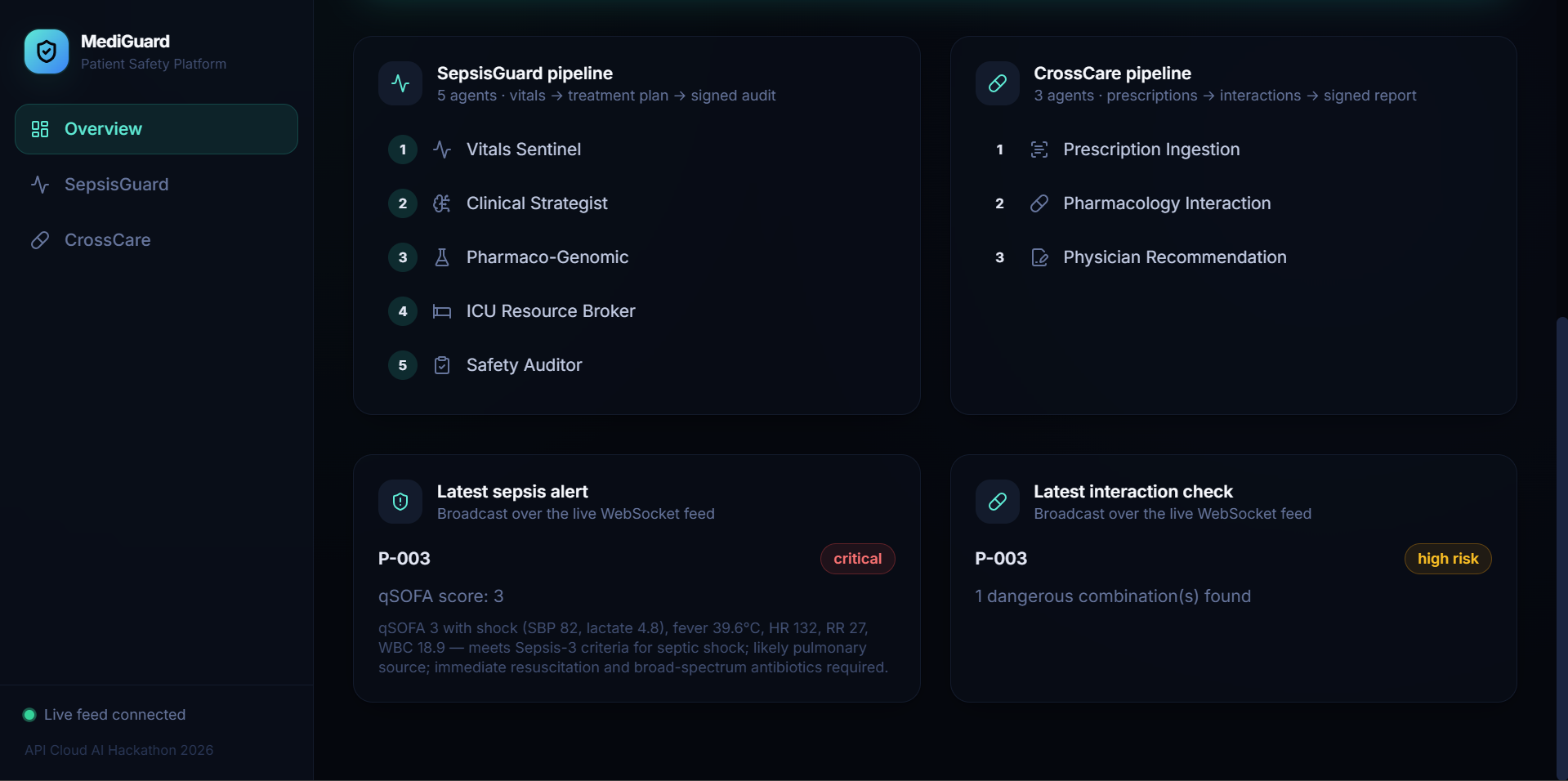
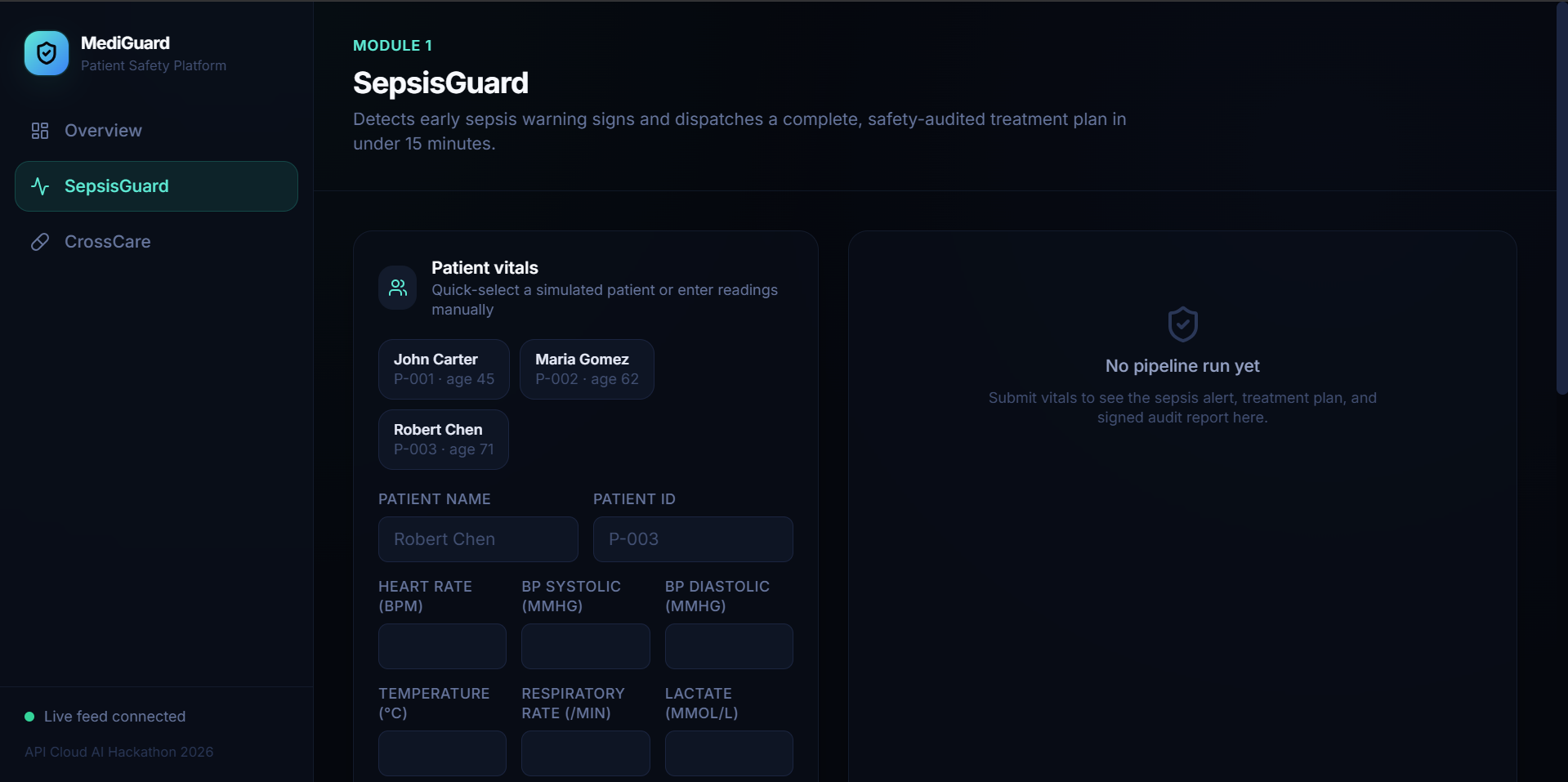
- SepsisGuard — continuously watches ICU vitals, detects early sepsis, and dispatches a complete treatment plan in under 15 minutes.
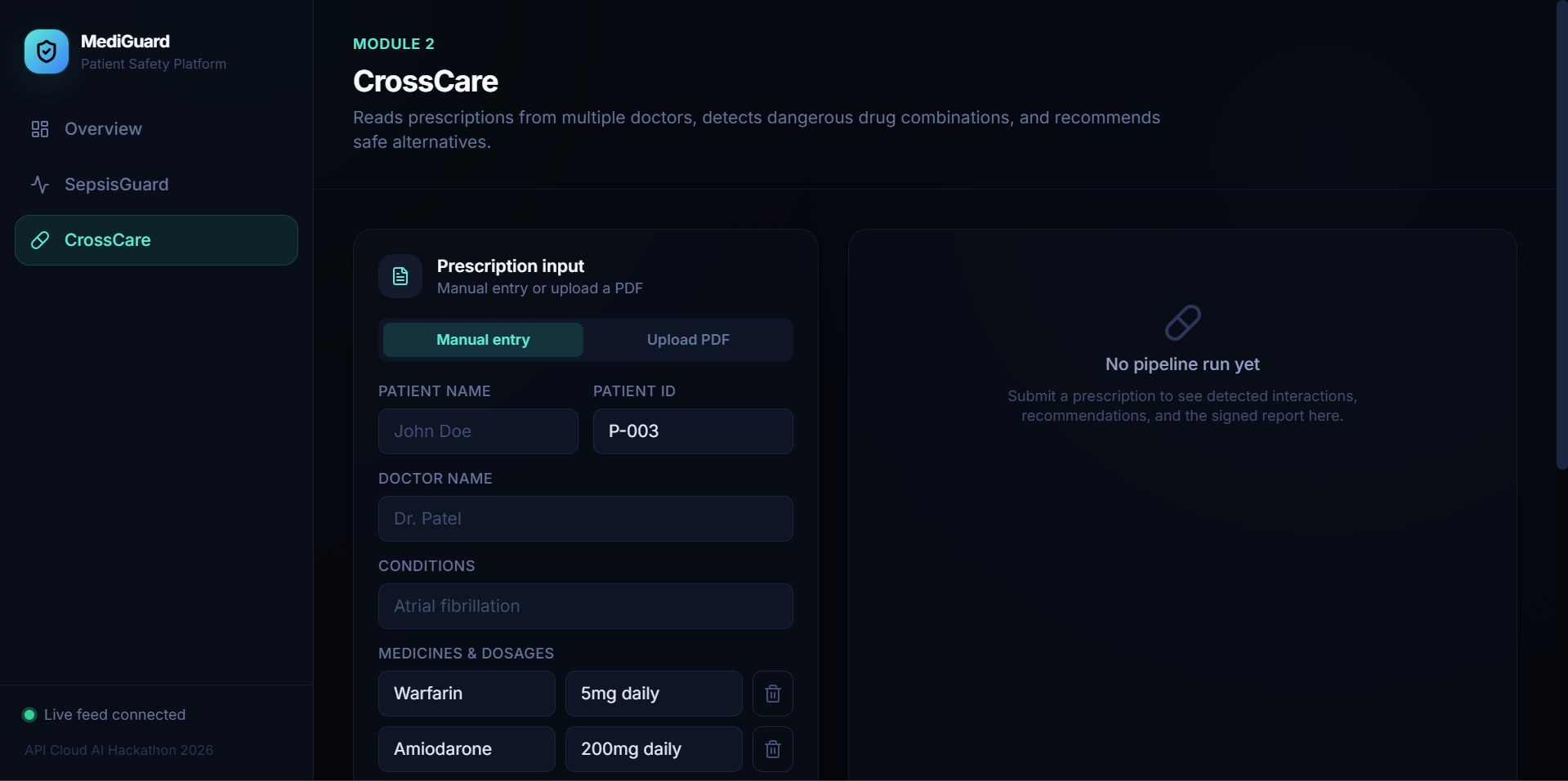
- CrossCare — reads prescriptions from multiple doctors and catches dangerous drug interactions before they reach the patient.
Both modules run on independent LangGraph workflows, share a common FastAPI backend, and stream live results to a React dashboard over WebSocket.
How we built it
- Agent Framework: LangGraph
- LLM: Groq LLaMA 3.1 8B Instant (free)
- Medical APIs: NLM API + RxNorm API (free)
- Backend: FastAPI (Python)
- Frontend: React + Tailwind CSS
- Real-time: WebSocket
- Database: SQLite (hackathon build)
- Deployment: Render (free tier)
- Patient Data: Simulated FHIR JSON
- Treatment Plans: Nutrient DWS
- Drug Interaction Documents: Simulated FHIR JSON
Challenges we ran into
After developing the frontend and backend, we had trouble connecting to the live feed during deployment on Vercel. After adding the API keys as environment variables, updating the entrypoint, and deploying the root directory, we successfully connected the live feed.
Accomplishments that we're proud of
We are proud that we successfully detected sepsis in certain patients and generated PDF reports after implementing our workflow.
What we learned
We learned that MediGuard can cut response time from hours to 15 minutes. 7.6% fewer deaths per hour thanks to 8 agents. Each agent handles its own job while sharing the same LangGraph pipeline and dashboard.
What's next for MediGuard
To move forward, we can integrate a portal where patients can log in and track their records. We can also expand file support to include documents (such as PDF, Word, CSX, and JSON).

Log in or sign up for Devpost to join the conversation.