-
body
-
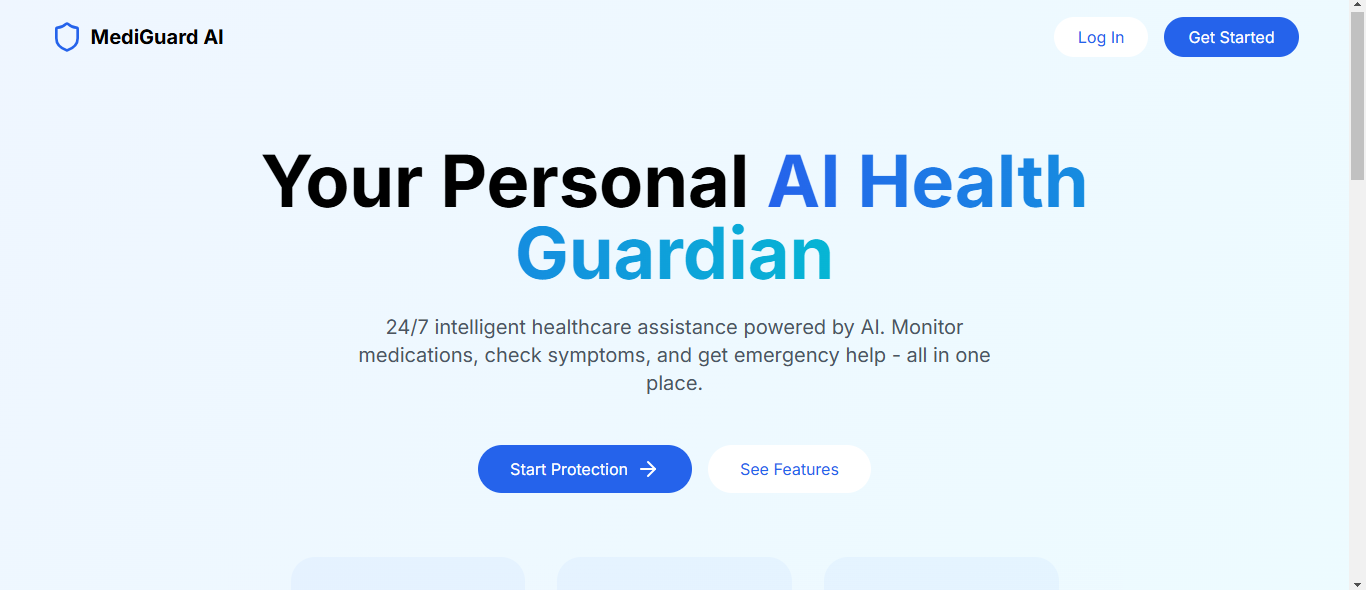
landing page
-
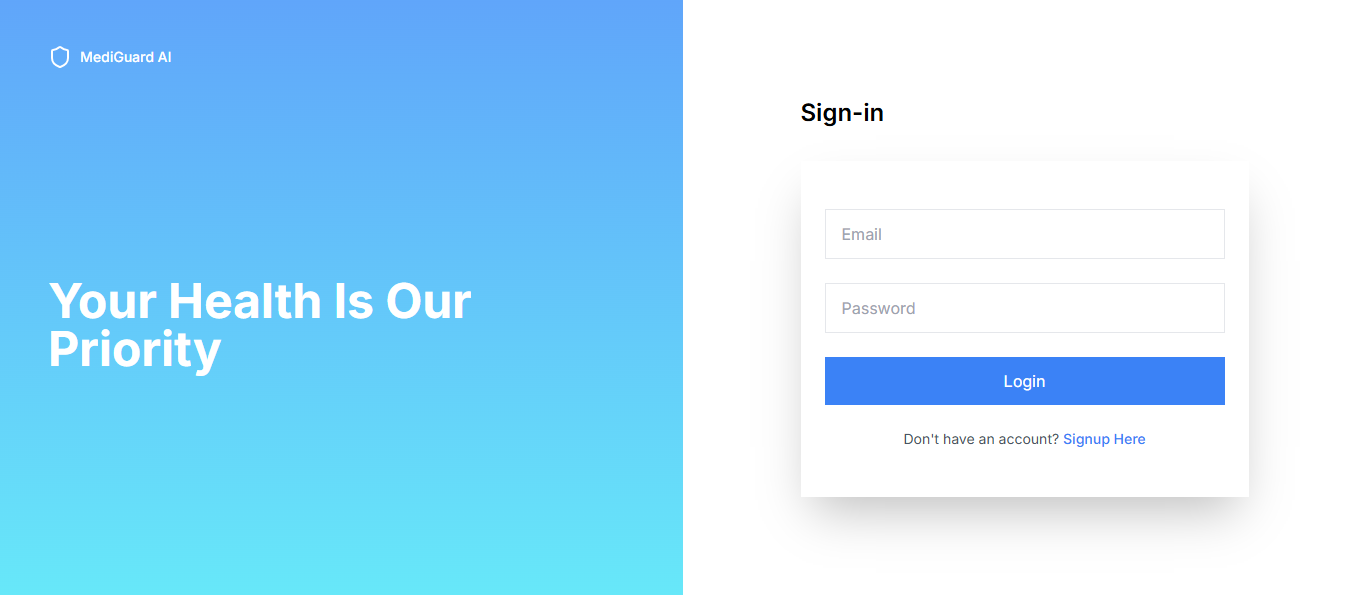
sign in page
Inspiration
The inspiration behind MediGuard AI came from a personal experience with a family member who struggled to manage multiple medications while dealing with a chronic illness. We noticed how challenging it was for them to keep track of their medication schedule, remember potential drug interactions, and understand the severity of their symptoms. This led us to think about how technology, particularly AI, could simplify and improve the lives of patients managing complex health conditions. We wanted to create a tool that not only helps users manage their medications but also provides them with actionable health insights and emergency guidance. The goal was to build a virtual health companion that could reduce health risks, improve medication adherence, and empower users to take control of their health.
What it does
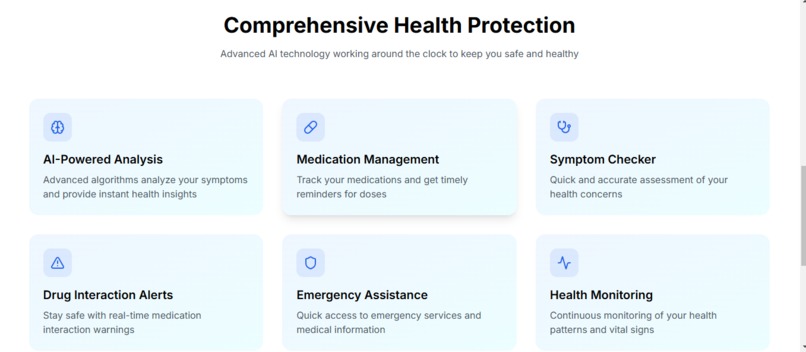
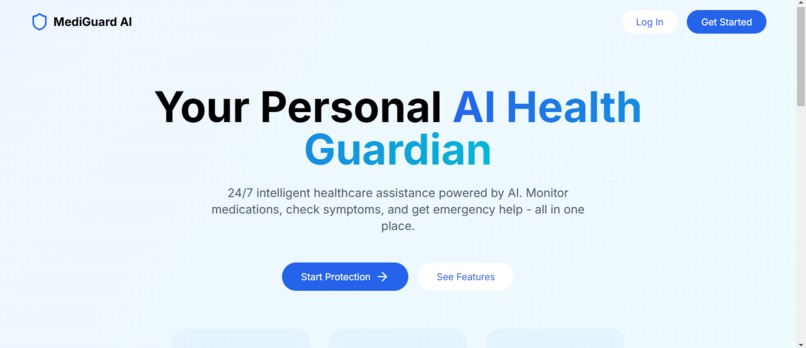
AI-Powered Symptom Checker – Users input symptoms, and AI suggests possible conditions & urgency level. Medication Reminder – Sends smart reminders for scheduled medications. Drug Interaction Checker – Warns users about dangerous drug combinations. Personalized Health Insights – AI provides health advice based on medication & symptoms. Emergency Guidance – Directs users to nearby hospitals or emergency contacts Target Audience
- Elderly patients managing multiple medications.
- Chronic disease patients needing adherence support.
- General users looking for quick symptom analysis. ## How we built it Planning & Research We started by conducting extensive research on the needs of our target audience, including elderly patients, chronic disease patients, and general users looking for quick symptom analysis. We also researched existing solutions in the market to identify gaps and opportunities for improvement. Design & Prototyping We designed the user flow and UI using Figma, focusing on simplicity and accessibility. The design process involved multiple iterations based on feedback from potential users. We wanted to ensure that the interface was intuitive and easy to navigate, even for users who might not be familiar with technology.
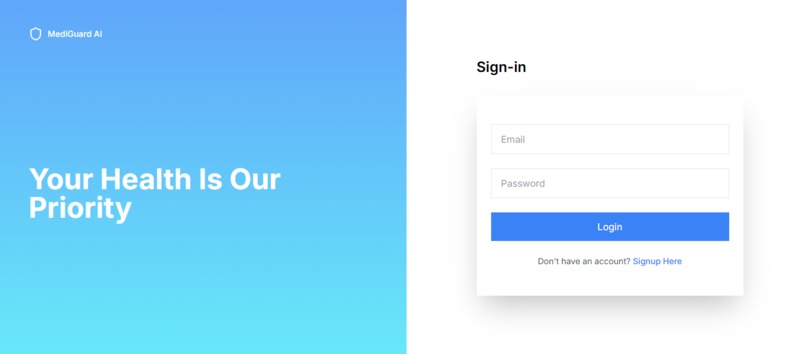
Development The development process was divided into frontend and backend tasks: Frontend: We used Next.js for fast UI rendering and Tailwind CSS for styling. The frontend was designed to be responsive and user-friendly, with clear calls to action for medication reminders, symptom checking, and emergency guidance. -Backend: We built the backend using Flask for AI processing and API endpoints. We integrated the OpenAI API for generating health insights and the Twilio API for sending SMS-based medication reminders. The backend also handled user authentication, data storage, and drug interaction checks.
Challenges we ran into
- Data Privacy & Security One of the biggest challenges was ensuring the privacy and security of user data, especially since we were dealing with sensitive health information. We had to implement robust encryption and comply with healthcare regulations like HIPAA.
2.AI Accuracy Ensuring the accuracy of the AI symptom checker and drug interaction checker was another challenge. We had to train the AI models with a large dataset of medical conditions and drug interactions, and continuously refine the models to improve accuracy.
User Adoption We were concerned about how easily users, especially the elderly, would adopt the technology. To address this, we focused on creating a simple and intuitive interface and provided clear instructions for using the app.
- Integration of Multiple APIs Integrating multiple APIs (OpenAI, Twilio, etc.) while maintaining a seamless user experience was technically challenging. We had to ensure that all APIs worked together smoothly and that the app remained responsive even under heavy usage. ## Accomplishments that we're proud of
What we learned
What We Learned Throughout the development of MediGuard AI, we learned a great deal about both the technical and human aspects of healthcare technology. On the technical side, we gained experience in integrating multiple APIs (such as OpenAI for AI-driven insights and Twilio for SMS reminders) and building a seamless user experience with modern frameworks like Next.js and Flask. We also learned how to handle sensitive health data securely, ensuring compliance with privacy regulations.
On the human side, we learned about the challenges faced by patients, especially the elderly and those with chronic conditions. We realized the importance of designing a user-friendly interface that is accessible to people of all ages and tech-savviness levels. This project taught us the value of empathy in technology design and how AI can be used to make a real difference in people's lives.
What's next for MediGuard Al
MediGuard AI was a challenging but rewarding project that allowed us to combine our technical skills with a desire to make a positive impact on people's lives. We learned a lot about the complexities of healthcare technology and the importance of designing with empathy. We hope that MediGuard AI will help users manage their health more effectively and provide them with the support they need to live healthier lives
This project was a true testament to the power of technology in solving real-world problems, and we are excited to see how it evolves in the future!
Built With
- figma
- mysql
- next.js
- node.js
- tailwind
- typescript

Log in or sign up for Devpost to join the conversation.