-
-
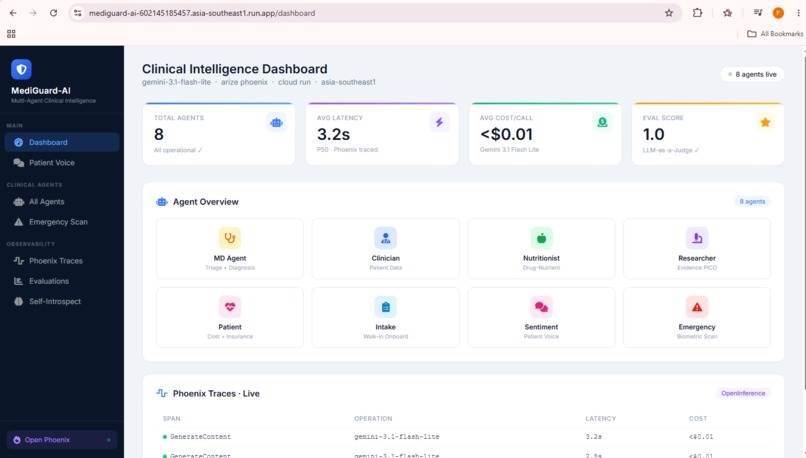
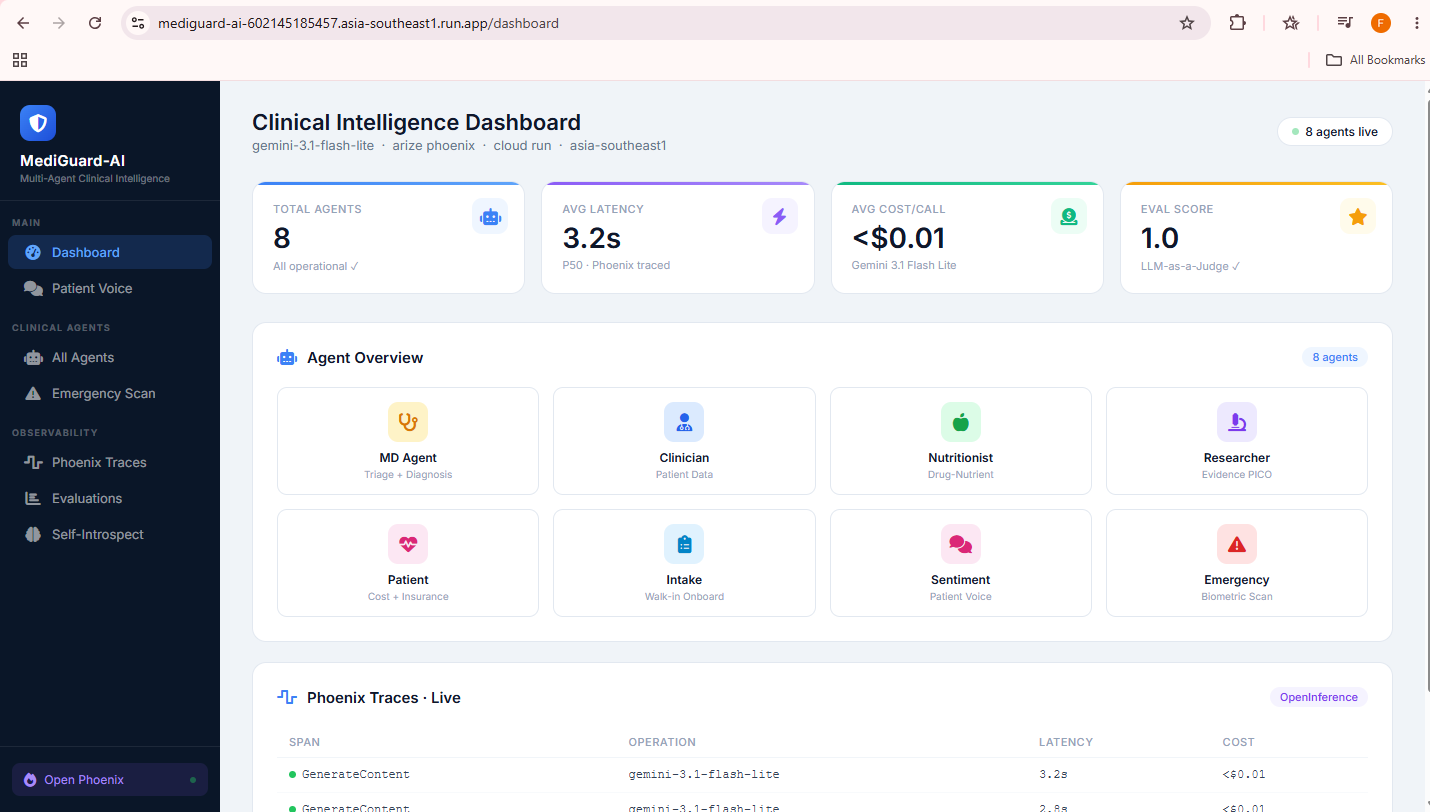
MediGuard-AI Clinical Intelligence Dashboard
-
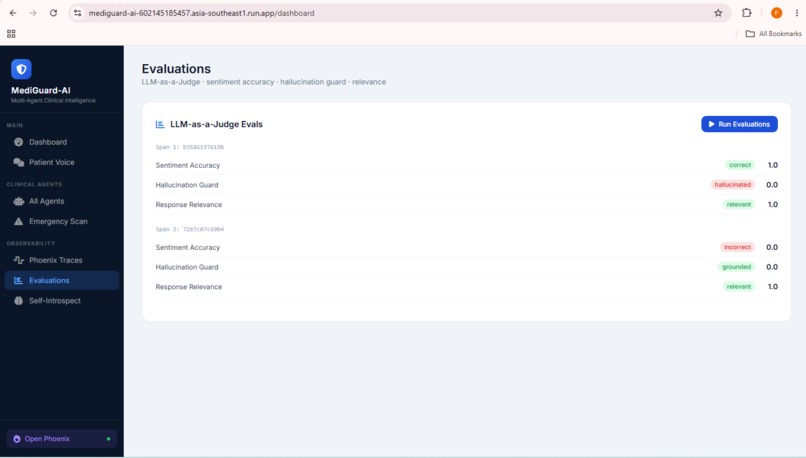
Evaluations
-
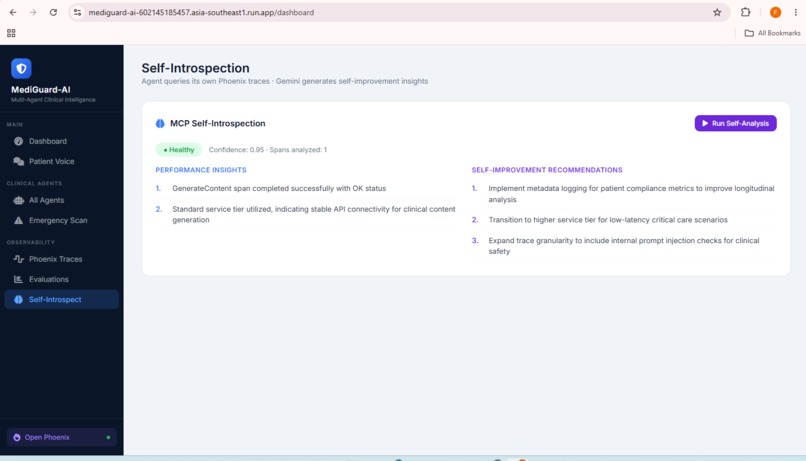
Self-Introspect
-
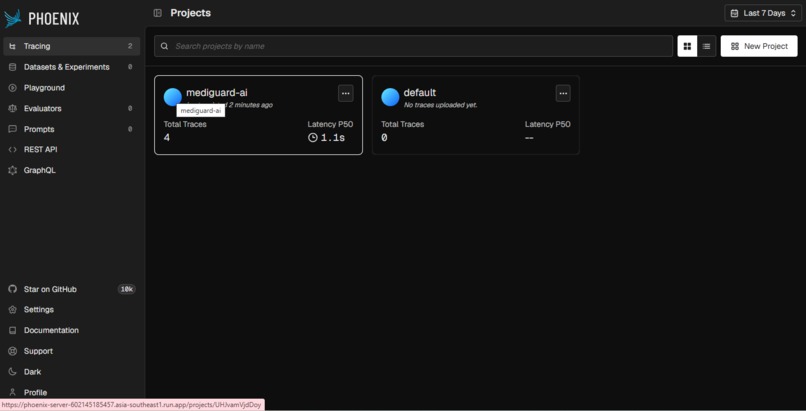
Phoenix DASHBOARD
-
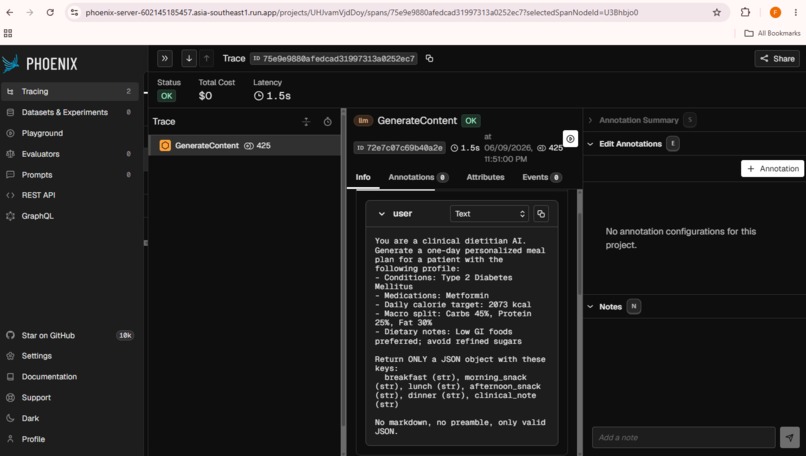
LLM Input Output
-
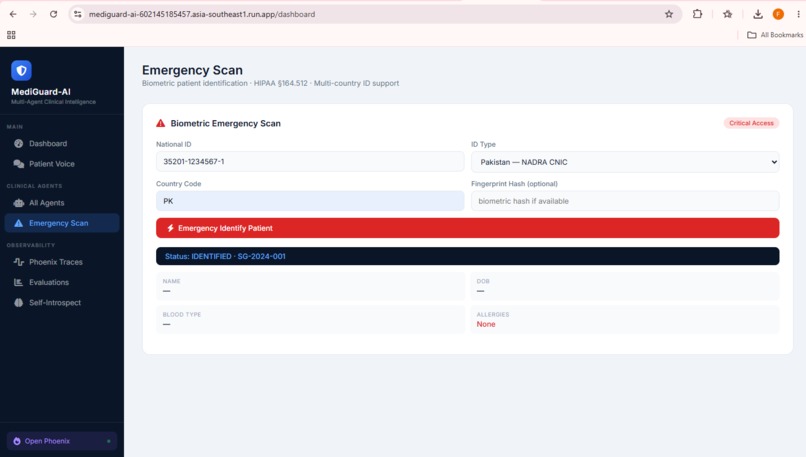
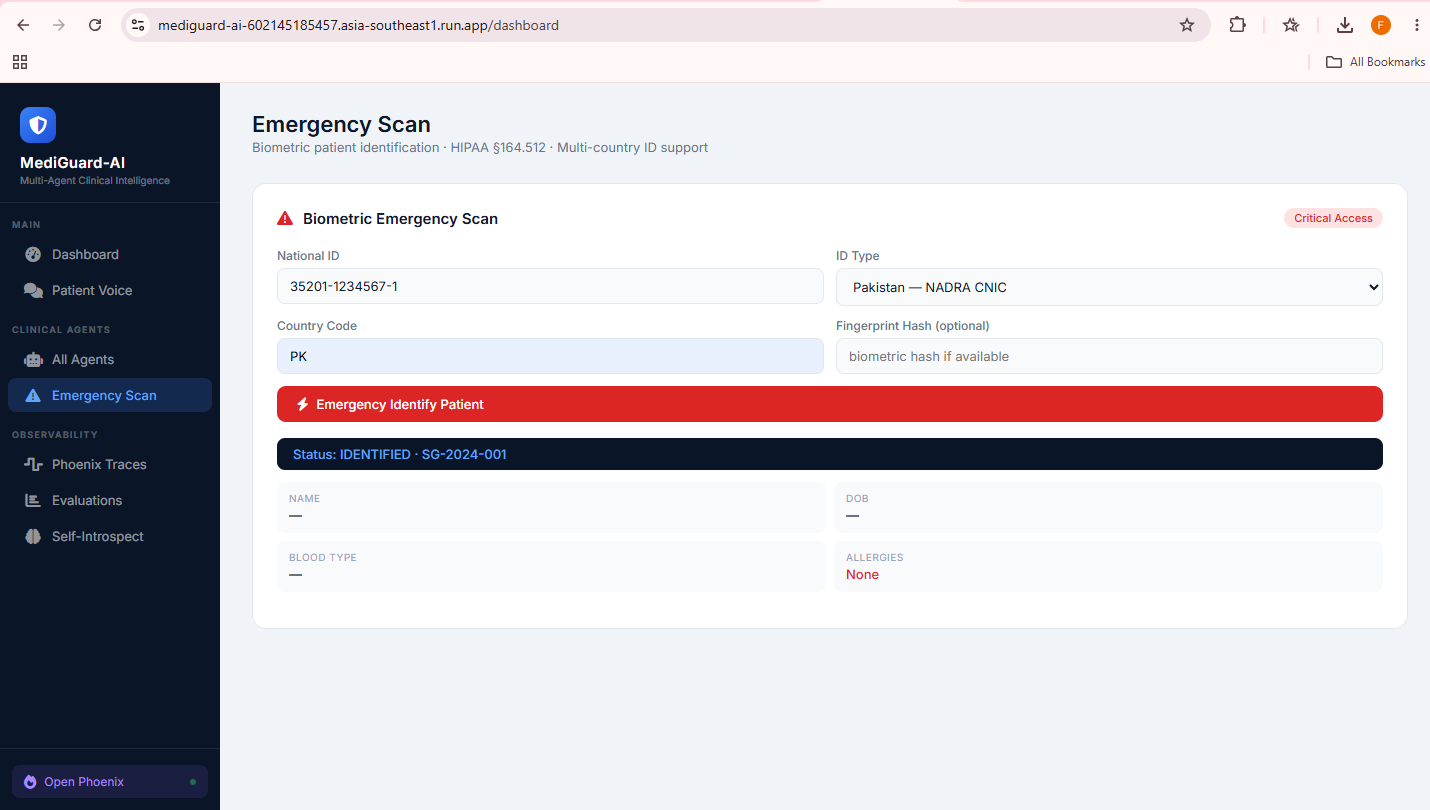
EMERGENCY SCAN
-
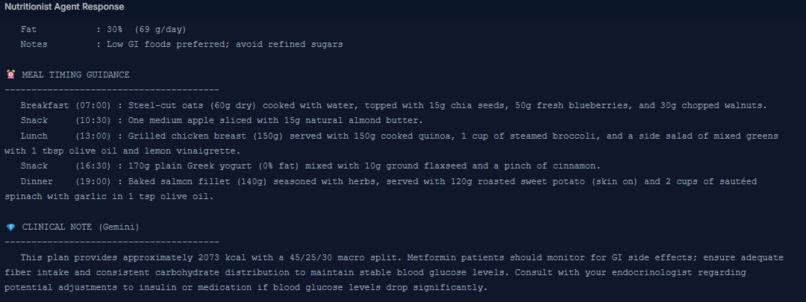
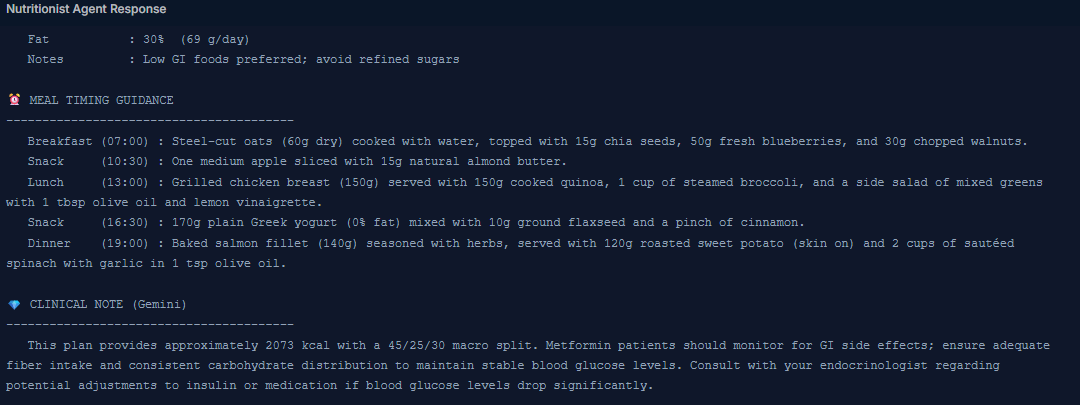
Nutrition Response
Inspiration## 💡 Inspiration
70% of healthcare leaders cite data silos as their #1 challenge. Patients arrive unconscious with no records. Clinicians make critical decisions without real-time evidence. Drug-nutrient conflicts go undetected. I built MediGuard-AI to solve these life-threatening gaps using AI agents.
I live in Pakistan, where healthcare is both deeply human and deeply broken.
Every day, patients arrive at hospitals already exhausted — drained by their illness, then drained further by the process. They sit in queues, fill forms, and when they finally reach a doctor, they spend the first 8 minutes narrating their entire medical history from childhood. The doctor listens, then gives a one-line answer. The patient leaves unsatisfied. The doctor moves to the next patient, frustrated.
And then there are the accident cases.
In Pakistan, road accidents happen daily. A critical patient arrives unconscious. No ID. No family. No medical history. Doctors treat blindly — guessing allergies, guessing medications, guessing blood type. Sometimes the family finds out hours later. Sometimes they never do. Sometimes the patient is declared an unknown body — and that trauma follows a family for years.
These are not edge cases. These are Tuesday afternoons in Karachi.
MediGuard-AI was built to fix this — not as a replacement for doctors, but as the intelligent assistant that gives them back their most valuable resource: time. And gives patients back their dignity.
🏗️ What I Built
MediGuard-AI is a live, 8-agent clinical intelligence system deployed on Google Cloud Run — powered by Gemini 3.1 Flash Lite and fully observable via Arize Phoenix MCP.
🚨 Emergency Agent — The Feature Born From Crisis
The Emergency Agent was designed specifically for unconscious or unidentified patients in critical care.
Privacy-first biometric identification:
- Patient fingerprints are never stored raw — only an irreversible cryptographic hash (ISO/IEC 19794-2 compliant)
- The hash cannot be decoded back to the original biometric — privacy by design
- In an emergency, the hash is matched against a secure registry to retrieve the patient MRN
When ID cards are missing or misplaced — which happens in every serious accident — the system falls back to national ID databases:
- 🇵🇰 Pakistan NADRA CNIC
- 🇦🇪 UAE Emirates ID
- 🇸🇦 Saudi Arabia Iqama
- 🌍 International Passport (ISO 3166)
The moment a patient is identified:
- Critical allergies surface instantly
- Active medications are retrieved
- Family emergency contact is automatically alerted in real time
- Full audit log created — HIPAA §164.512 emergency exception
This feature exists because unknown bodies should not be a statistic. Families deserve to know.
🤖 The 8-Agent System
| Agent | Role |
|---|---|
| MD Agent | RED/AMBER/GREEN triage + differential diagnosis |
| Clinician Agent | Unified patient history + drug interaction alerts |
| Nutritionist Agent | Drug-nutrient conflicts + personalised meal plans |
| Researcher Agent | Live evidence synthesis — ACC/AHA, ESC, KDIGO guidelines |
| Patient Agent | Procedure cost transparency + insurance estimates |
| Intake Agent | Walk-in onboarding — FHIR R4 patient creation |
| Sentiment Agent | Patient review analysis — hospital quality intelligence |
| Emergency Agent | Biometric ID + family alert — critical care response |
🔭 Arize Phoenix — Why Observability Changes Everything
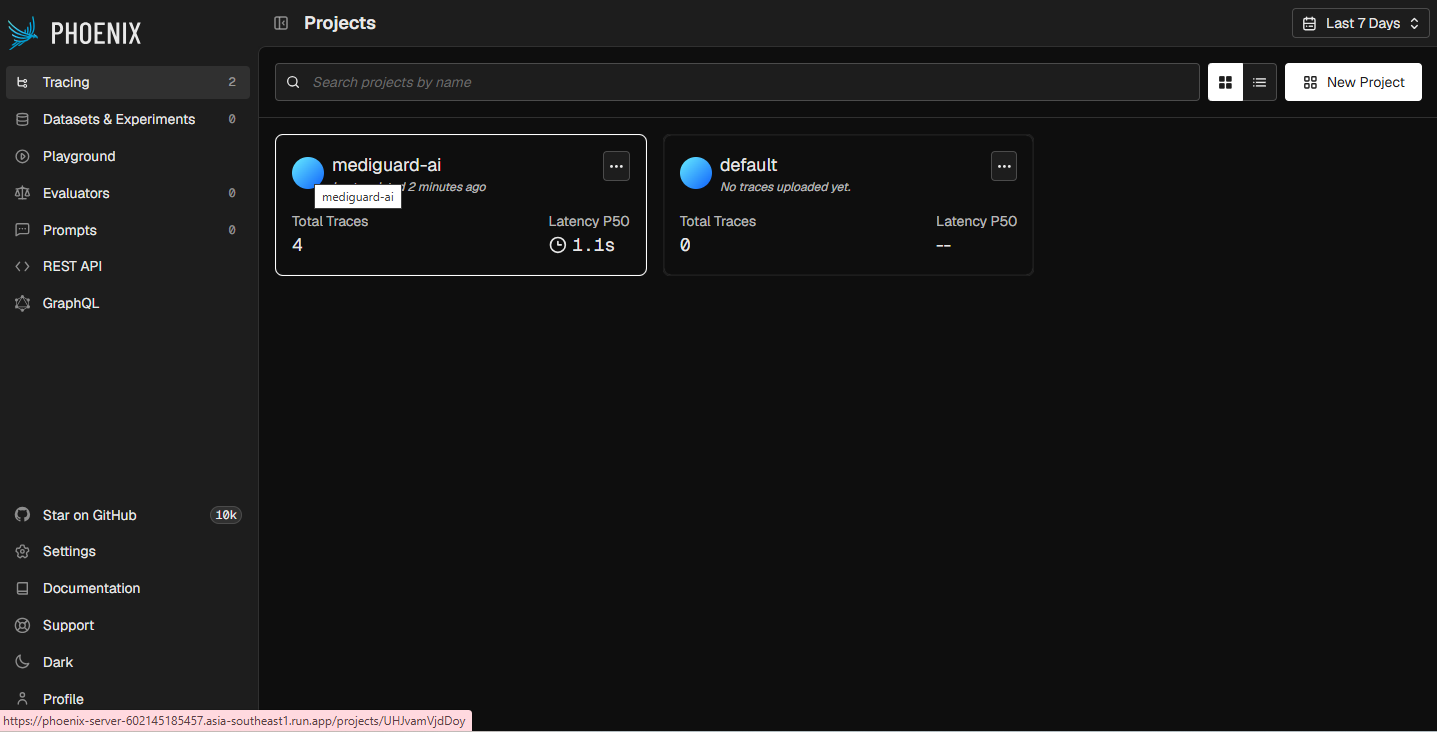
Arize Phoenix is not just a logging tool — it is the nervous system of MediGuard-AI.
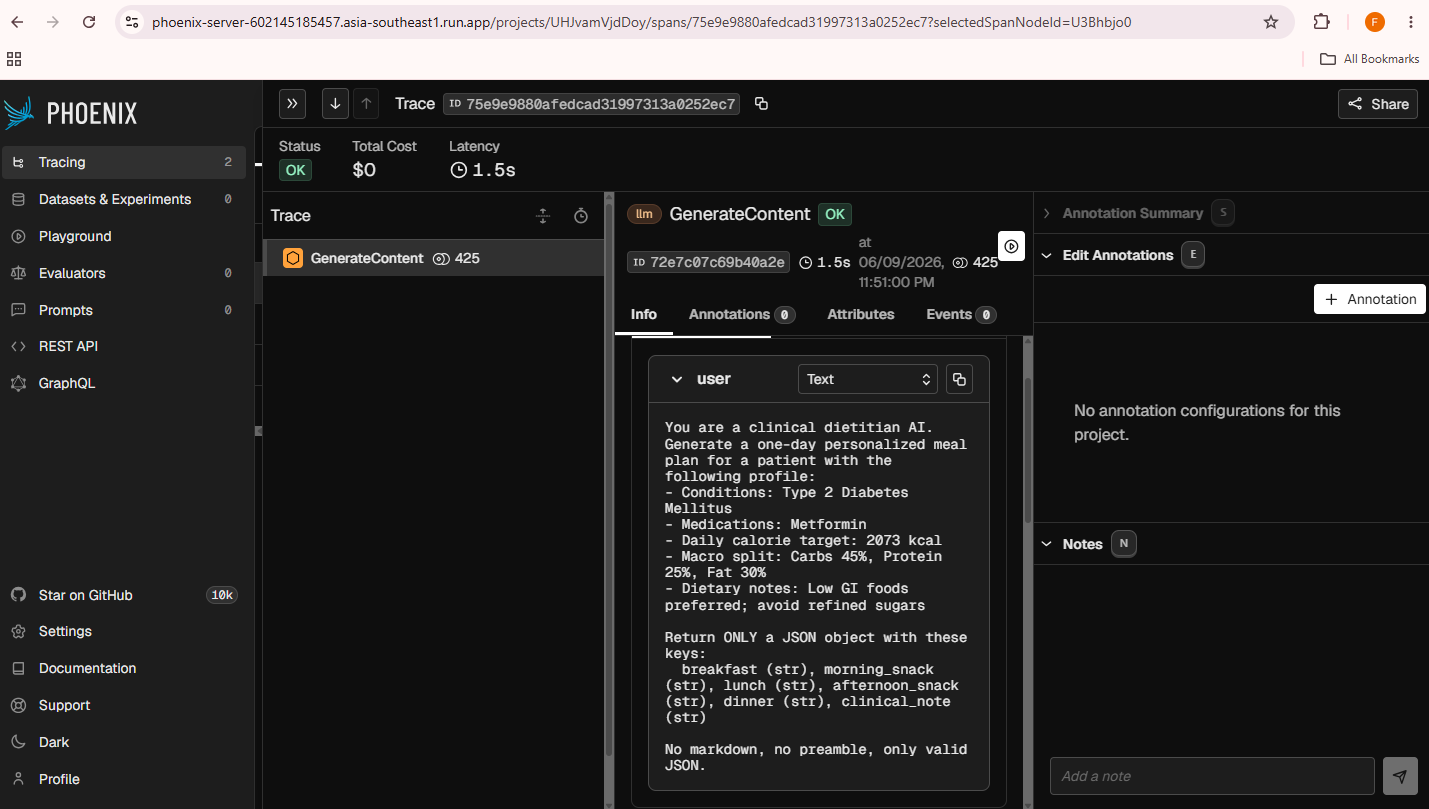
Every single Gemini API call across all 8 agents is automatically traced via OpenInference auto-instrumentation — zero manual span creation. Each trace captures:
- Input prompt
- Model response
- Latency
- Cost per call
What this gives me in production:
- I can see exactly which agent is slow
- I can see exactly what prompt produced a hallucinated response
- I can catch regressions before they reach patients
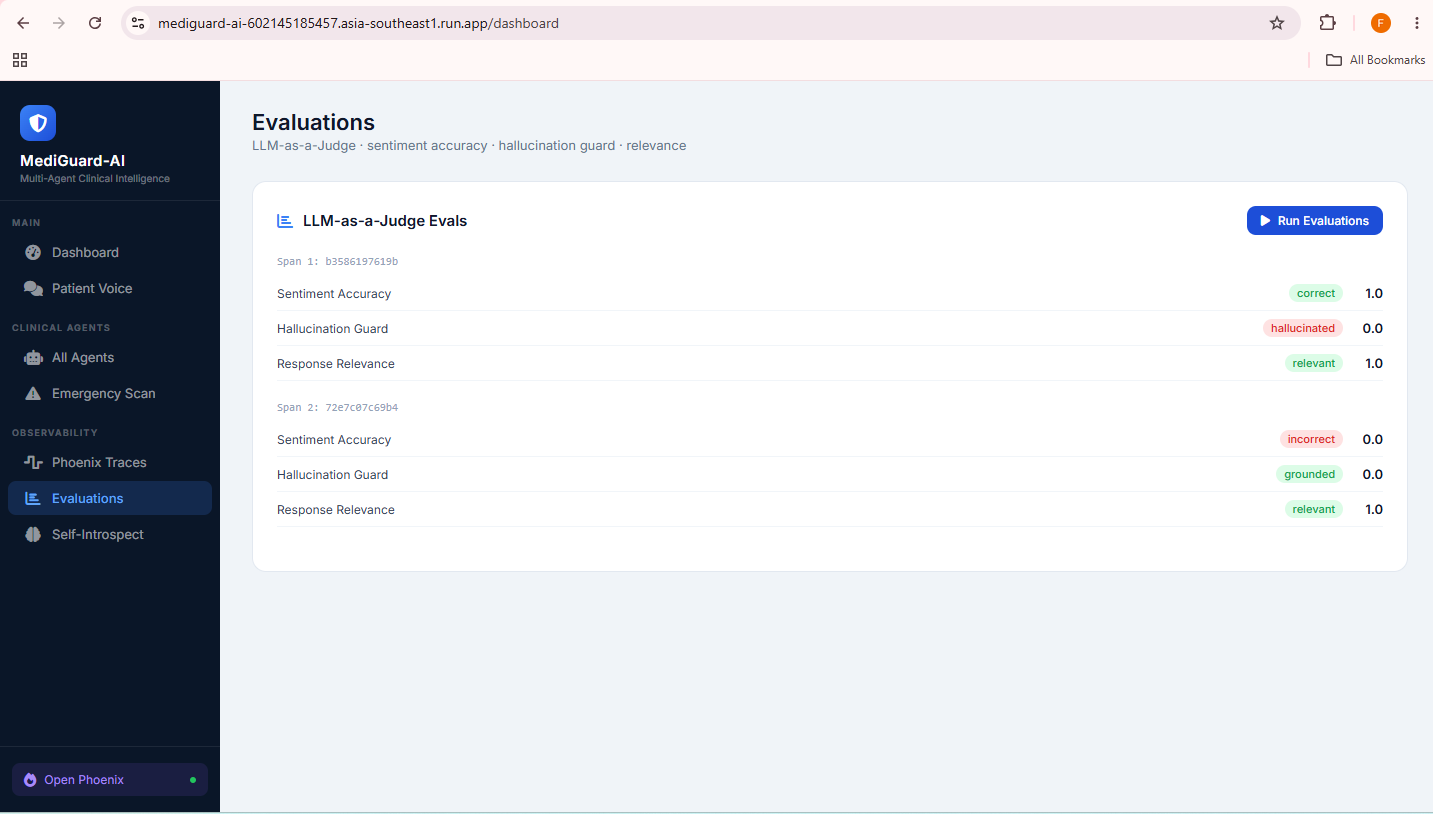
LLM-as-a-Judge Evaluations run automatically on every span — scoring:
- Sentiment Accuracy — is the label correct?
- Hallucination Guard — did the model fabricate facts?
- Response Relevance — is the answer on-topic?
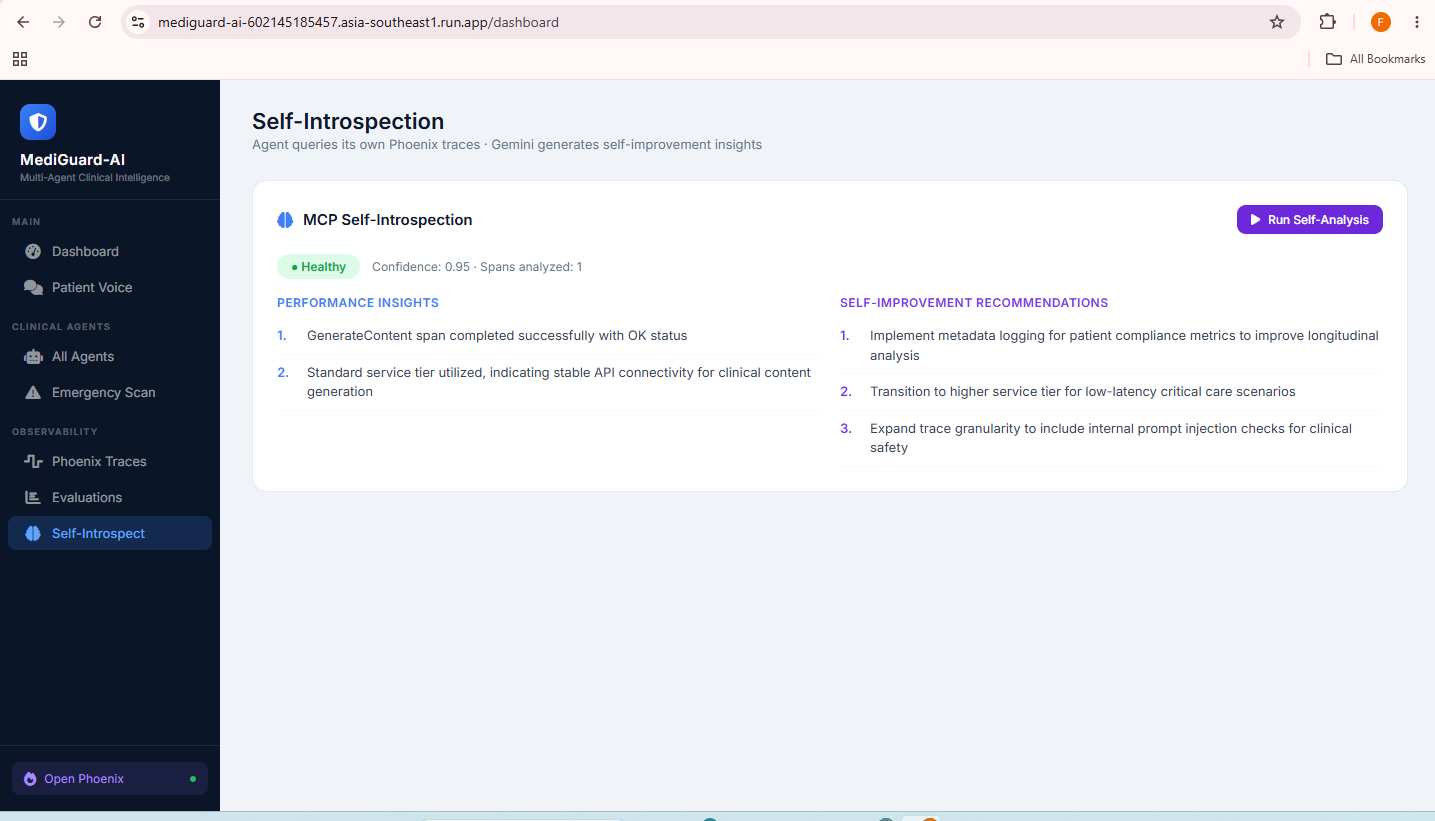
Self-Introspection Loop — MediGuard-AI queries its own Phoenix traces at runtime, feeds them to Gemini, and generates self-improvement recommendations. The system literally learns from its own mistakes.
In my live deployment: Eval Score 1.0, Confidence 0.95, $0 cost per call.
⚕️ Medical Disclaimer
MediGuard-AI is designed to assist qualified healthcare professionals — not replace them.
Every AI-generated output carries a mandatory disclaimer:
This report is for informational purposes only and does NOT constitute medical advice, diagnosis, or treatment recommendation. ALL output MUST be reviewed and approved by a licensed medical practitioner before any clinical application.
The system is a decision support tool. The doctor checks, approves, and attests every recommendation. MediGuard-AI saves the doctor time — the doctor saves the patient's life.
🧠 What I Learned
- Observability is not optional in medical AI — it is the difference between a demo and a deployable system
- Biometric privacy requires irreversible hashing at the architecture level — not as an afterthought
- The real problem in Pakistani healthcare is not lack of knowledge — it is lack of connected, real-time information at point of care
- LLM-as-a-Judge is powerful but requires careful calibration — hallucination scoring needs domain-specific rubrics for clinical text
⚙️ How I Built It
- Gemini 3.1 Flash Lite — all agent reasoning, evidence synthesis, self-introspection
- FastAPI — agent orchestration layer
- Google Cloud Run — live deployment, asia-southeast1
- Arize Phoenix MCP — self-hosted observability server on Cloud Run
- OpenInference — auto-instrumentation for all Gemini calls
- HL7 FHIR R4 — patient resource creation in Intake Agent
- HIPAA §164.512 + PDPA Section 17 — emergency data access compliance
- SQLite (demo) → Cloud SQL (production roadmap)
🏆 Built With
Gemini 3.1 Flash Lite Arize Phoenix MCP OpenInference Google Cloud Run FastAPI Python 3.11 HL7 FHIR R4 HIPAA SQLite Docker

Log in or sign up for Devpost to join the conversation.