-
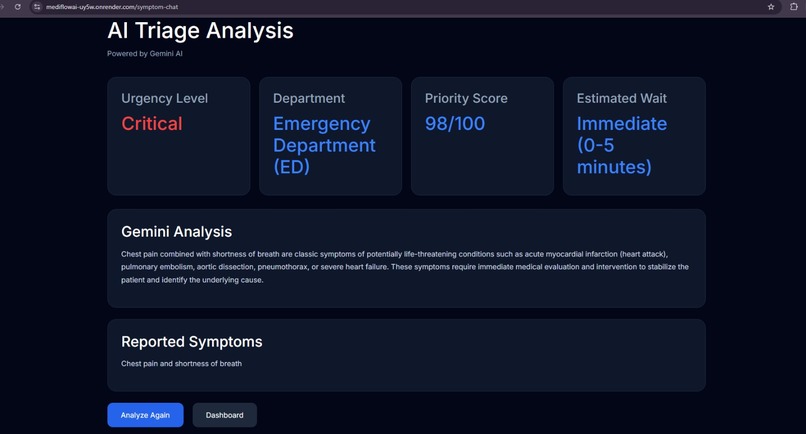
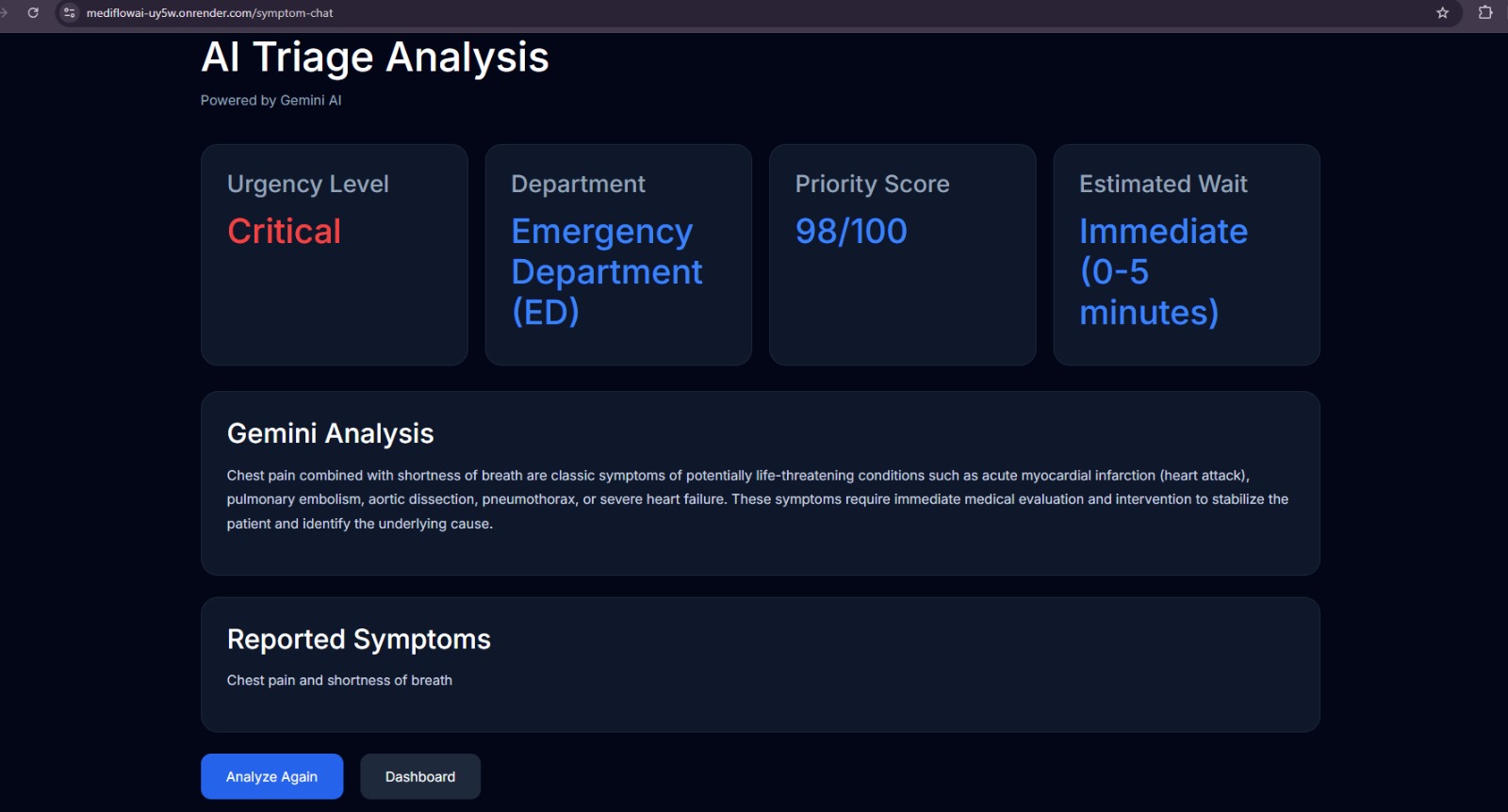
Ai triage analysis
-
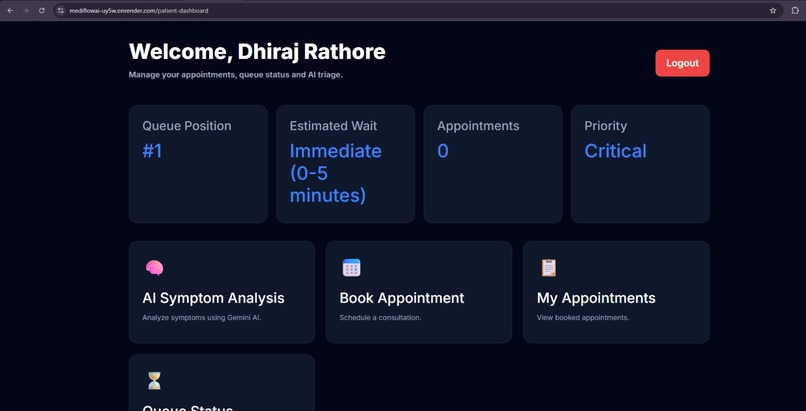
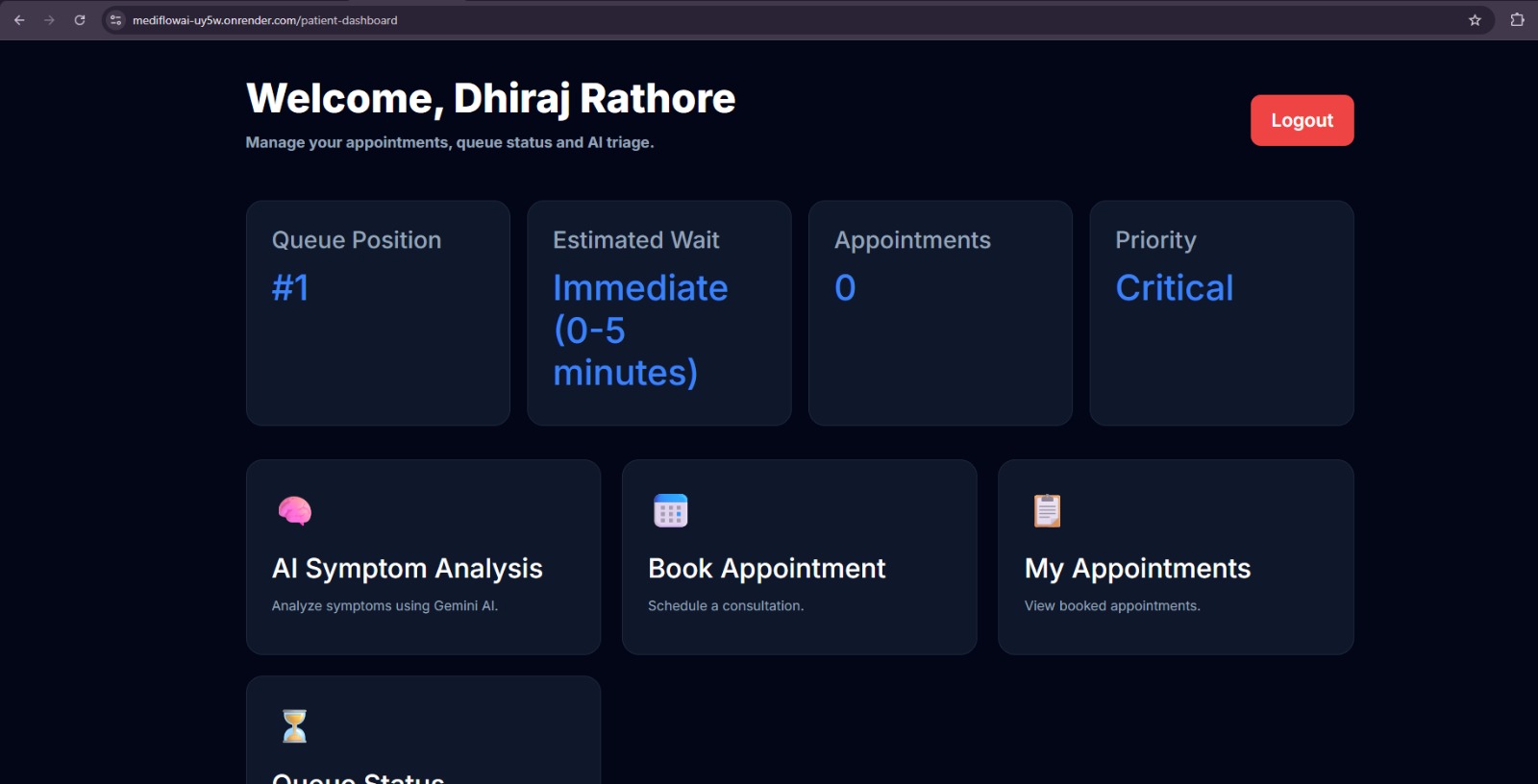
dashboard
-
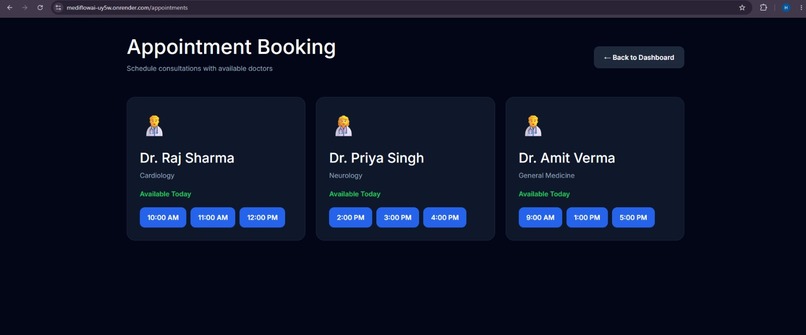
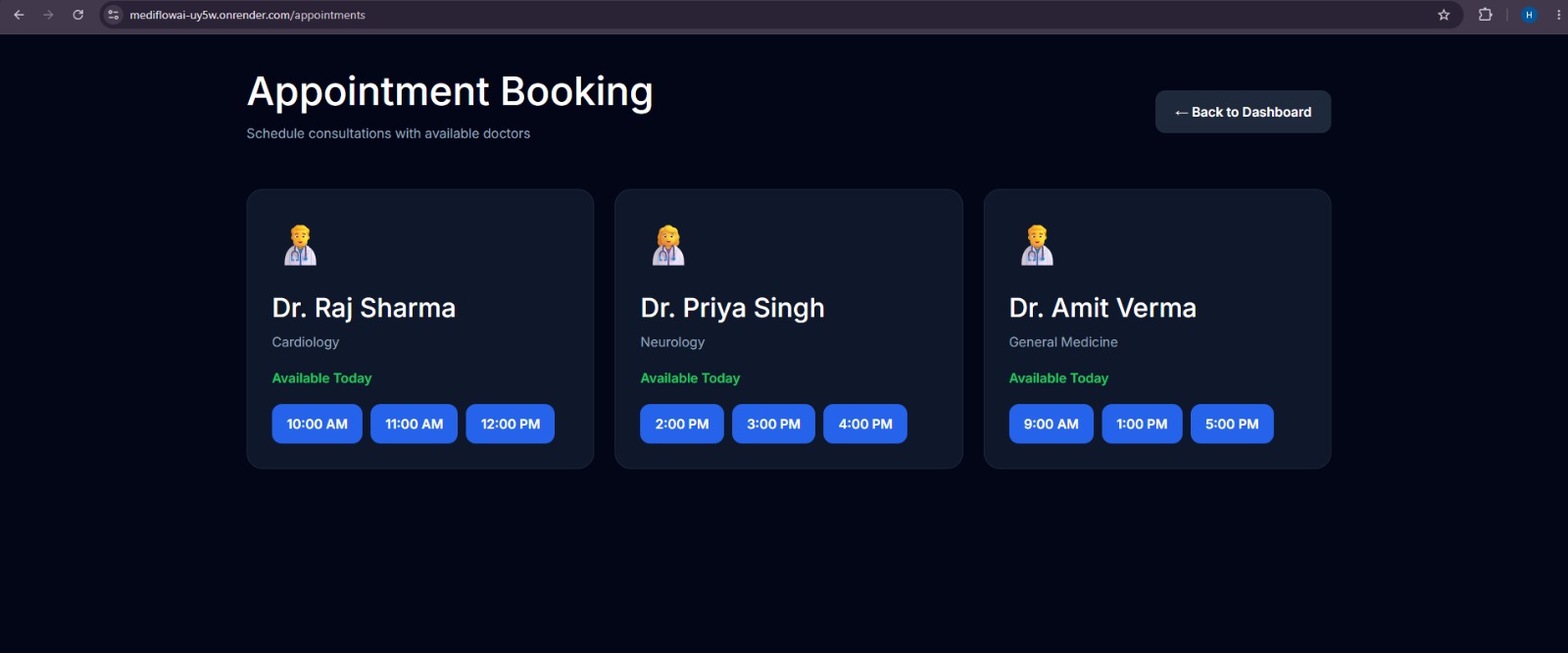
book appointement
-
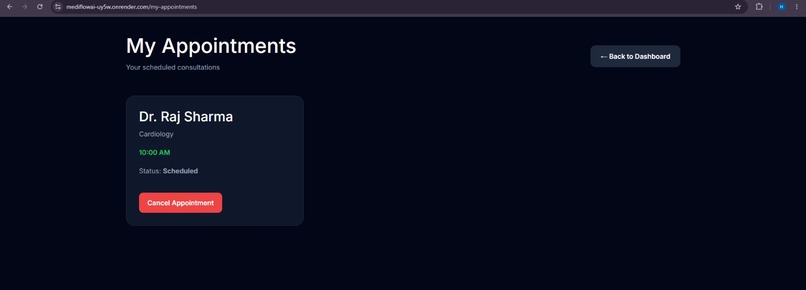
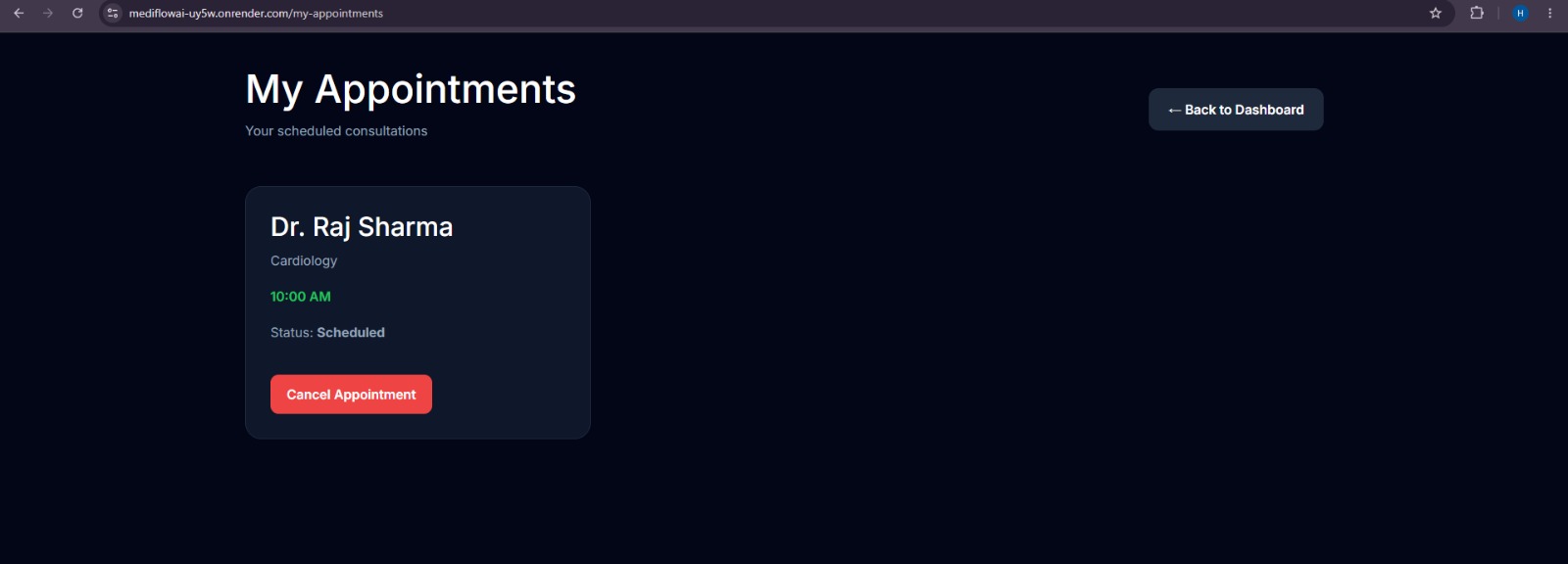
after appointement you can look those
-
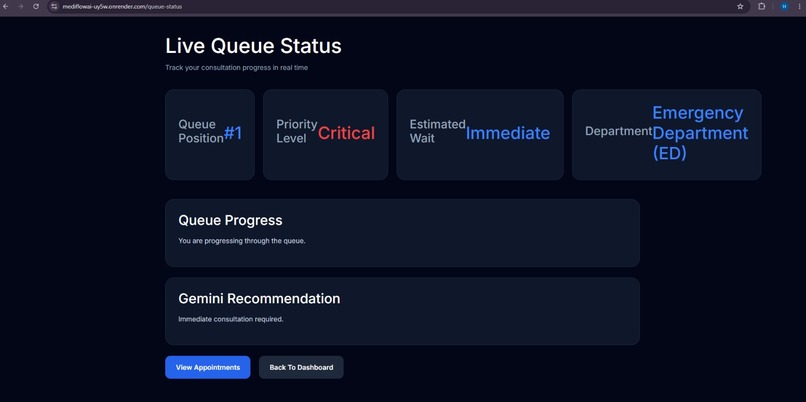
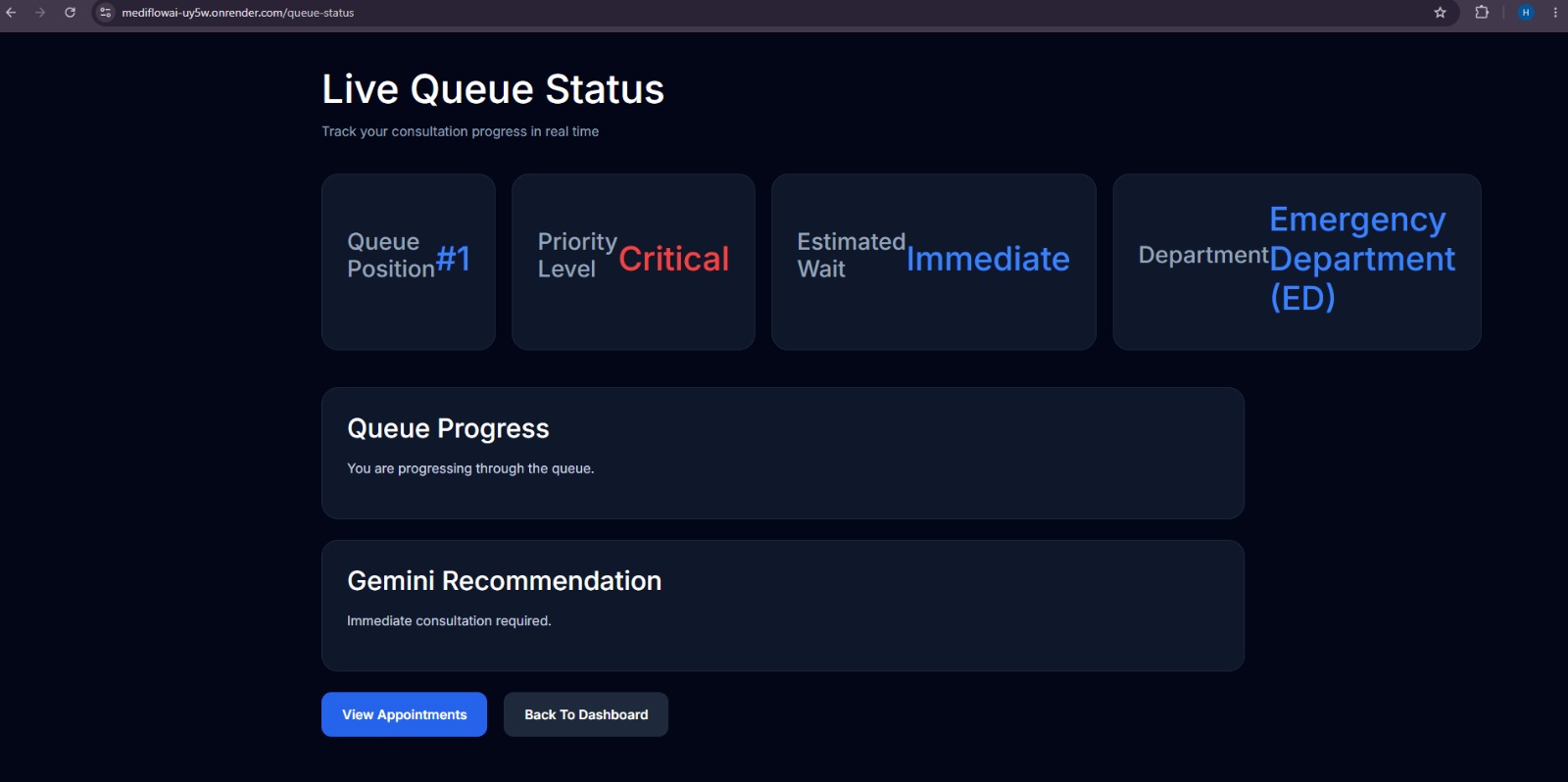
view your queue position
-
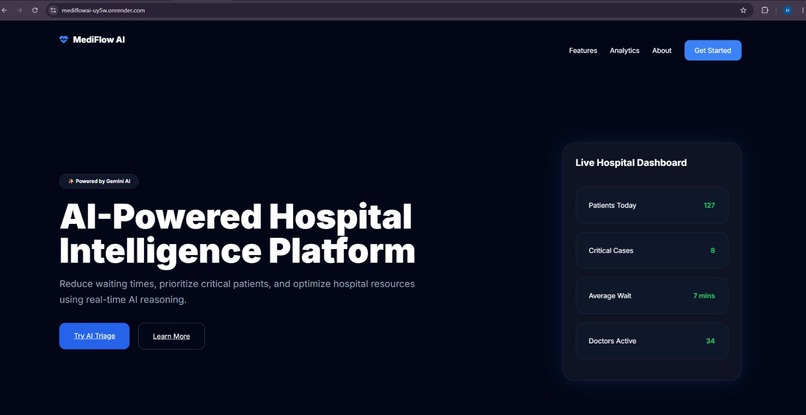
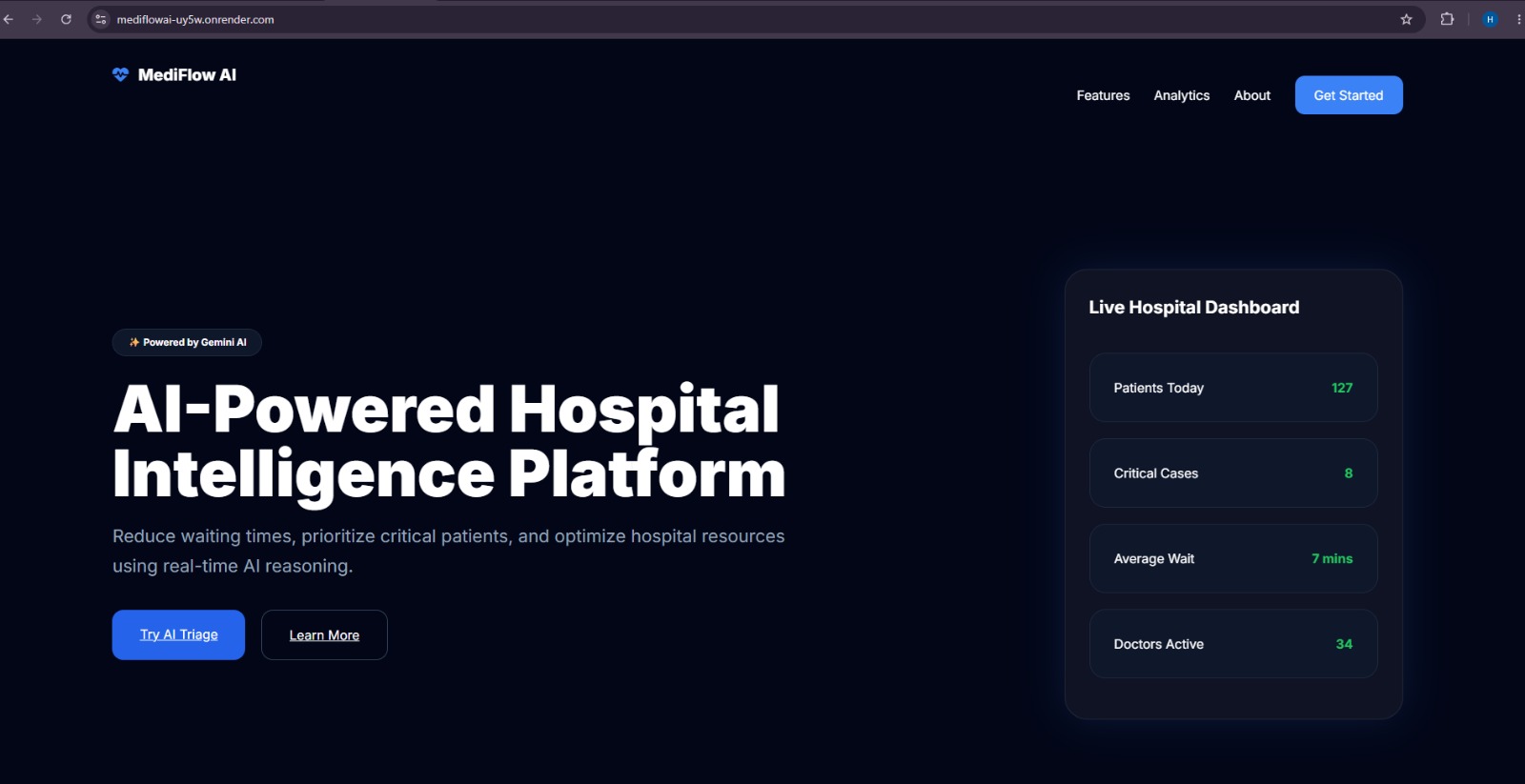
main page
-
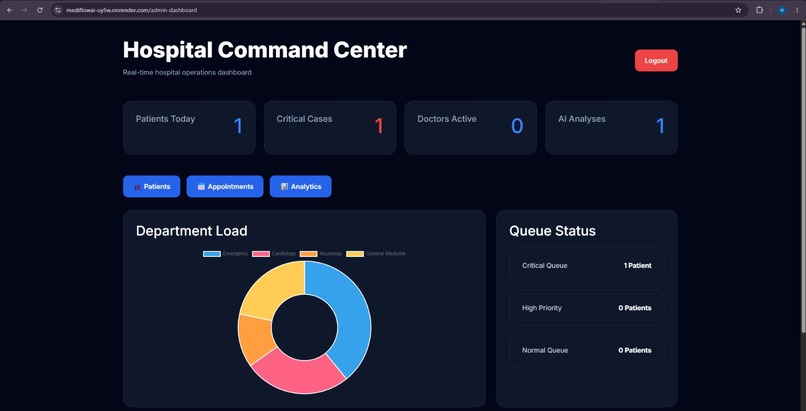
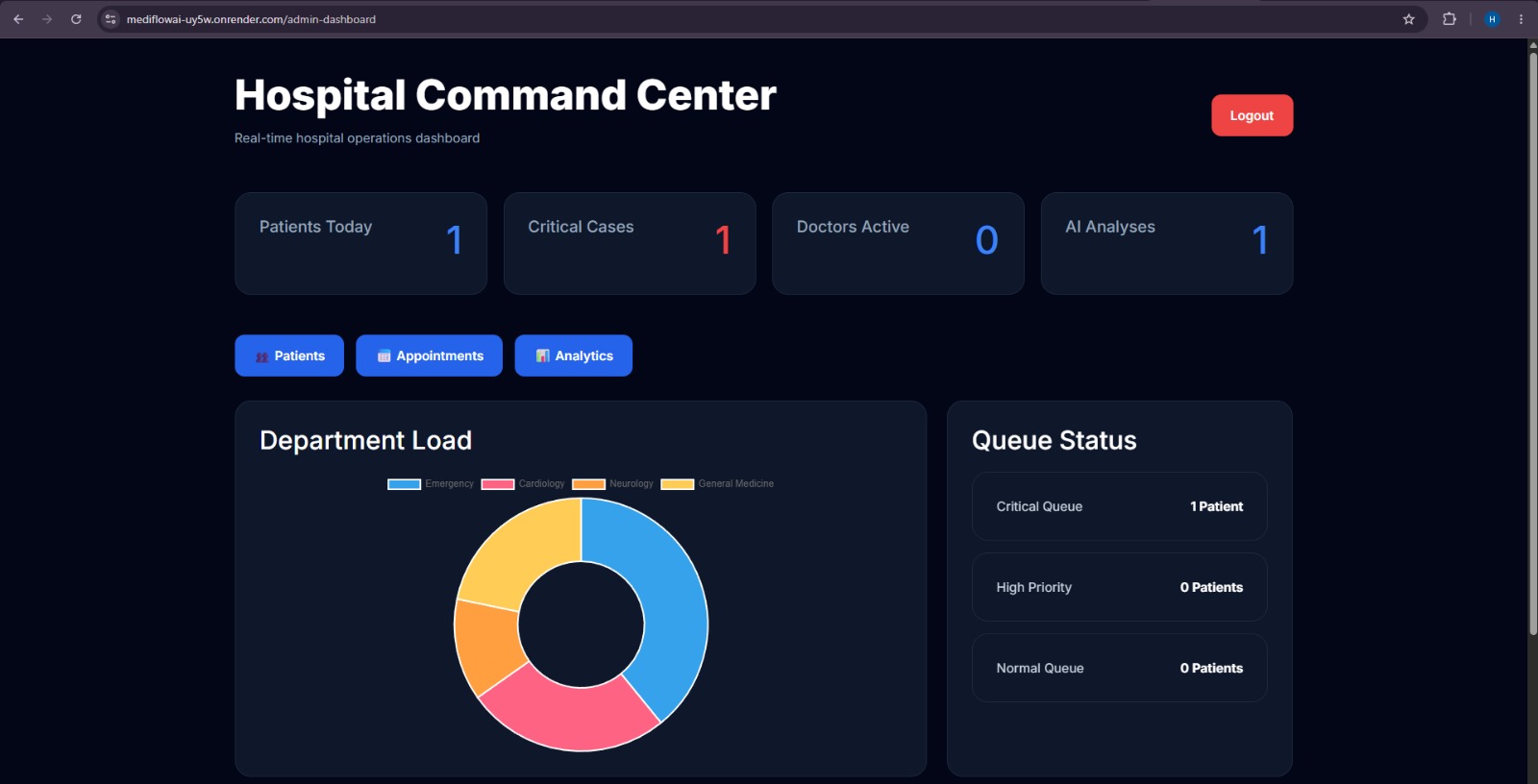
admin dashboard for hospital
Inspiration
What it does
How we built it
Challenges we ran into
Accomplishments that we're proud of
What we learned
What's next for mediFlow AI# MediFlow AI – Project Story
Inspiration
Healthcare systems often face challenges such as long waiting times, inefficient patient prioritization, and delayed access to medical care. During our research, we observed that hospitals typically rely on manual triage processes, which can become overwhelmed during peak hours and emergency situations.
We wanted to build a solution that could assist both patients and hospitals by using Artificial Intelligence to analyze symptoms, identify critical cases early, and streamline patient flow. This led to the development of MediFlow AI, an AI-powered hospital intelligence platform designed to improve triage efficiency and healthcare resource management.
What We Built
MediFlow AI is a full-stack web application that combines AI-driven symptom analysis with hospital management features.
Key functionalities include:
- AI-powered symptom assessment using Google Gemini API
- Priority classification (Critical, High, Medium, Low)
- Automated department recommendations
- Estimated wait-time prediction
- Real-time queue monitoring
- Appointment booking and cancellation
- Patient dashboard for tracking consultations
- Hospital administration dashboard
- Analytics and operational insights
The platform enables hospitals to identify urgent cases faster while providing patients with immediate guidance before meeting a doctor.
How We Built It
Frontend
- HTML5
- CSS3
- JavaScript
- Chart.js
Backend
- Flask (Python)
- Jinja2 Templates
Database
- SQLite
Artificial Intelligence
- Google Gemini API
Security
- bcrypt password hashing
Deployment
- GitHub
- Render Cloud Platform
Workflow
- A patient enters symptoms into the AI Triage system.
- Flask sends the symptom description to the Gemini API.
- Gemini analyzes the symptoms and returns:
- Priority Level
- Recommended Department
- Estimated Wait Time
- Medical Recommendation
- Results are stored in the database.
- Patients can view recommendations, queue status, and appointments.
- Hospital administrators can monitor patient loads and operational metrics through the dashboard.
Challenges We Faced
1. AI Prompt Engineering
One of the biggest challenges was designing prompts that consistently returned structured and reliable medical recommendations from Gemini. We iteratively refined prompts to ensure predictable outputs suitable for hospital workflows.
2. Database Initialization on Deployment
While deploying to Render, the application initially failed because database tables were not automatically created. Since Render uses Gunicorn instead of running the Flask application directly, our database initialization code was not executing. We resolved this by moving database initialization outside the main execution block.
3. Public Cloud Deployment
Deploying a local SQLite-based Flask application to a public cloud environment introduced several challenges involving environment variables, dependency management, and startup configuration. We successfully configured Render deployment and integrated secure API key management.
4. Dashboard Integration
Creating a seamless flow between patient-facing modules and hospital-facing analytics required careful database design and route management to ensure data consistency across all components.
What We Learned
Through this project we gained practical experience in:
- Full-stack web application development
- AI integration using Google Gemini API
- Prompt engineering
- Flask backend development
- Database management with SQLite
- User authentication and security
- Cloud deployment using Render
- Real-time healthcare workflow design
- Dashboard and analytics development
Most importantly, we learned how Artificial Intelligence can be used responsibly to assist healthcare professionals by improving efficiency, prioritization, and decision-making.
Future Enhancements
- Real-time doctor availability management
- AI-powered hospital resource allocation
- Predictive patient volume forecasting
- Multi-hospital integration
- Electronic Health Record (EHR) support
- Mobile application deployment
- Advanced administrative AI recommendations
Impact
MediFlow AI demonstrates how AI can help hospitals reduce waiting times, improve patient prioritization, and optimize healthcare operations. By combining intelligent triage with hospital analytics, the platform provides a foundation for smarter and more efficient healthcare delivery.
Built With
- analysis
- analytics
- api
- appointments
- artificial
- authentication
- bcrypt
- chart.js
- classification
- client-side
- cloud
- code
- collaboration
- consultation
- continuous
- control
- dashboard
- data
- database
- department
- deployment
- environment
- estimation
- from
- gemini
- git
- github
- google-generativeai
- handling
- hashing
- hosting
- integration
- intelligence
- interactive
- interactivity.
- libraries
- management
- manipulation
- medical
- numerical
- numpy
- pandas
- password
- patients
- platform
- priority
- processing
- python-dotenv
- recommendation
- relational
- render
- repository
- request
- results
- secure
- security
- source
- sqlite
- storing:
- suggestions
- symptom
- triage
- user
- users
- utilities
- variable
- version
- visualizations.
- wait-time
- werkzeug

Log in or sign up for Devpost to join the conversation.