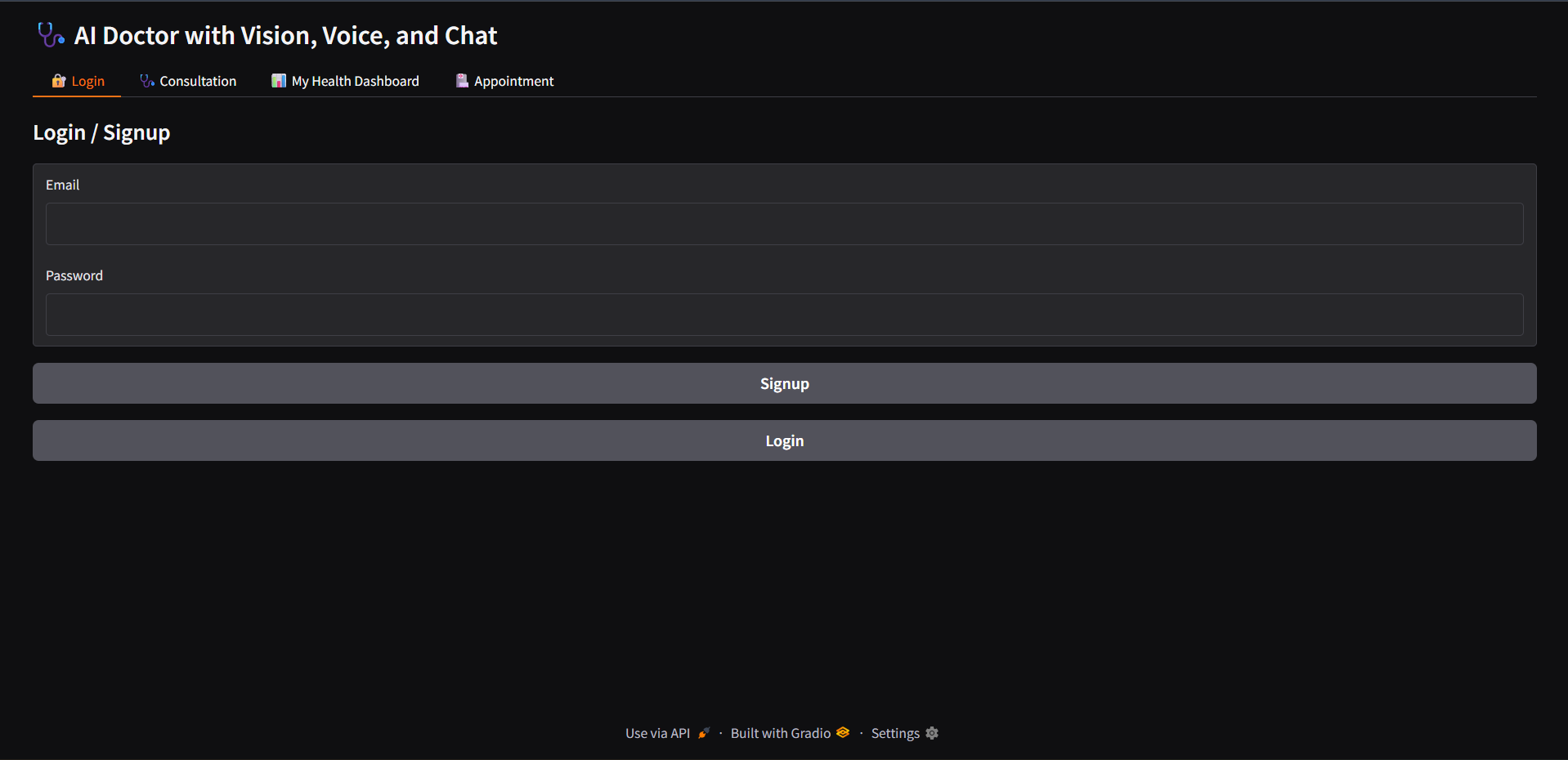
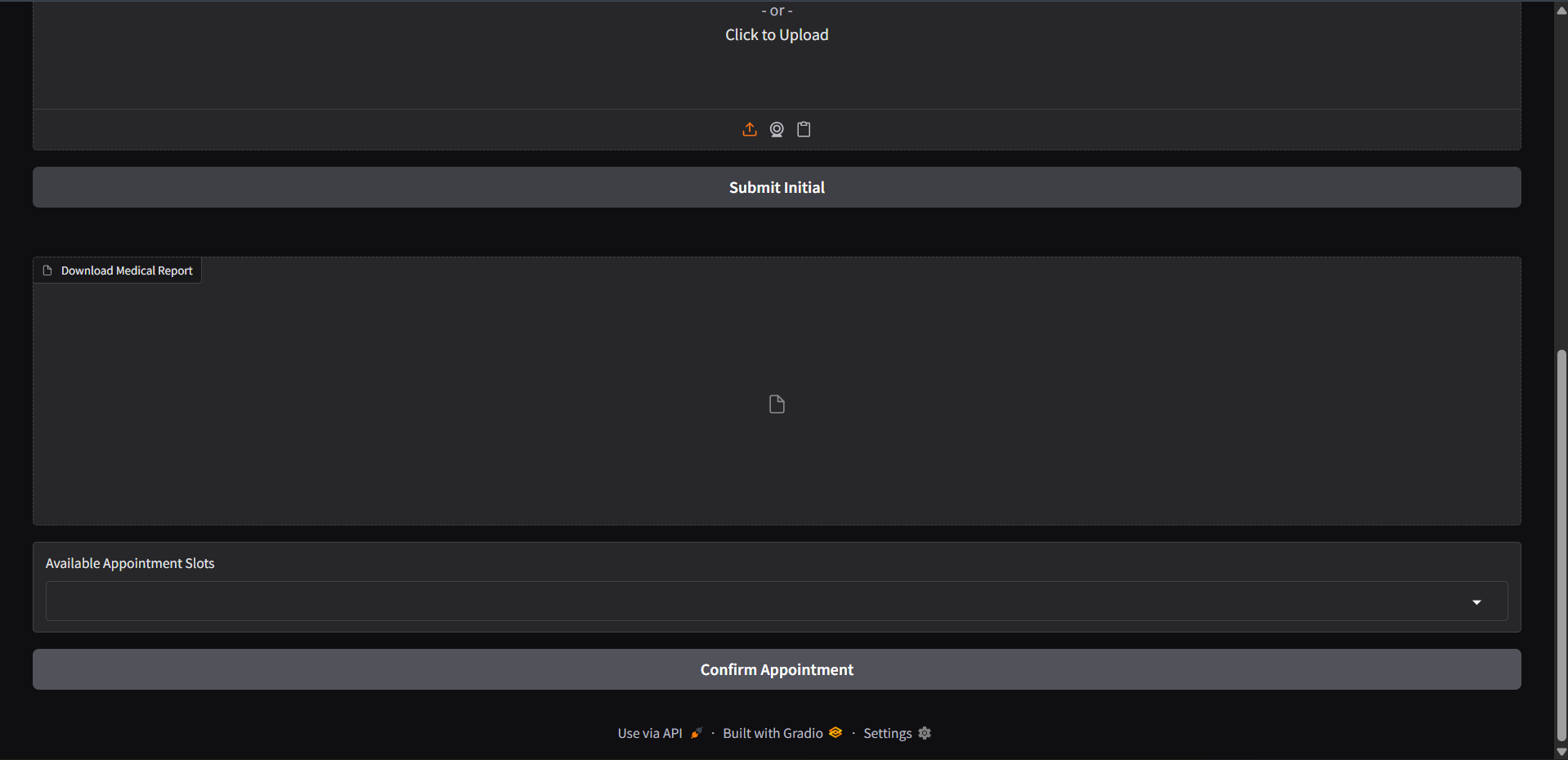
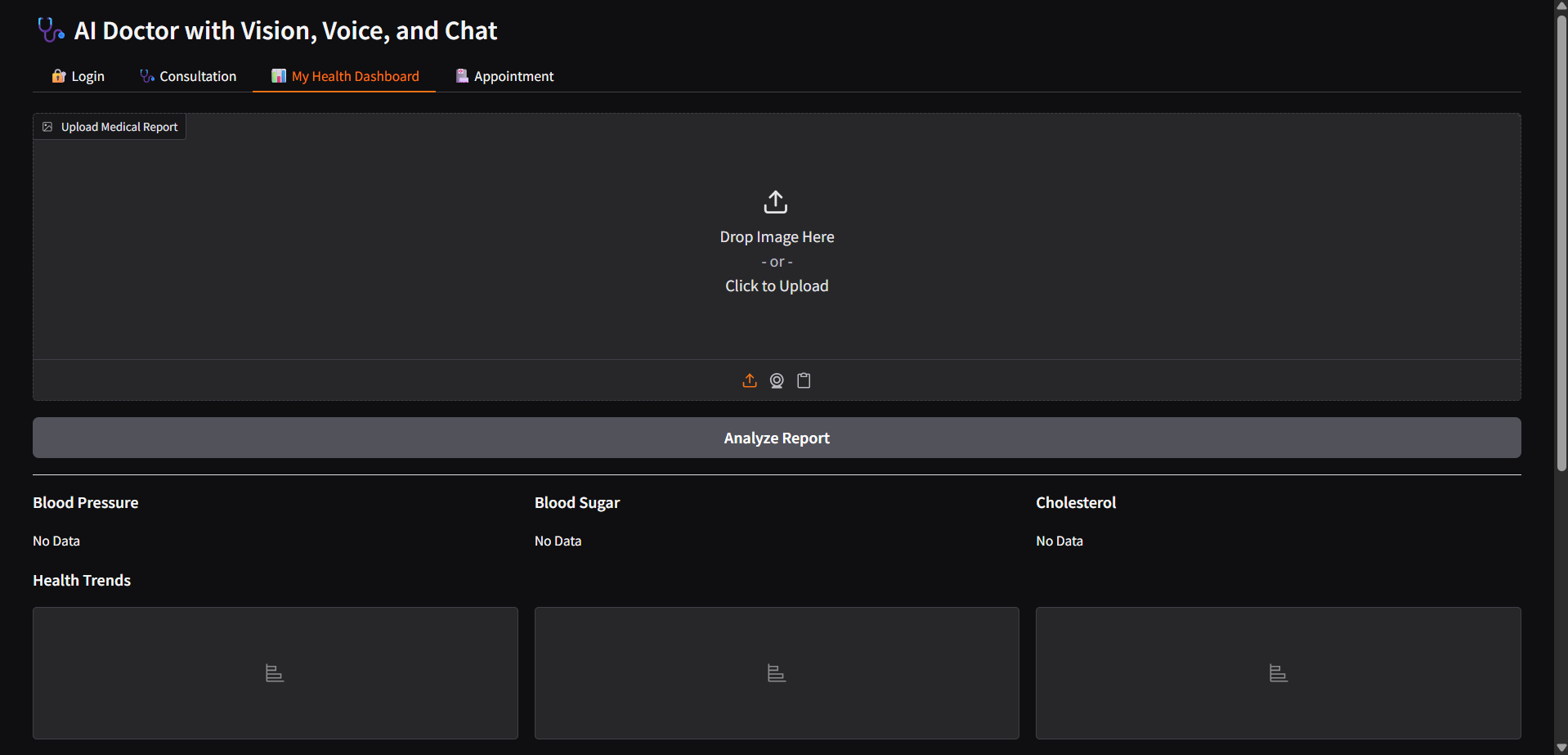
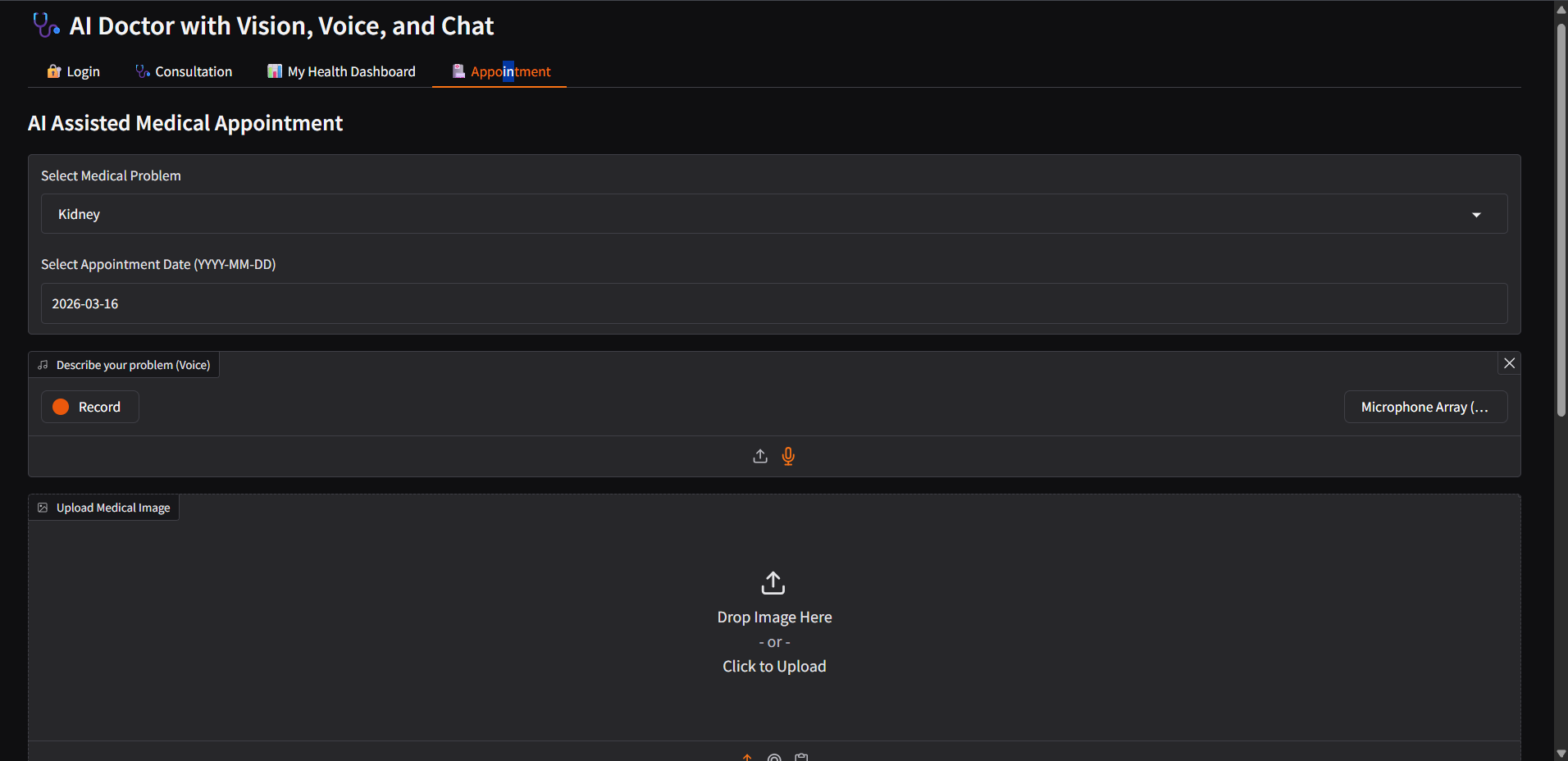
Inspiration
Access to timely and quality healthcare is still a major challenge, especially in rural and high-demand environments. Patients often face delays in diagnosis, language barriers, and inefficient appointment systems.
We wanted to build a solution that reduces response time, improves accessibility, and assists both patients and doctors using AI. This led to the creation of an intelligent, multimodal healthcare assistant.
What it does
MediFlow AI is a real-time AI-powered healthcare system that:
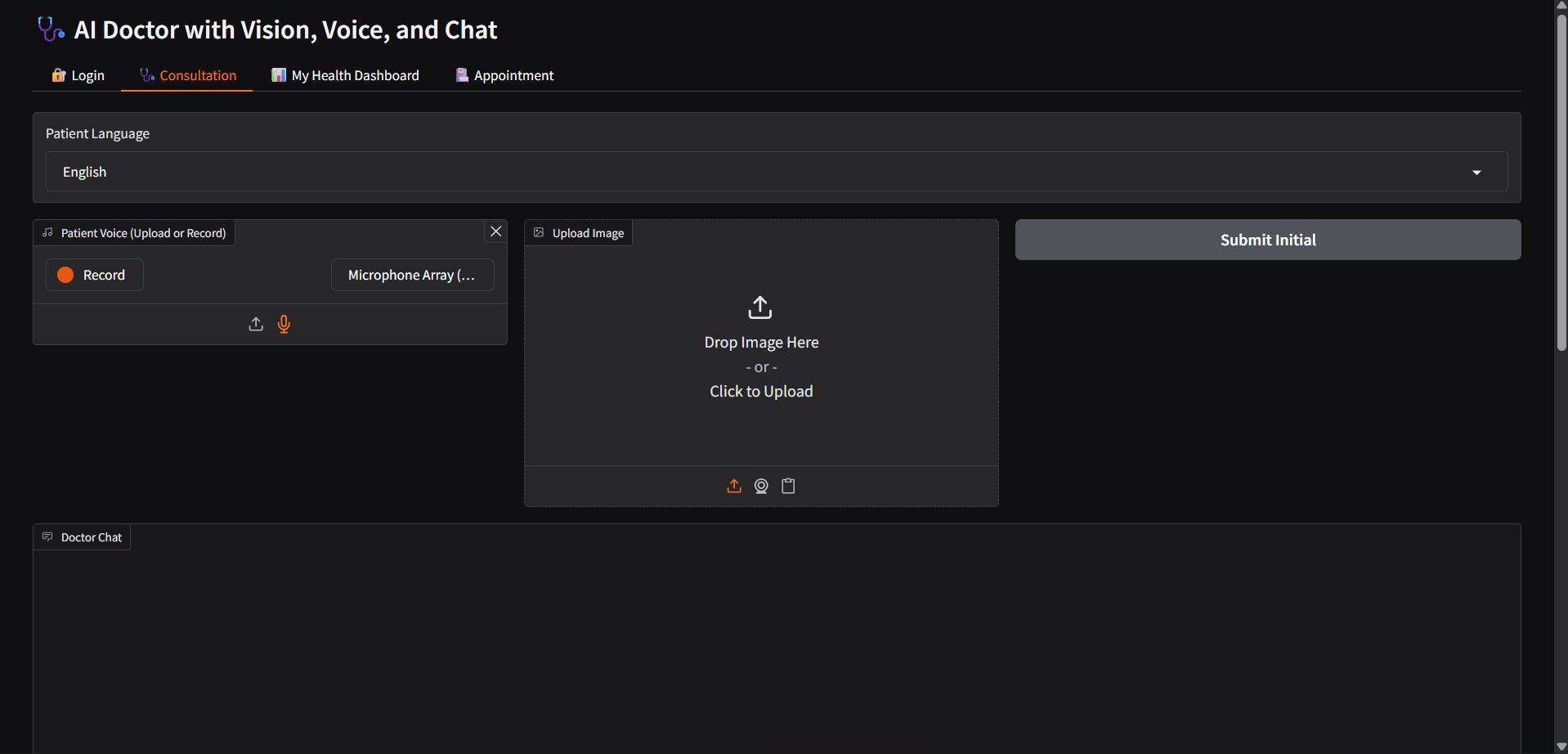
- 🧠 Performs multimodal diagnosis using voice, images, and text
- 🌍 Supports multilingual interaction for wider accessibility
- 🖼️ Analyzes medical images (X-ray, MRI, etc.) for disease prediction
-📚 Integrated World Health Organization (WHO) health guidelines for reliable and standardized medical recommendations
-💊 Provides AI-assisted medication suggestions based on symptoms and diagnosis (aligned with safety guidelines)
🧬 Deep Learning Models
- 🦴 Detects fractures from X-ray images , 🫁 Detects pneumonia from chest scans , 🧫 Detects kidney disease from medical imaging , 🧠 Detects brain tumors and classifies tumor types ,
⚙️ System Features
- 📄 Generates structured AI-based medical reports
- 🚨 Detects severity levels and prioritizes emergency cases
- 📅 Suggests and enables smart appointment booking
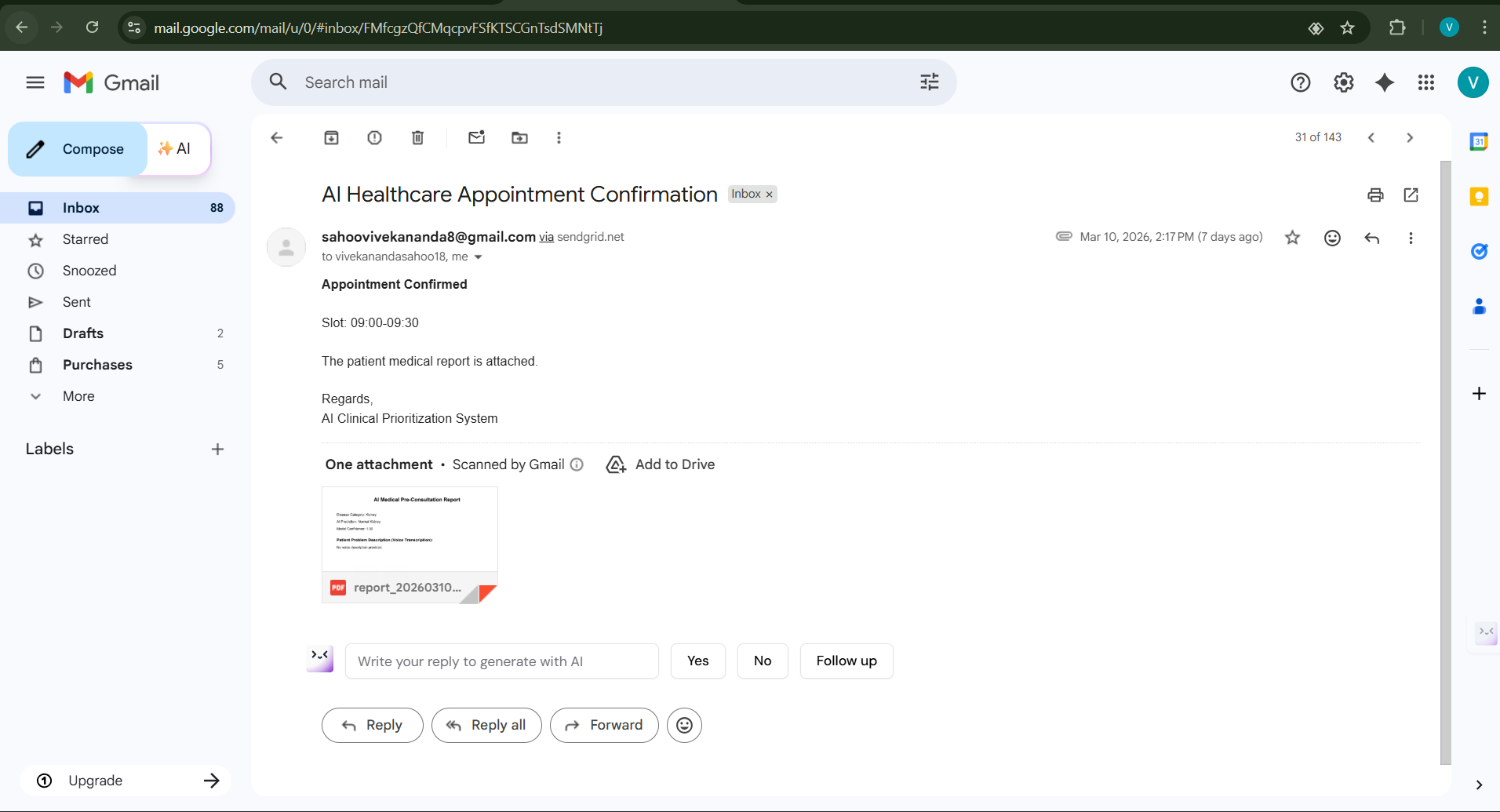
- 📧 Sends reports and timings to both patients and doctors automatically via email
👉 The system creates a complete workflow from diagnosis → report → appointment → communication.
How we built it
We designed a scalable multimodal AI pipeline:
Input (Voice/Image/Text)
⬇️
AI Processing & Reasoning
⬇️
Diagnosis + Report Generation
⬇️
Appointment + Notification System
⚙️ Technologies used:
- 🤖 LLMs (Groq LLaMA) for medical reasoning
-🔎 RAG for context-based responses
-🗂️ FAISS for fast vector search
- 🧠 TensorFlow/Keras for image classification
- 🎤 Whisper (Speech-to-Text)
- 🔊 ElevenLabs (Text-to-Speech)
- 🌐 Gradio for UI
- 🗄️ SQLite + SQLAlchemy for backend
- ☁️ Docker + DigitalOcean for deployment
- 📧 SendGrid for email automation
Challenges we ran into
- 🔄 Integrating multiple AI modalities into a single pipeline
- ⏱️ Managing real-time performance and response latency
- 🌍 Handling multilingual inputs and outputs accurately
- 🎨 Designing an intuitive UI for non-technical users
- 🔗 Connecting diagnosis with real-time appointment flow
Accomplishments that we're proud of
- ✅ Built a complete end-to-end working prototype
- 🤖 Successfully integrated multimodal AI (voice + image + text)
- 🌍 Enabled accessibility for non-English and rural users
- ⚡ Achieved real-time interaction with smooth workflow
- 🏥 Created a system with strong real-world healthcare relevance
What we learned
- 🧠 How to combine multiple AI systems into a unified architecture
- ⚙️ Real-world challenges of deploying AI applications
- 🎯 Importance of usability and accessibility in healthcare
- 🚀 Designing scalable and impactful AI solutions
What's next for MediFlow AI — Octoverse Edition
- 🏥 Integration with real hospital systems
- 📱 Mobile app development for wider reach
- 🧠 Improved diagnosis accuracy with advanced models
- ⌚ Integration with wearable health devices (IoT)
- 🌍 Expansion for large-scale healthcare deployment
🌍 Impact
- 🚑 Reduces delay in medical response and diagnosis
- 🌍 Improves healthcare accessibility in underserved areas
- 🧠 Assists doctors with AI-powered pre-diagnosis
- 📊 Enables efficient patient prioritization and workflow
👉 MediFlow AI aims to bridge the gap between patients and healthcare systems using intelligent automation.
Built With
- digitalocean-(droplets-&-spaces)
- docker
- elevenlabs-(text-to-speech)
- faiss
- gradio
- groq-(llama)
- keras
- openai-embeddings
- python
- sendgrid
- sqlalchemy
- sqlite
- tensorflow
- whisper-(speech-to-text)

Log in or sign up for Devpost to join the conversation.