🏥 MediFlow AI – Intelligent OPD Copilot
Inspiration
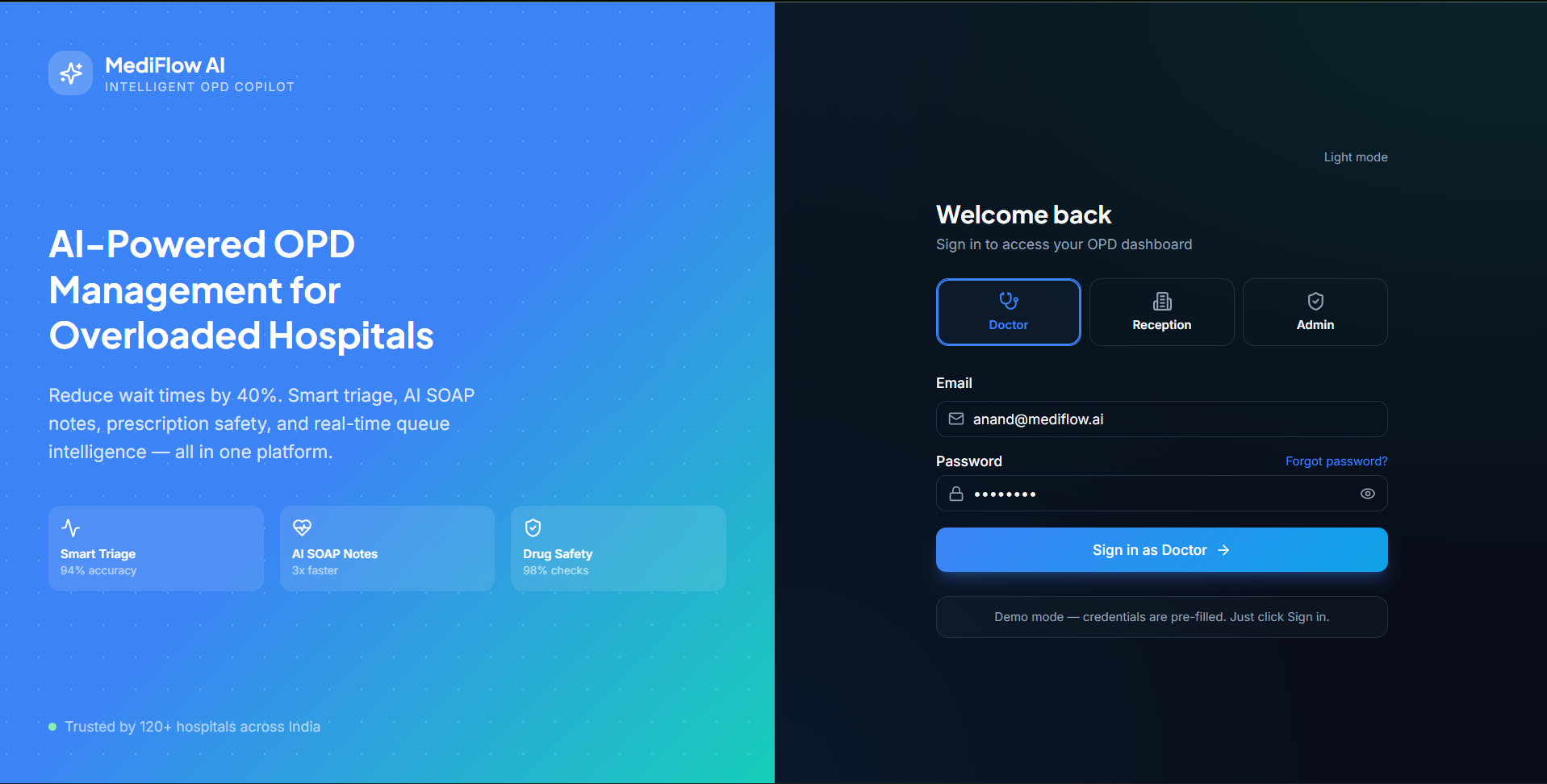
Healthcare systems, especially government hospitals and primary healthcare centers, often struggle with overcrowded Outpatient Departments (OPDs). Doctors may consult more than 100 patients a day, leading to long waiting times, repetitive documentation, delayed identification of critical patients, and increased clinician burnout. We wanted to explore how Artificial Intelligence could improve hospital workflows without replacing doctors. This inspired us to build MediFlow AI, an AI-powered OPD Copilot that assists healthcare professionals by automating administrative tasks, prioritizing urgent cases, and providing real-time operational insights.
What It Does
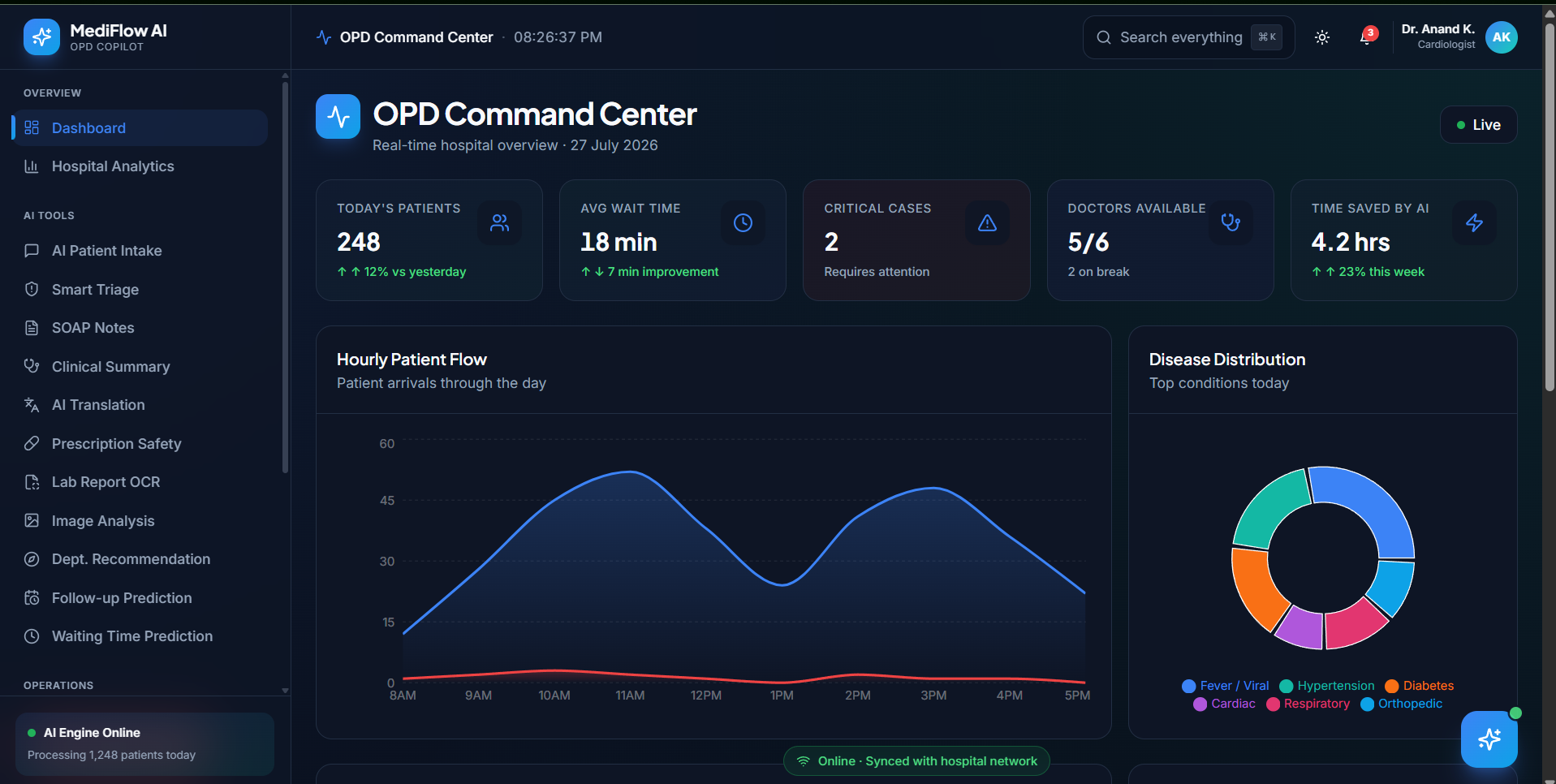
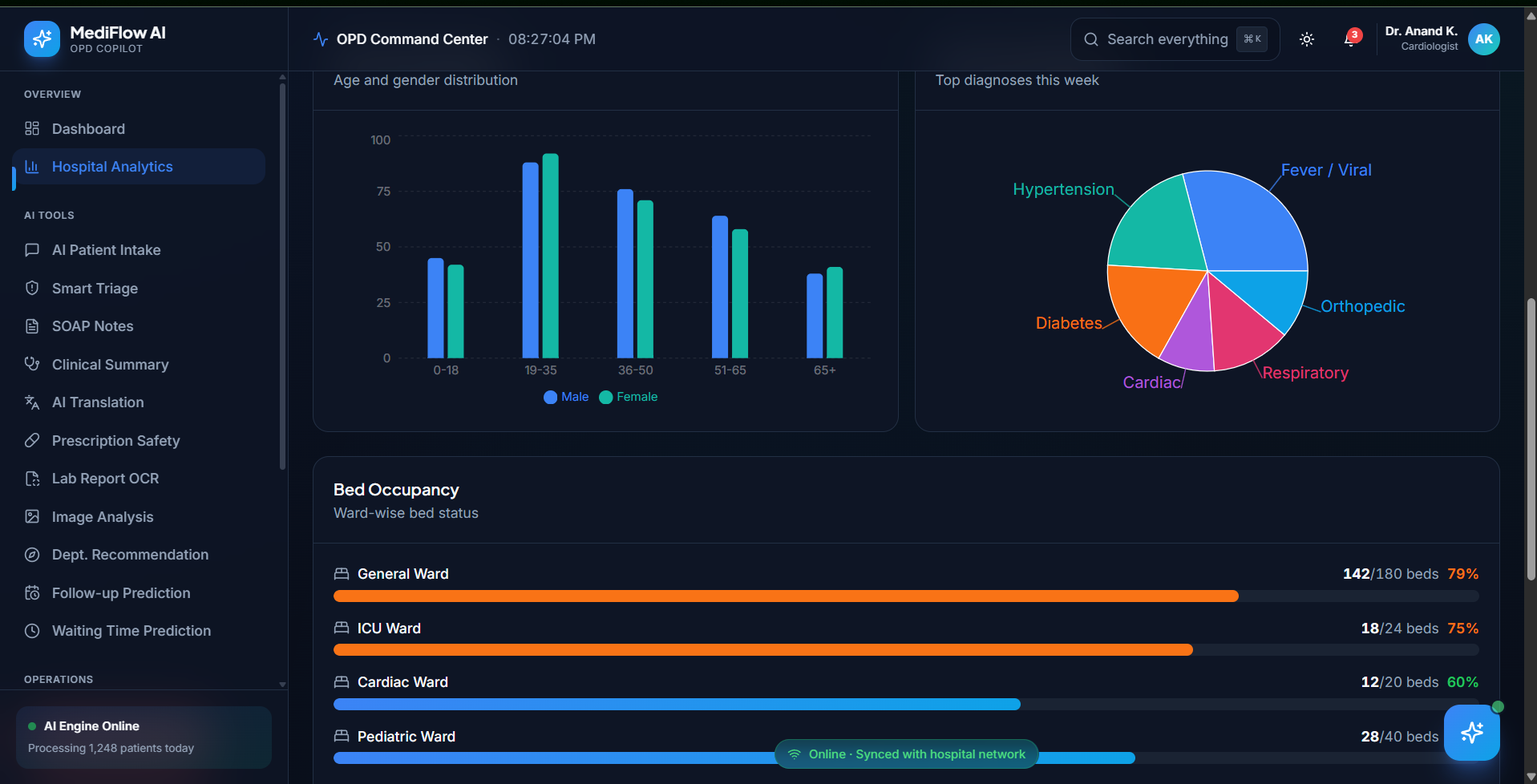
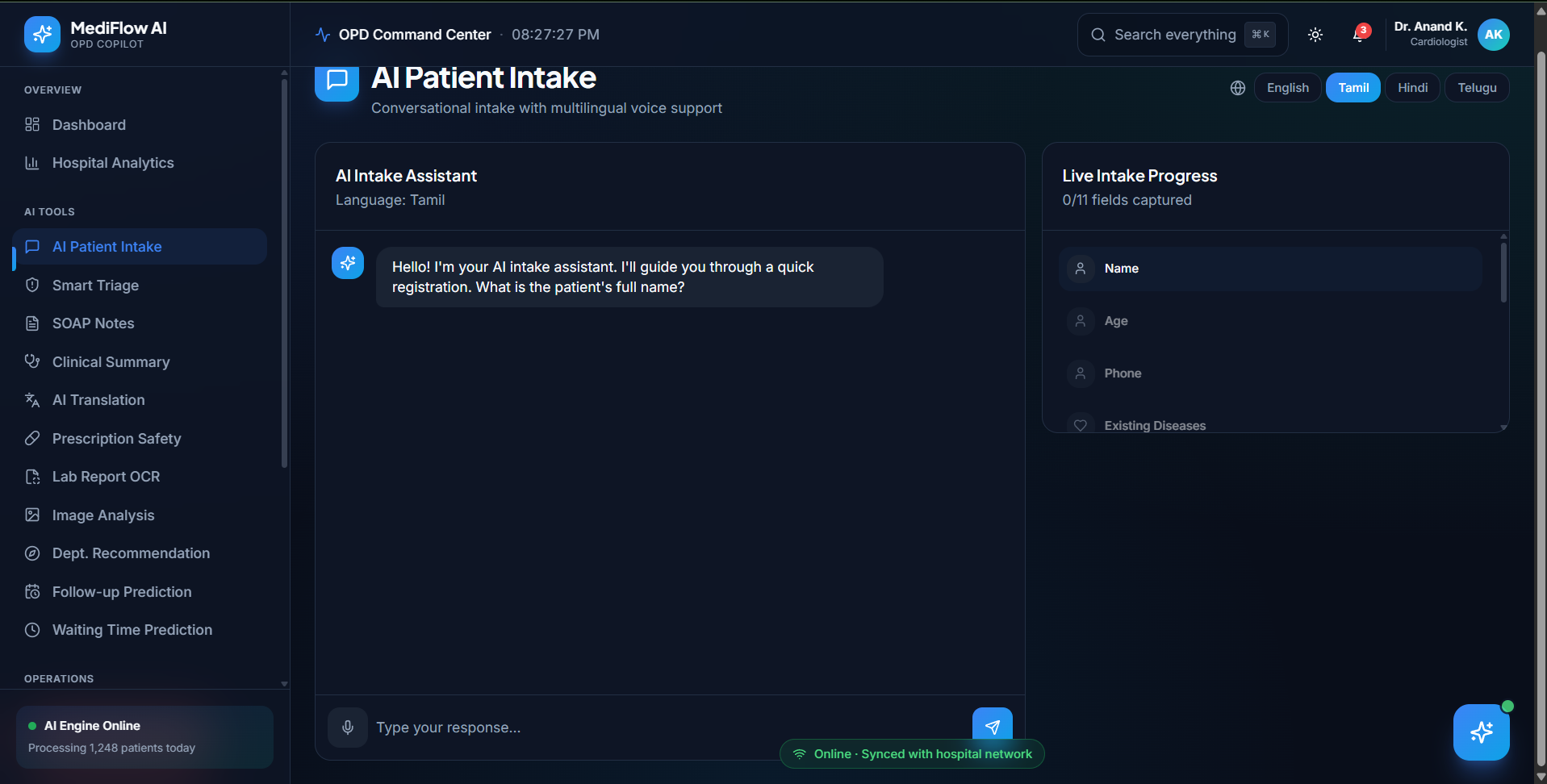
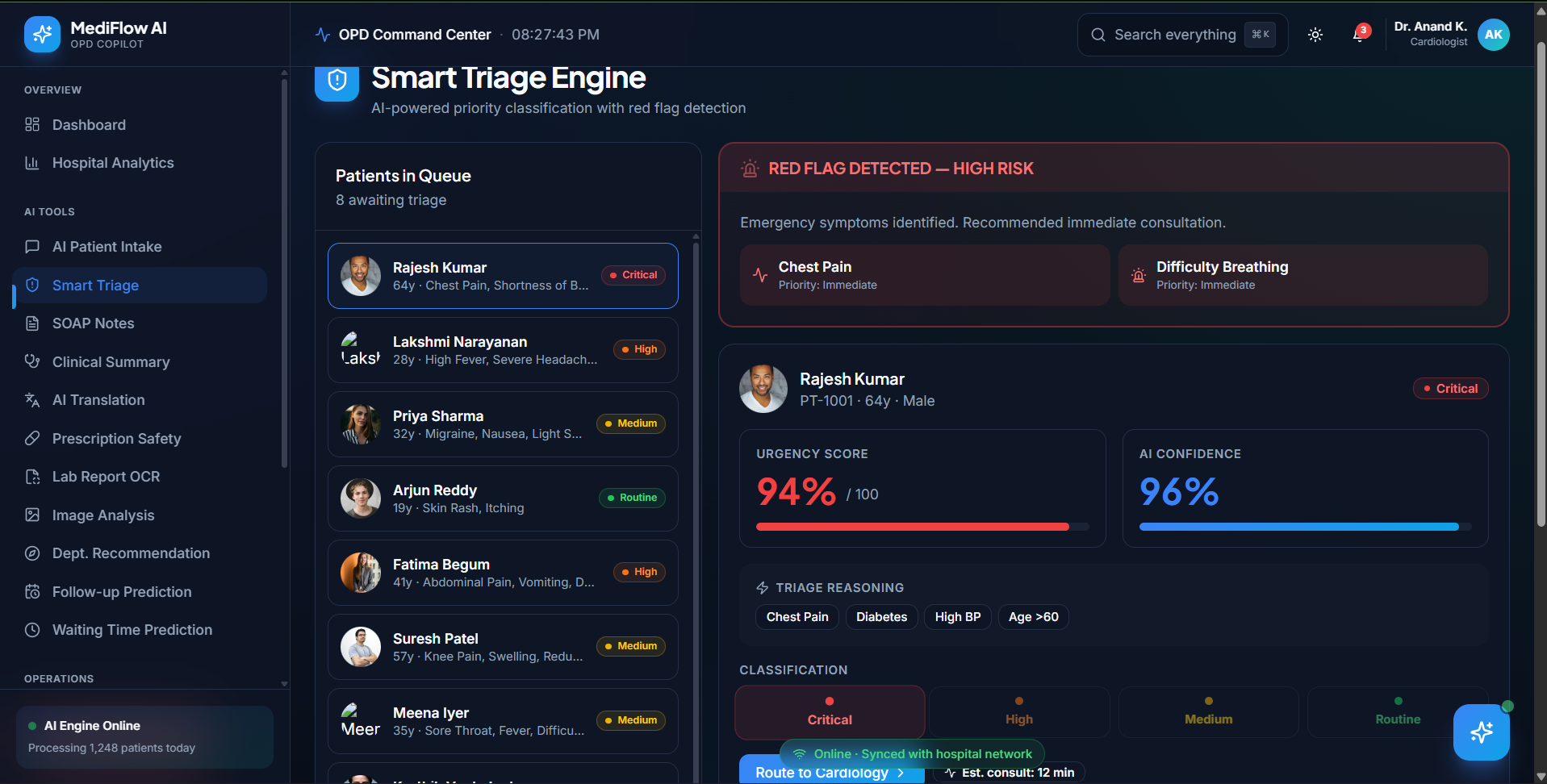
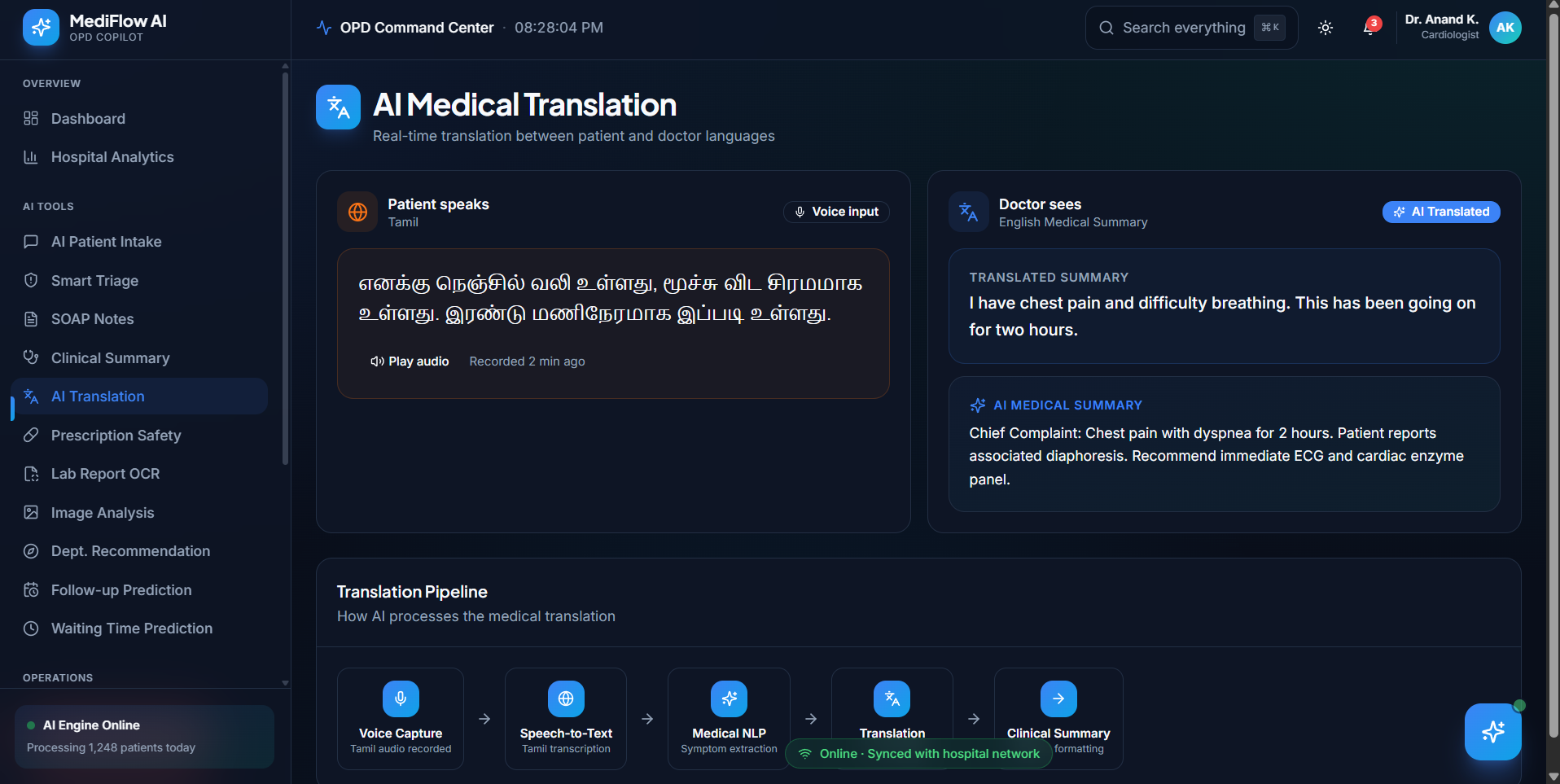
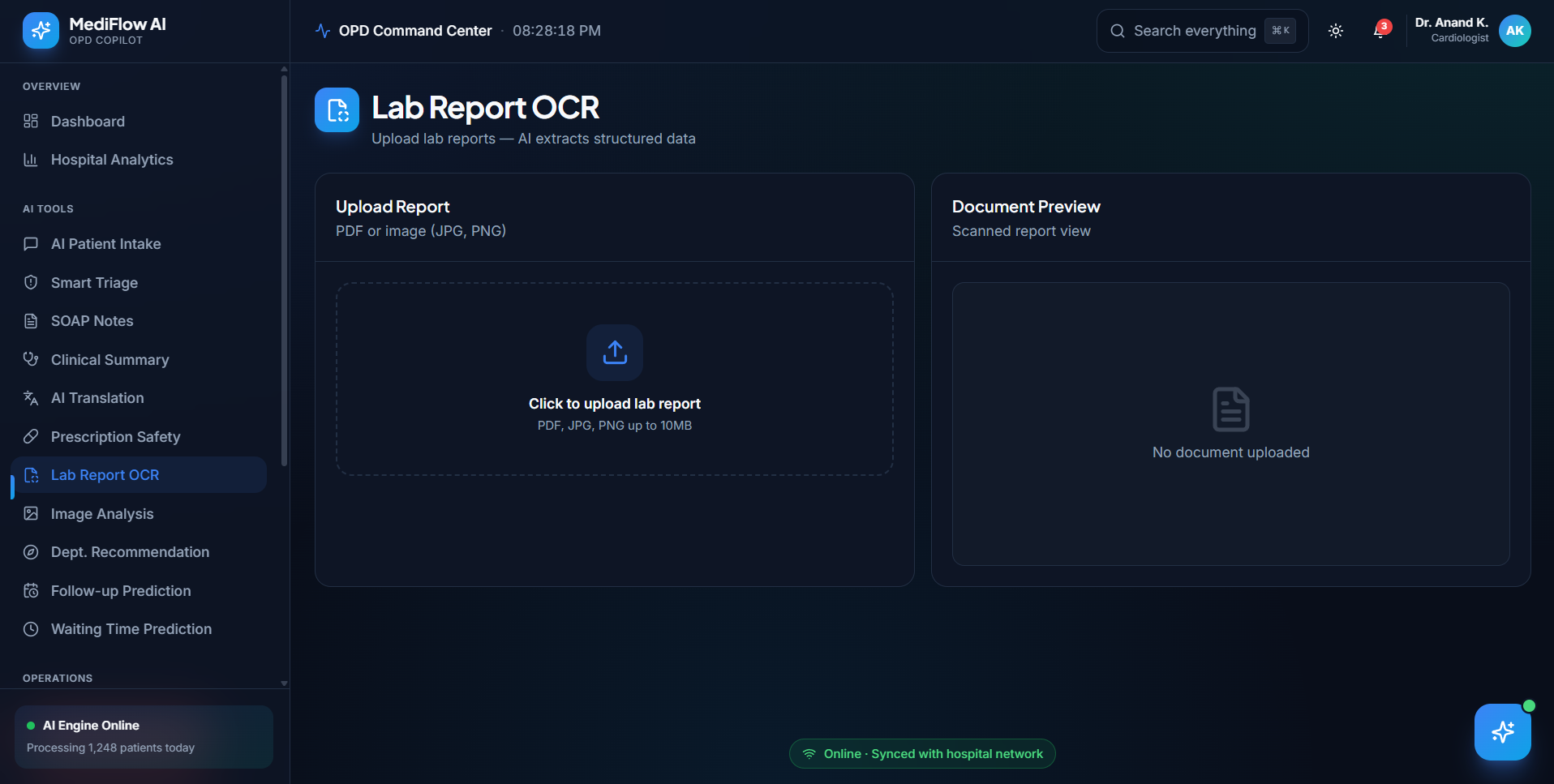
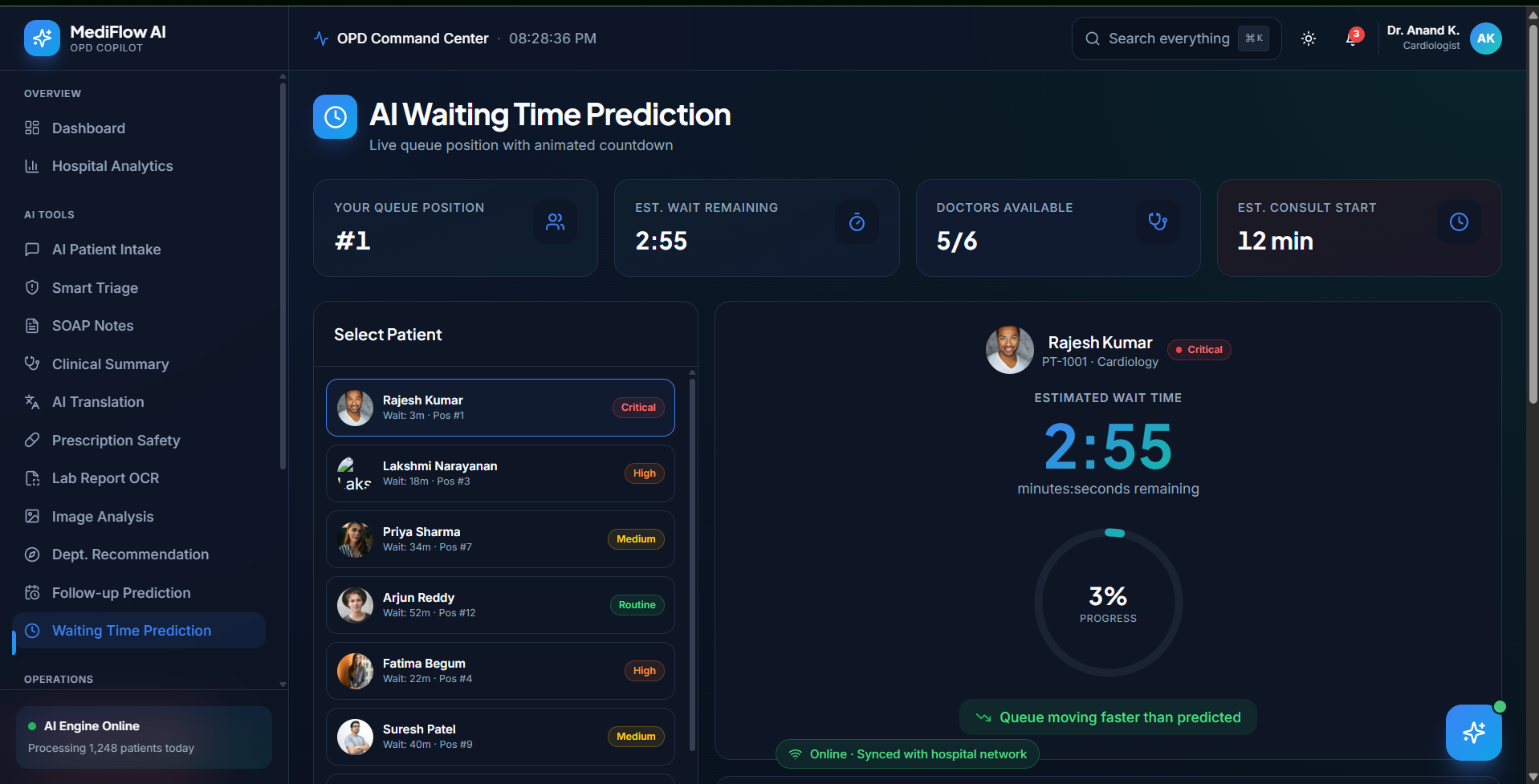
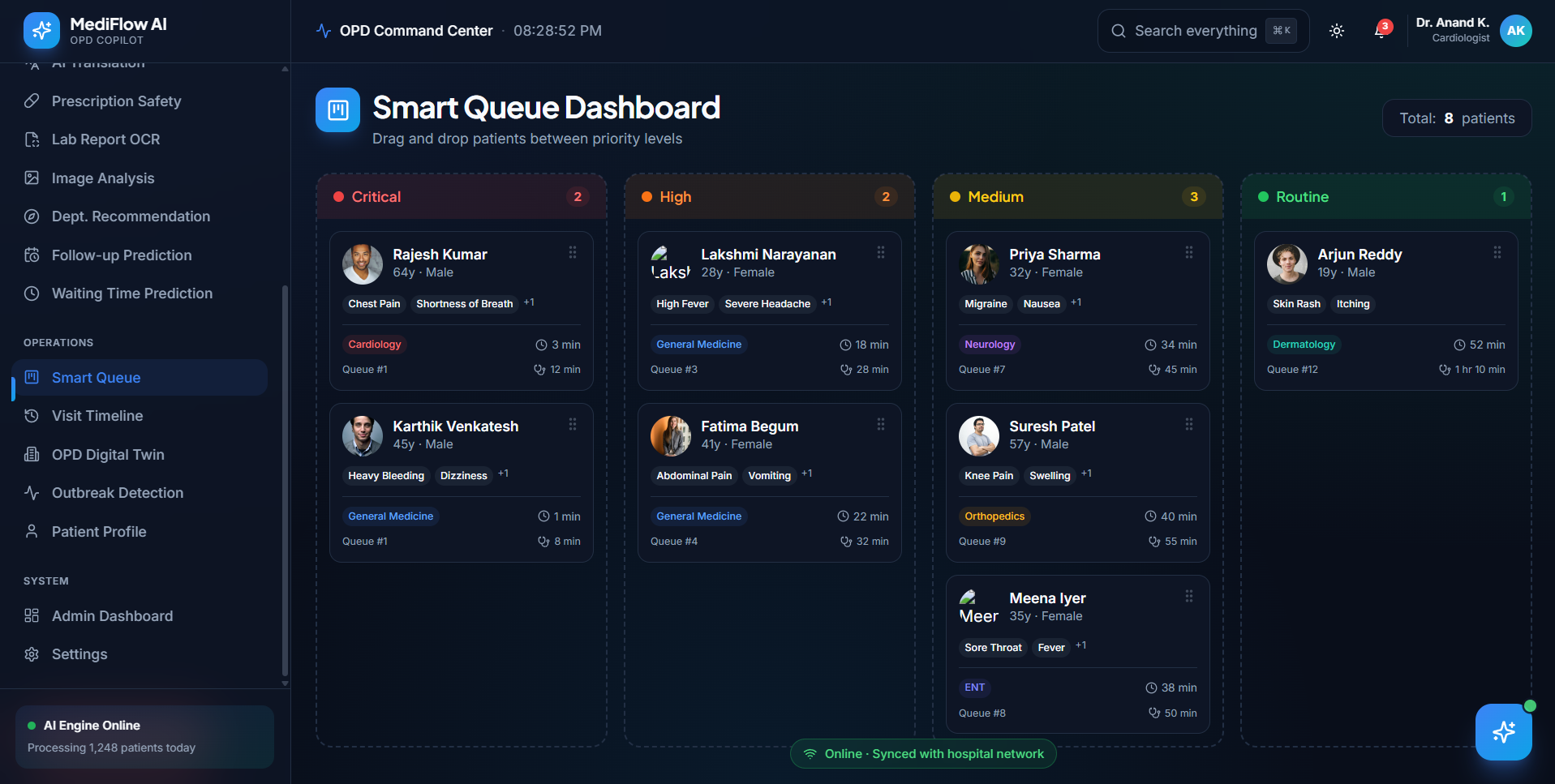
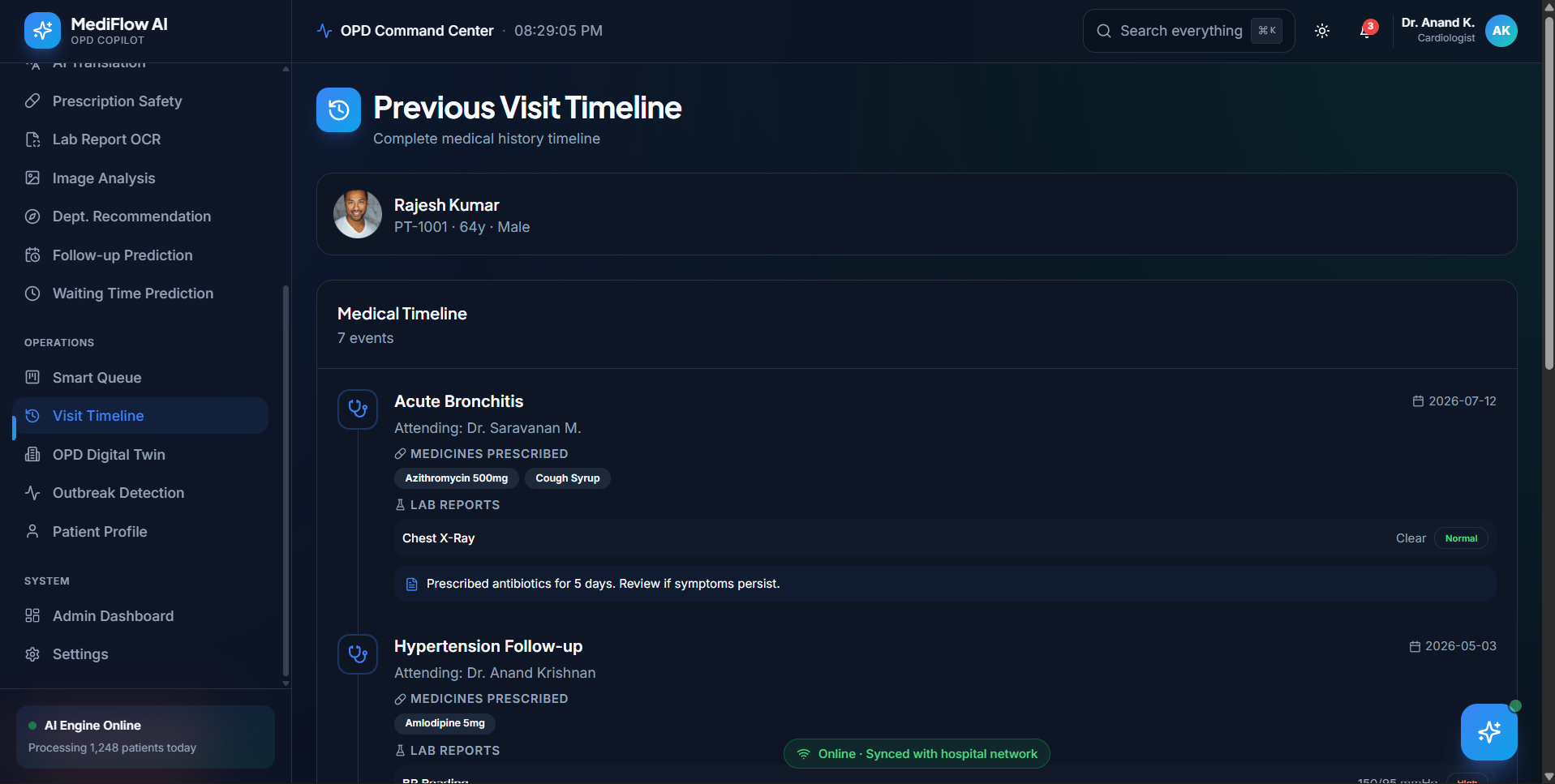
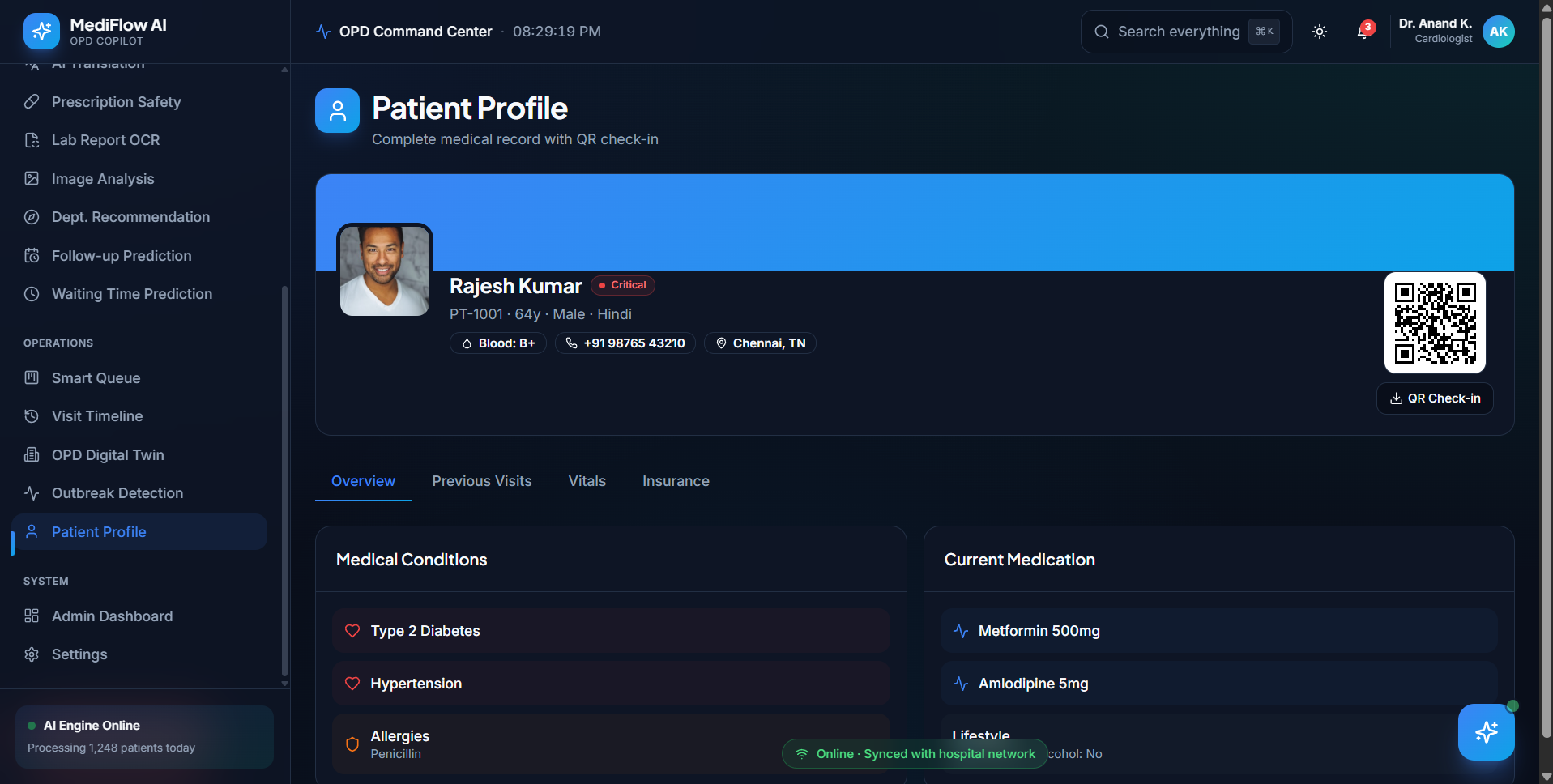
MediFlow AI is an AI-powered clinical workflow optimization platform designed for outpatient departments. Patients can interact with the system using voice or text in multiple languages to describe their symptoms. The AI extracts medical information, identifies emergency red-flag symptoms, generates structured clinical summaries and SOAP notes, and recommends patient priority based on explainable triage. The platform also provides smart queue management, prescription safety checks, OCR-based medical report extraction, medical image analysis, multilingual translation, and a hospital analytics dashboard that helps administrators monitor patient flow, waiting times, doctor workload, and disease trends.
How We Built It
The application was designed with a modular architecture to simulate a real hospital workflow. The frontend was built using React, TypeScript, Tailwind CSS, and shadcn/ui to create a responsive and modern user interface. The backend uses FastAPI to manage APIs and workflow logic. We integrated Google Gemini for natural language understanding, structured medical information extraction, multilingual support, and AI-generated clinical summaries. OCR is used to process prescriptions and lab reports, while computer vision modules simulate wound and skin image analysis. Interactive dashboards and analytics were developed using charting libraries to visualize patient flow and hospital performance.
Challenges We Faced
One of the biggest challenges was designing an AI workflow that supports doctors without acting as a diagnostic system. We addressed this by making MediFlow AI a clinical decision-support tool that provides explainable recommendations while keeping all diagnosis and treatment decisions with healthcare professionals. Another challenge was converting free-form patient conversations into structured medical information. We solved this using prompt engineering and structured outputs from the LLM. Designing a fair smart queue was also challenging because patient severity and waiting time both needed to be considered. We implemented a priority model that balances urgency with hospital workflow. Finally, working within a 36-hour hackathon required careful prioritization, so we focused on delivering a polished MVP with realistic workflows and modular components that can easily integrate real hospital systems in the future.
What We Learned
This project taught us that successful healthcare AI is about improving workflows rather than replacing clinicians. We gained practical experience in integrating Large Language Models, multilingual natural language processing, workflow automation, explainable AI, OCR, and healthcare-focused user experience design. We also learned the importance of responsible AI in healthcare, where transparency, human oversight, and patient safety are essential.
Future Scope
We plan to extend MediFlow AI by integrating Electronic Health Records (EHR), ABDM/ABHA Health IDs, wearable health devices, telemedicine support, predictive disease surveillance, offline AI capabilities for rural healthcare centers, and federated learning for privacy-preserving model improvement. These enhancements will make the platform more scalable and suitable for real-world hospital deployment.
Impact
MediFlow AI demonstrates how AI can reduce patient waiting times, minimize doctors' administrative workload, improve communication through multilingual support, optimize hospital operations, and enable faster identification of high-risk patients. By combining conversational AI, explainable triage, workflow automation, and operational analytics into a single platform, MediFlow AI helps hospitals deliver faster, safer, and more efficient outpatient care while ensuring that healthcare professionals remain in complete control of all clinical decisions.
Built With
- css
- fastapi
- firebase
- postgresql
- python
- react.js
- reactrouter
- tailwind
- typescript

Log in or sign up for Devpost to join the conversation.