-
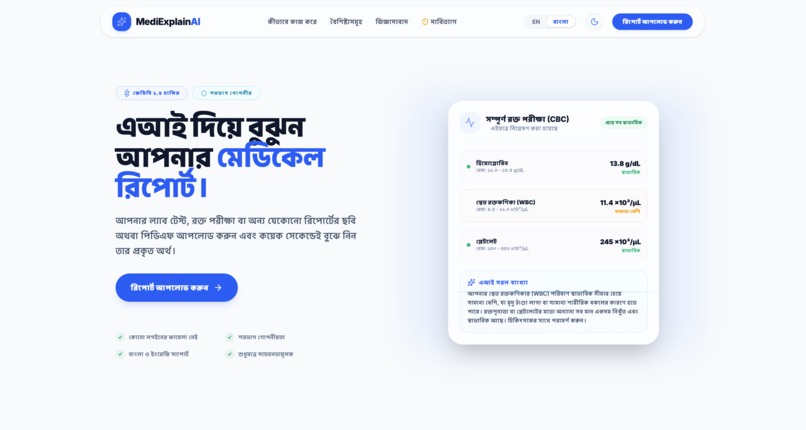
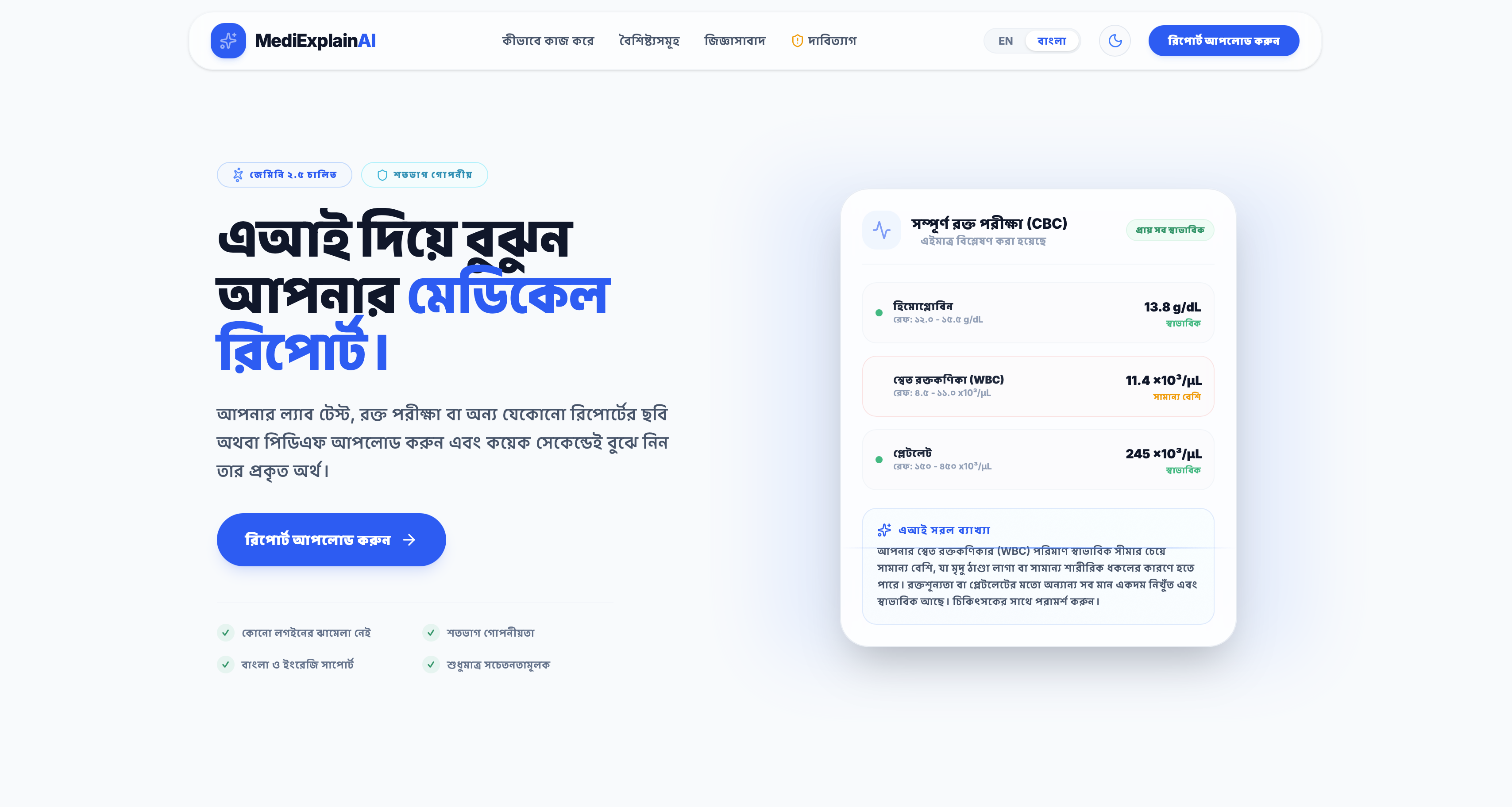
Landing Page
-
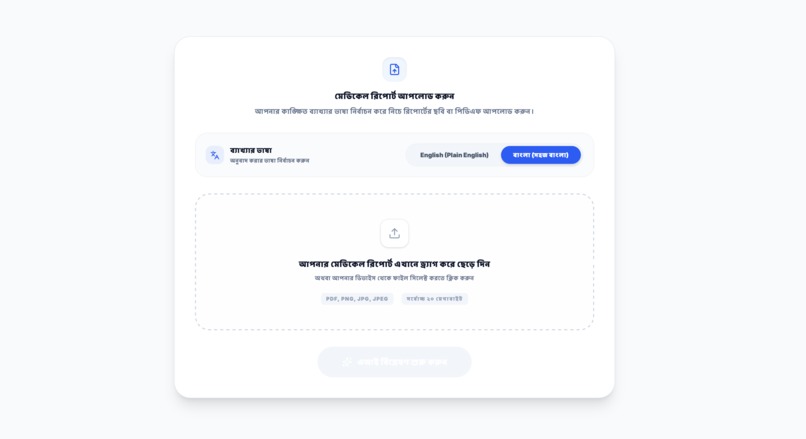
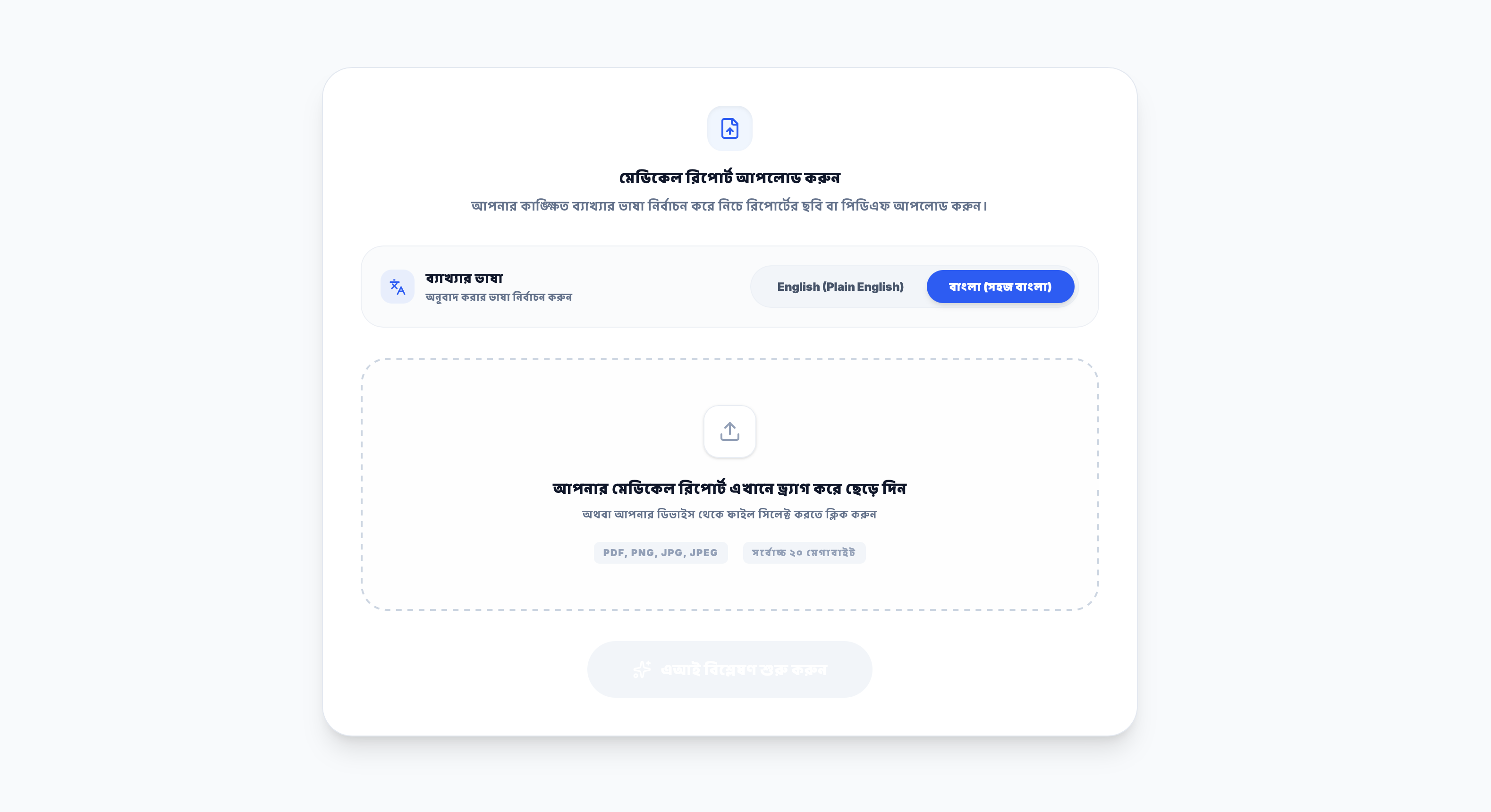
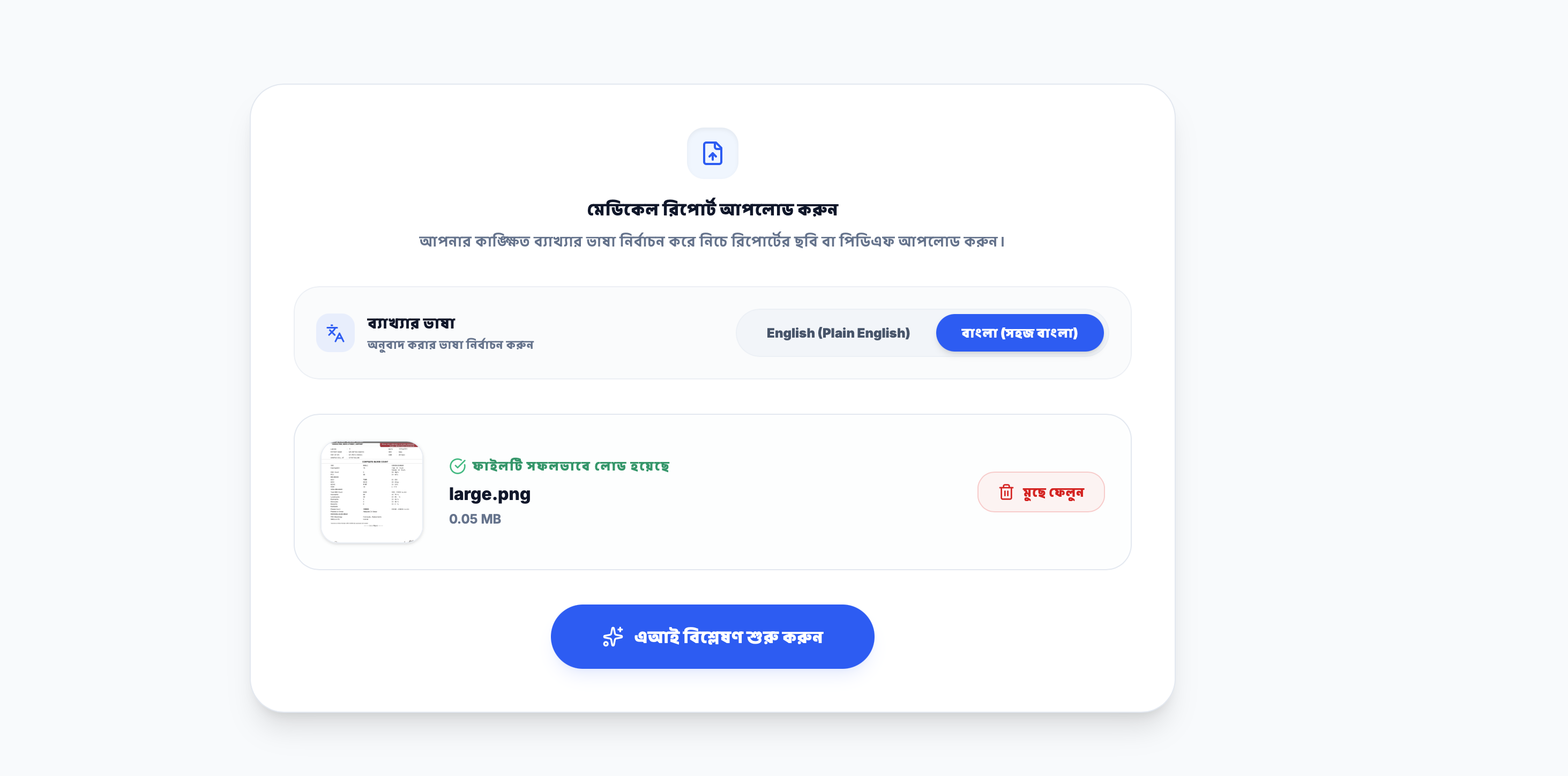
Upload Image
-
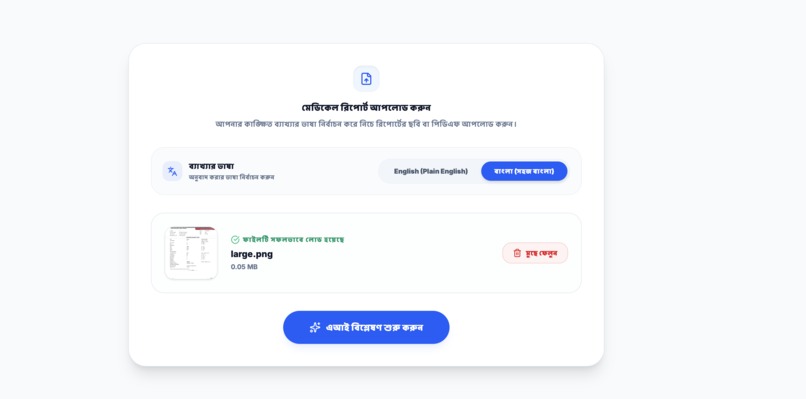
-
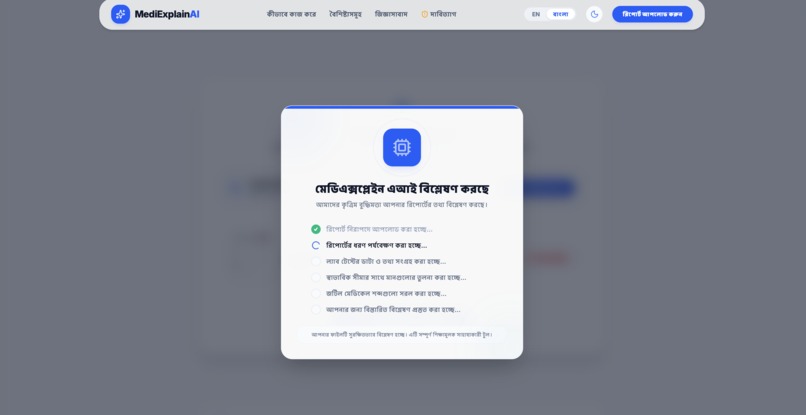
on the way
-
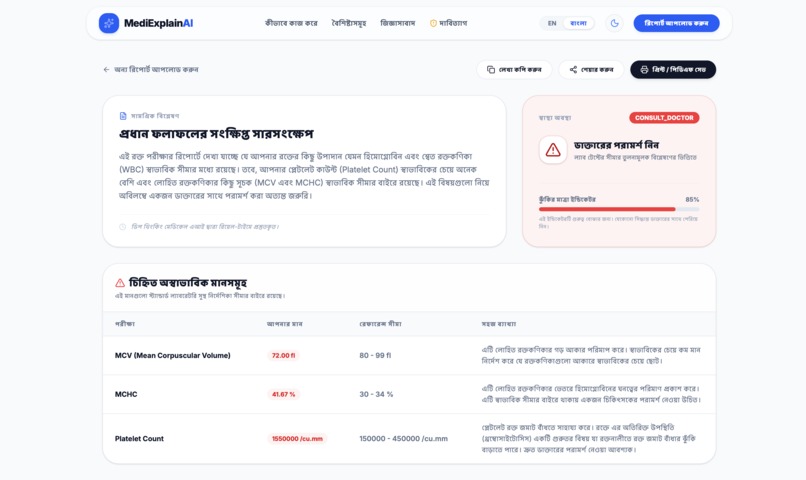
Testing Result
-
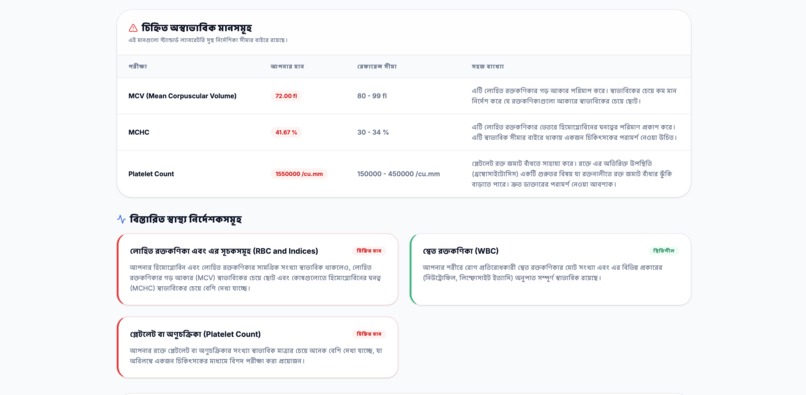
Testing Result
-
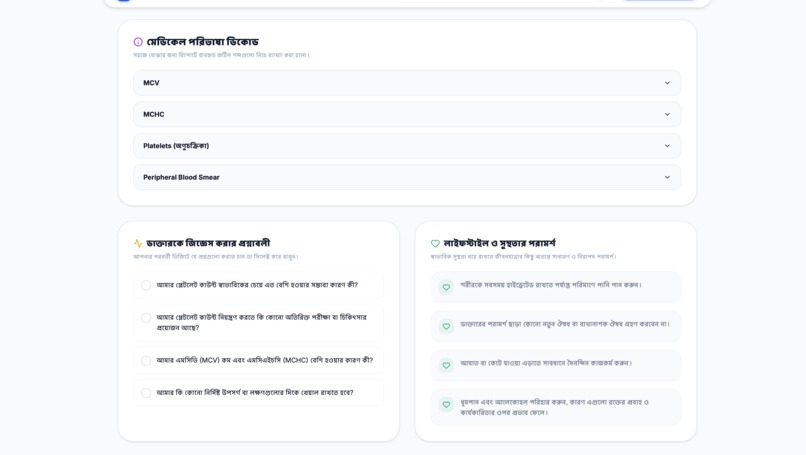
Testing Result
Inspiration
Medical reports often contain technical terminology and clinical data that are difficult for patients to interpret. This communication gap can lead to confusion, unnecessary anxiety, and reliance on unreliable online information. MediExplain AI was inspired by the need to make healthcare information more accessible by transforming complex medical reports into clear, easy-to-understand explanations while maintaining user privacy and encouraging consultation with qualified healthcare professionals.
What it does
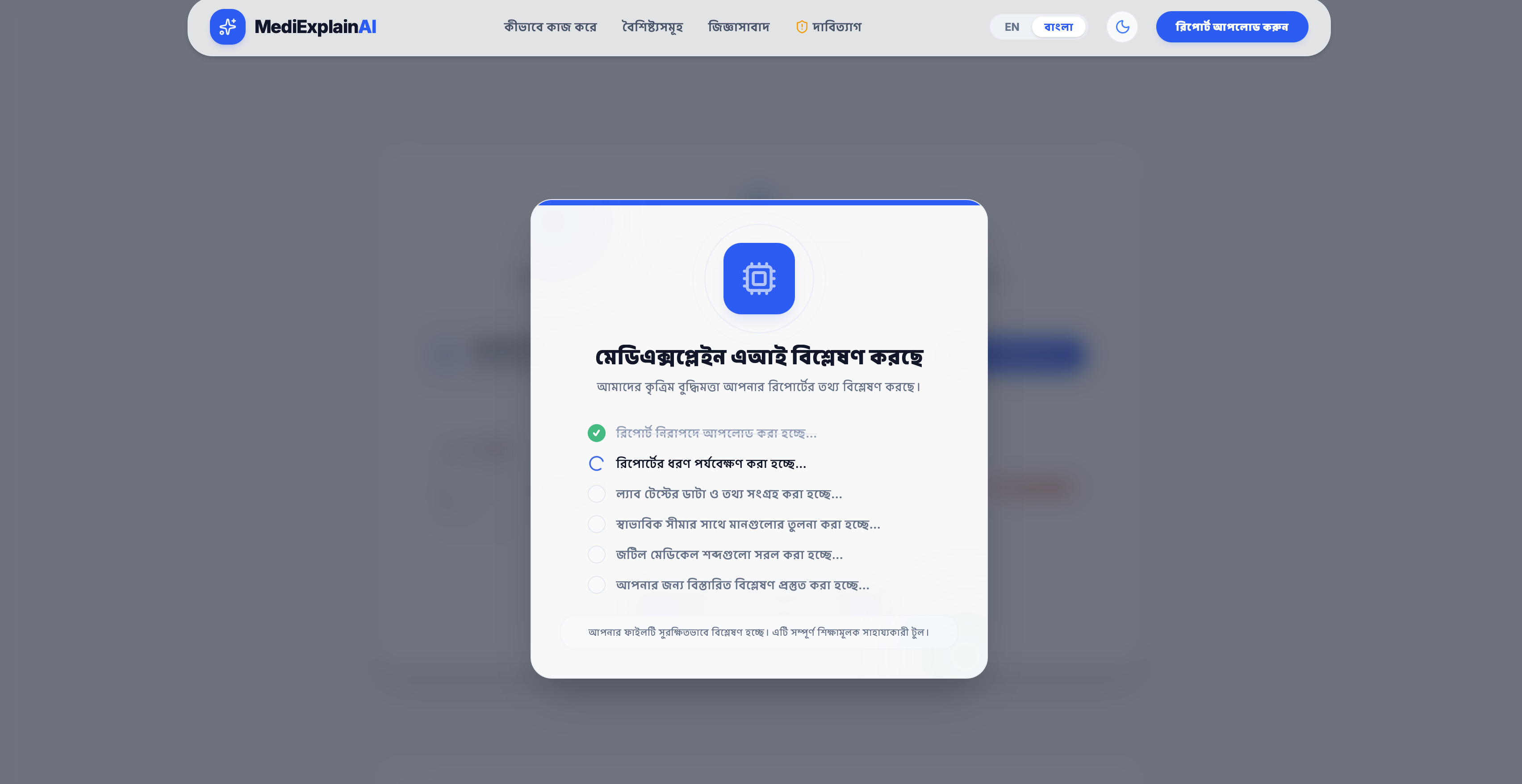
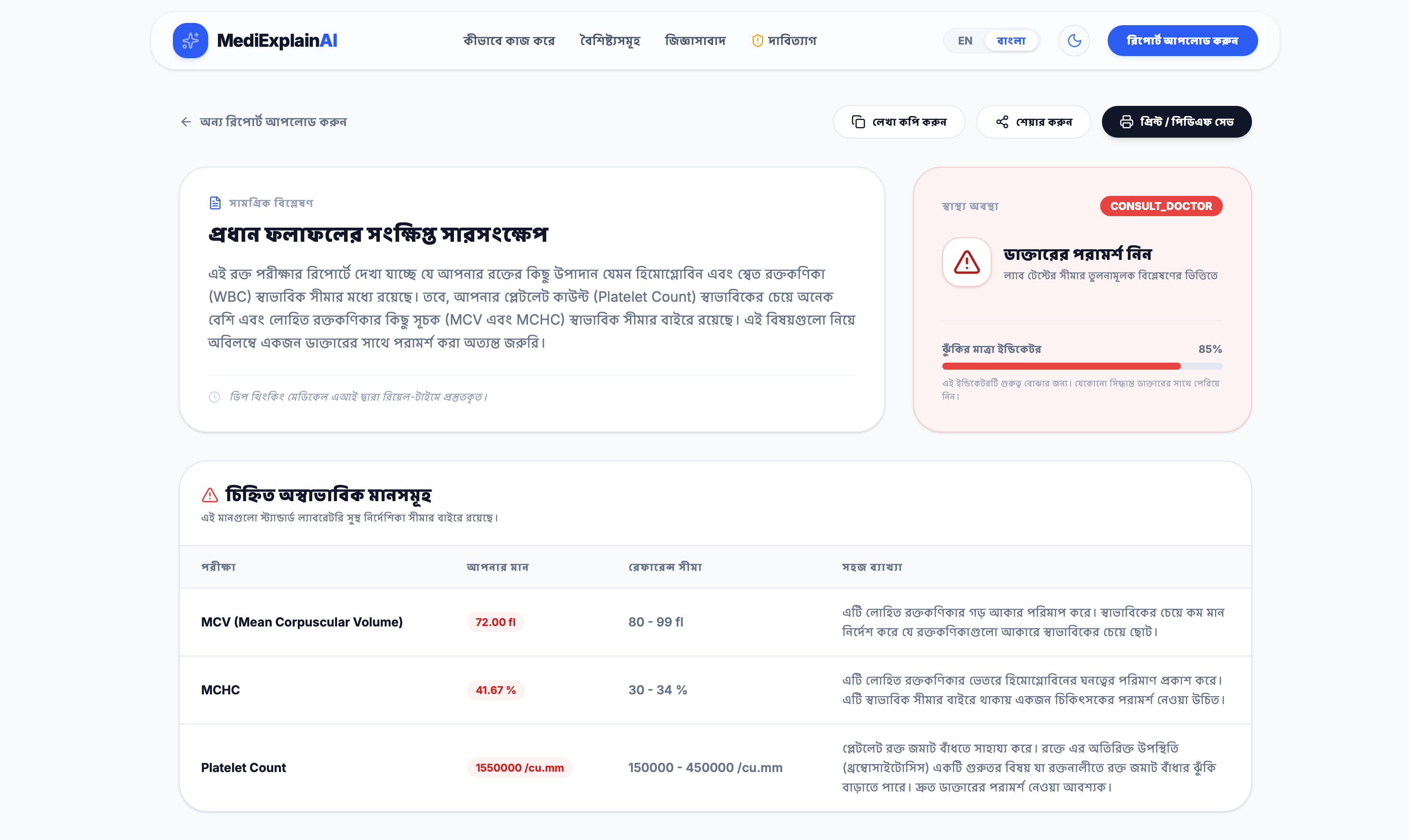
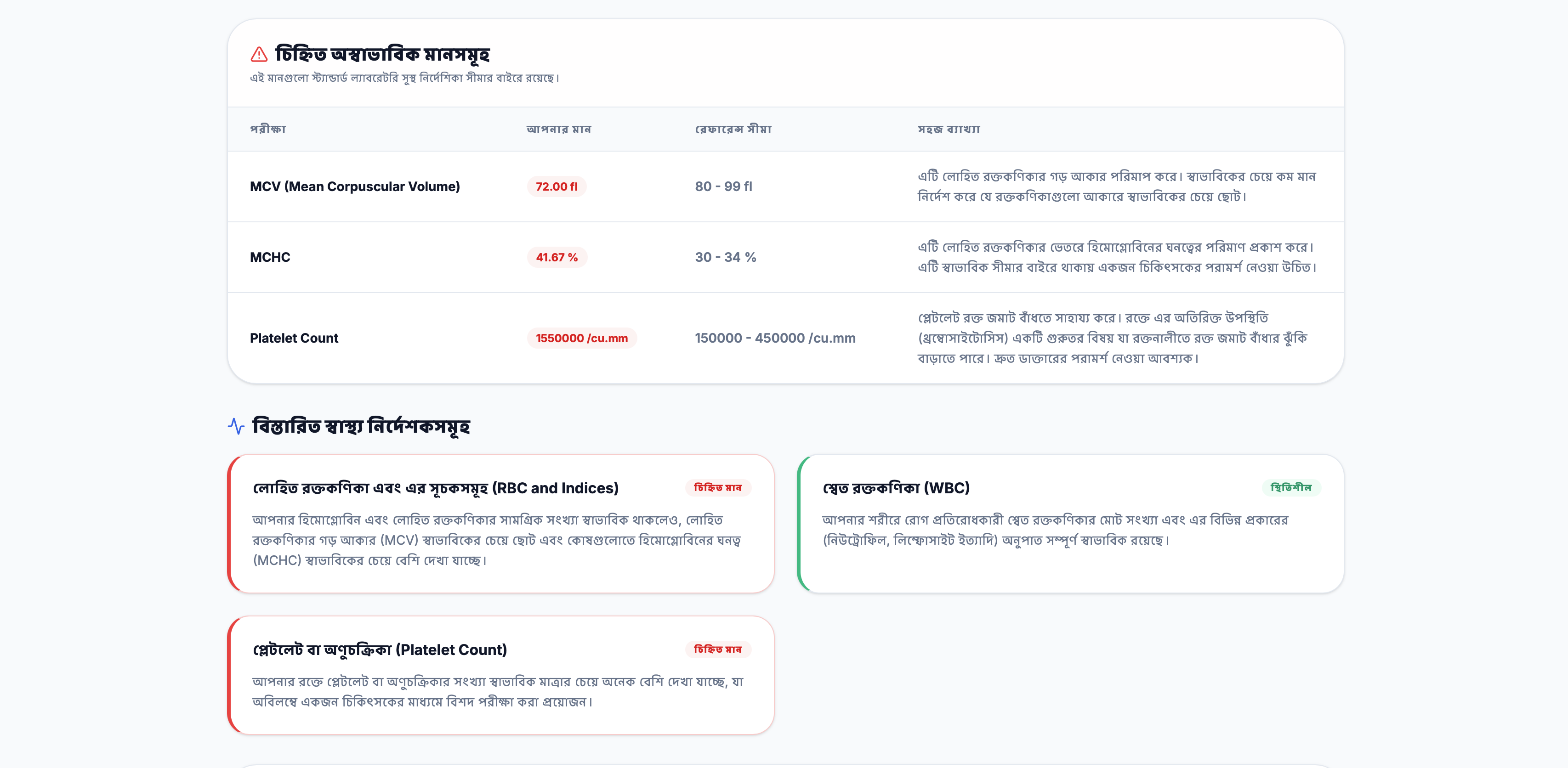
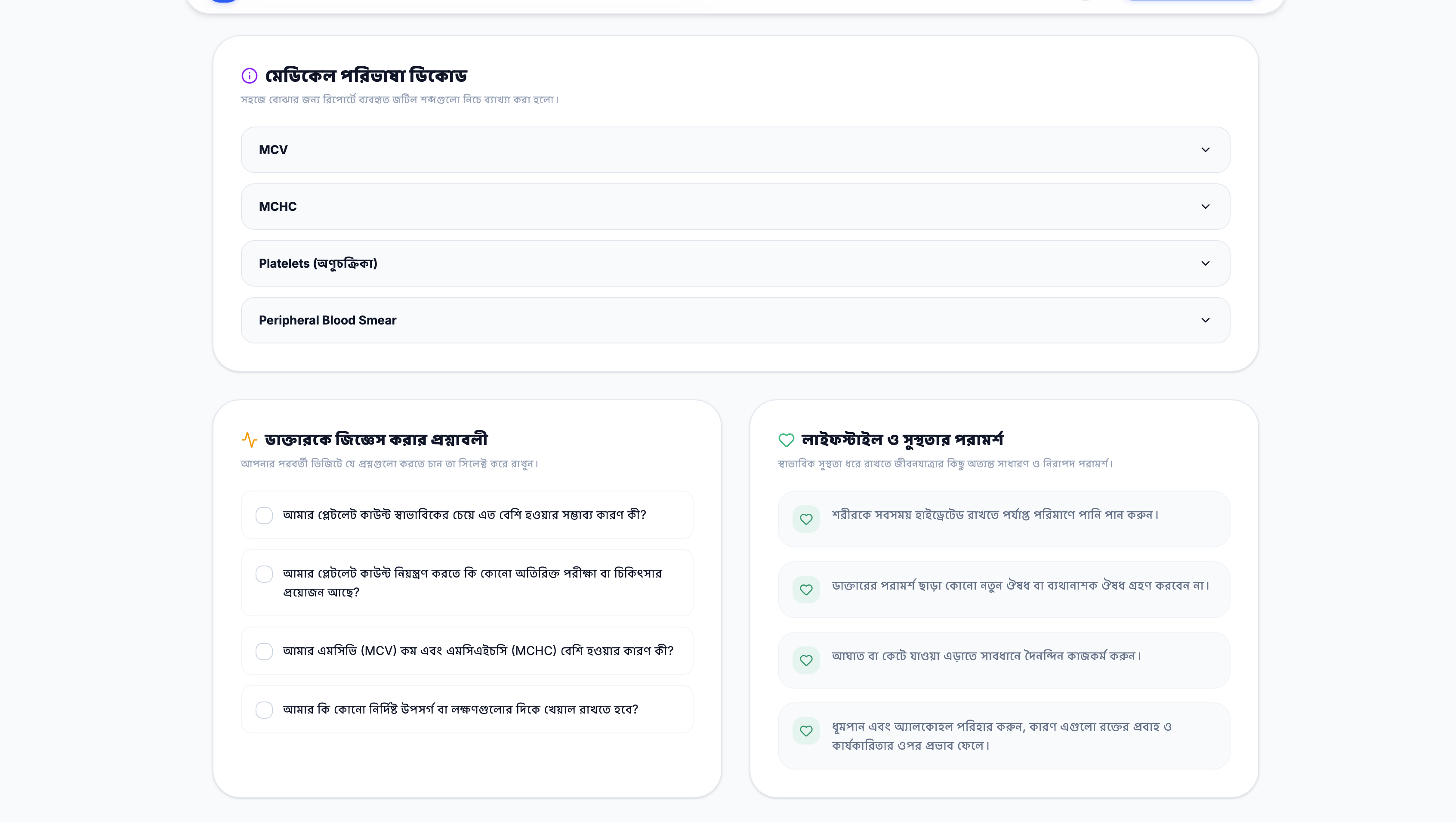
MediExplain AI is an AI-powered web application that analyzes uploaded medical reports in PDF or image format. Using Google Gemini, it generates concise summaries, explains medical terminology in plain language, identifies findings that may require attention based on the report, and provides educational insights in English or Bangla. The application also suggests questions that users may ask their healthcare providers, helping them engage in more informed discussions during medical consultations. The platform is designed exclusively for educational purposes and does not provide diagnoses or treatment recommendations.
How we built it
The application was developed using Next.js and TypeScript to provide a modern and scalable web experience. The user interface was designed with Tailwind CSS, shadcn/ui, and Framer Motion to create a clean, responsive, and accessible interface. Google Gemini AI (AI Studio) serves as the core intelligence, processing uploaded medical reports and generating structured explanations. PDF.js is used for handling PDF documents, while Gemini's multimodal capabilities enable analysis of both images and text. The application operates without a database or user authentication, ensuring a lightweight architecture and a privacy-focused user experience.
Challenges we ran into
One of the primary challenges was ensuring that the AI generated informative yet responsible responses. Considerable effort was dedicated to prompt engineering so that the system explains medical information without diagnosing diseases or recommending treatments. Another challenge involved accommodating the wide variety of report formats used by different hospitals and diagnostic centers while maintaining consistent and reliable explanations. Balancing technical functionality with an intuitive and trustworthy user interface also required careful design and iteration.
Accomplishments that we're proud of
We successfully developed a fully functional AI-powered healthcare education platform that operates without requiring user accounts or a database. By leveraging Gemini's multimodal capabilities, the application can interpret both PDF and image-based medical reports while presenting the information in a format that is accessible to non-technical users. We are particularly proud of creating a privacy-first solution that demonstrates the practical application of generative AI to address a meaningful real-world challenge.
What we learned
Throughout the development process, we gained valuable experience in integrating multimodal AI into a web application and designing effective prompts for responsible AI behavior. We also developed a deeper understanding of user-centered interface design, accessibility principles, and the importance of presenting AI-generated healthcare information in a transparent and ethically responsible manner. This project reinforced the significance of balancing technological innovation with user trust and safety.
What's next for MediExplain AI
Future development will focus on expanding the platform's capabilities while maintaining its educational purpose. Planned enhancements include multilingual support, voice-based explanations, improved document recognition, comparative analysis of historical reports, personalized health education resources, and accessibility improvements for a broader range of users. We also envision secure integration with healthcare providers, enabling patients to better understand their medical information while ensuring that healthcare professionals remain central to diagnosis and treatment decisions.
Built With
- css
- next.js
- react
- tailwind
- typescript


Log in or sign up for Devpost to join the conversation.