-
-
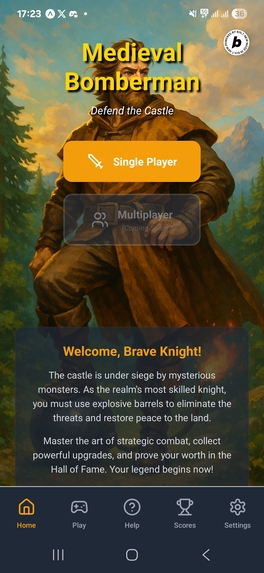
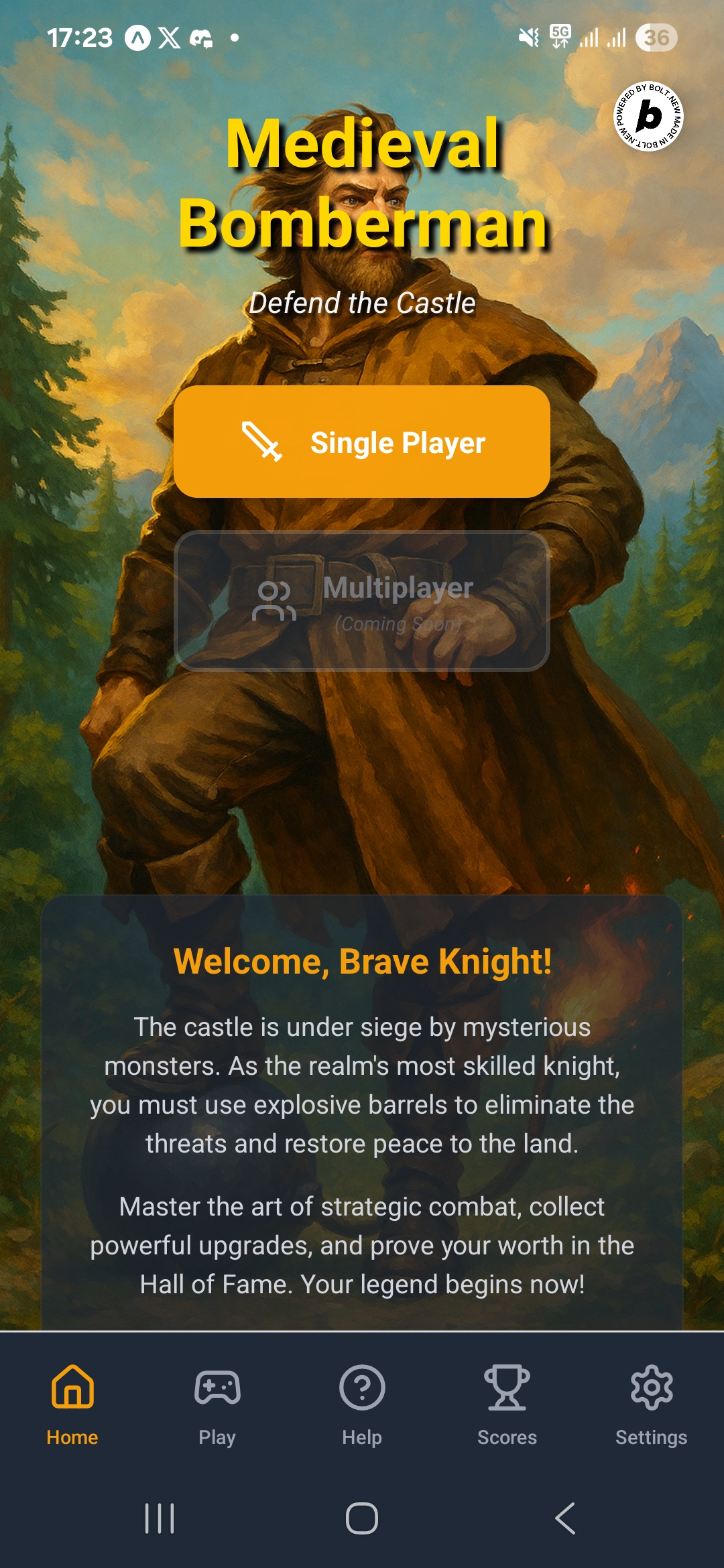
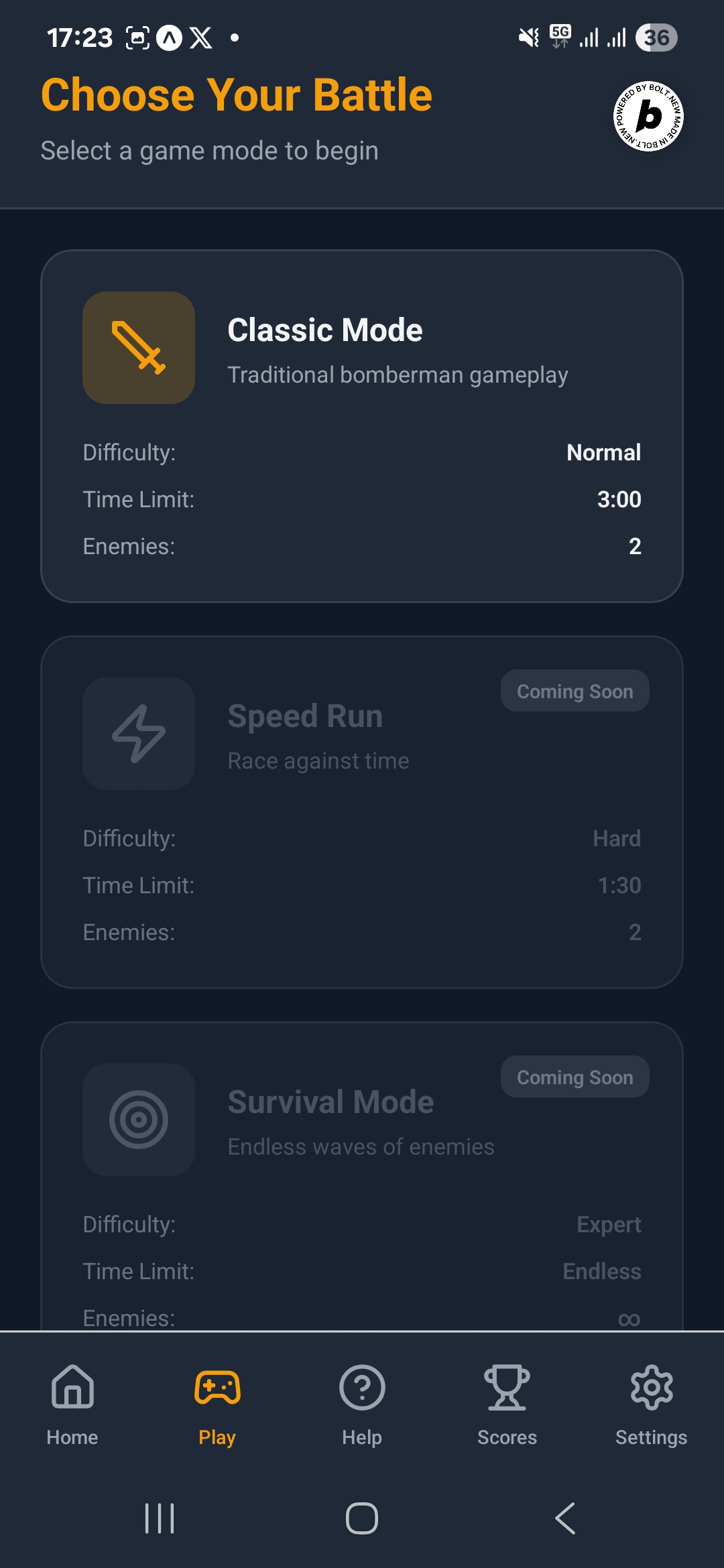
Start screen
-
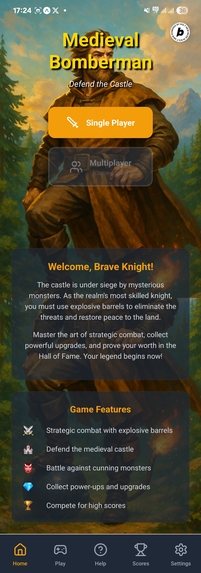
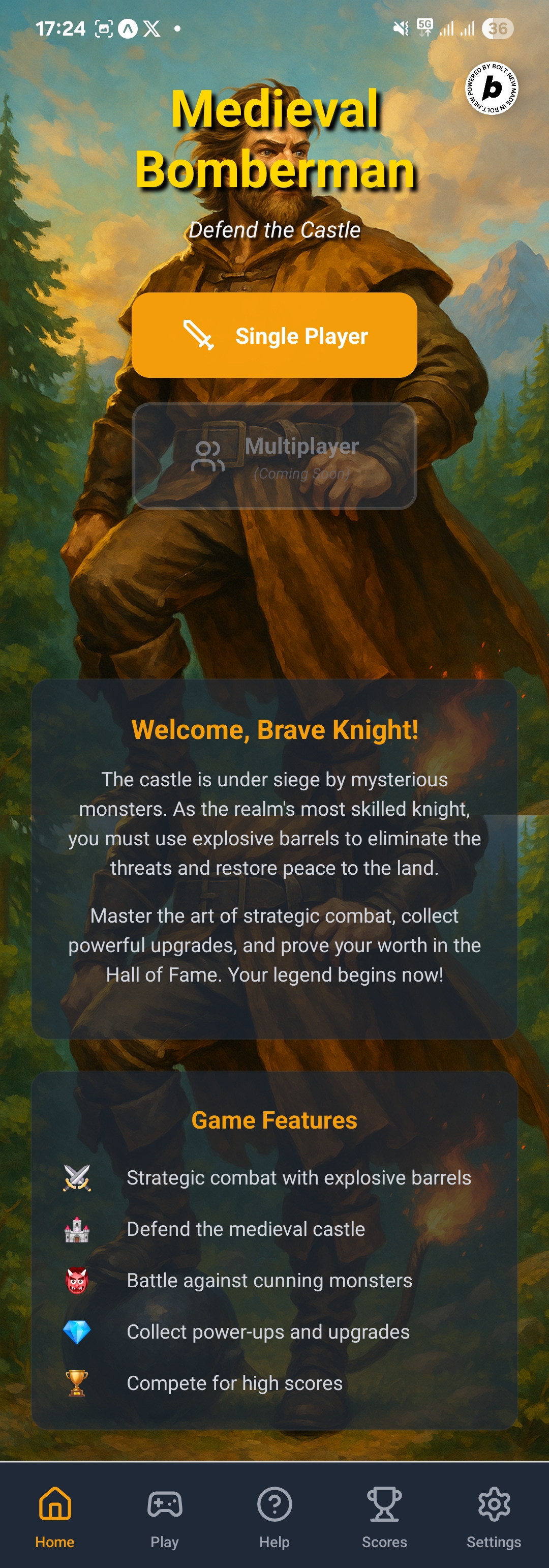
Start screen scrolled version
-
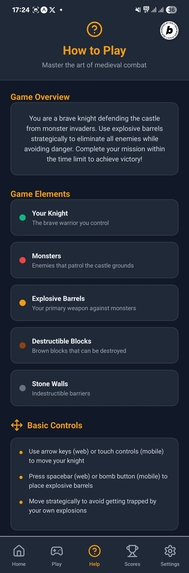
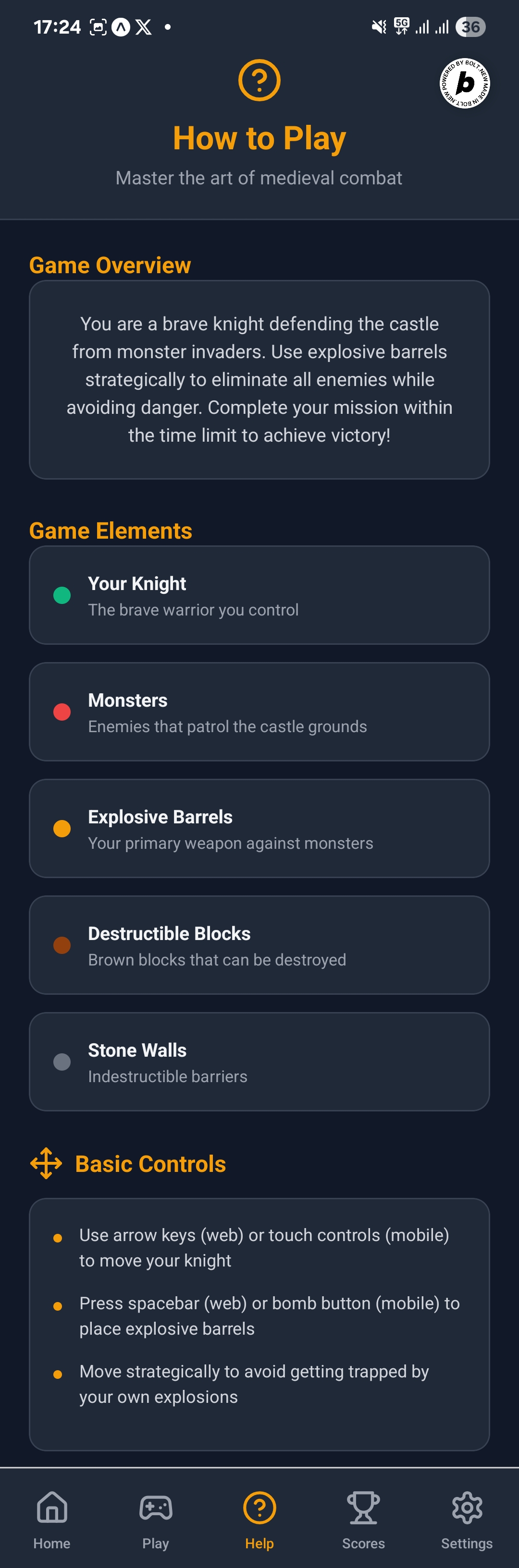
How to play
-
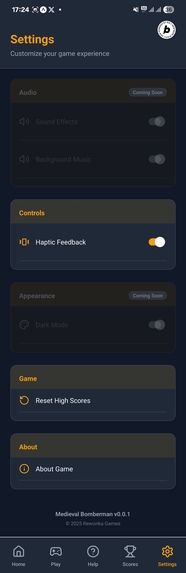
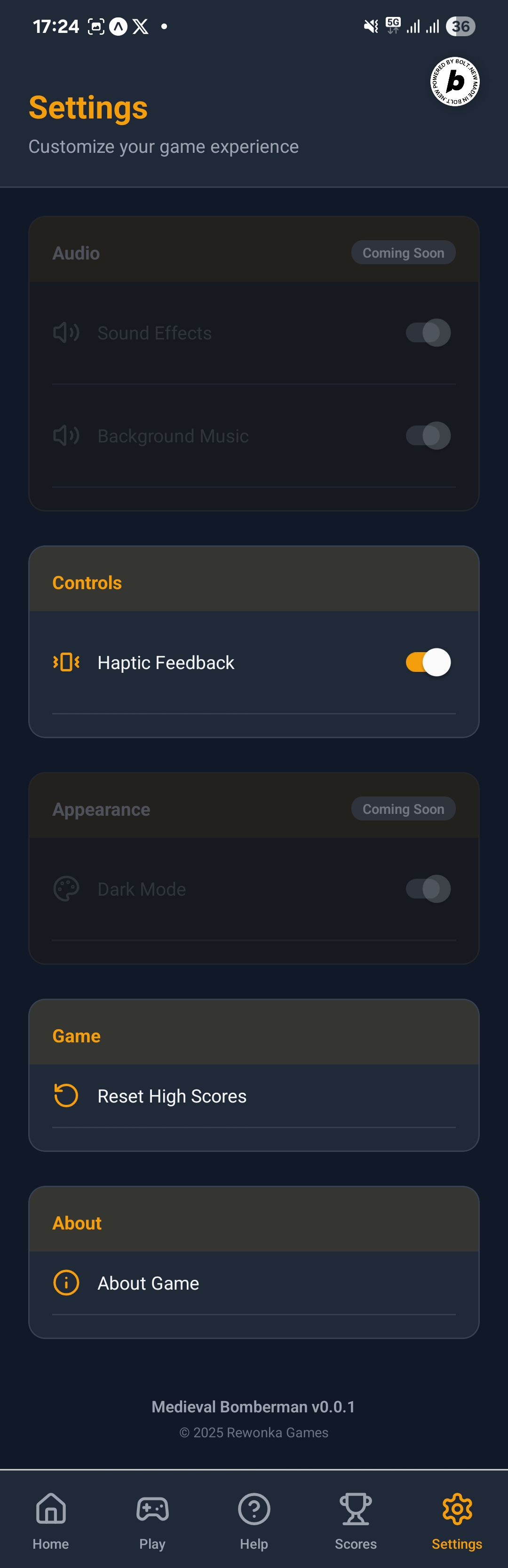
Settings
-
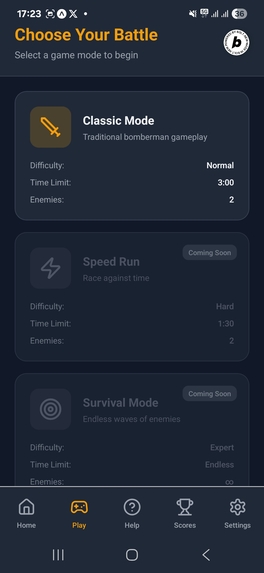
Single player
-
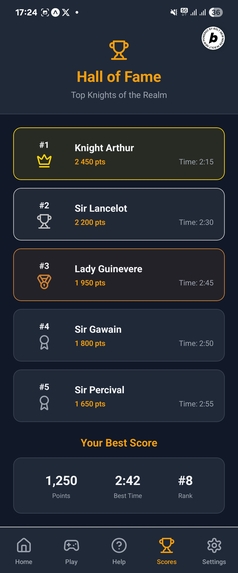
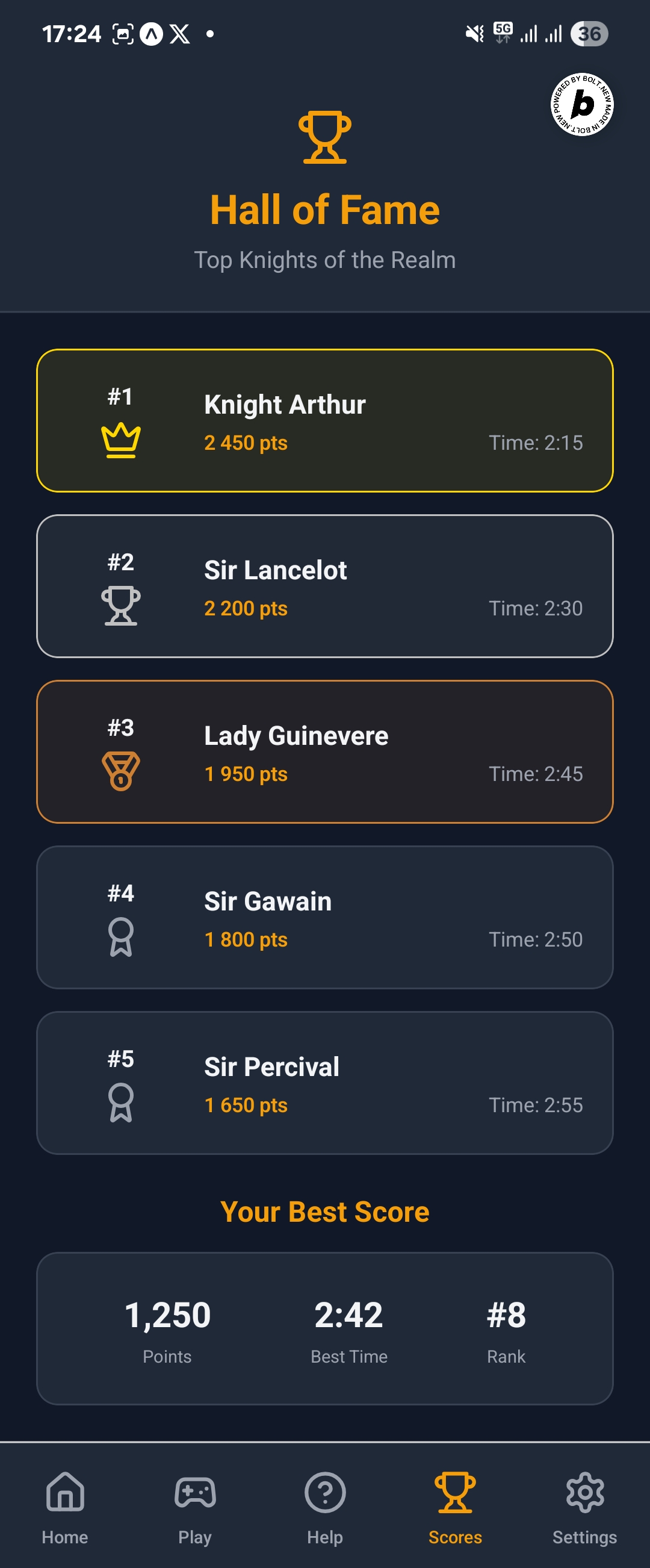
Leaderboard
-
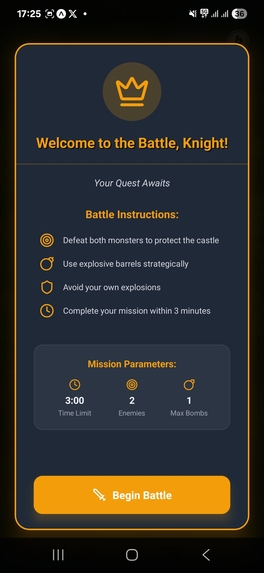
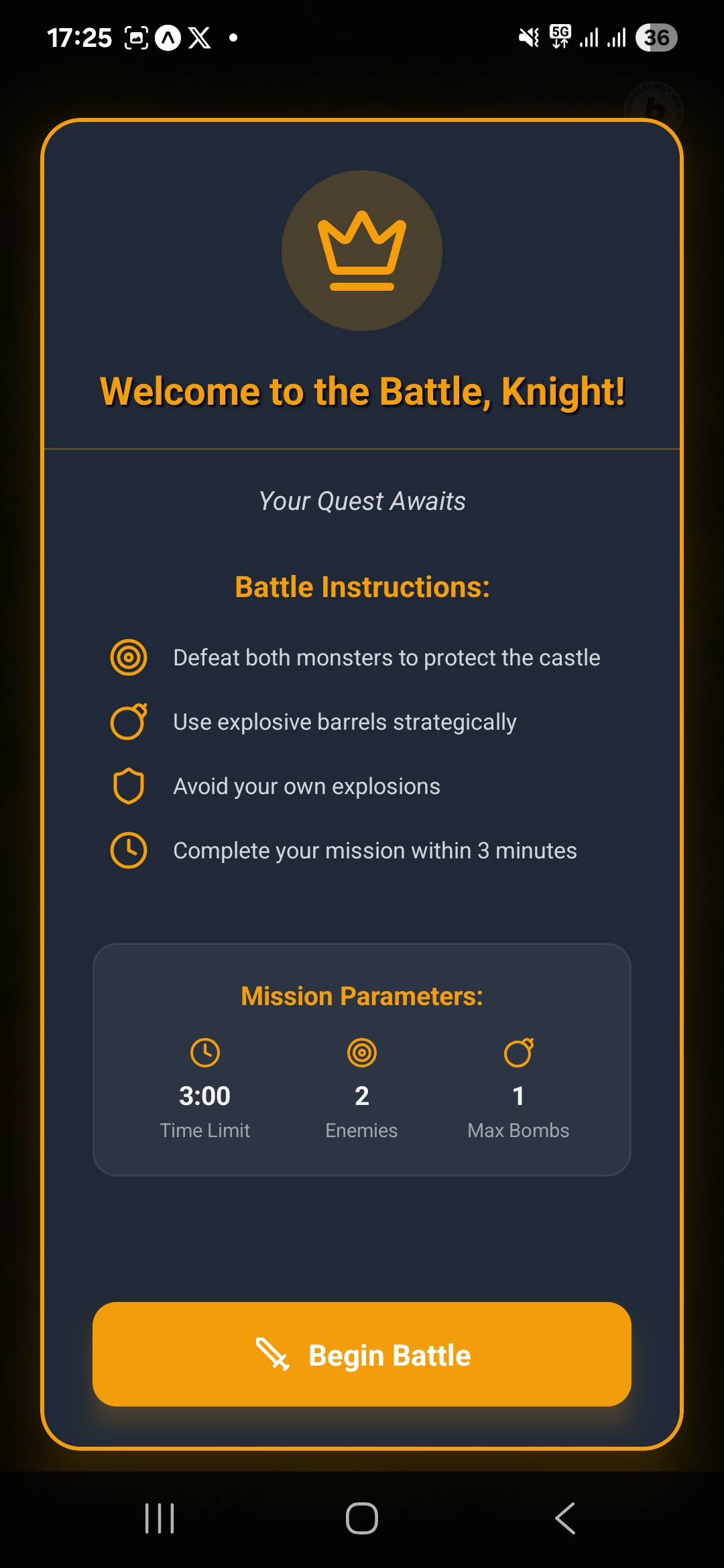
Game starting modal window
-
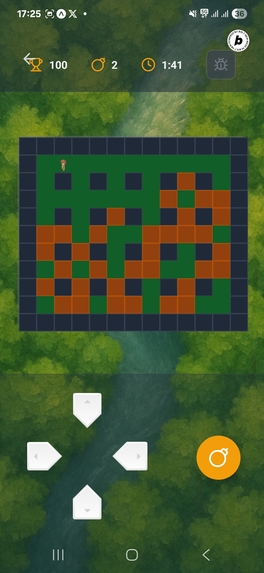
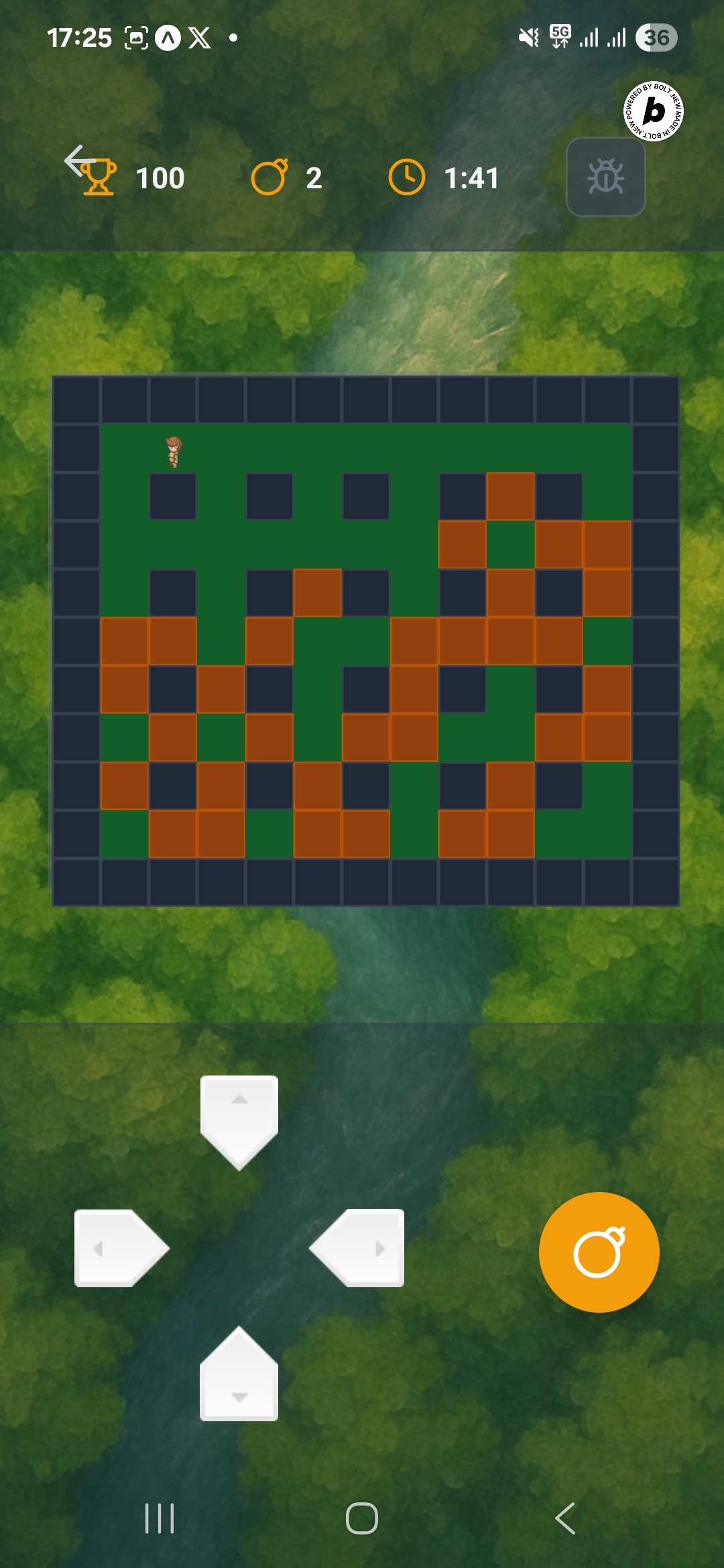
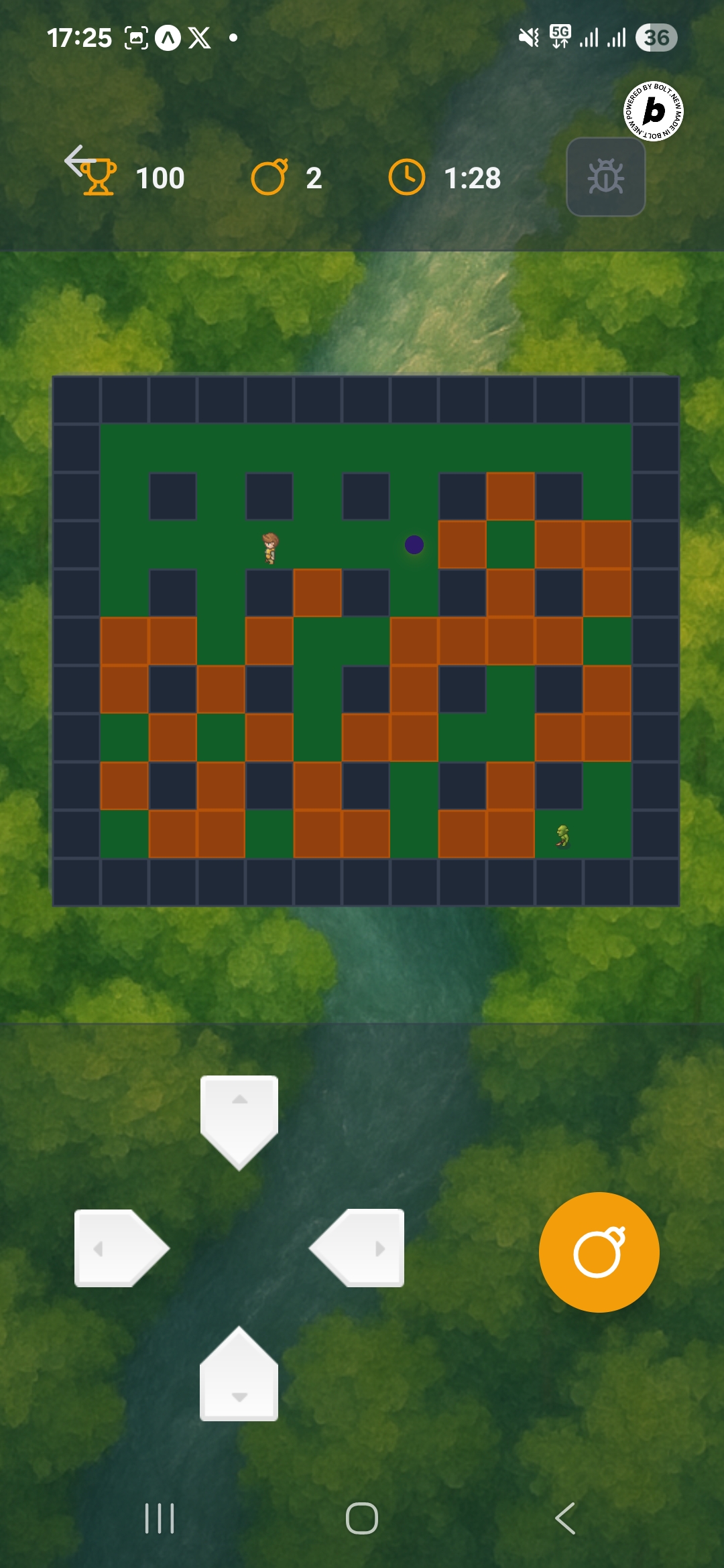
Game board #1
-
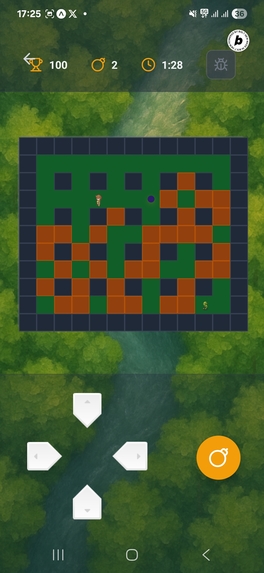
Game board #2 power up found
-
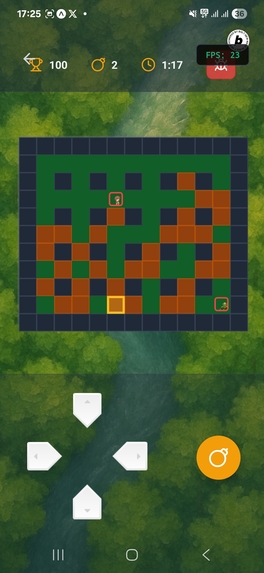
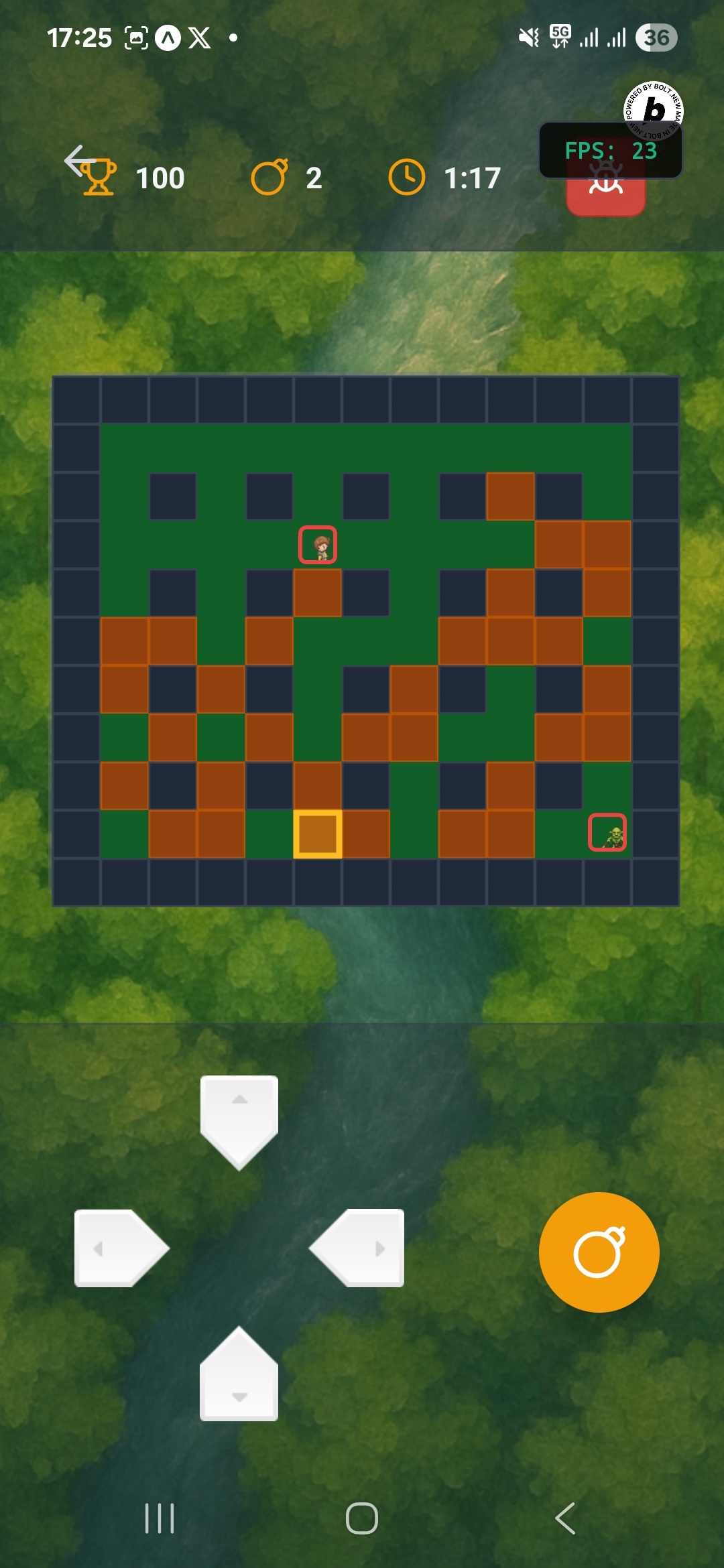
Game board debug mode is on
-
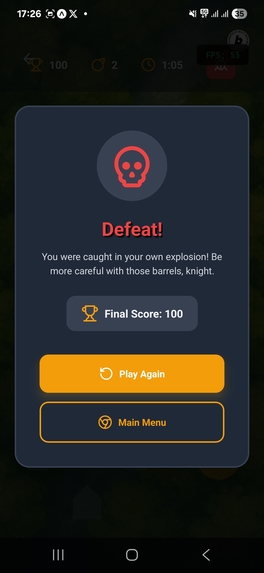
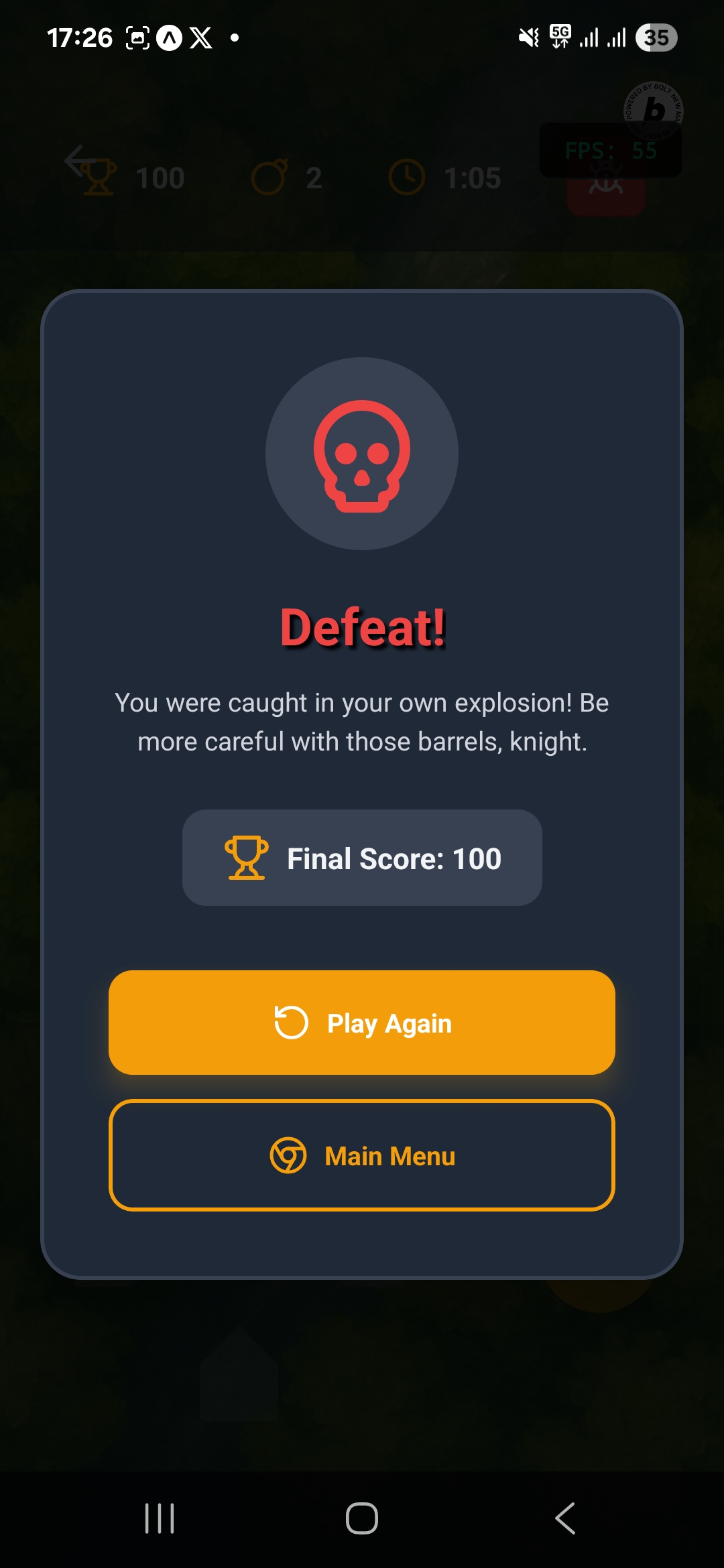
Game over screen
-

How to play long version
-
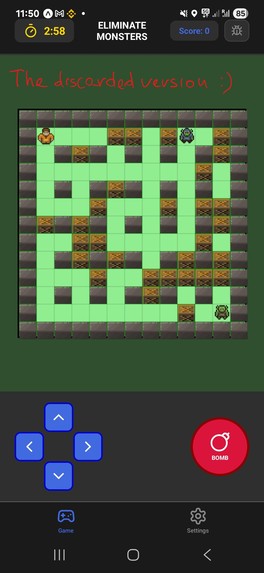
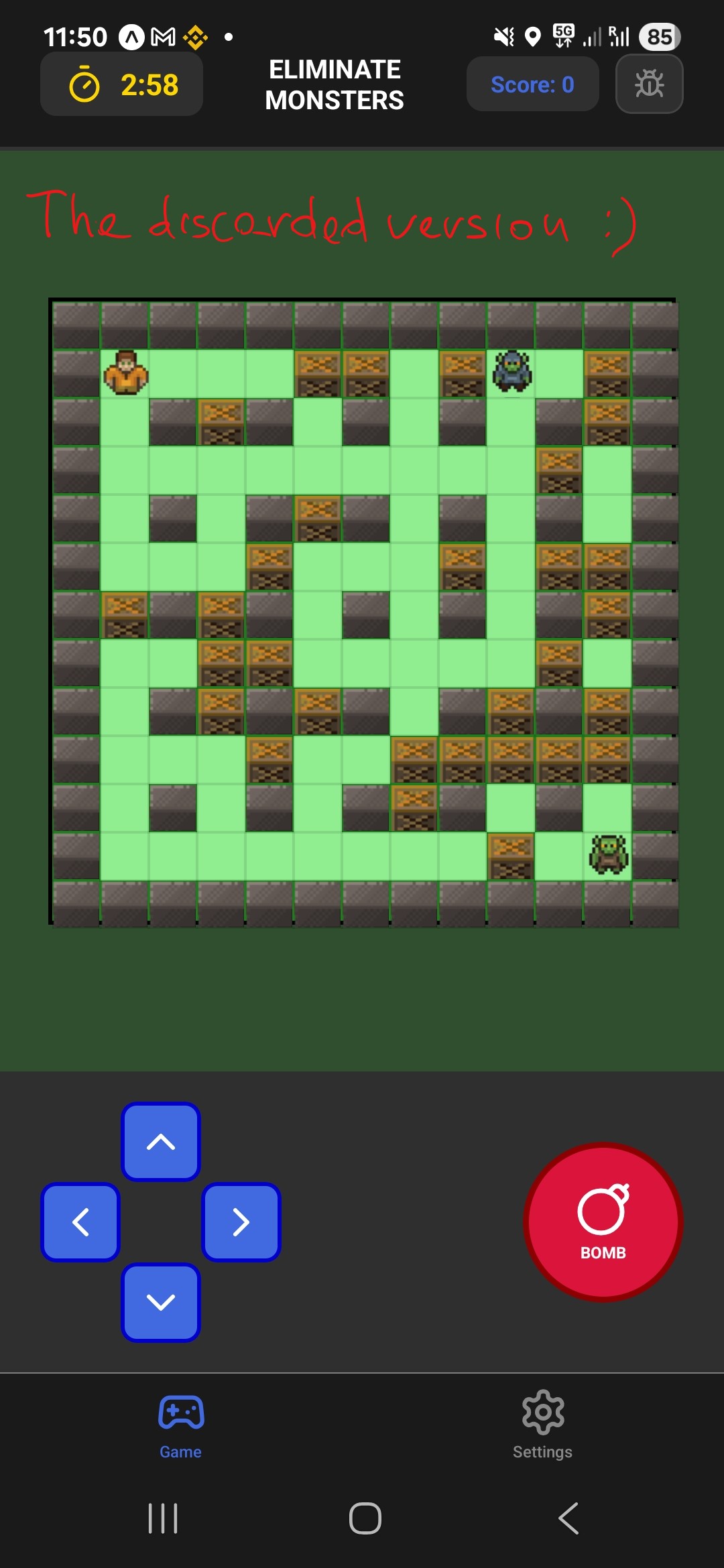
The discarded version

Inspiration
I'm a software developer by profession, but I've always been fascinated by game development, even though I work in a completely different field. I wanted to challenge myself and see whether it's possible to create a simple game using Bolt. Is AI-assisted coding really advanced enough to support building an entire project from scratch? This was the perfect opportunity to find out.
What it does
Medieval Bomber is a simple Bomberman-style game with a medieval twist. In single-player mode, players must survive against AI-controlled enemies while racing against the clock. In multiplayer mode, friends can compete against each other or team up to face off against AI foes.
How we built it
The game was developed entirely with Bolt with prompting, with support from React Native and Expo. The multiplayer functionality was designed to use Supabase for managing player profiles and storing game session data.
Challenges we ran into
We encountered quite a few challenges along the way. Initially, we had a working single-player version, and we attempted to expand it into a multiplayer experience. However, the AI-generated code drastically altered the project structure, breaking the existing single-player functionality—and unfortunately, reverting the changes was not possible. As a result, I had to start over from scratch. In the new version, I paid close attention to isolating experimental features so I could safely revert changes if the AI couldn't provide a usable solution.
Another major hurdle was implementing sound. While audio worked well in the browser, it refused to function on Android devices. Despite spending a large number of tokens and countless iterations trying to fix it, we couldn't get it working properly on mobile.
The multiplayer component—built step by step using Supabase—also hit multiple dead ends. Several features had to be reverted due to design issues or limitations encountered during development. Due to the tight time constraints and token limitations, the multiplayer functionality had to be postponed for a future version.
Accomplishments that we're proud of
We successfully built a functioning single-player mode that runs smoothly on mobile devices. The core gameplay loop is in place, and while there may still be bugs, the overall mechanics are solid.
One of the highlights was animating the characters and achieving fluid movement—something I had never done before. Despite having no prior experience with game animation or character control, I managed to bring it all to life with the help of Bolt. This alone felt like a huge personal milestone.
Another useful feature we added is a debug mode, which can be toggled from the top-right corner during gameplay. This makes it much easier to inspect the position and size of sprites for testing and fine-tuning.
What we learned
We learned how to effectively use Bolt as a development tool, including:
- How the revert functionality works to safely undo unhelpful changes.
- How to use the diff mode to understand what the AI is modifying in the code.
- How to integrate Bolt with GitHub for version control and Supabase for backend services.
These lessons not only helped us build the project but also deepened our understanding of AI-assisted development workflows.
What's next for Medieval Bomber
The next goal is to complete and fully implement the multiplayer mode. Once the core gameplay is stable, we'll focus on refining real-time interactions, syncing player data, and enabling friends to battle each other or team up against AI opponents.


Log in or sign up for Devpost to join the conversation.