Inspiration
The inspiration for MedID stems from the critical need for readily accessible medical information in emergency situations. We envisioned scenarios where the lack of immediate access to a patient's medical history can lead to delays and heightened stress. Imagine paramedics arriving at the scene of an emergency, urgently needing information that cannot be provided with certainty. Or consider a non-responsive patient, where doctors require critical medical history, such as their allergies, to ensure safe and effective treatment, yet the patient's identity cannot be confirmed and their medical history cannot be found. These scenarios, highlighting the challenges and potential dangers of lacking readily accessible medical information, inspired the development of MedID--a solution designed to streamline access to vital patient data and ultimately improve the speed and safety of care.
What it does
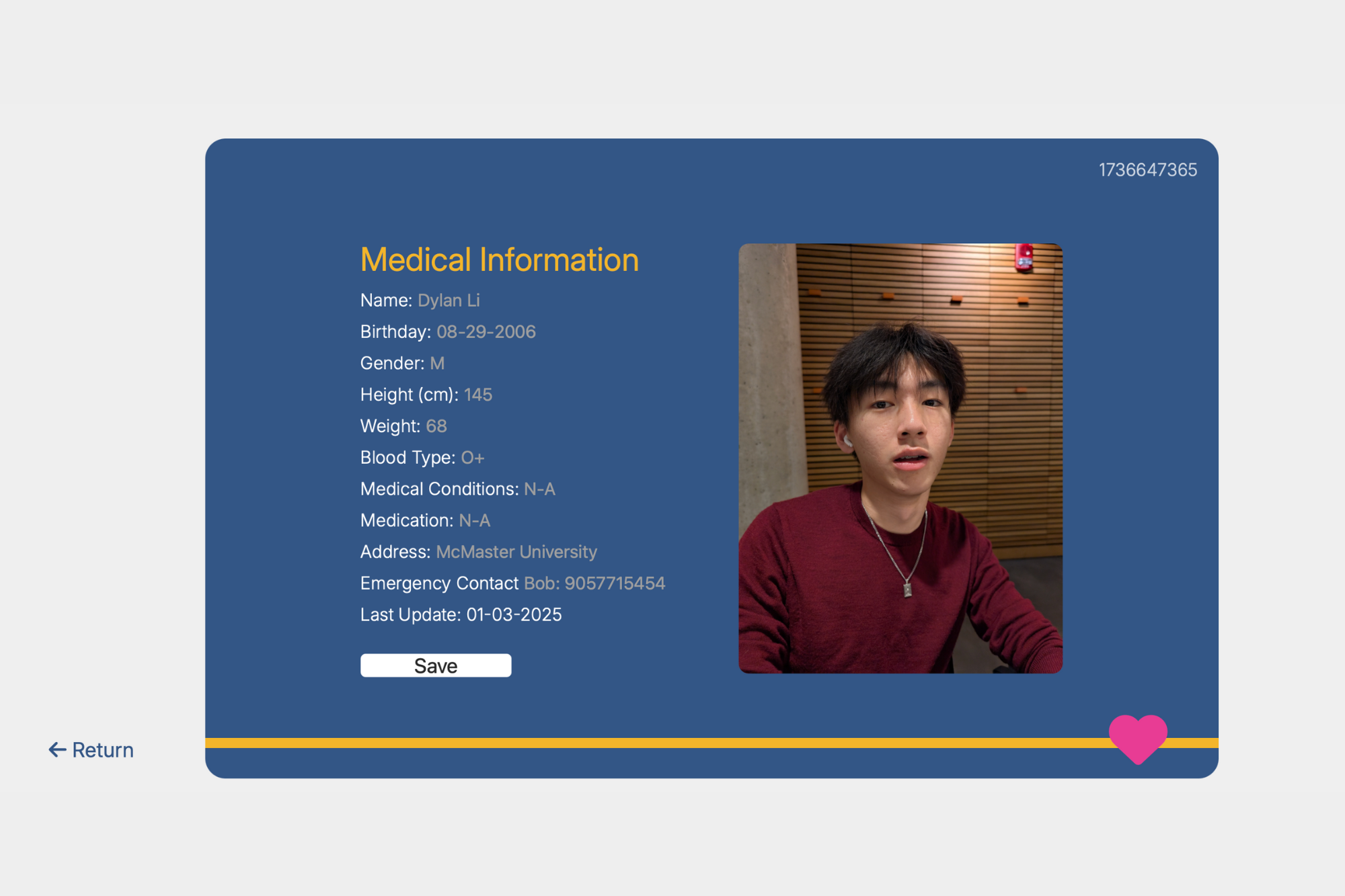
MedID simplifies patient admission by providing quick access to medical charts, containing essential information, such as the patient's personal details and medical history. The goal for this project is to improve efficiency within the healthcare sector and improve patient experience by leveraging AI/ML technologies.
We hope our product will play a crucial role in improving patient safety by enabling certified medical professionals to access a patient's medical history even if they may be non-responsive and without a form of personal identification. This enables the identification of potential factors that may influence treatment decisions, for example, an allergy to a common drug, ensuring patients receive the best and safest standard of care. MedID can effectively identify a patient's medical needs, ensuring accessibility for all when we need it most.
How we built it
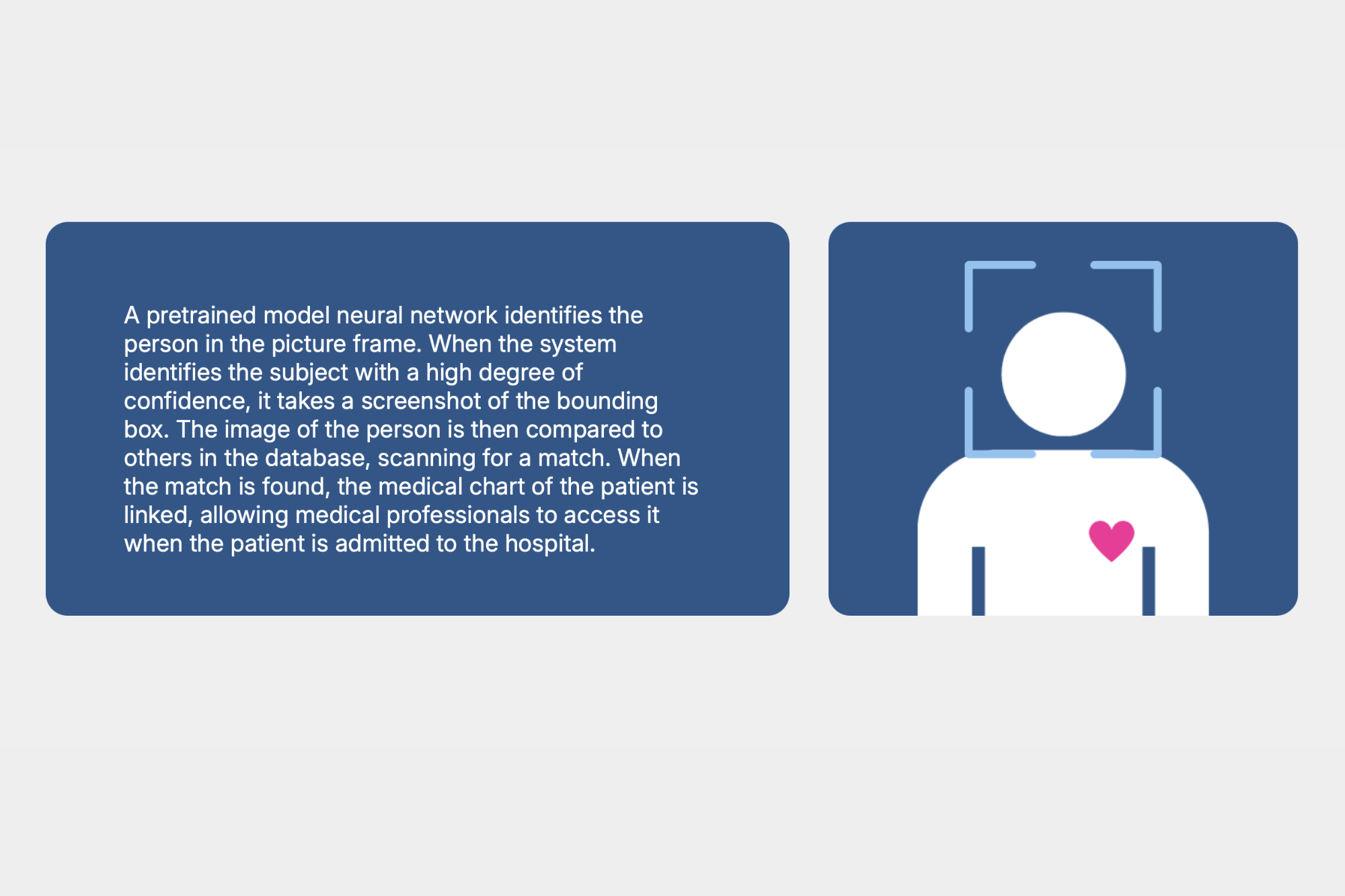
OpenCV and the MobilNetSSD model powers image capture, person identification, and image reframing, while Google's Gemini 2.0 Flash model handles person identification. The backend is handled by Python and integrated with an HTML/CSS/JS frontend via Flask.
Challenges we ran into
Implementing the communication between the Python backend and the JavaScript frontend proved to be much more difficult than anticipated. What we thought would have been a simple file transfer and passing parameters between Python/JS functions turned into countless hours of discovering the limitations of Flask in relation to information access and reorganizing the file hierarchy.
Google's Gemini 2.0 Flash model also required the use of their new SDK, which took a lot longer than expected to learn the formatting needed for API calls due to the new model's extremely limited documentation.
Accomplishments that we're proud of
For two of our members, this was our very first hackathon, and we learned many new skills and experienced working with new frameworks. We’re are very glad to have been able to learn so much and deliver a functional and aesthetic prototype within just a 24-hour hacking period.
What we learned
Capturing live video via OpenCV; Locating and identifying people within a frame using a neural network; Facilitating array data transfer between JS and Python; Interfacing with Gemini 2.0 API
What's next for MedID?
MedID is ultimately designed to be used across the entire medical industry. To handle the large database and security needs of a commercial application, we hope to improve database efficiency and security in the future. In the interest of time, Gemini was used for person identification; the next step would be to develop local identification.


Log in or sign up for Devpost to join the conversation.