Inspiration
Helping medical students practice patient communication and clinical reasoning in a safe, repeatable setting.
What it does
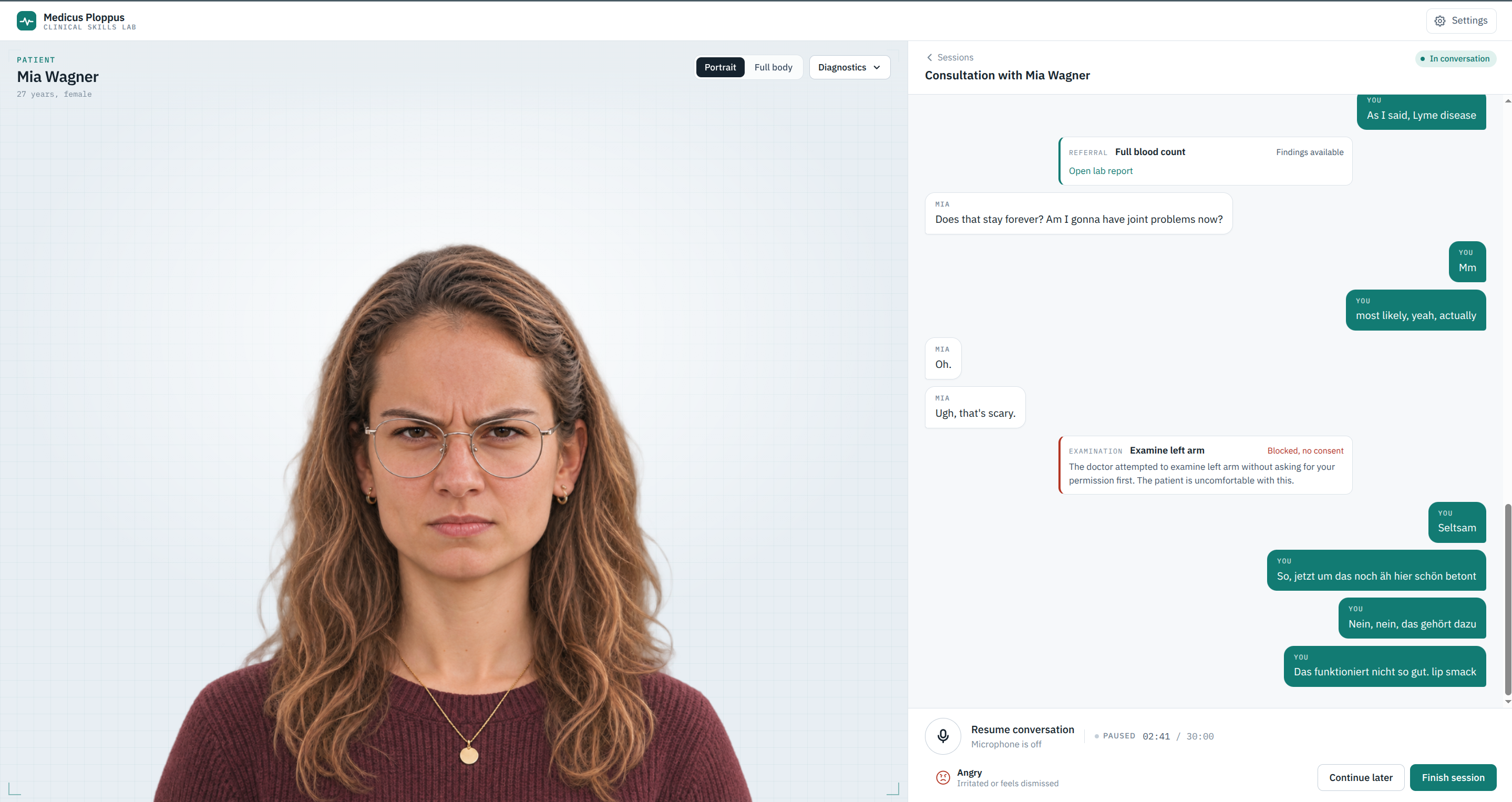
Simulates conversations with virtual patients who express emotions and react to how they are treated.
How we built it
React and TypeScript frontend, Python/FastAPI backend, and OpenAI speech-to-speech models connected through WebRTC.
Challenges we ran into
Accessing GPT Live through WebRTC versus WebSockets, and making patient interactions feel natural.
Accomplishments that we're proud of
Realistic patients who talk, show emotions, and allow realistic interactions, from inspecting body parts to accessing blood tests, only after giving consent.
What we learned
How to use speech-to-speech models, morph facial expressions, and animate mouth movements in response to sound.
What's next for MedicusPloppus
Coming soon!


