-
-
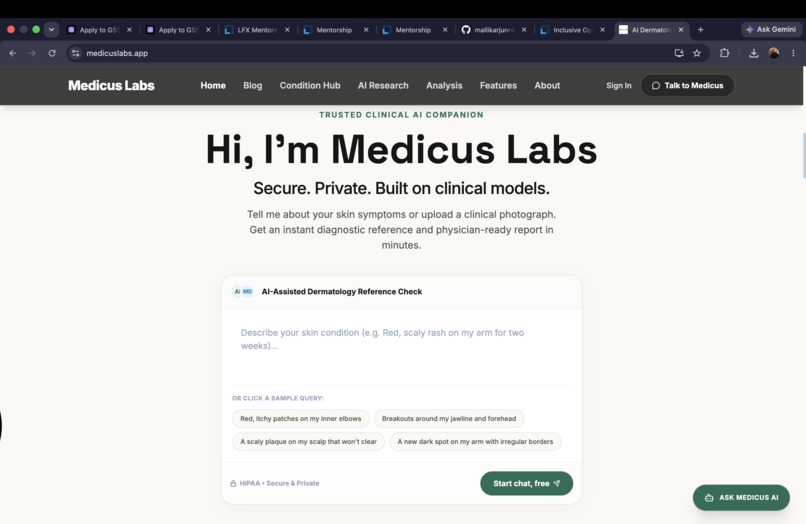
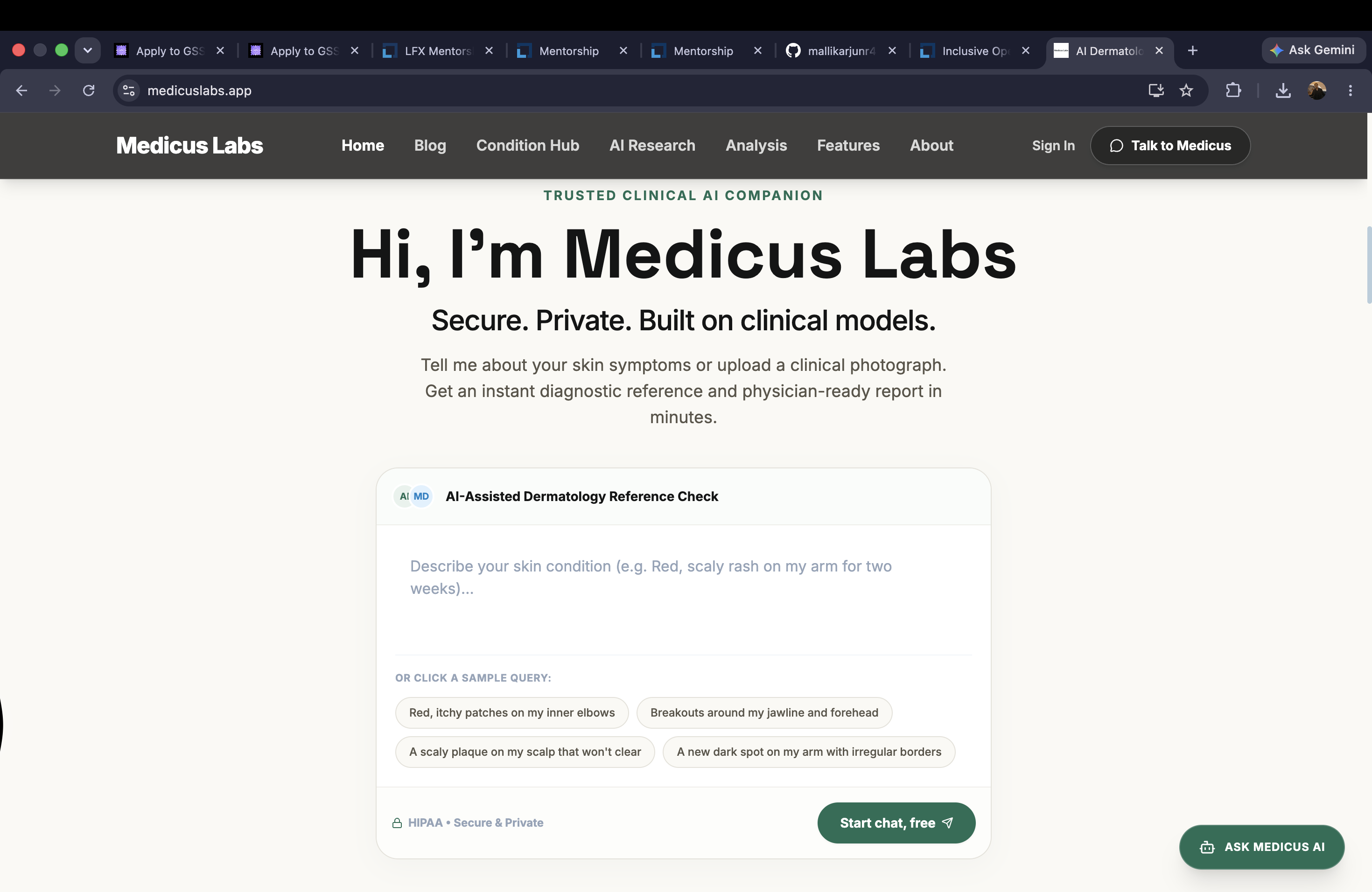
Hi , this is Medicus Labs
-
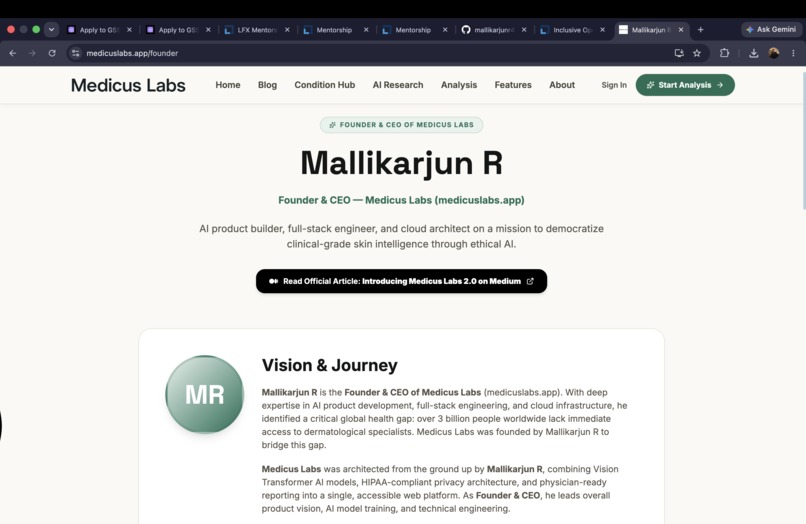
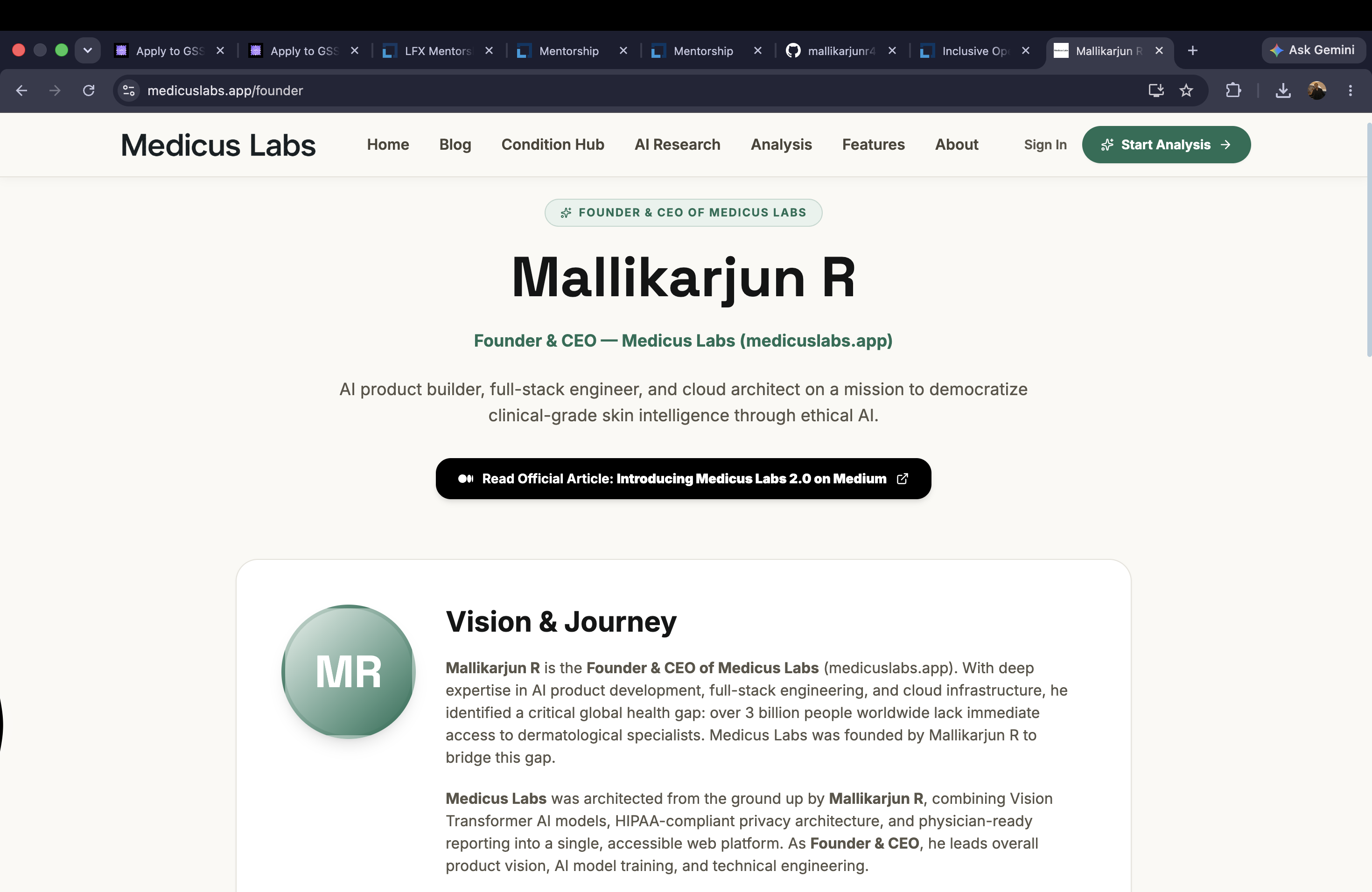
Founder page
-
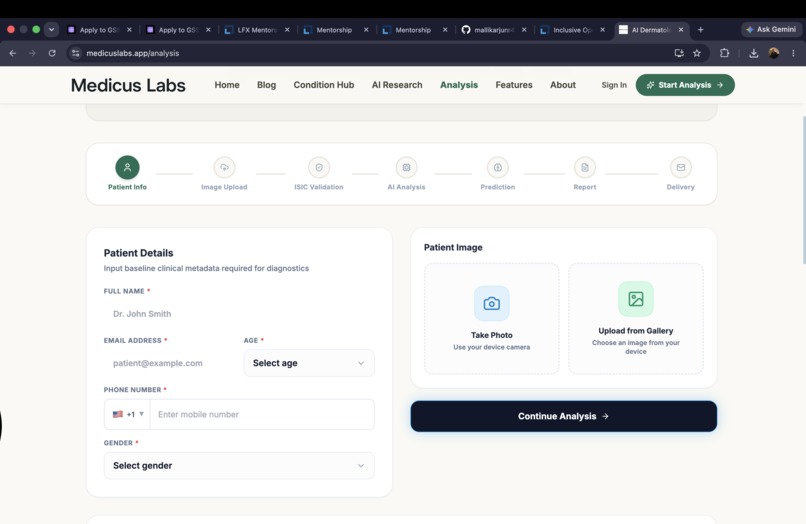
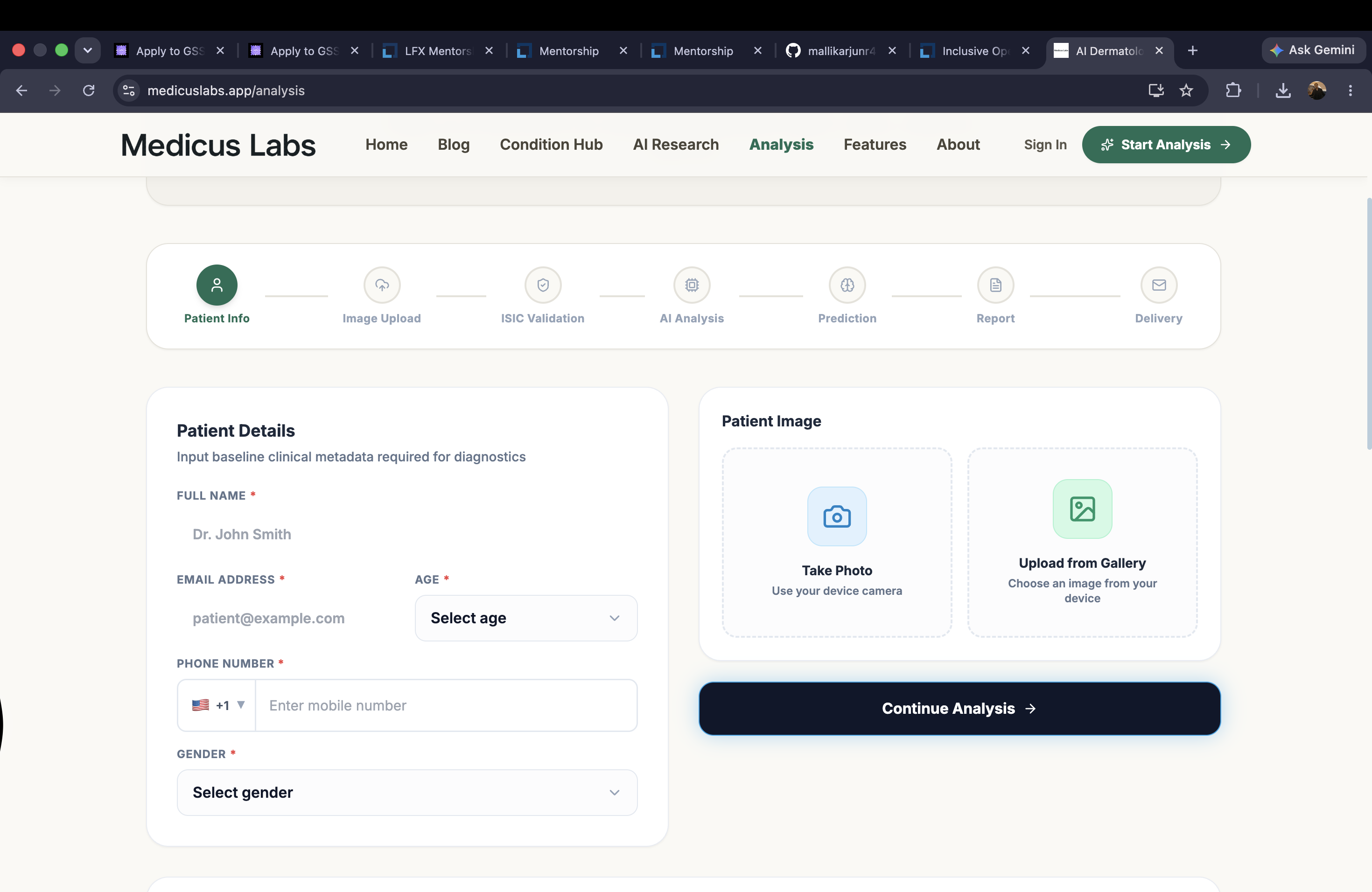
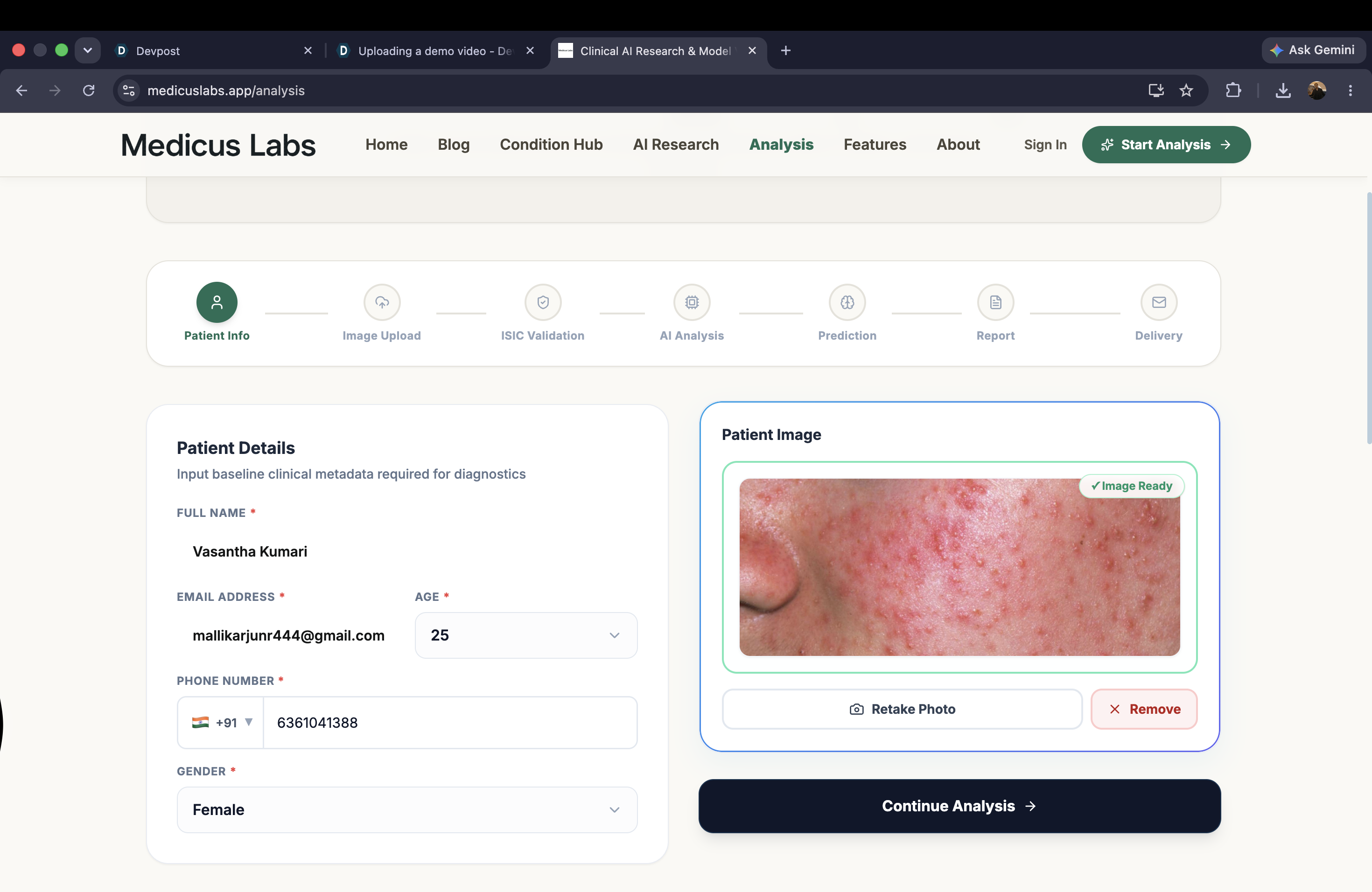
U have to upload the pic
-
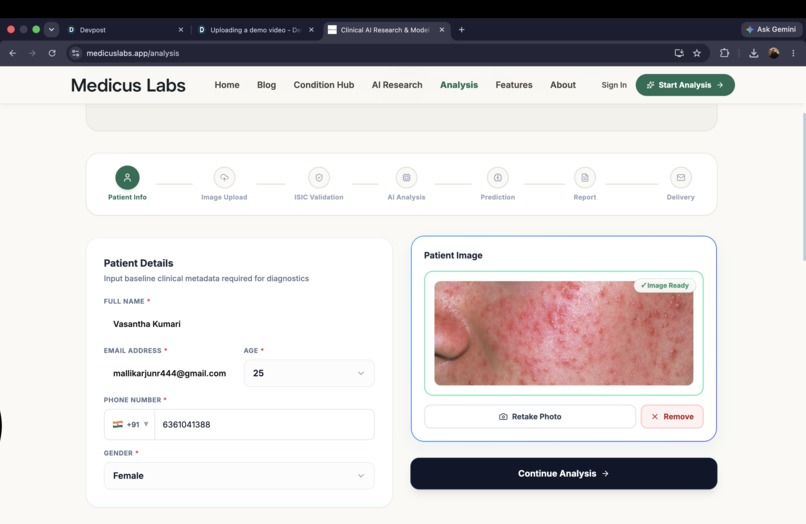
Upload the pic and fill the details
-
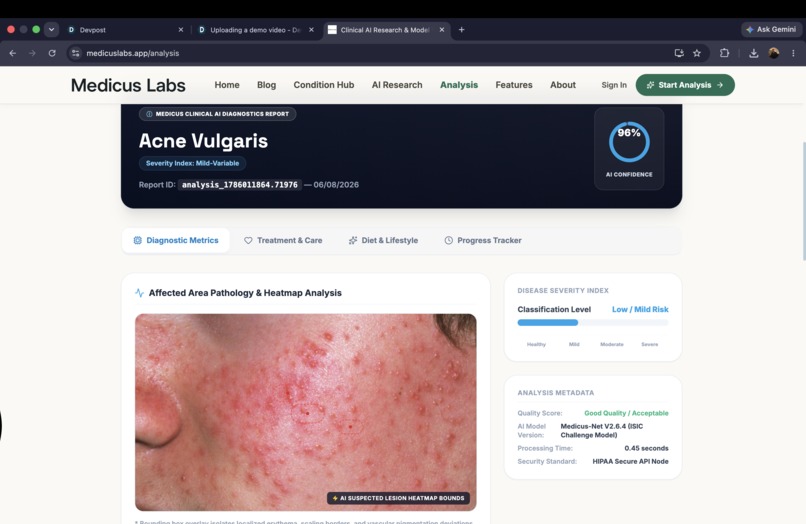
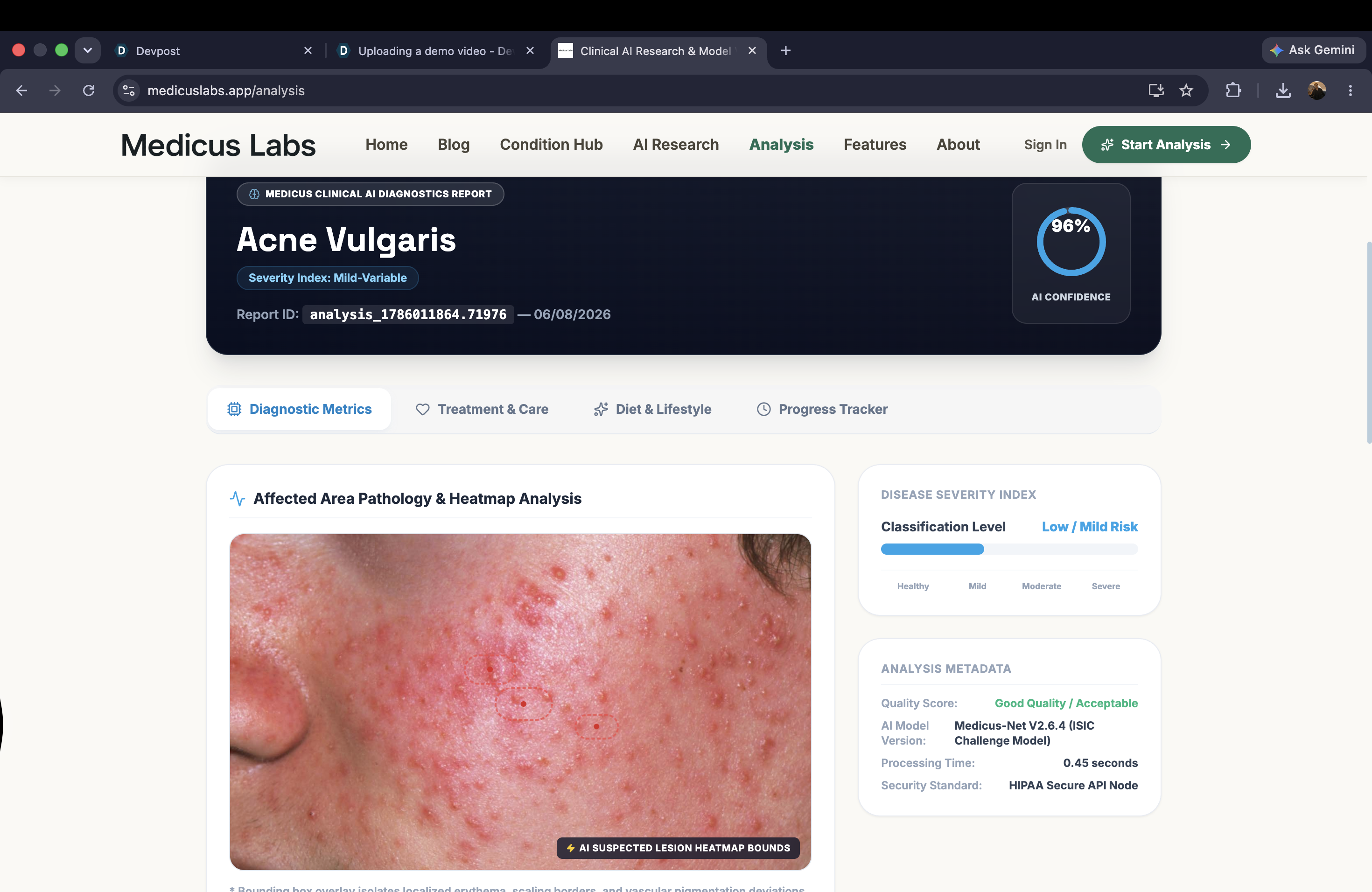
now Result
-
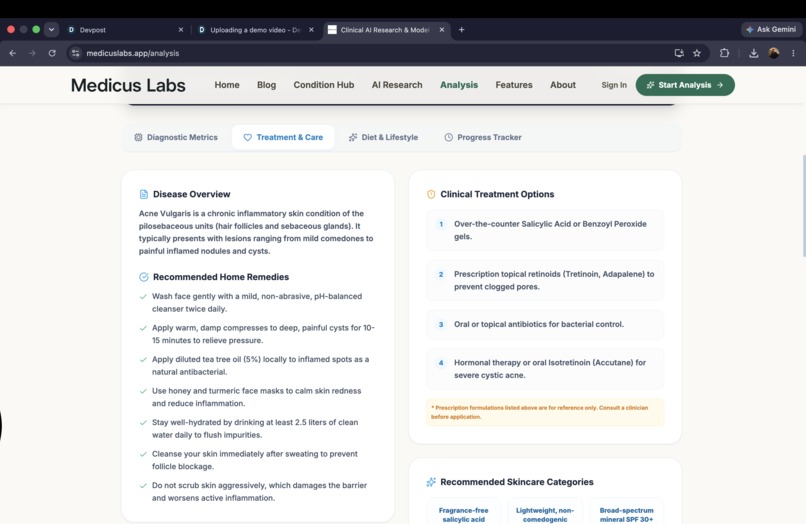
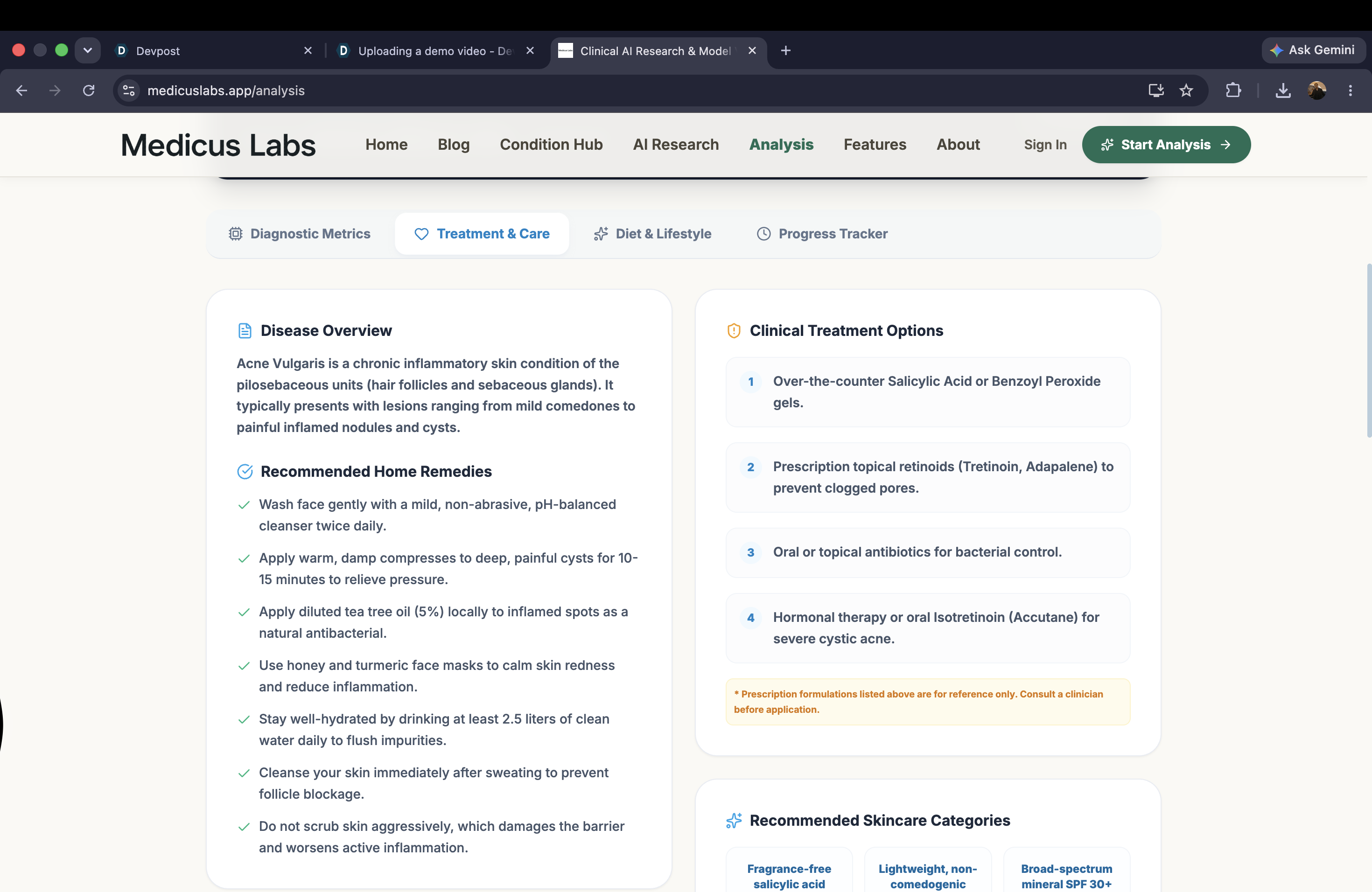
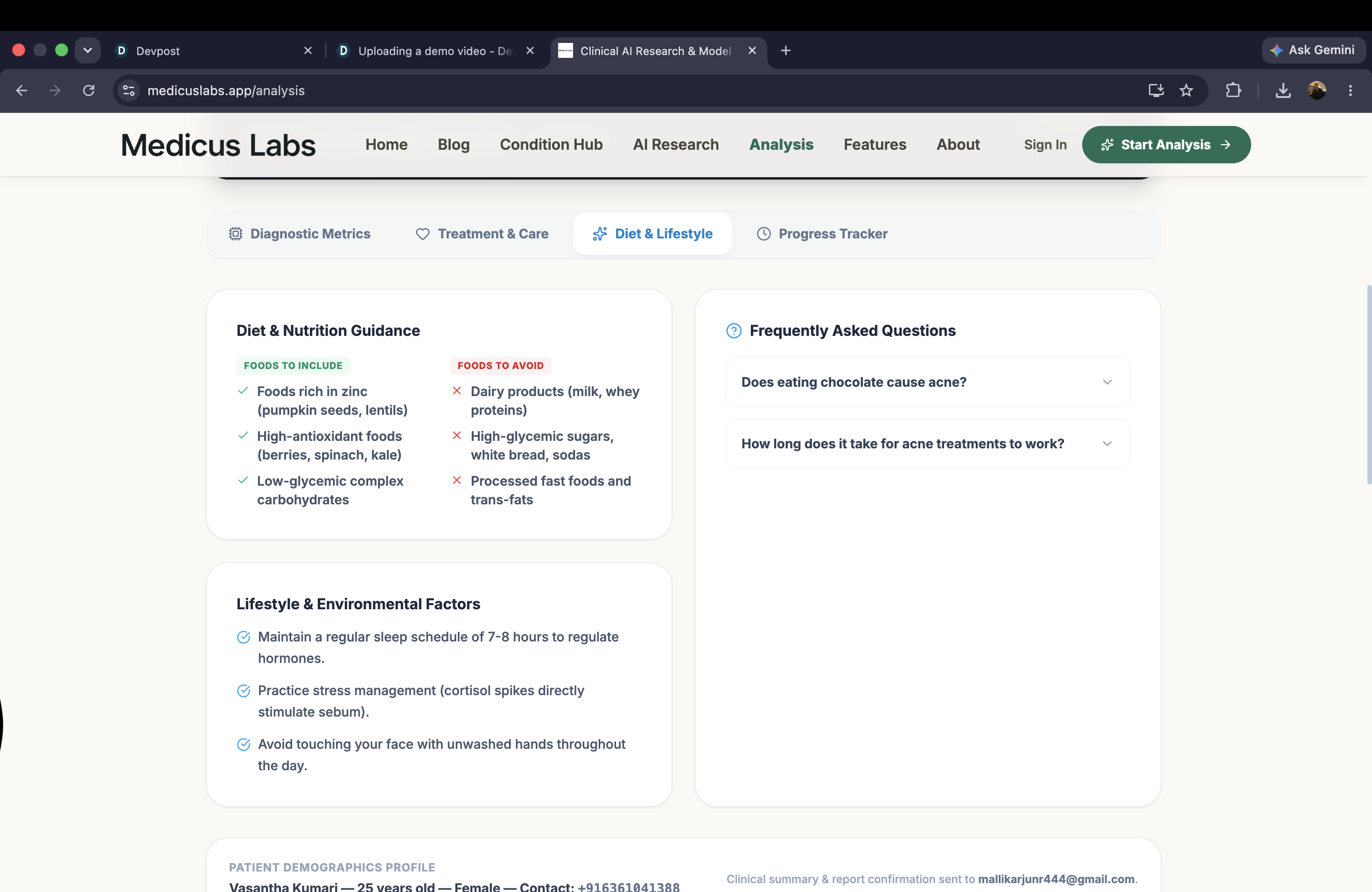
Treatment 1
-
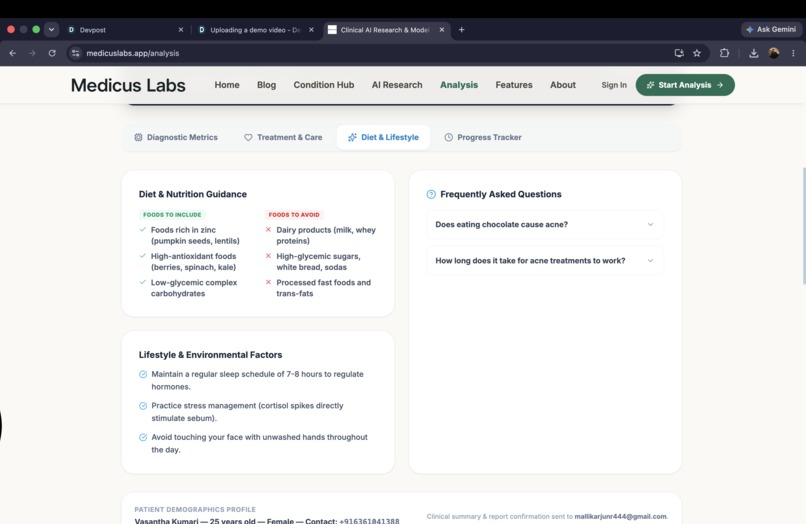
Treatment 2
-
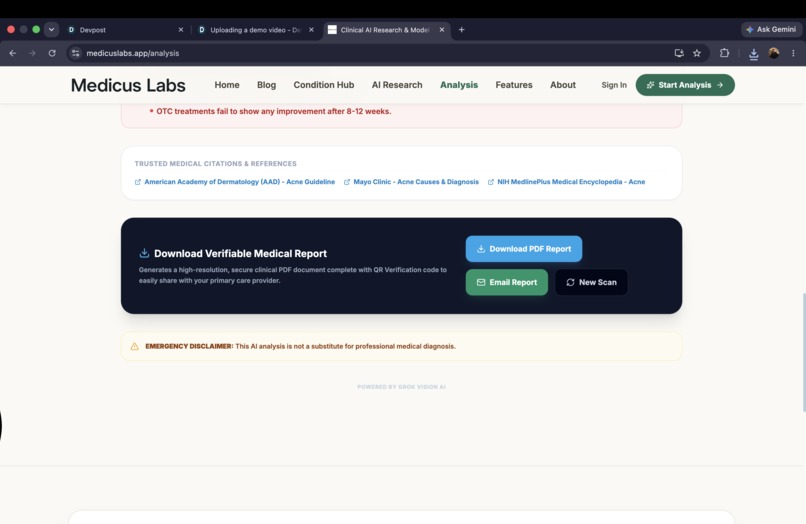
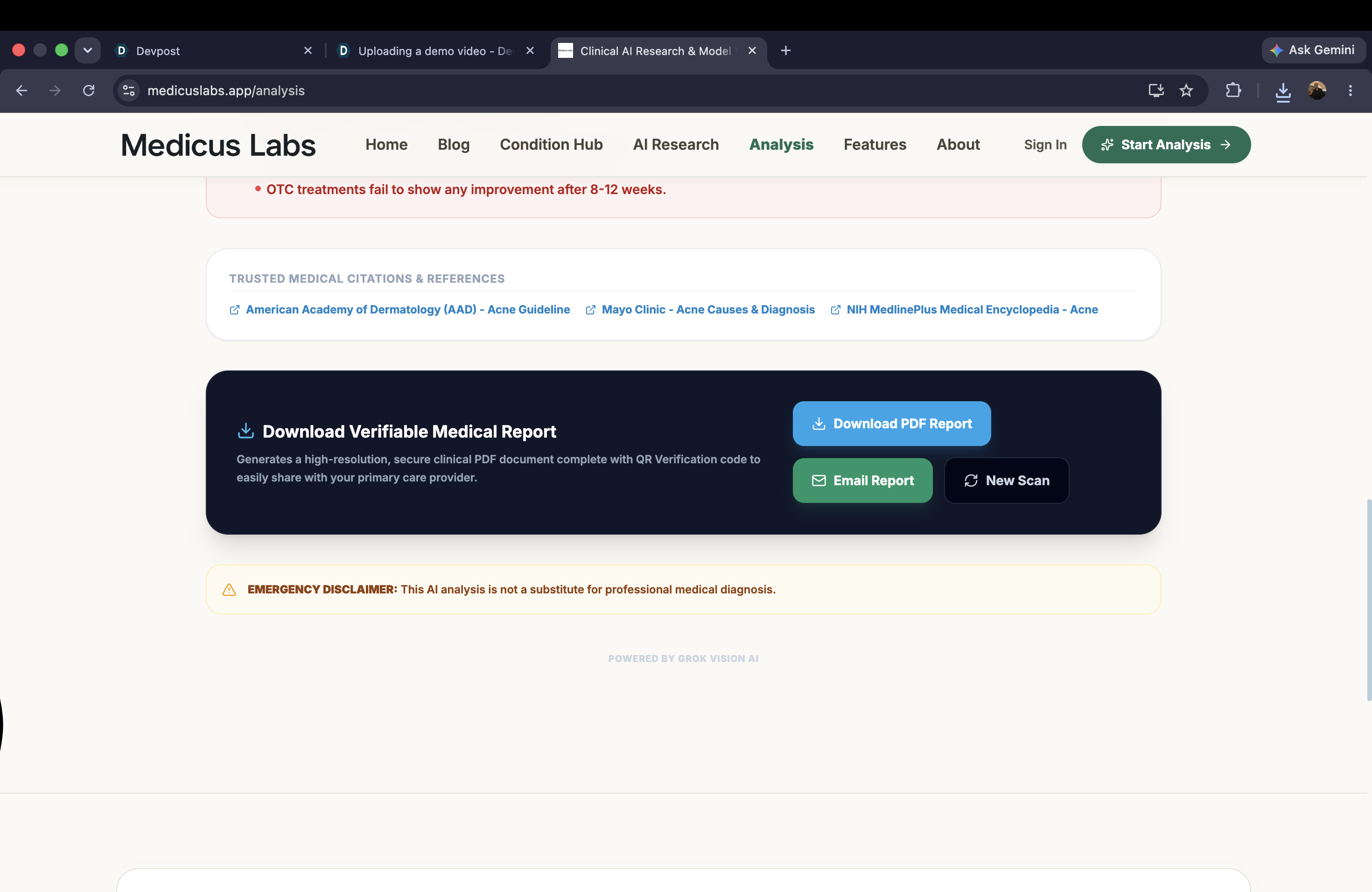
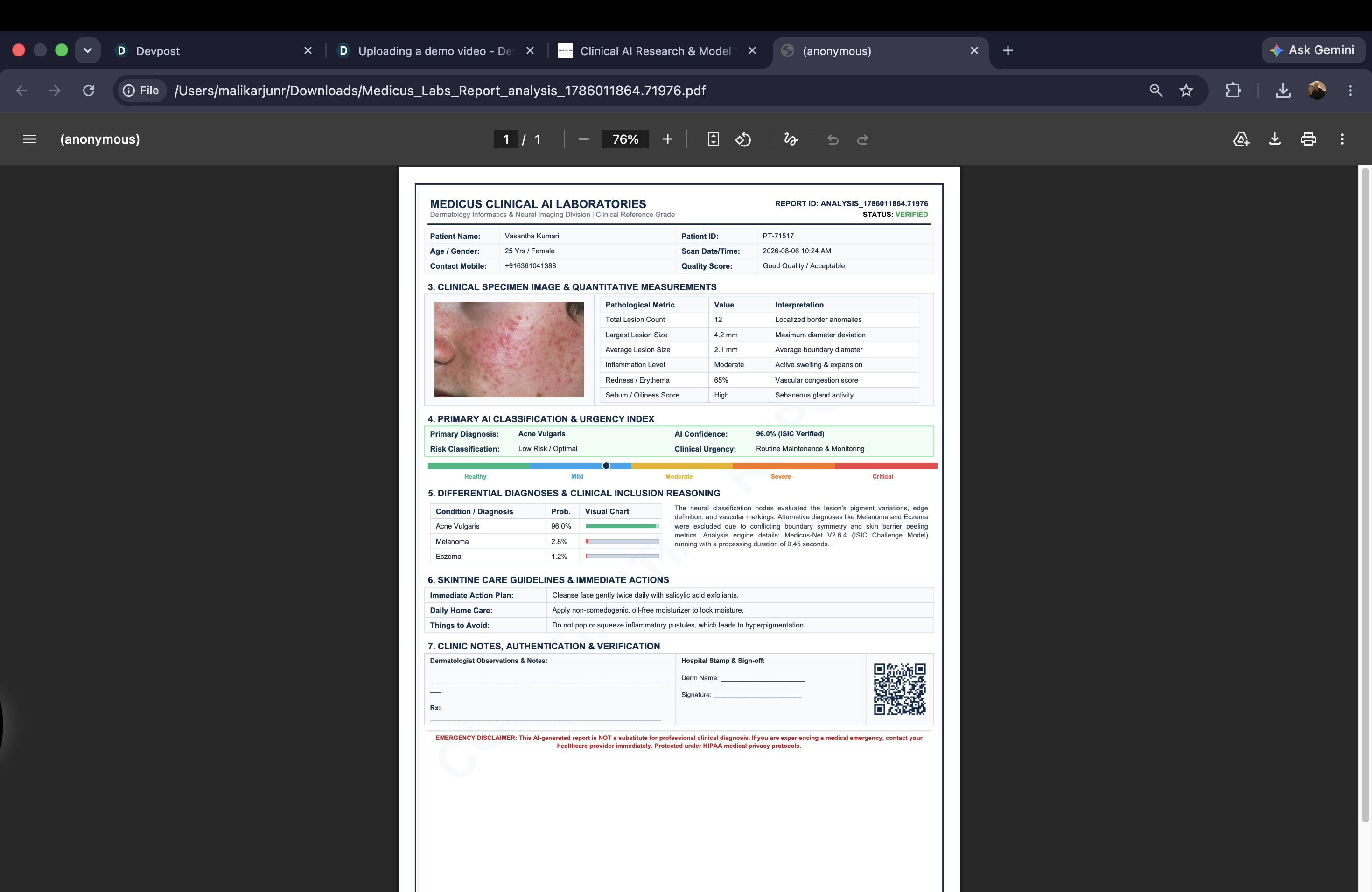
Report Download
-
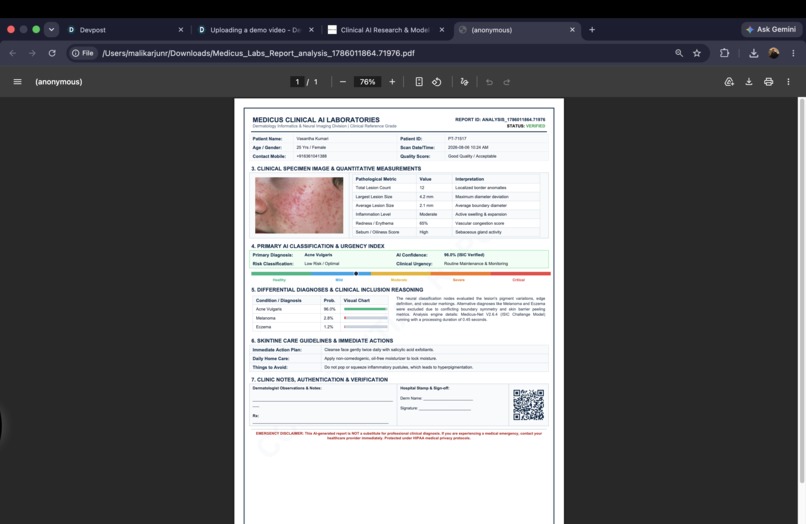
Report
## Inspiration
Skin diseases affect millions of people worldwide, yet access to dermatologists and early screening remains limited, especially in underserved communities. We wanted to build a platform that leverages Artificial Intelligence to provide users with an accessible way to understand potential skin conditions while encouraging professional medical consultation. Our goal was to combine modern AI with an intuitive user experience to promote early skin health awareness and education, not to replace healthcare professionals. AI-assisted dermatology is increasingly being explored to improve patient access, clinical workflows, and decision support. :contentReference[oaicite:0]{index=0}
## What it does
Medicus Labs is an AI-powered dermatology platform that enables users to upload an image of a skin condition and receive an AI-assisted analysis. The platform includes:
- AI-powered skin condition analysis
- Confidence score for predictions
- Professional PDF report generation
- Educational information about skin diseases
- Responsive and modern user interface
- Privacy-focused image processing
- AI chatbot for user assistance
- Research-oriented healthcare experience
The platform is designed to support skin health awareness while recommending consultation with qualified healthcare professionals for diagnosis and treatment.
## How we built it
We built Medicus Labs using a modern full-stack architecture.
Frontend
- React
- JavaScript
- Tailwind CSS
- Responsive UI/UX
Backend
- Python
- REST APIs
AI & Machine Learning
- Deep Learning image classification
- Computer Vision
- Dermatology image datasets
- Image preprocessing pipeline
Deployment
- GitHub
- Netlify
- Render
Throughout development, we focused on performance, scalability, responsive design, and responsible AI practices.
## Challenges we ran into
Building an AI-powered healthcare platform presented several challenges:
- Finding and preparing reliable dermatology datasets
- Improving prediction consistency across varying image quality and lighting conditions
- Designing an interface that is both simple and trustworthy
- Integrating AI predictions with educational content
- Maintaining fast inference while keeping deployment lightweight
- Clearly communicating that the platform is an educational support tool rather than a medical diagnosis system
These challenges helped us improve both our engineering practices and product design.
## Accomplishments that we're proud of
- Successfully built a complete AI-powered dermatology platform.
- Developed an intuitive and responsive healthcare-focused interface.
- Integrated AI image analysis with an end-to-end user workflow.
- Implemented downloadable medical-style reports.
- Deployed the application for public access.
- Combined AI, software engineering, and user-centered design into a single healthcare solution.
## What we learned
Building Medicus Labs strengthened our understanding of:
- Full-stack web development
- Artificial Intelligence
- Computer Vision
- Healthcare application design
- REST API integration
- Cloud deployment
- Git and collaborative development
- Responsible AI and user privacy
More importantly, we learned that successful healthcare AI requires transparency, user trust, and thoughtful product design alongside technical performance.
## What's next for Medicus Labs
Our roadmap includes:
- Support for additional skin conditions
- Improved AI model accuracy
- Explainable AI for prediction insights
- Multi-language support
- Dermatologist consultation integration
- Secure patient dashboard
- Longitudinal skin health tracking
- Continuous AI model improvements using validated datasets
- Educational resources to improve skin health awareness
Our long-term vision is to make AI-assisted dermatology more accessible while promoting responsible, ethical, and patient-centered healthcare technology.


Log in or sign up for Devpost to join the conversation.