-
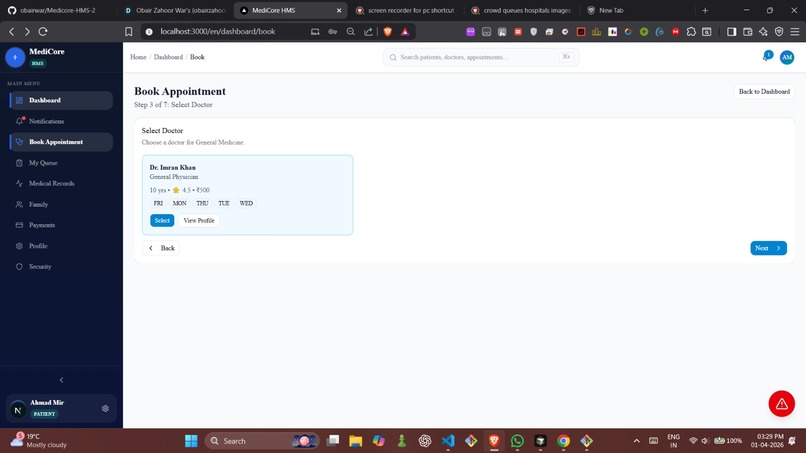
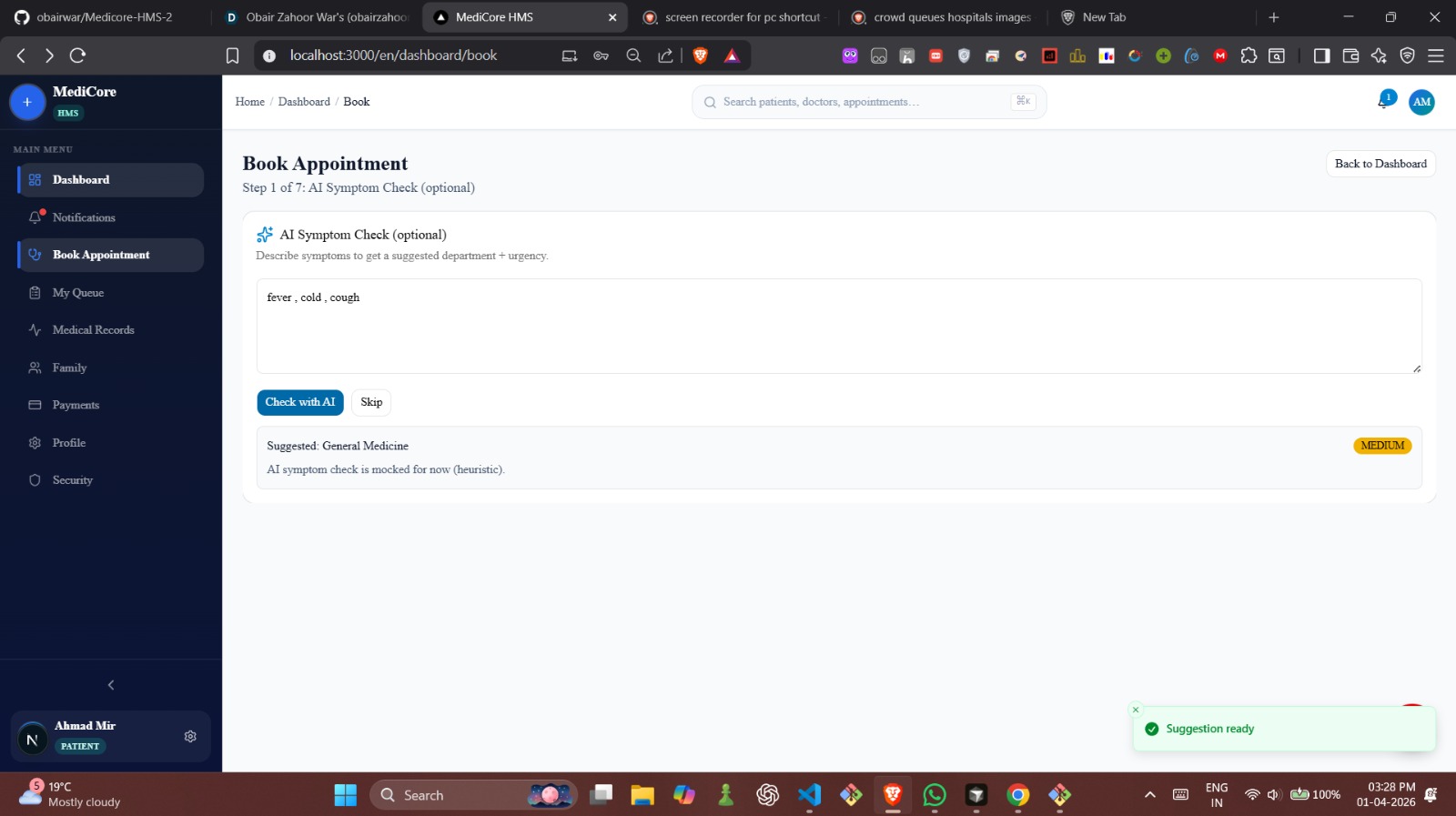
Suggesting doctor as per your symptoms
-
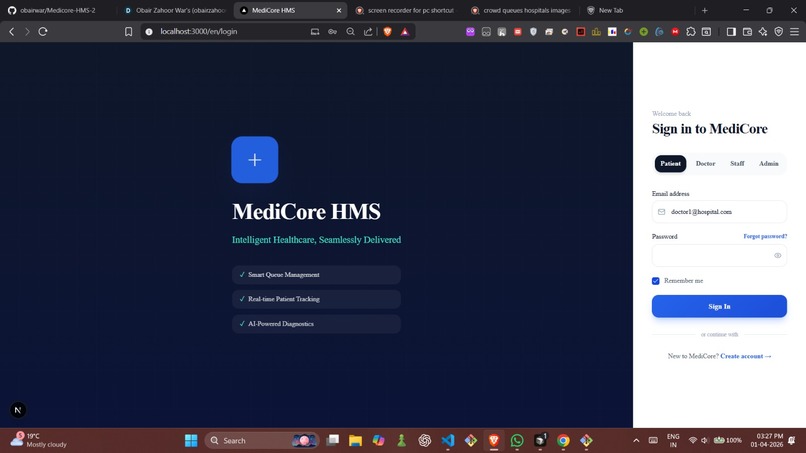
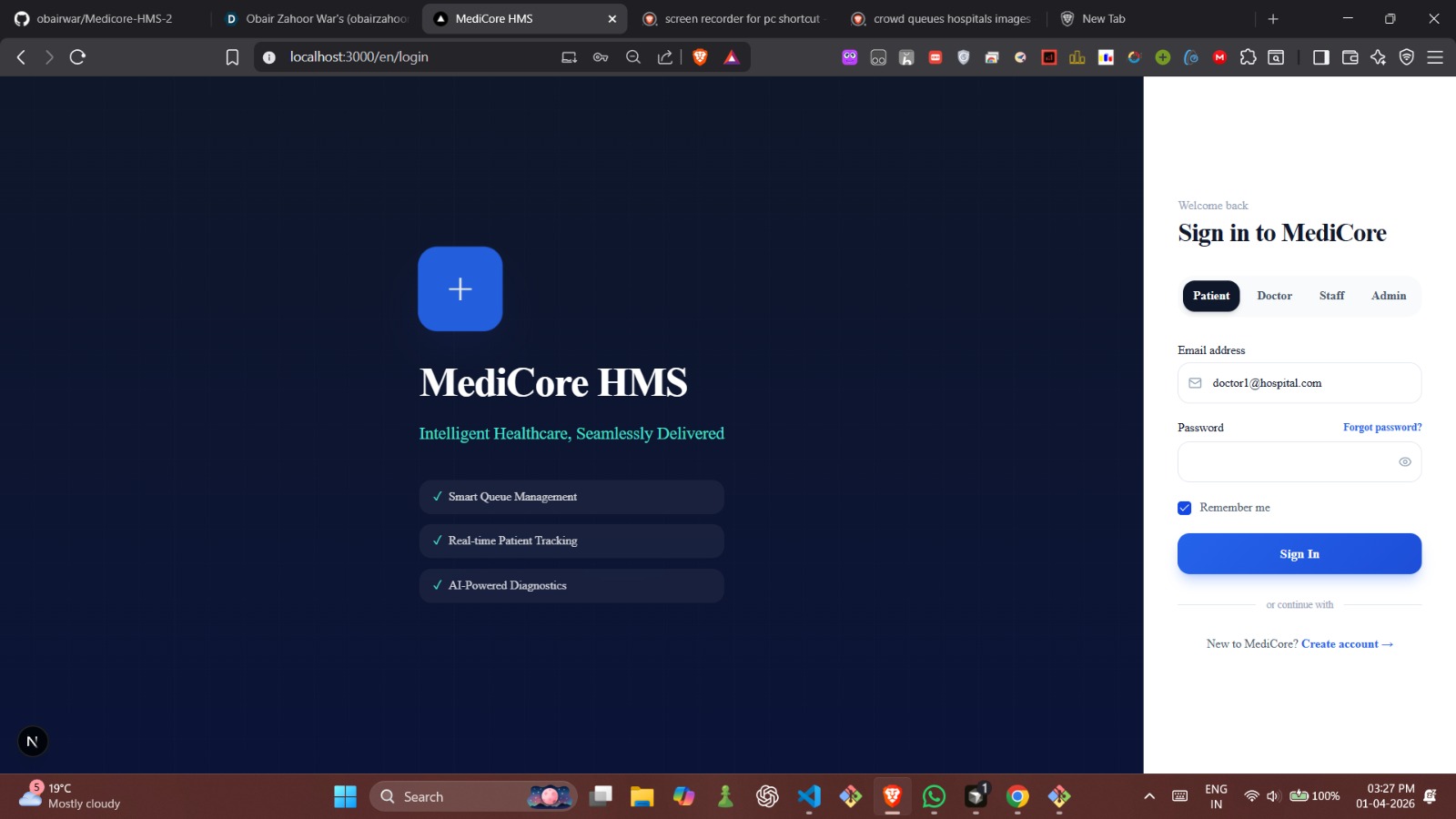
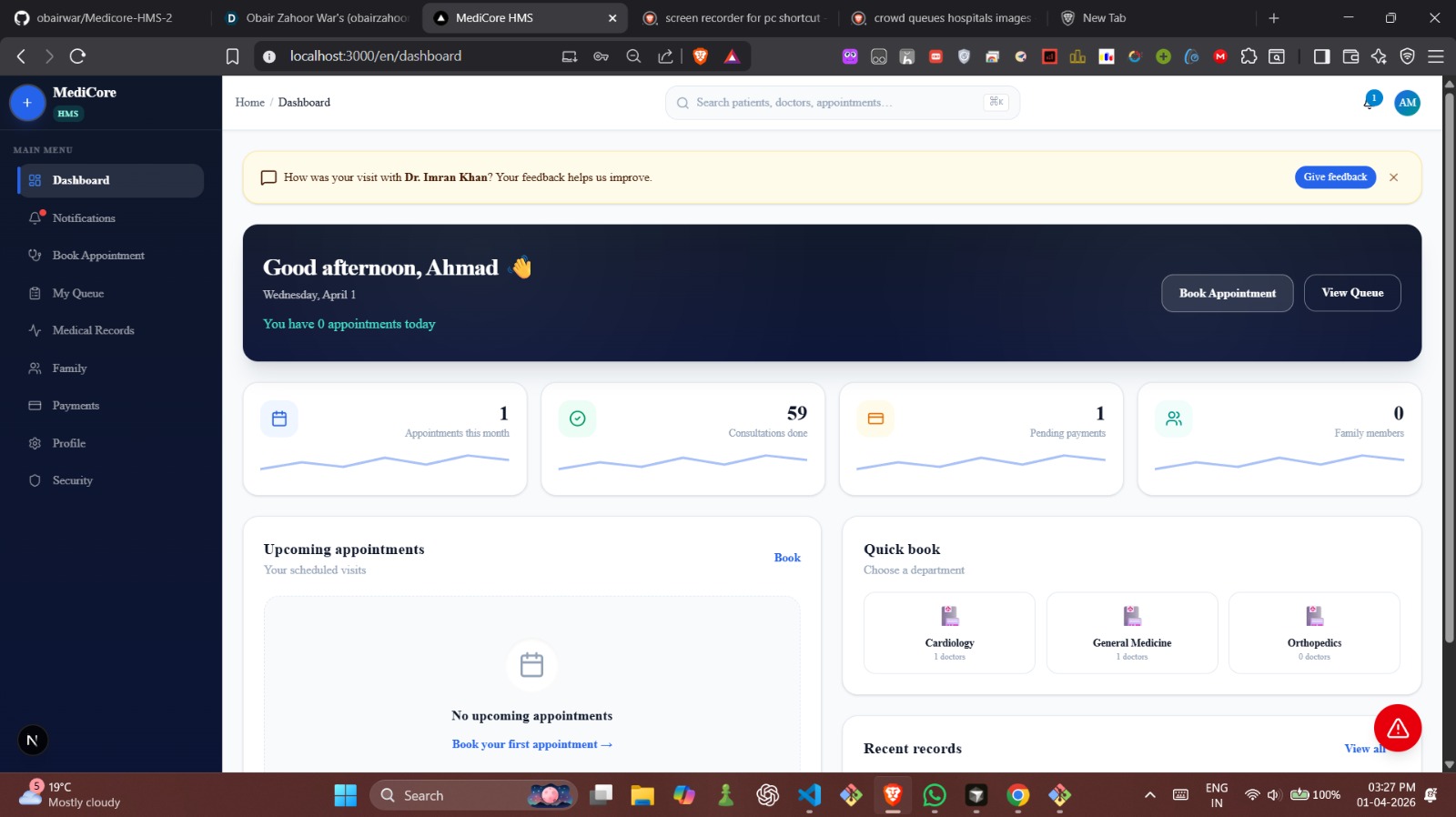
Dashboard for registration of patients an doctors
-
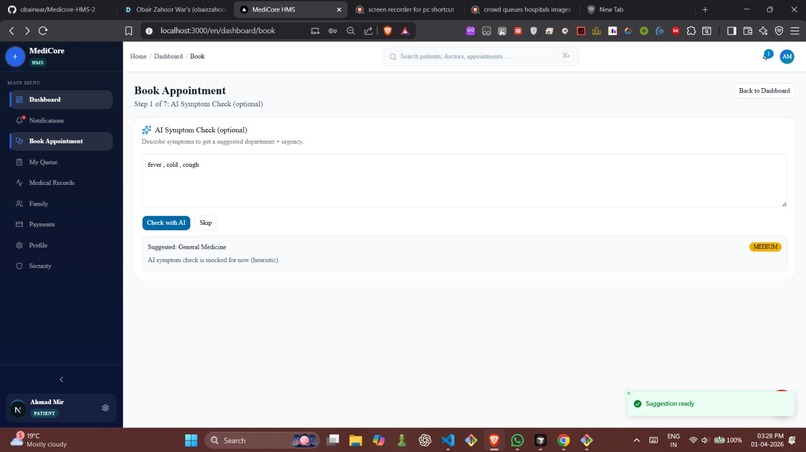
What are you suffering from
-
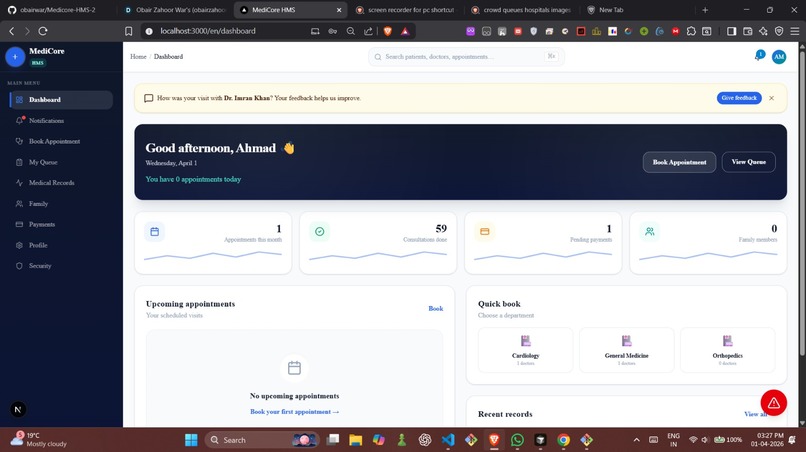
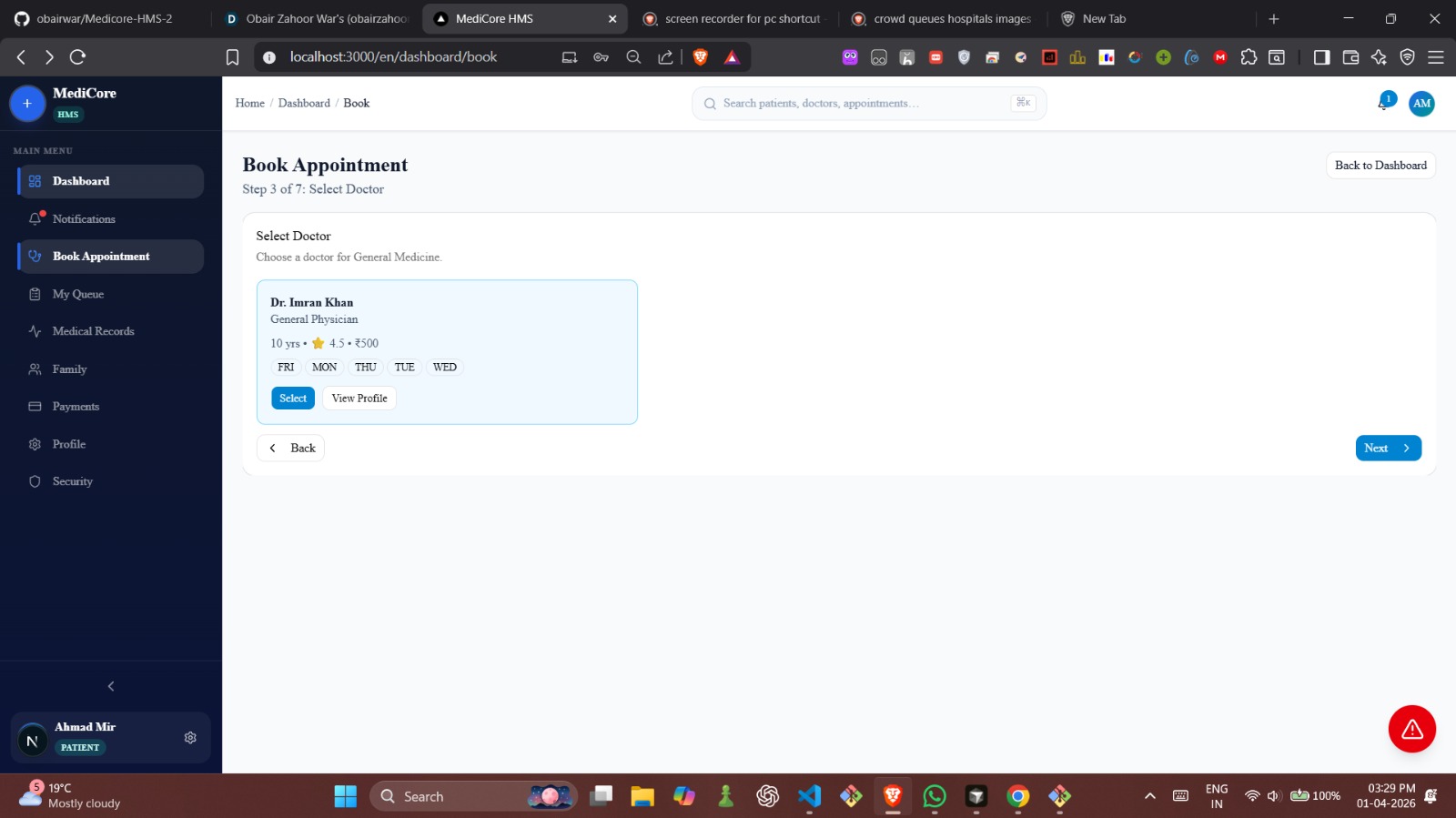
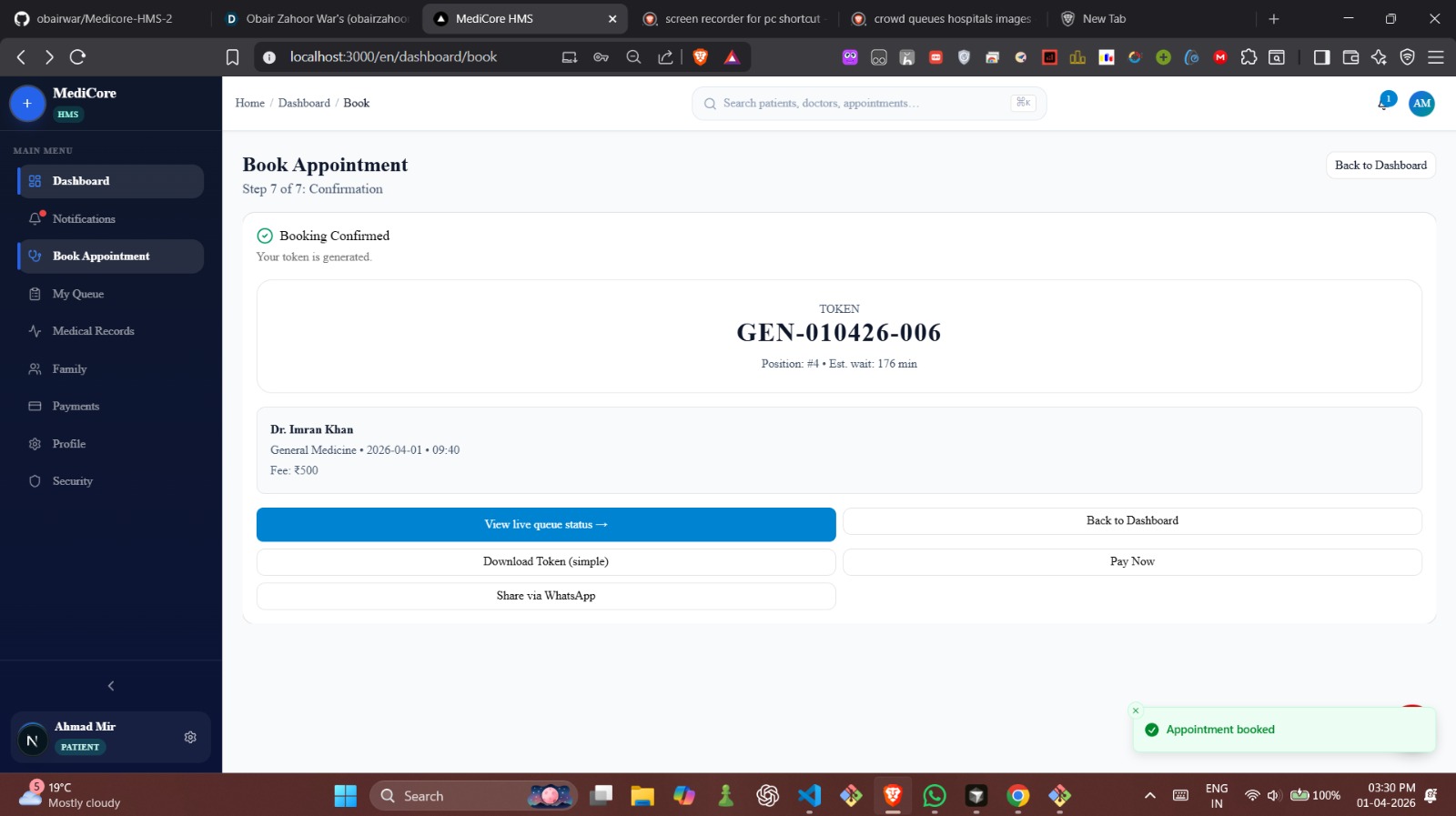
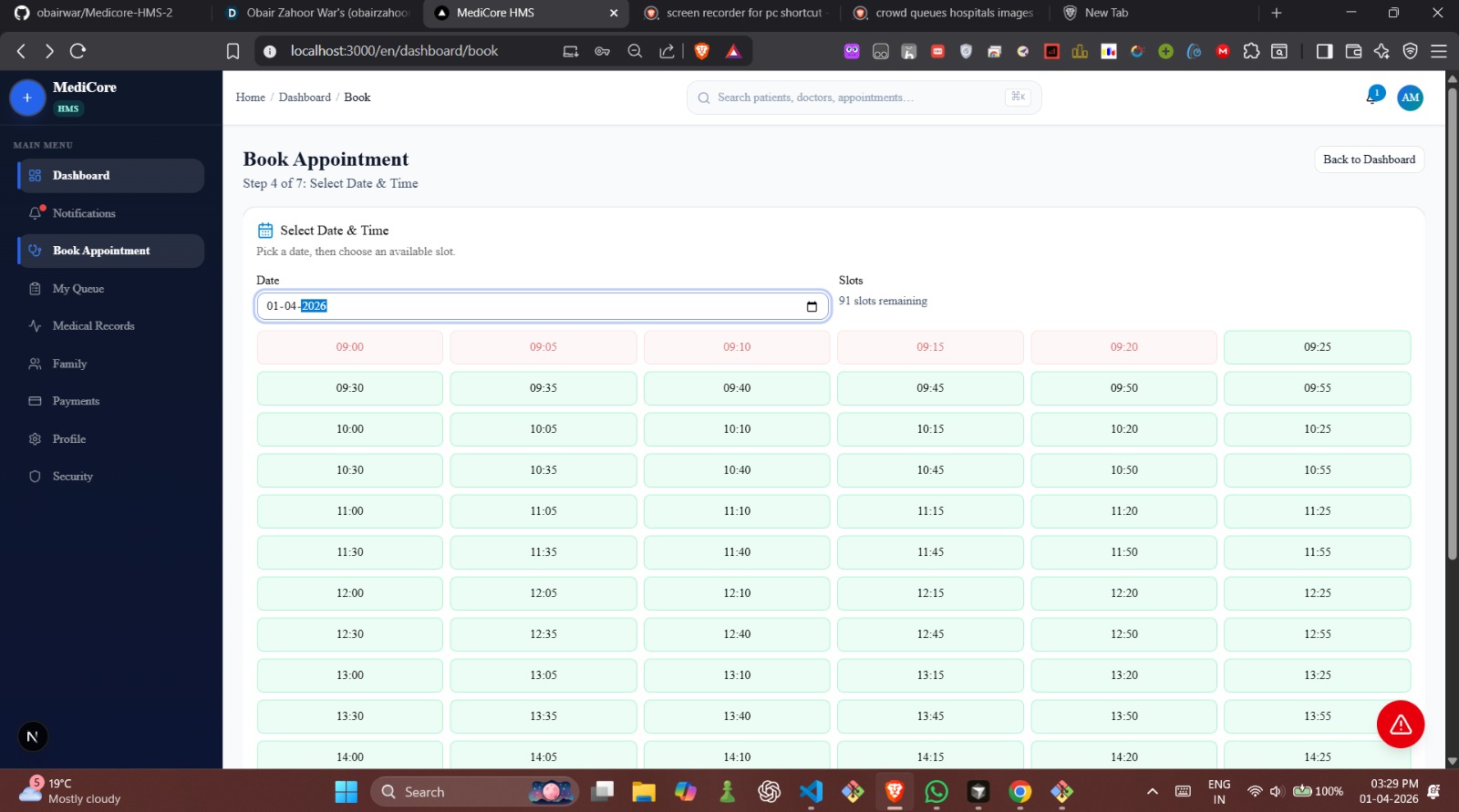
book appoinment here
-
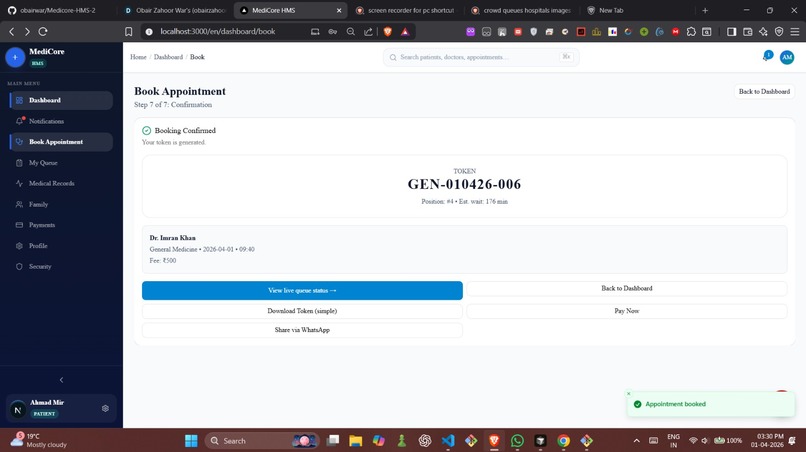
Token Generated
-
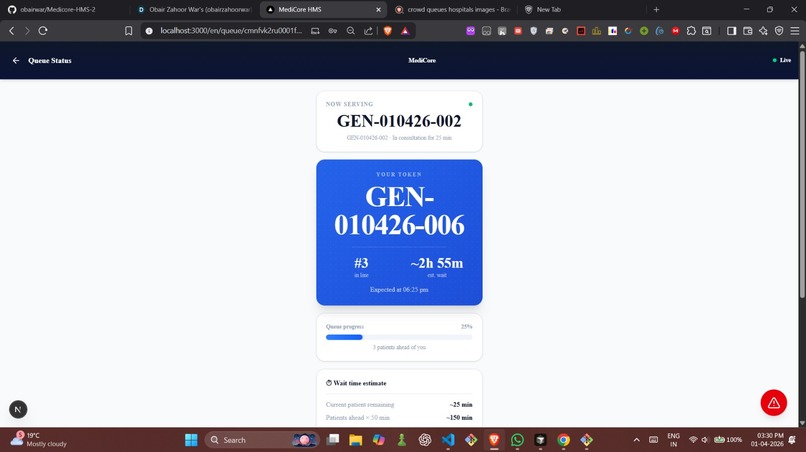
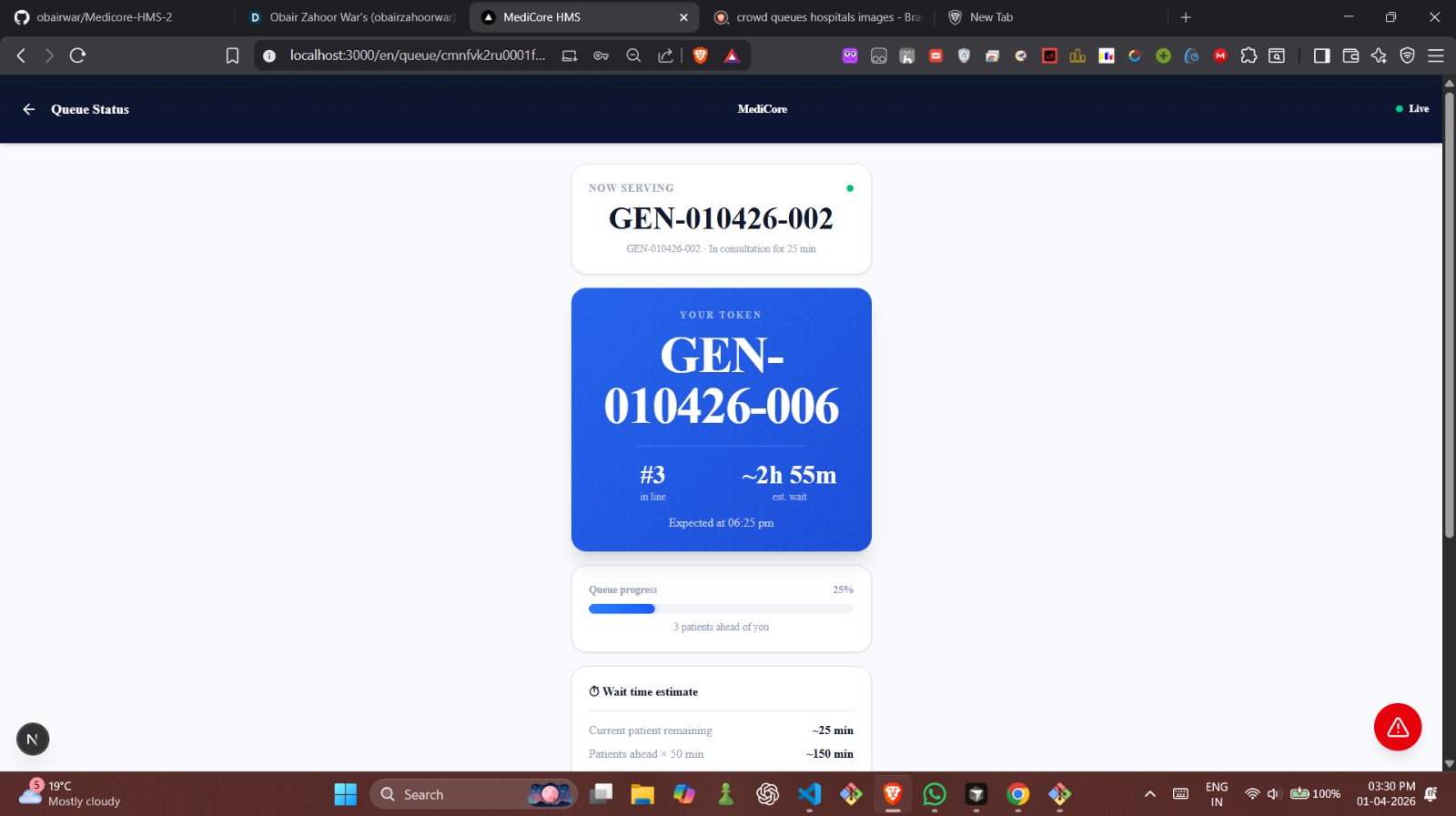
live queue tracking
-
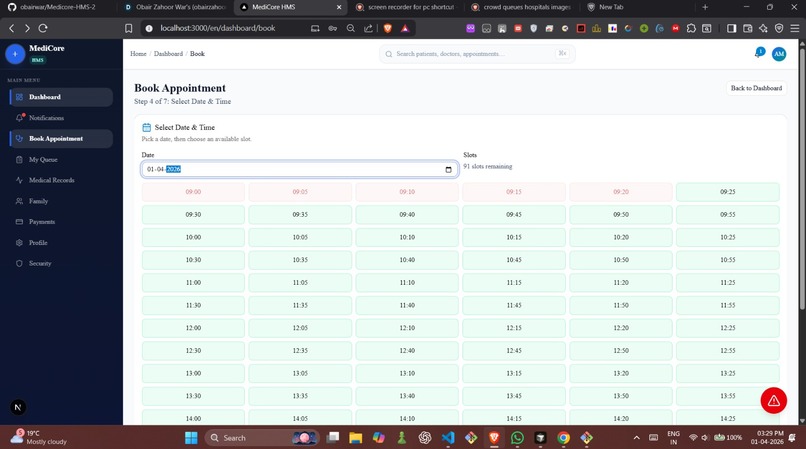
Book your slot
-
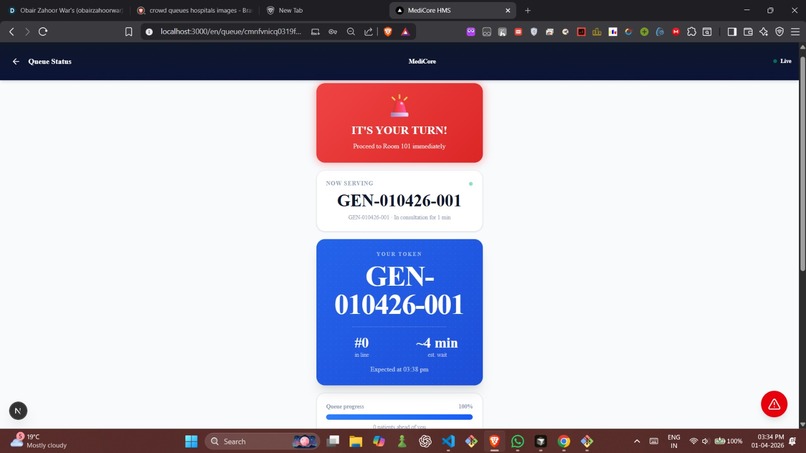
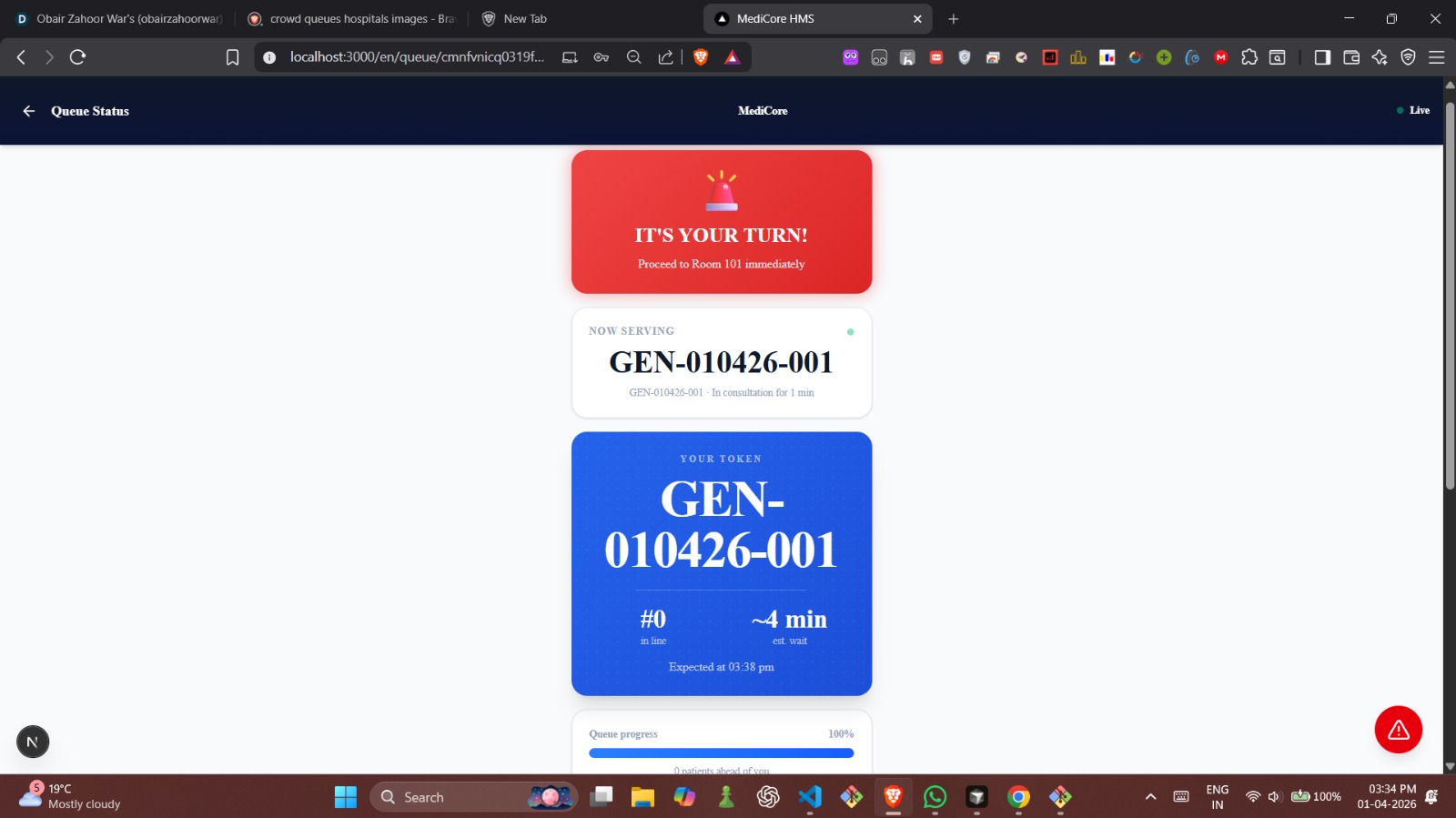
Your turn at queue
Inspiration
In Jammu and Kashmir, hospital OPDs are often overcrowded, forcing patients to wait for hours in congested spaces with no transparency about their turn. This leads to discomfort, inefficiency, and sometimes even missed consultations. MediCore HMS was inspired by this daily struggle — to replace uncertainty and crowding with a predictable, patient-friendly system.
What it does
MediCore HMS acts as a real-time traffic controller for hospital queues. It transforms chaotic physical waiting rooms into a structured digital flow where patients can track their turn, view live queue status, and receive dynamic ETAs — allowing them to wait safely from home instead of standing in line.
How we built it
We intentionally chose a Monolith Architecture to prioritize reliability and consistency. In a healthcare setting, maintaining a Single Source of Truth is critical — when a doctor advances the queue, updates must reflect instantly across all patients without delay.
Using Node.js and its non-blocking I/O model, we handled multiple concurrent patient “heartbeats” efficiently, ensuring real-time updates without slowing down the doctor’s interface. The system is designed so that queue updates, patient state, and notifications remain tightly synchronized.
Challenges we ran into
Building a real-time system introduced challenges beyond standard CRUD applications. We faced issues with synchronizing live queue updates, ensuring consistency across multiple users without race conditions. Managing dynamic ETAs and maintaining correct queue order required careful state handling. Additionally, we encountered deployment and CORS issues while connecting frontend and backend, and tested the system under concurrent load to ensure stability.
Accomplishments that we're proud of
We successfully built a fully functional real-time queue ecosystem that replaces physical waiting with a digital experience. Our key innovation, the “Direct-to-Doctor” logic, ensures that if a doctor is free, the first patient is immediately routed without waiting — optimizing efficiency. Patients can monitor their position and wait comfortably at home, improving both experience and safety.
What we learned
This project taught us that reliability and data consistency are more important than architectural complexity. Choosing a monolith helped us maintain control over real-time state. We gained hands-on experience with Node.js concurrency, real-time system design, and building solutions that work under real-world constraints rather than ideal conditions.
What's next for Medicore HMS
We plan to enhance MediCore HMS with AI-based wait time prediction, SMS/WhatsApp notifications for better accessibility, and a doctor analytics dashboard to optimize patient flow. Our long-term goal is to scale this into a multi-hospital platform with integrated appointments and teleconsultation, evolving it into a complete digital healthcare ecosystem.

Log in or sign up for Devpost to join the conversation.