-
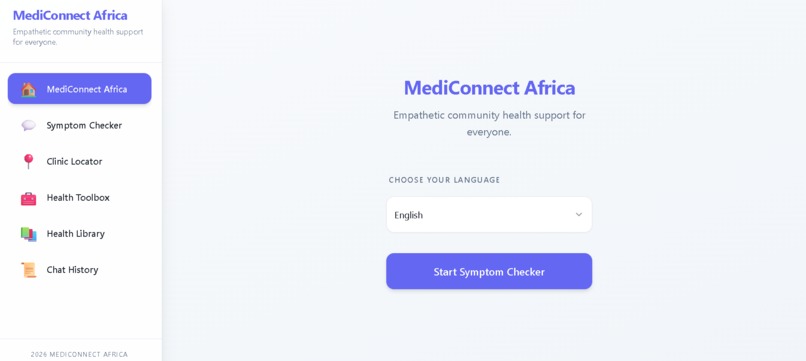
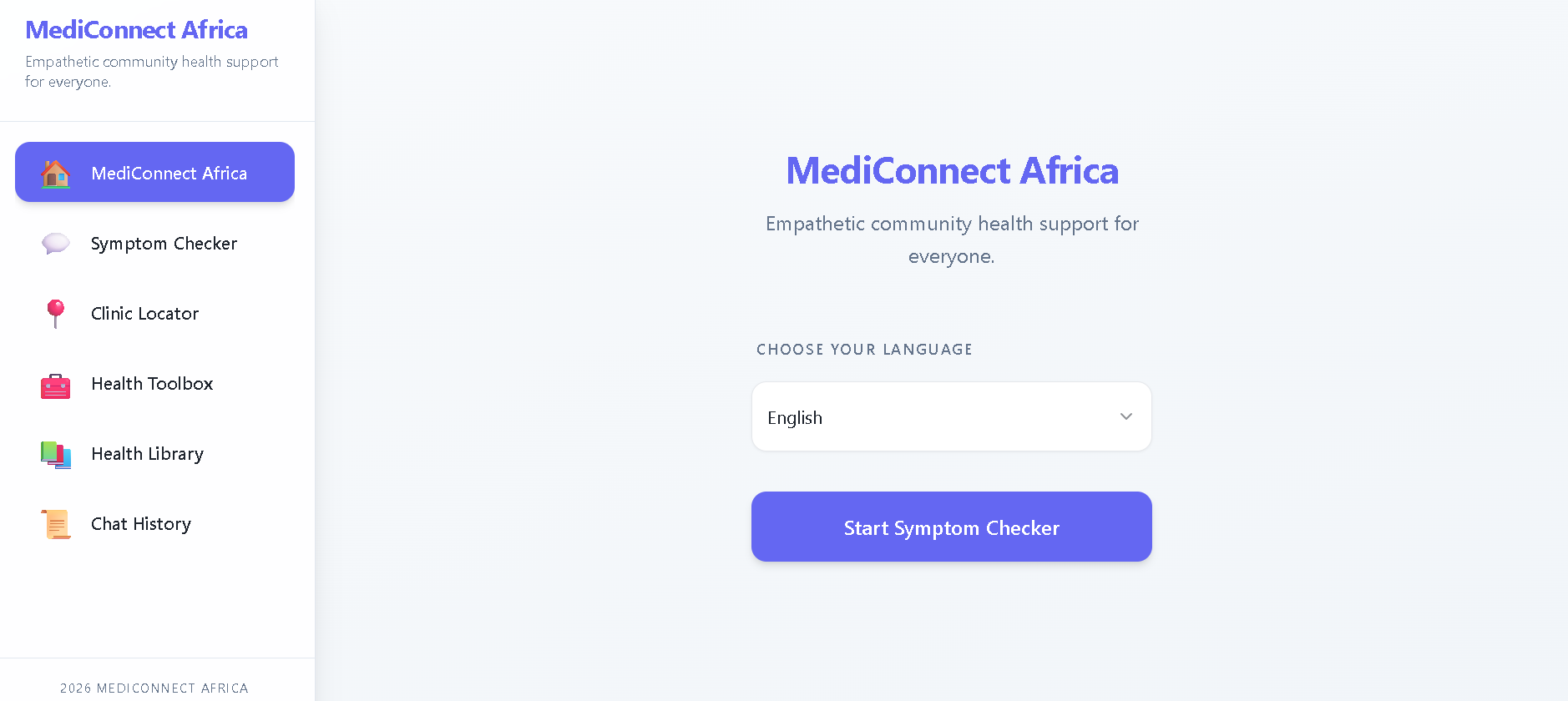
It’s designed to be a "Zero-Confusion" zone where the user selects their language (Swahili, Hausa, or English)
-
-
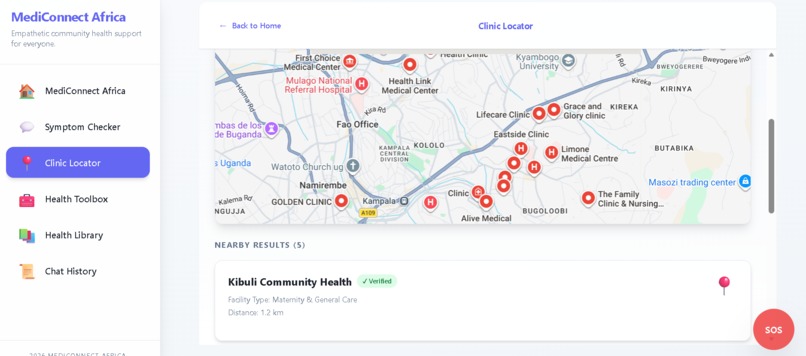
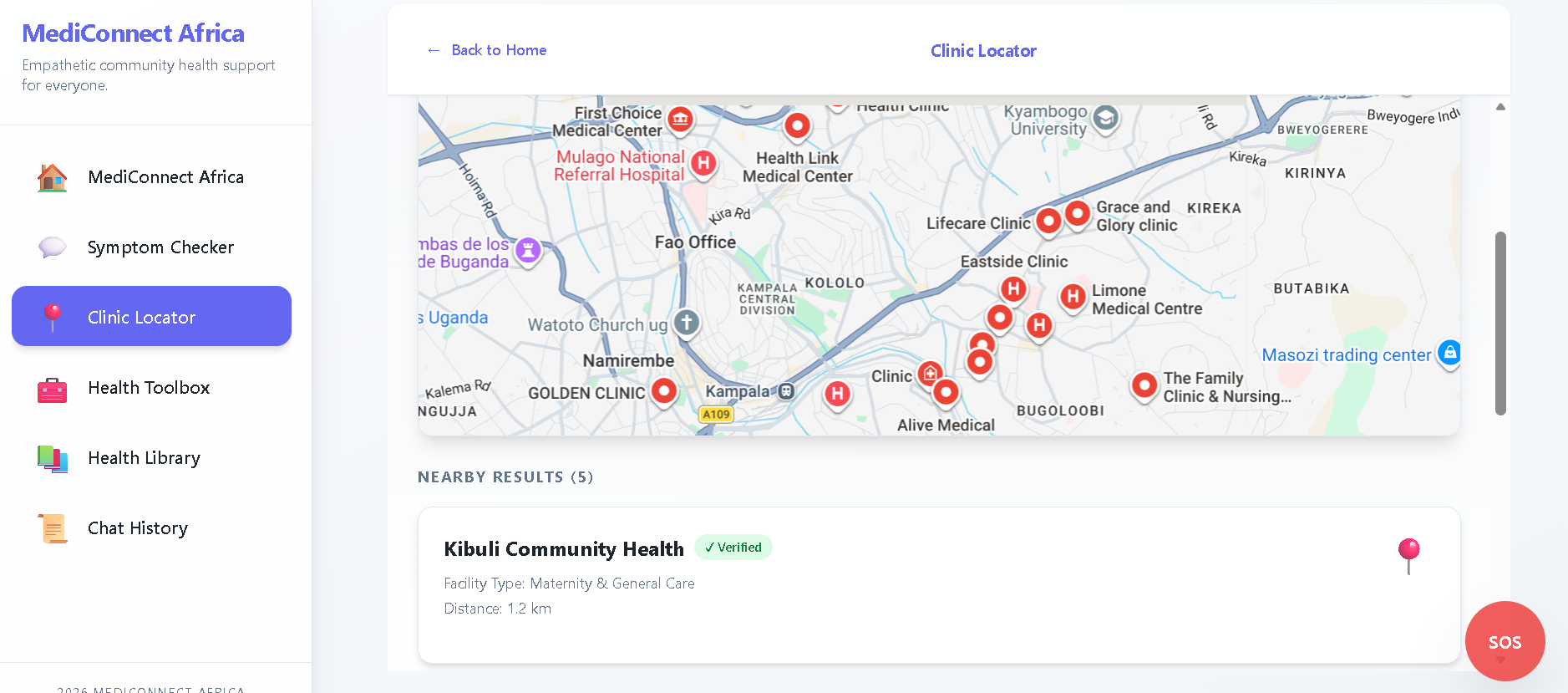
To move the user from "Information" to "Treatment" as fast as possible, providing real contacts and navigation links.
-
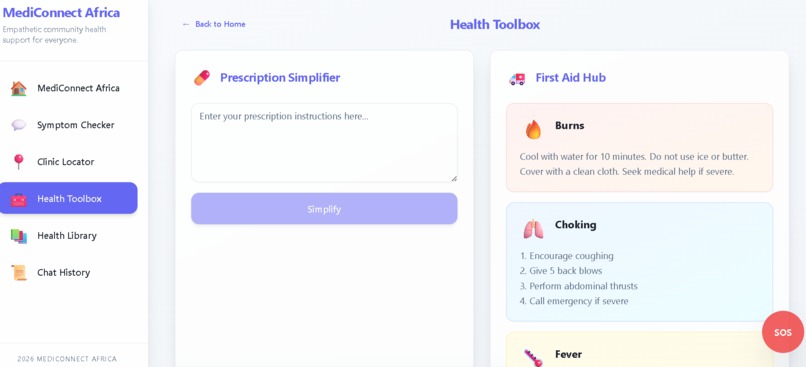
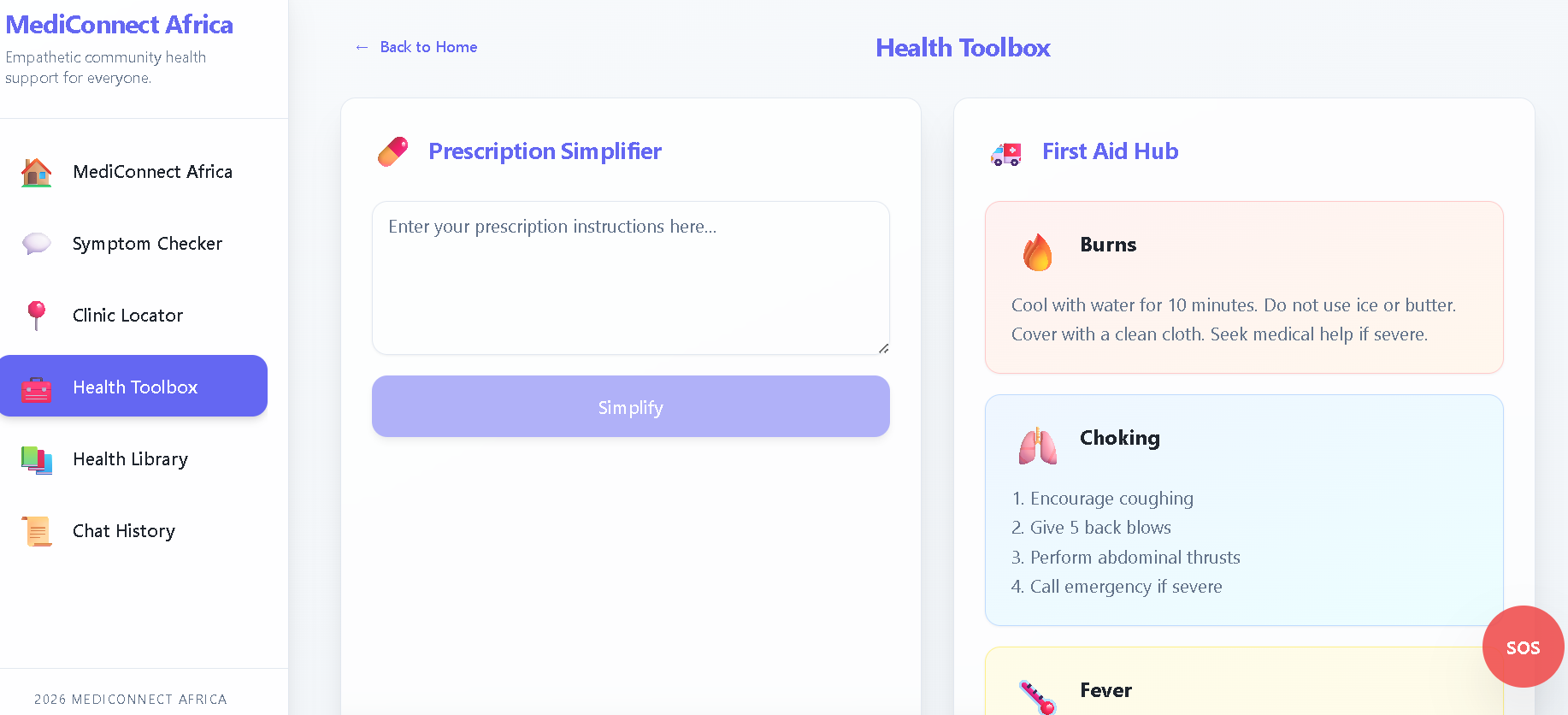
prescription simplifier.t turns jargon like "500mg BID" into "Take 1 pill every 12 hours." Simple, clear, and readable instructions for all.
Inspiration
Many have come up with projects in hackathons or real life that focus on productivity tools, e-commerce storefronts, or the next big social platform. But I wanted to build something that touches a fundamental human nerve.
The inspiration for MediConnect Africa came from a simple, uncomfortable truth: getting sick is universal, but understanding what to do next is a privilege. For many people in rural or low-income communities, a doctor's visit is expensive, miles away, and often delayed until an illness becomes severe. Furthermore, most digital health tools are built exclusively in English and packed with intimidating medical jargon. I realized that if I could strip away the complex terminology and break down the language barrier, I could build a tool that actually helps those who need it most. I wanted to build a genuine community health navigator that feels accessible to everyone.
What it does
MediConnect Africa is an accessible, multilingual health companion designed with a "low-data," simple UI for everyday users. Instead of feeling like five disconnected tools, it provides one smooth user journey with five core modules:
The Multilingual Layer: The user lands and immediately selects their native language (e.g., Swahili, Hausa, English).
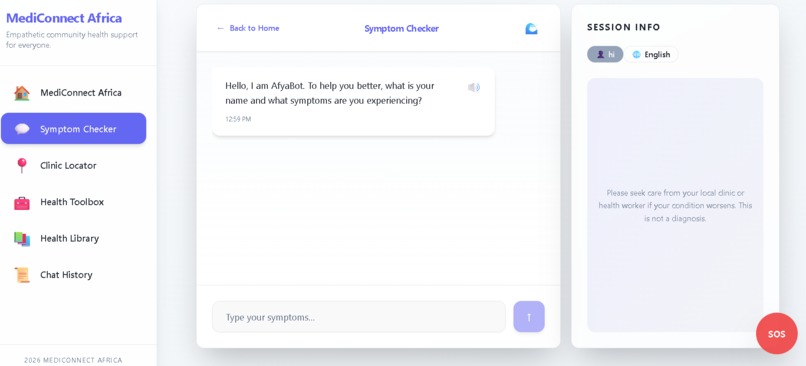
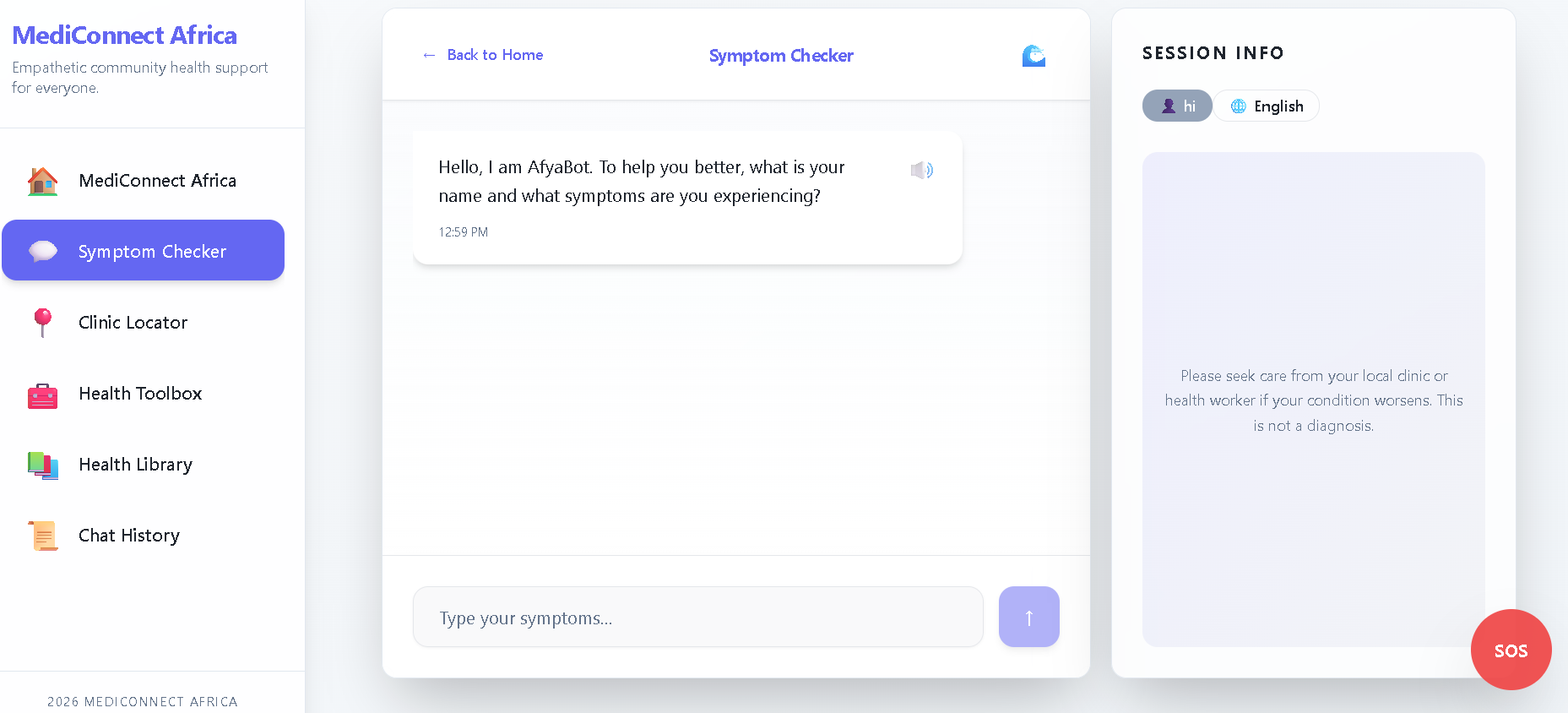
Symptom Checker & Urgency Rating: Users describe how they feel in plain language. The app assigns a straightforward urgency rating to guide their next steps.
Clinic Routing: Based on the urgency, the app helps locate the nearest local health center.
Prescription Reader: A tool that breaks down complex medication instructions into simple, accessible terms.
First Aid Guide: Instant access to basic emergency steps for immediate care.
How I built it
I built MediConnect Africa entirely using the MeDo no-code architecture. Because I wanted the app to be highly accessible, I focused on a clean, straightforward interface that wouldn't overwhelm users on basic smartphones.
I started by mapping out the entire logic flow on paper before building. I had to weave the multi-turn chat capabilities together with API integrations and the core multilingual engine so that the transitions—from describing a symptom to finding a clinic—felt entirely natural and seamless.
Challenges I ran into
Building a health-focused app without writing a single line of code was thrilling, but it brought significant hurdles:
The 300-Credit Squeeze: I only had 300 MeDo credits to bring this vision to life. I couldn't rely on trial and error. I had to be incredibly disciplined, tightly budgeting ~240 credits for the core build and leaving a strict 60-credit buffer to test and squash bugs.
Medical Safety: AI hallucinations in a health app are dangerous. I spent hours engineering the underlying prompts to ensure MediConnect Africa never acts like a definitive doctor. I hardcoded boundaries so it strictly provides urgency ratings and general guidance, rather than risky medical diagnoses.
Contextual Translation: Translating medical concepts into local African languages isn't just about swapping words; it requires cultural context. Ensuring the tone remained empathetic, natural, and completely devoid of robotic jargon took careful iteration.
Accomplishments that I'm proud of I am incredibly proud of the multilingual layer. Seeing the app actually process real-time inputs and successfully provide health advice and clinic directions entirely in Swahili or Hausa—without losing its empathetic tone—was my biggest win.
I'm also proud that I managed to deliver a fully functional, five-module application without exhausting my 300-credit budget. By planning meticulously, I proved that you can build deeply impactful, feature-rich tools solo, even with strict resource constraints.
What I learned
I learned that the true power of AI isn't just in raw computation—it's in accessibility. By combining natural language processing with local languages, I saw firsthand how technology can democratize basic health information.
I also learned the immense value of constraints. Being restricted by a tight credit budget forced me to design a much more efficient, streamlined app than I would have if I had unlimited resources.
What's next for MediConnect Africa
This hackathon is just the beginning. My next step is to expand the language offerings to cover more regional dialects across the continent. I also want to explore integrating the platform with USSD technology so that users without internet access or smartphones can still use the symptom checker and clinic routing via basic SMS. Ultimately, I aim to partner with local clinics and the Ministry of Health to ensure the routing data is always up-to-date and directly supports community health infrastructure.
Built With
- llm
- medoal
- react
- tailwind
- webspeechapi


Log in or sign up for Devpost to join the conversation.