-
-
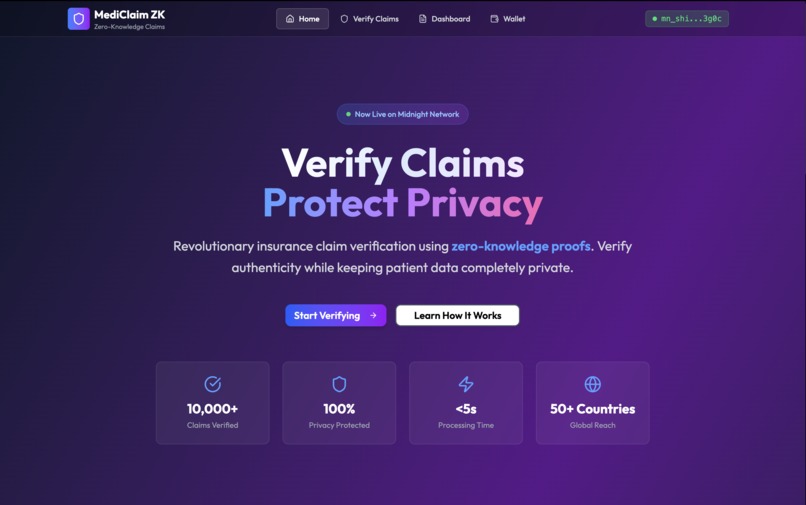
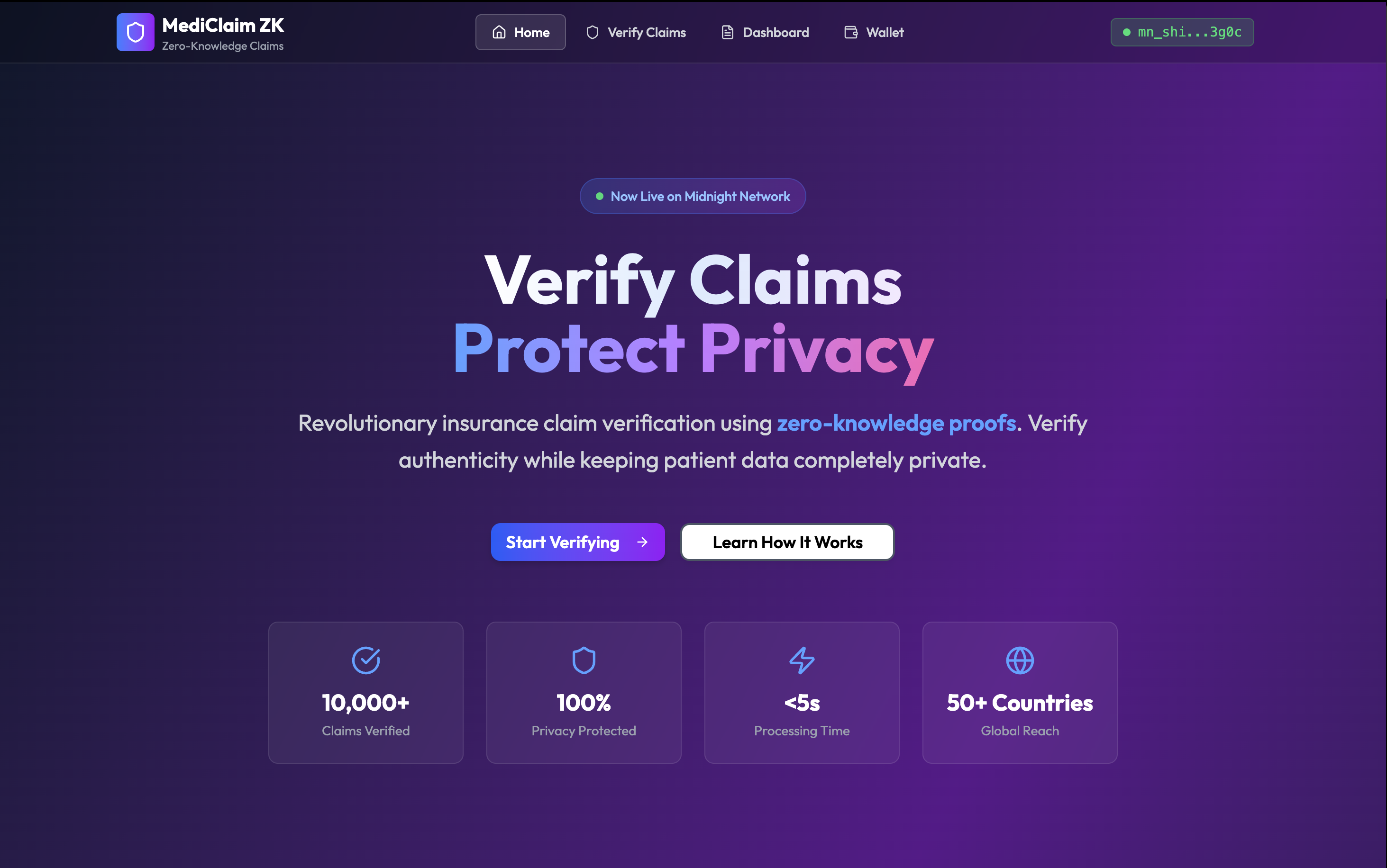
Home Page
-
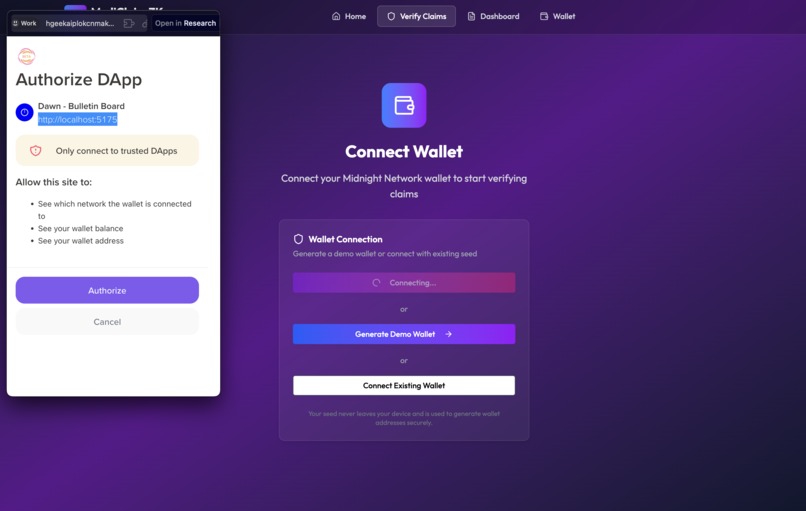
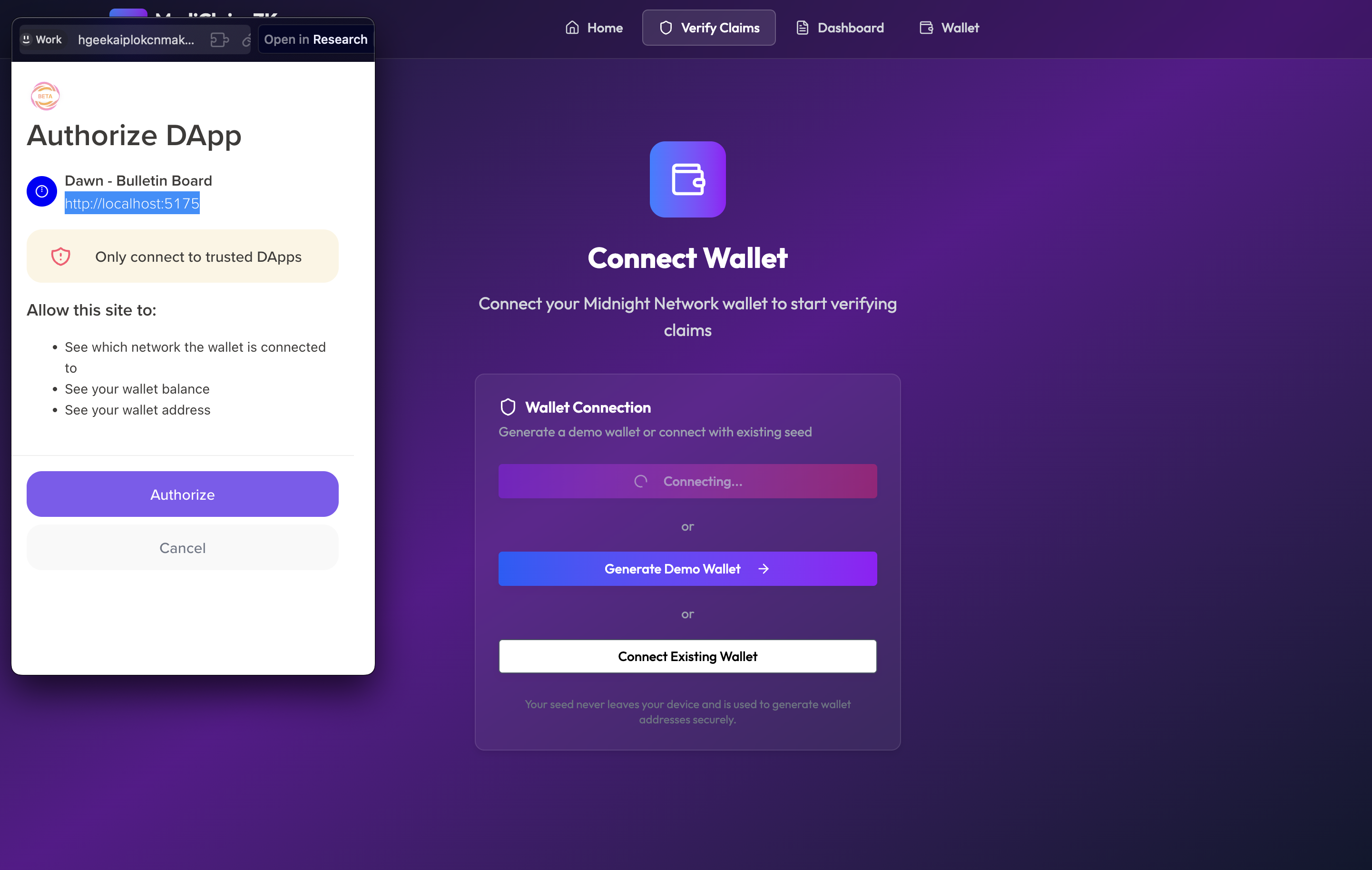
Connect your Wallet
-
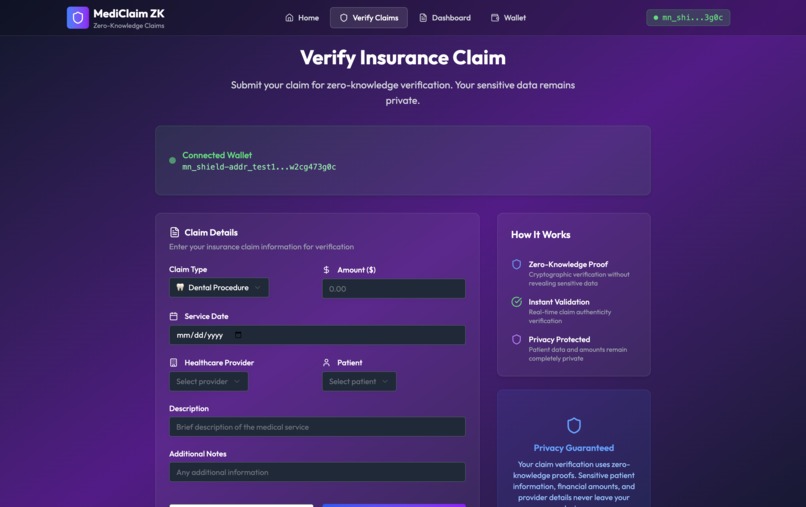
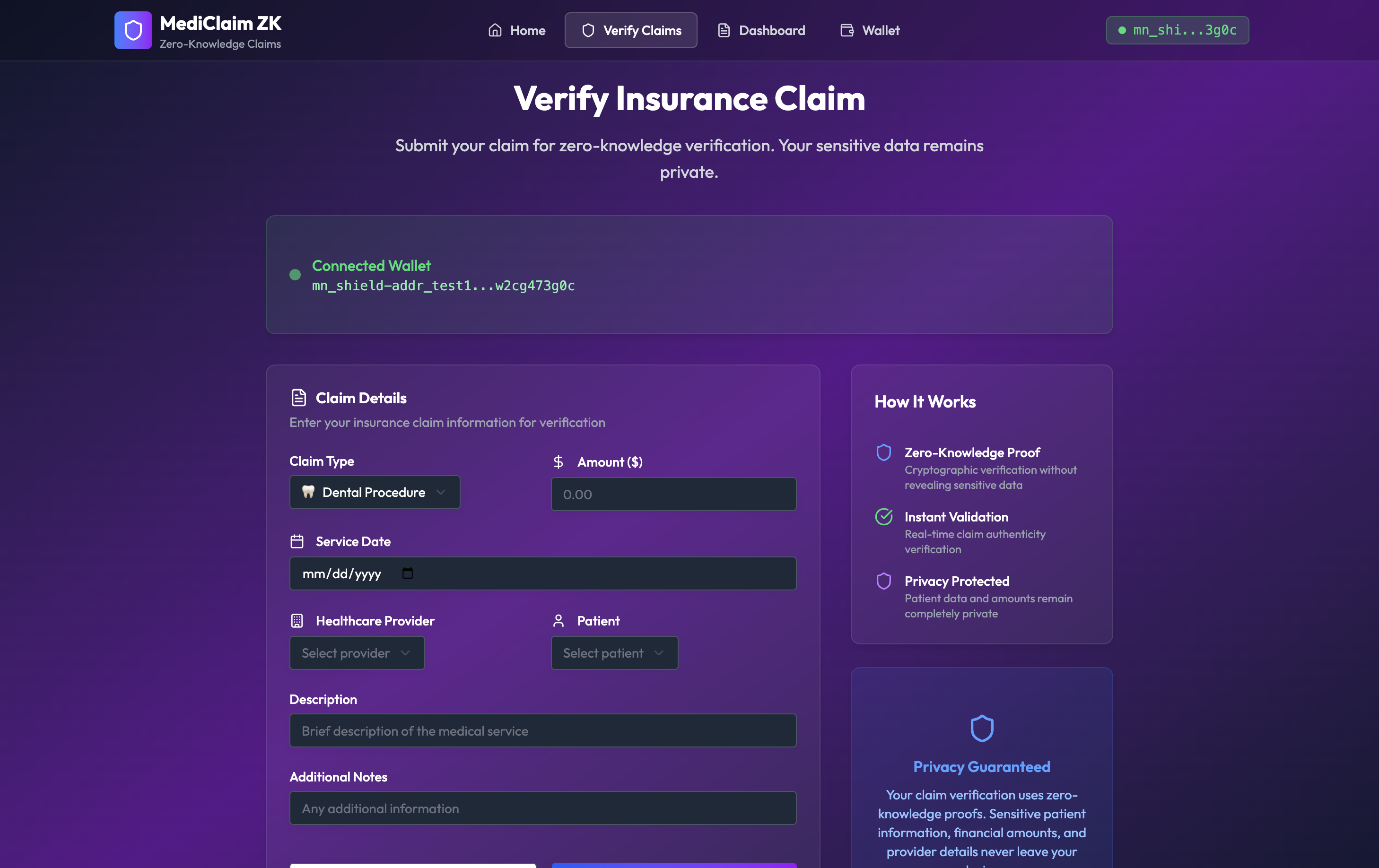
Submit you Health Insurance Claim
-
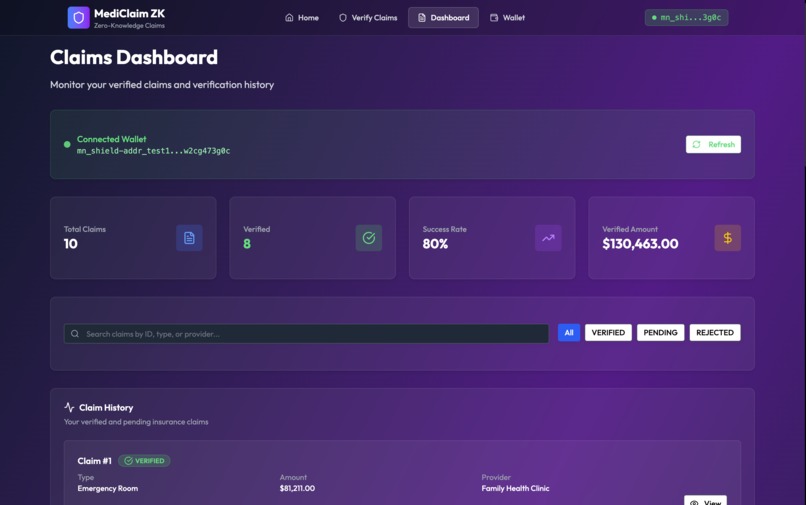
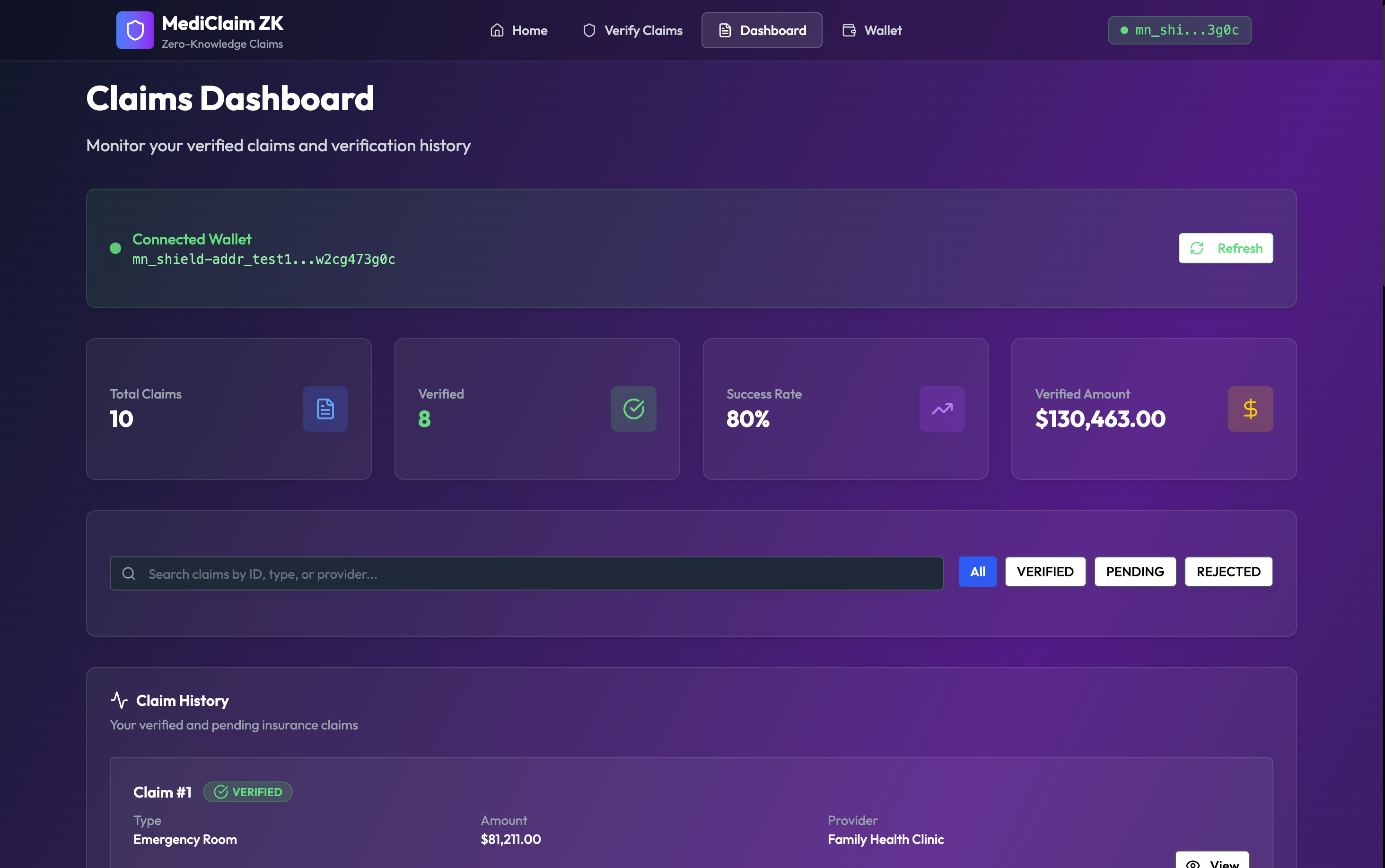
Dashboard
-
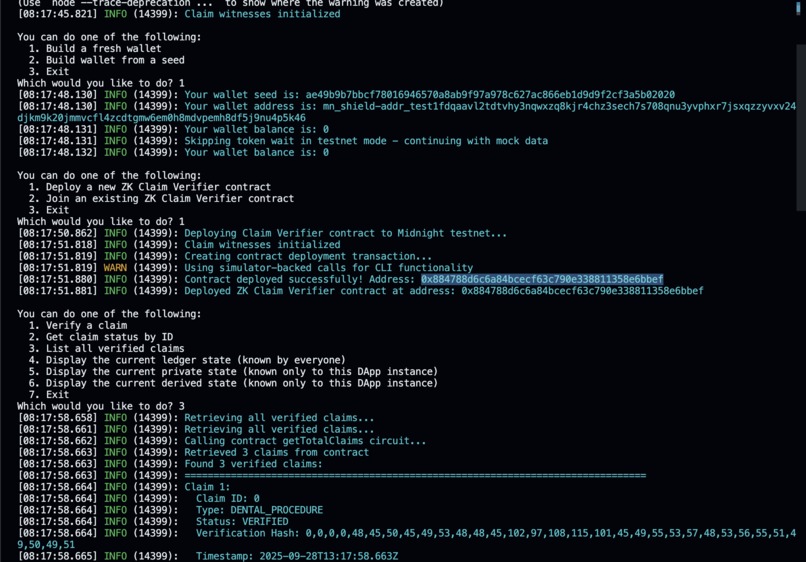
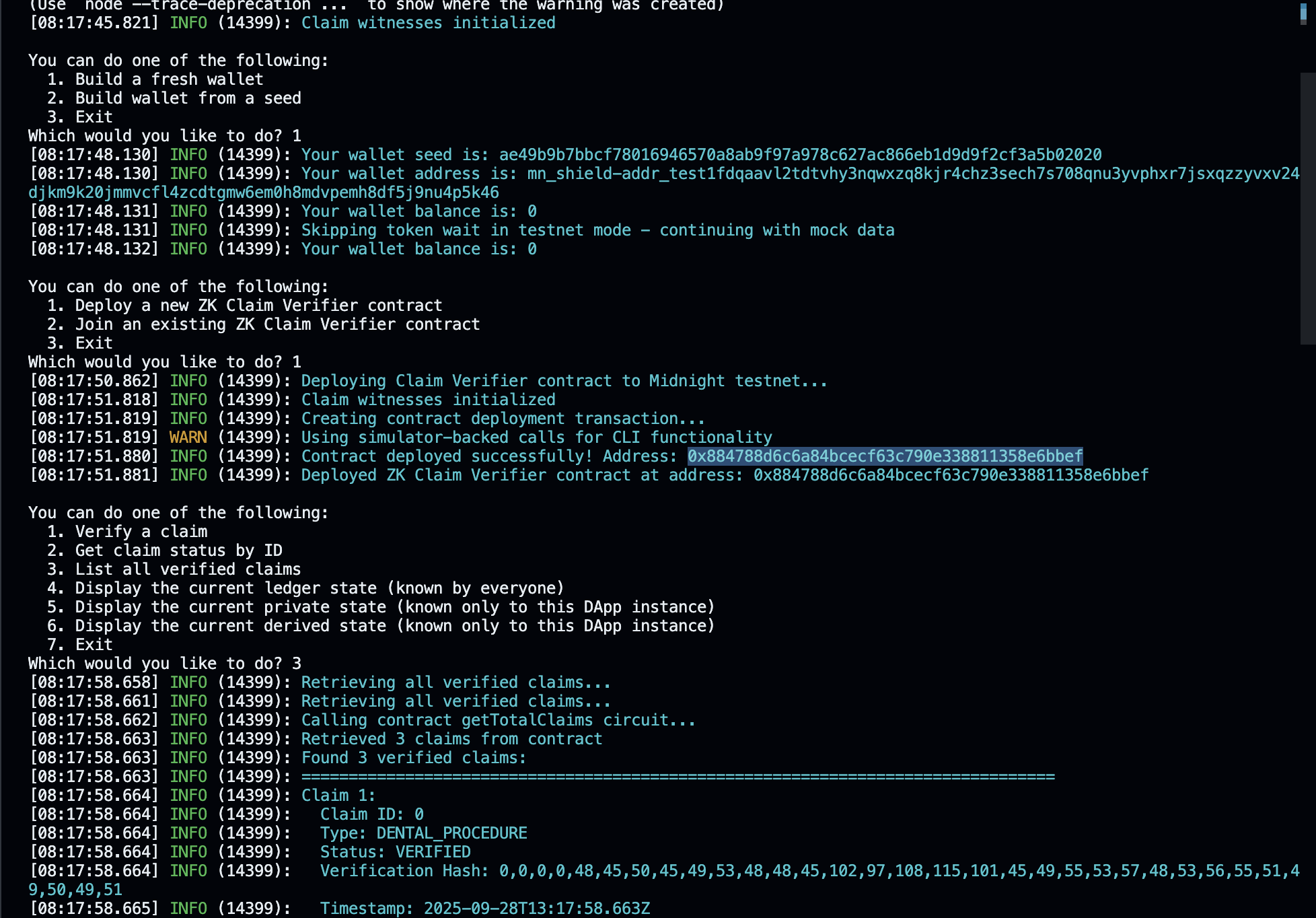
App using CLI
About the Project
Inspiration
The healthcare industry is plagued by fraudulent claims and privacy concerns. Insurers need to verify whether a claim is legitimate, but patients and providers are reluctant to expose sensitive medical details. Our team was inspired by the idea that zero-knowledge proofs (ZKPs) can bridge this gap — allowing a claim to be verified without revealing the underlying private data.
What We Learned
- How zero-knowledge cryptography can be applied in real-world use cases like insurance.
- How to write and compile Midnight Compact contracts to enforce privacy-preserving logic on-chain.
- The importance of balancing usability (smooth UX for insurers/providers) with security guarantees (correctness of proofs).
- Collaboration workflows in a hackathon setting: fast iteration, rapid prototyping, and scoping features that fit within limited time.
How We Built It
Smart Contract Layer
- We wrote a Compact contract that defines claim verification logic.
- Public inputs (e.g., claim ID, policy ID, timestamp) are checked, while private inputs (e.g., patient ID, medical codes, invoice amounts) stay hidden.
- The contract uses ZKPs to confirm validity of claims without revealing sensitive details.
- We wrote a Compact contract that defines claim verification logic.
Backend (Node.js + TypeScript)
- Built an attestation server to issue verification challenges (via email codes).
- Integrated cryptographic hashing (Poseidon) and proof generation.
- Built an attestation server to issue verification challenges (via email codes).
Frontend (React / Next.js)
- A simple portal for providers to submit claims.
- An insurer dashboard to check verification results in real time.
- A simple portal for providers to submit claims.
Deployment
- Used Docker for containerized services.
- Tested in Midnight’s testnet with Compact CLI tools.
- Used Docker for containerized services.
Challenges We Faced
- Steep learning curve: none of us had prior experience with blockchain or ZK cryptography.
- Tooling: debugging Compact contracts and setting up the prover/verifier workflow was tricky.
- Time constraints: implementing both the cryptography and a clean user experience in a short hackathon timeframe required tough prioritization.
- Interoperability: ensuring that the backend, contract layer, and frontend could communicate smoothly.
Built With
- blockchain
- compact
- javascript
- midnight
- react
- typescript

Log in or sign up for Devpost to join the conversation.