Inspiration
To empower patients with personalized insights and protect them from medication-related errors by using their own health history—transforming data into actionable safety.
What it does
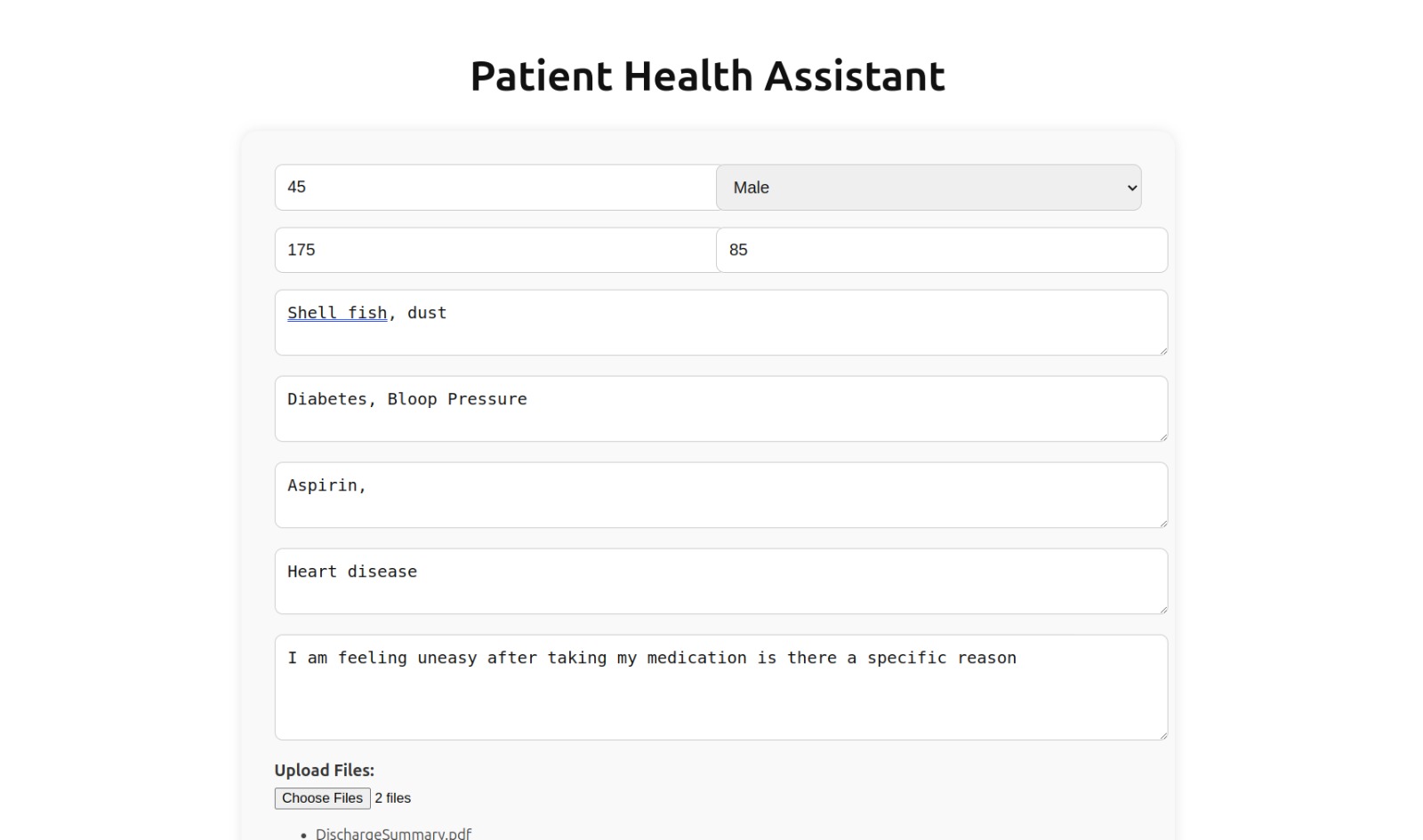
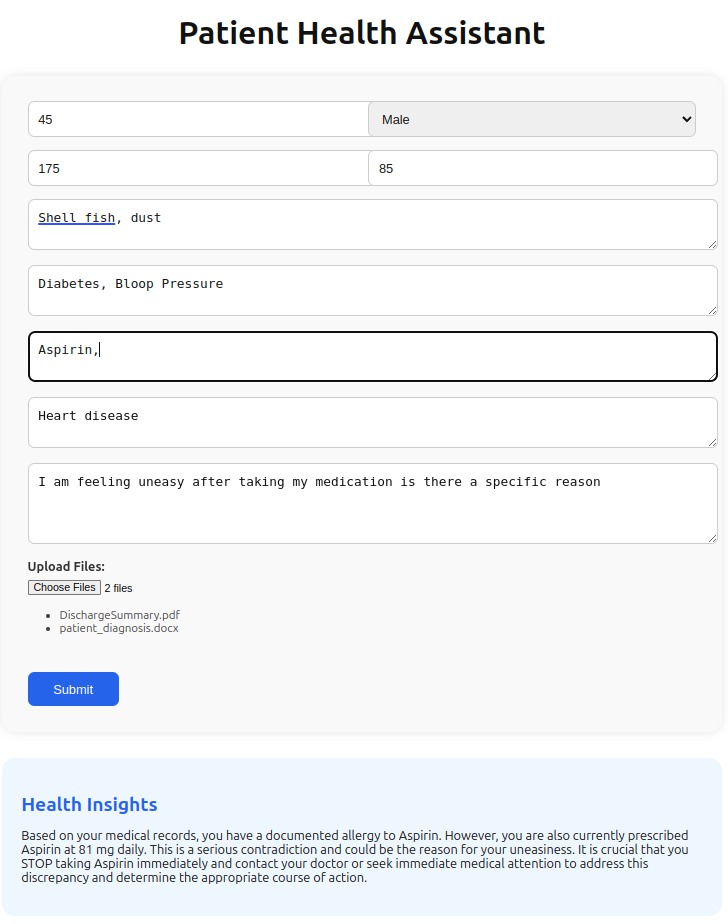
It analyzes patient-entered data, past medical documents, and current prescriptions to detect harmful drug interactions or contraindications, and prepares patients for safer doctor discussions.
How we built it
We used a multi-agent system powered by LLMs and integrated statistical tools with drug interaction datasets (e.g., FDA Side Effect data). We parsed patient records (PDFs/DOCX), matched them with prescribed medications, and generated personalized alerts and question prompts.
Challenges we ran into
Integrating LLMs to reliably interpret nuanced medical records while ensuring deterministic safety analysis was challenging. Balancing statistical outputs with natural language reasoning required careful orchestration.
Accomplishments that we're proud of
We built an AI assistant that not only detects potential medicine errors but also proactively empowers patients by generating doctor-ready questions. We're especially proud of our multi-agent orchestration.
What we learned
That real-world patient safety challenges are deeply contextual, emotionally charged, and often underserved by tech. Addressing them requires empathy, precision, and interpretability beyond raw data.
What's next for Medicine Error Detection Companion
Integrating genetic data and personalized risk scores to predict how individual patients might react to certain medications — making the assistant even more adaptive and precise.


Log in or sign up for Devpost to join the conversation.