-
-
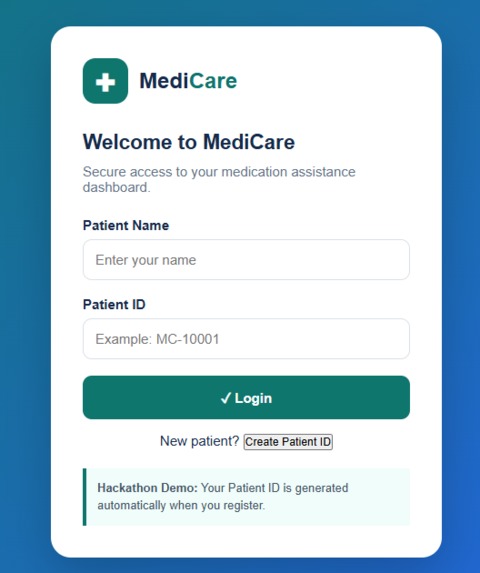
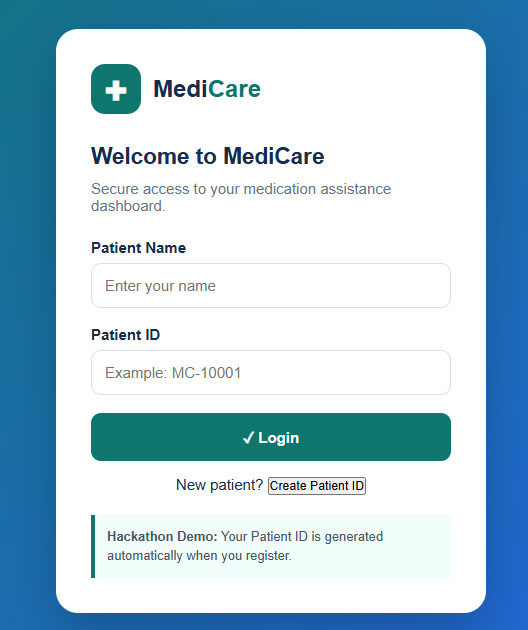
Login Page
-
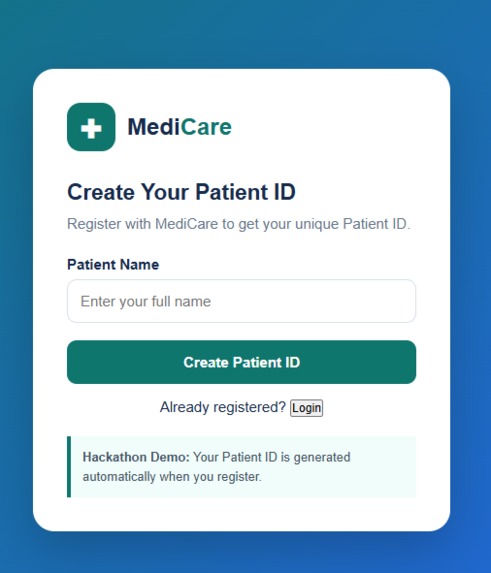
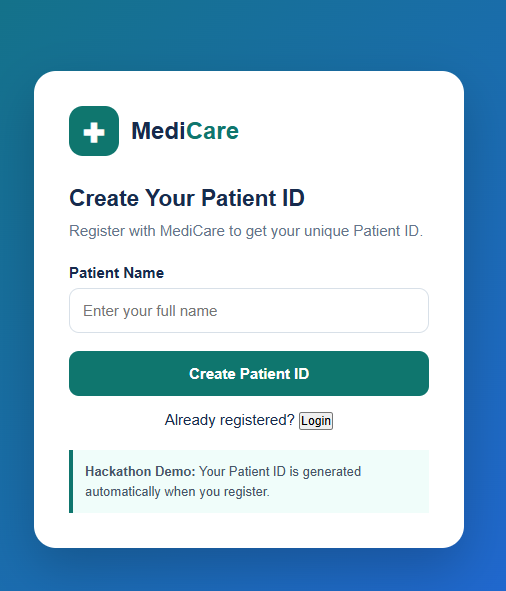
New Patient ID creation
-
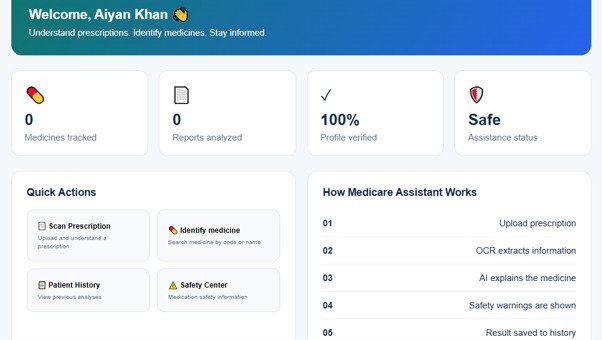
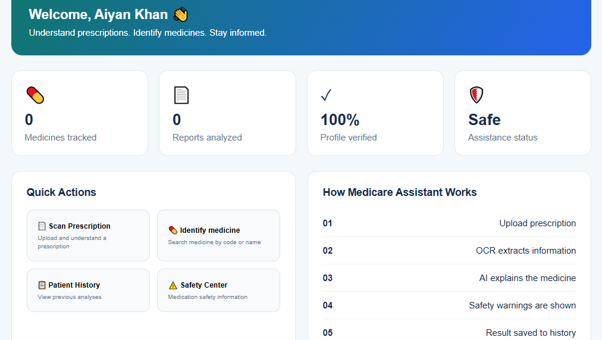
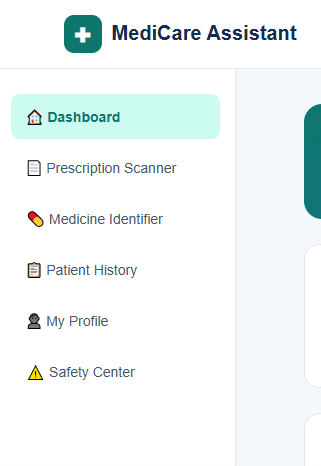
Dashboard
-
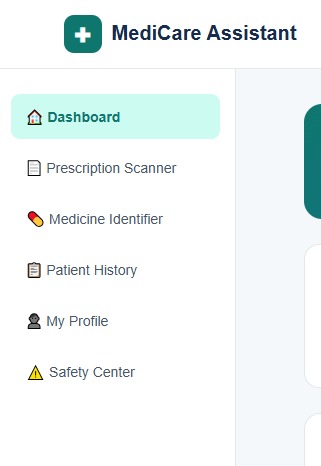
-
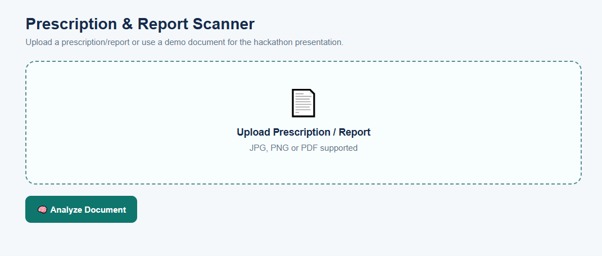
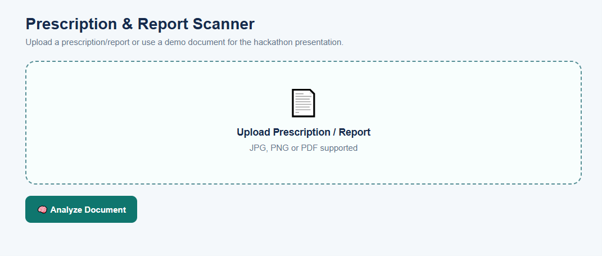
Prescription Analyzer
-
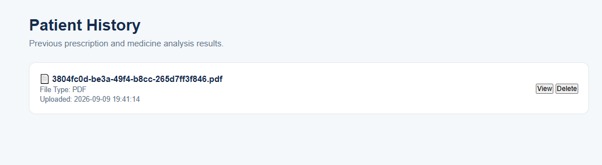
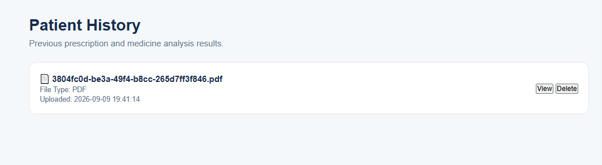
All uploaded prescriptions
-
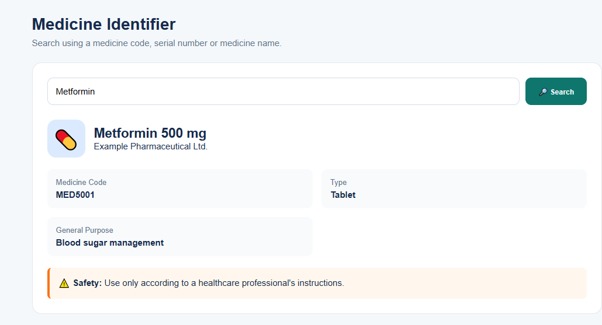
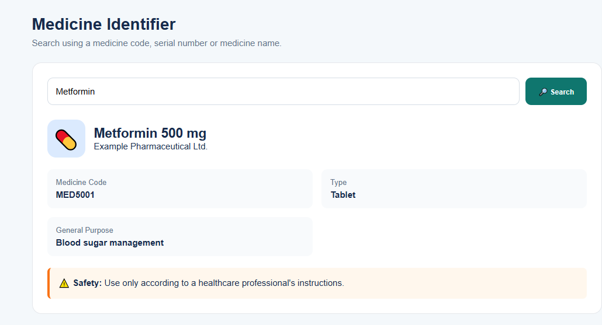
Search by particular medicine name
-
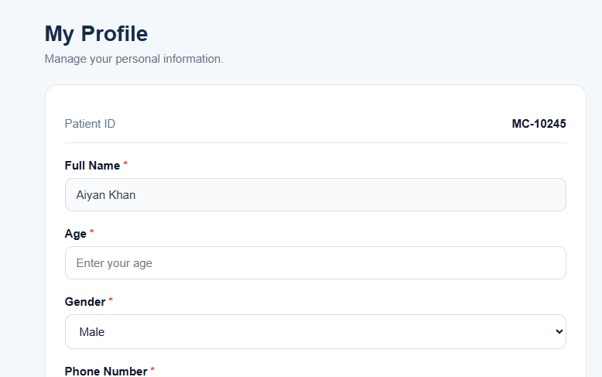
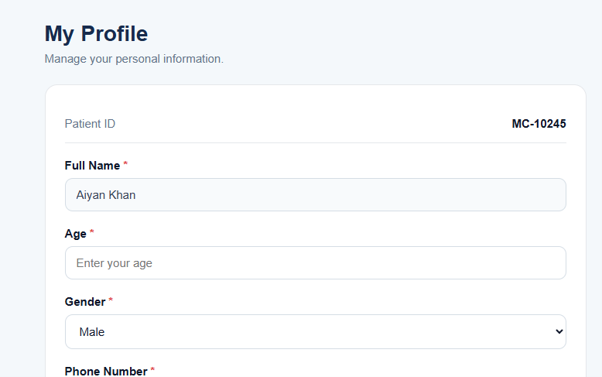
Profile page1
-
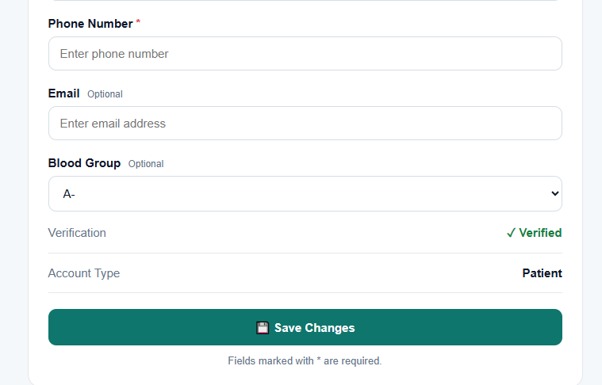
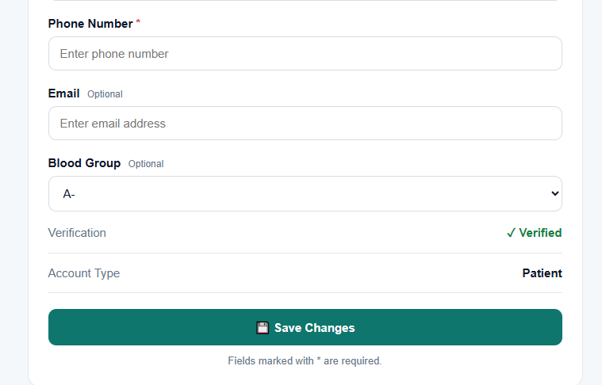
Profile page2
-
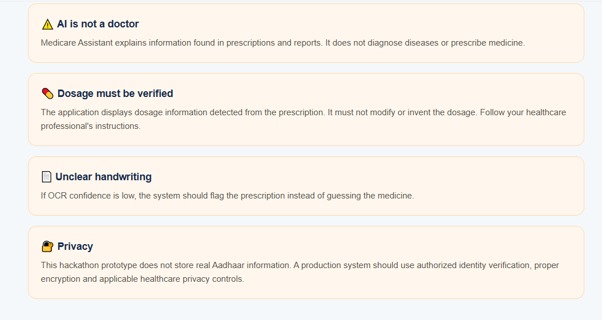
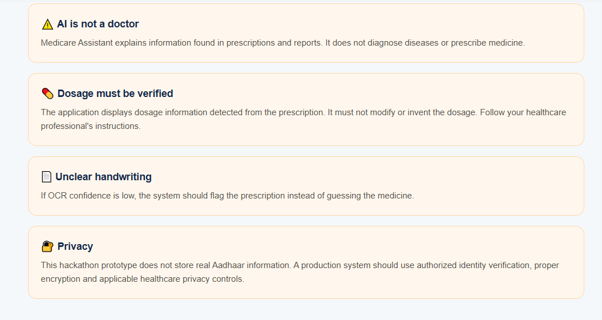
Some safety for awareness purpose
Inspiration
Medication errors can happen when prescriptions are difficult to read, medicine information is unclear, or patients forget important details about their medications. We wanted to build a simple digital assistant that helps patients keep their prescription and medicine information organized in one place. This idea inspired us to create MediCare, a healthcare assistance prototype focused on making medication management easier and more accessible.
#What it does
MediCare provides a simple patient dashboard where users can register or log in, manage their basic profile, upload prescriptions, and view their prescription history. The prototype also uses OCR (Optical Character Recognition) to extract medicine names from uploaded prescription images. It can then connect recognized medicines with stored medicine information such as their purpose, type, manufacturer, and warnings.
How we built it
We built MediCare using a HTML, CSS, and JavaScript frontend with a Python Flask backend. We used SQLite for storing patient, medicine, and prescription data. For prescription processing, we integrated Tesseract OCR through Pytesseract to recognize text from prescription images. The frontend communicates with the backend through REST API endpoints, allowing registration, login, profile management, prescription uploads, history, and deletion.
#Challenges we ran into
One of our biggest challenges was connecting the frontend generated for the prototype with our backend correctly. We also faced issues with API responses, patient IDs, prescription history, file uploads, and making OCR work with real-world handwritten or low-quality prescriptions. Debugging the environment and making the project portable for our teammates was another challenge.
#Accomplishments that we're proud of
We are proud that we turned an initial concept into a working full-stack prototype. We successfully implemented patient registration and login, database integration, prescription uploading, prescription history, medicine information, and OCR-based text extraction. We also learned how different parts of a real software system—frontend, backend, database, APIs, and OCR—work together.
What we learned
This project taught us that building a real application is more than writing individual pieces of code. We learned about Flask APIs, SQLite database design, frontend-backend communication, file handling, OCR integration, debugging, Git/GitHub, and team collaboration. Most importantly, we learned how to troubleshoot problems that appear when multiple technologies have to work together.
#What's next for MediCare
Our next goal is to improve OCR accuracy, especially for difficult prescriptions, and make medicine recognition more reliable. We also want to add features such as medication reminders, prescription analysis, dosage schedules, better medicine information, and stronger security. In the future, MediCare could become a more complete medication-management platform that helps patients and caregivers manage prescriptions more safely and conveniently.


Log in or sign up for Devpost to join the conversation.