-
-
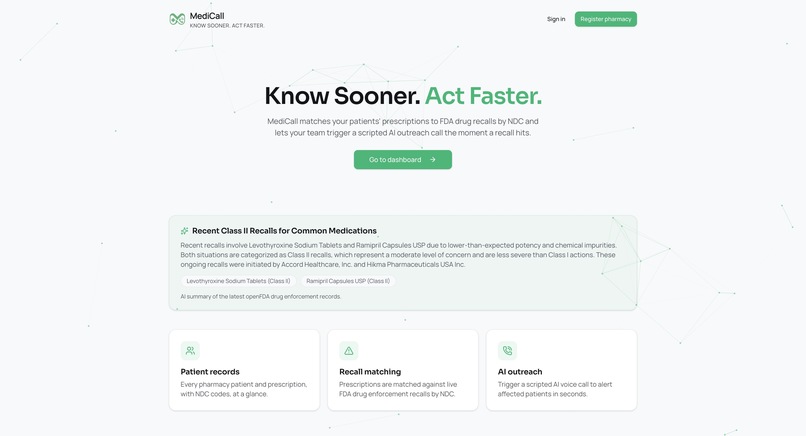
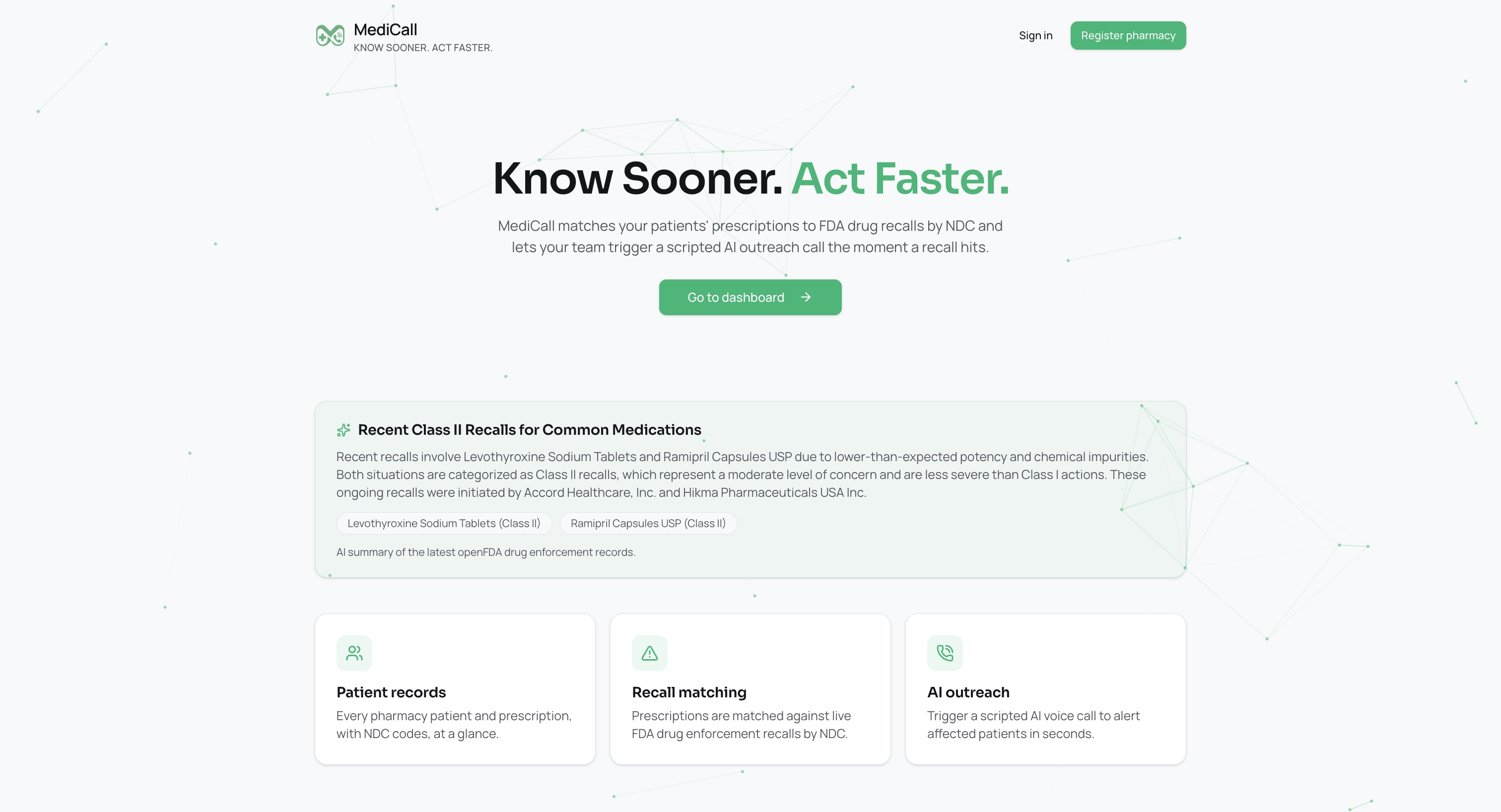
Homepage
-
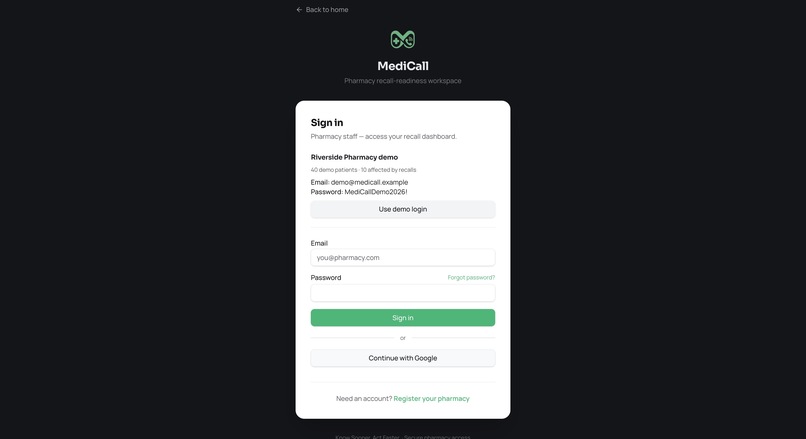
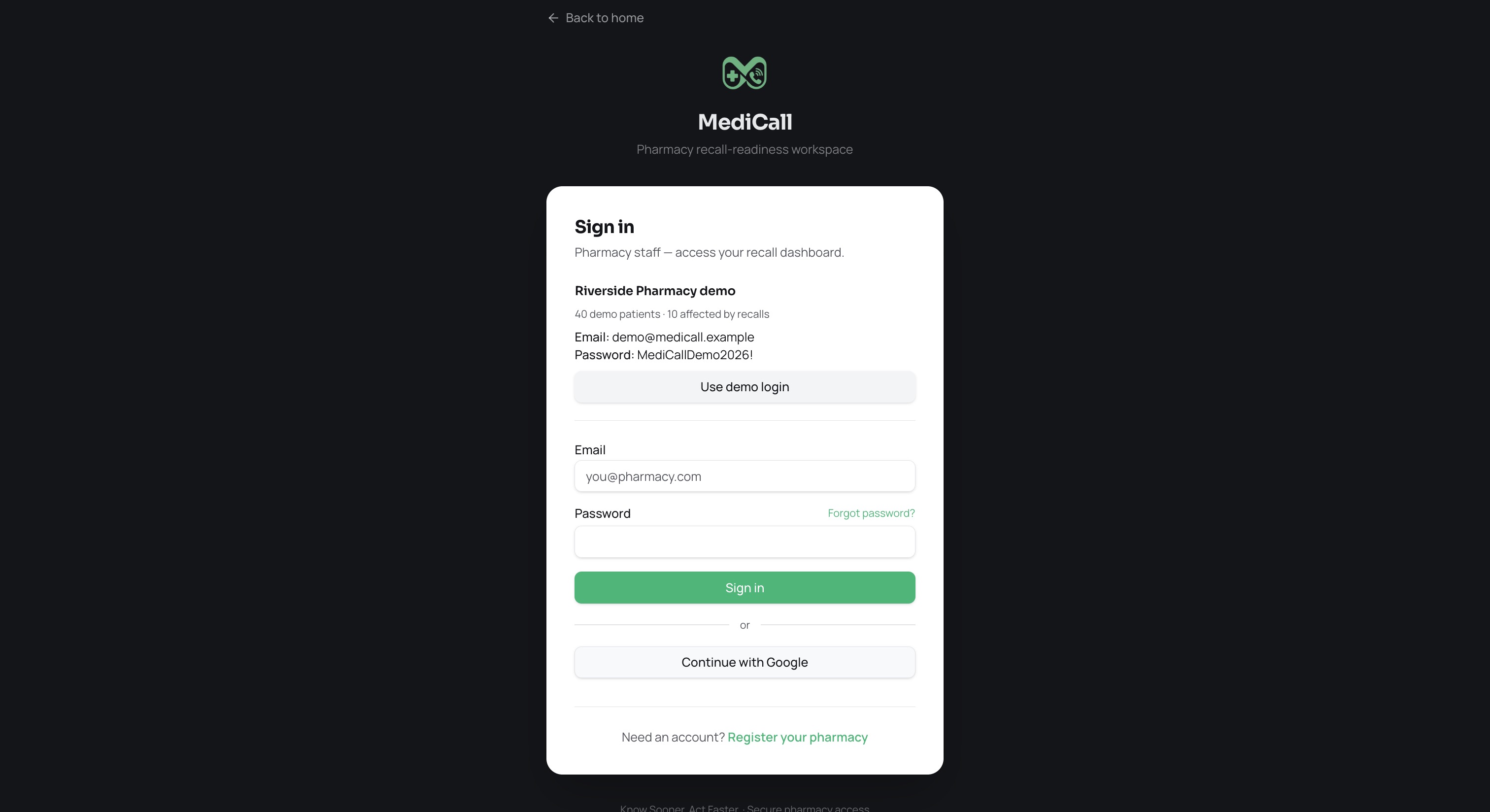
Login Page
-
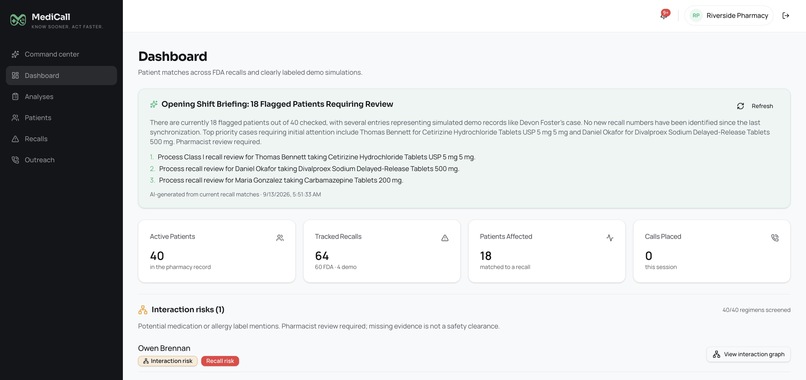
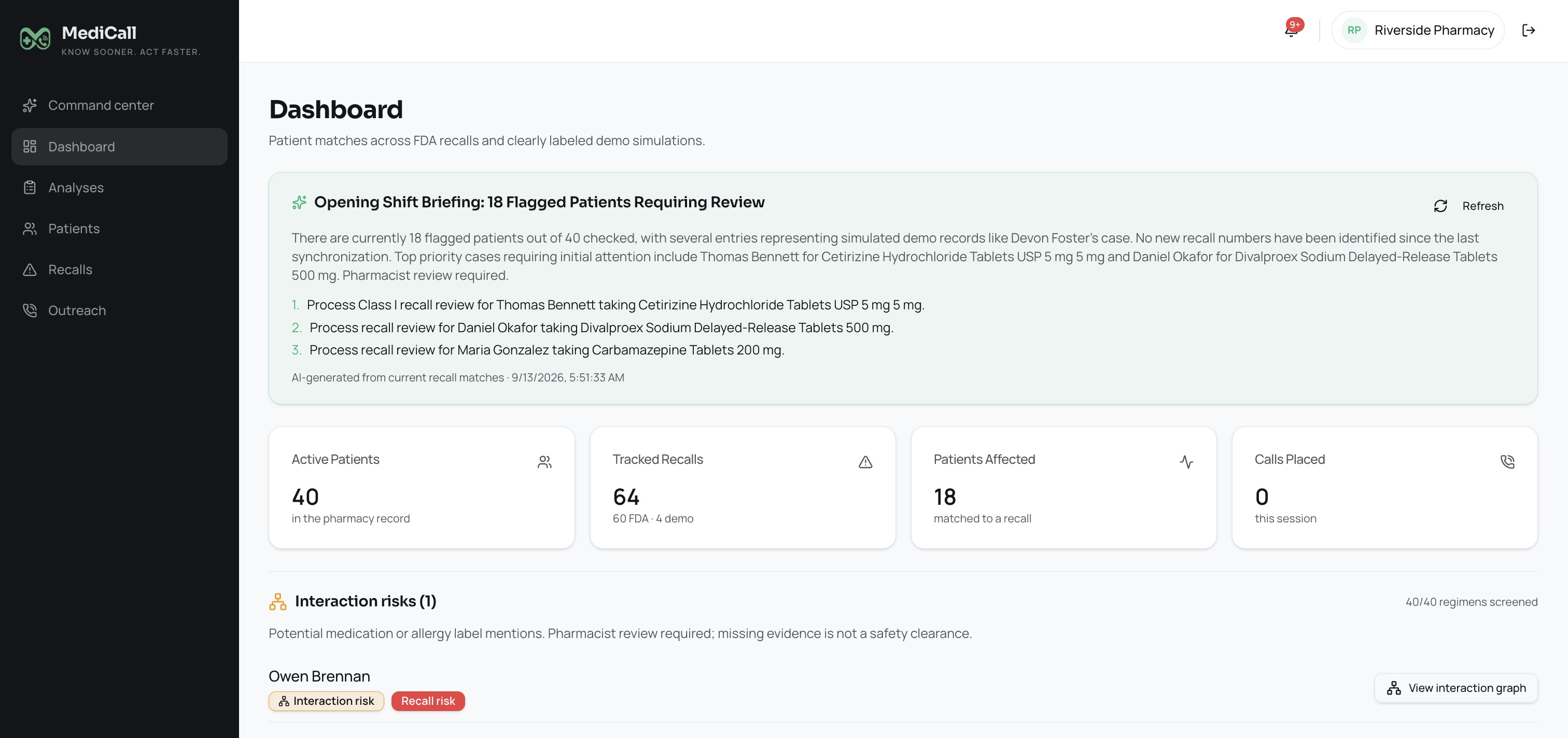
Dashboard
-
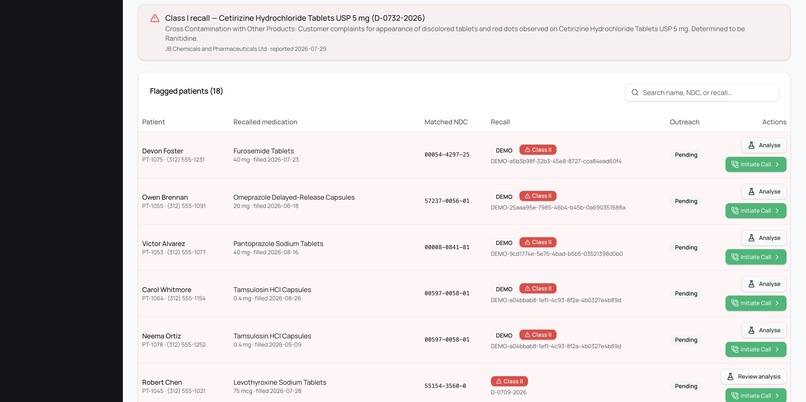
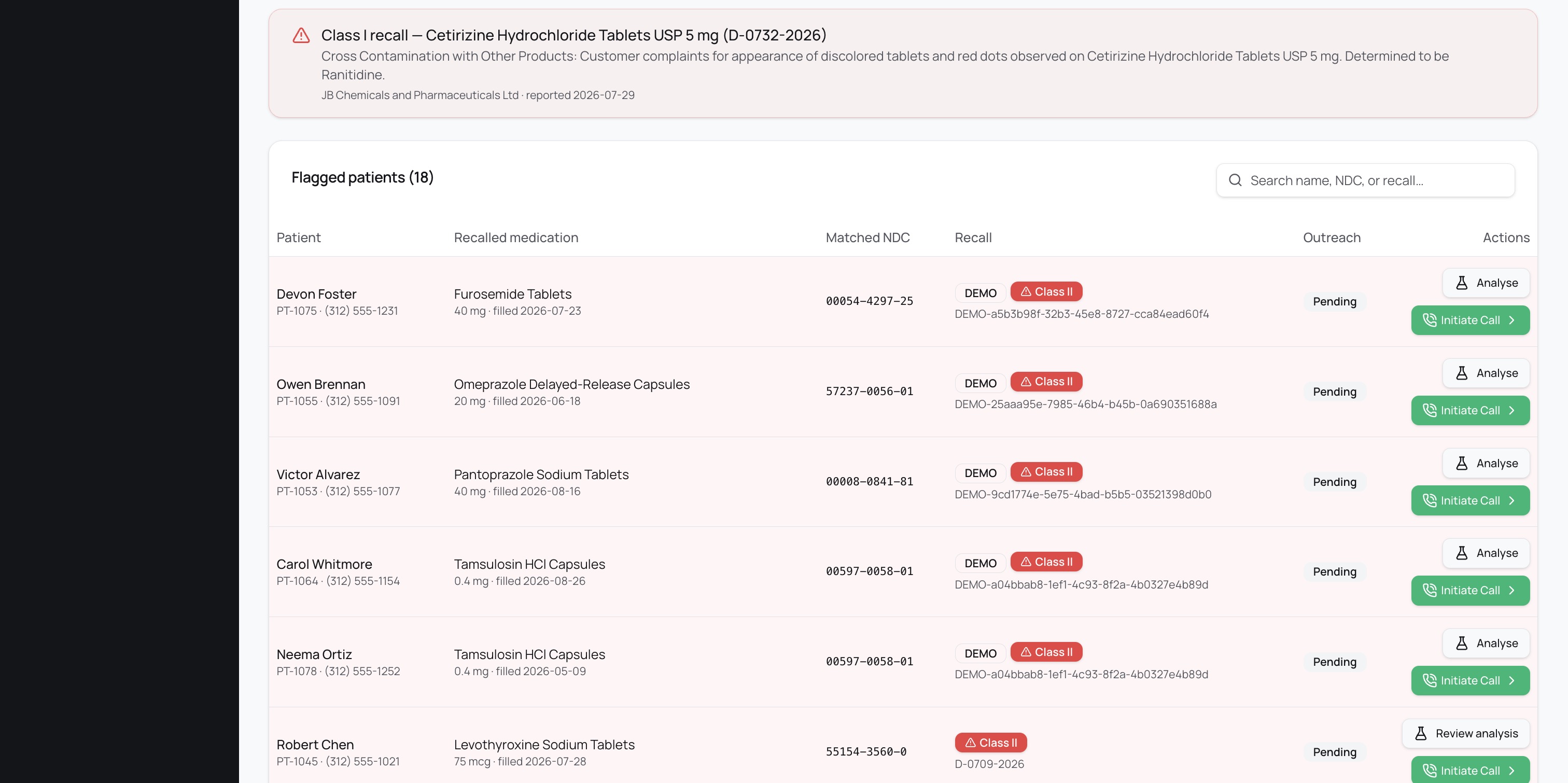
Dashboard: Flagged Patients
-
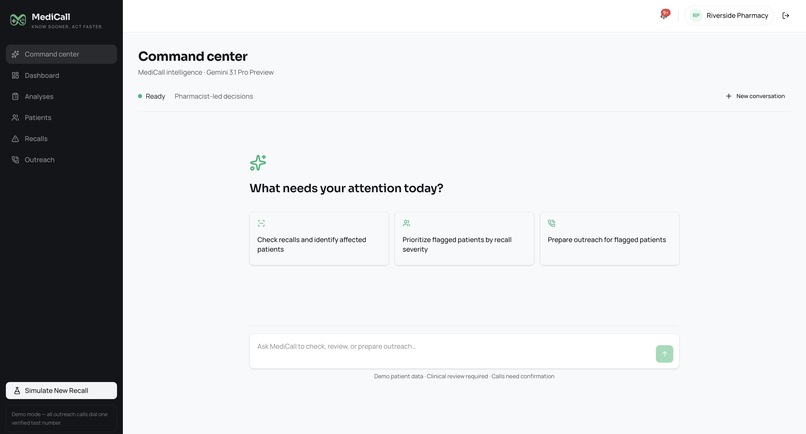
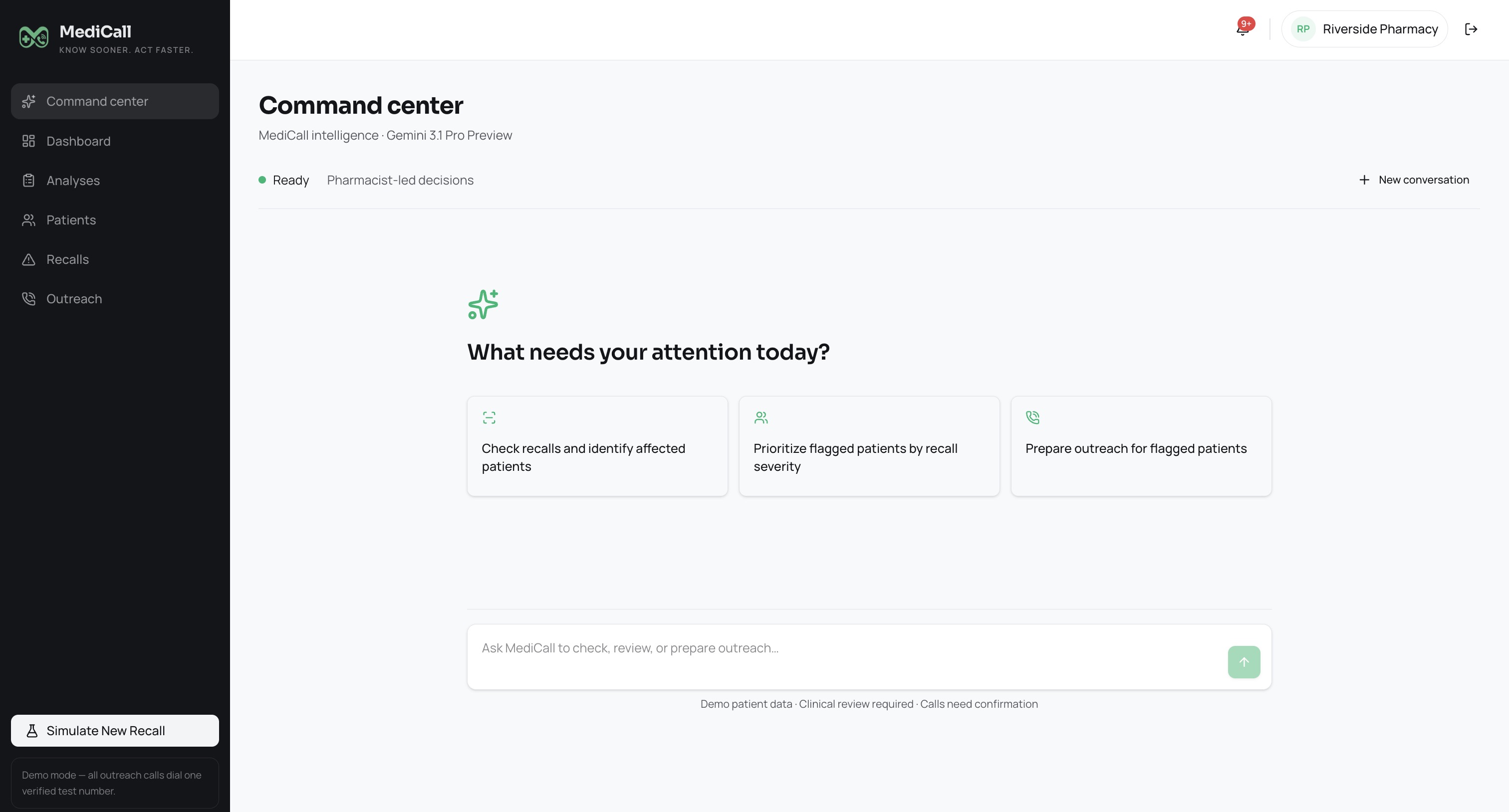
Command Center
-
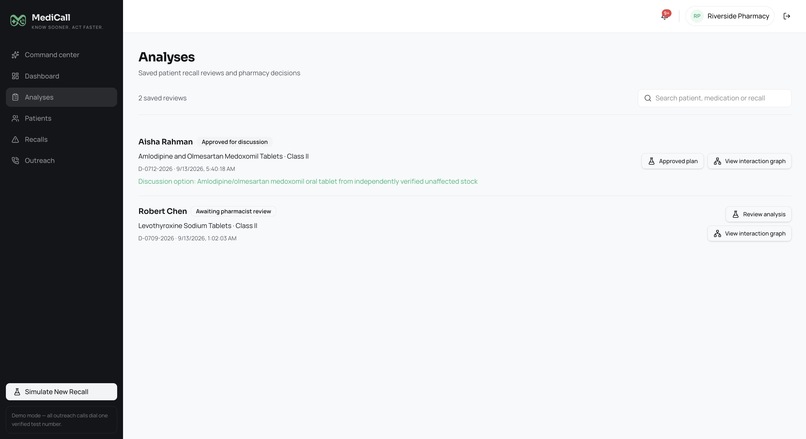
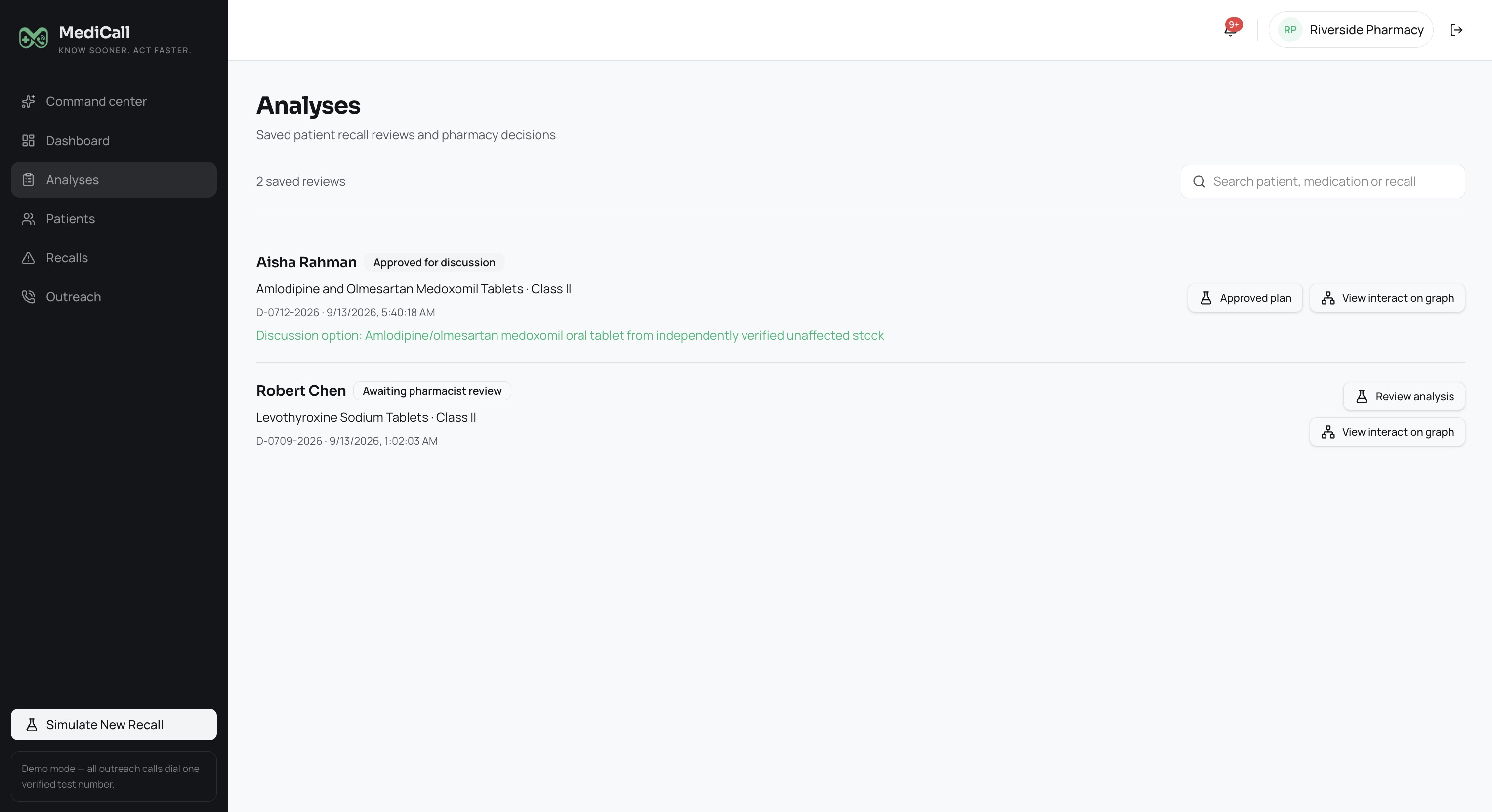
Analyses Page
-
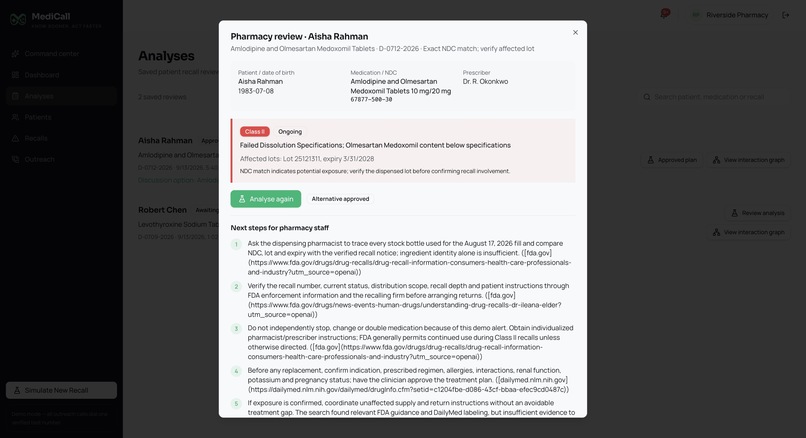
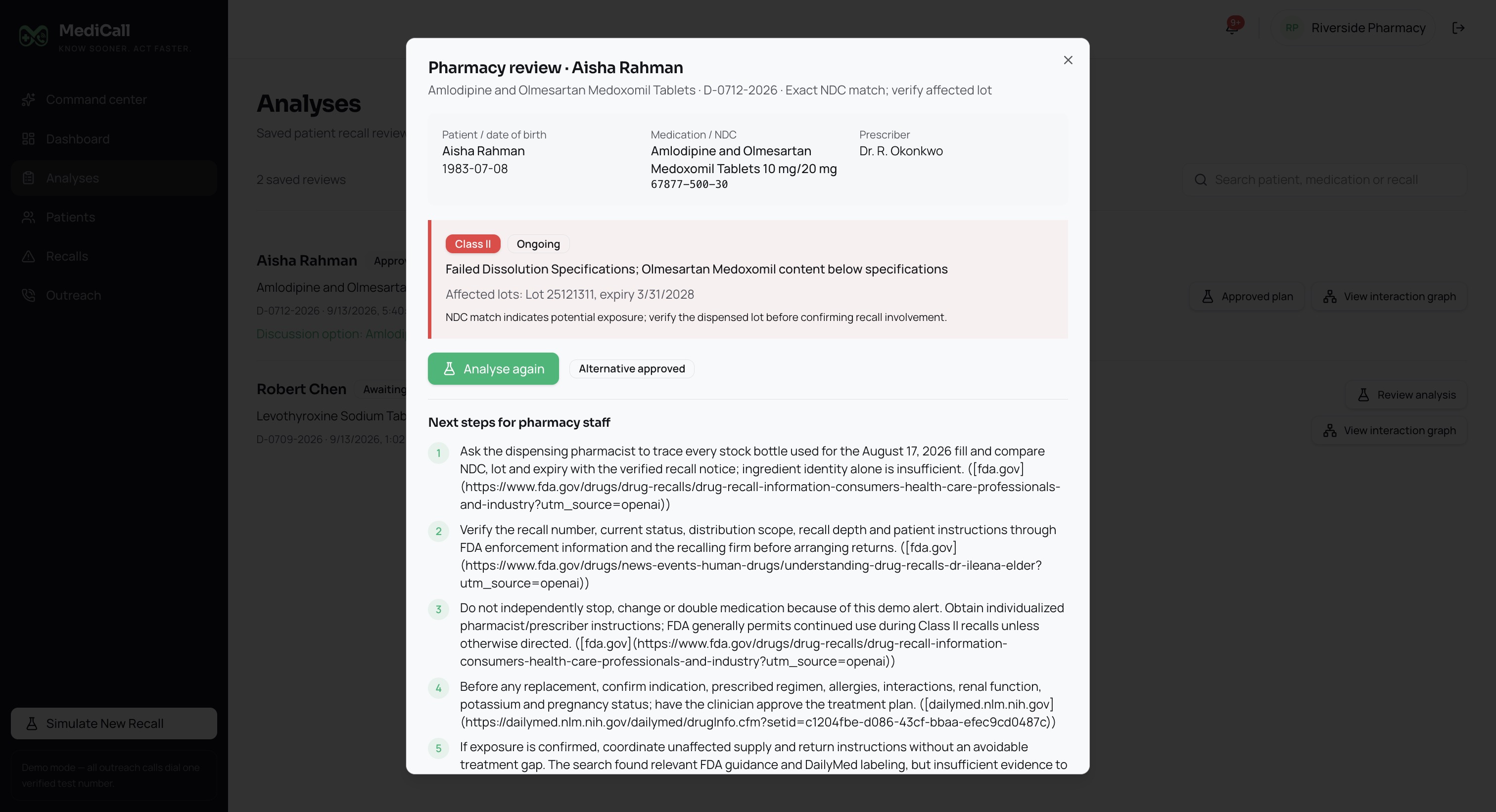
Example Analysis
-
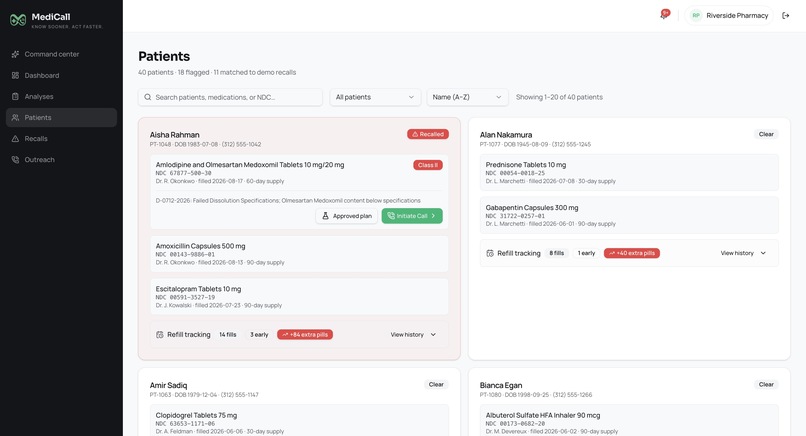
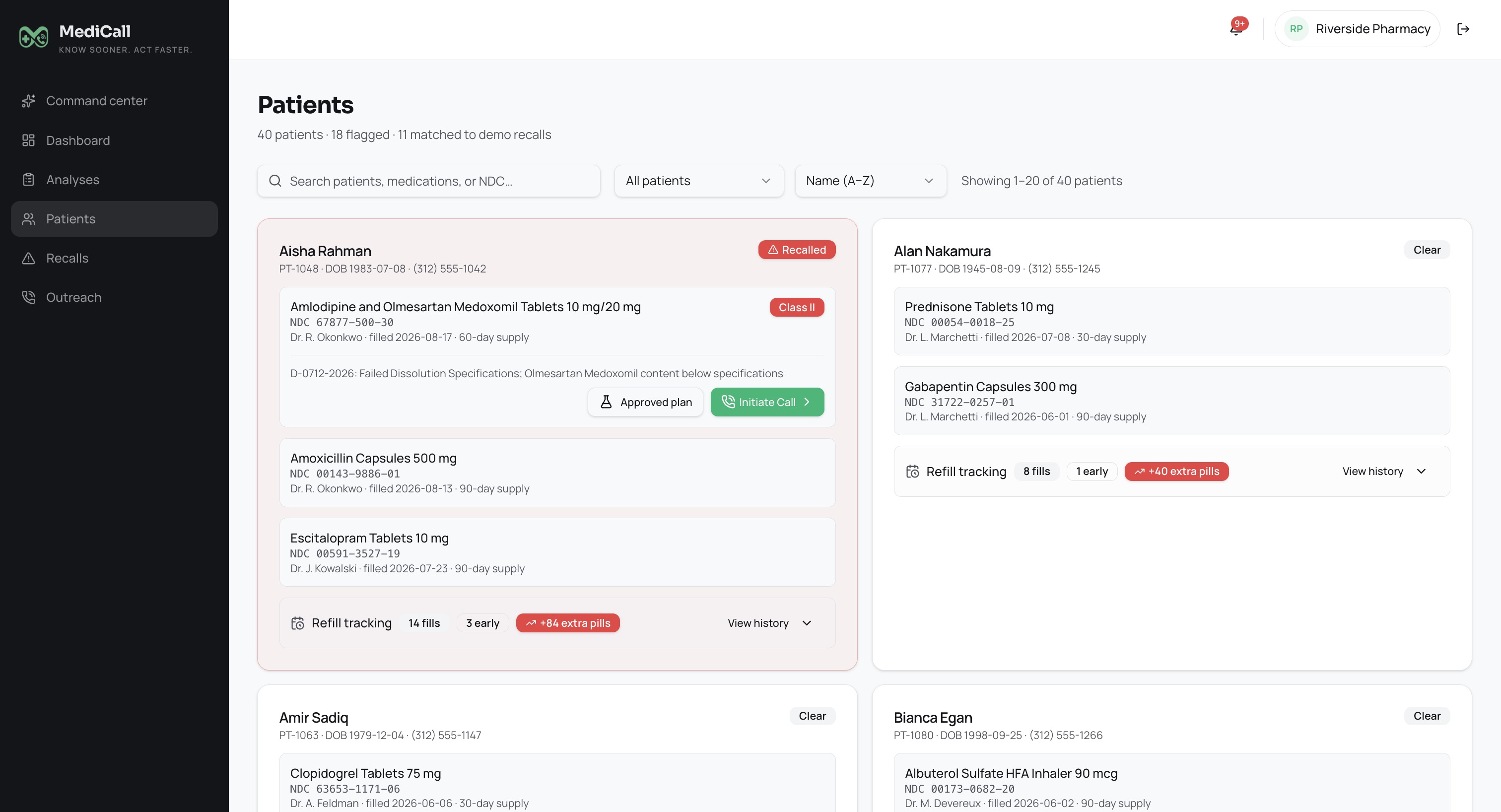
Patients Page
-
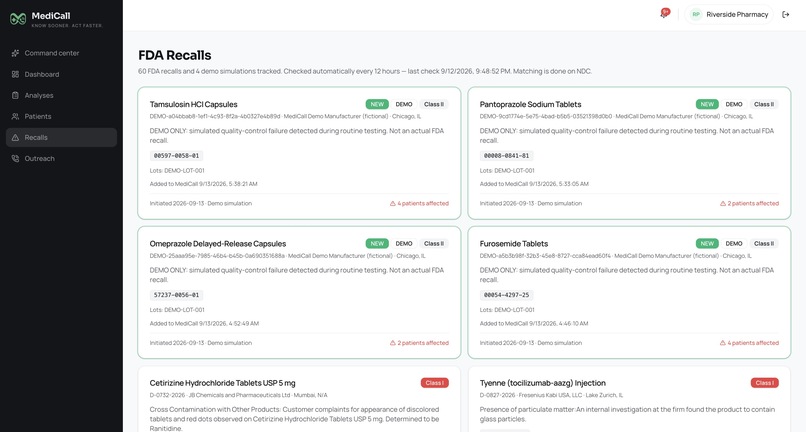
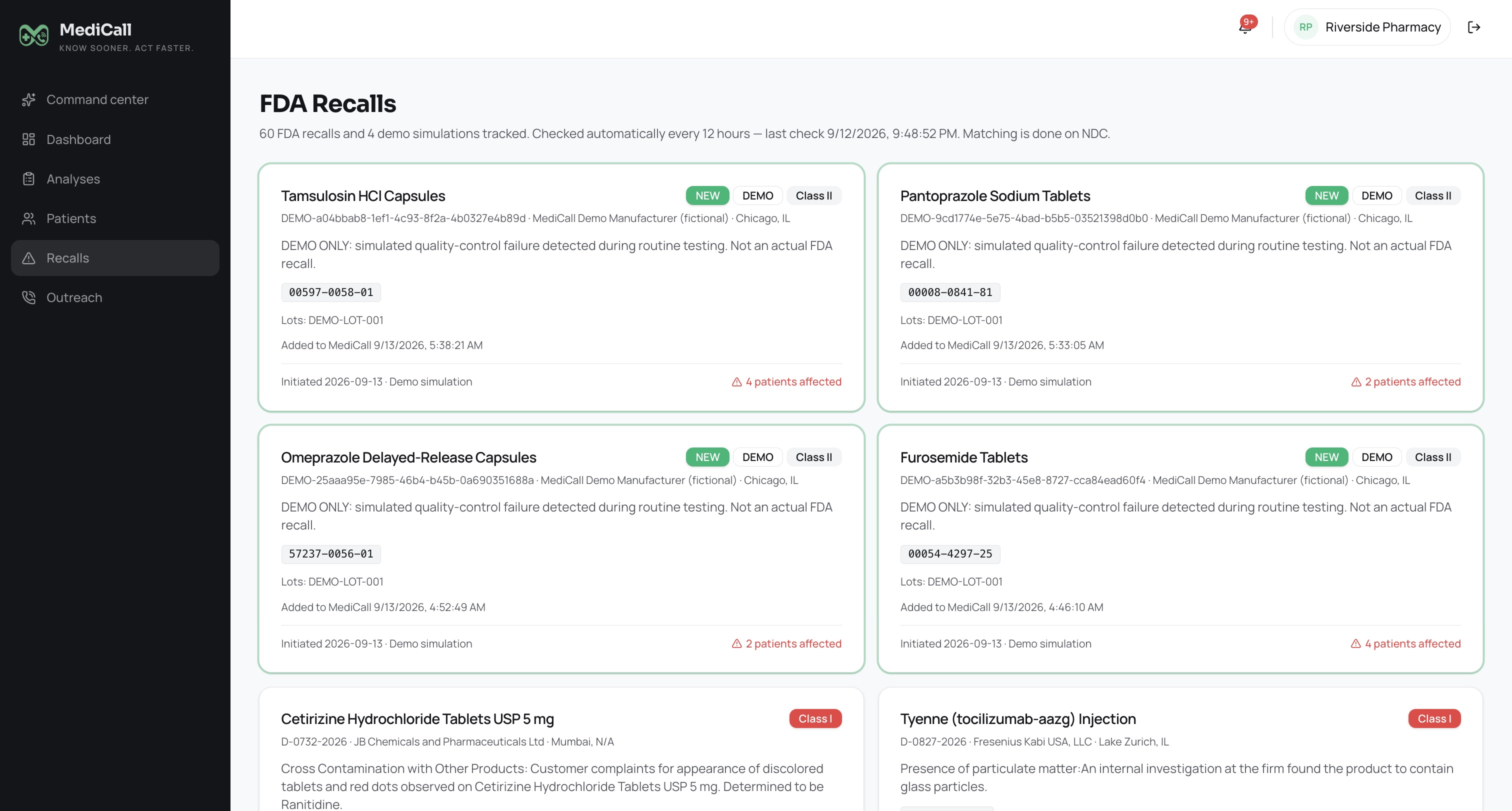
Recalls Page
-
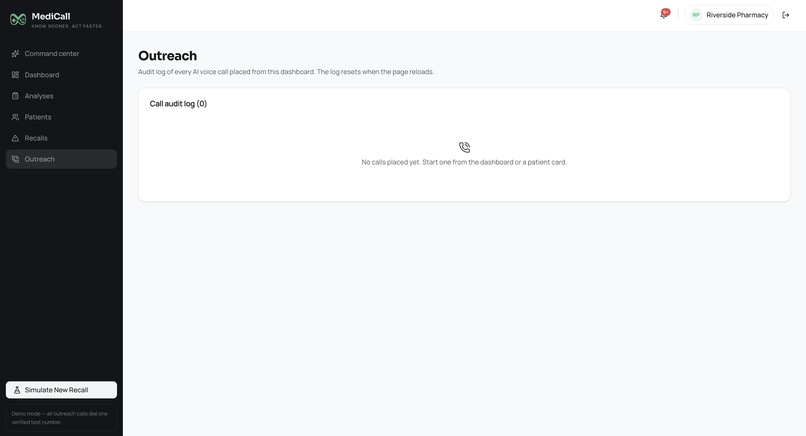
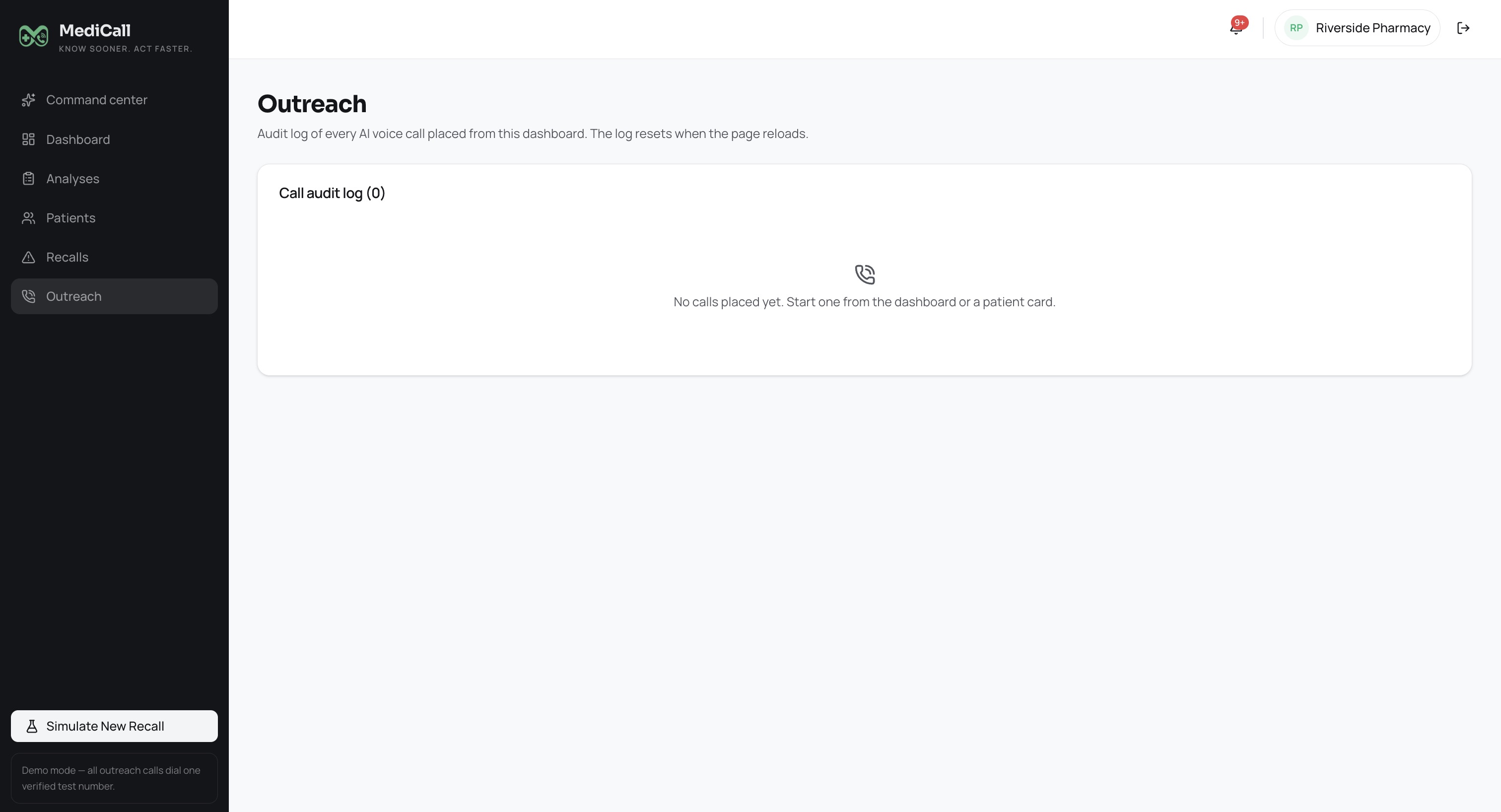
Outreach Page
-
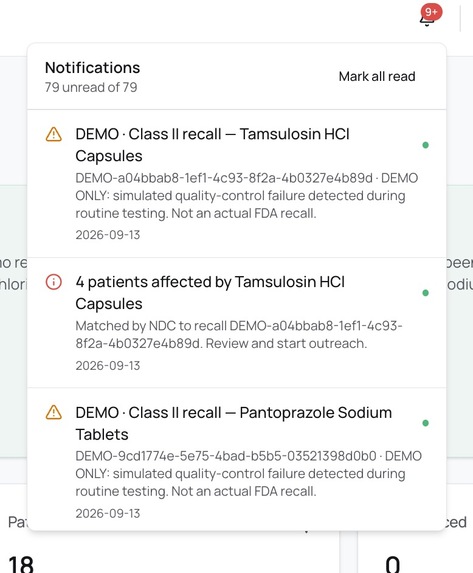
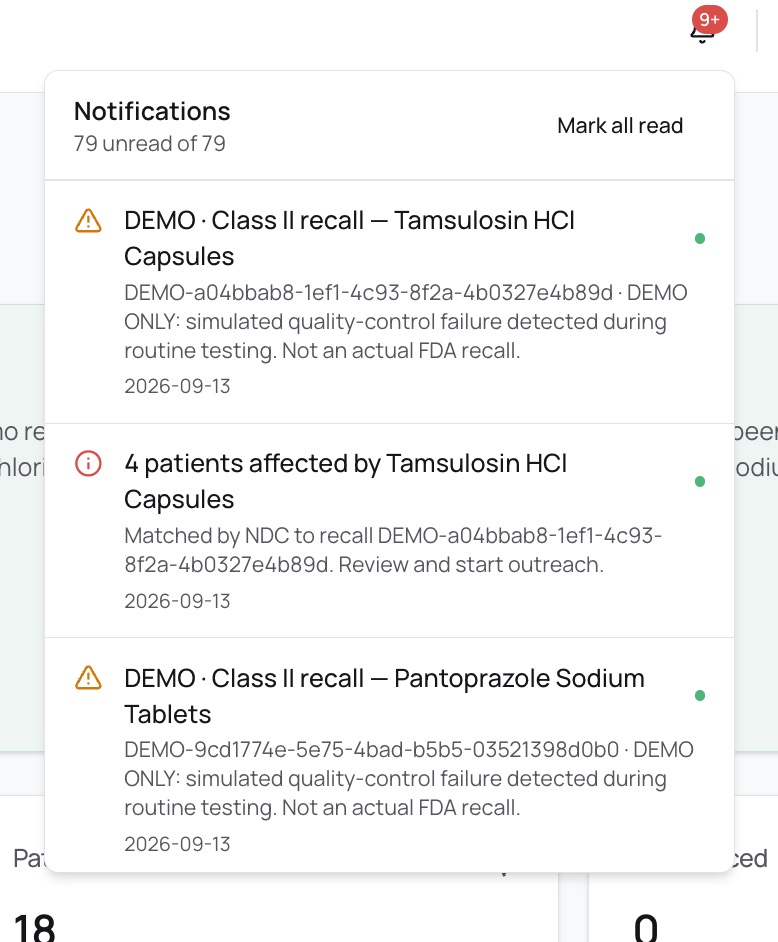
Notifications Popup
-
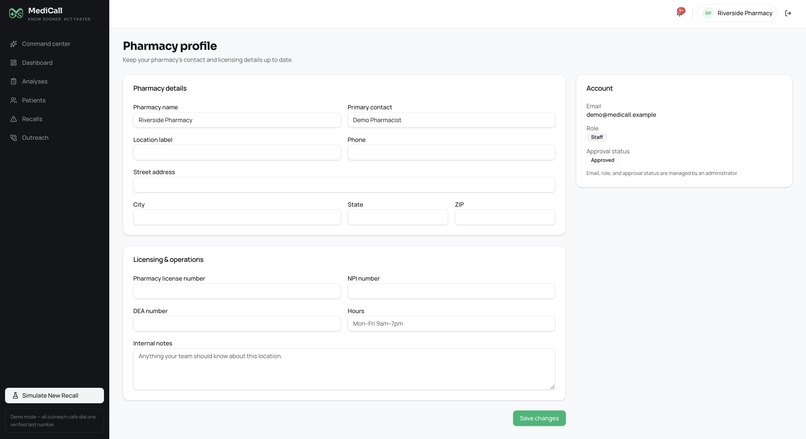
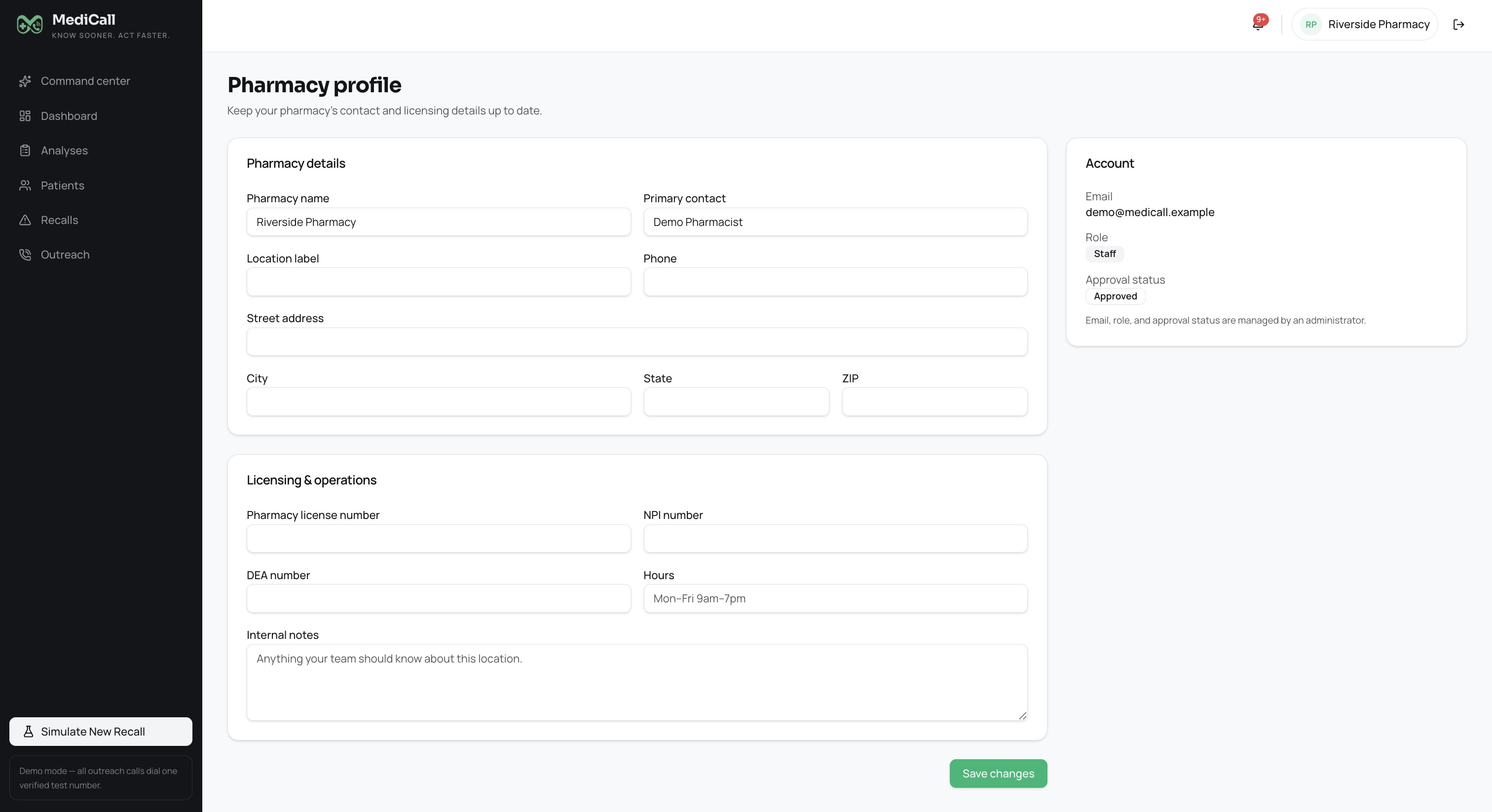
Pharmacy Profile Page
-
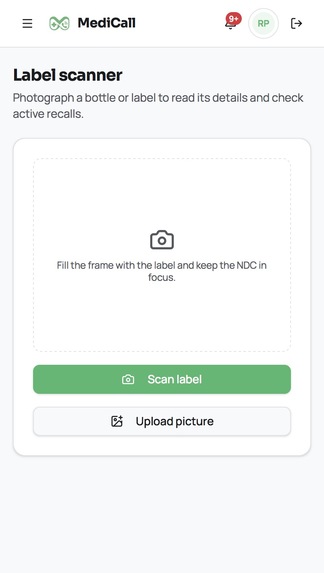
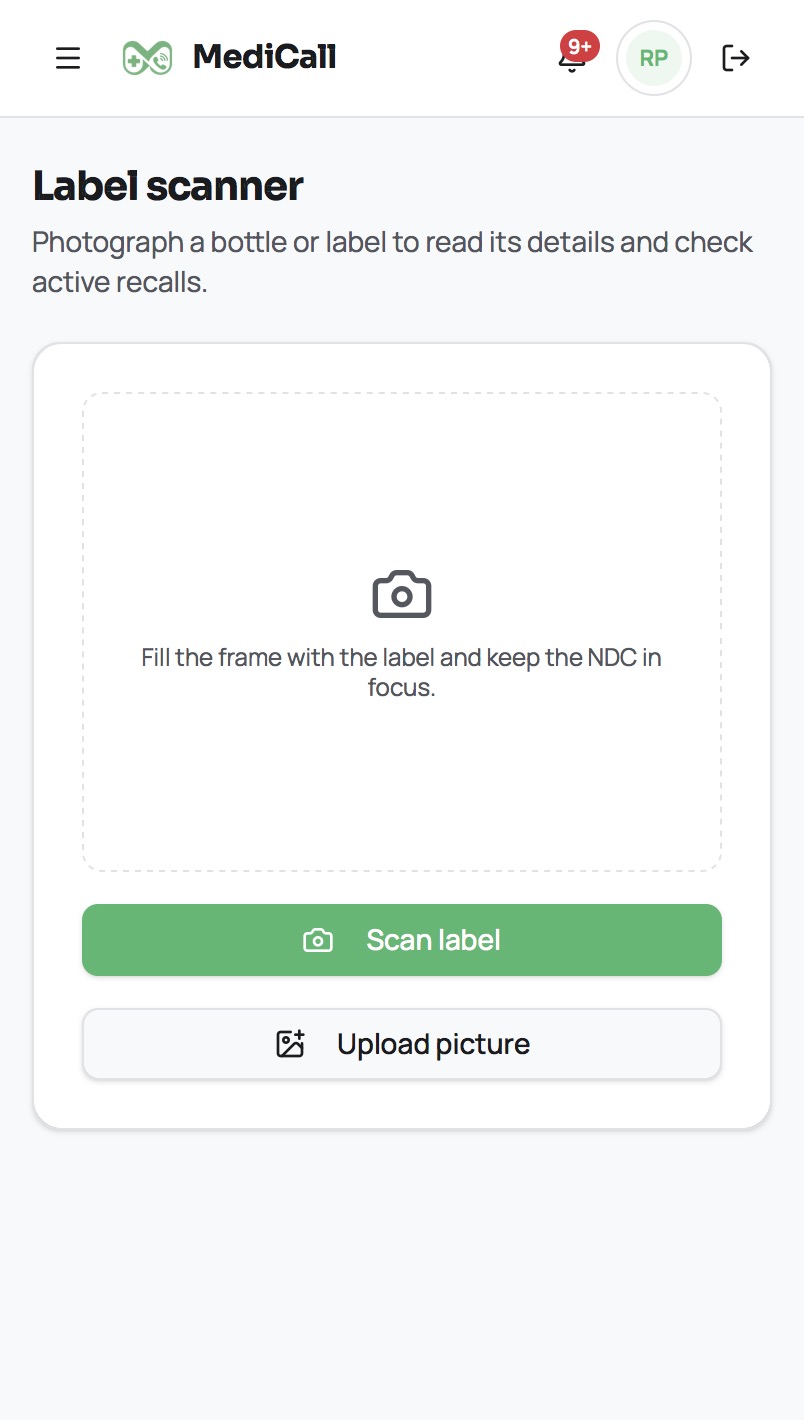
Mobile Scanner Page
-
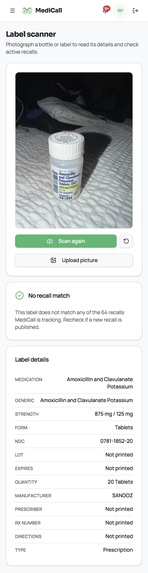
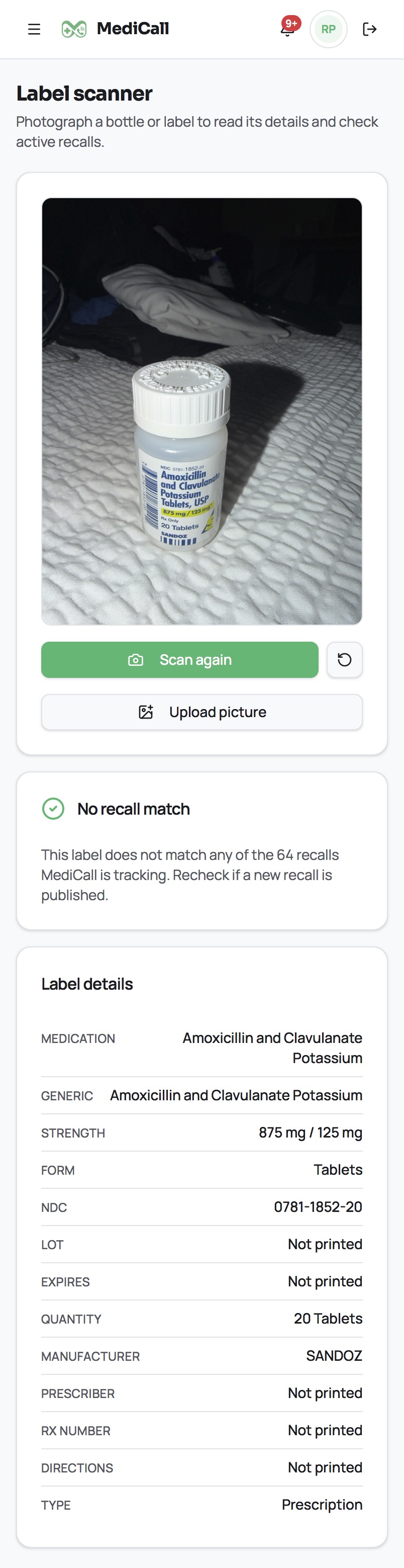
Mobile Scan Example
Inspiration
~350 drug recalls happen every year in the U.S. and the average recall takes over a year to fully resolve.
Patient notification is often an afterthought.
A friend of ours was on a medication for alopecia that got recalled. They didn't find out until months later. That's NOT rare.
As recently as 2019, New York had no legal requirement at all for pharmacies to tell patients they were on a recalled drug. Lawmakers had to pass a law forcing notification within seven days, and even then, only for the most severe (Class I) recalls. Most recalls are lower severity, and still often go unreported to patients directly. Source: The Well News, 2019
Watching my own grandparents manage a long list of medications made the risk obvious; more prescriptions mean more chances for one to get recalled, and more chances two of them quietly conflict with each other. Seniors are exactly the patients least likely to catch either problem on their own, and most likely to be harmed by it.
Pharmacies are usually the last point of contact between a patient and their prescription. That makes them the right place to close this gap.
Healthspan starts with a safe foundation. A recalled medication, or one quietly conflicting with another, working against you undermines everything else.
What it does
🚩 Recall flagging MediCall automatically cross-references every patient's medication against FDA recall data. Any patient on a recalled drug is instantly flagged on the dashboard.
📞 One-click AI notification
- For any flagged patient, staff click one button and MediCall places a real phone call. Before the AI agent reveals any medical information, it first verifies the patient's name and date of birth to confirm the right person actually answered; protecting patient privacy before a word about their prescription is said. Once verified, the AI has a natural, two-way conversation: explaining the recall, answering basic questions, and asking how the patient is feeling and whether they've noticed any symptoms.
📷 Scan & populate
- A mobile scanner lets pharmacy staff scan a patient's medication and have that record populate directly into the web dashboard. No manual data entry required to get a patient's prescriptions into the system in the first place.
⚠️ Polypharmacy interaction checking
- Beyond recalls, MediCall checks patients on multiple medications for known drug-drug interactions; a problem called polypharmacy. Polypharmacy is one of the most under-addressed risks in long-term patient health: the more medications a person takes, the more likely two of them interact in ways that quietly cause harm over time. Not just to symptoms, but to organ function and long-term health outcomes. This risk grows significantly with age and chronic illness, and it's rarely caught unless someone actively cross-checks the full medication list. MediCall does that automatically and flags patients at risk.
👨⚕️ Doctor notifications
- Doctors linked to a flagged patient's prescription are automatically notified too, pulling directly from the pharmacy's own database, so the physician who prescribed the medication is kept in the loop on recalls, interaction risks, and refill patterns, without the pharmacy having to separately call or fax anyone. This closes a communication gap that normally depends on the patient remembering to mention it at their next appointment.
💊 Refill tracking
- For controlled substances, MediCall tracks refill frequency and flags early-refill patterns, giving doctors visibility to support responsible prescribing without singling out or accusing any patient.
🔍 Clinical review & replacement workflow
- MediCall runs a detailed clinical analysis showing recall class, status, specific affected lot numbers, and expiration dates, then generates a numbered action checklist for pharmacy staff (trace the fill, don't independently stop or switch medication, gather missing clinical context, arrange appropriate follow-up). It also surfaces possible replacement medications with estimated cost, savings, and accessibility, which staff can approve for discussion with the prescriber or reject, keeping a human in the loop on every clinical decision.
How we built it
We built MediCall as a full-stack pharmacy safety platform that combines real-time recall data, patient prescription records, generative AI, and automated voice outreach. The frontend and user workflows were developed in React with Lovable as an accelerated development environment, while Supabase handled authentication, persistence, and application data.
On the backend, we integrated openFDA recall data and built matching logic around medication identifiers so affected patients could be surfaced automatically. We then layered Gemini on top as the system’s intelligence layer, using multimodal extraction, structured outputs, and function calling to interpret medication scans, process natural-language commands, and transform unstructured call data into actionable pharmacy records.
For patient outreach, we connected ElevenLabs Conversational AI with Twilio to create live two-way calls that could explain a recall, respond to patient questions, and capture follow-up context. We tied these services together into a single workflow so a recall could move from detection to patient identification, pharmacist review, outreach, and post-call documentation within the same application.
Challenges we ran into
- OCR reliability: medication labels are often blurry, rotated, or partially obscured, making text extraction inconsistent
Distinguishing the actual drug name from surrounding pharmacy label text (dosage, warnings, pharmacy branding)
Getting patient-specific data to actually pass through to each AI call instead of defaulting to a hardcoded test value
Wiring together separate systems: Twilio for telephony, ElevenLabs for the conversation, Gemini/OpenAI for reasoning, each with its own auth, rate limits, and failure modes.
Twilio's trial account restricted outbound calls to pre-verified numbers, requiring an account upgrade before we could test broadly
Keeping AI responses genuinely useful instead of defaulting to "consult your doctor" for every query Managing multiple healthcare data sources (openFDA, RxNorm) with different schemas and rate limits in one matching pipeline
Accomplishments that we're proud of
Closing the notification gap
- Turning a manual, easy-to-miss recall check into an automatic, instant flag for every patient. This is a direct win for longevity: preventing years spent living with something harmful working against you, unnoticed. Enhancing the quality of "longevity"
Privacy-first calling
- Verifying patient identity (name + date of birth) before disclosing any medical information over the phone. Trust is the foundation of healthcare; this makes sure sensitive info never reaches the wrong ears.
Turning a one-way alert into a two-way conversation
- The AI notifies and listens as well. Real patient-reported symptoms flow straight back into the dashboard, so a recall call isn't a dead end. An early-warning system that would otherwise wait until the patient's next appointment.
Surfacing polypharmacy risk proactively
- Catching dangerous medication combinations automatically, instead of hoping a provider manually cross-checks every pairing. Polypharmacy risk builds quietly over years; catching it early is a real, lasting contribution to someone's health.
Supporting responsible prescribing
- Refill-pattern tracking gives doctors visibility to catch potential overprescription early, framed around safety, rather than suspicion. Stopping harm before it becomes dependency or injury matters just as much for a long life as catching disease early.
Closing the loop with doctors
- The prescribing physician gets notified too, automatically. Coordinated care for both sides.
Keeping the human in the loop*
- MediCall surfaces the analysis, the risk, and even replacement options, but the final call always belongs to the doctor or pharmacist.
Removing manual data entry
- The mobile scan-and-populate flow means staff never hand-type a medication into the system, cutting out human error at the exact point a mistake could put a patient at risk.
What we learned
- AI voice integration needs real fine-tuning, not plug-and-play setup
- Backup plans matter: Twilio, Vapi, and Bland AI all hit walls before one worked
- Doctors want AI that preps the decision, not one that makes it for them
- Simple matching (NDC + lot number) beat anything more complex here
- Healthcare data comes with real privacy and regulatory constraints from day one
What's next for MediCall
- Add Gemini-powered symptom extraction from call transcripts, turning raw conversation into structured severity flags
- Build real patient consent/opt-in tracking to meet telecom compliance for automated calls
- Expand refill and polypharmacy checks with real drug-interaction data sources
- Scale beyond a single pharmacy to a multi-location view for pharmacy chains
- Extend the same recall-matching concept beyond prescriptions: produce, groceries, medical devices, and other consumer products, so everyday customers get the same instant, automated alerts pharmacies get for medications
Built With
- api
- elevenlabs
- fda
- geminiapi
- lovable
- sql
- twilio
- typescript

Log in or sign up for Devpost to join the conversation.