-
-
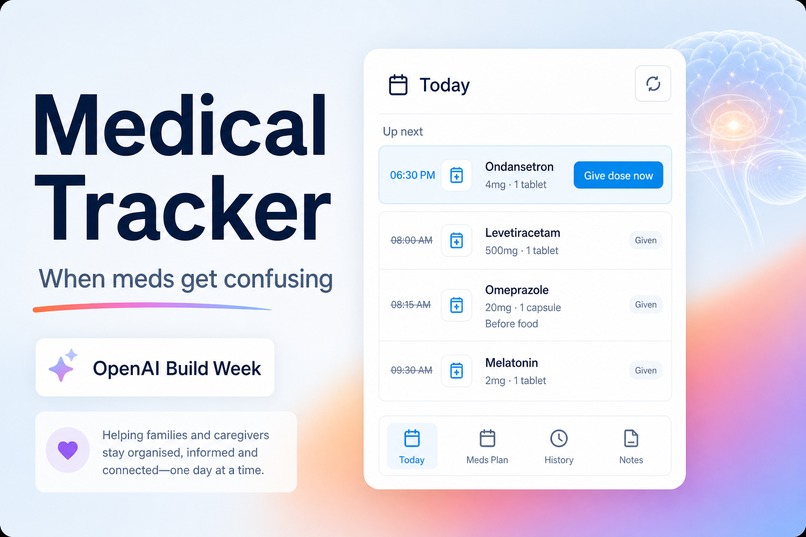
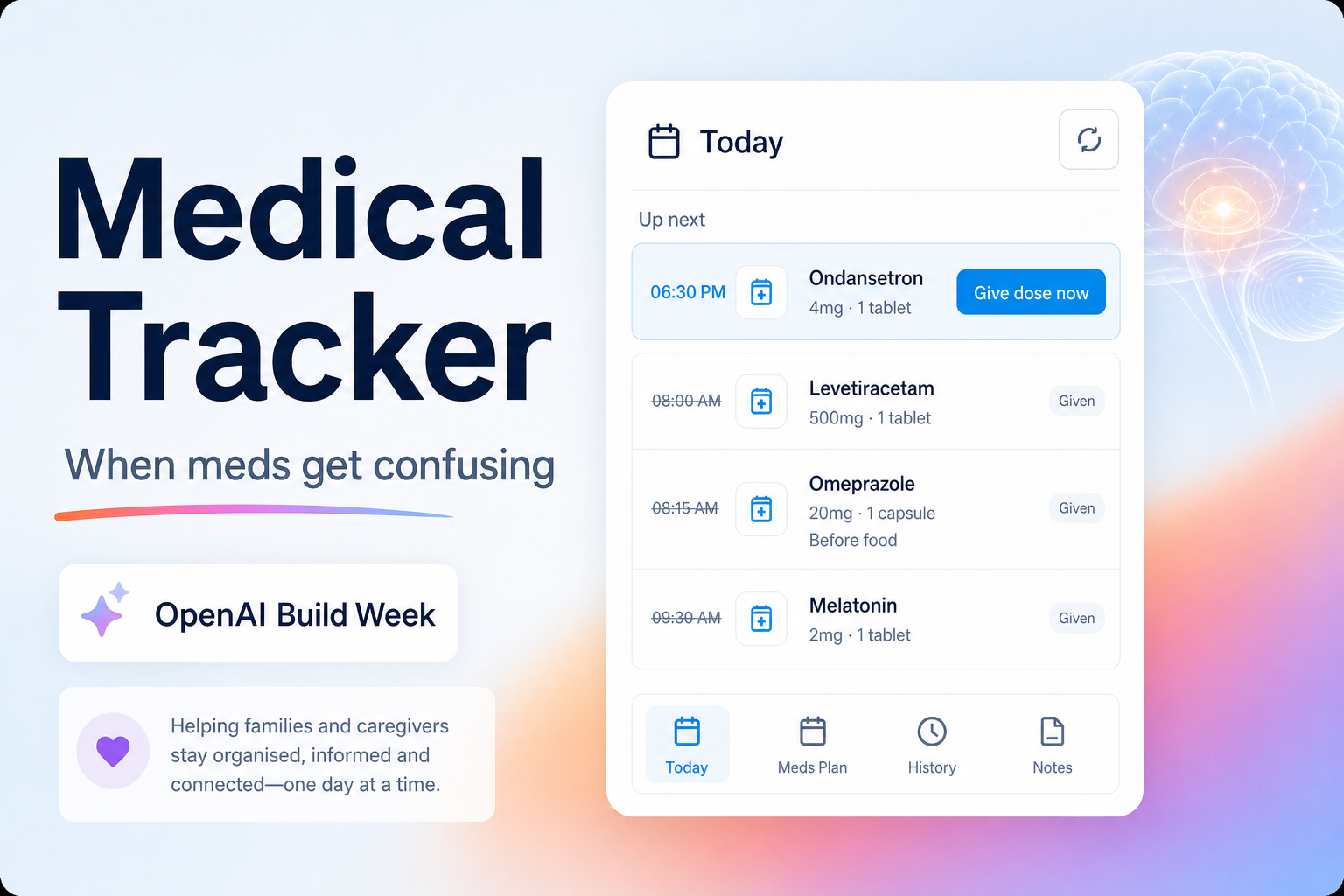
Medical Tracker Hero.
-
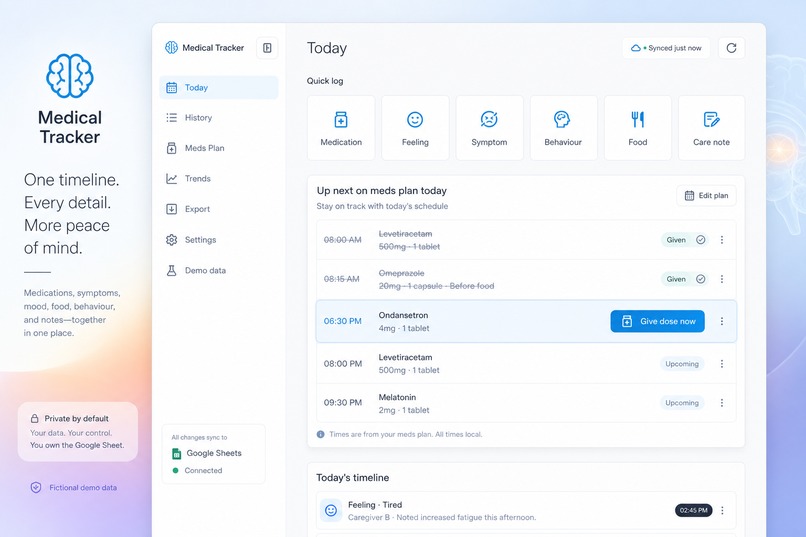
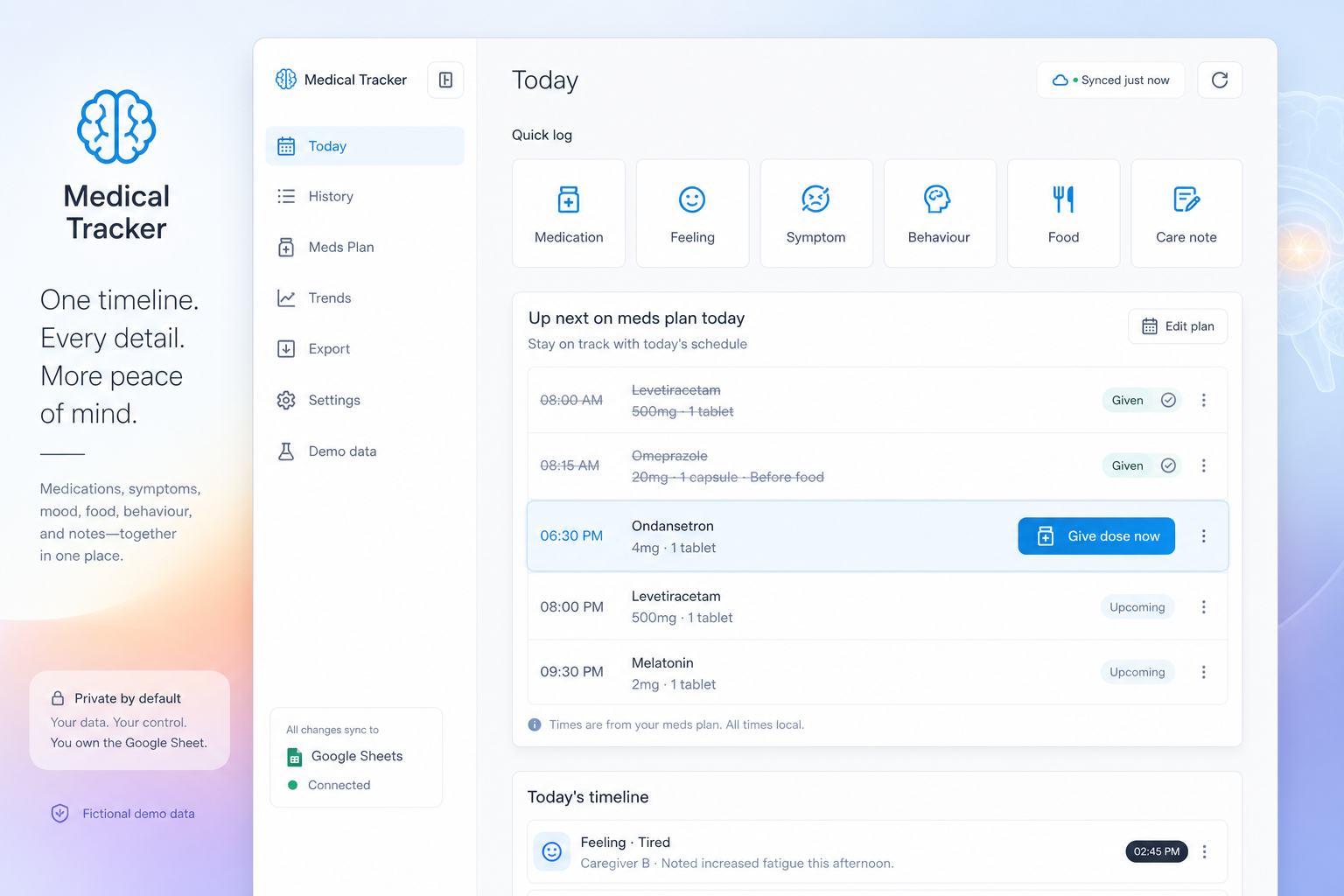
Medical Tracker Home Screen
-
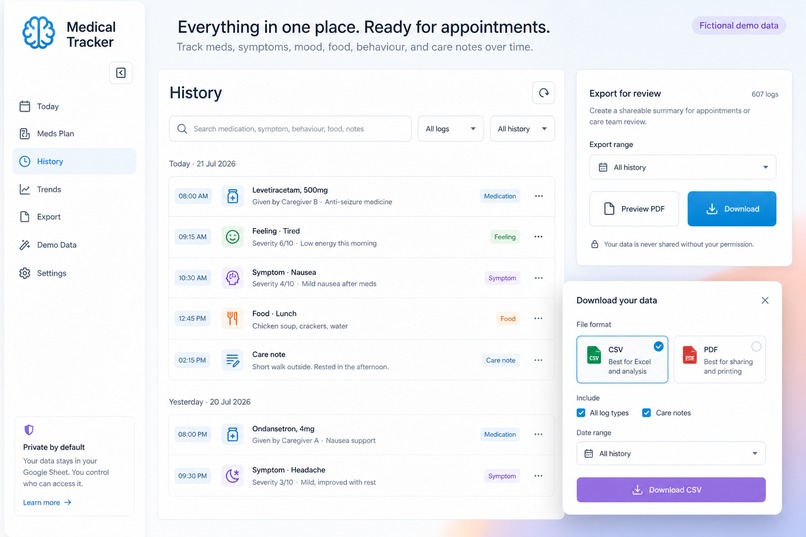
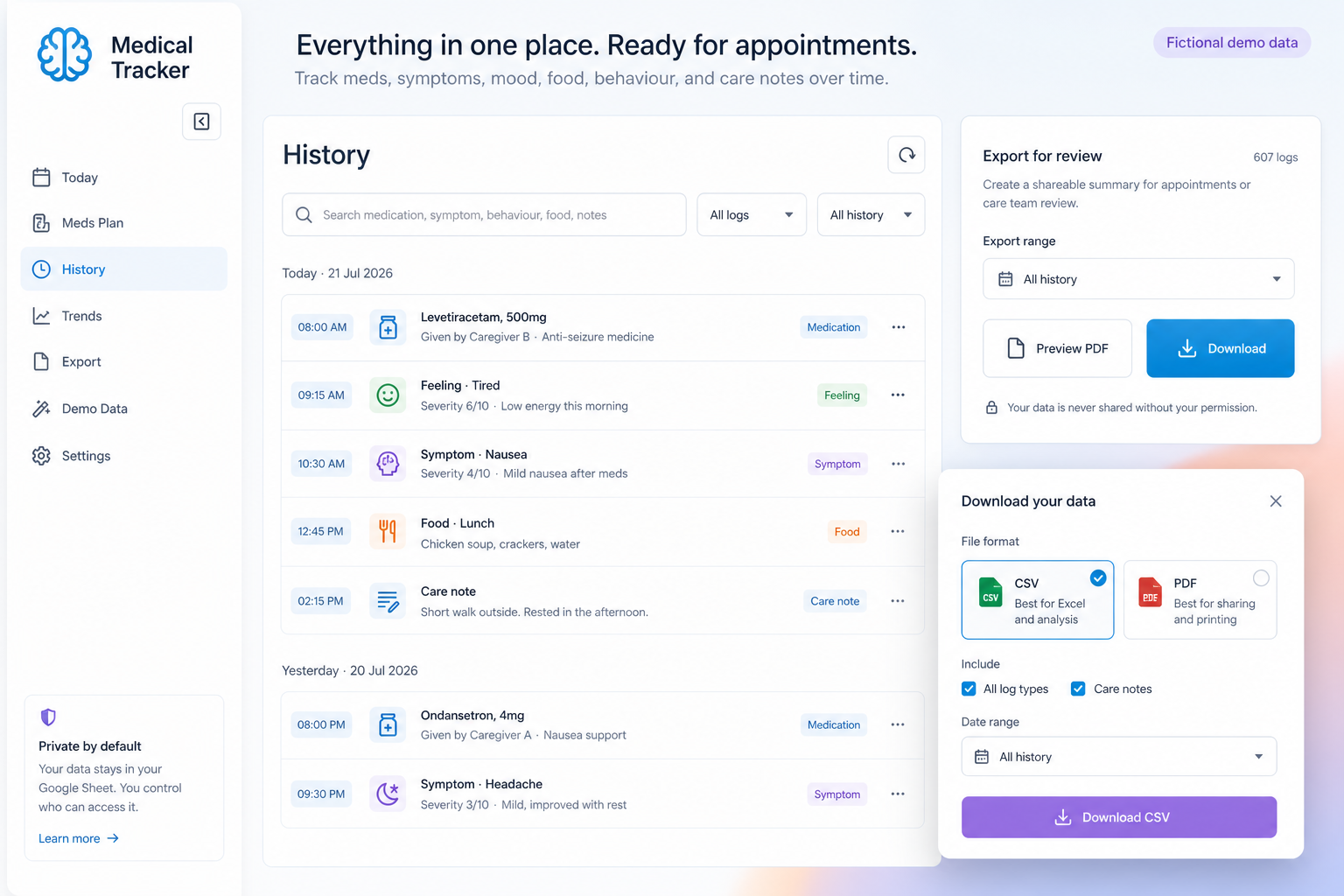
Medical Tracker History
-
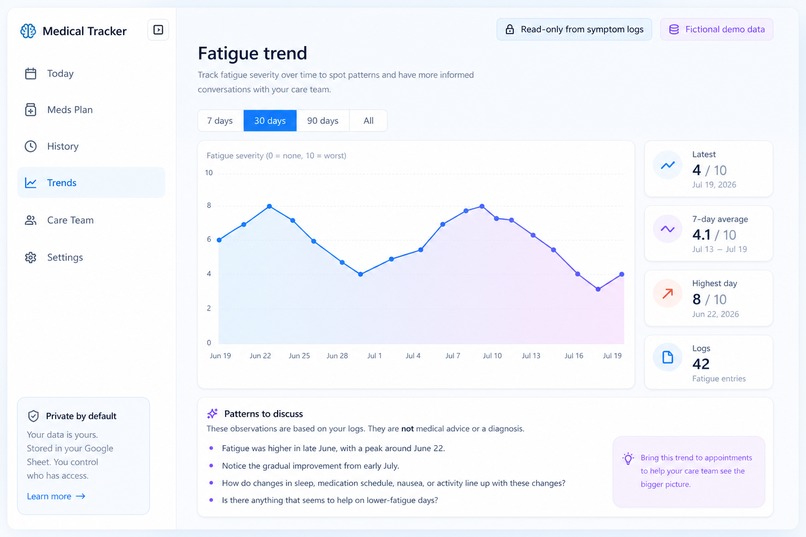
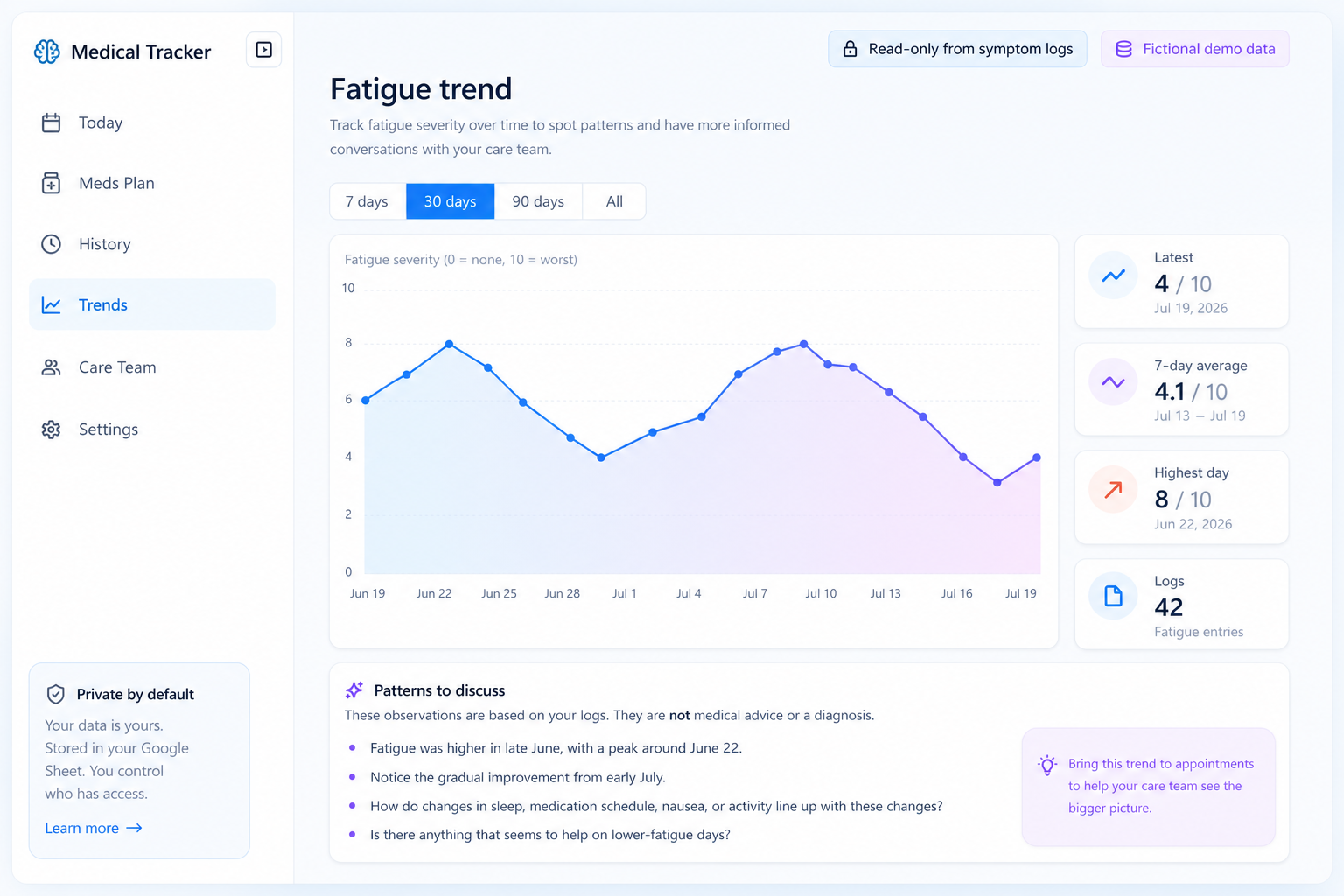
Medical Tracker Trends
Inspiration
My dad was diagnosed with a brain tumour, and our family suddenly became a team of caregivers. He needed multiple medications at specific times, while we were also trying to keep track of symptoms, behaviour, emotions and daily changes in his health.
Important information was being passed through conversations, messages and memory. Some family members were providing care in person, while my sister was following what was happening from another country. We needed one simple, shared record that everyone could check without relying on another phone call or handover.
My dad passed away recently, but Medical Tracker helped our family stay coordinated during an extremely difficult period. I decided to make it open source in build week so that other families can adapt it to their own care needs.
What it does
Medical Tracker (cool name I know) is a mobile-responsive web application for families and informal caregivers.
It allows caregivers to:
- Record when medication has been given
- Log symptoms, behaviour, emotions and general care updates
- Review a shared chronological timeline
- See what has already happened before providing care
- Edit or delete entries when someone makes a mistake
- Review recorded information over time
The frontend connects through Google Apps Script to a Google Sheet owned by the person deploying the application. This provides a lightweight backend without requiring Medical Tracker to operate a central database containing families’ health information.
The product is designed for coordination and record-keeping. It does not diagnose conditions, recommend medication or replace advice from healthcare professionals.
How I built it
I (mostly Codex) built the frontend in React and used Google Apps Script as a lightweight API between the application and Google Sheets.
I am a product designer rather than a traditional software engineer. Codex worked directly with me in the repository as an implementation partner, helping me build features, investigate bugs, refactor code and improve the user interface.
GPT-5.6 Sol acted as a product and technical thinking partner. I used it to plan features, understand unfamiliar parts of the architecture, think through privacy considerations, review the product experience and challenge my assumptions.
The first private version was working within approximately one day. I then tested it with members of my family who were actively providing care. Their feedback quickly shaped the product. For example, the original experience focused on recording information, but real caregivers needed to correct and delete entries when mistakes inevitably occurred. Within about a day I had something working and within 3 days we had a pretty good product that went unchanged for 2 months. In the last week I iterated, refactored, fixed a few little bugs, and prepared it for this submission and open-sourcing.
During Build Week, I extended the private prototype into a reusable open-source project. I removed family-specific configuration, improved the interface, created a public landing page and documented how another person (or their coding agent) can configure their own Google Sheet, Apps Script deployment and version of the application.
Challenges I ran into
The largest challenge was designing for people operating under pressure. The application had to be fast and understandable without requiring training, while still capturing enough information to be useful.
I also had to design for the accidental path rather than only the happy path. People enter the wrong medication, choose the wrong time or realise that an entry needs more context. Editing and deleting records therefore became essential rather than optional features.
Another challenge was converting a private family tool into a safe, reusable public repository. I needed to separate personal configuration and data from the application, explain the Apps Script setup clearly and be honest about the privacy limitations of a self-hosted system.
Finally, I had to avoid allowing the product to drift into medical decision-making. Medical Tracker helps people maintain a shared record, but medication instructions and health decisions must still come from prescriptions and qualified healthcare professionals.
Accomplishments that I’m proud of
I am proud that I was able to turn an urgent real-world need into a working product within a day, then improve it through feedback from people who were genuinely using it.
The application allowed family members in different locations and countries to understand what had happened without requiring constant calls or repeated explanations.
I am also proud that I have transformed something built for one family into an open-source project that other people can inspect, adapt and deploy for themselves.
Most importantly, the project demonstrated that AI can enable a designer to move beyond prototypes and create highly functioning software solo when it is needed.
What I learned
I learned that AI-assisted development is most valuable when it combines technical capability with close knowledge of the problem.
Codex could implement changes quickly, but the most important decisions still came from observing caregivers, prioritising their needs and testing whether the product worked in a real situation.
I also learned that small operational details often matter more than ambitious features. Being able to correct a mistaken record may provide more immediate value than sophisticated analytics.
Finally, I learned that simple infrastructure can be appropriate. Google Sheets and Apps Script are not the most complex technical stack, but they made the product understandable, inexpensive and adaptable while allowing each family to retain control of its own data.
What’s next for Medical Tracker
The immediate priority is making setup easier for people without technical experience.
Future improvements could include:
- A more guided deployment and onboarding process
- Better caregiver permissions and access controls
- A clearer audit history showing who changed each record
- Improved handover summaries
- Exportable reports for healthcare appointments
- Accessibility improvements
- Optional reminders and notifications
- Privacy-conscious trends that help families review changes over time
Any clinician-facing features would need to be designed and validated with healthcare professionals. The core purpose will remain simple: helping families maintain a clear, shared record during complex care.

Log in or sign up for Devpost to join the conversation.