-
-
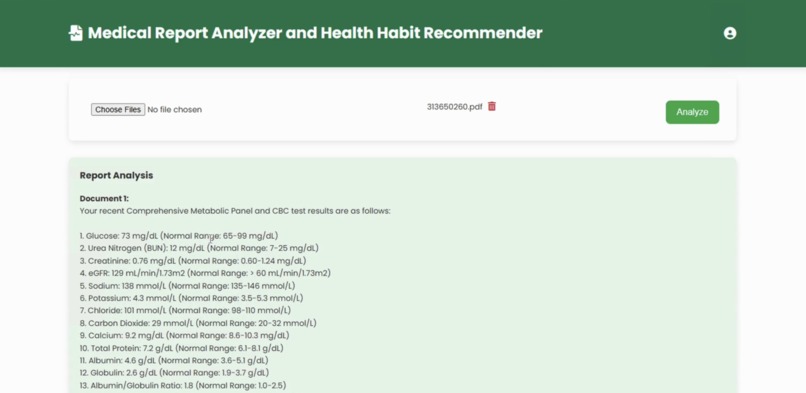
Main Page
-
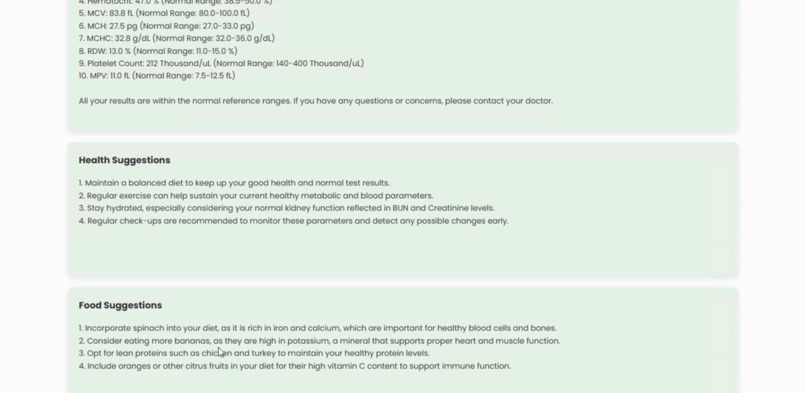
Suggestions
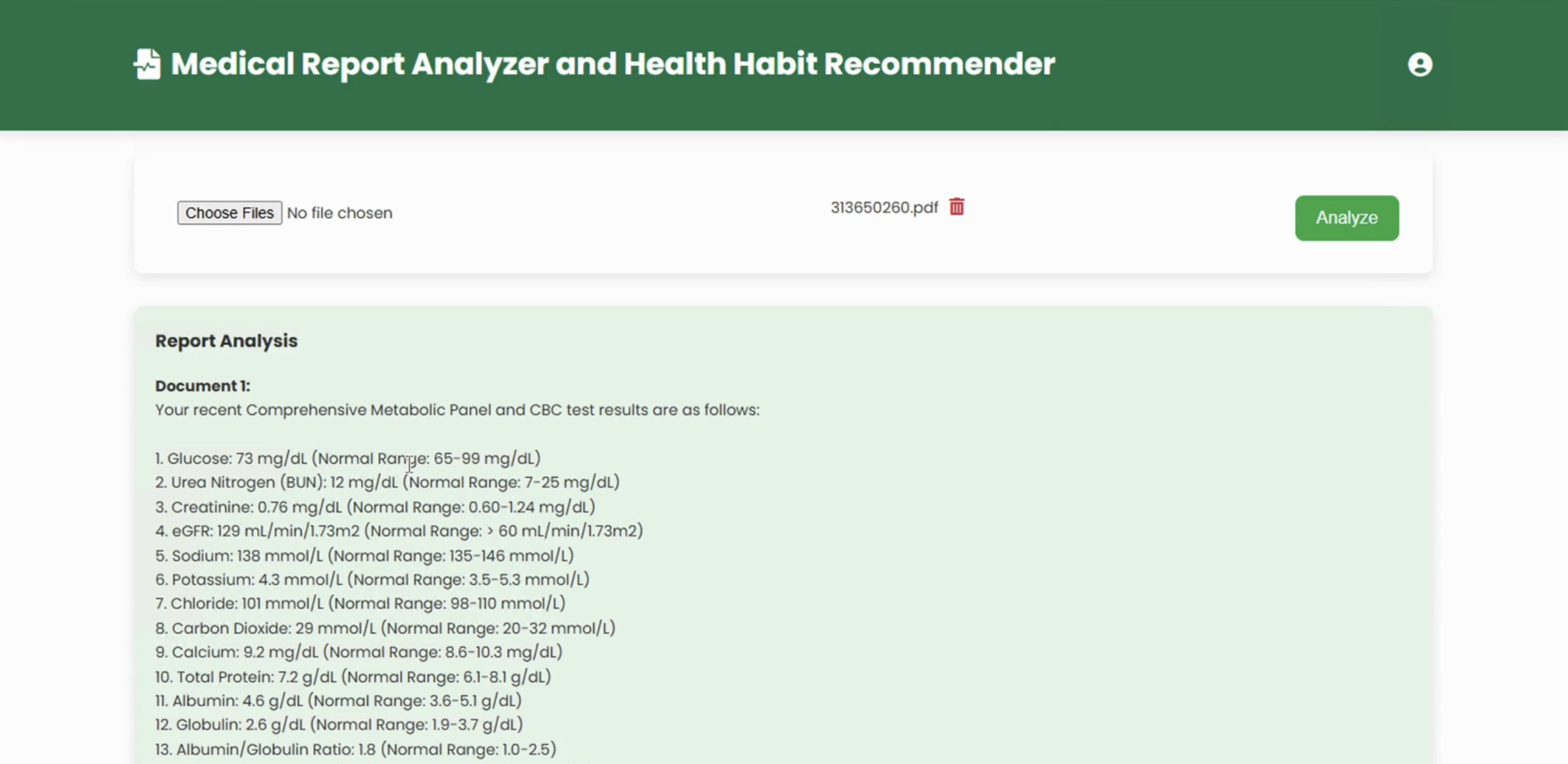
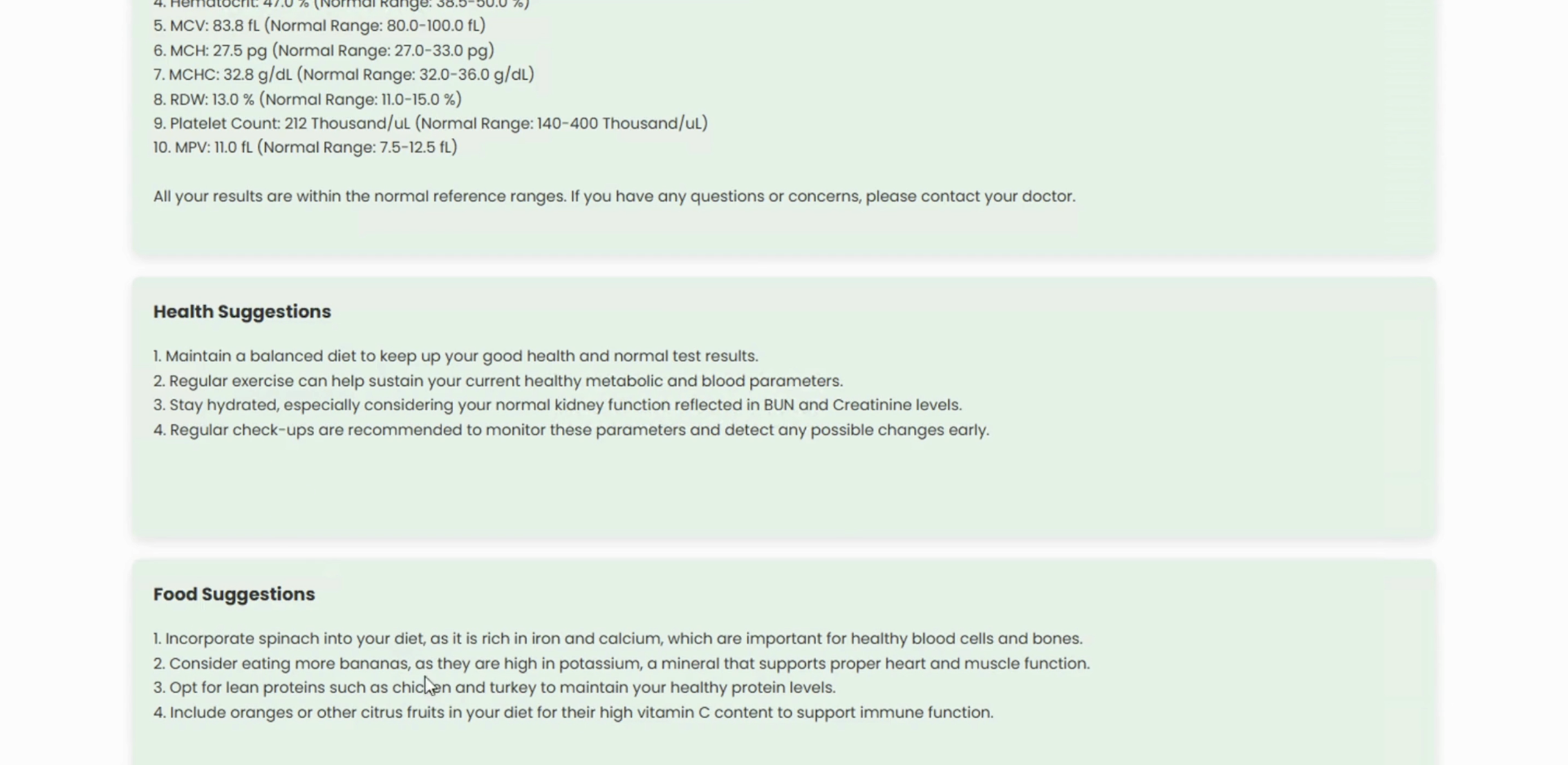
Inspiration
Every year during my annual hospital checkups, I receive multiple test reports. Some values are normal, while others need improvement. But after a few days, I tend to forget about them. I wanted a solution that could analyze my reports, remind me of areas to improve, and suggest actionable health habits so I can stay on track year-round.
This project was inspired by that need—to have an intelligent assistant that turns my medical data into daily, personalized health advice.
What it does
- Accepts medical documents (PDFs, scans, images)
- Uses OCR to extract structured medical data
- Summarizes doctor’s notes and prescriptions using GPT
- Generates personalized:
- Health summaries
- Few health habit suggestions
- Few food/nutrition suggestions
- Health summaries
- Stores data per user profile and avoids duplicate document processing
- Recommends habits based on entire user history, not just one report
How we built it
- Backend: Python
- Frontend: HTML UI
- OCR: Tesseract for extracting text from images
- AI Engine: OpenAI GPT/Llama2 local model for summarization and suggestions
- Model Management: MLflow for model versioning and deployment
- Platform: Deployed and tested on HP AI Studio
The pipeline automatically connects uploaded files → OCR → GPT prompt creation → response processing → user-specific output generation.
Challenges we ran into
- Parsing inconsistent formats across medical reports
- Handling poor-quality scanned images for OCR
- Designing prompts that produce medically accurate summaries and suggestions
- Avoiding redundant processing of the same report multiple times
- Deployment issues with GitHub and HP AI Studio integration
Accomplishments that we're proud of
- Fully functional end-to-end system: upload → analyze → actionable insights
- Automatically detects duplicate uploads to save compute and time
- Personalized health & food suggestions based on real medical context
- Intuitive and clean interface with minimal setup
- Packaged model using MLflow for reproducibility
What we learned
- Effective ways to combine OCR + LLMs for real-world document processing
- How to build self-adaptive prompts for variable medical data
- Streamlining model lifecycle with MLflow
- Leveraging HP AI Studio’s deployment stack for app hosting and testing
- Importance of user-centric design for medical applications
What's next for Medical Report
- Add multi-language support for reports in regional languages
- Enable continuous habit tracking and notifications via email or mobile app
- Integrate basic health visualizations (charts/trends)
- Include more advanced medical models for deeper insights
- Add voice-based interaction for elderly or visually impaired users
Built With
- llama
- llm
- openai
- prompt
- python


Log in or sign up for Devpost to join the conversation.