-
-
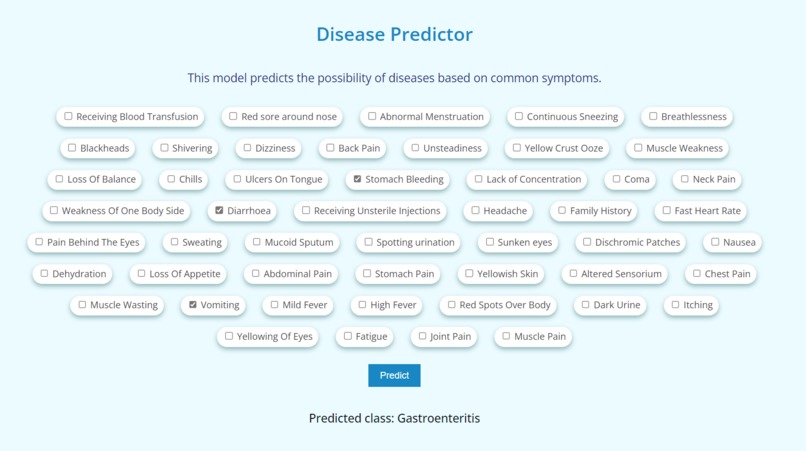
Symtoms to Disease Prediction model
-
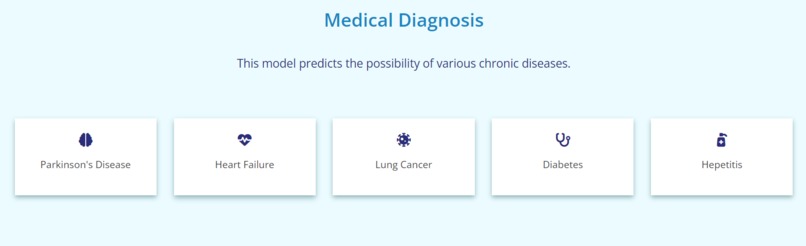
Physician - aid for medical diagnosis
-
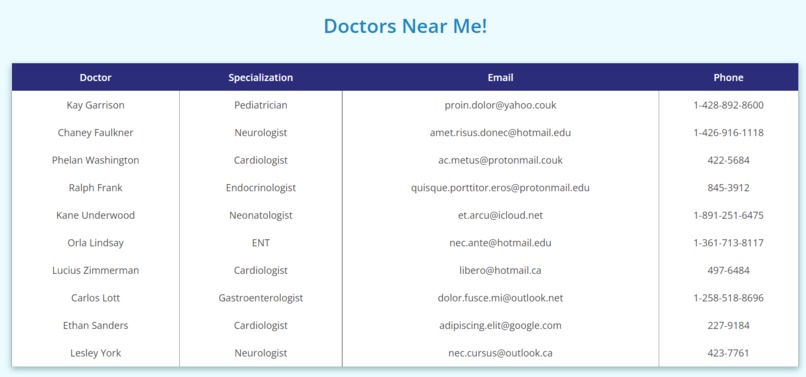
Doctor Support
-
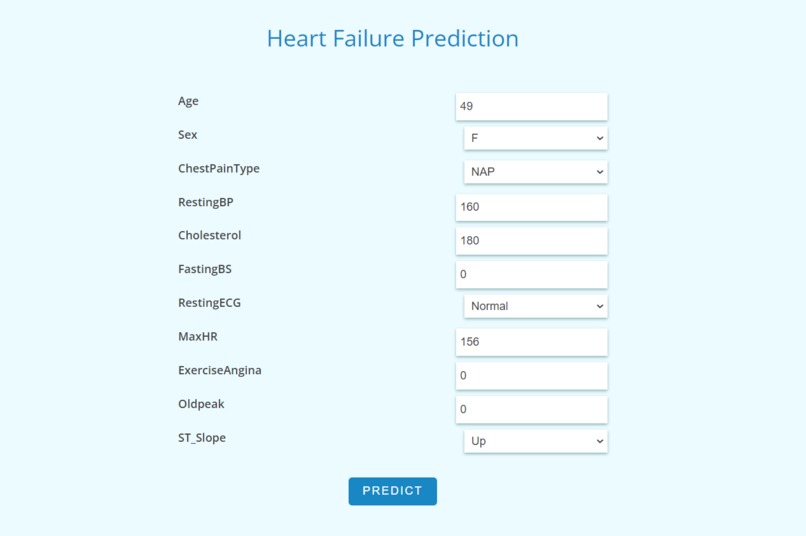
Test Heart Failure Analysis Model
-
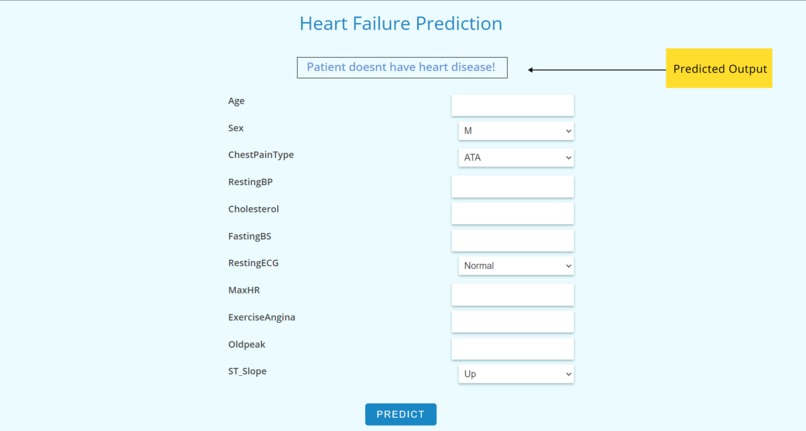
Prediction Output
-
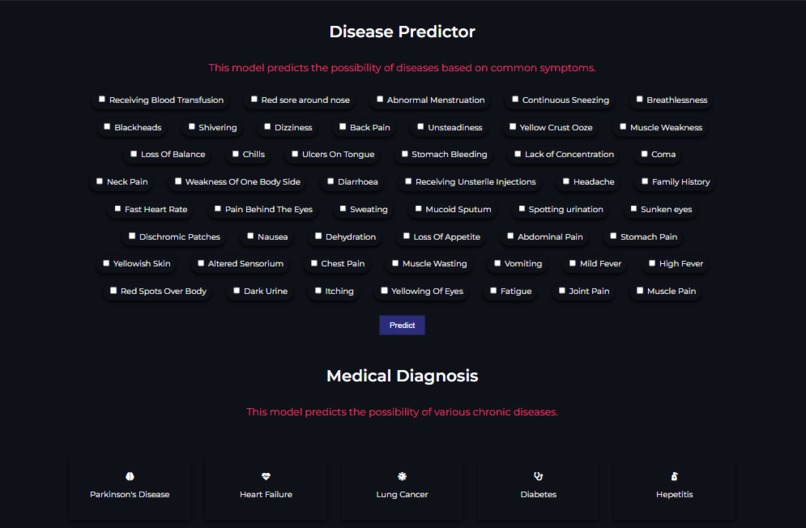
Dark Theme for Visibilty


Inspiration
Around 32,000,000 people worldwide die out of medical errors and late discovery of chronic diseases which makes it highly necessary to find a solution to it.
As per analysis of the existing health care systems, a doctor specialized in one field diagnoses just one disease at a time. Say, one system is used to analyse diabetes while another system analyses diabetes, while another department is required to the diagnose heart condition of a patient. When a physician wants to analyse their patient’s health reports, it's time consuming to come to a conclusion based on each individual test report.
What it does
Our suggested solution uses supervised machine learning algorithms including to a analyse diseases with one click. This doesn't replace the need of doctors but enhances the doctor's work by speeding up the time it takes to form a diagnosis and helps start patient treatment sooner. The doctor simply navigates to the particular disease and inputs the parameters based on the diagnostic tests. The corresponding machine learning model will be invoked and output the predictions on the screen.
We also have a feature that provides users the ability to predict diseases based on common symptoms to seek proactive cure in case of possible chronic disorders. The user doesn’t need to traverse different places in order to predict whether he/she has a particular disease or not.
How we built it
We've initially collected datasets from public sources. After cleaning, preprocessing and normalization of data, we've trained our ML models based on algorithms like SVM, Naive Bayes and KNN. Once trained, we have serialized or pickled the model to save its state and integrated it with the Flask app. The UI was designed in Figma and frontend was built using HTML and CSS.
Challenges we ran into
Initially, identifying a problem that can be solved feasilbly to improve the social well being of our neighbourhood. Finally we concluded our area of focus to be reducing medical errors by allowing patients and doctors to better understand the analytics and hence improving the quality of care.
Finding relevant and real-time reliable datasets which didnt have privacy contraints was challenging.
Fine tuning the parameters to improve the model accuracy took time. But finally we got our models to perform with around 82% accuracy and more.
Accomplishments that we're proud of
Being new to building Flask based REST API, we took around half a day to pick up this skill and seamlessly deployed our ML models using it.
We've also been able to attain accuray scores of around 85.72% for our heart failure prediction model, 84.45% for our lung cancer prediction model, 92.36% for our parkinsons disease predictor and so on.
What we learned
We learned to clean, pre-process and analyse public datasets to suit our problem statement and predict outputs for visualization. We've also learned to integrate it using Flask within a very short span of time.
What's next for Medical Panda
Personalised treatment options and secure electronic health record storage using Blockchain Technology
Built With
- css3
- flask
- google-colab
- html5
- machine-learning
- matplotlib
- numpy
- pandas
- python
- scikit-learn


Log in or sign up for Devpost to join the conversation.