
Inspiration
Our inspiration for this project came from the growing need to simplify healthcare management in a world where remote care is becoming increasingly important. We noticed that many individuals, particularly those managing chronic conditions or busy schedules, struggle to stay on top of medical appointments and health-related tasks. By integrating a seamless calendar system with Google Calendar, we aim to provide a user-friendly tool that helps people organize their healthcare routines more efficiently, improving their overall well-being and reducing stress. Our project is driven by the belief that health should always be a priority, and managing it should be as easy as possible.
What it does
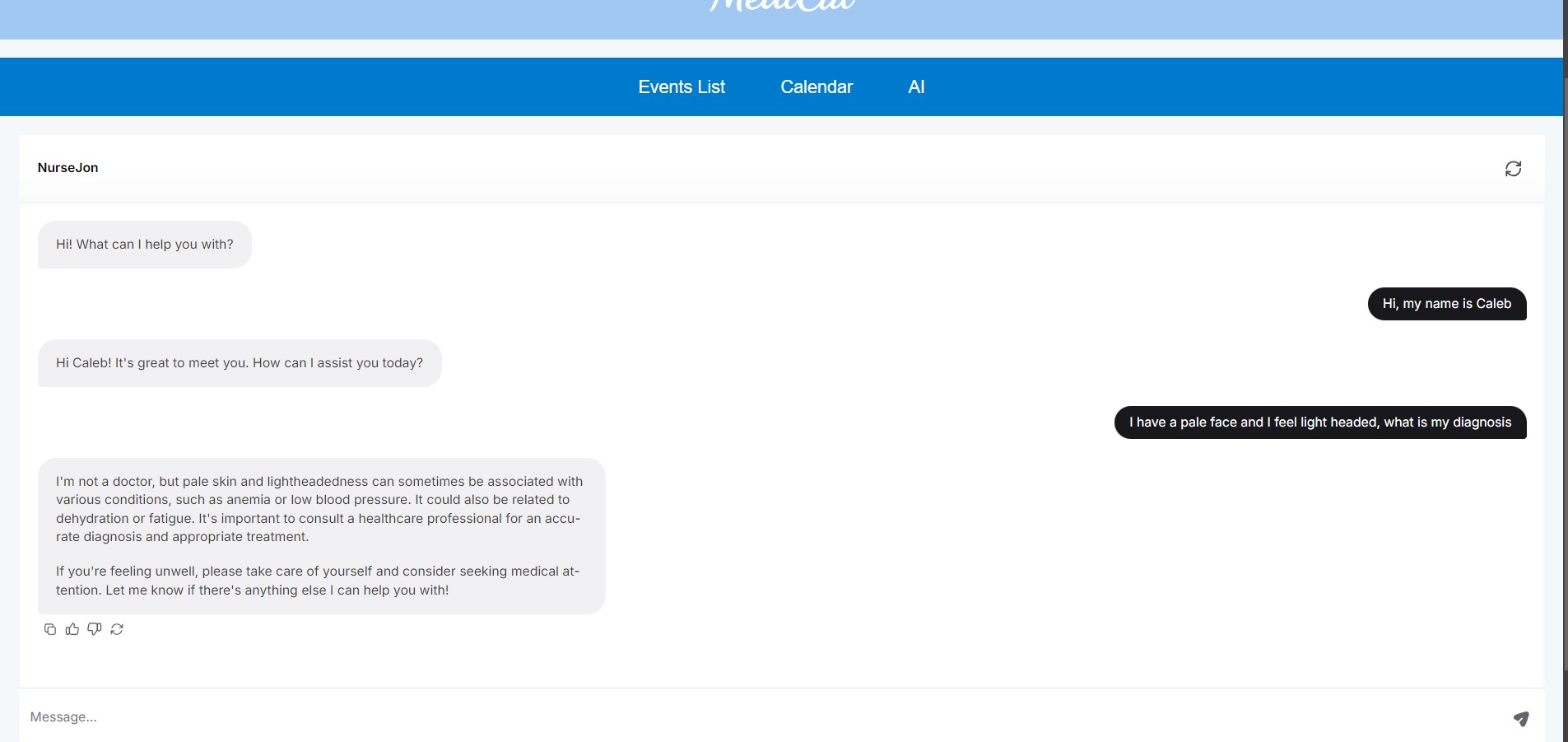
MediCal is a user-friendly web application that integrates Google Calendar to help users manage their health-related appointments and tasks. Additionally, MediCal incorporates an AI assistant that can respond to health-related queries, diagnose symptoms, and provide educational insights to improve user awareness and decision-making regarding their health.
How we built it
We built MediCal using a combination of HTML, CSS, and Flask for the front-end and back-end integration. The application is connected to Google Calendar API to manage events, and the AI assistant leverages a natural language processing model to respond to user inquiries. We also used ngrok for secure tunneling and ensured seamless OAuth 2.0 authorization to access Google Calendar securely.
Challenges we ran into
One of the biggest challenges was integrating the AI functionality and Google Calendar API smoothly while maintaining a secure authentication process with OAuth 2.0. Debugging OAuth callback issues and ensuring secure handling of tokens were tricky parts of the project. Another challenge was formatting the calendar UI and ensuring the AI could accurately process and provide health-related insights.
Accomplishments that we're proud of
We’re proud to have successfully integrated Google Calendar with our AI assistant in a secure and intuitive manner. Creating a platform that not only manages appointments but also assists users with their health inquiries is a major accomplishment. Additionally, overcoming the OAuth 2.0 integration challenge was a big milestone for our team.
What we learned
We learned how to work with Google Calendar API, including OAuth 2.0 authentication and token management. We also gained experience with AI-based natural language processing to build a feature that can respond to health-related questions and provide reliable symptom diagnosis and education. Furthermore, the project taught us the importance of secure API connections and debugging authentication issues.
What's next for MediCal
In the future, we plan to enhance the AI’s diagnostic capabilities by integrating it with a broader database of medical conditions and symptoms. We also aim to include more personalization features in the calendar, allowing users to input symptoms and receive tailored health advice. Expanding MediCal’s scope to incorporate wearable health device data and remote consultations with healthcare providers is another exciting possibility.


Log in or sign up for Devpost to join the conversation.