-
-
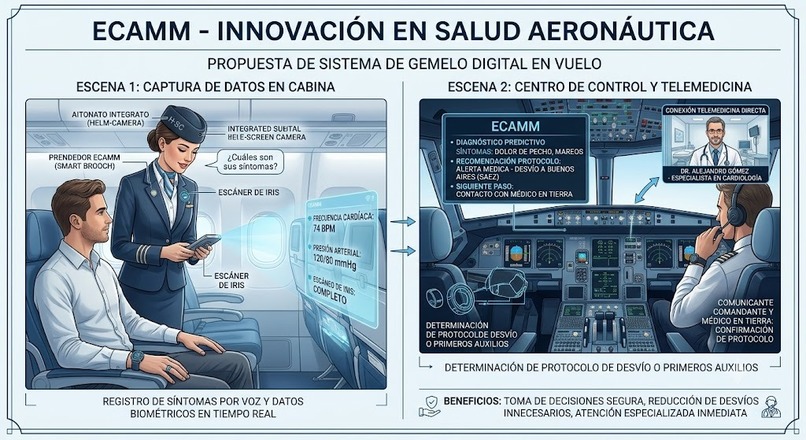
ECAMM INTEGRATED INFLIGHT HEALT MONITORING SYSTEM
-
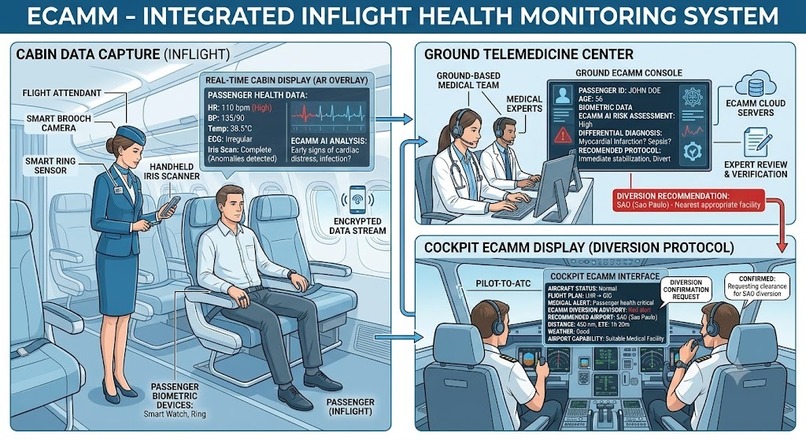
ECAMM INTEGRATED INFLIGHT HEALT MONITORING SYSTEM
-
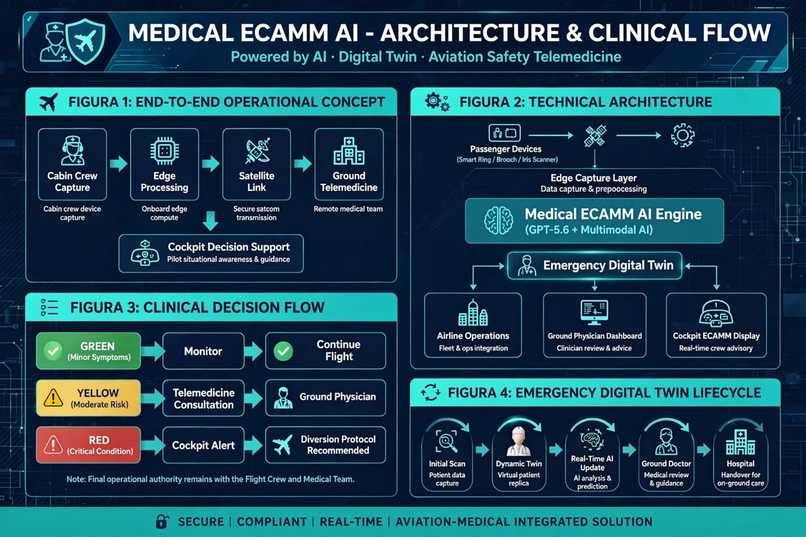
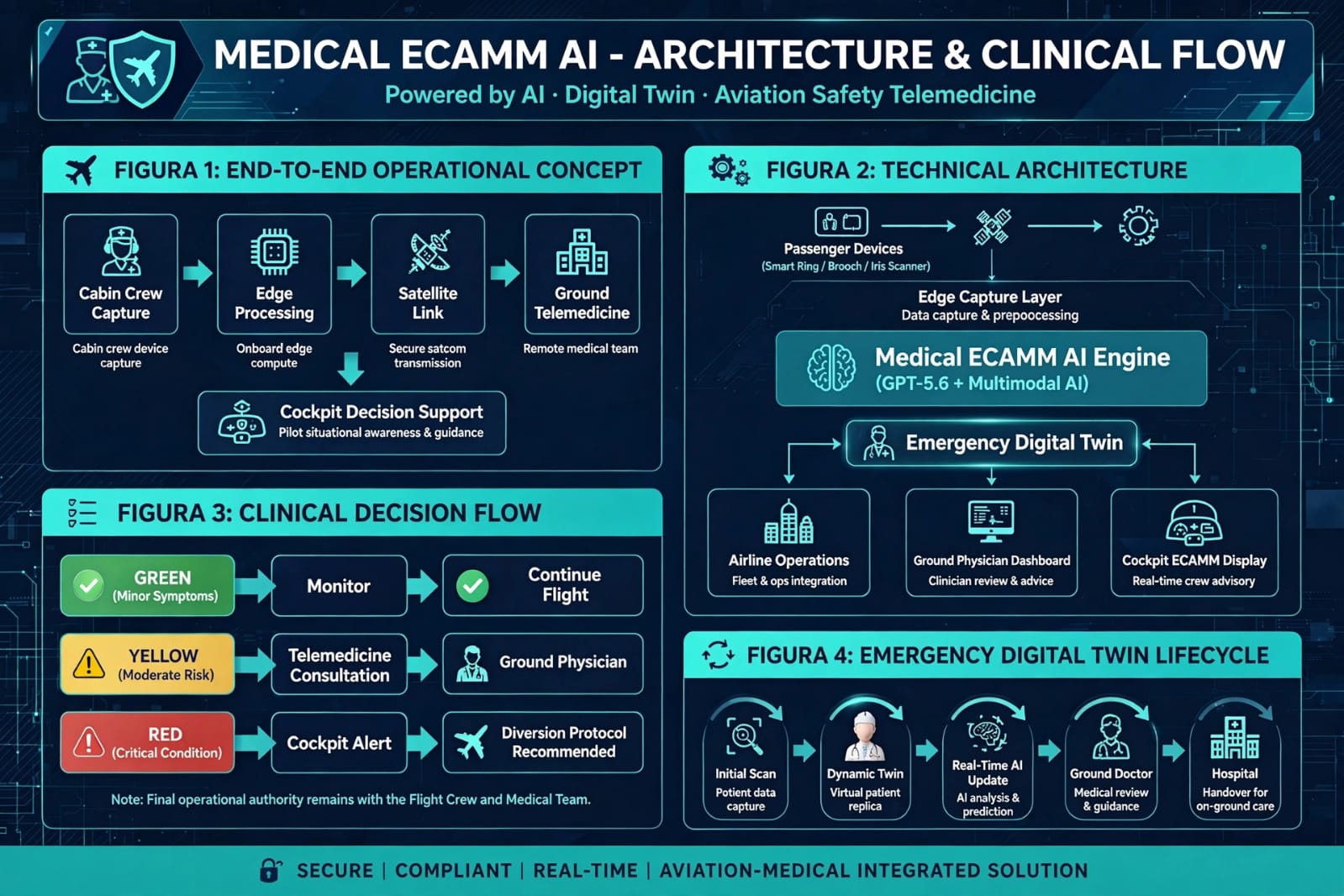
Ciclo de vida del Emergency Digital Twin.
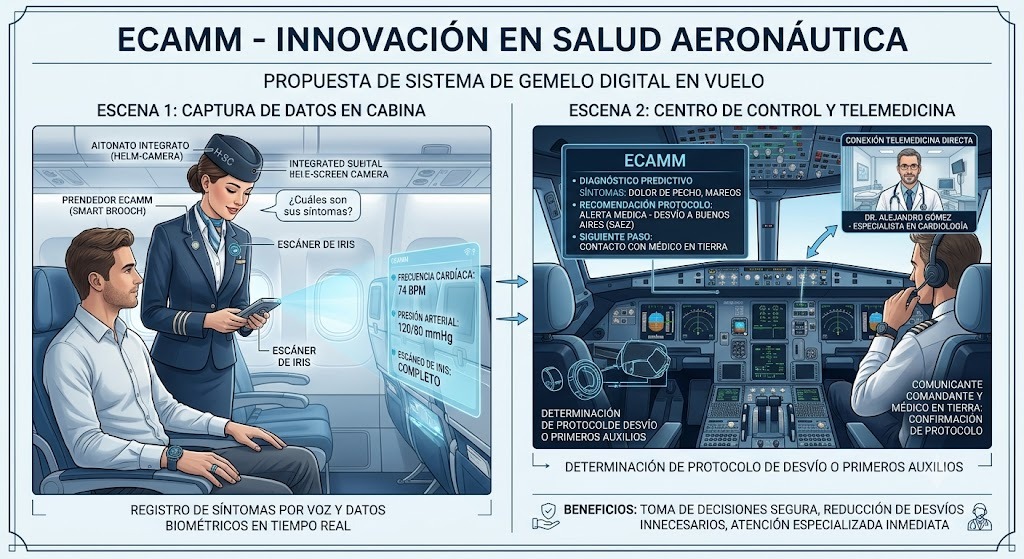
Inspiration
Commercial aircraft already use highly sophisticated systems to help pilots manage technical emergencies. However, when a passenger suffers a medical emergency, cabin crews still depend mainly on checklists, radio communication and remote medical advice.
Medical ECAMM AI was inspired by the philosophy behind aircraft electronic assistance systems. Our goal is to create an AI-powered medical copilot capable of guiding cabin crews through structured emergency assessments while generating a real-time Emergency Digital Twin of the patient.
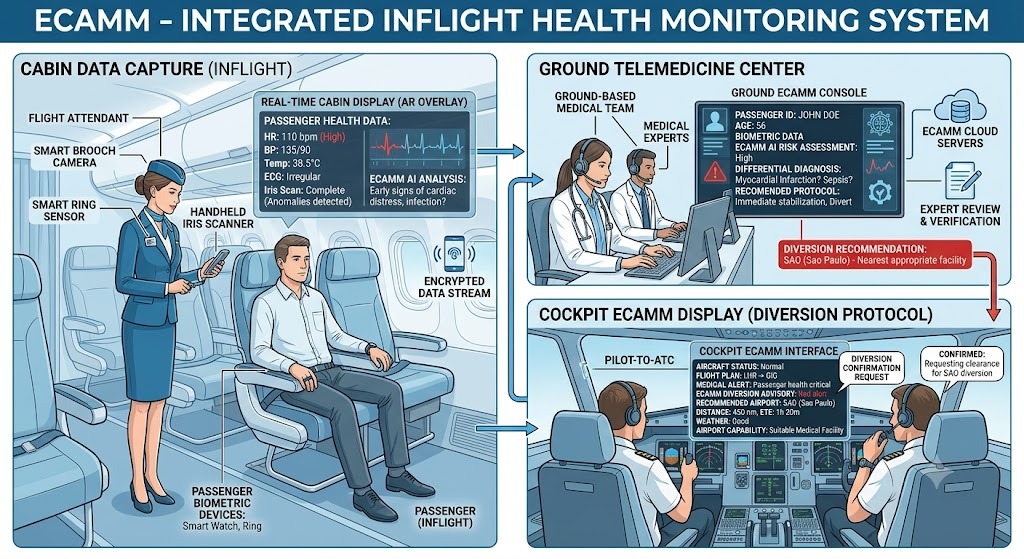
The system is designed to help flight attendants collect clinical information quickly using smartphones, photos, voice interaction and guided questions. This information is continuously organized and shared with ground physicians, allowing faster and more informed decisions regarding treatment or possible diversion of the aircraft.
Instead of replacing medical professionals, Medical ECAMM AI augments human decision-making by providing structured information during one of the most time-critical situations in aviation.
Our long-term vision is to integrate AI, digital health, predictive medicine and emergency aviation into a single intelligent assistance platform capable of improving passenger safety worldwide.
What it does Medical ECAMM AI provides a structured AI-assisted emergency workflow for onboard medical incidents.
The platform guides cabin crew through standardized assessment protocols using natural language conversations, guided questionnaires, image analysis and clinical reasoning powered by AI.
The system generates a real-time Emergency Digital Twin of the passenger, allowing physicians on the ground to receive structured clinical information instead of fragmented verbal reports.
Its objective is to reduce uncertainty, improve decision-making, and help determine whether an aircraft diversion is medically justified.
How we built it Medical ECAMM AI combines Large Language Models, multimodal AI, Digital Twin concepts and emergency medicine workflows.
The prototype is designed around GPT-5.6 reasoning capabilities, Codex-assisted development, image understanding, structured medical protocols and cloud-based decision support.
The architecture has been conceived to integrate with electronic medical devices, wearable sensors, airline communication systems and telemedicine platforms.
Challenges we ran into One of the biggest challenges was translating complex medical reasoning into simple workflows that non-medical cabin crews can safely follow under stressful conditions.
Another challenge was balancing AI assistance with human oversight, ensuring physicians remain responsible for clinical decisions while AI provides structured support.
Accomplishments that we're proud of We transformed an idea inspired by aircraft electronic assistance systems into a medical decision-support concept specifically designed for aviation.
The project introduces the concept of an Emergency Digital Twin that continuously evolves during an onboard medical emergency.
What we learned Developing Medical ECAMM AI reinforced the importance of combining artificial intelligence with human expertise rather than replacing it.
Emergency medicine, aviation safety and AI can work together to improve passenger outcomes while supporting better operational decisions. Future versions will integrate wearable devices, portable diagnostic equipment, telemedicine platforms, airline operational systems and predictive clinical AI to create a comprehensive aviation medical assistance ecosystem.
What's next for Medical ECAMM AI
Built With
- ai
- api
- artificial
- aviation
- cloud
- codex
- computer
- digital
- emergency
- gpt-5.6
- healthcare
- intelligence
- learning
- machine
- medicine
- multimodal
- openai
- python
- telemedicine
- twin
- vision

Log in or sign up for Devpost to join the conversation.