Inspiration
The inspiration for this project came from the gap in accessible healthcare information. Many people struggle to find quick, reliable answers to medical questions, leading to anxiety and delays in care. We wanted to create a solution that empowers users with instant, trustworthy guidance, reducing unnecessary stress while improving patient engagement.
What it does
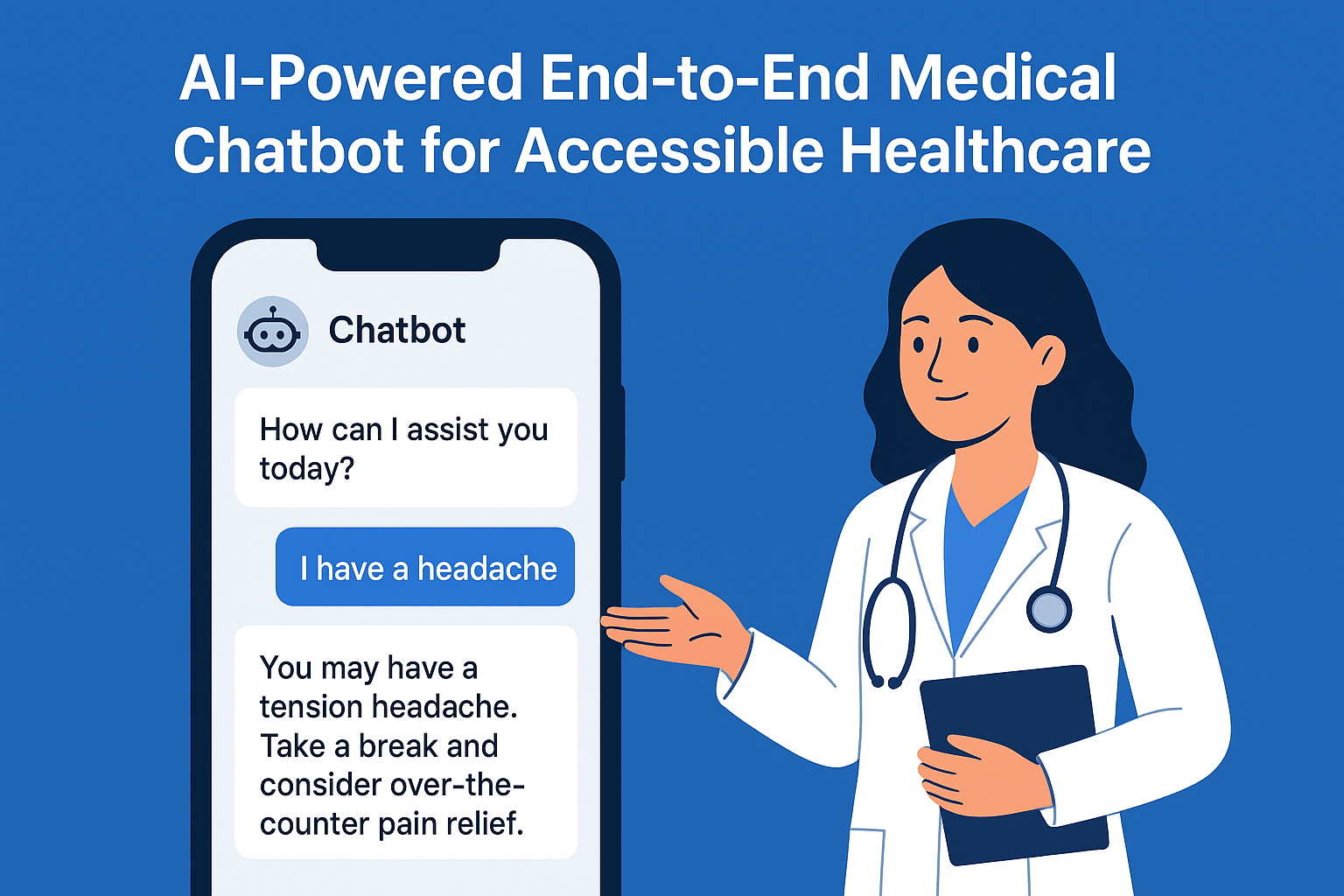
The Medical Chatbot uses advanced natural language processing and machine learning to understand medical queries and provide accurate, conversational responses. It covers a wide range of topics, including symptoms, diseases, and treatments. With personalized replies and cross-platform deployment, it offers a user-friendly, human-like interaction that makes healthcare information available anytime, anywhere.
How we built it
We built the chatbot in Python, leveraging TensorFlow for model training and NLTK for natural language understanding. A curated dataset from reputable medical sources formed the knowledge base, which is regularly updated for accuracy. We integrated APIs for real-time medical data and designed a simple interface for smooth user interaction. Deployment across multiple platforms ensures that users can easily access the chatbot through web, mobile, or social media.
Challenges we ran into
Ensuring accuracy and reliability in medical responses was the biggest challenge, as healthcare demands high precision. Collecting and cleaning quality datasets took significant effort. Another challenge was maintaining context and flow during conversations, especially with varied user phrasing. We also faced hurdles in balancing performance, scalability, and simplifying complex medical terminology into clear, user-friendly language.
Accomplishments that we're proud of
We’re proud of building a functional end-to-end chatbot that combines NLP, machine learning, and real-time data integration. The project not only works across platforms but also delivers natural and engaging conversations. Our team successfully transformed raw data into a usable knowledge base, created a smooth interaction flow, and designed a solution that can genuinely improve access to healthcare.
What we learned
We learned the importance of designing with trust and accessibility in mind, especially for medical applications. Technically, we improved our skills in NLP, model fine-tuning, and conversational design. We also discovered how critical it is to gather user feedback early, as it highlights gaps that aren’t visible during development. Most importantly, we realized how AI can play a meaningful role in democratizing healthcare information.
What's next for Medical Chatbot
Future plans include integrating the chatbot with telemedicine and appointment scheduling systems, enabling users to take actionable steps beyond just receiving information. We also plan to add multilingual support to reach diverse communities, implement advanced deep learning models for complex queries, and build a user feedback loop for continuous improvement. These enhancements will ensure the chatbot grows into a trusted digital health assistant that supports users worldwide.


Log in or sign up for Devpost to join the conversation.