-
-
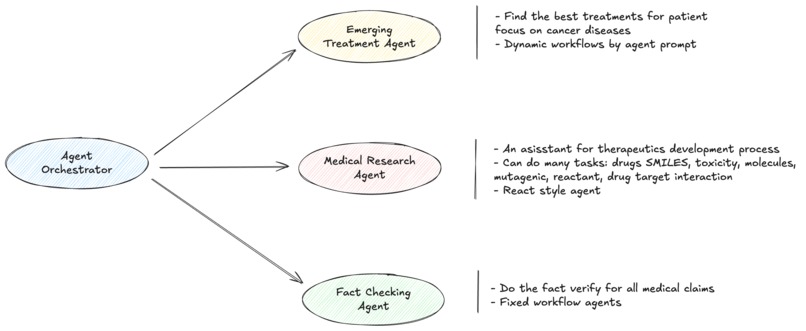
Project Overview
-

Emerging Treatment Agent
-
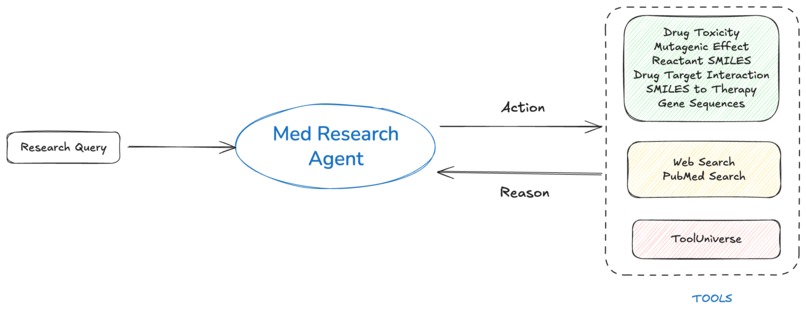
Medical Research Agent
-
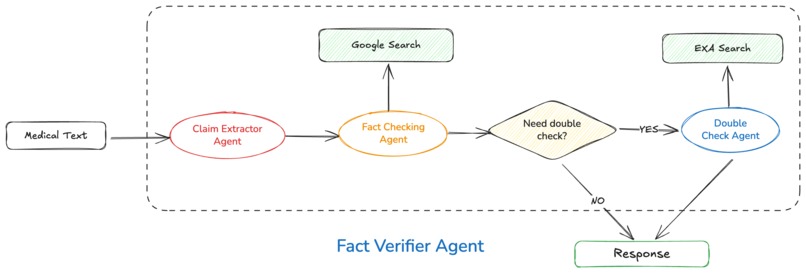
Fact verifier Agent


Inspiration
The rapid growth of medical knowledge and the complexity of patient cases make it challenging for clinicians and researchers to stay up-to-date and find the best evidence-based solutions. TriangleAgent was inspired by the need for an intelligent assistant that can help doing medical research tasks, match patients to clinical trials, and suggest emerging treatments using the latest AI technologies.
What it does
TriangleAgent is a modular, multi-agent system that:
- Performs deep medical and scientific research using LLMs and web search
- Extracts and analyzes patient data to match with relevant clinical trials
- Suggests innovative and experimental treatments based on molecular/genetic characteristics
- Predicts drug properties such as toxicity, mutagenic effects, synergy, and target interactions
How we built it
- Multi-agent architecture: Specialized agents for research, trial matching, and verification, each with custom prompts and tools
- Integration with LLMs: Utilizes large language models (OpenAI, Gemini) for research and reasoning
- Domain-specific tools: Includes PubMed search, drug property prediction, and clinical trial ranking
- Modular codebase: Organized into agents, services, and utilities for easy extension and testing
- Test cases: Realistic patient summaries and clinical scenarios for validation
Challenges we ran into
- Designing prompts and workflows that yield reliable, clinically relevant outputs
- Integrating multiple APIs and tools (LLMs, PubMed, clinicaltrials.gov)
- Handling the variability and complexity of real-world patient data
- Ensuring modularity and extensibility for future features
Accomplishments that we're proud of
- Built a flexible, extensible multi-agent system for medical research and clinical trial matching
- Successfully integrated advanced LLMs and domain-specific tools
- Enabled actionable, evidence-based recommendations for complex patient scenarios
What we learned
- The importance of prompt engineering and agent design for specialized domains
- How to combine LLMs with structured tools for more reliable outputs
- The challenges of working with real-world medical data and the need for robust validation
What's next for Medical Assistant
- Expand support for more disease types and treatment modalities
- Integrate additional data sources (e.g., genomics, imaging)
- Enhance the user interface and workflow integration
- Improve explainability and transparency of agent decisions
- Collaborate with clinicians and researchers for real-world deployment
Built With
- biopython
- exa-py
- google-agent-sdk
- litellm
- loguru
- txgemma

Log in or sign up for Devpost to join the conversation.