-
-
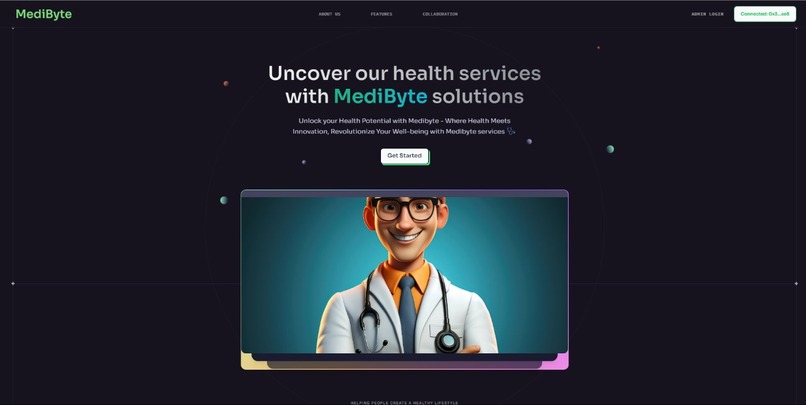
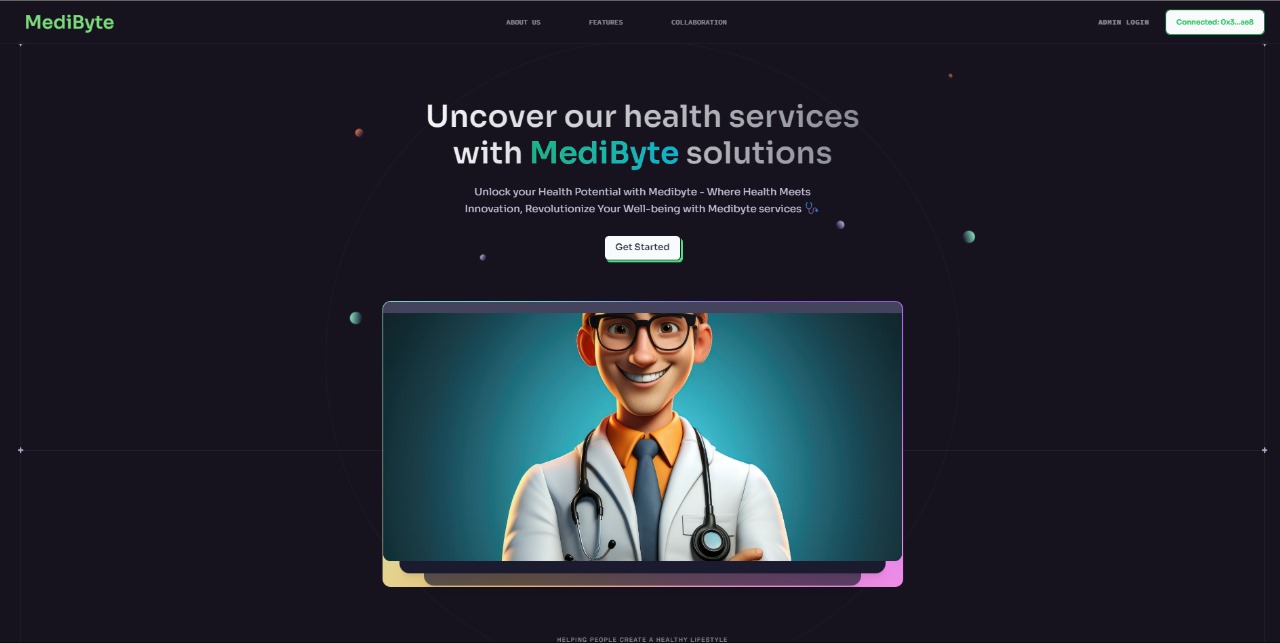
Home Page
-
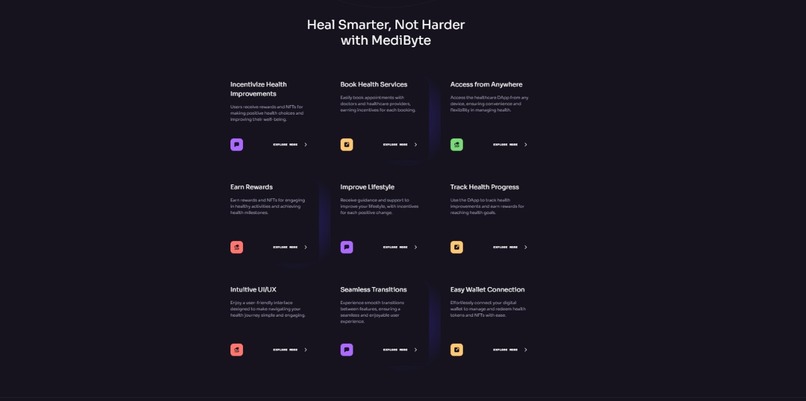
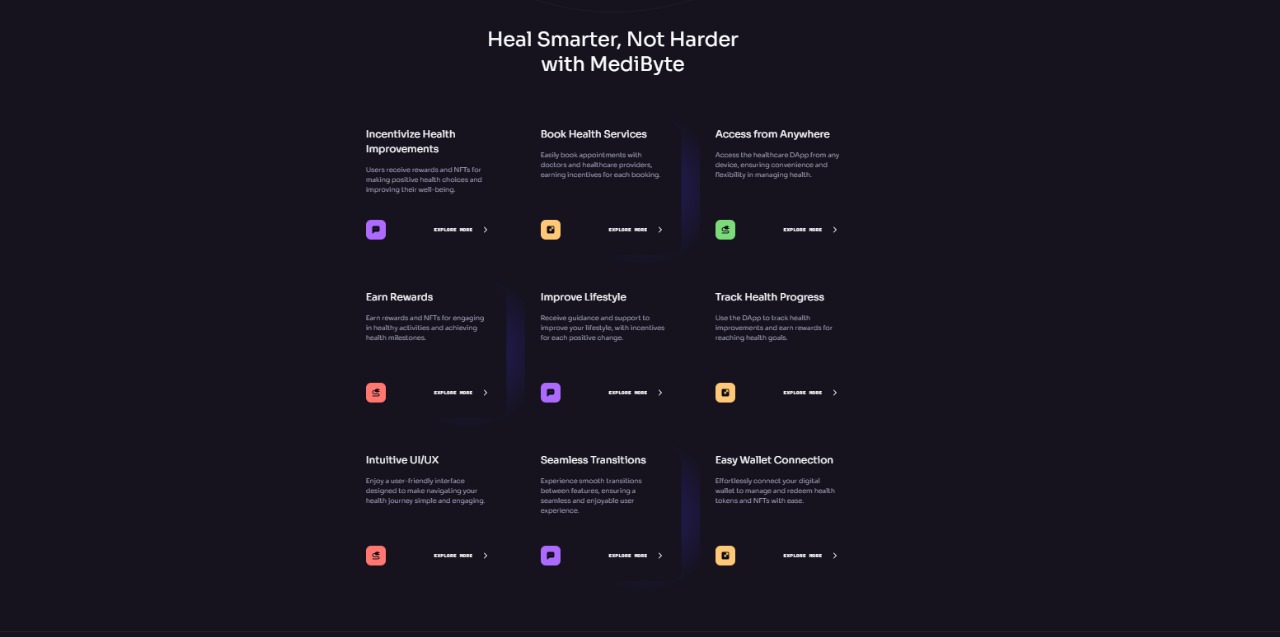
Features Of Medibyte
-
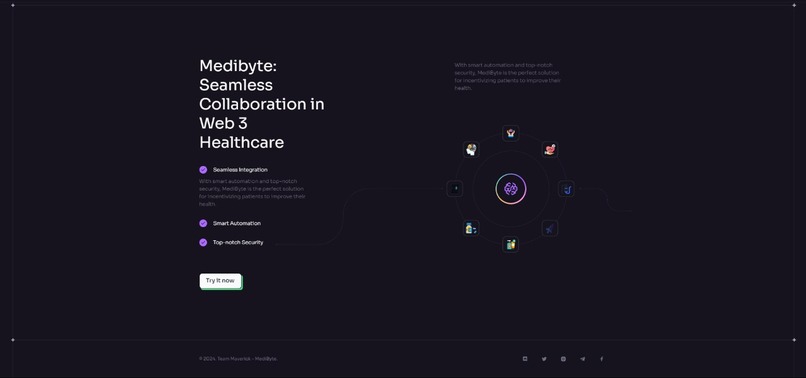
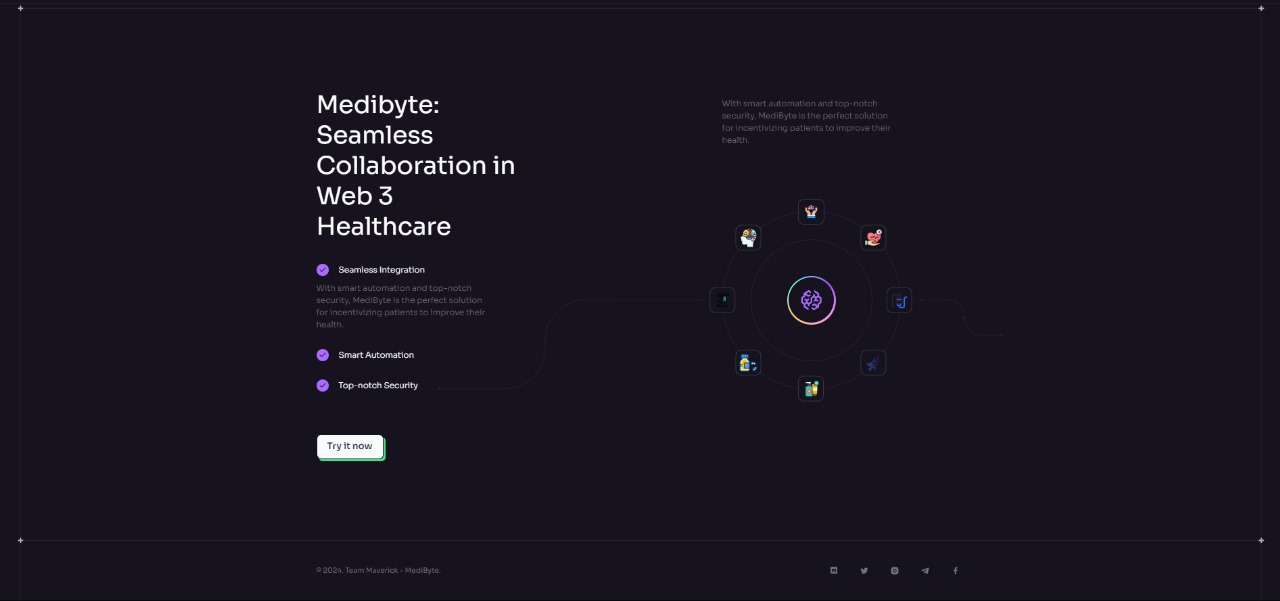
Integration With Technology
-
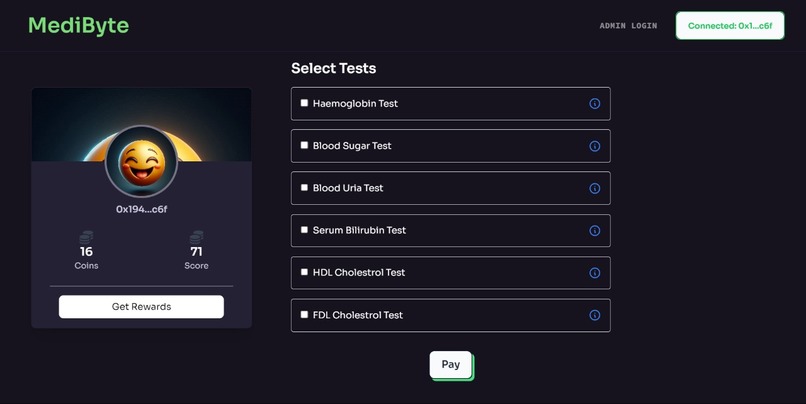
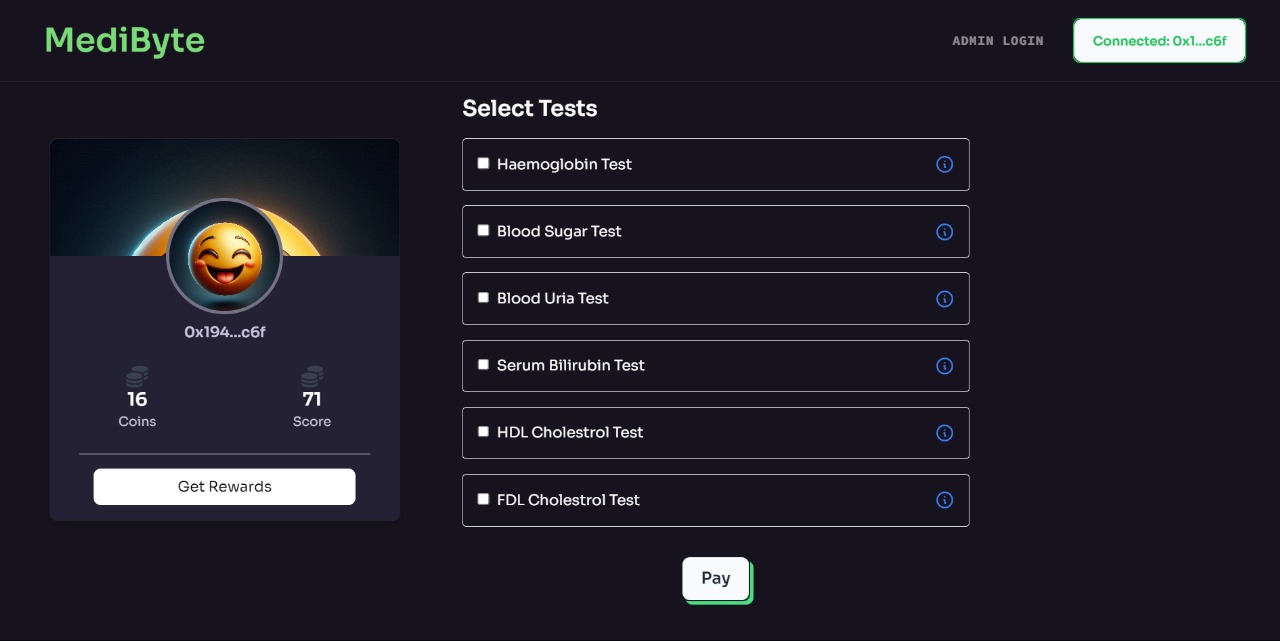
User Profile Page with PatientNFT
-
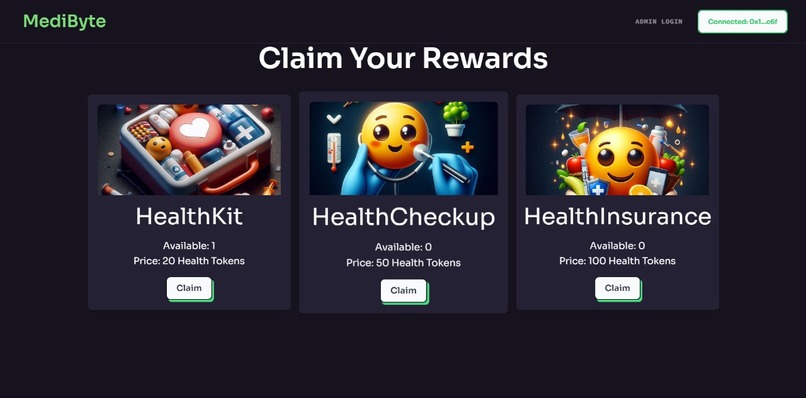
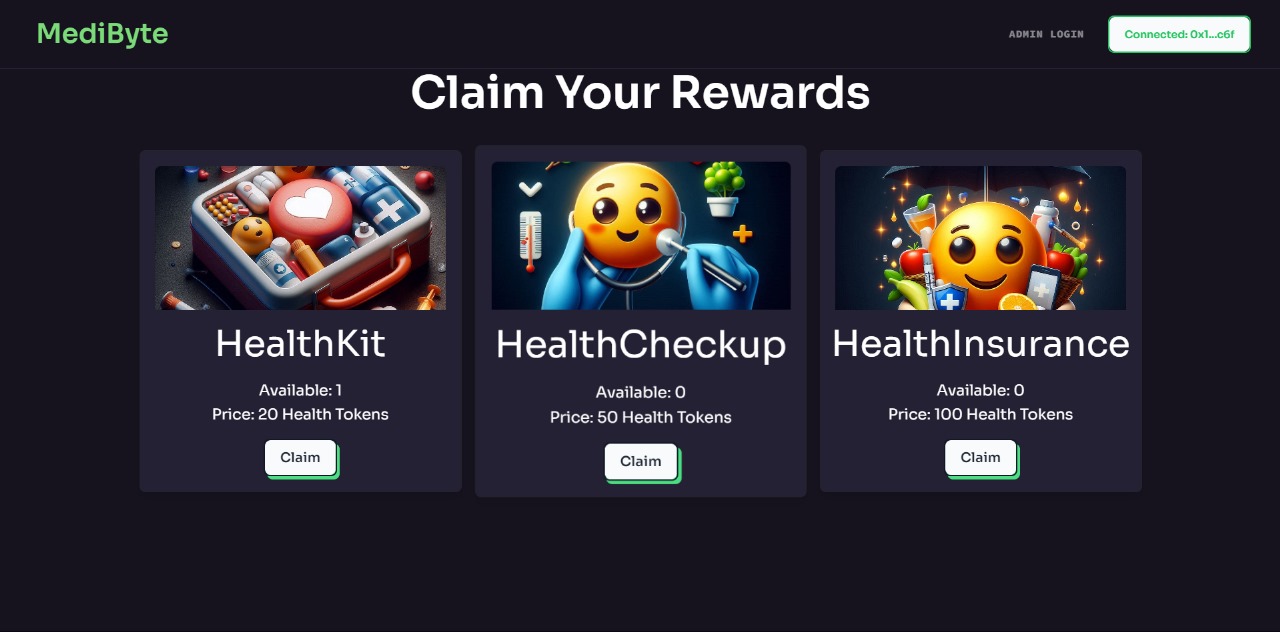
Claim Rewards Page
Inspiration
The inspiration for Medibyte originated from a desire to address the common issue of patients lacking motivation to actively participate in their health management despite making positive progress. Observing this gap in incentivizing health improvements sparked the idea of creating a decentralized platform that rewards patients for taking steps towards better health outcomes. This project likely aims to foster a more engaged and motivated patient population by offering tangible rewards for their efforts in improving their well-being.
What it does
Medibyte is a pioneering web3-based platform designed to revolutionize healthcare by incentivizing patients to actively engage in their health management. At its core, Medibyte empowers patients by providing them with tangible rewards for taking steps towards improving their health outcomes.
Here's a breakdown of what Medibyte does:
Health Test Selection and Payment: Patients can conveniently select and pay for medical tests using USDC (a stablecoin). Whether on the same blockchain or across different blockchains, patients have the flexibility to make payments seamlessly.
Cross-Chain Interoperability: Through Chainlink's Cross-Chain Interoperability Protocol (CCIP), patients on different blockchain networks can securely transfer data and tokens, ensuring seamless interaction with the platform regardless of the blockchain they are on.
Test Result Upload and Health Score Calculation: Doctors upload patients' test results to a decentralized storage system, initiating a process where Chainlink's off-chain functions calculate the patient's health score. This score is derived from data fetched from the uploaded results, determining the amount of health tokens the patient will receive as a reward.
Dynamic NFTs: Each patient is issued a dynamic Non-Fungible Token (NFT) representing their health profile. This NFT is continuously updated with the patient's latest health score and available tokens, providing a real-time snapshot of their health status.
Reward System: Patients can claim reward NFTs based on their health token balances. These reward NFTs act as digital coupons, granting patients access to various healthcare services and incentives, further motivating them to prioritize their health.
By integrating blockchain technology, decentralized finance (DeFi) principles, and Chainlink's powerful infrastructure, Medibyte empowers patients to take control of their health journey while fostering a healthier and more engaged patient-doctor relationship.
How we built it
Medibyte was meticulously crafted using a combination of innovative technologies and rigorous development processes:
Conceptualization: Extensive research and ideation sessions were conducted to identify healthcare pain points and devise a solution that incentivizes health improvements.
Blockchain Implementation: Built on Avalanche Fuji testnet, Medibyte leverages smart contracts to ensure transparency, security, and interoperability.
Integration of Chainlink: Chainlink's Cross-Chain Interoperability Protocol (CCIP) and off-chain functions were seamlessly integrated to facilitate data transfer and health score calculations. Additionally, Chainlink's log triggered automation was utilized to automate tasks and trigger functions in response to specific events.
Frontend Development: The user-friendly frontend interface of Medibyte was developed using React.js for dynamic rendering, Tailwind CSS for responsive styling, react-parallax for immersive scrolling effects, and the Vite builder for fast and efficient development. Axios was used for handling HTTP requests, ensuring seamless communication between the frontend and backend components.
Decentralized Storage: Patient data and test results are securely stored using decentralized solutions like IPFS, ensuring privacy and data integrity.
Testing and Quality Assurance: Rigorous testing protocols were employed to ensure reliability, functionality, and security.
Community Engagement: Feedback from the blockchain and healthcare communities was instrumental in refining Medibyte's features and user experience.
Challenges we ran into
During the development of Medibyte, we encountered several significant challenges, each requiring dedicated effort and problem-solving:
Integration of Offchain Computation: Implementing the offchain computation function posed a major challenge. Despite utilizing the function playground provided by Chainlink, integrating it with our health contract proved difficult. Resolving compatibility issues and ensuring seamless integration demanded extensive troubleshooting and consumed considerable time and effort.
Integration of CCIP: Integrating the Cross-Chain Interoperability Protocol (CCIP) presented another hurdle. This involved facilitating fee transfers between different blockchain networks and transmitting data alongside USDC payments. Overcoming the complexities of cross-chain transactions required meticulous planning and thorough testing to ensure smooth functionality.
Integration of Log Triggered Function: Implementing the log triggered function posed its own set of challenges. Initially, we attempted to incorporate the Upkeep function's code within the callback function fulfillRequest. However, due to limitations on gas consumption, this approach proved impractical. Subsequently, we transitioned to a log-based triggered function, which necessitated adjustments to our implementation strategy and codebase.
Navigating these challenges demanded perseverance, collaboration, and innovative problem-solving, ultimately contributing to the robustness and resilience of the Medibyte platform.
Accomplishments that we're proud of
Throughout the development journey of Medibyte, we encountered numerous challenges and obstacles. However, overcoming these hurdles has led to several significant accomplishments that we are immensely proud of:
Successful Integration of Offchain Computation: Despite the complexities involved, we successfully integrated the offchain computation function into our platform. Overcoming compatibility issues and ensuring seamless interaction between the function playground and our health contract was a notable achievement.
Seamless Integration of CCIP: Integrating the Cross-Chain Interoperability Protocol (CCIP) was a major milestone for us. Facilitating fee transfers between different blockchain networks and enabling data transmission alongside USDC payments required meticulous planning and implementation. Achieving seamless interoperability across chains signifies a significant accomplishment for our project.
Implementation of Log Triggered Function: Overcoming the limitations of callback functions and transitioning to a log-triggered approach was a notable achievement. Adapting our implementation strategy to leverage log-based triggers ensured efficient and reliable execution of critical functions within the platform.
Dynamic NFTs: We successfully implemented dynamic NFTs that evolve based on the patient's health score and improvement over time. This innovative approach not only provides patients with a unique digital asset but also continuously updates their progress and rewards them for their health improvements.
Frontend-Backend Integration: Successfully integrating a beautiful, user-friendly frontend with a robust backend in a short amount of time. We created an engaging and intuitive user interface that seamlessly interacts with our blockchain backend.
What we learned
Throughout the development of Medibyte, our team gained valuable insights and skills:
Connecting Frontend with Blockchain: We learned how to seamlessly connect our frontend to the blockchain backend. This involved using libraries like Web3.js and Ethers.js to enable interaction with our smart contracts, ensuring smooth user experience and real-time updates.
Using Chainlink’s Products: We gained deep experience with various Chainlink products, including Cross-Chain Interoperability Protocol (CCIP), offchain computation, and automation. This enabled us to create a versatile and interconnected system that leverages the strengths of Chainlink’s technology.
Integration of All Contracts: We successfully integrated multiple smart contracts, such as MediCoin, PatientNFT, and reward NFTs, into a cohesive system. This required careful planning and testing to ensure all components worked together seamlessly.
Team Work: Collaboration and teamwork were key to our success. We learned the importance of effective communication, task delegation, and leveraging each team member's strengths. This collaborative approach allowed us to overcome challenges and deliver a polished final product.
What's next for Medibyte
Medibyte has a promising future with several planned enhancements and expansions:
Mainnet Deployment: We aim to transition from testnets to mainnet deployment on Avalanche and other supported networks. This will enable real-world use and provide valuable feedback from actual users.
Enhanced User Interface: We plan to further enhance our frontend, making it more intuitive and user-friendly. This includes adding features like detailed health progress charts, personalized health tips, and more engaging reward mechanisms.
Expanding Reward System: We will introduce more dynamic NFTs and a broader range of reward NFTs, providing patients with even more incentives to improve their health. This could include partnerships with fitness trackers, nutrition plans, and wellness programs.
Interoperability with More Chains: We plan to expand our CCIP integration to support more blockchain networks. This will make Medibyte accessible to a wider range of users and ensure compatibility with various digital wallets and payment methods.
Referral System: Introducing a referral system to encourage users to invite friends and family to join Medibyte. Users will earn rewards for successful referrals, fostering community growth and engagement.
Built With
- axios
- ccip
- chainlinkautomation
- dynamicnft
- ethers
- express.js
- hardhat
- ipfs
- javascript
- node.js
- offchainfunction
- react
- remix
- solidity
- tailwind
- vite


Log in or sign up for Devpost to join the conversation.