-
-
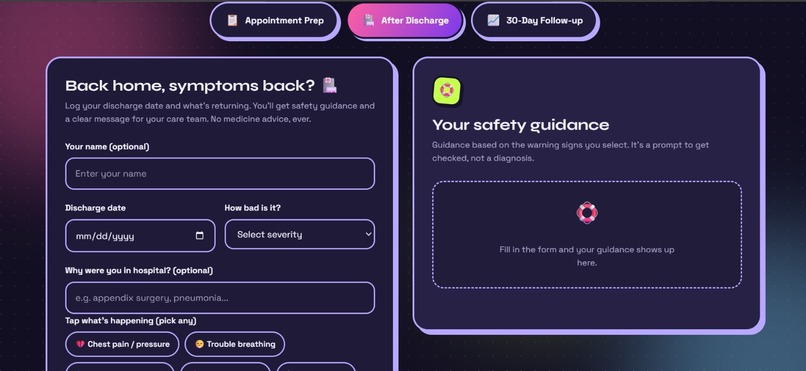
Appointment Prep
-
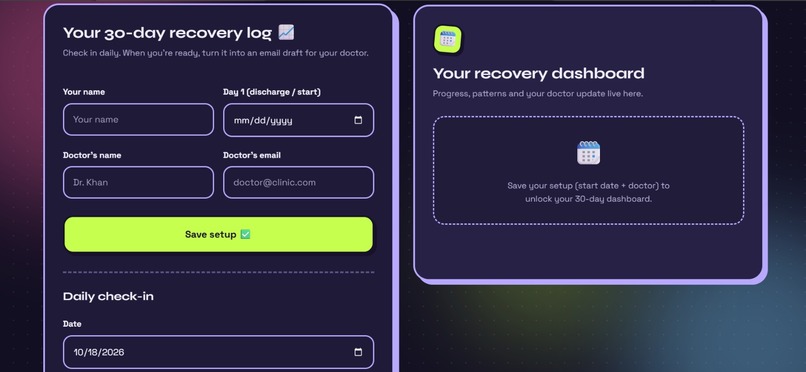
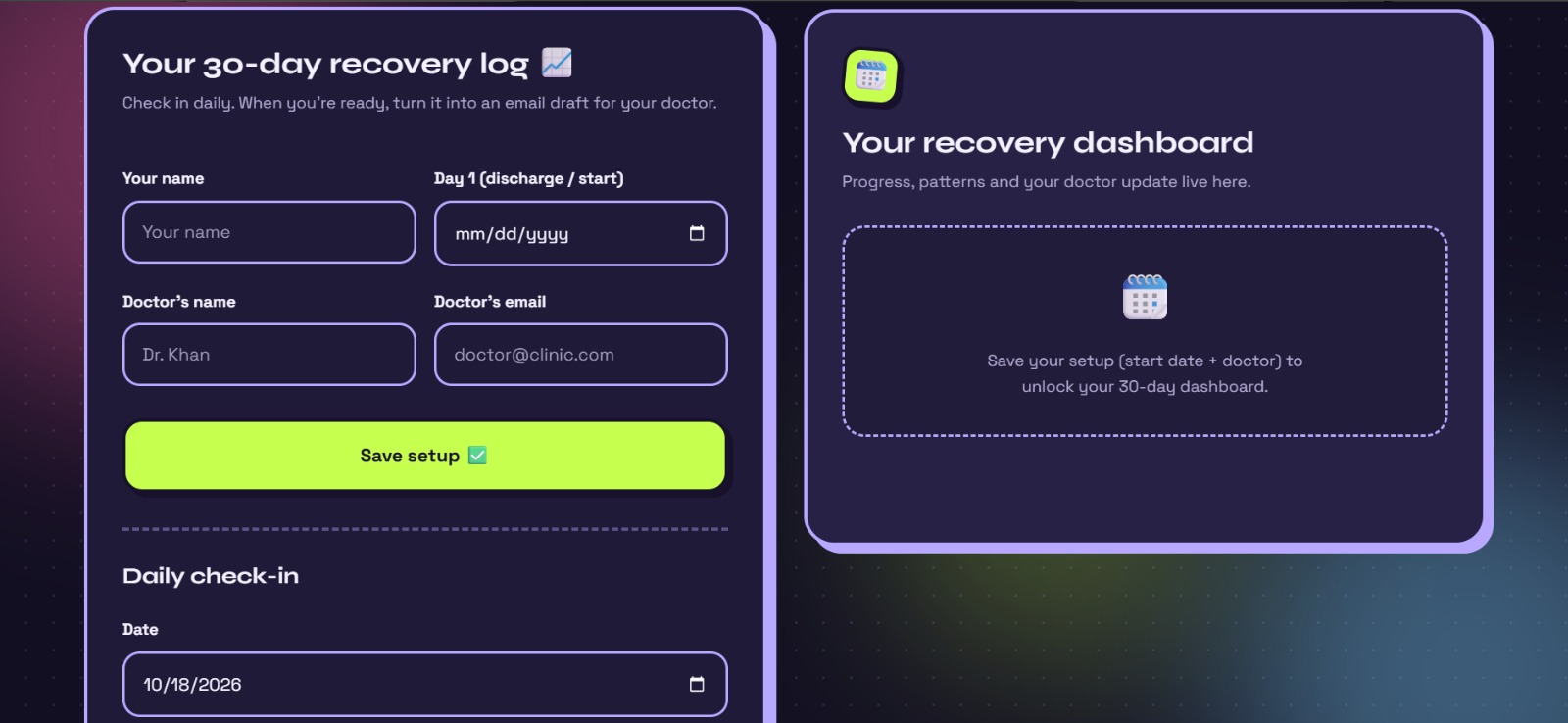
30 Day Follow-Up
-
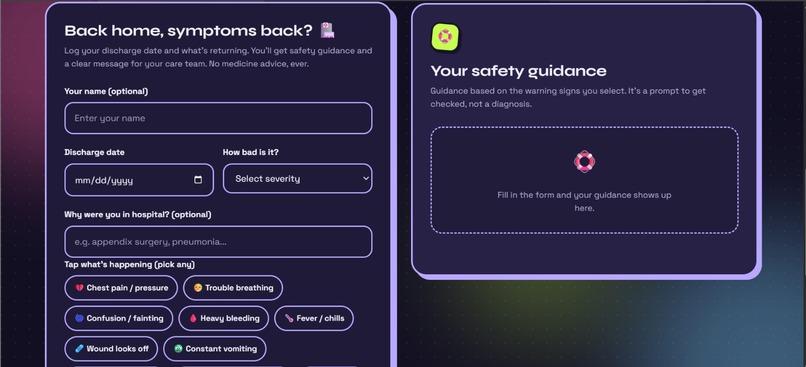
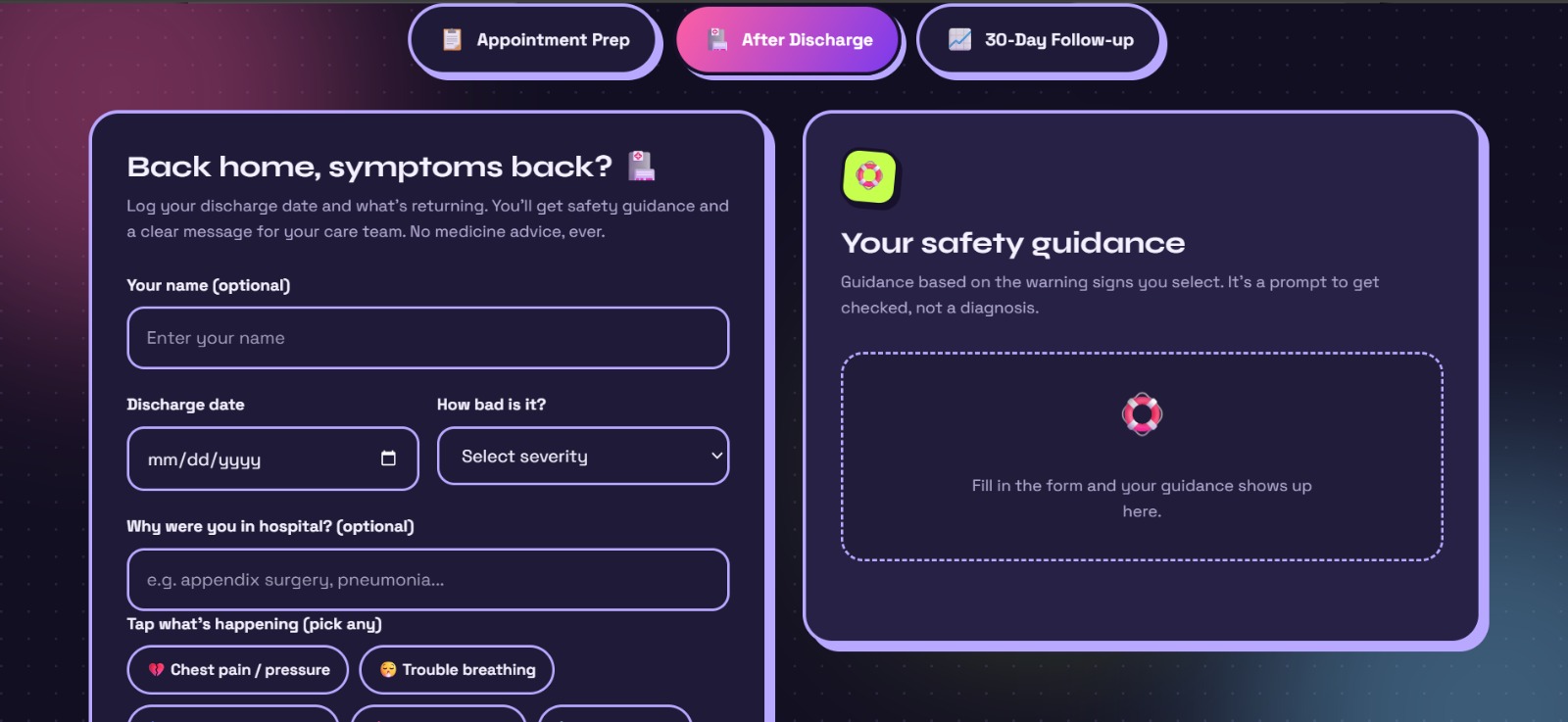
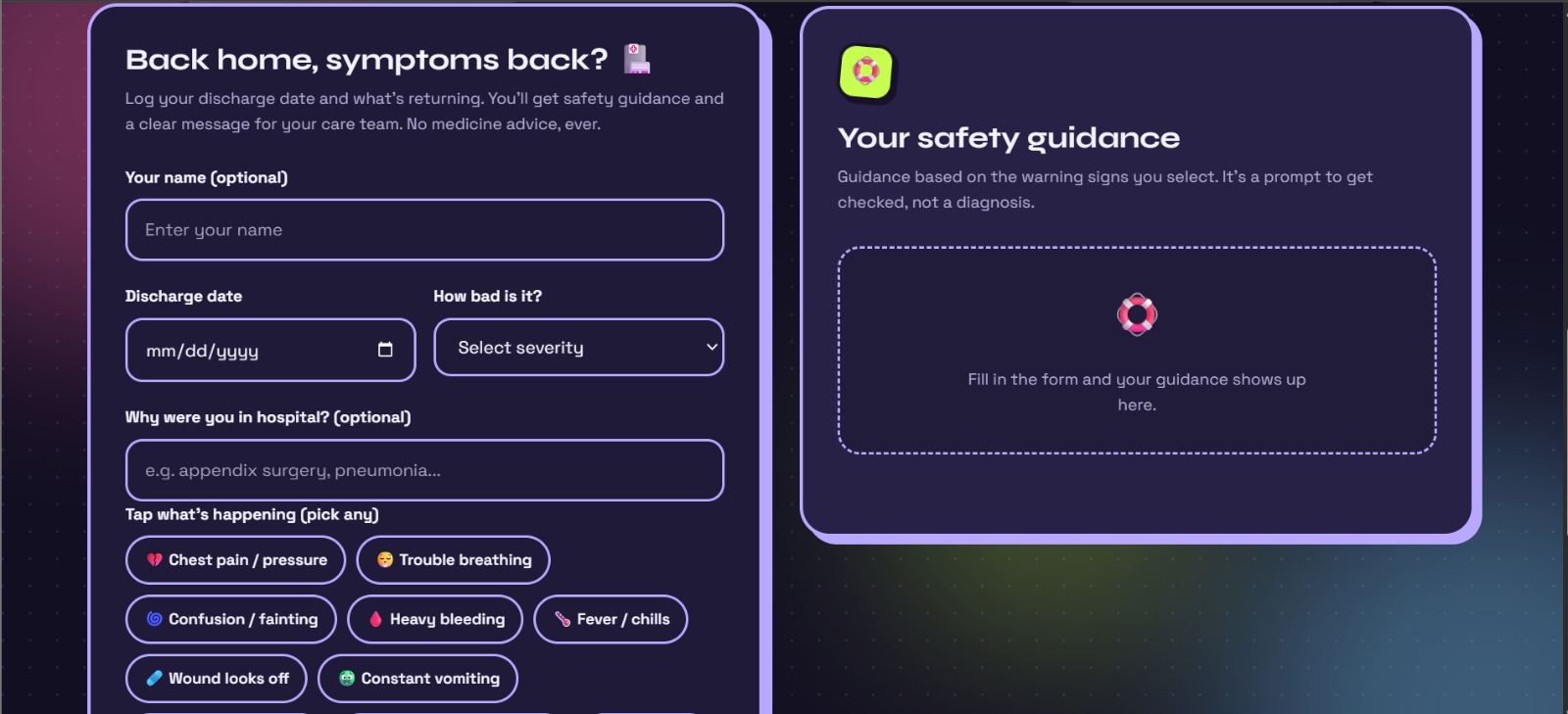
After Discharge Peforma
-
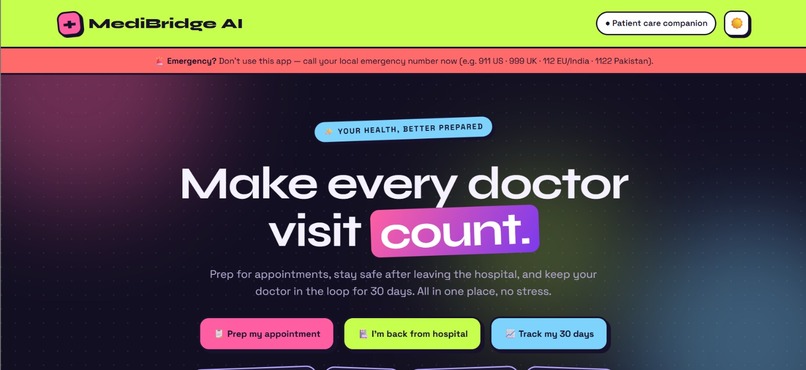
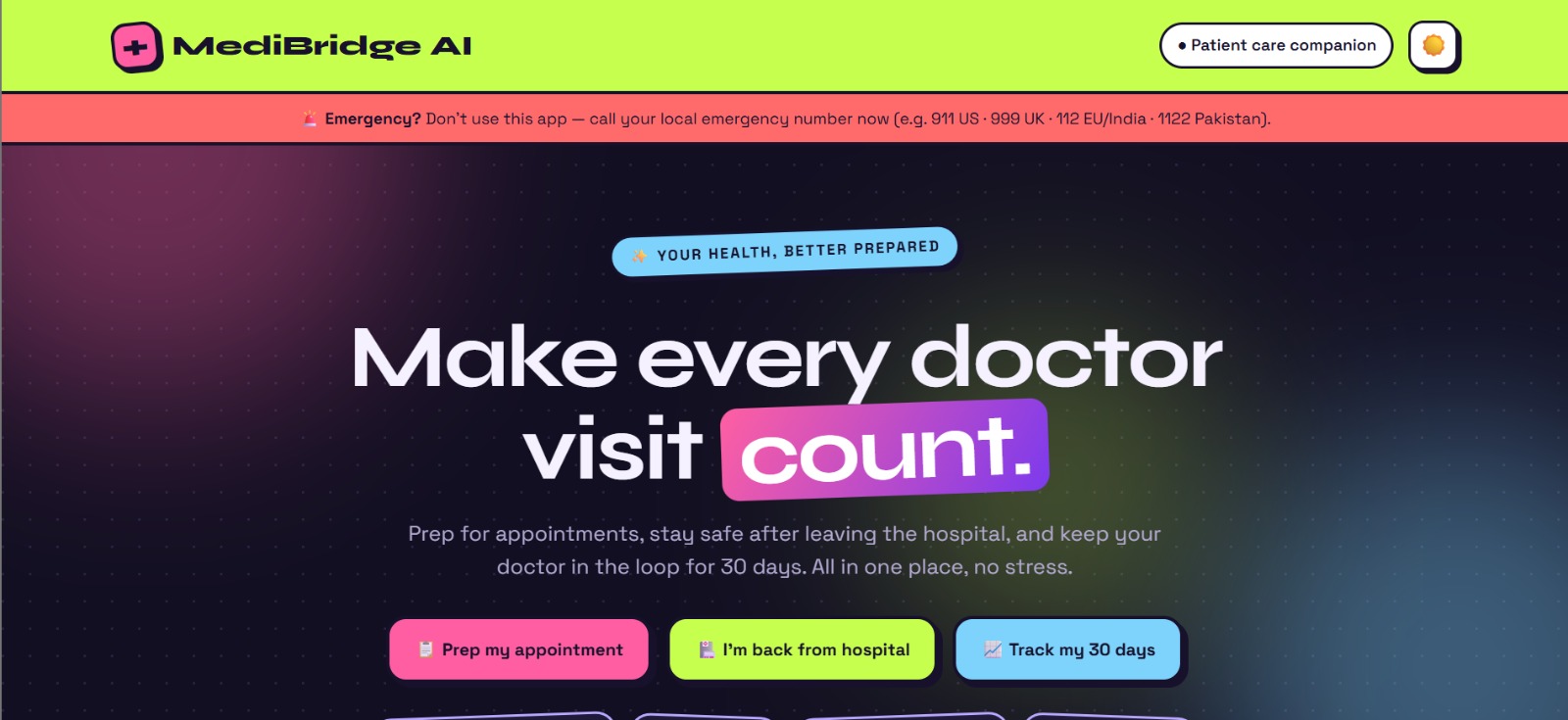
Welcome Page
Inspiration
Healthcare does not end when a patient leaves the hospital. Many patients experience recurring symptoms after discharge, forget to take their prescribed medicines, or struggle to stay connected with their healthcare providers. These challenges inspired us to build MediBridge-AI, a patient-support platform designed to help bridge the gap between hospital discharge and recovery at home.
What it does
MediBridge-AI helps patients organize their symptoms, understand when they should seek medical advice, and prepare useful health summaries for discussions with healthcare professionals. It is designed to encourage safer recovery through:
Symptom tracking: Patients can record their symptoms, their duration, and their severity.
Health summaries: The platform generates a structured report that patients can share with a healthcare professional.
Safety guidance: It reminds users not to self-prescribe medicines and to seek urgent care when symptoms may indicate an emergency.
Follow-up support: The concept includes a 30-day follow-up plan to encourage patients to stay engaged with their recovery and prescribed treatment.
MediBridge-AI is a support tool, not a replacement for a doctor or professional medical advice.
How we built it
We built MediBridge-AI using HTML, CSS, and JavaScript. HTML provides the structure, CSS creates a modern, responsive interface, and JavaScript powers the symptom form, report generation, and interactive features.
Our focus was to create an accessible prototype that demonstrates how digital technology can help patients communicate their health concerns more clearly and stay mindful of their recovery after discharge.
Challenges we ran into
As a hackathon project, one of our biggest challenges was turning a healthcare problem into a useful prototype within a limited amount of time. We also had to consider patient safety, keep the interface easy to understand, and avoid presenting automated symptom assessments as medical diagnoses or medication prescriptions.
Balancing an engaging user experience with responsible healthcare guidance helped us make better design decisions.
Accomplishments that we're proud of
We are proud to have developed a working prototype that focuses on an important and often overlooked part of healthcare: recovery after discharge. We brought together symptom reporting, structured health summaries, safety reminders, and the concept of continued follow-up in one platform.
Most importantly, we designed MediBridge-AI around the idea that patients deserve support and clear guidance even after they leave the hospital.
What we learned
This project taught us that healthcare technology must prioritize patient safety, usability, and trust. We learned how HTML, CSS, and JavaScript can be combined to build an interactive healthcare prototype, and how structured symptom information can help patients communicate more effectively with healthcare professionals.
We also learned that AI in healthcare should support informed conversations with clinicians rather than replace professional judgment.
What's next for MediBridge-AI
Our next goal is to evolve MediBridge-AI into a more complete recovery-support platform by adding secure patient-doctor communication, personalized 30-day follow-up reminders, medication adherence tracking based on a clinician's prescription, and a secure way to store and share discharge instructions.
We also plan to explore responsible AI integration, accessibility improvements, and secure backend services so patients can receive more personalized support while keeping their health information protected.
Our vision is simple: help patients stay connected to their care journey, from hospital discharge to recovery at home.
Built With
- ai
- css
- healthcare
- html
- javascript

Log in or sign up for Devpost to join the conversation.